Car Maintenance Schedule: What to Replace and When (2026 Guide)
An ASE Master Tech's complete car maintenance schedule — every milestone from monthly checks to 100k+ miles, with severe service truth, timing belt vs chain, and DIY vs shop guidance.
Updated
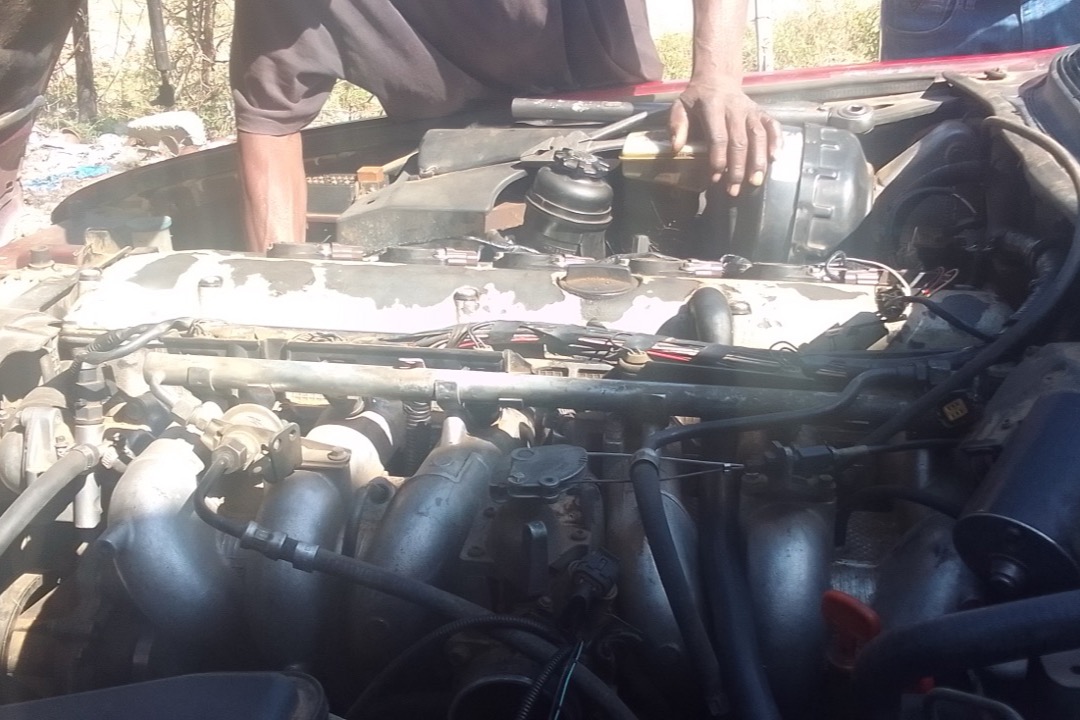
A few years back, a guy rolled a 2008 Honda Civic into the shop with 247,000 miles on the odometer and a knock you could feel through the steering wheel. He was the second owner. His maintenance records — proudly handed to me in a manila folder — showed exactly four oil changes since he bought the car at 168,000 miles. Eight years. Four oil changes. When we pulled the valve cover, the inside of the head looked like the bottom of a fryer at a county fair. Sludge in every passage, varnish on every surface, an oil pickup screen so clogged the pump was starving on every cold start. The engine was done. I quoted him a used motor with installation. He took the keys and left, and I never saw the car again.
That is the cost of ignoring a maintenance schedule. Not always immediate, not always dramatic — but eventually, completely, total. I am Mike Reeves, an ASE Master Technician with over twenty years on the shop floor, and the single biggest factor that separates a vehicle that hits 250,000 miles from one that gets junked at 130,000 is whether the owner kept up with the maintenance schedule. Not the brand. Not the price. Not even the driving style as much as people think. The schedule.
This guide is the maintenance schedule I would give a family member. Every milestone from monthly checks to 100,000-plus miles, what to actually do at each one, what the warning signs look like before something fails, and the truth about severe service that most drivers do not want to hear. No marketing fluff, no padding, no “consult a professional” hedging. Read it once, mark your intervals on a calendar, and your car will outlast the loan you took out to buy it.
Car Maintenance Schedule at a Glance
Here is the master scannable summary. Every milestone worth tracking, in one table. Specifics by section below.
| Interval | Tasks | DIY-able? |
|---|---|---|
| Monthly | Tire pressure, fluid levels, lights, wipers, tire condition | Yes — 10 minutes, no tools |
| Every 3,000–7,500 miles | Oil and filter (interval depends on oil type and conditions) | Yes — medium difficulty |
| Every 5,000–8,000 miles | Tire rotation | Yes — needs jack and stands |
| Every 15,000–30,000 miles | Engine air filter, cabin air filter | Yes — easy |
| Every 30,000 miles | Brake fluid flush, coolant inspection, full brake inspection | Mixed — fluid yes, full inspection better at shop |
| Every 30,000–60,000 miles | Transmission fluid (varies wildly by vehicle) | Sometimes — sealed units need shop |
| Every 30,000–100,000 miles | Spark plugs (varies by plug type) | Yes on accessible engines |
| Every 50,000–70,000 miles | Brake pads (front typically before rear) | Yes — medium difficulty |
| Every 60,000–100,000 miles | Timing belt (interference engines = mandatory) | No — leave to a shop |
| Every 100,000+ miles | High-mileage protocol: switch oil formulation, inspect everything more frequently | Yes for inspection, mixed for repairs |
| Every 2 years | Brake fluid (regardless of mileage) | Yes with bleeder kit |
| Every 3–5 years | Coolant flush (per manual) | Yes — medium difficulty |
| Every 5–7 years | Battery (load test annually after year 3) | Yes — easy |
| Twice yearly (seasonal) | Wiper blades, AC check, tire swap if applicable, battery load test | Yes |
Driving a Toyota, Honda, Ford, Mazda, Lexus, or VW? Skip the generic chart and pull your exact factory intervals from our brand-specific lookups — the Toyota maintenance schedule, Honda maintenance schedule (with the Maintenance Minder codes decoded), Ford maintenance schedule, Mazda maintenance schedule, Lexus maintenance schedule (with the engine-specific spark-plug intervals — 60k on the V6, 40k on the turbo — that generic charts get wrong), and VW maintenance schedule (with the DSG and 8-speed fluid services VW actually publishes at 80k — despite the “lifetime fluid” folklore). Enter your mileage and the tool flags what’s due now versus what’s coming up.
Now the detail. Skip to whatever section your odometer is closest to.
Monthly Checks: 10 Minutes That Save Thousands
The single highest-leverage maintenance habit in this entire guide is a monthly walk-around inspection. No tools, no lift, no skill required. Just attention. Every catastrophic failure I see in the shop had warning signs that someone could have caught in a 10-minute monthly check.
What to Check Every Month (No Tools Needed)
Tire pressure on all four tires plus the spare. Underinflated tires wear faster, hurt fuel economy, and fail catastrophically at highway speed when they overheat. Use a quality gauge — the pencil-style gauges at gas stations are notoriously inaccurate. Our best tire pressure gauges guide covers digital and analog options that read within one PSI. Set pressure to the spec on the door jamb sticker, not the maximum on the tire sidewall, and check when tires are cold (driven less than a mile).
Fluid levels under the hood. Engine oil dipstick, coolant overflow tank, brake fluid reservoir, power steering reservoir if equipped, and washer fluid. You do not need to top off a perfectly full system — you need to know if anything is dropping. A coolant level that drops a quarter inch every month is telling you something. Brake fluid that has dropped means either the pads have worn down (normal, brake fluid level falls as pads wear) or there is a leak (not normal, find it immediately).
Tire tread and sidewall condition. Look at each tire for uneven wear patterns — wear on the inner or outer edge means alignment is off, wear in the center means overinflation, wear on the edges means underinflation. Check sidewalls for cuts, bulges, or cracks. A bulge in a sidewall means the internal belts have separated and the tire can fail at any moment. Replace it before your next drive.
All exterior lights. Walk around the vehicle with a buddy or use a wall reflection. Headlights both high and low, turn signals front and rear, brake lights (need someone to press the pedal), reverse lights, license plate light, and any side markers. A burned-out brake light is a ticket and a safety risk that takes five minutes and a few dollars to fix.
Wiper blade condition. Run them across a wet windshield. If they streak, chatter, or skip — replace them. Wiper blades are a six-month item in most climates and become a safety issue the first time you need them in a downpour.
That entire check takes 10 minutes once you have done it twice. It will catch 80 percent of the problems that turn into expensive failures.
Every 3,000–7,500 Miles: Oil and Filter
Engine oil is the single most important fluid in your vehicle. It lubricates moving parts, carries heat away from the engine, suspends contaminants for the filter to capture, and protects against corrosion. When it degrades, every one of those functions suffers — and the engine pays the bill.
The 3,000-Mile Myth Mike Wants You to Forget
For decades, the standard advice was to change oil every 3,000 miles. That number was correct for the conventional Group I oils and looser engine tolerances of the 1970s. It is no longer correct, and following it on a modern vehicle wastes money, generates unnecessary waste oil, and accomplishes nothing for engine longevity.
Modern oil chemistry has improved dramatically. Today’s oils meet the API SN/SP and ILSAC GF-6 standards, which specify performance levels that conventional Group I oils could not approach. Modern Group II conventional oils support 5,000-mile intervals under normal conditions. Full synthetic oils support 7,500 to 10,000 miles, with some extended-performance formulations rated for 15,000 to 20,000 miles in vehicles equipped with oil life monitors.
If you want the full breakdown of why synthetic outperforms conventional and which one your engine actually needs, read our synthetic vs conventional oil deep dive. When that next interval comes up, our best synthetic motor oil roundup ranks the top formulations we trust for both daily drivers and turbocharged engines, and our best oil filters guide covers the synthetic-media filters that protect that investment.
How to Tell What Interval Is Right for Your Engine
Three sources of truth, in order of priority. First, your owner’s manual specifies an interval for normal service and a shorter interval for severe service. Use the severe interval if you qualify (more on that below). Second, if your vehicle has an oil life monitor, trust it — these systems measure actual operating conditions and are more accurate than any fixed mileage number. Third, when in doubt, default to 5,000 miles for conventional oil and 7,500 miles for synthetic in a modern engine driven under mixed conditions.
Time still matters. Change oil at minimum once per year regardless of mileage. Oil oxidizes and accumulates moisture even when the car sits.
Warning Signs Your Oil Needs Changing Now
You should never get to the warning sign stage if you are following intervals — but if you do, here is what to look for. A ticking or tapping sound from the top of the engine, especially at startup, often means oil is not getting to the lifters fast enough due to thickening or sludge. Oil on the dipstick that looks dark and gritty when you wipe it on a paper towel — clean oil is amber to dark brown, oil at the end of its life is opaque black with visible particulate. The oil pressure light flickering at idle means the pump is struggling to maintain pressure, often due to thickened oil or a clogged pickup screen. A burning oil smell from the engine bay often means oil is leaking onto the exhaust manifold — find the leak immediately.
High-Mileage Engines Need a Different Oil
Once a vehicle crosses about 75,000 miles, the seals and gaskets have lived a long time and have started to harden and shrink. High-mileage oil formulations include seal conditioners that help restore flexibility and reduce minor seepage, plus heavier additive packages designed for the wear patterns of older engines. Our best motor oil for high mileage guide covers the formulations that perform consistently in engines past the 75k mark.
Every 5,000–8,000 Miles: Tire Rotation
Tires wear unevenly because the loads on each wheel position differ. Front tires on a front-wheel-drive vehicle handle steering, braking, and acceleration loads that the rears do not see. The result is that front tires wear faster and develop different wear patterns than rears. Rotation evens out the wear, extends overall tire life, and maintains balanced handling.
Why Cross-Pattern Rotation Matters
The recommended pattern depends on your drivetrain. Front-wheel drive: front tires move straight back, rear tires cross to the front (rear left to front right, rear right to front left). Rear-wheel drive: rears move straight forward, fronts cross to the rear. All-wheel drive: typically a full cross — both axles cross. Directional tires (marked with an arrow on the sidewall) only swap front-to-back on the same side. Mixing up the pattern reduces rotation effectiveness.
Most owners’ manuals specify 5,000 to 7,500 miles. Pairing rotation with every other oil change is an easy way to remember.
Warning Signs of Uneven Wear
Wear on the inner or outer edge of a tire while the center is fine indicates an alignment problem. Wear in the center but not the edges indicates chronic overinflation. Wear on both edges but not the center indicates chronic underinflation. Cupping or scalloping (a rippled wear pattern) usually indicates worn shocks or struts allowing the tire to bounce. Any of these patterns mean rotation alone will not fix the problem — address the underlying cause before the tire is destroyed.
When Rotation Won’t Save You — Time to Replace
The penny test: insert a penny into the tread groove with Lincoln’s head facing down. If you can see the top of his head, you are at or below 2/32 inch — replace the tires now. The quarter test using Washington’s head measures 4/32 inch and is a better safety threshold, especially for wet weather performance. Sidewall cracking, bulges, exposed cords, or repeated punctures in the same area also warrant replacement. When that time comes, our best all-season tires guide covers options for daily driving across mixed conditions.
Every 15,000–30,000 Miles: Air Filters (Both of Them)
Two air filters in your vehicle, two different jobs. Most drivers know about one and have never thought about the other.
Engine Air Filter — The 5-Minute DIY That Saves Fuel
The engine air filter sits in the airbox under the hood and traps dust, pollen, and debris before it reaches the combustion chamber. A clogged filter restricts airflow, forcing the engine to work harder for the same output. The result is reduced fuel economy (typically 5 to 15 percent on a severely clogged filter), reduced power, and accelerated cylinder wear from any particulate that gets past the failed filter media.
Replacement is one of the easiest jobs in automotive maintenance. Pop the airbox clips, lift the lid, swap the filter, close the lid. Five minutes, no tools, on most vehicles. The interval is 15,000 to 30,000 miles depending on driving conditions — closer to 15,000 if you drive in dusty environments, closer to 30,000 for highway commuters in clean air. Inspect every oil change and replace when it visually looks loaded with debris (you can hold it up to a light — if you cannot see light through it, it is done).
Our best engine air filters guide covers OEM-style replacements, premium synthetic media filters, and reusable performance filters with the trade-offs of each.
Cabin Air Filter — The Service Most Drivers Have Never Done
The cabin air filter is the one nobody knows about. It sits behind the glove box on most vehicles and filters the air entering your interior through the HVAC system. When clogged, it reduces airflow from the vents (you crank the fan higher and it still does not blow as hard), causes musty smells inside the cabin, and can let allergens, mold spores, and exhaust particulate into the air you breathe.
Same interval as the engine air filter — 15,000 to 30,000 miles. On most modern vehicles, replacement takes about 10 minutes: remove the glove box (usually two clips and it pivots down), pull the old filter, install the new one in the same orientation, reinstall the glove box. Our best cabin air filters guide covers standard, activated carbon, and HEPA-grade options for drivers with allergies or who commute in heavy traffic.
Warning Signs Your Filters Are Done
Engine air filter: noticeable drop in fuel economy, reduced acceleration, check engine light for mass airflow sensor codes (a clogged filter can foul the MAF). Cabin air filter: weak airflow from vents at the same fan setting, musty or stale smell when AC or heat is running, condensation on windows that is slow to clear.
The 30,000-Mile Service: Foundation Check
The 30,000-mile mark is the first major service interval where the manufacturer expects you to do more than oil changes. This is the foundation service that, if skipped, sets up failures at 60,000 and beyond.
What’s Included at 30k
Engine air filter and cabin air filter replacement, brake fluid flush, coolant level inspection (some vehicles need a full coolant change at 30k, others not until 60k or 100k — check your manual), full brake inspection including pad measurement and rotor condition, transmission fluid inspection, and a comprehensive inspection of belts, hoses, CV boots, and steering and suspension components.
Brake Fluid — The Most Skipped Safety Item in America
Brake fluid is hygroscopic, which means it absorbs moisture from the atmosphere over time. New brake fluid has a dry boiling point well above 400 degrees Fahrenheit. After two years of moisture absorption in a typical climate, that boiling point can drop below 300 degrees. Under heavy braking — long mountain descents, repeated panic stops, towing — brake temperatures can exceed the contaminated fluid’s boiling point. The result is vapor in the brake lines, a brake pedal that goes to the floor with no resistance, and brake failure at exactly the moment you need brakes most.
Brake fluid flush is a two-year service regardless of mileage. Cost is minimal at a shop. DIY is possible with a one-person bleeder kit and patience. There is no “skip it” option on this one — boiled brake fluid kills people.
Coolant Service — More Than Overheating Protection
Engine coolant does three jobs: prevents freezing in winter, raises boiling point in summer, and protects metal cooling system components from corrosion. The corrosion protection comes from additives that are consumed over time even if the coolant looks fine. When the additives deplete, the coolant becomes acidic and starts attacking the aluminum head, water pump, radiator, and heater core. The damage is silent — until a head gasket fails or a heater core springs a leak.
Modern long-life coolants typically last 5 years or 100,000 miles. Older green coolant typically needs replacement every 30,000 miles or 2 years. The interval depends entirely on the coolant chemistry your vehicle uses — never mix coolant types, never assume your vehicle uses the same coolant as your previous vehicle, and check the manual or the cap on the overflow tank for the specification. Our best coolant and antifreeze guide breaks down the major chemistry types (IAT, OAT, HOAT, P-OAT) and which vehicles use each.
Transmission Fluid — When and Why
Automatic transmission fluid degrades from heat. The friction surfaces inside the transmission generate heat under normal operation, and that heat slowly oxidizes the fluid and consumes the friction modifiers. Old transmission fluid loses its lubrication and friction properties, leading to harsh shifts, slipping, and eventually clutch pack failure.
The interval is contentious. Manufacturers spec anywhere from 30,000 miles (severe service) to “lifetime” (which is a marketing term, not a real spec). The real-world recommendation from anyone who works on transmissions: change the fluid every 30,000 to 60,000 miles using the exact spec called for in the manual. “Lifetime” fluid is the lifetime of the transmission with that fluid, which is shorter than the lifetime of the transmission with periodic fluid changes.
Inspection Items: Brake Pads, Hoses, Belts, CV Boots
The 30,000-mile service is the right time to crawl under the vehicle and look at everything. Measure remaining brake pad material with calipers or a brake gauge. Check serpentine belt for cracks, glazing, or missing chunks of rib material. Squeeze upper and lower radiator hoses (engine cold) — they should feel firm but pliable, not mushy or rock hard. Inspect CV boots on front-wheel-drive and all-wheel-drive vehicles for cracks or grease leakage — a torn boot lets contamination into the CV joint and means the joint will fail in months. None of these are services in themselves at 30k — they are inspections that flag what will need service in the next 10,000 to 20,000 miles.
The 60,000-Mile Service: Midlife Tune-Up
Sixty thousand miles is when several major components reach the end of their first service life. Done right, this service sets the vehicle up for another 60,000 miles of reliable operation. Skipped, it is the milestone where preventable problems start cascading.
Spark Plugs — Iridium, Platinum, or Copper for Your Engine
Spark plug intervals depend entirely on the plug material your vehicle was designed for. Copper plugs last 20,000 to 30,000 miles and are mostly found in older vehicles. Single-platinum plugs last 50,000 to 60,000 miles. Double-platinum and iridium plugs last 80,000 to 100,000 miles or more in modern engines. Using the wrong plug type — substituting copper for iridium because they are cheaper, for example — will work for a few thousand miles and then create misfire codes and ignition problems.
Worn spark plugs cause incomplete combustion, which reduces fuel economy, reduces power, and dumps unburned fuel into the cylinders where it dilutes engine oil. Rough idle, hesitation under acceleration, and check engine misfire codes are the typical warning signs. On accessible engines (most inline four-cylinder and V6 layouts), spark plug replacement is a confident DIY job. On engines where the rear bank is buried under the intake manifold, leave it to a shop. Our best spark plugs guide ranks plugs by engine type and electrode material.
Timing Belt vs. Timing Chain — Why This One Choice Changes Everything
Some engines use a timing belt to synchronize the camshaft with the crankshaft. Other engines use a timing chain. The difference matters more than almost any other single fact about your vehicle.
Timing belts are wear items with a fixed replacement interval. Typically 60,000 to 100,000 miles, sometimes specified by time as well (often 7 years). Examples of engines with timing belts include the Subaru EJ25 (replace at 105,000 miles, mandatory), older Honda V6s (most pre-2003 J-series), older Toyota V6s (1MZ-FE in mid-1990s to mid-2000s Camry/Avalon/Highlander), most VW/Audi 1.8T and 2.0T engines (early generations), and many older 4-cylinder Hondas and Mitsubishis.
Timing chains are designed for the life of the engine but can stretch, develop guide wear, or fail tensioners. Most modern engines use chains. Examples: Toyota 4-cylinder engines from 2005 onward (chain), Honda 4-cylinder engines from 2002 onward (chain), most modern Ford and GM small-displacement engines, BMW N-series (chain, but with known guide failure issues on some models), and the VW/Audi EA888 series (chain, with documented tensioner failure issues on early variants).
Interference vs non-interference engine determines what failure means. In an interference engine, the valves and pistons share the same physical space at different points in the rotation — timing belt failure means valves stay open while pistons rise, the two collide, and the result is bent valves, possible cylinder head damage, and often a totaled engine. In a non-interference engine, the valves and pistons cannot collide — a broken timing belt simply stops the engine, and replacing the belt restarts it without internal damage. Most modern engines are interference. Verify yours before deciding whether to gamble on extending a timing belt interval.
The bottom line: if your vehicle has a timing belt and you are approaching the manufacturer’s interval, replace it. There is no warning sign before failure. The belt looks fine until the moment it shreds. This is a non-negotiable shop job for almost everyone — the labor is significant (the front of the engine has to come apart), and a mistake costs an engine.
Brake Pads and Rotors — The 60k Reality
Front brake pads typically last 40,000 to 70,000 miles depending on driving style and brake pad compound. Rear brake pads usually last 1.5 to 2 times as long as fronts on most vehicles. By 60,000 miles, most vehicles need front brake pads and many need rotors as well — rotors that have been turned (machined) once cannot usually be turned again without going below the minimum thickness spec.
Warning signs include squealing during light braking (the wear indicators making contact), grinding during braking (pads worn through, metal-on-metal contact), brake pedal pulsation (warped or unevenly worn rotors), and longer stopping distances. Brake pad replacement is a confident DIY job on standard caliper designs and a reasonable mid-tier shop job otherwise. Our best brake pads guide covers ceramic, semi-metallic, and performance compounds for different vehicle types and driving conditions.
Suspension Inspection: What Mike Checks at 60k
By 60,000 miles, suspension components are showing wear. I check shock or strut performance with a bounce test (push down on each corner of the vehicle — it should bounce once and settle, not bounce repeatedly), control arm bushings for cracking or movement, ball joints for play (lift the vehicle and check for vertical movement at the wheel), tie rod ends for play (grab the inside of the tire at 9 and 3 o’clock and try to rock — any clunking is play in steering components), and sway bar end links for noise or movement. Worn suspension components cause uneven tire wear, alignment problems, and degraded handling. None are urgent at the first sign of wear, but planning replacement during the 60k service window is cheaper than addressing them after they cause secondary damage.
The 90,000-Mile Service: Deep System Refresh
Ninety thousand miles is where the second wave of major maintenance hits. Most of these items are second-occurrence services — second timing belt for some engines, second transmission fluid change, second coolant flush — and the maintenance discipline at this milestone determines whether the vehicle reaches 200,000 miles or gets junked at 130,000.
Timing Belt Replacement — Non-Negotiable for Interference Engines
If your vehicle has a timing belt and you have not replaced it yet, do it now. Past 90,000 miles on the original belt is borrowed time on most engines, and an interference engine failure in this window is a top-three reason vehicles get totaled before mechanical end of life. When the timing belt is out for replacement, the water pump and tensioner pulleys should also be replaced — they live behind the timing cover, the labor to access them is the same, and they fail at similar mileage intervals. Refusing to do the water pump while the timing belt is out is the false economy that brings the same vehicle back into the shop in 20,000 miles for the same labor charge.
Power Steering Fluid (If Your Vehicle Still Has It)
Many newer vehicles use electric power steering, which has no fluid to service. Vehicles with hydraulic power steering need fluid replacement every 75,000 to 100,000 miles. The fluid degrades from heat over time, loses its lubrication properties, and can damage the power steering pump. Replacement involves drawing out the old fluid from the reservoir and refilling — a process that may need to be repeated several times to fully cycle out the old fluid. Use the exact fluid spec called for in the manual.
Fuel System Service
Fuel injectors develop deposits over tens of thousands of miles, especially on direct-injection engines. The deposits change the spray pattern of the injector, leading to incomplete fuel atomization, reduced power, reduced fuel economy, and potentially misfire codes. A 90,000-mile service is a reasonable point to use a quality fuel injector cleaner — the kind designed for tank treatment, not the marketing-driven octane boosters. Our best fuel injector cleaners guide covers the formulations with documented PEA (polyetheramine) content that actually clean injectors versus the products that just mask symptoms temporarily.
Battery and Charging System Check
Batteries typically last 4 to 7 years depending on climate. By 90,000 miles, most original batteries have been replaced once and the second battery may be approaching the end of its service life. Have the battery load-tested annually after the third year of service — a load test reveals weakness that voltage testing alone misses. Also test the alternator output and charging circuit — a failing alternator that overcharges or undercharges can ruin a healthy battery in weeks. Our best jump starters guide covers compact lithium options to keep in your trunk for the inevitable failure that catches you in a parking lot, and our best car battery chargers roundup covers maintainers for vehicles that sit (the leading cause of premature battery death).
100,000 Miles and Beyond: High-Mileage Strategy
Past 100,000 miles, the maintenance calculus shifts. The goal is no longer preventing every possible failure — it is keeping the high-leverage systems healthy and accepting that some items will be triaged based on cost-to-benefit math.
How Mike Approaches Any 100k+ Vehicle in the Shop
When a high-mileage vehicle comes in, I do a comprehensive inspection focused on three categories. Safety items: brakes, tires, suspension, steering, lighting. These get fixed regardless of cost because they are about not killing anyone. Reliability items: oil leaks, cooling system condition, charging system, drive belts, hoses. These get prioritized based on failure consequence — a leaking valve cover gasket that drips oil is annoying; a leaking valve cover gasket that drips oil onto the exhaust manifold is a fire risk and gets fixed immediately. Cosmetic and convenience items: A/C performance, accessory function, trim and weatherstripping. These get triaged based on the owner’s intentions for the vehicle.
O2 Sensors and Catalytic Converter Health
Oxygen sensors typically last 60,000 to 100,000 miles on older vehicles and 100,000 to 150,000 miles on newer designs. A failing O2 sensor causes the engine computer to run incorrect fuel mixtures, which reduces fuel economy and accelerates catalytic converter degradation. By 100,000-plus miles, both upstream and downstream O2 sensors are reasonable preventive replacements. A failing catalytic converter is a much larger expense — protect it by addressing engine misfires immediately (raw fuel reaching the cat destroys it), keeping the O2 sensors fresh, and avoiding chronic rich-running conditions.
Switch to High-Mileage Oil
Past 100,000 miles, every engine benefits from a high-mileage oil formulation. The seal conditioners help maintain gasket flexibility, the heavier additive packages address the wear patterns of older engines, and the slightly higher viscosity helps with the increased clearances of worn bearings. Our best motor oil for high mileage guide covers the formulations that perform consistently in older engines and offer real seal conditioning rather than just marketing claims.
Inspect More, Replace Smarter
The inspection cadence should tighten past 100,000 miles. Crawl under the vehicle every six months. Open the hood every other month. Watch for oil leaks, coolant leaks, exhaust leaks, and worn rubber components. The goal is to catch developing problems before they cascade. A small valve cover leak is a 30-minute fix. The same leak ignored for two years drips oil onto the alternator, kills the alternator, leaves you stranded, and now you are paying for both repairs plus a tow.
When to Walk Away from a Repair
Past 150,000 miles, certain repairs stop making economic sense. The general rule: if a single repair exceeds 50 percent of the vehicle’s resale value and the rest of the vehicle is also showing significant wear, the math favors replacement over repair. Major engine work on a vehicle with a tired transmission, rusty body, and worn suspension is throwing good money after bad. The exception is sentimental value or a vehicle you specifically want to keep — that is a different decision and a personal one. Just be honest with yourself about which calculation you are making.
Normal vs. Severe Service: Most of You Are on the Wrong Schedule
Almost every owner’s manual splits maintenance intervals into “normal” and “severe” service. Normal service is the schedule most owners assume applies to them. Severe service is shorter intervals — typically half the normal — that apply to harsher driving conditions. Here is the truth manufacturers do not advertise: most American drivers actually qualify for severe service, and most do not realize it.
The Real Definition of Severe Service (With Specific Examples)
You are on the severe service schedule if any of these describe your typical driving:
Frequent trips under five miles where the engine never fully warms up. This is the single most common severe-service condition, and the most damaging. The engine takes 10 to 20 minutes of driving to fully reach operating temperature. Until it does, fuel dilution into the oil is high, moisture accumulates in the oil and exhaust, and the catalytic converter does not reach light-off temperature. Short-trip driving — running errands, school drop-offs, the daily commute that is mostly five-mile hops — qualifies as severe whether the manufacturer flags it explicitly or not.
Stop-and-go commuting in city or heavy traffic. Repeated stops generate heat in the brakes, transmission, and engine without the cooling airflow of sustained driving. Most American suburban commutes qualify.
Towing trailers, hauling cargo, or carrying roof loads regularly. Anything that puts sustained load on the engine, transmission, or brakes accelerates wear on those systems. A pickup that tows a boat every weekend is severe service.
Driving in temperatures consistently below zero or above 90 degrees Fahrenheit. Cold extremes thicken oil and stress the battery. Heat extremes accelerate fluid degradation and stress the cooling system.
Driving on dusty, gravel, or unpaved roads. Air filters load up faster, dust enters the engine and transmission through every imperfect seal, and abrasive contamination accelerates wear everywhere.
Sustained mountain or hill driving. Constant load on the engine going up, constant brake load coming down. Mountain commuters are severe service.
How to Cut Your Intervals If You Drive Severe Service
The simplest adjustment: cut all mileage intervals roughly in half, with a minimum of the time-based interval. So if your manual specifies oil changes at 7,500 miles for normal service and 3,750 for severe, follow the 3,750 number. Air filter changes move from 30,000 to 15,000. Transmission fluid intervals move from 60,000 to 30,000. Brake fluid stays at 2 years (it is already a time-based interval). Coolant typically moves from 5 years to 3.
If you commit to severe service intervals, your engine will outlast a half-dozen owners.
Mileage vs. Time: The “Whichever Comes First” Rule for Low-Mileage Drivers
The flip side of the severe service problem: low-mileage drivers who skip fluid services because they never hit the mileage number. This is just as damaging as severe-service drivers extending normal-service intervals.
If You Drive Under 5,000 Miles Per Year, Read This
Time-based maintenance for low-mileage drivers:
Engine oil: change annually minimum. Even if the oil life monitor reads 80 percent. Even if you only drove 3,000 miles. Oil oxidizes, accumulates moisture, and dilutes from short-trip fuel contamination. One year is the maximum interval for any oil.
Brake fluid: every two years regardless of mileage. Hygroscopic moisture absorption is independent of how much you drive.
Coolant: every three to five years per manual. Additive depletion happens through chemistry, not through driving. A garaged car with five-year-old coolant has the same cooling system corrosion exposure as a daily driver.
Spark plugs: inspect every five years even if mileage interval not reached. Plug wear from time alone is minimal, but inspecting reveals oil fouling, oil leaks past the valve cover gasket, or other issues that low-mileage usage can mask.
Timing belt: replace at the time interval (often seven years) regardless of mileage. Belts age chemically as well as mechanically. A seven-year-old timing belt with 30,000 miles on it has lost rubber flexibility and is a failure candidate.
Battery: load test annually after year three. Batteries on low-use vehicles often die from sulfation rather than from cycling — the battery sits discharged for long periods, sulfate crystals form on the plates, and capacity drops. A trickle charger or maintainer can extend battery life dramatically on low-use vehicles.
If you are a low-mileage driver, a 30-minute highway drive every couple of weeks helps the engine fully warm up and burn off accumulated moisture and fuel contamination. It is not optional maintenance, but it slows the chemical degradation of fluids and helps every system in the vehicle last longer.
DIY vs. Shop: What You Can Do at Home
Not every job belongs in the home garage, and not every job needs a shop. Here is the honest matrix.
| Task | Difficulty | Time | Tools Needed | DIY Verdict |
|---|---|---|---|---|
| Engine air filter | Easy | 5 min | None | Yes — every owner can do this |
| Cabin air filter | Easy | 10 min | None or screwdriver | Yes — every owner can do this |
| Fluid level checks | Easy | 5 min | Paper towel | Yes |
| Wiper blade swap | Easy | 5 min | None | Yes |
| Light bulb replacement | Easy-Medium | 15 min | Screwdriver, sometimes a special tool | Yes on most vehicles |
| Tire pressure check + adjust | Easy | 10 min | Pressure gauge + air source | Yes |
| Oil and filter change | Medium | 45 min | Jack stands, wrench, drain pan, filter wrench | Yes for confident DIYers |
| Tire rotation | Medium | 60 min | Floor jack + 4 jack stands, lug wrench | Yes — never use a scissor jack |
| Spark plug replacement | Medium | 60-120 min | Spark plug socket, torque wrench, extension | Yes on accessible engines, no on buried plugs |
| Brake pad replacement (front) | Medium-Hard | 90-150 min | Jack stands, C-clamp, brake cleaner, torque wrench | Yes for confident DIYers |
| Coolant flush | Medium | 90 min | Drain pan, hose, coolant, sometimes a vacuum filler | Yes on accessible drain plugs |
| Battery replacement | Medium | 30 min | Wrench set, memory keeper recommended | Yes |
| Transmission fluid (drain and fill) | Medium-Hard | 90-180 min | Jack stands, drain pan, fluid pump, exact spec fluid | Sometimes — sealed units need a shop |
| Brake bleed | Medium-Hard | 60-90 min | One-person bleeder kit or helper, fresh fluid | Yes with patience |
| Timing belt replacement | Hard | 4-8 hours | Specialty pulley tools, harmonic balancer holder, alignment marks | No — leave to a shop |
| AC system service | Hard | Varies | EPA Section 609 certification required for refrigerant | No — shop only |
| Brake rotor replacement | Hard | 120-180 min | Same as pads plus possible caliper bracket removal | Yes for confident DIYers |
A diagnostic prep tip: any check engine light or unusual symptom is worth scanning before you pay a shop diagnostic fee. Our best OBD2 scanners guide covers Bluetooth scanners that pair with a phone app for under the cost of one shop diagnostic charge — they let you read codes, see live data, and often pinpoint the issue before you decide whether the repair belongs in your driveway or on a lift.
Cost of Neglect: What Skipping Each Service Actually Costs You
Every skipped maintenance item has a downstream consequence. Here is what each one actually causes when ignored.
Skip oil changes for 30,000-plus miles. Engine sludge accumulates in the oil pan, blocks the oil pickup screen, starves the engine on cold starts, accelerates wear on every bearing surface. End state: rebuilt engine or vehicle replacement. The Civic at the start of this article was this exact failure mode.
Skip a timing belt on an interference engine. Belt fails without warning. Valves stay open while pistons rise. Bent valves, possible piston damage, possible head damage. End state: cylinder head rebuild minimum, often a full engine replacement. A vehicle that was worth several thousand dollars before the belt failed is worth scrap value after.
Skip brake fluid flushes. Hygroscopic moisture absorption drops the fluid’s boiling point. Heavy braking — mountain descents, towing, panic stops — boils the contaminated fluid. Vapor in brake lines means a brake pedal that goes to the floor. End state: total brake failure at exactly the worst moment.
Skip air filter changes. Restricted airflow means 10 to 15 percent fuel economy loss. Particulate that gets past a failed filter accelerates cylinder wear. End state: years off the engine’s service life and thousands in extra fuel costs over ownership.
Skip coolant flushes. Additives deplete, coolant becomes acidic, water pump bearings fail, head gasket starts seeping, heater core springs a leak. End state: cooling system replacement, possible head gasket repair, possible engine damage from overheating.
Skip tire rotation. Front tires wear unevenly and faster. Replace in pairs much sooner than necessary. End state: replacing tires twice as often as required, paying for two extra sets over the vehicle’s life.
Skip transmission fluid changes. Friction modifiers deplete, fluid loses lubrication properties, clutch packs begin slipping, harsh shifts develop, eventually clutch packs fail completely. End state: transmission rebuild or replacement, often the most expensive single repair on a vehicle.
The pattern across every item: the cost of doing the maintenance is a tiny fraction of the cost of the failure that maintenance prevents. Maintenance is not an expense. It is insurance with a guaranteed payout.
Seasonal Checks: Twice-a-Year Items That Don’t Fit a Mileage Schedule
Some maintenance is keyed to seasons rather than mileage. Two checks a year — one in spring as you transition out of winter, one in fall as you prepare for winter — cover the items the mileage schedule misses.
Spring/Summer
AC system check. Run the AC at maximum cold for 10 minutes and check vent temperature with a thermometer (should be 35 to 45 degrees colder than ambient on a properly charged system). Listen for the compressor cycling normally. Check for refrigerant leaks if cooling is weak. AC service requires EPA certification for refrigerant handling — shop work for almost everyone.
Wiper blade replacement. Winter destroys wiper blades. Spring is the right time to replace front and rear blades. Streaking, chattering, or skipping means the blade is done. Our best windshield wipers guide covers traditional, beam, and hybrid blades by climate and vehicle compatibility.
All-season tire condition assessment. Check tread depth with a quarter test (4/32 inch is the safety minimum for wet-weather performance). Look for sidewall damage, uneven wear, and signs that rotation has not kept the wear even.
Switch to summer washer fluid. Winter blends contain methanol or ethanol for freeze protection. Summer blends use bug remover formulations that work better at high temperatures. Drain and refill if you live somewhere with both extremes.
Fall/Winter
Battery load test. Cold weather is brutal on weak batteries. A battery that started fine in summer can fail at the first hard freeze. Have it load-tested in fall — most parts stores do this free. If the battery shows weakness, replace it before winter. Our best jump starters and best car battery chargers guides cover compact lithium jump packs for in-trunk emergency use and smart chargers for at-home maintenance.
Antifreeze concentration check. A simple hydrometer or refractometer checks the freeze protection level of your coolant mix. The standard 50/50 antifreeze-to-water mix protects to about minus 35 degrees Fahrenheit. Colder climates may want a 60/40 mix. Our best coolant and antifreeze guide covers the major chemistries and how to verify compatibility before topping off.
Winter tire swap if applicable. If you live somewhere that sees regular sub-40-degree temperatures and snow or ice, dedicated winter tires outperform all-season tires in every safety metric. Our best winter tires guide covers studded, studless, and performance winter options. The transition month — when daily highs fall below 45 degrees consistently — is the right time to swap.
Tire pressure adjustment for cold weather. Tire pressure drops about 1 PSI for every 10-degree drop in ambient temperature. A tire set at 35 PSI on a 75-degree day will read 30 PSI on a 25-degree morning. Check and adjust monthly through winter. Our best tire inflators guide covers portable 12V inflators that handle cold-weather pressure adjustments without a trip to a gas station.
Windshield wiper fluid with winter additive. Switch to a fluid rated to at least minus 25 degrees to prevent freezing on the windshield and in the reservoir.
Final Thoughts from the Shop
The cars that make it past 250,000 miles are not the ones with the most expensive fluids or the latest brand of additive. They are the ones whose owners followed the maintenance schedule consistently, caught problems early, and refused to skip services because money was tight or the calendar got busy. Maintenance is the highest-ROI spending decision in vehicle ownership. It is cheaper than repairs. It is much cheaper than replacement.
The single biggest mistake I see in the shop is owners running normal-service intervals while driving severe service. The second biggest is low-mileage owners skipping time-based fluid services because they never hit the mileage number. Both mistakes are completely preventable with one honest assessment of how you actually drive and a calendar entry for the time-based items.
If you do nothing else from this guide, do these three things. First, do a 10-minute monthly walk-around — pressure, fluids, lights, wipers, tires. That alone catches most of what becomes an expensive failure. Second, change your engine oil at the shorter of the manual interval or once a year, whichever comes first. Third, flush your brake fluid every two years regardless of how few miles you drive. Those three habits, executed consistently, will keep you out of the shop for the failures that strand drivers and total vehicles.
The maintenance schedule in your owner’s manual is not a suggestion. It is the agreement between you and the engineering team that designed your vehicle. Honor it, and the vehicle does its job for the long haul. Skip it, and the engineering team’s assumptions break down item by item until the cascade reaches the failure that ends the vehicle’s life. The choice is in the calendar, not the shop bay.
Buyer's Guide
Six factors determine the maintenance schedule you should actually follow. Get these right and the calendar writes itself based on your specific vehicle and how you actually drive.
Your Vehicle's Owner's Manual
The manual is the only document that knows your specific engine, transmission, and fluid requirements. It specifies exact viscosity grades, fluid types, replacement intervals, and component locations for your vehicle. Generic schedules — including this one — are starting points. The manual is the source of truth. If your manual says 10,000-mile oil intervals on full synthetic and you change at 5,000, you are wasting money. If your manual specifies a Dexron VI transmission fluid and you put in a generic ATF, you can damage the transmission. Read the maintenance schedule section once, mark the intervals on a calendar, and keep the manual in the glove box for reference.
Your Real Driving Conditions
Almost every owner's manual splits maintenance into normal service and severe service schedules. Severe service intervals are roughly half the normal intervals because the conditions accelerate wear. The honest assessment most drivers avoid: short trips under five miles, stop-and-go traffic, towing, extreme temperatures, dusty roads, and hilly terrain all qualify as severe. If two or more of these describe your typical week, you are a severe-service driver and the shorter intervals apply. Following normal service intervals while driving severe service is the single most common reason engines develop sludge, transmissions fail early, and brake systems corrode.
Mileage vs. Time — Whichever Comes First
Both clocks run independently. Mileage measures mechanical wear on moving components — spark plugs, brake pads, tires, bearings. Time measures chemical degradation in fluids — oil oxidation, brake fluid moisture absorption, coolant additive depletion. A garage-queen sports car driven 2,000 miles per year still needs annual oil changes and biennial brake fluid flushes. A delivery vehicle racking up 30,000 miles per year hits mileage intervals first. Track both, and trigger service on whichever clock reaches the limit first. The drivers who get burned are the low-mileage owners who skip fluid services because they never hit the mileage number.
Engine Technology
Modern engines with turbochargers, gasoline direct injection, variable valve timing, or hybrid drivetrains demand tighter maintenance discipline than the naturally aspirated engines of 20 years ago. Turbo bearings spin at 200,000 RPM and depend on clean oil to survive. Direct injection systems generate carbon buildup on intake valves that can require manual cleaning by 60,000 to 80,000 miles. VVT phasers depend on clean oil flow through small passages — sludge causes timing errors and check engine lights. Hybrid powertrains have specialized cooling systems for the battery and inverter that need fluid changes most owners forget. If your vehicle has any of these technologies, follow severe-service intervals as a baseline and never extend oil changes beyond the manual's recommendation.
Vehicle Age and Mileage
Three life stages, three different maintenance postures. Under 75,000 miles, follow the manufacturer schedule and stay ahead of the inspection items — small problems caught early are cheap to fix. From 75,000 to 150,000 miles, switch to high-mileage formulations for engine oil and consider preventive replacement of items approaching their service life rather than waiting for failure — water pumps, alternators, and serpentine belts all become risk items in this window. Over 150,000 miles, inspect more frequently, replace selectively, and develop a clear-eyed view of which repairs are worth doing on a vehicle approaching the end of its economic life. The goal shifts from preventing every failure to keeping the high-leverage systems healthy and accepting that some items will be triaged.
DIY Capability and Tool Investment
Not every job belongs in the home garage, and not every job needs a shop. The decision comes down to three things: do you have the tools, do you have the workspace, and do you have a plan if something goes wrong? Oil changes, air filter swaps, tire rotations, and brake pad replacements are well within the capability of a careful owner with a basic tool kit and jack stands. Timing belts, AC service, and transmission programming are not. The middle ground — spark plugs, coolant flushes, brake bleeding — depends on your specific vehicle and your willingness to invest in the right tools. A torque wrench, a quality jack with stands, a basic OBD2 scanner, and a clean workspace cover most of what a confident DIYer needs.
Frequently Asked Questions
What is the 30-60-90 rule for cars?
Can I really go 15,000 miles between oil changes?
What counts as severe driving conditions?
Is car maintenance based on mileage or time — which one matters?
What car maintenance can I do myself versus what needs a shop?
Related Articles
About the Reviewer

Mike Reeves, ASE Master Technician
A.A.S. Automotive Technology, Universal Technical Institute (UTI)
Mike Reeves is an ASE Master Technician with 15 years of hands-on experience in automotive repair and diagnostics. He earned his A.A.S. in Automotive Technology from UTI and runs his own independent shop in Denver, Colorado. Mike founded RevRated to help everyday car owners make smarter parts decisions -- every recommendation comes from real-world testing in his garage.