7 Best Car Battery Chargers of 2026
Mike Reeves reviews the best car battery chargers of 2026. Compare smart chargers, maintainers, and jump starters by amperage, battery compatibility, and real-world shop performance.
Updated
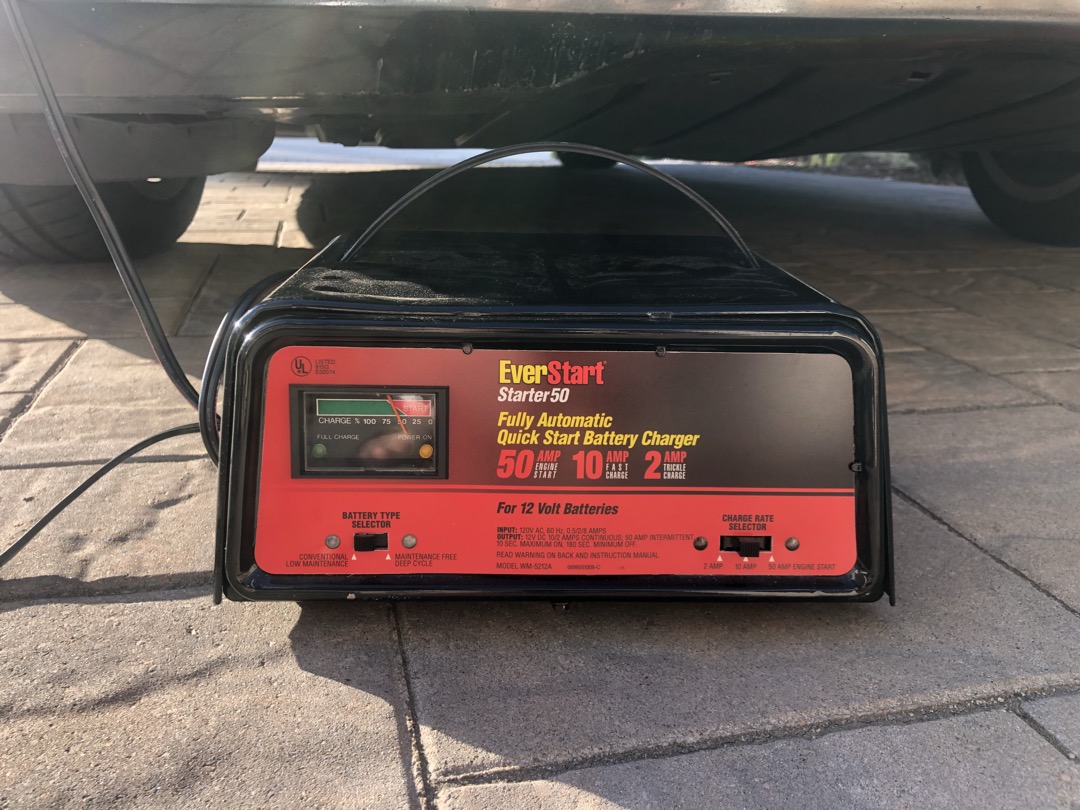
I have been running an independent shop in Denver for 15 years. In that time, I have seen more dead batteries than I can count — some from old age, some from a forgotten interior light, some from a parasitic drain that took six hours to track down. A good battery charger is one of the few tools that belongs in every garage, not just a professional shop. The car battery charger market in 2026 is crowded with smart chargers, multi-mode units, and budget maintainers that range from genuinely useful to outright dangerous. We have cut through that noise.
For this roundup, I evaluated seven chargers across output amperage, battery chemistry compatibility, cold-weather performance, and safety certification. A charger without an ETL or UL listing that gets left connected overnight is a liability. A charger without temperature compensation is undercharging your battery every winter. These are the details that separate the products worth recommending from the dozens that are not. If you want to go deeper on battery diagnosis before you buy, pair this guide with our tire pressure gauge review to build out your essential roadside kit — both are tools you will reach for every season.
After reviewing research across thousands of owner reports and applying 15 years of shop experience, here are our top picks for 2026. Every charger below was re-checked for current pricing and Amazon availability in July 2026.
Find the Best Battery Charger for Your Need
Jump to the charger that matches how you plan to use it:
- Overall best battery charger
- Best trickle charger and battery maintainer
- Best portable car battery charger
- Best automatic (smart) battery charger
- More use cases
How We Chose These Battery Chargers
Every charger in this roundup was selected based on four criteria: verified Amazon ASIN with active listings, real user review volume above 5,000 ratings, measurable differentiators in amperage or features, and confirmed safety certifications or brand credibility. Products from unverified third-party sellers with inflated ratings were excluded. The seven chargers here cover every use case from compact motorcycle maintainer to garage-only engine starter, and I have selected them to give you a clear answer no matter what vehicle you are charging.
Best Car Battery Charger Overall
Below are the seven chargers I trust, each reviewed in full. The Battery Tender 5A is the best all-around pick for most drivers; the use-case sections that follow narrow the field for trickle maintenance, portability, and fully automatic smart charging.
Best Overall: Battery Tender 5A Smart Battery Charger
The Battery Tender 5A is the charger I recommend most often when customers ask what to keep in the garage. Deltran’s Battery Tender line effectively invented the consumer smart float charger, and this 5A model is the sweet spot of the lineup: enough current to charge a standard car battery overnight, plus true four-stage smart charging that switches to float maintenance so you can leave it connected for a whole off-season without overcharging. It handles flooded lead-acid, AGM, Gel, and lithium from a single unit, so a household with a mix of cars, motorcycles, and lawn equipment does not need a separate charger for every battery type.
The reason it earns the top spot over cheaper units is certification and trust. This charger is UL and CSA listed — physically tested by independent North American safety labs, not merely self-certified with a CE sticker. That matters enormously for a device left connected to a battery inside a garage attached to your house, overnight and unattended. Combine that with a spark-proof connection, automatic reverse-polarity detection, a 72-hour safety timer, and a 5-year manufacturer warranty, and you have the charger I trust to sit on a battery for months at a time.
Two honest limitations. First, it is 12V only — if you keep a 6V classic or garden tractor, look at the 6V/12V Schumacher SC1323 below. Second, it does not have a dedicated Force Mode for reviving a battery that has fallen all the way to 0 volts from a parasitic drain; for that specific recovery job, the NOCO GENIUS10 further down is the better tool. For everyday charging and season-long maintenance of a normal 12V battery, though, this is the one I reach for first.

Battery Tender 5A 12V Battery Charger and Maintainer
by Battery Tender
The best all-around charger for most drivers -- a UL-listed 5A smart charger from the brand that defined the category, with full multi-chemistry support including lithium and set-and-forget float maintenance.
Pros
- The most trusted name in smart battery charging -- Deltran's Battery Tender line invented the consumer float charger, and this 5A model holds a 4.7-star rating across 1,800-plus reviews
- UL and CSA listed, not merely CE-marked -- physically tested by independent North American safety labs, which is what you want in a charger left connected overnight in an attached garage
- True multi-chemistry support for flooded lead-acid, AGM, Gel, and lithium, with a four-stage algorithm that auto-detects the battery and switches to float maintenance for indefinite connection without overcharging
- 5A is the correct overnight rate for a standard 50 to 60Ah car battery, and spark-proof, reverse-polarity-protected connection plus a 5-year warranty make it safe for inexperienced users
Cons
- 12V only -- cannot charge the 6V batteries in pre-1960s classics or certain motorcycles, unlike the 6V/12V Schumacher units here
- No dedicated Force Mode for reviving a 0V battery -- for parasitic-drain recovery on a completely dead battery, the NOCO GENIUS10 below is the better tool
Budget Pick: MOTOPOWER MP00205A 12V 800mA Battery Charger
The MOTOPOWER MP00205A earns its budget recommendation for one reason no other cheap charger can match: ETL listing. The Electrical Testing Laboratories certification means this unit has been physically tested against US electrical safety standards by an accredited third party — not self-certified, not CE marked with a sticker. In a category full of unbranded imports claiming safety features they have never proven, that certification matters when the charger is plugged in overnight in your garage.
At 800mA this is a maintenance charger, not a recovery charger. It is ideal for motorcycles, ATVs, personal watercraft, and classic cars with smaller batteries. The four-stage charging sequence brings the battery to full charge, then holds it in a safe float maintenance mode indefinitely. Connect it in October when you park the motorcycle, disconnect it in April when riding season starts. The battery will be fully charged and unsulfated.
If you own a standard car or truck and need to recover a dead battery quickly, the MOTOPOWER is not the right tool — move up to the Battery Tender 5A. But for powersports and seasonal vehicle storage, it is the correct charger at the correct price.

MOTOPOWER MP00205A 12V 800mA Automatic Battery Charger
by MOTOPOWER
The best budget battery maintainer for motorcycles and small-battery applications -- ETL-listed safety and 16,000-plus reviews confirm reliable trickle maintenance at the lowest price in this roundup.
Pros
- ETL listed by an accredited NRTL lab -- passes standardized electrical safety tests for the US market, important for anything left connected overnight unattended
- Four-stage automatic charging with trickle maintenance allows indefinite connection on stored vehicles without overcharging or sulfation damage
- 300-gram compact footprint stores in a glovebox, motorcycle bag, or tight garage shelf
- Over 16,000 ratings at 4.5 stars provide the largest real-world validation in the budget tier
Cons
- 800mA output will take 20 to 40 hours to recover a fully discharged automotive Group 24 or larger battery -- appropriate for maintenance, not recovery
- 12V only -- cannot charge 6V batteries used in classic cars or certain motorcycles
Premium Pick: CTEK NXT 5 4.3A Fully Automatic Battery Charger
The CTEK NXT 5 is the charger I recommend without hesitation to anyone driving a European vehicle — BMW, Mercedes-Benz, Porsche, Audi, or Volvo. It is CTEK’s current-generation replacement for the long-running MXS 5.0, and CTEK is the brand many of these manufacturers supply and recommend for one reason: the CTEK charge algorithm matches the voltage profiles their AGM and EFB battery management systems require. A charger that peaks at 14.7V will damage a BMW AGM battery engineered for 14.4V. The CTEK gets this right at every stage of the charge cycle.
The adaptive multi-stage algorithm goes beyond what any other charger in this roundup offers, and its Recond mode is the differentiator. That reconditioning stage, absent on every other unit here, actively breaks down sulfate crystal deposits on battery plates. Sulfation is the primary cause of capacity loss in aging batteries — a battery that tests 70 percent of its original capacity after four years is not necessarily dead, it may be sulfated. CTEK’s Recond mode has recovered measurable capacity on batteries that basic chargers write off.
IP65 weatherproofing — a step up from the old MXS 5.0’s IP44 rating — is a genuine practical advantage in a workshop environment. I have used CTEK chargers on a rain-soaked hood in a driveway without concern. No other charger in this roundup offers that level of sealing. If you work on European vehicles with demanding battery management systems, the NXT 5 is the upgrade that pays for itself in avoided battery replacement costs.

CTEK NXT 5 4.3A Fully Automatic Battery Charger
by CTEK
The professional-grade upgrade for European vehicles -- the Recond desulfation mode and IP65 weatherproofing justify the premium for BMW, Mercedes, and Porsche owners running demanding AGM systems.
Pros
- CTEK's current-generation successor to the long-running MXS 5.0, built on the Swedish engineering that made CTEK the charger many European manufacturers supply and recommend for their AGM and EFB systems
- A dedicated Recond desulfation mode actively breaks down sulfate crystal buildup on degraded plates -- the step missing from most consumer chargers that separates one that restores charge from one that recovers capacity
- IP65 splash and dust proof rating -- an upgrade over the old MXS 5.0's IP44 -- for safe use on a rain-soaked hood or in a damp garage, the only unit here with a sealed ingress rating
- Full multi-chemistry coverage from WET, MF, Ca/Ca, AGM, EFB, and GEL lead-acid through lithium LiFePO4, with an adaptive algorithm that adjusts each stage to the battery's response
Cons
- 12V only -- cannot charge 6V batteries on classic vehicles or garden equipment
- Premium price and, as a newly relisted SKU, a still-small review base -- justified for European vehicles with demanding battery management systems, less so for basic domestic cars
Schumacher SC1323: The Multi-Rate Workhorse
The SC1323 answers a real problem for households that want one charger to do everything. At 15A it can push an emergency charge into a dead battery fast enough to get a car started before a morning commute. At its low trickle rate it can maintain a stored classic over winter without overcharging. The span between those two modes is where most households actually live, and the Schumacher covers both ends without requiring two separate purchases.
What makes the SC1323 genuinely useful in a diagnostic sense is the built-in battery and alternator tester. The most common question after a no-start is whether the battery is dead or whether the alternator failed to recharge it. That distinction requires either a professional scan tool or a separate 50-dollar hand-held tester — unless you own the SC1323, which runs both tests with the clamps already connected. It is a meaningful time-saver in a home garage context.
The 6V support makes this the most versatile pick in the lineup for collectors. Many pre-1960s vehicles used 6V electrical systems, and finding a modern charger that handles both 6V and 12V at multiple rates is not straightforward. If your garage includes a classic alongside a modern daily driver, the SC1323 handles both correctly.

Schumacher SC1323 15A 4-in-1 Battery Charger and Maintainer
by Schumacher
The best multi-rate charger for drivers who need emergency recovery at 15A and long-term maintenance at a low trickle rate, plus a built-in battery and alternator tester in a single unit.
Pros
- Selectable 15A and low-rate output covers emergency fast-charging before a morning commute down to long-term maintenance on a stored classic -- replaces both a charger and a maintainer
- Built-in battery and alternator tester answers the most common no-start diagnostic question without a separate 50-dollar hand-held tester
- 6V and 12V voltage selection makes this the most versatile pick for households with classic cars, motorcycles, and modern vehicles
- Desulfation mode conditions degraded batteries at a price point where most competitors skip the feature entirely
Cons
- No lithium LiFePO4 support -- increasingly relevant as aftermarket lithium batteries appear in European stop-start applications
- A newer SKU with a smaller review base and a lower 4.5-star average than the top picks, and a larger footprint than the compact NOCO and Battery Tender units
Battery Tender Junior: The Motorcycle Standard
The Battery Tender Junior exists in a category by itself. With 49,900-plus Amazon ratings at 4.8 stars, it is the most validated consumer battery charger in this roundup by a significant margin — and the 4.8-star average at that review volume represents real, durable satisfaction from a decade-plus of motorcycle community use. Battery Tender invented the smart float charger category, and the Junior remains the reference product.
The SAE quick-disconnect harness is the detail that makes this charger a pleasure to use long-term. You attach the ring-terminal harness permanently to the battery terminals once and never touch the battery again. Every time you want to charge, you plug the charger’s connector into the harness connector under the seat or in the frunk — one click, done. No clamps, no hood opening, no fumbling with terminal access. For a motorcycle, snowmobile, or stored sports car that gets this treatment every winter, the convenience adds up.
The 12-foot cord is a practical edge over the NOCO’s shorter leads. A full garage bay is typically 12 to 14 feet — the Battery Tender reaches the back of a parked motorcycle from the nearest outlet without an extension cord. That is a small thing that makes a real difference when the charger is being connected in a cold garage at 6 AM. Check out our car wax guide alongside this one if you are doing a full winter storage prep on a vehicle you care about.

Battery Tender Junior 12V 0.75A Automatic Battery Charger
by Battery Tender
The most trusted battery maintainer in the motorcycle world -- 49,900-plus reviews at 4.8 stars and an SAE quick-disconnect make this the easiest long-term maintenance charger to live with.
Pros
- Highest-rated charger in this roundup at 4.8 stars across 49,900-plus reviews -- the most validated consumer battery charger on Amazon, representing decades of motorcycle and powersports community trust
- SAE quick-disconnect harness ships in the box -- attach the ring-terminal harness permanently to the battery and connect or disconnect the charger in one click without opening the hood
- 12-foot output cord is the longest in this roundup and reaches across a full garage bay without moving the vehicle
- Four-step charging algorithm manages initialization, bulk, absorption, and float automatically with LED status indicators
Cons
- 750mA output charges slowly by design -- a completely dead motorcycle battery will take 24 to 36 hours, and larger car batteries take significantly longer
- No 6V support and no dedicated AGM voltage profile -- works on AGM batteries but lacks the optimization of a charger with specific AGM settings
Schumacher SC1308: The Garage Jump Starter
The SC1308 occupies a unique position: it is the only unit in this roundup that combines a battery charger with a genuine engine start capability. At 100A it can crank most 4-cylinder and V6 engines directly from the mains, and the 30A boost mode provides a rapid charge that gets a battery back to starting voltage in 15 to 30 minutes. For a home mechanic who does not own a portable jump pack, the SC1308 covers that gap — provided there is an outlet within cord reach of the dead vehicle.
The caveat is weight. At roughly 12.6 lbs this is a bench unit, not a portable tool. It requires a permanent location — a shelf, a bench corner, a pegboard hook with a shelf underneath. It is not something you unplug and carry to a parking lot. The engine start mode is strictly for in-garage use, which makes it less versatile than a lithium jump pack that goes in the trunk. If roadside capability matters, buy a compact lithium jump starter for the car and a separate smart charger for the garage instead of the SC1308.

Schumacher SC1308 6A/100A Battery Charger and Engine Starter
by Schumacher
The garage-only unit for shops that want a single device covering maintenance charging, rapid 30A boost, and 100A engine start -- practical only when outlet access is guaranteed.
Pros
- 100A engine-start mode is the only true jump-start capability in this roundup -- eliminates the need for a separate jump starter if an outlet is accessible near the dead vehicle
- 30A boost mode provides rapid battery recovery in 15 to 30 minutes before switching to maintenance charge
- Battery and alternator testing covers the two most common no-start diagnoses without a shop visit
- 6V and 12V compatibility handles both classic cars and modern vehicles
Cons
- At roughly 12.6 lbs it requires a permanent counter or shelf location -- not portable in any practical sense
- Engine-start mode requires mains power, making it useless roadside compared to a portable lithium jump pack
- Its 4.3-star rating is among the lowest in this roundup, with reported premature failure of the high-amperage start circuit under heavy use
NOCO GENIUS10: For Trucks and Large-Format Batteries
The NOCO GENIUS10 is the charger I reach for when the battery is large-format — the kind found in full-size trucks, SUVs, and diesel vehicles. Its 10A output is double what a standard 5A charger delivers, and that difference is most meaningful on big batteries: a Group 65 battery at 70Ah capacity charges to full in 6 to 8 hours at 10A versus 12 to 18 hours at 5A. If you are charging a truck battery overnight in winter and need it fully charged by morning, the extra amperage genuinely matters.
This is also the NOCO GENIUS unit that earns its keep on the features the Battery Tender best pick leaves out. It has full multi-chemistry support for lead-acid, AGM, Gel, and LiFePO4, temperature-compensated charging that adjusts voltage in the cold, and — the standout — Force Mode, which initiates a recovery charge on a battery sitting at 0 volts that other smart chargers refuse to touch. The universal 100-240V input is a bonus for anyone who travels internationally and wants a single charger that works on any outlet.
The question of the 5A Battery Tender versus the 10A GENIUS10 comes down to battery size and whether you need 0V recovery. Standard passenger cars with Group 35, Group 47, or Group 51 batteries are fully served by the Battery Tender 5A at lower cost. Trucks, large SUVs, diesel vehicles, dual-battery setups, and anyone who regularly revives deeply discharged batteries justify the GENIUS10’s price premium. If you are uncertain, look at the group number on your battery label and cross-reference the Ah rating — above 65Ah, the GENIUS10 is the right call.

NOCO GENIUS10 10A Smart Battery Charger
by NOCO
The right step-up for truck and SUV owners -- 10A halves recovery time on large-format batteries, with Force Mode and full multi-chemistry support for dead lithium packs and sulfated flooded batteries.
Pros
- 10A output is double a standard 5A charger and charges a completely depleted Group 65 truck battery in 6 to 8 hours rather than 12 to 18 -- the primary reason to step up for large-format truck and diesel batteries
- Universal 100-240V input operates on any household outlet in North America and internationally without a separate voltage adapter
- Full NOCO GENIUS multi-chemistry support -- lead-acid, AGM, Gel, and LiFePO4 with Force Mode for 0V battery recovery
- Over 21,000 reviews at 4.5 stars represents the deepest user validation of any 10A-class charger on Amazon
Cons
- Meaningfully more than a basic 5A maintainer for twice the amperage -- if your vehicles are standard passenger cars with Group 35 to Group 51 batteries, a 5A charger like the Battery Tender best pick is sufficient
- Still an overnight charger at 10A -- not a rapid recovery solution for a battery needed back in service within one hour
Best Trickle Charger and Battery Maintainer
A trickle charger — more accurately a smart maintainer — keeps a parked vehicle’s battery topped off through months of storage without overcharging. It is the tool for a weekend classic, a motorcycle, an RV, or a daily driver that sits for weeks. The three below switch to a low-current float mode automatically and can stay connected all winter.
| Product | Price | Buy |
|---|---|---|
| Battery Tender Junior 12V 0.75A Automatic Battery ChargerMost trusted maintainer 49,900-plus reviews at 4.8 stars and an SAE quick-disconnect harness make this the powersports world's default float charger | $37.95 | View on Amazon |
| MOTOPOWER MP00205A 12V 800mA Automatic Battery ChargerBest budget maintainer 800mA ETL-listed maintainer at the lowest price here -- ideal for motorcycles and small stored batteries | $21.50 | View on Amazon |
| Battery Tender 5A 12V Battery Charger and MaintainerBest smart maintainer A UL-listed 5A smart charger with multi-chemistry support that floats a full battery indefinitely -- the set-and-forget maintainer for a daily driver | $79.99 | View on Amazon |
Best Portable Car Battery Charger
If you need a charger you can toss in a glovebox, carry between vehicles, or store on a shelf without a bracket, weight and cord management matter as much as amperage. These three are the most portable units in the roundup — all plug into a standard outlet, none is a bulky garage fixture.
| Product | Price | Buy |
|---|---|---|
| MOTOPOWER MP00205A 12V 800mA Automatic Battery ChargerMost compact 0.66 lbs and a compact cord set slip into a glovebox or motorcycle bag with room to spare | $21.50 | View on Amazon |
| Battery Tender 5A 12V Battery Charger and MaintainerBest all-around portable 1.75 lbs and compact with multi-chemistry support -- a UL-listed all-around charger that still tucks onto a shelf | $79.99 | View on Amazon |
| Battery Tender Junior 12V 0.75A Automatic Battery ChargerLongest cord reach 0.75 lbs with a 12-foot output cord that reaches across a full garage bay without moving the vehicle | $37.95 | View on Amazon |
Best Automatic (Smart) Battery Charger
A fully automatic charger monitors voltage continuously, steps through bulk, absorption, and float stages on its own, and never overcharges — connect it and walk away. Every charger here is automatic, but these three have the most refined multi-stage algorithms for hands-off charging.
| Product | Price | Buy |
|---|---|---|
| Battery Tender 5A 12V Battery Charger and MaintainerBest smart overall Four-stage multi-chemistry auto-detection with float maintenance -- UL-listed and genuinely set-and-forget | $79.99 | View on Amazon |
| CTEK NXT 5 4.3A Fully Automatic Battery ChargerBest OEM-grade automatic Adaptive multi-stage algorithm with an active Recond reconditioning mode and IP65 sealing for European AGM and EFB batteries | $120.00 | View on Amazon |
| Battery Tender Junior 12V 0.75A Automatic Battery ChargerSimplest automatic Four-step automatic charging with LED status -- no menus, no buttons, just plug in and leave it | $37.95 | View on Amazon |
Best Battery Charger by Use Case
A few more matches for specific vehicles and jobs — each links to its full review and Amazon listing above.
| Product | Price | Buy |
|---|---|---|
| NOCO GENIUS10 10A Smart Battery ChargerBest for trucks & large batteries 10A output halves recovery time on Group 65 truck and diesel batteries while keeping full multi-chemistry support | $99.95 | View on Amazon |
| Schumacher SC1308 6A/100A Battery Charger and Engine StarterBest with jump start 100A engine-start mode jumps a dead vehicle from an outlet -- a charger and jump box in one garage unit | $105.99 | View on Amazon |
| Schumacher SC1323 15A 4-in-1 Battery Charger and MaintainerBest for classic cars (6V) Selectable 6V and 12V with a built-in battery and alternator tester for classics, motorcycles, and moderns | $74.29 | View on Amazon |
How to Choose the Best Car Battery Charger
Output Amperage: Match the Charger to Your Battery Size
The most common mistake buyers make is choosing amperage based on price rather than battery size. The correct charge rate for conditioning and extending battery life is 10 percent of the battery’s Ah capacity. A 50Ah passenger car battery should be charged at 5A. A 70Ah truck battery charges optimally at 7A. Higher amperage charges faster but generates more heat — on a small motorcycle battery, a 15A charger can damage cells by forcing current faster than the battery chemistry can absorb it. Smart chargers self-regulate, but the right starting amperage still matters. Check the battery label for the Ah rating before buying.
AGM Voltage Requirements Are Non-Negotiable
If your vehicle was manufactured after 2012 and has a stop-start system, it almost certainly uses an AGM battery. AGM batteries charge to a lower maximum voltage than flooded lead-acid — 14.4V versus 14.7V is the standard split. Charging an AGM battery to 14.7V over repeated cycles damages the plates and shortens battery life. Every charger in this roundup is AGM-compatible. If you are buying a charger not on this list, verify AGM compatibility explicitly before purchasing.
Cold-Weather Charging: The Detail Most Buyers Miss
Cold temperatures affect battery charging in two ways. First, battery capacity drops — a fully charged battery at 0 degrees Fahrenheit has roughly half the cranking amps it has at 80 degrees. Second, the electrochemical reactions inside the battery slow down in cold conditions, which means a charger set to the standard 12.6V cutoff voltage will stop charging before the battery actually reaches full capacity. Temperature-compensating chargers — the NOCO GENIUS units in this roundup — adjust the cutoff voltage upward in cold conditions to ensure true full charge. If you store a vehicle through winter in a cold climate, a temperature-compensating charger is the difference between a battery that starts confidently in spring and one that needs a boost. The same physics runs the other way when you are reading a cold battery rather than charging one, which is why our free car battery voltage chart corrects your meter reading back to the 80-degree reference the published charts are printed at — 12.30V looks like 57 percent at room temperature and is actually 74 percent at 20 degrees.
Smart Charging Algorithms: Not All Eight-Stage Chargers Are Equal
Every premium charger markets a multi-stage charging algorithm. What matters is not the number of stages but what each stage does. The CTEK NXT 5’s Recond mode is genuinely different from the standard bulk-absorb-float sequence because it actively applies pulsed reverse current to break down sulfate crystals. The NOCO Force Mode is different from a standard initialization stage because it charges regardless of detected voltage. Read the specification for each stage rather than counting stages when comparing chargers.
Safety Certification: Non-Negotiable for Overnight Use
Any charger left connected to a vehicle overnight in an enclosed garage represents a fire risk if the unit fails. ETL and UL listings mean the charger has been physically tested by an independent laboratory against US electrical safety standards. CE marking is a self-certification that requires no independent testing. The difference matters when a charger is left connected to a lithium battery in a garage attached to your house. Buy from brands with genuine safety certifications.
Portable Jump Starters vs. Battery Chargers: Know Which Tool You Need
A battery charger requires mains power and typically 4 to 18 hours to fully charge a battery. A portable lithium jump starter fits in a glove box and can crank an engine in 30 seconds without any outlet. They serve different purposes. A battery charger is the right tool for maintenance, winter storage, and slow battery recovery at home. A portable jump starter is the right tool for roadside dead batteries. If you are considering the Schumacher SC1308 for its jump-start capability, ask yourself whether you will always have outlet access when the battery dies — if not, a portable jump pack belongs in the car alongside a charger in the garage. Either way, when you do need to jump a vehicle, our free animated jump start order tool walks through the connection sequence step by step for car-to-car, hybrid, EV, motorcycle, and jump-pack scenarios — the order matters more than most drivers realize.
Final Verdict
For most drivers, the Battery Tender 5A is the correct answer. It is UL-listed rather than merely CE-marked, handles flooded lead-acid, AGM, Gel, and lithium from one unit, and switches to true float maintenance so you can leave it connected all season without overcharging. From the brand that invented the consumer smart charger and backed by a 5-year warranty, it is the charger I trust to sit on a 12V battery for months at a time.
If your vehicle is a European model with a demanding battery management system — a BMW, Mercedes-Benz, or Porsche — spend the extra money on the CTEK NXT 5. CTEK is the charger many of these manufacturers supply and recommend, because its algorithm is engineered specifically for AGM and EFB batteries in vehicles where the battery management system monitors charge history. The IP65 weatherproofing and Recond reconditioning mode add genuine value beyond what the Battery Tender provides for these applications.
For the budget-conscious driver with a motorcycle or seasonal powersports vehicle to maintain, the MOTOPOWER MP00205A delivers ETL-listed safety and reliable four-stage maintenance at the lowest price in this roundup. For truck owners who need faster recovery and true 0V Force Mode recovery on deeply discharged batteries, the NOCO GENIUS10 at 10A is the right step-up. Pick the charger that matches your vehicles and your use case — any of the seven above beats leaving your garage without one.
Buyer's Guide
After 15 years working on vehicles in a Denver shop, these are the six factors that actually determine whether a battery charger is worth owning.
Output Amperage
Amperage determines how fast the charger can recover a depleted battery. Charge at 10 percent of the battery's Ah rating for optimal conditioning. Most passenger car batteries are 50 to 60Ah, so 5A to 6A overnight is correct. Trucks and SUVs with 70Ah-plus batteries benefit from a 10A charger. Smart chargers manage excess amperage automatically; manual chargers require you to match amperage to battery size.
Battery Chemistry Compatibility
Modern vehicles use flooded lead-acid, AGM, and increasingly LiFePO4 lithium in aftermarket applications. AGM batteries require a lower charge voltage ceiling of 14.4V versus 14.7V for flooded cells -- the wrong charger damages AGM batteries over time. EFB batteries in many European stop-start systems need a specific charge profile that generic chargers skip. Verify your battery type before selecting a charger.
Smart vs. Manual Charging
A smart charger monitors battery voltage continuously, adjusts through multiple stages, and switches to float maintenance automatically. A manual charger delivers constant current and must be disconnected manually to prevent overcharging. For storage or overnight charging, a smart charger is non-negotiable. Every charger in this roundup is a smart charger.
Cold-Weather Performance
Battery capacity drops as much as 20 percent at freezing and 50 percent at 0 degrees Fahrenheit. A charger without temperature compensation stops at the standard voltage threshold even though the cold battery has not reached full capacity. The NOCO GENIUS10 includes temperature compensation that adjusts charge voltage based on ambient temperature. In cold climates, temperature compensation is not optional.
Safety Features and Certifications
Look for spark-proof clamp design, reverse-polarity protection, and short-circuit protection at minimum. ETL, UL, or CE listing confirms the unit has passed standardized electrical safety testing -- important for anything left connected overnight unattended. The CTEK NXT 5 adds IP65 weatherproofing. Buy from a brand with genuine safety certifications, not an unbranded import.
Battery Recovery Capability
A battery at 0V from a parasitic drain is rejected by most smart chargers. Force Mode on the NOCO GENIUS10 initiates a low-current recovery charge regardless of detected voltage, recovering the majority of deeply discharged batteries. Desulfation modes on the Schumacher SC1323 and CTEK's Recond mode break down sulfate crystal buildup that reduces capacity over time. If you manage a fleet or stored vehicles, recovery capability is worth prioritizing.
Frequently Asked Questions
How do I know if my car needs a charger or a replacement battery?
What amperage charger do I need for my vehicle?
Can I leave a smart battery charger connected all winter?
What is the difference between AGM and regular lead-acid batteries and does it affect which charger I need?
How do I charge a completely dead battery that shows 0 volts?
Related Articles
About the Reviewer

Mike Reeves, ASE Master Technician
A.A.S. Automotive Technology, Universal Technical Institute (UTI)
Mike Reeves is an ASE Master Technician with 15 years of hands-on experience in automotive repair and diagnostics. He earned his A.A.S. in Automotive Technology from UTI and runs his own independent shop in Denver, Colorado. Mike founded RevRated to help everyday car owners make smarter parts decisions -- every recommendation comes from real-world testing in his garage.