Synthetic vs Conventional Oil: An ASE Mechanic's Honest Breakdown (2026)
ASE Master Tech Mike Reeves explains the real differences between synthetic and conventional motor oil — with technical specs, cost math, a vehicle-type decision matrix, and myth-busting from 20+ years in the shop.
Updated
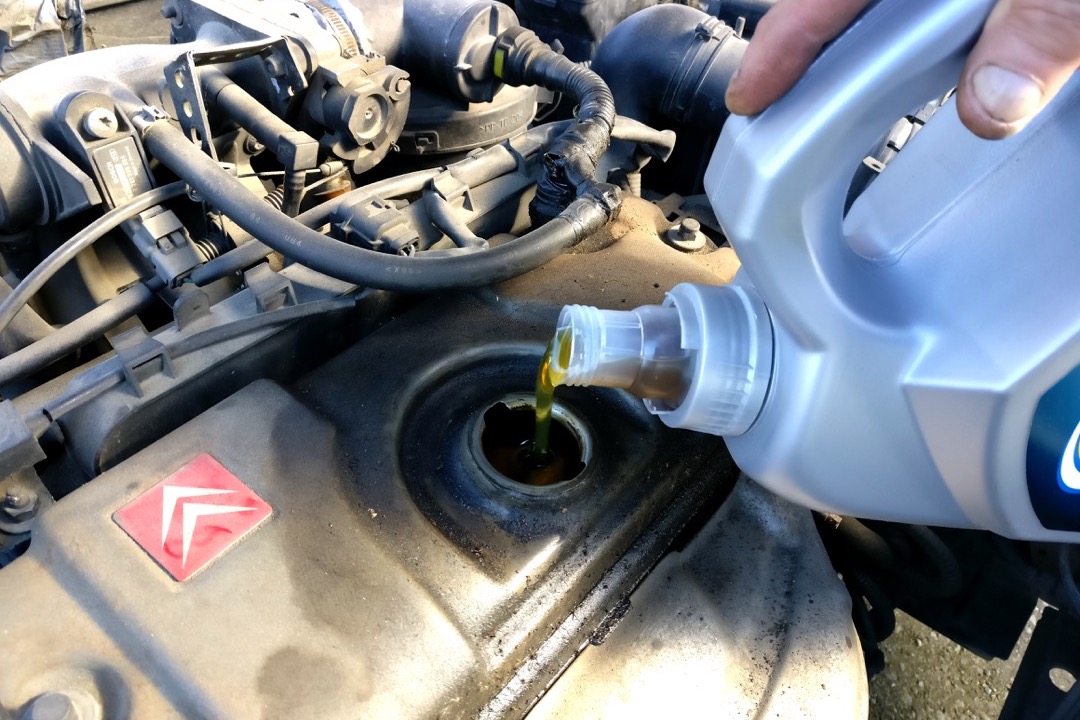
I have been changing oil in professional shop environments for over two decades. In that time, I have pulled drain plugs on everything from fleet work trucks with 300,000 miles to weekend sports cars that see 2,000 miles a year. I have seen engines that ran synthetic oil from day one still show clean, honey-colored oil at 8,000 miles — and I have seen engines running conventional oil on extended intervals come in with sludge so thick it looked like roofing tar.
The synthetic vs conventional oil debate has been going on for decades, and most of what you read online is either oversimplified or written by someone selling you oil. This guide is going to give you the straight answer based on what I actually see on the lift, the chemistry behind why these oils perform differently, and the real cost math that determines which one actually saves you money. If you are also shopping for a specific synthetic oil, our best synthetic motor oil roundup covers the top formulations we trust in the shop, and our Mobil 1 vs Castrol GTX comparison breaks down the two most popular brands head to head.
What Is Conventional Oil?
Conventional motor oil starts as crude petroleum extracted from the ground. The refining process distills and processes the crude oil to remove impurities and produce base oil stocks, which are then blended with additive packages — detergents, dispersants, anti-wear agents, viscosity index improvers, and antioxidants — to create finished motor oil.
The key characteristic of conventional oil is its molecular structure. Because it originates from naturally occurring hydrocarbons, the molecules in conventional oil vary in size and shape. You get a distribution of molecular weights — some shorter chains, some longer, some branched, some straight. This molecular inconsistency is what limits conventional oil’s performance envelope. The shorter, lighter molecules are more volatile and evaporate at lower temperatures, contributing to oil consumption. The longer, heavier molecules are more prone to forming deposits and sludge under sustained heat. The mixture works, but it represents a compromise.
The API classifies conventional oil base stocks as Group I (solvent-refined) and Group II (hydroprocessed). Group II is the standard for modern conventional oils — cleaner and more consistent than Group I, but still fundamentally limited by its petroleum origin.
What Is Synthetic Oil?
Synthetic motor oil is engineered from the molecular level up. The base stocks are either polyalphaolefin (PAO) compounds — Group IV in the API classification — or severely hydrocracked petroleum stocks that have been processed to the point where their molecular structure is essentially uniform (Group III). Some premium formulations use ester-based compounds (Group V) for specific performance properties.
The critical difference is molecular uniformity. Where conventional oil contains molecules of varying sizes and shapes, synthetic base stocks consist of molecules that are nearly identical in structure. Every molecule is approximately the same length, same weight, same shape. This uniformity is what drives every performance advantage synthetic oil has over conventional.
Uniform molecules mean consistent viscosity behavior across a wider temperature range. They mean lower volatility because there are no light fractions to evaporate early. They mean better resistance to oxidation and thermal breakdown because there are no weak molecular links for heat and oxygen to attack. They mean less deposit formation because the molecules break down into predictable, less harmful byproducts rather than the complex sludge precursors that form from irregular conventional molecules.
Synthetic Blend: The Middle Ground
Synthetic blend oil — sometimes called semi-synthetic — is exactly what it sounds like: a mixture of synthetic and conventional base stocks. The ratio varies by manufacturer and product line but typically ranges from 20 to 40 percent synthetic content, with the balance being conventional Group II base oil.
Synthetic blends offer a meaningful step up from straight conventional oil in temperature stability, wear protection, and change interval length. They do not match full synthetic performance, but they cost less per quart and represent a reasonable compromise for drivers who want better protection than conventional without the full synthetic price. Many quick-lube shops push synthetic blend as an upsell from conventional — and in this case, the upsell is actually justified for most vehicles.
The Chemistry: Why Synthetic Performs Better
Let me explain what actually happens inside your engine at a molecular level, because this is where the marketing claims either hold up or fall apart.
Temperature Stability
Your engine oil operates across an enormous temperature range. On a cold Minnesota morning, the oil in your pan might be minus 20 degrees Fahrenheit. At full operating temperature under load, the oil film on your piston rings and turbocharger bearings can exceed 300 degrees. The oil needs to flow freely at the cold extreme and maintain a protective film at the hot extreme.
Conventional oil handles this range through viscosity index improvers — polymer additives that expand when heated to counteract the oil’s natural tendency to thin out. These polymers work, but they are mechanically fragile. The shearing forces inside your engine — particularly in the valve train and between gear teeth — physically break these polymer chains over time, causing the oil to lose its high-temperature viscosity permanently. This is called shear degradation, and it is why conventional oil’s protection diminishes well before its additive package is depleted.
Synthetic oil has a naturally higher viscosity index due to its uniform molecular structure. It still uses viscosity index improvers, but it relies on them less. The base stock itself maintains viscosity across a wider range, which means synthetic oil’s protective properties degrade more slowly over time and mileage.
Oxidation and Sludge Formation
Oxidation is the chemical reaction between oil molecules and oxygen at elevated temperatures. It is the primary mechanism by which motor oil degrades. Oxidation produces acids, varnish, and eventually sludge — the thick, dark deposits that restrict oil passages and starve engine components of lubrication.
Conventional oil’s irregular molecular structure includes weak points — branched chains and unsaturated bonds — that are particularly susceptible to oxidative attack. Once oxidation starts at these weak points, it propagates through the oil in a chain reaction. This is why conventional oil darkens and thickens progressively over its service life.
Synthetic oil’s uniform molecules have fewer vulnerable bonds for oxygen to attack. The oxidation rate is inherently slower, and the antioxidant additives in the oil last longer because they are not being consumed as rapidly. This is the fundamental reason synthetic oil supports longer change intervals — it simply degrades more slowly under the same conditions.
Cold Start Protection
Here is a fact that every mechanic knows: the majority of engine wear occurs during cold starts. When your engine has been sitting overnight, the oil has drained back to the pan. When you turn the key, metal contacts metal with minimal lubrication until oil pressure builds and the oil reaches every bearing surface, cam lobe, and cylinder wall. That window — measured in seconds — is when the most damage occurs.
Conventional oil thickens significantly at low temperatures. A 5W-30 conventional oil at minus 20 degrees Fahrenheit has the consistency of cold honey. It takes longer to flow through oil passages, longer to build pressure, and longer to reach critical components. Every additional second of dry contact at startup is measurable wear.
Synthetic oil at the same temperature flows like warm syrup. The pour point — the temperature at which oil ceases to flow — for a typical synthetic 5W-30 is around minus 50 to minus 60 degrees Fahrenheit, compared to minus 25 to minus 35 degrees for conventional. The practical result is faster oil pressure buildup and faster delivery to critical components on every cold start.
If you live anywhere that sees temperatures below freezing, this single property makes synthetic oil worth the premium. Our best engine air filters guide addresses the other side of cold-weather engine protection — ensuring your intake system does not restrict airflow during cold starts when the engine is already working harder.
Head-to-Head Specification Comparison
| Property | Conventional (Group II) | Synthetic (Group IV PAO) |
|---|---|---|
| Pour point | -25 to -35 degrees F | -50 to -60 degrees F |
| Flash point | 390 to 430 degrees F | 440 to 475 degrees F |
| Viscosity index | 95-110 | 130-150+ |
| NOACK volatility | 18-25 percent | 6-14 percent |
| Oxidation stability | Moderate | High |
| Shear stability | Moderate (degrades over time) | High (maintains grade longer) |
| Change interval | 3,000-5,000 miles | 7,500-10,000+ miles |
| Cold cranking viscosity (-25C) | Higher (sluggish flow) | Lower (faster flow) |
| Typical cost per quart | 4-8 dollars | 8-14 dollars |
The cold-cranking row is the one that decides which winter grades a base stock can even reach: SAE J300 caps a 0W oil at 6,200 cP on that test at -35C, and conventional Group II stock rarely gets there. Our free engine oil viscosity chart has the full J300 table and plots each grade against your own coldest morning.
A few numbers worth highlighting. NOACK volatility measures what percentage of the oil evaporates at high temperature — lower is better. Conventional oil loses 18 to 25 percent of its volume to evaporation under the NOACK test, while synthetic loses only 6 to 14 percent. This directly translates to oil consumption between changes. Flash point — the temperature at which oil vapor can ignite — is meaningfully higher for synthetic, which matters in turbocharged applications where oil contacts extremely hot surfaces.
The Real Cost Math
This is the calculation that changes minds. Let me run the numbers for a typical scenario.
Assumptions: 15,000 miles per year, 5-year ownership
Conventional oil (changed every 4,000 miles):
- Changes per year: approximately 4
- Changes over 5 years: approximately 19
- DIY cost per change (5 quarts plus filter): roughly 28 to 35 dollars
- 5-year DIY total: roughly 530 to 665 dollars
- Shop cost per change: roughly 40 to 65 dollars
- 5-year shop total: roughly 760 to 1,235 dollars
Synthetic oil (changed every 8,000 miles):
- Changes per year: approximately 2
- Changes over 5 years: approximately 9-10
- DIY cost per change (5 quarts plus filter): roughly 45 to 60 dollars
- 5-year DIY total: roughly 405 to 600 dollars
- Shop cost per change: roughly 65 to 100 dollars
- 5-year shop total: roughly 585 to 1,000 dollars
The DIY numbers tell the story clearly: synthetic oil costs roughly the same or less over five years despite the higher per-quart price, because you are doing fewer than half the number of changes. At shop prices, the savings are even more pronounced because you are paying for fewer labor charges. And this calculation does not account for the reduced engine wear that synthetic provides, which translates to longer engine life and higher resale value — both of which are real but harder to quantify in dollars.
The only scenario where conventional oil is genuinely cheaper is if you are doing very low annual mileage — under 5,000 miles per year — and changing based on time rather than mileage. At that usage level, you might change oil once a year regardless of type, and the per-change cost difference matters more than the interval advantage.
Your Oil Filter Matters as Much as Your Oil
This is the section that no other synthetic vs conventional guide includes, and it is one of the most important things I can tell you as a mechanic.
Premium synthetic oil flowing through a cheap cellulose oil filter is like filtering your drinking water through a paper towel. Standard cellulose filters capture particles down to roughly 25 to 40 microns. Synthetic media filters capture particles down to 10 to 20 microns. Full synthetic media filters from premium manufacturers capture particles below 10 microns with high efficiency.
Engine wear particles — the metal fragments that abrade bearing surfaces, cylinder walls, and cam lobes — are often in the 10 to 25 micron range. A cellulose filter lets these pass through freely. They circulate with the oil, acting as an abrasive compound that accelerates the very wear you are trying to prevent.
If you are investing in synthetic oil for its superior protection properties, pair it with a quality synthetic media filter. The filter upgrade costs a few dollars more than a basic filter and makes a measurable difference in the cleanliness of your oil over its service life. Our best oil filters guide covers the top-performing filters by media type, filtration efficiency, and compatibility with extended synthetic oil change intervals.
6 Myths About Synthetic Oil — Debunked
Myth 1: Synthetic Oil Causes Leaks
False. This myth originated in the 1970s with early ester-based synthetic formulations that could affect certain rubber seal materials. Modern PAO and Group III synthetic oils are fully compatible with all seal materials used in engines manufactured after the mid-1990s. What actually happens: synthetic oil’s superior detergent properties can clean away sludge deposits that were masking pre-existing seal seepage. The synthetic oil did not cause the leak — it revealed one that conventional oil’s sludge was hiding.
Myth 2: You Cannot Switch Back to Conventional After Using Synthetic
False. You can switch between synthetic and conventional oil freely, in either direction, at any time. The oils are fully compatible and miscible. There is no chemical reaction, no seal damage, and no engine damage from switching. The only consequence of switching from synthetic to conventional is that you lose the performance advantages of synthetic and should return to conventional oil change intervals.
Myth 3: Synthetic Oil Is Overkill for Older Cars
Misleading. Synthetic oil benefits engines of any age. Older engines with higher mileage actually benefit from synthetic oil’s superior detergent properties, which help clean accumulated deposits, and from seal conditioners in modern synthetic formulations that help maintain aging gasket flexibility. The only consideration is that a very high-mileage engine with marginal seals might show seepage when synthetic cleans away masking deposits — but that is a seal problem, not an oil problem.
Myth 4: The 3,000-Mile Oil Change Rule Still Applies
Outdated. The 3,000-mile interval was appropriate for the Group I conventional oils and engine tolerances of the 1970s and 1980s. Modern Group II conventional oils in modern engines support 5,000-mile intervals under normal conditions. Synthetic oils support 7,500 to 10,000 miles or more. Following the 3,000-mile rule with modern synthetic oil wastes money and creates unnecessary waste oil. Follow your vehicle’s oil life monitor or the interval specified in your owner’s manual for your driving conditions.
Myth 5: All Synthetic Oils Are the Same
False. There is a significant performance range within “synthetic” oil. Some products marketed as full synthetic use Group III hydrocracked base stocks, which are technically conventional petroleum that has been severely processed. Others use true Group IV PAO base stocks or Group V ester compounds. The additive packages also vary significantly between brands and product lines. A premium synthetic from a major manufacturer outperforms a budget synthetic on every metric. Our best synthetic motor oil guide tests and ranks the top formulations so you can see where the real performance differences are.
Myth 6: Synthetic Oil Does Not Need to Be Changed
False. Synthetic oil lasts longer than conventional, but it still degrades. The additive package — detergents, dispersants, anti-wear agents, antioxidants — is consumed over time and mileage regardless of base stock quality. Contaminants from combustion byproducts, fuel dilution, and moisture accumulation still enter the oil. Extended-life synthetic oils push the envelope further, but every oil has a finite service life. Skipping oil changes because you are running synthetic is a recipe for the same sludge and wear problems you were trying to avoid.
Modern Engine Technologies That Demand Synthetic
If your vehicle was manufactured in the last 15 years, there is a good chance it has at least one of these technologies — and each one has specific reasons for needing synthetic oil.
Turbochargers
A turbocharger shaft spins at speeds up to 200,000 RPM. The bearing surfaces are lubricated by engine oil that passes through oil feed lines to the turbo housing. At those rotational speeds, the oil film between the shaft and bearings is measured in microns. The oil temperature at the turbo bearing can exceed 400 degrees Fahrenheit — and when you shut the engine off after hard driving, the residual heat in the turbo housing continues to cook the oil that is sitting in the bearing cavity (called heat soak).
Conventional oil breaks down rapidly at turbocharger temperatures. The volatile fractions evaporate, the remaining oil oxidizes and forms deposits on the bearing surfaces, and over time those deposits restrict oil flow to the turbo — creating a feedback loop of higher temperatures and more deposit formation. This is the primary cause of premature turbocharger failure in engines that run conventional oil.
Synthetic oil resists this degradation. Its higher flash point means less evaporative loss at turbo temperatures, its oxidation resistance prevents deposit formation, and its thermal stability maintains protective film strength even during heat soak events.
Direct Injection
Direct injection systems spray fuel directly into the combustion chamber at extremely high pressures — up to 35,000 PSI in modern gasoline direct injection systems. The high-pressure fuel pump and injectors are lubricated by engine oil. The precision tolerances and extreme pressures involved demand oil that maintains consistent viscosity and film strength under mechanical stress.
Additionally, direct injection engines are prone to low-speed pre-ignition (LSPI) — an abnormal combustion event that can cause catastrophic engine damage. Research has shown that certain oil formulations — specifically those with high calcium content in the detergent package — can contribute to LSPI. Modern synthetic oils formulated for GDI engines use modified additive packages designed to minimize LSPI risk. This is a formulation-specific concern that makes choosing the right synthetic oil for your direct-injection engine important.
Variable Valve Timing
Variable valve timing systems use oil pressure to actuate phaser mechanisms that adjust camshaft timing. These systems depend on consistent oil viscosity and clean oil flow to operate correctly. Sludge or varnish deposits in the oil passages feeding the phasers can cause timing errors, rough idle, reduced performance, and diagnostic trouble codes.
Conventional oil’s higher sludge formation tendency makes VVT systems more vulnerable to phaser problems over time. Synthetic oil’s resistance to deposit formation keeps the oil passages clean and the phasers operating as designed. If your engine has a VVT system — and nearly all modern engines do — synthetic oil is the safer choice for long-term reliability.
What Happens When You Use the Wrong Oil
I want to be direct about this because I see the consequences regularly.
Using conventional oil in an engine that requires synthetic: The engine will run. It will not immediately fail. But over time, the oil will degrade faster than the engine was designed to tolerate, deposits will accumulate in passages designed to stay clean, and components like turbochargers, VVT phasers, and high-pressure fuel pumps will experience accelerated wear. The damage is cumulative and often does not manifest until a component fails — at which point the repair cost dwarfs years of oil savings.
Using the wrong viscosity grade: Your engine was designed around a specific oil viscosity. Using a heavier oil than specified — a 10W-40 instead of a 0W-20, for example — increases parasitic drag, reduces fuel economy, and can starve components designed for lower-viscosity oil flow. Using a lighter oil than specified can reduce film strength at critical bearing surfaces. Always use the viscosity grade specified in your owner’s manual.
Extending change intervals beyond the oil’s capability: This applies to both types. Running conventional oil to 10,000 miles or synthetic oil to 20,000 miles without evidence that the oil is still protecting your engine is a gamble with expensive consequences. If you want to push intervals, invest in used oil analysis — send a sample to a lab like Blackstone Laboratories and get actual data on your oil’s remaining life under your specific driving conditions.
Keeping your engine healthy is about more than just oil. A restricted engine air filter forces the engine to work harder and can increase crankcase blowby, contaminating your oil faster. A failing cooling system lets engine temperatures climb, accelerating oil degradation — our coolant and antifreeze guide covers the other fluid that keeps your engine alive. And a clogged fuel system means incomplete combustion, which means more fuel contamination in your oil — fuel injector cleaners address that side of the equation.
The Verdict: Which Should You Use?
| Your Situation | Recommendation |
|---|---|
| Vehicle manufactured after 2010 | Synthetic oil |
| Turbocharged engine | Synthetic oil (non-negotiable) |
| Direct injection engine | Synthetic oil |
| Variable valve timing system | Synthetic oil |
| Owner’s manual specifies synthetic | Synthetic oil |
| Towing, hauling, or heavy loads | Synthetic oil |
| Extreme hot or cold climate | Synthetic oil |
| Frequent short trips (under 10 miles) | Synthetic oil |
| Pre-2000 naturally aspirated engine, low miles/year | Conventional oil is acceptable |
| Budget is the absolute primary concern | Synthetic blend |
| High mileage (75,000+ miles) | High-mileage synthetic formulation |
| Any vehicle you plan to keep 5+ years | Synthetic oil |
Here is the straight answer: for the vast majority of drivers in 2026, synthetic oil is the correct choice. The cost difference over a vehicle’s ownership period is negligible to nonexistent when you account for extended change intervals. The protection difference is significant and well-documented. And the increasing prevalence of turbocharged, direct-injection, VVT-equipped engines means that most modern vehicles genuinely need synthetic oil’s thermal stability and deposit resistance to operate as designed.
Conventional oil is not a bad product. It is a proven lubricant that has protected engines for a century. But engine technology has evolved past what conventional oil was designed to handle. Using conventional oil in a modern engine is like using bias-ply tires on a modern car — it works, but you are leaving performance and protection on the table that the vehicle was engineered to exploit.
If you are ready to choose a specific synthetic oil, our best synthetic motor oil guide ranks the top formulations by wear protection, thermal stability, and value. Pair it with a quality filter from our best oil filters roundup, and your engine’s lubrication system is covered.
Buyer's Guide
Choosing between synthetic and conventional oil comes down to six factors. Get these right and the decision makes itself based on your vehicle and driving situation.
Your Vehicle's Manufacturer Requirement
This is the first and most important factor. Approximately 70 percent of vehicles manufactured since 2019 require synthetic oil per the owner's manual. If your manufacturer specifies synthetic, the decision is made — using conventional oil in an engine designed for synthetic can accelerate wear, void warranty coverage, and cause problems with variable valve timing and turbocharger systems that depend on synthetic oil's thermal stability. Check your owner's manual before anything else.
Engine Technology and Design
Turbocharged engines, direct-injection engines, and engines with variable valve timing systems generate higher operating temperatures and tighter tolerances than older naturally aspirated designs. These technologies depend on oil that maintains consistent viscosity at extreme temperatures and resists thermal breakdown under sustained stress. Synthetic oil handles these demands; conventional oil degrades faster under the same conditions. If your vehicle has any of these technologies — and most vehicles manufactured after 2010 do — synthetic oil is the appropriate choice regardless of what the manual technically allows.
Your Driving Conditions
The severe service schedule in your owner's manual exists for a reason. Frequent short trips where the engine never fully warms up, stop-and-go city driving, towing or hauling heavy loads, driving in extreme heat or cold, and dusty or dirty environments all accelerate oil degradation. If more than half your driving falls into these categories, synthetic oil's superior resistance to thermal breakdown and oxidation provides meaningful protection that conventional oil cannot match at the same change interval.
Climate and Temperature Extremes
Conventional oil thickens significantly in cold temperatures, which increases engine wear during cold starts — the period when most engine wear occurs. Synthetic oil flows freely at temperatures as low as minus 40 degrees Fahrenheit, reaching critical engine components faster after startup. In extreme heat, synthetic oil resists thinning and thermal breakdown better than conventional. If you live in a climate with harsh winters, hot summers, or both, synthetic oil provides measurably better protection at temperature extremes.
Vehicle Age and Mileage
High-mileage vehicles — generally those over 75,000 miles — benefit from either synthetic oil or a high-mileage formulation that includes seal conditioners and additives designed for aging engines. The myth that older cars should use conventional oil is outdated. Synthetic oil's detergent properties can actually help clean accumulated deposits in older engines, and its seal conditioners help maintain gasket flexibility. The one consideration is that if an older engine has been running conventional oil for 200,000 miles with no issues, there is no urgent reason to switch — but there is no risk in doing so either.
Total Cost Over Your Ownership Period
Synthetic oil costs more per quart but lasts two to three times longer between changes. A conventional oil change at a shop runs roughly 35 to 75 dollars every 3,000 to 5,000 miles. A synthetic oil change runs 65 to 125 dollars every 7,500 to 10,000 miles. Over 15,000 miles of driving, conventional requires three to five changes while synthetic requires one to two. When you calculate cost per mile driven — including filter cost and labor — synthetic often matches or beats conventional. The math favors synthetic more strongly if you do your own changes, because the labor cost difference disappears entirely.
Frequently Asked Questions
Is synthetic oil really better than conventional oil?
Can you switch from conventional to synthetic oil without damaging your engine?
Can you mix synthetic and conventional oil?
How often should you change synthetic oil?
Does synthetic oil cause oil leaks in older cars?
Related Articles
About the Reviewer

Mike Reeves, ASE Master Technician
A.A.S. Automotive Technology, Universal Technical Institute (UTI)
Mike Reeves is an ASE Master Technician with 15 years of hands-on experience in automotive repair and diagnostics. He earned his A.A.S. in Automotive Technology from UTI and runs his own independent shop in Denver, Colorado. Mike founded RevRated to help everyday car owners make smarter parts decisions -- every recommendation comes from real-world testing in his garage.