7 Best Coolant and Antifreeze of 2026
Mike Reeves reviews the best coolant and antifreeze of 2026. Compare OAT, IAT, and HOAT formulas, vehicle-specific compatibility, concentrate vs premixed options, and real-world protection performance.
Updated
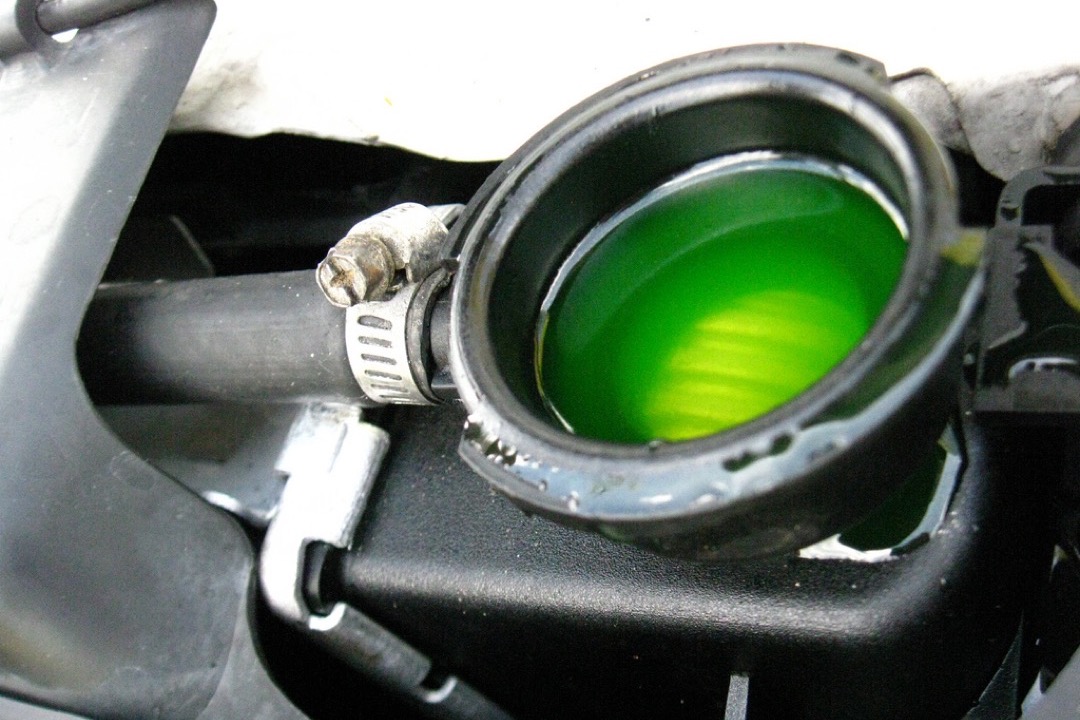
I have been an ASE Master Technician for 15 years, and coolant is the maintenance item I see neglected more than any other fluid in the engine bay. Oil changes get done because the dashboard reminder is impossible to ignore. Transmission fluid gets attention eventually because shift quality degrades noticeably. But coolant sits in the overflow tank looking fine until the day a head gasket fails, a heater core springs a pinhole leak, or a water pump seal disintegrates — and in every one of those cases, the root cause traces back to either the wrong coolant chemistry, a missed change interval, or both. Choosing the right coolant is not complicated, but getting it wrong is expensive. The cooling system protects your engine from thermal damage at operating temperatures above 200 degrees Fahrenheit, and the fluid inside that system is the single variable you have direct control over. This roundup covers the seven best coolant and antifreeze products of 2026, organized by the vehicle type and chemistry specification each one is designed to serve.
The critical distinction that most coolant marketing obscures is that coolant is not interchangeable across vehicles the way motor oil largely is. The additive chemistry — IAT, OAT, or HOAT — must match your cooling system’s metallurgy, seal materials, and manufacturer specification. Pouring the wrong color into your radiator is not a minor mistake; it is a corrosion and deposit formation event that can cost thousands in cooling system repairs. Every product in this roundup is matched to a specific vehicle category, and the right choice depends on what you drive, not which brand has the best shelf placement at the parts store.
| Product | Price | Buy |
|---|---|---|
| Zerex Asian Vehicle Red Silicate & Borate Free 50/50 AntifreezeBest Overall | $17.99 | View on Amazon |
| Valvoline Multi-Vehicle 50/50 Prediluted AntifreezeBudget Pick | $18.58 | View on Amazon |
| Toyota Genuine Super Long Life Coolant 50/50Premium Pick | $34.43 | View on Amazon |
| Zerex Dex-Cool 50/50 Antifreeze/CoolantRunner-Up | $21.98 | View on Amazon |
| Zerex Original Green Antifreeze/Coolant Concentrate | $15.49 | View on Amazon |
| Zerex G05 Phosphate Free Antifreeze/Coolant Concentrate | $17.99 | View on Amazon |
| Engine Ice High Performance Coolant | $31.49 | View on Amazon |
Find the Right Coolant for Your Vehicle
Coolant is not interchangeable — the right one is the one that matches your vehicle’s chemistry specification. Jump straight to the pick for what you drive:
- Best for Asian vehicles (Toyota, Honda, Nissan)
- Best for GM and domestic vehicles
- Best for European vehicles (BMW, Mercedes, VW)
- Best for classic and pre-1995 vehicles
- Best for track days and motorsport
How We Chose These Coolants
Every product in this roundup was selected based on a verified Amazon ASIN with an active listing, meaningful review volume from verified purchasers, published chemistry specifications, and documented compatibility with a specific vehicle category or use case. Products making vague “all vehicle” claims without published additive chemistry data were excluded. The seven products here represent every major coolant chemistry type — IAT, OAT, and HOAT — across the vehicle categories that account for the overwhelming majority of cars and trucks on U.S. roads: Asian-make vehicles, GM Dex-Cool systems, European vehicles, pre-1995 domestic vehicles, and high-performance motorsport applications. Each product is evaluated on the chemistry match for its intended application, not on a generic “best coolant” ranking that ignores the fundamental truth that coolant selection is vehicle-specific.
Best Overall: Zerex Asian Vehicle Red 50/50
Zerex Asian Vehicle earns the best overall position because it serves the largest single segment of the U.S. vehicle market that requires a specific coolant chemistry: Asian-manufactured vehicles. Toyota, Honda, Subaru, Nissan, Hyundai, and Kia collectively represent a massive proportion of vehicles on U.S. roads, and all of them require silicate-free and borate-free coolant to protect the aluminum cooling system components that Asian automakers use extensively. The HOAT formula in Zerex Asian Vehicle provides the organic acid corrosion inhibitors for long-term aluminum protection without the silicates and borates that can cause water pump seal degradation and deposit formation in these systems.
The number-one best-seller ranking on Amazon is not a marketing claim — it is a data point. Over 2,000 units per month at 6,400-plus reviews and a 4.8-star rating means the product has been validated across an enormous range of vehicle years, climates, and driving conditions. The review corpus includes Toyota Camry owners in Phoenix running their cooling systems at sustained high temperatures and Subaru Outback owners in Vermont requiring reliable freeze protection through six-month winters. The fact that the rating holds at 4.8 across that range of conditions is the most meaningful quality signal available.
The pre-diluted 50/50 format is important because it eliminates the most common coolant installation error I encounter in the shop: mixing concentrate with tap water. Municipal tap water contains chlorides, calcium, magnesium, and other dissolved minerals that accelerate galvanic corrosion inside the cooling system — the exact problem the corrosion inhibitors in the coolant are designed to prevent. A factory-premixed 50/50 uses deionized water and delivers the correct ratio every time. For the majority of Asian-vehicle owners who need a drain-and-fill or a top-off, Zerex Asian Vehicle is the correct product at the correct concentration in a single pour.

Zerex Asian Vehicle Red Silicate & Borate Free 50/50 Antifreeze
by Zerex
The best overall coolant for Asian-make vehicles -- HOAT formula, silicate and borate free, pre-diluted 50/50, and the number-one best-seller on Amazon at 4.8 stars across 6,400-plus reviews from Toyota, Honda, Subaru, and Nissan owners who need the correct chemistry match.
Pros
- HOAT (Hybrid Organic Acid Technology) formula engineered specifically for Asian-manufactured vehicles -- Toyota, Lexus, Scion, Honda, Subaru, Nissan, and other Japanese and Korean makes that require silicate-free and borate-free coolant chemistry to protect aluminum radiators and water pump seals from the additive incompatibility that causes premature gasket degradation
- Number-one best-seller ranking in the antifreeze category on Amazon with over 2,000 units purchased monthly confirms sustained consumer validation across a massive and diverse installed base of Asian-make vehicles -- at 6,400-plus reviews and a 4.8-star rating, real-world reliability across climates, vehicle ages, and driving conditions is not in question
- Pre-diluted 50/50 ratio eliminates the mixing error that is the single most common coolant installation mistake -- using tap water instead of distilled water introduces mineral deposits that accelerate corrosion inside the cooling system, and a factory-premixed formula removes that failure mode entirely
- Red/pink color matches the factory-fill coolant in Toyota, Lexus, and Scion vehicles, which simplifies visual identification during top-offs and eliminates the guesswork that leads to accidental mixing of incompatible coolant chemistries in the overflow reservoir
Cons
- Vehicle-specific formulation means this is not a universal coolant -- owners of GM, Ford, Chrysler, and European vehicles need a different chemistry match for their cooling system, and using this product in a Dex-Cool or G05-spec vehicle introduces the wrong additive package for those systems
- Premium pricing relative to universal formulas reflects the specialized chemistry, but owners who only need basic freeze and boil protection without vehicle-specific additive matching can achieve adequate protection at a lower price point with a universal HOAT product
Budget Pick: Valvoline Multi-Vehicle 50/50
Valvoline Multi-Vehicle is the right choice for the owner who maintains multiple vehicles across different makes and does not want to keep three or four different coolant bottles in the garage. The universal HOAT formula is engineered for compatibility across domestic, Asian, and European cooling systems, which means one product covers the household fleet without the risk of cross-chemistry contamination that comes from accidentally grabbing the wrong jug. It is not the cheapest jug in this roundup — the two Zerex formulas undercut it — but it is the cheapest way to cover a mixed fleet, because one gallon replaces the three vehicle-specific jugs you would otherwise buy and store. The 7,000-plus reviews at 4.8 stars confirm that the broad compatibility does not indicate compromised protection.
The universal compatibility claim deserves a nuanced assessment. Valvoline Multi-Vehicle meets the broad-spectrum additive requirements that cover the majority of vehicles, and for most owners it provides entirely adequate corrosion protection and thermal performance. Where the nuance matters is in vehicles with strict OEM specifications — a Toyota owner who wants the exact silicate-free, borate-free match specified in their manual, or a GM owner whose cooling system is designed specifically around OAT chemistry, may benefit from the vehicle-specific product over a universal formula. The practical difference in protection between Valvoline Multi-Vehicle and a vehicle-specific coolant is minimal for most driving conditions, but for owners who want zero compromise on specification matching, the vehicle-specific products elsewhere in this roundup are the appropriate choice.
For a multi-car household, a roadside emergency top-off kit, or anyone who wants reliable coolant protection without memorizing chemistry types, Valvoline Multi-Vehicle is the simplest correct answer. Keep a gallon in the trunk of each vehicle alongside a battery charger and you have covered the two most common roadside fluid emergencies.
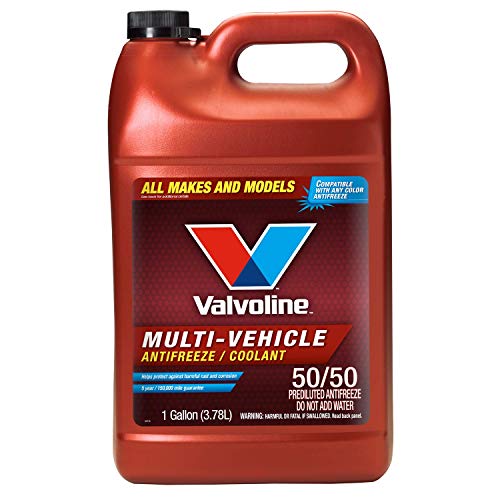
Valvoline Multi-Vehicle 50/50 Prediluted Antifreeze
by Valvoline
The one-jug answer for a multi-vehicle household -- universal HOAT compatibility across all makes and models, pre-diluted 50/50, a near-flat price against the single-make formulas, and 7,000-plus reviews at 4.8 stars confirming that broad compatibility does not mean compromised protection.
Pros
- Universal compatibility across all makes and models -- domestic, Asian, and European vehicles are all covered by the HOAT formula, making this the correct single-product choice for multi-vehicle households or anyone who does not want to stock different coolant bottles for different cars in the garage
- Priced alongside the vehicle-specific coolants here despite fitting every make, while maintaining a 4.8-star rating across 7,000-plus reviews and 2,000-plus monthly purchases -- the combination of price, rating, and volume confirms that universal compatibility does not require a premium, and budget-conscious owners are not sacrificing protection for savings
- Pre-diluted 50/50 mix eliminates the need for distilled water and the measurement error that accompanies concentrate mixing -- particularly relevant for owners who top off coolant in a parking lot or roadside situation where precise measuring tools are not available
- HOAT chemistry provides both the organic acid corrosion inhibitors for long-term aluminum protection and the inorganic additives for immediate ferrous metal passivation -- the hybrid approach covers the full range of cooling system metallurgy found in modern vehicles without requiring the owner to know what metals their radiator, heater core, and engine block contain
Cons
- Universal formulas are engineered to be broadly compatible rather than optimally matched to any single manufacturer's cooling system design -- vehicles with specific OEM coolant requirements like Toyota Super Long Life or GM Dex-Cool may benefit from the exact additive package their engineers specified rather than a broadly compatible alternative
- The Valvoline brand carries less recognition in the coolant category than in motor oil, which means fewer firsthand owner reports in automotive forums compared to Zerex or Prestone -- though the 6,900-plus Amazon reviews more than compensate for forum visibility
Upgrade Pick: Toyota Genuine Super Long Life Coolant
Toyota Genuine SLLC is the coolant for the Toyota or Lexus owner who wants zero ambiguity about chemistry compatibility. This is the identical formulation that comes in the vehicle at the factory — the same additive package, the same corrosion inhibitor concentrations, the same pink color. There is no aftermarket interpretation of what the Toyota specification means; this is the specification. For owners who maintain their Toyota or Lexus meticulously and follow the factory maintenance schedule, paying the OEM premium eliminates every question about whether the coolant in their system is the one Toyota’s engineers designed the cooling system around.
The price premium is real — at nearly double the cost of aftermarket alternatives like Zerex Asian Vehicle, which uses a comparable HOAT chemistry with the same silicate-free and borate-free profile. The functional difference in freeze protection, boil protection, and corrosion inhibition between Toyota Genuine SLLC and a correctly formulated aftermarket equivalent is minimal under normal driving conditions. What you are paying for with the OEM product is certification — Toyota’s confirmation that this specific formulation has been tested against their specific seal materials, gasket compositions, and cooling system metallurgy for the full service life specified in the maintenance schedule. For some owners, that certainty is worth the premium. For others, an aftermarket HOAT product that meets the same chemistry requirements provides equivalent protection at a lower cost.
The 2,000-plus monthly purchases on Amazon tell the story of the Toyota SLLC buyer: this is a deliberate, informed purchase by owners who know what they want and are willing to pay for it. If you drive a Toyota or Lexus and want the factory-fill product with no compromises, this is it. If you drive a Toyota or Lexus and want equivalent protection at a lower price, Zerex Asian Vehicle is the more cost-effective path.

Toyota Genuine Super Long Life Coolant 50/50
by Toyota
The factory-exact coolant for Toyota and Lexus -- identical to the assembly-line fill, Super Long Life Coolant certification, and the OEM premium that guarantees zero additive compatibility risk for owners who want the same product their vehicle was built with.
Pros
- Factory OEM coolant -- the identical formulation that Toyota and Lexus fill at the factory assembly line, meaning zero additive compatibility questions, zero risk of seal or gasket material interaction, and guaranteed conformance to every Toyota engineering specification for cooling system chemistry, corrosion inhibition, and thermal transfer efficiency
- Super Long Life Coolant (SLLC) designation reflects Toyota's own extended service interval validation -- the additive package is engineered for the full service life that Toyota specifies in the owner's manual, which removes the guesswork of whether an aftermarket formula's claimed interval matches the OEM's tested interval
- Pink color matches the factory fill exactly, which matters for visual inspection and top-off situations -- adding a different-colored coolant to a system filled with pink Toyota SLLC creates a visual contamination signal that complicates future service, and using the OEM product eliminates that ambiguity
- 2,000-plus monthly purchases on Amazon at 4.8 stars across 1,950-plus reviews reflects the purchasing pattern of Toyota and Lexus owners who specifically seek out the OEM product rather than accepting an aftermarket substitute -- the willingness to pay the OEM premium is itself a signal of how much these owners value exact-match chemistry
Cons
- Highest price in this roundup at nearly double the cost of universal alternatives -- the premium pays for OEM certification and exact factory-match chemistry, but the actual freeze and boil protection is functionally equivalent to correctly formulated aftermarket HOAT products like Zerex Asian Vehicle
- Limited to Toyota and Lexus applications -- owners of Honda, Subaru, Nissan, or any non-Toyota vehicle gain no benefit from the Toyota-specific certification and are paying the OEM premium for a product that was not formulated for their cooling system
Runner-Up: Zerex Dex-Cool 50/50
Zerex Dex-Cool exists for one reason: GM vehicles from 1995 onward that require OAT chemistry. This is not an optional preference — GM designed their cooling systems around the organic acid inhibitor package in Dex-Cool, and using a different chemistry type introduces additive incompatibility that GM’s own technical service bulletins document as a cause of cooling system deposit formation and corrosion. If you drive a Chevrolet, GMC, Buick, or Cadillac built after 1995, Dex-Cool is the specification in your owner’s manual, and Zerex Dex-Cool meets that specification at a price below the GM-branded alternative.
The Dex-Cool reputation issue needs to be addressed directly because it still appears in every online coolant discussion. In the early 2000s, certain GM 3.1L and 3.4L V6 engines experienced intake manifold gasket failures that owners attributed to Dex-Cool. The root cause was a gasket material deficiency — GM changed the gasket material in subsequent production years, and the failures stopped. The coolant chemistry was not the cause, but the association persisted in online forums and created a segment of GM owners who drain their Dex-Cool systems and switch to green IAT coolant. This is counterproductive: the green IAT chemistry is not compatible with the GM cooling system design that was engineered for OAT, and switching introduces the exact additive mismatch that the system was designed to avoid. If your GM vehicle came with Dex-Cool, maintaining it with Dex-Cool is the correct service practice.
The 4,000-plus monthly purchase volume at 4.8 stars confirms that the majority of GM owners understand this and are maintaining their cooling systems with the correct specification. The pre-diluted 50/50 format and orange color provide both convenience and visual confirmation that you are adding the right chemistry.

Zerex Dex-Cool 50/50 Antifreeze/Coolant
by Zerex
The correct coolant for GM vehicles with Dex-Cool cooling systems -- OAT formula meeting the GM specification, orange color for visual compatibility confirmation, 4,000-plus monthly purchases, and the extended service life that organic acid chemistry provides.
Pros
- OAT (Organic Acid Technology) formula meeting GM's Dex-Cool specification -- the only coolant chemistry approved by General Motors for use in Dex-Cool cooling systems, which have been standard in GM vehicles since 1995 and require the specific organic acid inhibitor package that conventional green coolant does not contain
- 4,000-plus monthly purchases confirm this is the volume leader for GM-vehicle coolant on Amazon -- at that purchasing rate across 2,100-plus reviews at 4.8 stars, the product's compatibility with the GM Dex-Cool cooling system design is validated at scale across Chevrolet, GMC, Buick, and Cadillac applications
- Pre-diluted 50/50 ratio with the correct orange color for immediate visual identification and compatibility confirmation -- pouring orange Dex-Cool into a system that already contains orange coolant confirms you are maintaining the correct chemistry without ambiguity
- Extended service life inherent to OAT chemistry -- organic acid inhibitors degrade more slowly than the inorganic additives in conventional IAT coolant, which is why GM specified OAT technology for their extended-maintenance cooling systems in the first place
Cons
- GM-specific formulation that should not be mixed with conventional green (IAT) coolant -- the organic acid and inorganic additive chemistries are incompatible when mixed, and the resulting interaction can produce gel-like deposits that clog heater cores, radiator tubes, and thermostat passages
- The Dex-Cool name carries lingering reputation concerns from early-2000s intake manifold gasket issues in certain GM engines -- while the coolant chemistry was not the root cause of those gasket failures, the association persists in online discussions and creates hesitation among some GM owners
Zerex Original Green: Best for Classic and Pre-1995 Vehicles
Zerex Original Green is the only IAT formula in this roundup, and it exists for a specific and important segment of the vehicle population: pre-1995 domestic vehicles, classic cars, and older imports whose cooling systems were designed around the silicate-based corrosion inhibitor chemistry that IAT provides. These older systems use copper/brass radiators, cast iron blocks, and seal materials that were engineered for compatibility with inorganic additives. Switching these vehicles to modern OAT or HOAT coolant is not an upgrade — it is a chemistry mismatch that can leave the copper and brass components without the silicate passivation layer they need for corrosion protection.
The concentrate format is deliberate for this application. Classic car owners and those in extreme cold climates need the ability to adjust the coolant-to-water ratio beyond the standard 50/50. A 60/40 or 70/30 ratio provides additional freeze margin for vehicles stored in unheated garages in northern climates, and a concentrate gives the owner that control. The trade-off is the requirement to use distilled water — a non-negotiable step that I emphasize to every customer in the shop. Tap water mixed with concentrate creates the corrosion conditions the coolant is supposed to prevent.
The shorter change interval — 2 years or 30,000 miles compared to the 5-year or 150,000-mile intervals of modern formulas — reflects the faster depletion rate of inorganic silicate inhibitors. Classic car owners and those maintaining older trucks need to factor this shorter interval into their maintenance schedule. A coolant test strip at each oil change provides a quick check on whether the inhibitor package is still within specification or whether the coolant needs replacement ahead of schedule. If you are already doing seasonal maintenance with fuel injector cleaner treatments and fluid checks, adding a coolant test strip takes 30 seconds.

Zerex Original Green Antifreeze/Coolant Concentrate
by Zerex
The correct coolant for pre-1995 domestic vehicles and classic cars -- traditional IAT green formula with silicate corrosion inhibitors, concentrate format for custom mix ratios, and 2,000-plus reviews from owners who need the chemistry their older cooling systems were designed around.
Pros
- IAT (Inorganic Additive Technology) formula -- the traditional green coolant chemistry that has been the standard for domestic vehicles built before approximately 1995, and the only correct coolant type for older vehicles whose cooling systems were designed around silicate-based corrosion inhibitors rather than the organic acid chemistry used in modern extended-life formulas
- Concentrate format provides maximum flexibility for owners who need custom mix ratios -- in extreme cold climates, a 60/40 or 70/30 coolant-to-water ratio provides lower freeze protection than the standard 50/50, and a concentrate allows the owner to adjust the ratio to match their specific climate conditions using distilled water
- 4.8-star rating across 2,000-plus reviews from owners of classic cars, older domestic trucks, and vintage vehicles confirms the product's reliability in the specific application where IAT chemistry is required -- these are owners who know their cooling system needs and choose Zerex Green deliberately
- Silicate corrosion inhibitors provide rapid passivation of bare metal surfaces after cooling system service -- when a radiator is replaced, a heater core is swapped, or a water pump is serviced and fresh metal surfaces are exposed, the silicate additives in IAT coolant form a protective barrier faster than organic acid inhibitors
Cons
- Shorter change interval than modern OAT or HOAT formulas -- IAT coolant requires replacement every 2 years or 30,000 miles because the inorganic inhibitors deplete faster than organic acid compounds, which means more frequent maintenance compared to 5-year or 150,000-mile extended-life coolants
- Concentrate requires mixing with distilled water before use -- using tap water introduces chlorides, calcium, and other minerals that accelerate internal corrosion, and owners who skip the distilled water step are undermining the corrosion protection they purchased the coolant to provide
Zerex G05: Best for European Vehicles
Zerex G05 addresses the specific chemistry requirement that separates European cooling systems from domestic and Asian designs: phosphate-free formulation. Mercedes-Benz, Volkswagen, Audi, BMW, and Chrysler cooling systems use seal and gasket materials that are sensitive to phosphate-containing coolants, and the European automakers specify phosphate-free HOAT chemistry in their service manuals for this reason. The G05 designation aligns with the VW TL 774-C specification that serves as the reference standard across multiple European manufacturers.
The yellow/gold color is a practical identification feature that prevents cross-contamination. In a garage with multiple vehicles or during a service appointment where the technician is working on several cars, the distinct color prevents accidentally pouring Asian-spec red coolant or GM-spec orange coolant into a European vehicle’s cooling system. Color coding in coolant is not decoration — it is a contamination prevention system, and the G05’s yellow/gold is immediately distinguishable from every other chemistry type in this roundup.
The low-silicate HOAT formula provides the hybrid corrosion protection approach that European cooling system metallurgy requires. European engines and cooling systems use a broader mix of aluminum, cast iron, copper, and brass components than many domestic designs, and the combination of organic acid long-term inhibitors and inorganic rapid-passivation additives covers that metallurgical range. At 800-plus monthly purchases and 4.8 stars across just over 2,000 reviews, the product has been validated by the specific owner demographic it is designed for: European vehicle owners who understand their cooling system’s chemistry requirements and are making an informed specification match.
One practical note before you buy: unlike the Zerex Asian Vehicle and Dex-Cool products in this roundup, the G05 ships as a concentrate. It has to be mixed 50/50 with distilled water before it goes into the cooling system. That is not a drawback so much as a step — a gallon of concentrate makes two gallons of finished coolant, which is why the per-gallon economics look better than the pre-mixed options, but pouring it in straight is a mistake. Over-concentrated coolant transfers heat worse than a correct 50/50 mix, so measure it.
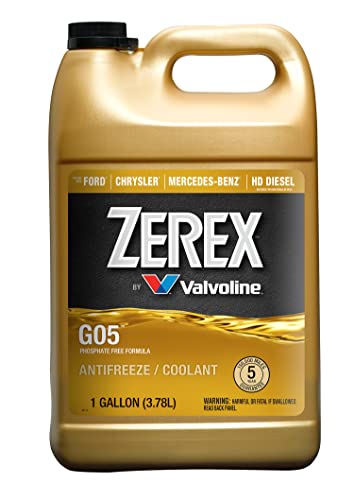
Zerex G05 Phosphate Free Antifreeze/Coolant Concentrate
by Zerex
The correct coolant for European vehicles requiring phosphate-free chemistry -- HOAT formula meeting Mercedes, VW, Audi, and Chrysler specifications, yellow/gold color for visual identification, and just over 2,000 reviews from European vehicle owners who need the right additive match.
Pros
- HOAT formula specifically engineered for European vehicles -- phosphate-free chemistry meets the specifications required by Mercedes-Benz, Volkswagen, Audi, BMW, and Chrysler cooling systems that use phosphate-sensitive seals and gaskets, and the G05 designation aligns with the VW TL 774-C specification that European automakers reference in their service manuals
- Yellow/gold color provides instant visual distinction from green IAT, orange OAT, and red/pink Asian HOAT coolants -- in a cooling system service where the previous coolant type is unknown, the color helps confirm compatibility and prevents accidental mixing with the wrong chemistry
- 800-plus monthly purchases at 4.8 stars across just over 2,000 reviews confirms the product's acceptance among European vehicle owners who understand their cooling system requires phosphate-free chemistry -- these are informed buyers making a deliberate specification match, not impulse purchases
- Low-silicate hybrid organic acid formula provides both the rapid bare-metal protection of inorganic inhibitors and the extended service life of organic acid chemistry -- the hybrid approach covers the metallurgical mix of aluminum, cast iron, copper, and brass found across European cooling system designs
Cons
- European-vehicle-specific formulation limits the application to the vehicles that require phosphate-free chemistry -- for domestic and Asian vehicles that tolerate or require phosphate-containing coolant, Zerex G05 is an unnecessary specification restriction and the universal Valvoline or Zerex Asian Vehicle products are more appropriate
- Mid-range pricing without the OEM certification premium of factory-branded coolant -- Mercedes, VW, and BMW all sell their own branded coolant at higher prices, and owners who insist on the factory bottle will pay more for equivalent chemistry with an automaker logo on the label
- Sold as a concentrate, so it must be mixed 50/50 with distilled water before use -- pouring it in straight leaves the system over-concentrated and reduces heat transfer
Engine Ice: Best for Track Days and Motorsport
Engine Ice occupies a niche that no other product in this roundup addresses: high-performance cooling in motorsport applications where conventional ethylene glycol coolant is either prohibited or suboptimal. Most racing sanctioning bodies and racetracks ban ethylene glycol because a coolant spill on a racing surface creates an extremely slippery hazard that is difficult to clean and dangerous to other competitors. Engine Ice uses a propylene glycol base that is biodegradable and non-toxic, which satisfies track safety requirements while providing genuine thermal performance advantages under sustained high-load conditions.
The temperature reduction claims are validated by the review corpus in a way that is uncommon for automotive chemicals. The 4,300-plus reviews at 4.8 stars come overwhelmingly from motorcycle riders, track-day car owners, UTV racers, and performance enthusiasts who monitor their coolant temperature with data loggers and digital gauges. The consistently reported 10-20 degree Fahrenheit reduction in operating temperature under sustained load is not a marketing claim — it is repeated data from owners who measure before and after with instruments. For an engine operating at the edge of its thermal envelope on a hot track day, that margin is the difference between completing a session and pulling into the pits with an overheating condition.
The half-gallon format and higher per-gallon cost mean Engine Ice is not the economical choice for a daily driver that never sees sustained high-load conditions. The performance benefit is measurable under track conditions and essentially invisible in stop-and-go commuting where the thermostat regulates temperature within its normal range. For track cars, motorcycles, UTVs, and any vehicle that regularly operates at sustained high RPM and load, Engine Ice is the correct choice. For everything else, a conventional coolant from elsewhere in this roundup provides equivalent protection at a fraction of the cost. If you are prepping a track car, pair Engine Ice with an OBD2 scanner that displays live coolant temperature data so you can verify the thermal performance difference in real time during your first session.

Engine Ice High Performance Coolant
by Engine Ice
The track-day and motorsport coolant -- propylene glycol base approved by racing sanctioning bodies, measurable temperature reduction under high-load conditions, non-toxic and biodegradable, and 4,300-plus reviews from performance enthusiasts who monitor operating temperatures with data loggers.
Pros
- Propylene glycol base instead of ethylene glycol makes Engine Ice biodegradable and non-toxic -- this is the reason it is the only coolant in this roundup approved for use at most motorsport sanctioning bodies and racetracks that prohibit ethylene glycol because spilled conventional coolant on a track surface creates a dangerous slick that is nearly impossible to clean during a session
- Thermal transfer properties engineered for high-heat applications reduce operating temperatures by measurable margins in track and motorsport use -- owners consistently report 10-20 degree reductions in coolant temperature compared to conventional 50/50 coolant under sustained high-load conditions, which is the difference between a stable temperature gauge and a creeping overheat on a hot track day
- 4,300-plus reviews at 4.8 stars from a user base that skews heavily toward motorcycles, track cars, UTVs, and high-performance applications -- the review corpus is dominated by enthusiast owners who measure operating temperatures with data loggers and gauges, not casual drivers who would not notice a temperature difference
- Pre-diluted and ready to pour -- no mixing required, which eliminates the contamination risk from non-distilled water and ensures the correct concentration ratio every time, particularly relevant for trackside coolant changes where precision mixing is impractical
Cons
- Half-gallon bottle at a higher per-gallon cost than any other product in this roundup -- for a full cooling system drain and fill on a passenger car requiring one to two gallons, Engine Ice costs significantly more than conventional coolant, and the performance benefit is only measurable under sustained high-load conditions that most street-driven vehicles never experience
- Not the correct choice for daily-driven vehicles in extreme cold climates -- the propylene glycol base has a slightly higher freeze point than ethylene glycol at equivalent concentrations, and the half-gallon format means a full system fill requires multiple bottles at cumulative cost that is difficult to justify for normal street driving
Best Coolant for Asian Vehicles (Toyota, Honda, and Nissan)
Asian-make cooling systems require silicate-free, borate-free HOAT chemistry to protect their aluminum radiators and water-pump seals — the wrong additive package degrades those gaskets prematurely. If you drive a Toyota, Lexus, Honda, Subaru, or Nissan, one of these two is the correct match: the Zerex Asian Vehicle Red is the aftermarket best-seller that fits the whole segment, while the Toyota Genuine SLLC is the factory-exact fill for Toyota and Lexus owners who want zero compatibility questions.
| Product | Price | Buy |
|---|---|---|
| Zerex Asian Vehicle Red Silicate & Borate Free 50/50 AntifreezeBest for most Asian makes Silicate- and borate-free HOAT, Amazon's best-seller across Toyota, Honda, Subaru, and Nissan owners | $17.99 | View on Amazon |
| Toyota Genuine Super Long Life Coolant 50/50Best OEM match for Toyota/Lexus The identical Super Long Life Coolant Toyota fills at the factory -- exact-match chemistry | $34.43 | View on Amazon |
Best Coolant for GM and Domestic Vehicles
GM vehicles built since 1995 run Dex-Cool cooling systems that require OAT chemistry — conventional green coolant is the wrong spec and can gel if mixed in. For a Chevy, GMC, Buick, or Cadillac, the Zerex Dex-Cool is the direct GM-approved match; if you keep several makes in the garage, the universal Valvoline Multi-Vehicle covers domestic, Asian, and European systems from one bottle.
| Product | Price | Buy |
|---|---|---|
| Zerex Dex-Cool 50/50 Antifreeze/CoolantBest for GM/Dex-Cool systems OAT formula meeting the GM Dex-Cool specification, orange for visual compatibility | $21.98 | View on Amazon |
| Valvoline Multi-Vehicle 50/50 Prediluted AntifreezeBest universal option HOAT rated for all makes -- the single-bottle answer for a multi-vehicle household | $18.58 | View on Amazon |
Best Coolant for European Vehicles (BMW, Mercedes, VW)
European cooling systems from Mercedes-Benz, BMW, VW, and Audi use phosphate-sensitive seals and specify phosphate-free HOAT chemistry (the VW TL 774-C / G05 standard). The Zerex G05 is the phosphate-free match built for exactly those systems; the universal Valvoline is a broadly compatible fallback if you cannot source G05, though the exact-spec G05 is the safer choice for a phosphate-sensitive system.
| Product | Price | Buy |
|---|---|---|
| Zerex G05 Phosphate Free Antifreeze/Coolant ConcentrateBest for European vehicles Phosphate-free HOAT meeting Mercedes, VW, Audi, and BMW G05 specifications -- ships as a concentrate, so mix 50/50 with distilled water | $17.99 | View on Amazon |
| Valvoline Multi-Vehicle 50/50 Prediluted AntifreezeBest universal fallback All-make HOAT for owners who need one bottle across mixed fleets, pre-diluted and ready to pour | $18.58 | View on Amazon |
Understanding Coolant Chemistry: IAT vs OAT vs HOAT
The three-letter acronyms on coolant labels — IAT, OAT, and HOAT — are not marketing differentiation. They describe fundamentally different corrosion inhibitor chemistries that are not interchangeable and, in some combinations, are actively incompatible. Understanding what each chemistry does and which vehicles require it is the single most important piece of knowledge for choosing the right coolant.
IAT (Inorganic Additive Technology) is the oldest coolant chemistry, recognizable by its green color. The corrosion inhibitors are inorganic compounds — primarily silicates and phosphates — that form a protective layer on metal surfaces inside the cooling system. This layer provides excellent rapid protection on freshly exposed metal, which is why IAT is appropriate for older vehicles with copper/brass radiators and cast iron components that may be serviced frequently. The limitation is that inorganic inhibitors deplete faster than organic compounds, which is why IAT coolant requires replacement every 2 years or 30,000 miles.
OAT (Organic Acid Technology) uses organic acid compounds — primarily 2-ethylhexanoic acid and sebacic acid — as corrosion inhibitors. These compounds do not form a physical barrier layer like silicates; instead, they interact with metal surfaces at the molecular level to prevent corrosion at the sites where it initiates. OAT inhibitors deplete much more slowly than inorganic compounds, which is why OAT coolant supports the 5-year or 150,000-mile service intervals that GM specified when they introduced Dex-Cool. The trade-off is slower initial protection on bare metal surfaces, which is why OAT is paired with cooling systems that are sealed from the factory and rarely opened for component service.
HOAT (Hybrid Organic Acid Technology) combines both approaches — organic acid inhibitors for long-term protection and a small amount of inorganic additive (typically low-silicate) for rapid initial passivation. HOAT is the most common modern coolant chemistry because it provides the extended service life of OAT with the rapid bare-metal protection of IAT. Most Asian and European vehicle manufacturers specify HOAT chemistry, though with different additive profiles — Asian-spec HOAT is silicate-free and borate-free, while European-spec HOAT is phosphate-free.
How to Choose the Right Coolant for Your Vehicle
The selection process is straightforward once you accept that coolant choice is vehicle-specific rather than brand-specific. Start with your owner’s manual — it will specify either a chemistry type (IAT, OAT, HOAT), a manufacturer part number, or a specification standard. Match that specification to the products in this roundup, and your choice is made. If the manual says “Dex-Cool” or references GM 6277M, choose Zerex Dex-Cool. If it references Toyota Super Long Life Coolant, choose either Toyota Genuine SLLC or Zerex Asian Vehicle. If it references a VW TL 774-C or MB 325.0 specification, choose Zerex G05. If it says “conventional green” or the vehicle was built before 1995, choose Zerex Original Green.
For multi-vehicle households that want a single product, Valvoline Multi-Vehicle is the universal answer — with the caveat that vehicle-specific products provide a tighter chemistry match for vehicles with strict OEM specifications. For performance applications, Engine Ice is the only track-approved option. And for every application, the pre-diluted 50/50 format eliminates the most common installation error and is the correct default choice unless you specifically need a custom mix ratio for extreme cold protection.
Maintenance and Change Intervals
Coolant change intervals are not suggestions — they are engineered to the depletion rate of the corrosion inhibitor package in the coolant chemistry you are using. Running IAT coolant past its 2-year or 30,000-mile interval means the silicate inhibitors have depleted to the point where bare metal surfaces inside the cooling system are exposed to corrosion. Running OAT or HOAT coolant past its 5-year or 150,000-mile interval means the organic acid compounds are no longer providing the molecular-level corrosion protection that the extended interval was designed around.
The most reliable approach to coolant maintenance is incorporating a test strip check into your existing service schedule. At every oil change, dip a coolant test strip into the overflow tank and check the pH and reserve alkalinity readings against the strip’s color chart. If both readings are within specification, the coolant is still providing adequate protection. If either reading is out of specification, schedule a drain-and-fill regardless of mileage or time. A test strip costs a few dollars and takes 30 seconds — that investment prevents the thousands of dollars in damage that neglected coolant causes when corrosion compromises a head gasket, heater core, or water pump.
When performing a coolant drain and fill, always flush the system with distilled water before adding fresh coolant if the previous coolant was past its service interval or if the drained fluid shows any discoloration, particles, or rust. A thorough flush removes the depleted inhibitor residue and any corrosion byproducts that have accumulated, giving the fresh coolant a clean system to protect. Skip the flush and the new coolant’s inhibitors immediately begin interacting with the contaminants left behind, reducing their effective service life from the first day.
Buyer's Guide
Choosing the right coolant is less about brand and more about matching three variables to your specific vehicle: the additive chemistry type your cooling system requires, the concentration format that fits your installation situation, and the service interval that aligns with your maintenance schedule.
Coolant Chemistry Type (IAT, OAT, HOAT)
This is the most critical selection criterion and the one most likely to cause damage if you get it wrong. IAT (Inorganic Additive Technology) is the traditional green formula with silicate-based inhibitors -- correct for pre-1995 domestic vehicles and some older imports. OAT (Organic Acid Technology) uses organic acid inhibitors and is the chemistry behind GM's Dex-Cool specification -- required in GM vehicles from 1995 onward. HOAT (Hybrid Organic Acid Technology) combines both chemistries and is the most common modern formula, covering most Asian and European vehicles and many newer domestic models. Your owner's manual specifies which chemistry type your vehicle requires. Using the wrong type does not simply reduce protection -- it can cause additive interaction, deposit formation, seal degradation, and corrosion that leads to cooling system component failure.
Vehicle-Specific Compatibility
Coolant is not a one-size-fits-all fluid. Toyota and Lexus vehicles require silicate-free and borate-free HOAT chemistry. GM vehicles with Dex-Cool systems require OAT chemistry. European vehicles from Mercedes, VW, Audi, and BMW require phosphate-free HOAT chemistry. Older domestic vehicles require traditional IAT chemistry. Universal coolants like Valvoline Multi-Vehicle are formulated for broad compatibility across these systems, but vehicles with specific manufacturer requirements benefit from the exact chemistry match. When in doubt, check the coolant specification in your owner's manual -- it will list either a chemistry type, a manufacturer part number, or a specification standard like GM 6277M (Dex-Cool) or VW TL 774-C (G05).
Concentrate vs Pre-Diluted 50/50
Pre-diluted 50/50 is the right choice for most owners because it eliminates two common errors: using tap water instead of distilled water and measuring the wrong ratio. The factory pre-mix uses deionized water at the exact 50/50 proportion, which provides freeze protection to minus 34 degrees Fahrenheit and boil protection to 265 degrees Fahrenheit under a 15 psi radiator cap. Concentrate is appropriate when you need a custom ratio for extreme cold climates or when you already have distilled water on hand and want the economy of mixing your own. A 70/30 concentrate-to-water ratio extends freeze protection to approximately minus 84 degrees Fahrenheit, which matters in northern climates where sustained temperatures drop below the 50/50 protection floor.
Climate Protection Range
Standard 50/50 coolant-to-water ratio protects against freezing down to approximately minus 34 degrees Fahrenheit and against boiling up to approximately 265 degrees Fahrenheit under a standard 15 psi pressure cap. For most of the continental United States, this range is adequate year-round. Owners in extreme cold regions -- northern Minnesota, Montana, North Dakota, Alaska -- may need a higher coolant concentration for additional freeze margin. Owners in extreme heat climates or high-altitude regions where cooling systems work harder may want to verify their system is operating within the boil protection range under load. A coolant hydrometer or refractometer provides an accurate reading of the installed mixture's freeze and boil points and costs under 15 dollars -- a worthwhile tool for any garage.
Change Interval and Service Life
IAT green coolant requires the most frequent replacement at 2 years or 30,000 miles because inorganic silicate inhibitors deplete faster than organic acid compounds. OAT and HOAT formulas are engineered for 5-year or 150,000-mile intervals, which aligns with the extended maintenance schedules that modern vehicles are designed around. The owner's manual interval takes precedence over the coolant bottle's label -- if your manual says 100,000 miles and the bottle says 150,000 miles, follow the manual. A coolant test strip that measures pH, freeze point, and reserve alkalinity costs a few dollars and provides objective data on whether the coolant in your system still has adequate corrosion protection or needs replacement regardless of mileage.
Mixing Rules and System Flushing
Never mix coolant chemistries -- IAT with OAT, OAT with HOAT, or any cross-type combination. The additive packages interact in ways that reduce corrosion protection and can produce deposits that restrict coolant flow. If you are switching coolant types -- upgrading from IAT green to a modern HOAT formula in an older vehicle, for example -- a complete cooling system flush is required before adding the new coolant. Flush with distilled water until the drain runs clear, then fill with the new coolant. Topping off with the same chemistry and color is acceptable for maintaining the existing fill between service intervals. If you do not know what coolant is in the system, flush and start fresh with the correct specification rather than guessing.
Final Verdict
For the majority of Asian-vehicle owners — Toyota, Honda, Subaru, Nissan, Hyundai, Kia — Zerex Asian Vehicle Red 50/50 is the correct choice. It matches the silicate-free, borate-free HOAT chemistry these cooling systems require, the pre-diluted format eliminates mixing errors, and the number-one best-seller ranking across 6,400-plus reviews at 4.8 stars confirms it works as specified across a massive range of vehicles and climates.
For multi-vehicle households or anyone who wants one coolant that works across all makes, Valvoline Multi-Vehicle 50/50 provides universal HOAT compatibility without an OEM premium. For Toyota and Lexus owners who want the factory-exact product with zero chemistry questions, Toyota Genuine SLLC is the OEM answer at an OEM price. For GM owners, Zerex Dex-Cool is the only correct option. For European vehicles, Zerex G05 matches the phosphate-free specification. For classic cars and pre-1995 vehicles, Zerex Original Green provides the IAT chemistry those cooling systems were designed around. And for track days and motorsport, Engine Ice is the propylene glycol formula that keeps operating temperatures lower under sustained load while meeting track safety requirements.
The common thread across all seven recommendations: match the coolant chemistry to your vehicle’s specification, use pre-diluted 50/50 unless you have a specific reason not to, and respect the change interval. Your cooling system is the least forgiving system in the engine bay when it comes to fluid neglect — and the easiest to maintain correctly when you start with the right product.
Frequently Asked Questions
Can you mix different coolant colors?
How often should you change your coolant?
What is the difference between coolant and antifreeze?
What happens if you use the wrong coolant in your car?
Should I use concentrate or premixed 50/50 coolant?
What is the best coolant for a diesel engine (6.0 Powerstroke, Duramax)?
What is the best coolant for a motorcycle?
What is the best coolant brand?
Related Articles
About the Reviewer

Mike Reeves, ASE Master Technician
A.A.S. Automotive Technology, Universal Technical Institute (UTI)
Mike Reeves is an ASE Master Technician with 15 years of hands-on experience in automotive repair and diagnostics. He earned his A.A.S. in Automotive Technology from UTI and runs his own independent shop in Denver, Colorado. Mike founded RevRated to help everyday car owners make smarter parts decisions -- every recommendation comes from real-world testing in his garage.