8 Best Fuel Injector Cleaners of 2026
Mike Reeves reviews the best fuel injector cleaners of 2026. Compare PEA formulas, GDI compatibility, gas vs diesel coverage, and real-world cleaning performance.
Updated
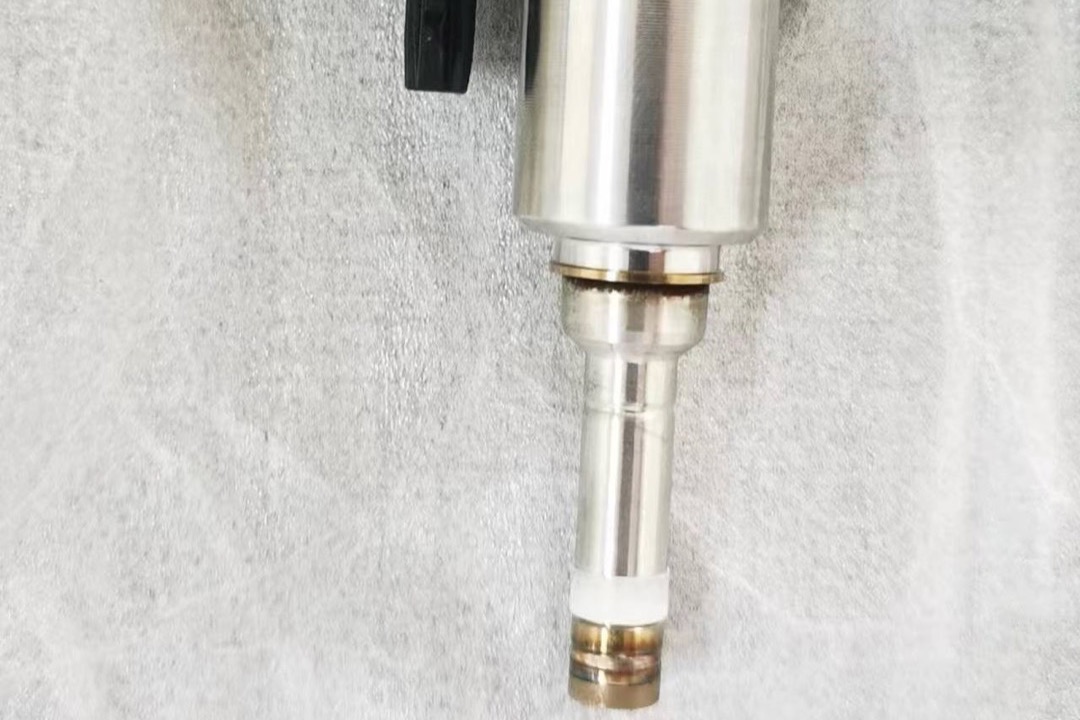
I have spent 15 years as an ASE Master Technician, and the question I hear most often in the service lane is some version of this: “Do those fuel system cleaners at the auto parts store actually do anything?” The honest answer is that it depends entirely on which one you pick, and the difference between a PEA-based formula and a petroleum solvent product is the difference between a tool that chemically dissolves injector deposits and one that mostly prevents new ones from forming. Choosing the right fuel injector cleaner in 2026 requires understanding that distinction — and then matching the product to your engine type, fuel, and the specific condition you are trying to address. If you already have a OBD2 scanner pulling codes, that diagnostic context — whether you are chasing a lean fault code, a catalyst efficiency code, or just maintaining a clean system — should determine which product goes into the tank.
For this roundup, I evaluated eight fuel additives across cleaning chemistry, engine type compatibility, treat volume, recommended intervals, and the quality signals that matter at scale: review volume, rating distribution, and confirmed real-world outcomes. The products here range from under six dollars for a diesel-compatible maintenance lubricant to a professional-grade PEA formula that until recently was only available through dealership service departments.
After evaluating PEA concentration, owner review data, fuel type coverage, and application versatility, here are the best fuel injector cleaners of 2026.
Find the Right Cleaner for Your Engine
The right bottle depends on what you drive and what you are treating. Jump straight to the recommendation that fits:
- Best diesel fuel injector cleaner — purpose-built chemistry for common-rail diesels
- Best for high-mileage engines — deep-clean protocols for 75,000+ miles
- Best for motorcycles — small-tank dosing that will not overconcentrate
- Best for emissions and P0420 codes — catalyst-system treatment
- Best overall for most gas engines — the proven default pick
How We Chose These Fuel Injector Cleaners
Every product in this roundup was selected based on a verified Amazon ASIN with an active listing, meaningful review volume, published formulation data, and either independent chemistry validation or a large enough owner review base to confirm real-world performance. Products making claims about PEA concentration without confirmed formulation data were excluded. The eight products here represent every relevant chemistry type, fuel compatibility tier, and application mode available at consumer price points — with an honest assessment of what each product cannot do.
Best Overall: Chevron Techron Concentrate Plus
Techron earns the best overall pick because it sits at the intersection of proven PEA chemistry, validated real-world performance at scale, and a price-to-effectiveness ratio that no competitor matches for the average gasoline vehicle owner. The number-one best-seller rank in the fuel additive category across years of sustained production is not a coincidence — it reflects the accumulated experience of over 16,000 Amazon reviewers who added it to their tank and reported improvement. The most common reports are consistent cold-start improvement, smoother idle, and restored throttle response in high-mileage engines, all of which are the direct mechanical consequence of clean injectors restoring proper spray pattern.
The PEA formula is the reason Techron works where petroleum-solvent alternatives do not. PEA chemically bonds to and dissolves baked-on carbon and varnish deposits inside the injector body and nozzle tip — the deposits that reduce fuel flow, disrupt spray pattern, and cause the lean mixture conditions behind P0171 and P0174 fault codes. This is not a marketing distinction; it is a chemistry distinction with documented SAE research behind it, and it is why Chevron has used PEA as the basis of its Techron line for decades rather than switching to cheaper alternatives.
The honest limitation is the gasoline-only formulation. Diesel owners and anyone who needs a single product across a mixed-fuel garage will need to look at Lucas Oil or Sea Foam instead. And for new or recently maintained vehicles with clean injectors, there is genuinely little for the PEA to clean — Techron is a maintenance product as much as a cleaning product, and using it every oil change interval keeps the system clean rather than waiting for symptoms to appear. Add Techron to the tank at the beginning of a fill-up and drive the tank down normally; one complete treatment cycle is all that is needed.

Chevron Techron Concentrate Plus Fuel System Cleaner
by Chevron
The PEA-based benchmark for gasoline fuel system cleaning -- 17,200-plus reviews, number-one category ranking, and a proven formula that dissolves injector deposits, restores idle quality, and stabilizes fuel for up to a year.
Pros
- Polyetheramine (PEA) chemistry -- the only injector-cleaning compound independently validated to dissolve baked-on deposits in port-injection and throttle body systems in a single tank -- is the active formula here, giving Techron a meaningful cleaning advantage over petroleum-solvent competitors that primarily prevent new buildup
- Fuel stabilization for up to one year makes this the correct choice for seasonal vehicles, stored equipment, and rarely-driven cars -- a single treatment before storage keeps the fuel system clean and the gasoline viable without a separate stabilizer additive
- Consistent cold-start improvement and idle quality restoration are the most frequently reported outcomes in the 17,200-plus Amazon reviews -- both are direct consequences of restored injector spray pattern, which is the primary mechanism Techron addresses
- Amazon's number-one best-seller rank in the fuel additive category across years of production reflects sustained consumer validation, not a promotional spike -- at that review volume and rank, real-world reliability is not in question
Cons
- Gasoline engines only -- the formulation is not compatible with diesel fuel systems, which rules it out for diesel truck, van, and equipment owners who need a single-product solution
- Minimal impact on new or low-mileage vehicles with clean injectors -- if the engine is running well and injectors are clean, the PEA chemistry has nothing to dissolve and owners report no perceptible difference after treatment
Budget Pick: Lucas Oil Fuel Treatment (1 Quart)
Lucas Oil Fuel Treatment is not a PEA-based deposit cleaner, and it is important to be clear about that before recommending it. What it is — and what no other product in this roundup can match on cost per treatment — is a 4.8-star gas-and-diesel compatible fuel lubricant with 24,854 verified reviews, tied with Sea Foam for the highest rating in this roundup, and a mechanical benefit that purely detergent-based cleaners do not provide: upper cylinder lubrication. In the one-quart size it works out to roughly a dollar a tank, which is what makes treating every fill-up realistic rather than a luxury. The petroleum carrier formula coats injector tips, valve seats, and upper cylinder walls with a protective film that reduces wear in engines running ethanol blends, which strip the natural lubrication that fuel provided before widespread E10 adoption.
The diesel compatibility is the differentiator that puts Lucas in the budget position over cheaper gasoline-only alternatives. For diesel truck owners, diesel-compatible fuel lubricants address a genuine maintenance need — diesel injectors operate at significantly higher pressures than gasoline injectors and experience corresponding wear rates, and a lubricant additive extends service life between injection service intervals. The same bottle goes in the diesel pickup and the gasoline daily driver without compatibility concerns.
For a high-mileage gasoline engine with baked-on deposits causing rough idle or hesitation, Lucas Oil alone will not resolve the condition — the petroleum formula prevents new buildup and lubricates but lacks the aggressive deposit-dissolution of PEA. In that situation, a one-time treatment with Techron or BG 44K followed by Lucas Oil at every fill-up for maintenance is the correct protocol. As a standalone product for a well-maintained engine, diesel equipment, or a driver who wants the highest-rated additive regardless of chemistry type, Lucas Oil is the right choice.

Lucas Oil 10003 Fuel Treatment (1 Quart, Gas & Diesel)
by Lucas Oil
The highest-rated fuel additive in this roundup at 4.8 stars across 24,854 reviews -- gas and diesel compatibility, upper cylinder lubrication, and rust protection in a quart that makes every-fill-up treatment cost about a dollar a tank.
Pros
- Gas and diesel compatibility in a single product makes Lucas the most affordable multi-fuel option in this roundup on a per-treatment basis -- diesel truck owners who run mixed fleets or drive a diesel daily and a gasoline vehicle on weekends need not buy separate treatments
- Upper cylinder lubrication from the petroleum-based carrier fluid reduces injector tip and valve seat wear over time, which is a genuine mechanical benefit that purely detergent-based cleaners do not provide -- particularly relevant for high-mileage engines running ethanol blends that strip natural lubrication
- 4.8-star rating across 24,854 Amazon reviews ties Sea Foam for the highest rating in this roundup and is one of the highest in any automotive chemical category -- at that volume the rating reflects genuine owner satisfaction, not statistical noise
- Rust and corrosion inhibitors protect the fuel tank, fuel lines, and injector bodies from oxidation during storage -- relevant for anyone who runs the same product in seasonal gasoline equipment and year-round diesel trucks
Cons
- At roughly a dollar a treatment the quart is the cheapest option here per fill-up, but the up-front sticker price is higher than a single small single-tank bottle -- you are buying a season of treatments at once, not a one-time try
- Petroleum lubricant and detergent formula rather than PEA -- effective at lubrication and light deposit prevention, but less aggressive at dissolving heavy carbon buildup in high-mileage injectors than PEA-based cleaners in a single treatment
Premium Pick: BG 44K Platinum Fuel System Cleaner
BG 44K is the fuel system cleaner I recommend when a customer comes in with a rough-running high-mileage engine and wants the most aggressive single-treatment cleaning available without going to an in-shop fuel system service. BG Products supplies dealership service departments — Toyota, Honda, GM, and others use BG’s professional line as their in-house fuel system service chemistry. The 44K is the same professional concentration now available to consumers on Amazon, and the 84 percent five-star review rate across 3,802 ratings reflects what happens when people who bought it specifically because of its professional reputation use it and find out the reputation is accurate.
The higher PEA concentration is what distinguishes BG 44K from Techron in an aggressive cleaning context. Where Techron at standard concentration is appropriate for consistent maintenance-interval treatment, BG 44K is formulated for an every-10,000-mile deep cleaning cycle — the kind of treatment a shop would perform alongside a spark plug replacement and air filter service on a higher-mileage vehicle. One 11-ounce bottle per 10,000 miles costs more per treatment than Techron’s every-3,000-mile protocol, but the concentration means each treatment accomplishes more dissolving work per ounce of active compound.
The third-party seller situation on Amazon deserves a mention because it affects real purchases. BG 44K is sold directly by BG Products on Amazon and also through a number of third-party resellers; authenticity and condition are more reliable from the direct BG listing. The price is consistent across listings, so the only variable is who ships it and how it is handled in transit. For the first-time purchase, use the sold-by-BG listing. For ongoing maintenance supply, both sources are generally fine.
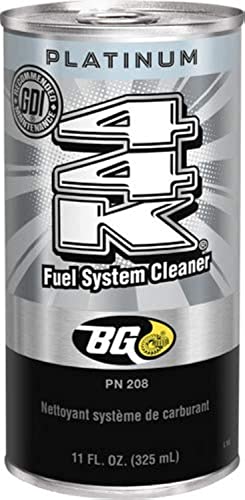
BG 44K Platinum Fuel System Cleaner
by BG Products
The dealer-grade PEA formula now available on Amazon -- BG Products' professional fuel system cleaner delivers the same chemistry used in dealership service lanes at a fraction of the shop markup, with 84 percent five-star reviews validating every claim.
Pros
- Professional-grade PEA concentration formulated for dealership and shop use -- BG Products supplies service departments at Toyota, Honda, and GM dealerships nationally, and the 44K is the same chemistry those shops use for fuel system service intervals, now available to Amazon consumers without a shop markup
- 84 percent five-star review rate across 3,802 Amazon ratings reflects the characteristic review pattern of a product that overperforms initial consumer expectations -- owners who buy it based on forum recommendations tend to report exactly the cleaning improvement those forums promised
- Cleans fuel injectors, intake valves, combustion chambers, and the entire fuel system in a single treatment -- the higher concentration allows a single 11-ounce bottle to accomplish what multiple treatments of standard-concentration cleaners may not
- Amazon's Choice designation in the fuel system cleaner category confirms algorithmic and consumer selection validation beyond the raw review count -- the smaller review corpus relative to Techron reflects its recent transition from dealer-only availability, not a deficit in performance
Cons
- The highest per-ounce cost in this roundup at over two dollars per ounce -- owners who treat every oil change interval will pay significantly more annually than with Techron Concentrate Plus at roughly the same cleaning efficacy per use
- Third-party seller fulfillment on Amazon introduces variability in shipping speed and packaging condition -- buying from the sold-by-BG listing rather than third-party resellers is recommended for authenticity and condition assurance
Runner-Up: Sea Foam Motor Treatment (4-Pack)
Sea Foam earns the runner-up position not because it outperforms Techron at PEA-based injector cleaning — it does not, because it is not a PEA product — but because it is the most versatile fuel system treatment in this roundup and the correct choice for a specific and large segment of vehicle owners: those with carbureted small engines, seasonal gasoline equipment, older port-injected vehicles, and anyone who wants to treat the fuel system, crankcase, and intake valve area with a single product. The 29,933 reviews at 4.8 stars is the largest validated dataset in this roundup, spanning lawn mowers, outboard motors, vintage carbureted vehicles, and modern fuel-injected engines.
The three application modes are the feature that no other product in this roundup replicates at this price point. Adding Sea Foam to the fuel tank addresses the injectors and fuel system. Adding it to the crankcase before an oil change cleans the oil passages and helps dissolve sludge before the drain. Running it through an intake vacuum line — a 15-minute process well-documented in Sea Foam’s published instructions — delivers solvent directly to the intake valves and combustion chambers without pulling the intake manifold. For a GDI engine with intake valve carbon deposits, this is the only non-disassembly intervention available, though it is less effective than walnut blasting on heavy deposits.
The four-bottle pack format at under ten dollars per bottle makes quarterly treatment for a full year economically realistic, and the per-treatment cost at that cadence is lower than any individual bottle in this roundup except Lucas Oil. For owners who want to establish a consistent maintenance schedule without managing multiple products, Sea Foam’s versatility makes it a practical single-product solution. Pair a quarterly fuel treatment with a tire pressure check at the same interval and you have covered two of the most overlooked routine maintenance items in a single afternoon.

Sea Foam Motor Treatment (4-Pack, 16 oz each)
by Sea Foam
The most versatile fuel treatment in this roundup -- 29,933 reviews at 4.8 stars, three application modes, gas and diesel compatibility, and a four-pack format that makes consistent quarterly treatment economically straightforward.
Pros
- Three application modes -- fuel tank, crankcase oil, and intake manifold via vacuum line -- make Sea Foam the most versatile multi-system treatment in this roundup, capable of cleaning the fuel system, lubricating the oil system, and dissolving intake valve deposits in a single product
- 29,933 Amazon reviews at 4.8 stars is the largest review corpus in this roundup by a significant margin, spanning carbureted small engines, port-injected gasoline vehicles, and diesel equipment -- the breadth of verified use cases reflects genuine cross-platform effectiveness
- Ethanol fuel treatment and water-in-fuel correction are built into the petroleum solvent formula -- particularly relevant for owners of small gasoline equipment, boats, and seasonal vehicles that sit with ethanol-blended fuel in the tank between uses
- Four-bottle value pack provides a full year of quarterly treatments at a per-treatment cost lower than any individual bottle option in this roundup except Lucas -- the pack format rewards owners who treat on a consistent schedule
Cons
- Petroleum naphtha solvent rather than PEA -- effective as a maintenance treatment and for carbureted engines, but less aggressive at dissolving heavy baked-on deposits in modern GDI and port-injection systems compared to high-concentration PEA formulas
- GDI engine intake valve deposits cannot be addressed via the fuel tank -- the fuel injectors in a GDI engine spray directly into the cylinder, bypassing the intake valves entirely, which means no fuel additive reaches the valve deposits that cause carbon buildup issues in direct injection engines
Red Line SI-1: Best for Performance Engines
Red Line SI-1 is the fuel system cleaner with the strongest following in enthusiast and performance communities, and the dual-detergent PEA-plus-PIBA formula is the technical reason behind that reputation. PIBA (polyisobutylene amine) addresses the soft varnish and gum deposits that PEA alone does not prioritize — the two compounds cover complementary fouling mechanisms, and flow-bench testing of SI-1 consistently shows injector cleaning efficiency at near-100 percent after treatment. For a modified engine, a forced-induction application, or a track car where consistent injector spray pattern affects measured power output, the dual-detergent formula is the appropriate choice over a standard PEA cleaner.
The corrosion inhibitor package in SI-1 is a detail that matters specifically in high-ethanol-blend regions and for vehicles that sit between track events. Modern fuel systems use aluminum fuel rails and aluminum injector bodies that oxidize when exposed to ethanol-blended fuels without corrosion protection. SI-1’s inhibitor package addresses this directly, which is why it is a default choice for track-day preparation among owners who run high-ethanol fuel or store vehicles between seasonal use.
The two-bottle pack is the correct purchasing format for SI-1 — the per-treatment cost in the two-pack is competitive with BG 44K for a twice-per-year treatment protocol, and two treatments covers a full driving season for owners who use it at the beginning and end of the year. For daily drivers on a consistent maintenance schedule, Techron at every oil change is a lower-cost protocol that accomplishes comparable maintenance cleaning; Red Line SI-1 is the appropriate choice when treatment frequency is lower but cleaning thoroughness per treatment is the priority.

Red Line SI-1 Complete Fuel System Cleaner (2-Pack, 15 oz each)
by Red Line
The performance enthusiast's choice for injector cleaning -- high-concentration PEA plus PIBA dual-detergent formula, near-100 percent cleaning efficiency ratings, and a strong following among track-day and modified-vehicle owners who need consistent injector performance.
Pros
- High-concentration PEA and PIBA (polyisobutylene amine) dual-detergent formula delivers injector cleaning efficiency reported at near-100 percent in controlled flow-bench testing -- the combination addresses both the baked-on carbon that PEA dissolves and the soft varnish deposits that PIBA removes, covering the full spectrum of injector fouling
- Strong enthusiast and track-day following reflects the chemistry's reputation in performance driving communities where injector spray pattern consistency directly affects power output -- owners running modified engines and forced induction report Red Line SI-1 as their consistent choice for pre-season cleaning
- Corrosion inhibitor package protects aluminum fuel system components including fuel rails, injector bodies, and throttle body housings from oxidation -- relevant in regions with high ethanol blend availability and for vehicles sitting between track events
- Two-bottle value pack provides two complete treatment cycles at a per-treatment cost competitive with single-bottle BG 44K -- the pack format is sized for an annual cleaning schedule with one treatment per season
Cons
- Gasoline engines only -- no diesel compatibility, which limits the value for owners who need a single additive across a mixed-fuel fleet or equipment lineup
- Higher per-ounce cost than Techron Concentrate Plus when purchased as individual bottles rather than in the two-pack format -- the value proposition assumes regular two-per-year treatment rather than occasional single-use cleaning
Cataclean: Best for Emissions and Catalytic Converter Issues
Cataclean occupies a unique position in this roundup because it is the only product specifically designed to address the complete exhaust aftertreatment system — the catalytic converter and oxygen sensors — alongside the fuel injectors. Every other product in this roundup treats the fuel delivery side of the combustion equation; Cataclean treats both sides. When a P0420 catalyst efficiency code appears alongside rough running, poor fuel economy, or a failed emissions test, a product that only cleans the injectors addresses one potential contributor while leaving the exhaust system untreated. Cataclean addresses both in a single tank treatment.
The fuel compatibility range is the widest in this roundup: gasoline, diesel, hybrid, and flex-fuel vehicles are all covered by the same formulation. For a shop or household running a gasoline passenger car, a hybrid SUV, and a diesel pickup, Cataclean is the only additive in this roundup that goes in all three tanks without compatibility concerns. The EPA registration for emissions reduction is a meaningful validation for owners in states with strict I/M testing who need a documented, approved intervention before a test date.
The honest limitation is that Cataclean’s 4.2-star rating at 15,704 reviews — the lowest in this roundup — reflects a real pattern in the review corpus: a meaningful percentage of owners with physically damaged or coolant-contaminated catalytic converters report no improvement, because chemical treatment cannot restore a converter with melted substrate or mechanical damage. Cataclean works on chemically fouled converters — those clogged by rich-running carbon deposits or oil consumption residue — and does not work on mechanically failed units. If a P0420 code is accompanied by oil consumption symptoms or coolant loss, the converter likely needs replacement and Cataclean is not the appropriate intervention. If the converter is fouled by fuel system issues, it is the most direct treatment available. An OBD2 scanner that supports live oxygen sensor data reading can help distinguish between a fouled converter and a sensor reporting incorrectly before you decide between a chemical treatment and a parts replacement.

Cataclean Fuel and Exhaust System Cleaner
by Cataclean
The only fuel additive in this roundup that cleans the catalytic converter and oxygen sensors alongside the injectors -- the right choice when a P0420 catalyst code, failed emissions test, or rich-running condition points to exhaust system fouling rather than injector deposits alone.
Pros
- Catalytic converter, oxygen sensor, and fuel injector cleaning in a single treatment is the only product in this roundup that addresses the complete exhaust aftertreatment system -- if a P0420 catalyst efficiency code or P0136 O2 sensor code is present alongside rough idle or poor fuel economy, Cataclean treats the entire system rather than just the injectors
- Broadest fuel compatibility in this roundup -- gasoline, diesel, hybrid, and flex-fuel (E85) vehicles are all supported, making Cataclean the correct single-product choice for households or shops running multiple fuel types
- EPA-registered formula for emissions reduction makes it valid in U.S. states with strict emissions testing programs -- some owners have documented successful emissions test passage after Cataclean treatment, though results depend on the severity and cause of the underlying catalyst degradation
- Verified customer reports of check engine light resolution for P0420 catalyst efficiency codes -- the most common emissions-related DTC in modern vehicles -- represent a genuine use case that no other product in this roundup addresses directly
Cons
- Lowest Amazon rating in this roundup at 4.2 stars across 15,704 reviews -- the larger review corpus and lower rating compared to competitors reflects a meaningful proportion of owners reporting no improvement, particularly in cases where the catalytic converter damage is mechanical rather than chemical fouling
- Not effective on catalytic converters with physical damage, melted substrate, or contamination from coolant or oil leaks -- if the catalyst is chemically fouled from rich-running deposits, Cataclean can help; if it is mechanically damaged, chemical treatment cannot restore function and the converter requires replacement
Gumout Multi-System: Best Value PEA Cleaner
Gumout Multi-System is the product in this roundup that consistently gets overlooked in forum discussions and consistently impresses owners who try it, which is the pattern you see in the review data: 4.7 stars at 3,853 reviews from a relatively low-profile brand competing against Techron’s marketing budget. The reason it belongs in this roundup is the per-ounce cost for real PEA chemistry — at under 50 cents per ounce, Gumout delivers the only injector-deposit-dissolving formula in this roundup at a price point that competes with non-PEA products. Every other PEA cleaner here costs significantly more per ounce.
The built-in stabilizer is a legitimate dual-function benefit for owners of seasonal equipment and rarely-driven vehicles. Adding a fuel stabilizer to a lawnmower, generator, or stored vehicle typically requires a separate product purchase; Gumout Multi-System covers both the injector cleaning and the fuel stabilization in a single bottle. For someone who wants to prep a vehicle for winter storage and add an injector treatment at the same time, this is the correct single-product answer.
The three application modes — fuel tank, crankcase, and fuel system — match Sea Foam’s versatility at a lower per-ounce cost, making Gumout the value alternative for owners who want multi-system coverage without paying for the Sea Foam brand name. The gas, diesel, and ethanol compatibility covers the widest fuel type range of any PEA-based formula in this roundup. The trade-off is the smaller review corpus and lower brand recognition, which means less firsthand forum data to research before purchase — but the 4.7-star rating on 3,853 reviews is a statistically valid signal of consistent real-world performance.

Gumout Multi-System Tune-Up Fuel System Cleaner
by Gumout
The best per-ounce value for PEA-based fuel system cleaning -- real injector-dissolving chemistry, built-in stabilizer, three application modes, and gas/diesel/ethanol compatibility at a price that makes quarterly treatment an afterthought.
Pros
- PEA-based formula at under 50 cents per ounce delivers genuine injector-deposit-dissolving chemistry at a price point that competes directly with non-PEA alternatives -- every other PEA cleaner in this roundup costs at least three times as much per ounce, making Gumout the value PEA option for budget-conscious owners unwilling to compromise on cleaning chemistry
- Built-in fuel stabilizer extends treated gasoline viability for storage -- effectively combining two additive functions in a single 16-ounce bottle that covers seasonal equipment, stored vehicles, and rarely-driven second cars without a separate stabilizer purchase
- Three application modes -- fuel tank, crankcase, and fuel system -- mirror Sea Foam's versatility at a fraction of the cost per ounce, making Gumout a legitimate multi-system option for owners who want cleaning coverage beyond the fuel injectors
- Gas, diesel, and ethanol-compatible formulation works across the most common fuel types in U.S. passenger vehicles and equipment, including flex-fuel vehicles running E85 blends
Cons
- Lower brand recognition compared to Techron, Sea Foam, and Red Line in online forums and enthusiast communities -- owners researching fuel additives on Reddit and automotive forums encounter fewer firsthand Gumout reports, which can make the value proposition feel less validated despite the solid Amazon review base
- 3,853 reviews is the second-smallest sample in this roundup -- statistically valid but less comprehensive than Techron's 16,000-plus or Sea Foam's 29,000-plus, which cover a wider range of engine types and use conditions
Hot Shot’s Secret Diesel Extreme: Best for Diesel Engines
Every dedicated cleaner above except Lucas, Sea Foam, and Cataclean is gasoline-only, and diesel owners deserve better than a compatibility footnote. Modern common-rail diesel injectors operate above 30,000 PSI and develop a fouling mechanism gasoline systems never see: internal diesel injector deposits (IDIDs), including waxy and polymeric buildup inside the injector body that causes hard starts, rough idle, and balance-rate drift. Hot Shot’s Secret Diesel Extreme is formulated specifically for those deposits, and the Powerstroke, Duramax, and Cummins owner communities — the toughest audiences in the additive world — consistently rank it at the top of the diesel category.
The formula does three jobs per treatment. The concentrated detergent package dissolves IDIDs and external nozzle coking. The cetane boost of up to 7 points advances combustion quality, which owners report as smoother idle and quicker cold starts. And the lubricity package addresses the problem ultra-low-sulfur diesel created in 2006: ULSD lubricates the high-pressure injection pump dramatically worse than older diesel did, and injection pumps are four-figure repairs. At 4.7 stars across 5,809 reviews, the real-world data backs all three claims.
Dose it as a clean-up treatment every 6,000 miles — one 16-ounce bottle treats 40 gallons, which is one full tank on a one-ton truck or several treatments for a diesel car. For everyday between-treatment maintenance, Hot Shot’s own EDT or the Lucas Oil bottle reviewed above are the lighter-duty companions.

Hot Shot's Secret Diesel Extreme Fuel System Cleaner
by Hot Shot's Secret
The best diesel fuel injector cleaner -- purpose-built chemistry for common-rail injector deposits, a 7-point cetane boost, and the lubricity package that ultra-low-sulfur diesel needs, backed by 4.7 stars across 5,809 reviews.
Pros
- Purpose-built diesel chemistry that gasoline cleaners cannot replicate -- Diesel Extreme targets internal diesel injector deposits (IDIDs), including the waxy and polymeric deposits that form inside modern common-rail injectors at 30,000-plus PSI, a fouling mechanism that does not exist in gasoline systems
- Cetane boost of up to 7 points alongside the cleaning package -- owners report smoother idle, quicker cold starts, and reduced white smoke on high-mileage diesels
- 4.7 stars across 5,809 Amazon reviews with a strong following in the Powerstroke, Duramax, and Cummins communities -- the forums hardest on additive marketing rank Diesel Extreme at the top of the diesel category
- Adds back the lubricity that ultra-low-sulfur diesel stripped away, protecting the high-pressure injection pump and injectors between fuel filter services
Cons
- Diesel engines only -- the mirror image of Techron's limitation; mixed-fleet owners still need a separate gasoline product or a dual-fuel option like Sea Foam
- The 16-ounce bottle treats 40 gallons as a concentrated clean-up dose every 6,000 miles -- a one-ton truck with a 40-gallon tank uses the whole bottle per treatment
Best Diesel Fuel Injector Cleaner
Diesel fuel systems need diesel-specific chemistry — gasoline-only PEA formulas like Techron and BG 44K must never go in a diesel tank. Three products in this roundup are safe and effective in diesel:
| Product | Price | Buy |
|---|---|---|
| Hot Shot's Secret Diesel Extreme Fuel System CleanerBest diesel cleaner The purpose-built pick: dissolves common-rail IDIDs, boosts cetane 7 points, and restores ULSD lubricity every 6,000 miles. | $16.99 | View on Amazon |
| Sea Foam Motor Treatment (4-Pack, 16 oz each)Best dual-fuel treatment Gas-and-diesel safe solvent for mixed fleets -- treats the truck and the mower with one product, though it lacks diesel-specific cetane and lubricity packages. | $39.69 | View on Amazon |
| Lucas Oil 10003 Fuel Treatment (1 Quart, Gas & Diesel)Best diesel budget lubricant The every-fill-up lubricity habit for diesel injection pumps at under six dollars -- maintenance, not deep cleaning. | $12.99 | View on Amazon |
For a diesel showing symptoms — hard starts, rough idle, white smoke — run Diesel Extreme as the corrective treatment, then keep lubricity in the tank with Lucas between treatments. For a mixed gasoline-and-diesel garage that wants one bottle, Sea Foam covers both at the cost of less aggressive diesel-specific cleaning.
Best Fuel Injector Cleaner for High-Mileage Engines
Past 75,000 miles, injector deposits stop being theoretical — decades of heat cycles and fuel-quality roulette leave the varnish and carbon that PEA chemistry exists to dissolve. The high-mileage protocol is a one-time deep clean followed by maintenance dosing:
| Product | Price | Buy |
|---|---|---|
| BG 44K Platinum Fuel System CleanerBest high-mileage deep clean The dealer-grade opening move for a neglected engine -- one bottle every 10,000 miles does the heavy dissolving. | $22.50 | View on Amazon |
| Red Line SI-1 Complete Fuel System Cleaner (2-Pack, 15 oz each)Strongest PEA concentration PEA + PIBA dual detergent for engines that have run years of low-quality fuel -- the enthusiast-forum favorite for restoration cleaning. | $30.99 | View on Amazon |
| Chevron Techron Concentrate Plus Fuel System CleanerBest high-mileage maintenance After the deep clean, Techron at every oil change keeps a high-mileage engine's injectors from re-fouling. | $15.99 | View on Amazon |
Chevron also sells a Techron High Mileage variant formulated for engines past 75,000 miles; the standard Concentrate Plus reviewed here uses the same PEA backbone and the deep-clean-then-maintain protocol above accomplishes the same result. Expect the improvement on a genuinely dirty engine over one to two treated tanks: smoother idle first, then cold-start quality, then fuel economy recovery of a few percent.
Best Fuel Injector Cleaner for Motorcycles
Motorcycle and powersports fuel systems respond to the same chemistry as cars with one critical difference: tank size. A 3-to-5-gallon motorcycle tank turns a car-sized bottle into a wildly overconcentrated dose, so the rule is to dose by the label’s per-gallon ratio, never by the bottle:
| Product | Price | Buy |
|---|---|---|
| Red Line SI-1 Complete Fuel System Cleaner (2-Pack, 15 oz each)Best for motorcycles Red Line's chemistry is the canonical powersports recommendation -- the company sells the identical formula in a powersports bottle; dose the SI-1 at roughly 1 oz per gallon. | $30.99 | View on Amazon |
| Sea Foam Motor Treatment (4-Pack, 16 oz each)Best for carbureted bikes The default for carbureted and stored bikes -- dissolves varnish from ethanol fuel sitting in float bowls over winter. | $39.69 | View on Amazon |
| Lucas Oil 10003 Fuel Treatment (1 Quart, Gas & Diesel)Best budget bike treatment A multi-fuel lubricant that suits bikes and powersports too -- dose by the label ratio (about 1 oz per 3 gallons), never the whole bottle, on a small tank. | $12.99 | View on Amazon |
For a fuel-injected bike with rough idle after winter storage, one properly dosed SI-1 treatment through a full tank is the first move. If the injectors are fully clogged from old fuel — the bike will not idle at all — no tank additive generates enough pressure to clear them, and the injectors need to come off for a back-flush; that is a mechanical job, not a chemical one.
How to Choose the Best Fuel Injector Cleaner
PEA vs Non-PEA Formula
The most important decision in this category is whether you need a PEA-based formula or not. PEA is the compound that actually dissolves baked-on deposits; petroleum solvents prevent new buildup and provide lubrication but are not aggressive cleaners on existing fouling. If your engine has symptoms — rough idle, cold-start hesitation, lean mixture codes, reduced fuel economy — PEA is the correct chemistry. If your engine is running well and you want to maintain a clean system, non-PEA options like Lucas Oil or Sea Foam are appropriate maintenance choices. For the most aggressive single-treatment PEA cleaning, BG 44K or Red Line SI-1. For consistent maintenance cleaning at a lower per-treatment cost, Techron Concentrate Plus.
GDI Engines: What Fuel Additives Cannot Do
This is the section that most fuel injector cleaner marketing glosses over. If your vehicle was built after approximately 2012 and is a turbocharged four-cylinder, V6, or high-compression V8, there is a reasonable chance it uses gasoline direct injection (GDI). In a GDI engine, the injectors spray fuel directly into the combustion chamber, not over the intake valves — which means treated fuel never touches the intake valves. Fuel additives in a GDI engine clean the injector tip only, not the intake valve stems and heads where carbon accumulates in direct injection engines. This is why many GDI owners report no improvement from fuel additives: the injectors may already be clean, and the performance issues are coming from intake valve deposits that no fuel additive reaches. For GDI intake valve carbon buildup, walnut blasting — a compressed walnut shell media blast through the intake ports — is the correct service procedure, not a fuel additive.
Top Tier Fuel and Injector Cleaner Frequency
Top Tier certified gasoline contains higher concentrations of detergent additives than the minimum EPA-mandated requirement. Vehicles running Top Tier fuel consistently accumulate injector deposits more slowly than those running non-certified gasoline — which affects how often and how aggressively you need to treat the fuel system. For a driver who always runs Top Tier certified fuel (Shell, Chevron, Costco, and other major brands are Top Tier certified), a Techron treatment every oil change is typically adequate maintenance. For a driver who frequently uses non-certified discount station gasoline or gasoline with high ethanol content, more frequent treatment or a higher-concentration formula is appropriate. The injector cleaner decision is not made in isolation from the fuel quality decision.
Buyer's Guide
Fuel injector cleaners vary more in chemistry and application than their marketing suggests. Understanding three variables -- the active cleaning compound, your engine type, and the condition you are treating -- narrows the correct choice quickly.
PEA vs Non-PEA Formula
Polyetheramine (PEA) is the only fuel additive compound independently validated by SAE research and controlled flow-bench testing to dissolve baked-on injector deposits. Products without PEA -- Lucas Oil, Sea Foam, and Cataclean -- use petroleum solvents and detergents that prevent new buildup and provide lubrication but are less aggressive at removing existing deposits. If your goal is cleaning a dirty injector on a high-mileage engine, PEA is non-negotiable. If your goal is routine maintenance, corrosion prevention, or treating a carbureted small engine, non-PEA products are appropriate and effective for those specific applications.
Engine Type Compatibility
Fuel additive effectiveness is directly tied to how the fuel reaches the combustion chamber in your engine. Port-injection engines spray fuel across the intake valves, so fuel additives clean both injectors and valves. Direct injection (GDI) engines spray fuel directly into the cylinder -- the intake valves never see treated fuel, which means no fuel additive addresses GDI intake valve carbon deposits. For GDI engines, injector cleaners clean the injector tips only; intake valve deposits require walnut blasting or a chemical soak through the intake port. Diesel engines have their own compatible products; do not use gasoline-formulated cleaners in a diesel.
Treat Volume and Concentration
The ratio of active cleaning compound to fuel volume determines treatment effectiveness. A dilute formula in a large tank cleans less aggressively than a concentrated formula in the correct tank size. Check the label treat ratio before purchase -- Techron Concentrate Plus at 20 ounces per 20 gallons is a different concentration than BG 44K at 11 ounces per 20 gallons at higher active PEA concentration. Do not chase volume; a smaller bottle with higher concentration often delivers superior cleaning to a larger bottle of dilute formula. For high-mileage cleaning, choosing the product with the highest PEA concentration per treat ratio is more important than the bottle price.
Recommended Treatment Interval
Injector cleaners are maintenance products, not one-time fixes -- they keep the fuel system clean when used on a consistent schedule. Techron and Gumout recommend treatment every 3,000 miles or every oil change interval, which aligns the fuel treatment with the most common maintenance touchpoint and makes it easy to remember. BG 44K and Red Line SI-1 are higher-concentration formulas appropriate for less frequent use at 10,000-15,000 mile intervals. Sea Foam on a quarterly schedule covers the fuel system, crankcase, and intake in a single maintenance session. Matching the treatment interval to a maintenance event you already perform -- oil changes, annual inspections, tire rotations -- is the most reliable way to maintain a clean fuel system.
Fuel Type Compatibility
Not all fuel additives work across fuel types, and using an incompatible product risks fuel system component damage. Gasoline-only formulas -- Techron Concentrate Plus, BG 44K, Red Line SI-1 -- should never go in a diesel fuel tank. Gasoline and diesel compatible products -- Lucas Oil, Sea Foam -- are the correct choice for owners who maintain both gasoline and diesel vehicles and want a single product. Cataclean covers the widest range with gasoline, diesel, hybrid, and flex-fuel (E85) compatibility. If you own a flex-fuel vehicle running E85, verify explicit E85 compatibility before adding any fuel system treatment.
High Mileage and Specific Condition Targeting
The correct product changes based on the specific symptom being treated. High-mileage engines with rough idle, hesitation, or a lean code (P0171, P0174) benefit most from a PEA-based deep cleaning -- BG 44K or Red Line SI-1 as a one-time aggressive treatment, followed by Techron at every oil change for maintenance. A failed emissions test with a P0420 catalyst code points to Cataclean as the appropriate targeted treatment. An engine in extended storage needs a stabilizer-capable product -- Techron Concentrate Plus for gasoline storage, or Gumout Multi-System which includes a built-in stabilizer. Match the product to the problem rather than the most marketed option.
Final Verdict
For the majority of gasoline vehicle owners, Chevron Techron Concentrate Plus is the correct answer. It has the PEA chemistry that actually dissolves deposits, 17,200-plus verified reviews confirming it works as described, the number-one category ranking on Amazon, and a fuel stabilizer function that covers seasonal storage without a separate product. Add it to the tank at every oil change interval and your injectors will stay clean through the life of the vehicle.
For budget-conscious owners — particularly diesel truck drivers or anyone running both gasoline and diesel equipment — Lucas Oil Fuel Treatment is tied for the highest-rated product in this roundup at 4.8 stars across 24,854 reviews. The lubrication-first formula will not aggressively clean already-fouled injectors, but as a consistent maintenance addition at every fill-up — about a dollar a tank in the quart size — it is the best value in the category.
For a one-time aggressive cleaning on a high-mileage engine showing symptoms — rough idle, hesitation, a lean fault code on your OBD2 scanner — step up to BG 44K Platinum for the professional-grade PEA concentration, then maintain with Techron going forward. That protocol covers both the deep cleaning and the consistent maintenance that keeps the fuel system performing correctly through the next oil change interval and beyond.
Frequently Asked Questions
Do fuel injector cleaners actually work?
Which fuel injector cleaner has the highest PEA concentration?
Lucas Oil vs Sea Foam -- which is better?
Can too much fuel injector cleaner damage my engine?
How long do I need to drive after adding fuel injector cleaner?
Will fuel injector cleaner fix a rough idle or misfire?
How do you use fuel injector cleaner correctly?
Is a professional fuel injection service worth it over an additive?
How do Royal Purple, STP, Liqui Moly, Amsoil, Berryman B-12, and Valvoline compare?
Related Articles
About the Reviewer

Mike Reeves, ASE Master Technician
A.A.S. Automotive Technology, Universal Technical Institute (UTI)
Mike Reeves is an ASE Master Technician with 15 years of hands-on experience in automotive repair and diagnostics. He earned his A.A.S. in Automotive Technology from UTI and runs his own independent shop in Denver, Colorado. Mike founded RevRated to help everyday car owners make smarter parts decisions -- every recommendation comes from real-world testing in his garage.