7 Best Fuel Stabilizers of 2026
Mike Reeves reviews the best fuel stabilizers of 2026. Compare antioxidant vs enzyme chemistry, ethanol protection, marine and storage formulas, and treatment ratios for cars, motorcycles, generators, and boats.
Updated
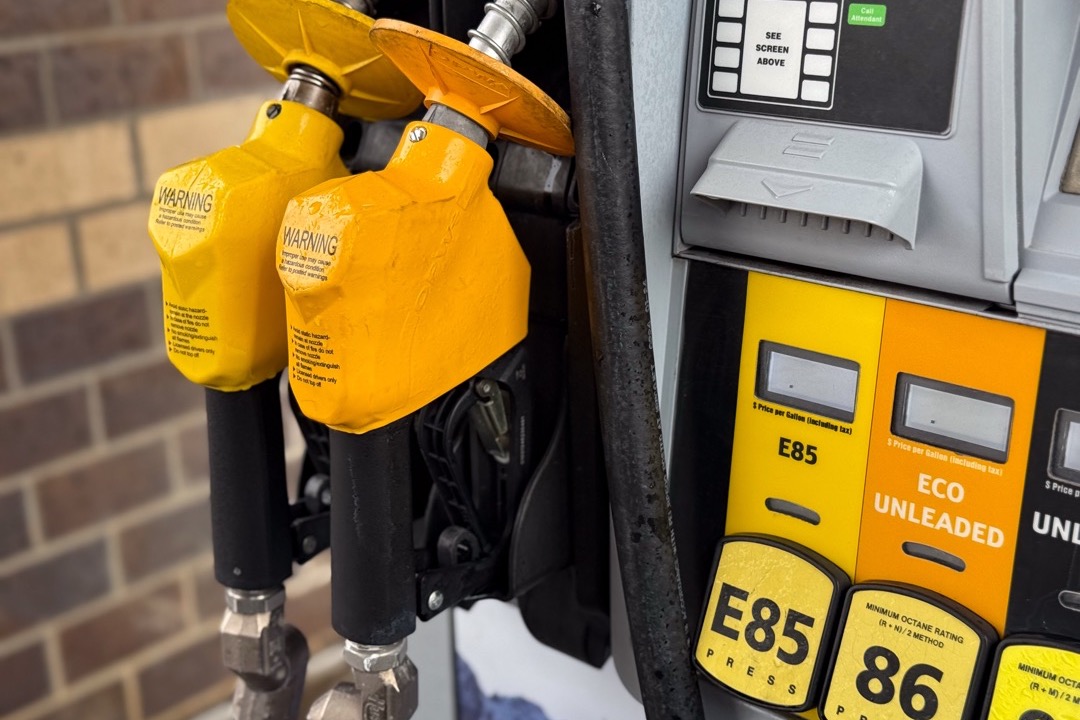
A customer rolled a 1968 Camaro into my shop last spring with a problem he could not figure out: the car would not start after sitting through the winter, and the cranking sound told me everything before I even pulled the air cleaner. The carburetor was full of varnish. The float bowl had a layer of yellow lacquer cemented to the bottom, the idle jets were plugged solid, and the accelerator pump diaphragm had hardened against its bore. He had skipped one storage season — one — and the cost was a complete carburetor rebuild plus the weekend of labor it took to chase down every plugged passage. The whole disaster could have been prevented with one bottle of fuel stabilizer. After 15 years as an ASE Master Technician, I have seen this exact failure mode hundreds of times across motorcycles, generators, lawn equipment, boats, and stored classics, and the pattern never changes: neglected fuel costs more than stabilizer, every single time. This roundup covers the seven best fuel stabilizers of 2026, organized by storage duration, fuel type, and the specific applications each one is designed for.
The reason fuel stabilization matters more in 2026 than it did 20 years ago is the ethanol blend in modern pump gasoline. The standard E10 fuel that comes out of every pump in the United States contains 10 percent ethanol, and ethanol absorbs water from atmospheric humidity continuously through the tank vent. Once enough water is absorbed, the fuel separates into two layers — a water-and-ethanol layer at the bottom and a hydrocarbon layer on top. The water layer corrodes everything it touches, the gasoline layer oxidizes into the gum and varnish that destroys carburetors and clogs injectors, and the engine that gets cranked on this fuel either will not start or runs poorly until the system is cleaned. A quality fuel stabilizer prevents both failure modes. If you store any gasoline equipment for more than 30 days — which describes virtually every mower, snowblower, motorcycle, boat, generator, and seasonal vehicle in the country — you need a stabilizer in the tank.
This is also where I want to flag the importance of pairing fuel stabilization with the rest of your seasonal maintenance. A stabilized fuel system gets you started in the spring; a neglected battery, dirty injectors, or contaminated coolant ruins the rest of the experience. If you are reading this for winter prep, also check our guides to the best fuel injector cleaners for spring restart and the best car battery chargers for keeping batteries topped off during long storage.
| Product | Price | Buy |
|---|---|---|
| STA-BIL Storage Fuel Stabilizer, 32 oz.Best Overall | $13.58 | View on Amazon |
| STA-BIL In-Season Protection Fuel System Treatment & Injector Cleaner, 4 oz.Budget Pick | $7.19 | View on Amazon |
| CRC Marine Gasoline Fuel Stabilizer, 1 GallonPremium Pick | $53.00 | View on Amazon |
| Star Tron Enzyme Fuel Treatment Concentrate, 16 oz.Runner-Up | $22.89 | View on Amazon |
| STA-BIL 360 Marine Ethanol Treatment & Fuel Stabilizer, 32 oz.Runner-Up | $22.71 | View on Amazon |
| Sea Foam Motor Treatment, 16 oz. (3-Pack)Runner-Up | $29.99 | View on Amazon |
| Lucas Oil Safeguard Ethanol Fuel Conditioner with Stabilizers, 16 oz.Runner-Up | $11.98 | View on Amazon |
Find the Right Fuel Stabilizer for Your Equipment
Jump to the pick that matches what you are storing or running:
- Best fuel stabilizers overall — our top picks reviewed
- Best for lawn mowers & small engines
- Best for generators
- Best for boats & marine
- Best for motorcycles
- Best for old or degraded gas
- Best for long-term storage
How We Chose These Fuel Stabilizers
Every product in this roundup was selected based on a verified Amazon ASIN with an active listing, meaningful review volume from verified purchasers, published treatment-ratio specifications, and documented performance in either independent testing or large-scale consumer validation. The clear cornerstone of the testing reference for this category is Project Farm’s 5-year fuel storage experiment — the most rigorous independent stabilizer comparison ever published — which provides objective performance data on the products that matter most. STA-BIL Storage and Star Tron Enzyme dominated that test, and both are featured prominently here. Beyond independent testing, the seven products in this roundup represent every meaningful chemistry approach — antioxidant, enzyme, hybrid cleaning-plus-stabilization, bulk high-potency preservation, and ethanol-specific formulation — across the price points and use cases that cover the realistic range of consumer storage applications.
Best Overall: STA-BIL Storage Fuel Stabilizer 32 oz
STA-BIL Storage earns the best overall position because it is the product I have been recommending to customers for 15 years and the product Project Farm’s 5-year independent test validated as the only stabilizer that successfully started a generator after 20 months of treated storage without using starting fluid. That second part deserves emphasis — Project Farm tested every major brand in identical conditions, and STA-BIL was the only one that passed the most stringent storage benchmark. When the most respected independent automotive testing channel on YouTube reaches that conclusion across a 5-year experiment, the practical implication is clear: this is the product that actually does what fuel stabilizer is supposed to do.
The 36,000-plus reviews at 4.8 stars are not a coincidence. STA-BIL has been the dominant fuel stabilizer in the U.S. market for more than 20 years, and that review corpus represents two decades of mowers, motorcycles, generators, boats, and stored gas cans that came out of storage and started on the first crank. The chemistry is straightforward antioxidant preservation — it stops the oxidation reactions that turn fresh gasoline into varnish — and the 24-month storage rating is documented and validated. For the standard winterization scenario that covers most American households — mower, snowblower, motorcycle, boat, generator — one 32 oz bottle treats 80 gallons at the recommended dose, which is more than enough fuel volume for a full year of seasonal storage across the entire equipment fleet.
The one operational detail that matters: add STA-BIL to fresh fuel before storage, fill the tank to minimize air space, and run the engine for 5 minutes after dosing to circulate the treated fuel through the carburetor or injector system. That 5-minute run is non-negotiable. Skipping it leaves the fuel sitting in the carburetor or fuel rail untreated, which defeats the purpose. Do those three things — fresh fuel, full tank, 5-minute run — and STA-BIL Storage delivers exactly what the label promises.
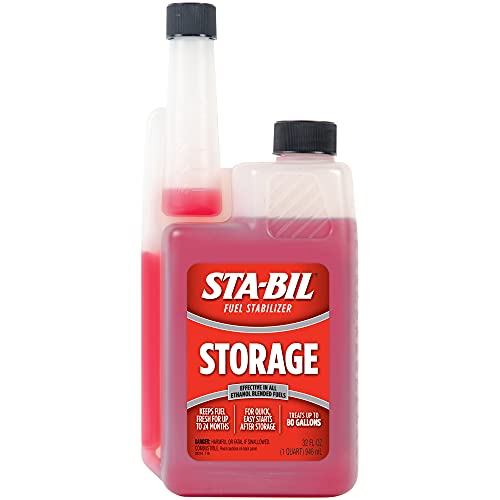
STA-BIL Storage Fuel Stabilizer, 32 oz.
by STA-BIL
The default fuel stabilizer for every garage -- 36,000-plus reviews, 20-plus years of proven results, the only product that won Project Farm's independent 5-year storage test, and the right choice for winterizing mowers, motorcycles, boats, generators, and stored gas cans.
Pros
- America's number-one fuel stabilizer with 36,000-plus verified reviews and more than 20 years of proven results -- the volume of buyer validation across decades of stored mowers, motorcycles, boats, generators, and gas cans is the strongest social-proof signal in the entire fuel-additive category, and the product holds 4.8 stars across that enormous review corpus
- Prevents gum, varnish, rust, and corrosion in all gasoline engines including 2-cycle equipment -- the antioxidant chemistry stops the oxidation reactions that turn fresh gasoline into the sticky lacquer that clogs carburetor jets and fuel injector pintles, which is the single most expensive failure mode for stored small engines
- Treats 80 gallons of fuel per 32 oz bottle at the standard 1 oz per 2.5 gallon ratio, which makes it the right value for a household with multiple stored items -- one bottle covers a mower, a generator, a motorcycle, and a boat for an entire winter without needing to track separate inventory
- Project Farm's independent 5-year fuel storage test ranked STA-BIL Storage as the only product that successfully started a generator without starting fluid after 20 months of treated storage -- this is the most rigorous independent fuel-stabilizer comparison ever published, and STA-BIL won it
Cons
- Must be added to fresh fuel and the engine must be run for 5 minutes after dosing to circulate the treated fuel through the entire fuel system -- adding STA-BIL to a tank that already contains degraded fuel does not reverse the existing oxidation, and skipping the 5-minute run leaves the carburetor or injectors filled with untreated gasoline
- Lower treatment concentration than enzyme-based alternatives -- 1 oz per 2.5 gallons compared to Star Tron's 1 oz per 16 gallons means more bottle volume is consumed per gallon of fuel treated, which matters for high-volume storage applications like marina fuel tanks or fleet generators
STA-BIL 360 Protection 4 oz — Best Budget
One naming note before anything else: Amazon now lists this bottle as STA-BIL In-Season Protection Fuel System Treatment & Injector Cleaner, not STA-BIL 360 Protection. It is the same 360 Protection formula in the same 4 oz bottle — the product detail page still describes the 360 chemistry in its own bullet points — so do not assume you have landed on the wrong item when the title reads differently to the name you searched for.
STA-BIL 360 Protection is the right product for the daily-driven vehicle owner who wants the brand without committing to the 32 oz Storage bottle. At under 7 dollars per bottle, it is the lowest entry point in the entire STA-BIL lineup, and the formulation is genuinely different from STA-BIL Storage — this is a cleaning-plus-stabilization product rather than a pure preservative. The polyetheramine (PEA) cleaning chemistry removes deposits from injectors and intake valves while the stabilization chemistry handles the ethanol protection that pump gas requires. For the owner who runs E10 in a daily-driven sedan, dropping a 4 oz bottle into the tank every few fill-ups provides ongoing injector cleaning that pays for itself in fuel economy.
The fuel economy claim deserves a closer look because customers report it consistently. The mechanism is straightforward: dirty injectors do not atomize fuel uniformly, which throws off the air-fuel mixture, which the ECU compensates for by enriching, which reduces mileage. PEA cleaners remove the deposits, the spray pattern returns to factory specification, and the ECU stops compensating. The reported 5 mpg improvement is consistent with the published data on PEA injector cleaner effectiveness in vehicles with significant deposit buildup. For a daily driver doing 12,000 miles per year at 25 mpg, recovering 5 mpg over the course of the year is a substantial fuel cost savings — enough to pay for the additive many times over.
The trade-off is the small bottle size. A 4 oz bottle treats 20 gallons — one fill-up for a typical sedan or SUV plus a small mower or two — which makes this the wrong product for storage tanks, bulk gas cans, or large fleet applications. For those situations, the 32 oz STA-BIL Storage or Star Tron Enzyme are the right choices on per-gallon economics. STA-BIL 360 Protection is purpose-built for the in-season fill-up application, and within that scope, it is the best value entry into the STA-BIL ecosystem.

STA-BIL In-Season Protection Fuel System Treatment & Injector Cleaner, 4 oz.
by STA-BIL
STA-BIL's most affordable entry point doubles as a fuel injector cleaner -- the smart add-on for daily drivers running ethanol-blended pump gas who want injector cleaning and ethanol protection in a single under-7-dollar bottle.
Pros
- Lowest entry price in the entire STA-BIL product line at under 7 dollars per bottle, which makes it the right choice for an owner who wants to try the brand without committing to the 32 oz Storage bottle -- a single 4 oz bottle treats 20 gallons, which covers a typical car fill-up plus a mower or two
- Bundles polyetheramine (PEA) injector cleaner with ethanol protection in a single bottle -- this is unusual at this price point, and it means the product cleans deposits off injectors and intake valves while it stabilizes the fuel against ethanol-related water absorption
- Customers consistently report fuel economy improvements of approximately 5 mpg with regular use in daily-driven vehicles -- the PEA cleaner removes the deposits that throw off fuel atomization and combustion timing, and cleaner injectors deliver more consistent spray patterns that translate directly to better mileage
- Single-fill-up size matches the practical use case for daily drivers -- one 4 oz bottle treats up to 20 gallons of pump gas, which is exactly the capacity of a typical sedan or compact SUV fuel tank, eliminating the measurement guesswork that comes with larger bottles
Cons
- Small 4 oz bottle treats only 20 gallons, which is too little for storage tanks, bulk fuel jugs, or seasonal winterization of multiple pieces of equipment -- for a household with a mower, generator, motorcycle, and boat, the 32 oz STA-BIL Storage is the more economical choice
- Formulated as an in-season treatment for active-use vehicles, not as a long-term storage stabilizer -- the protective claims center on cleaning and ethanol defense rather than the 24-month storage protection that the dedicated STA-BIL Storage product provides
CRC Marine Gasoline Fuel Stabilizer 1 Gallon — Best Premium / Bulk Storage
First, an honest housekeeping note: this slot used to belong to PRI-G, the military-grade preservative I recommended for multi-year fuel storage. As of July 2026, the PRI-G gasoline formula is no longer sold on Amazon — only the diesel-formula PRI-D remains listed — so I have replaced it with the best bulk-storage stabilizer you can actually buy today. If you specifically need PRI-G’s multi-year rejuvenation chemistry, it is still available direct from industrial suppliers; for everyone else, the CRC gallon covers the bulk-volume job at economics no retail bottle can touch.
CRC Industries is not a consumer additive startup — it is the chemical company that has been supplying maintenance chemistry to professional marine, heavy-duty, and industrial shops for decades, and any working mechanic recognizes the brand from the parts washer shelf. This gallon of high-potency stabilizer is the product I point at when a customer runs real fuel volume: a landscaping outfit winterizing a trailer full of 2-stroke equipment, a marina dosing customer tanks at end of season, an off-grid homeowner keeping generator fuel in drums, or the multi-machine household with a boat, two sleds, a mower, and a generator all going into storage the same month. At 1 oz per 5 gallons, the 128 oz jug treats 640 gallons of fuel — the per-gallon math lands around eight cents, which no small retail bottle in this roundup approaches.
The ‘Marine’ on the label deserves a quick decode, because it stops land-equipment buyers who should not be stopped. The marine designation reflects the protection level — the formula is built for the worst-case ethanol-and-moisture environment that boat tanks live in — but the application list on the jug explicitly covers all 2-cycle and 4-cycle gasoline engines: mowers, chainsaws, generators, snow blowers, snowmobiles, motorcycles, tractors, and automobiles. Two practical notes: keep a proper measuring cup with the jug since there is no dosing chamber, and treat this as a season-to-season product — dose fresh fuel going into storage and re-dose annually if the equipment sits longer, the same protocol you would run with any antioxidant stabilizer.
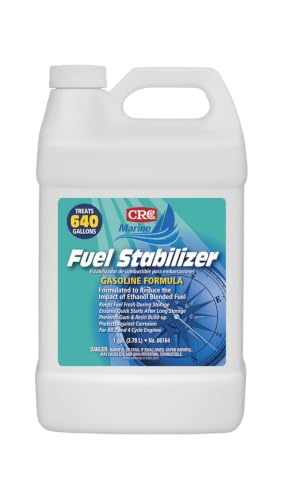
CRC Marine Gasoline Fuel Stabilizer, 1 Gallon
by CRC
The pro-shop bulk buy -- CRC's high-potency gallon treats 640 gallons at the best antioxidant-stabilizer economics on Amazon, the right answer for fleets, marinas, and multi-machine garages that dose serious fuel volume every season.
Pros
- CRC Industries is the chemical brand professional shops already trust -- the company supplies maintenance chemistry for marine, heavy-duty, and industrial engines, and this stabilizer carries that same pro-grade formulation pedigree into a consumer-purchasable jug rather than being a retail-shelf brand extension
- Bulk gallon format delivers the best antioxidant-stabilizer economics on Amazon -- at 1 oz per 5 gallons, the 128 oz jug treats 640 gallons of fuel, which works out to roughly a twelfth of the per-gallon cost of dosing the same volume with small retail bottles, and is the reason this is the fleet, marina, and multi-machine-garage answer
- High-potency concentrated formula targets both of the stored-fuel failure modes -- it suppresses the gum and resin formation that oxidation produces AND reduces the harmful impact of ethanol-blended gasoline on fuel system components, so one product covers the E10 pump-gas reality that most stored equipment lives with
- Explicitly rated for every gasoline application in the typical equipment fleet -- all 2-cycle and 4-cycle engines including mowers, chainsaws, generators, snow blowers, snowmobiles, motorcycles, jet skis, tractors, and automobiles -- so the one jug on the shop shelf covers everything from the trimmer to the tow vehicle
Cons
- The 'Marine' label makes land-equipment owners hesitate, but the application list on the jug is explicit: lawn and garden equipment, generators, automobiles, and tractors are all listed uses -- the marine designation reflects the ethanol-and-moisture protection level, not a restriction to boats
- Small review corpus of 70 on this gallon listing compared to the five-figure counts on STA-BIL and Star Tron -- CRC's brand reputation is decades deep in professional channels, but buyers who weight Amazon social proof heavily will notice the thinner public validation
- A gallon jug has no built-in dosing chamber, so you need a measuring cup or dosing bottle to hit the 1 oz per 5 gallon ratio accurately -- and the 53 dollar upfront cost only makes sense if you actually store enough fuel volume to work through a 640-gallon jug
Star Tron Enzyme Fuel Treatment 16 oz — Best for Ethanol Protection
Star Tron Enzyme is the runner-up overall and the product I recommend specifically for owners dealing with ethanol-related fuel problems. The chemistry is fundamentally different from antioxidant stabilizers like STA-BIL — Star Tron uses an enzyme-based formulation that actively breaks down the ethanol-water layer at the sub-micron level, rather than just preventing oxidation of the hydrocarbon component. This matters when the fuel is already contaminated. Antioxidant stabilizers cannot reverse phase separation that has already occurred, but enzyme stabilizers can re-emulsify the water-and-ethanol layer back into the fuel column where it can be burned through normal combustion. For a marina operator dealing with stored boat fuel that has absorbed water through six months of high-humidity conditions, Star Tron is the more aggressive intervention.
The per-gallon economics are also exceptional. At 1 oz per 16 gallons, a single 16 oz bottle treats 256 gallons — more than three times the gallons-treated-per-bottle of STA-BIL Storage at a comparable upfront price. For owners with high total fuel storage volume across multiple stored items, Star Tron is the cost-leader. The Project Farm 5-year independent test validated this product as the second-best stabilizer in the comparison, behind only STA-BIL Storage. When the most rigorous independent testing in the category produces that result across two products with fundamentally different chemistries, the practical takeaway is that you have two excellent options and your selection should be driven by application: STA-BIL for pure preservation of fresh fuel, Star Tron for ethanol-heavy or already-contaminated systems.
The other underrated advantage of Star Tron is engine-type versatility. The product is safe in gasoline AND diesel engines and works in 2-stroke and 4-stroke applications. For a household with mixed equipment — gas mower, diesel generator, 2-stroke chainsaw, gas outboard — one 16 oz bottle of Star Tron handles the entire fleet. That inventory simplification is meaningful for owners who do not want to maintain separate stabilizer bottles for each engine type, and it is one of the few cases where a single product genuinely serves an entire mixed application without compromise.

Star Tron Enzyme Fuel Treatment Concentrate, 16 oz.
by Star Brite
The enzyme-powered alternative that actively breaks down ethanol water and sludge while it stabilizes fuel -- the right choice for owners with high-ethanol pump gas, contaminated tanks, or mixed gas-and-diesel equipment fleets.
Pros
- Enzyme technology actively breaks down the ethanol-related water and sludge inside the tank at the sub-micron level -- this is a fundamentally different mechanism than antioxidant stabilizers, and it is the reason Star Tron is the answer for owners who are dealing with already-contaminated fuel rather than just preserving fresh fuel
- Extraordinary treatment concentration of 1 oz per 16 gallons means a single 16 oz bottle treats 256 gallons -- this is far more economical per gallon than standard antioxidant stabilizers, and it makes Star Tron the cost-leader for owners with high total fuel-storage volume across multiple stored items
- Safe to overtreat without engine damage and works across every engine type -- gasoline, diesel, 2-stroke, and 4-stroke -- which means one bottle covers the mixed equipment fleet that most households actually own without requiring separate gas-only and diesel-only inventory
- Project Farm's 5-year fuel storage test ranked Star Tron as the second-best product behind STA-BIL Storage for fuel preservation, which validates the enzyme chemistry against rigorous independent testing rather than marketing claims -- this is the only product in the test that came close to STA-BIL's performance
Cons
- Higher per-bottle price than STA-BIL Storage despite treating more than three times the fuel volume -- the per-gallon cost favors Star Tron heavily, but the upfront sticker price feels expensive next to a bottle of STA-BIL Storage to buyers who do not calculate the gallons-treated math
- Less recognizable in mass-market retail than the STA-BIL brand, which means fewer impulse purchases at parts stores and gas stations -- owners who only know fuel stabilizers by the STA-BIL name often skip Star Tron without realizing the enzyme chemistry is functionally different
STA-BIL 360 Marine 32 oz — Best for Boats and Marine
STA-BIL 360 Marine is engineered for one specific environment: the high-moisture, high-corrosion conditions that marine fuel systems experience. Boat tanks, jet ski tanks, and outboard motor fuel systems live in air saturated with water vapor, and they absorb moisture continuously through the tank vent during normal operation. The corrosion inhibitor package in STA-BIL Marine is formulated for that specific failure mode rather than the dry-storage conditions that land-based equipment experiences. On top of corrosion protection, the product includes polyetheramine (PEA) cleaning chemistry that actively removes water, gum, and varnish from injectors, fuel lines, and carburetor passages. This is a cleaning-plus-stabilization product purpose-built for the marine application.
The treatment concentration is generous at 1 oz per 10 gallons, which means the 32 oz bottle treats 320 gallons of fuel. For a typical boat with a 50 to 75 gallon fuel tank, one bottle covers four to six full fill-ups, which makes the per-fill economics very favorable for an in-season treatment that you add at every refueling stop. The product is safe across the full range of marine engine types — 2-stroke and 4-stroke outboards, inboards, sterndrives, jet skis, personal watercraft — which removes the engine-type matching guesswork that complicates some marine fuel additive selection.
The important operational distinction: STA-BIL Marine is primarily an in-season treatment for active-use marine equipment, not a long-term winter storage product. For end-of-season winterization with the boat sitting in storage from October through April, the dedicated STA-BIL Storage formulation provides better long-duration preservation chemistry, and many serious boat owners use both products — Marine during the active season for ongoing protection, Storage at the end of the season for the lay-up. The two-product approach covers the entire annual cycle and is what I recommend to customers who want to maximize protection on a substantial boat investment. While you are handling the winter lay-up, also consider one of the best car covers — many of the same materials work for shrink-wrap-alternative boat covers in unheated storage.
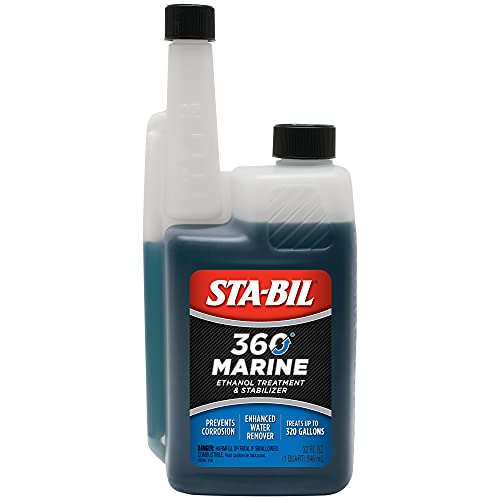
STA-BIL 360 Marine Ethanol Treatment & Fuel Stabilizer, 32 oz.
by STA-BIL
The marine-engineered STA-BIL formulation that battles corrosion, ethanol, and water in one blue bottle -- the trusted choice for boat, jet ski, and outboard owners during the active season.
Pros
- Industry-leading corrosion protection engineered specifically for the high-moisture environment of marine fuel systems -- boats, jet skis, and outboards live in air saturated with water vapor, which means their fuel tanks absorb moisture continuously, and the corrosion inhibitors in STA-BIL Marine are formulated for that specific failure mode rather than the dry-storage conditions that land-based equipment experiences
- Polyetheramine (PEA) fuel system cleaners actively remove water, gum, and varnish from injectors, fuel lines, and carburetor passages -- this is a cleaning function on top of stabilization, which means the product addresses both prevention of new deposits and removal of existing buildup in a single bottle
- Highly concentrated at 1 oz per 10 gallons, which means the 32 oz bottle treats 320 gallons of fuel -- for a typical boat with a 50 to 75 gallon fuel tank, one bottle covers four to six full fill-ups, making the per-fill economics very favorable
- Safe and effective across the full range of marine engine types -- jet skis, outboards (2-stroke and 4-stroke), inboards, sterndrives, and personal watercraft -- which removes the engine-type matching guesswork that plagues some marine fuel additive selection
Cons
- Primarily formulated as an in-season treatment to combat the active corrosion that marine fuel systems experience during the boating season -- for long-term winter lay-up of 6 months or more, the dedicated STA-BIL Storage product provides better preservation chemistry, and many marine owners use both
- Premium price relative to standard STA-BIL Storage for buyers who do not have marine-specific moisture and corrosion concerns -- a bass boat operator on a freshwater lake gains the full benefit, but a small-engine owner using STA-BIL Marine on a generator is paying a marine premium for protection they do not need
Best Multi-Purpose: Sea Foam Motor Treatment
Sea Foam Motor Treatment is the product mechanics reach for when a customer brings in a neglected engine that has been sitting with degraded fuel. The petroleum distillate base dissolves the lacquer-like varnish deposits that form when ethanol-blended pump gas sits unused for months, which is the root cause of most carburetor failures in stored small engines. The product is genuinely versatile — it functions as a fuel stabilizer, a carburetor and injector cleaner, and a crankcase oil treatment, all from the same iconic green can (now sold in a three-can value pack, since Sea Foam’s single-can listings have gone in and out of stock on Amazon). This is the only product in this roundup that legitimately spans all three applications, which is what makes it the high-utility choice for owners who want one bottle to handle multiple maintenance functions.
The cross-fuel-type compatibility is also rare in this category. Sea Foam works in both gasoline AND diesel engines and is safe for 2-stroke applications. For the owner with a gas mower, a diesel generator, a 2-stroke chainsaw, and an outboard in the same garage, one can of Sea Foam covers the entire fleet without needing to stock separate gas-only and diesel-only stabilizers. The decades-long reputation among professional mechanics for reviving neglected engines is well-earned — when I have a customer’s classic that has been sitting for 3 years and the carburetor is full of varnish, Sea Foam is the first thing I try before tearing the carburetor down. It frequently dissolves enough deposits to get the engine running, which buys time to do a proper carb service when the schedule allows.
The trade-off is treatment concentration. The standard fuel-stabilization dose is 1 oz per gallon, which means each 16 oz can treats only 16 gallons — significantly less than dedicated stabilizers like STA-BIL Storage at 80 gallons per 32 oz bottle or Star Tron at 256 gallons per 16 oz bottle. For pure fuel stabilization economics, Sea Foam is more expensive per gallon than purpose-built stabilizers. But Sea Foam is not really competing as a pure stabilizer — it is the carburetor cleaner and engine treatment that also stabilizes fuel, which is a different value proposition. For carbureted engines, neglected systems, and mixed-fleet applications, the multi-purpose utility justifies the per-gallon premium.

Sea Foam Motor Treatment, 16 oz. (3-Pack)
by Sea Foam
The mechanic's go-to multi-tasker that stabilizes fuel, cleans carbs and injectors, and conditions oil -- all from the iconic green can, now in a value 3-pack, that works on gasoline, diesel, and 2-stroke engines.
Pros
- True 3-in-1 product that functions as a fuel stabilizer, a carburetor and injector cleaner, and a crankcase oil treatment -- this is the only product in this roundup that legitimately spans all three applications, which makes it the high-utility choice for owners who want one bottle to handle multiple maintenance functions
- Works in both gasoline AND diesel engines and is safe for 2-stroke applications -- this rare versatility makes Sea Foam the right inventory choice for mixed-fleet operators with gas mowers, diesel generators, 2-stroke chainsaws, and outboards in the same garage who do not want to stock separate stabilizer bottles for each engine type
- Decades-long reputation among professional mechanics for reviving neglected engines that have been sitting with degraded fuel -- when a customer brings in a classic that has not run in 3 years and the carb is full of varnish, Sea Foam is the first thing most experienced techs try before tearing the carburetor down
- Especially effective on carbureted engines with gum and varnish buildup in the float bowl, jets, and idle circuits -- the petroleum distillate base dissolves the lacquer-like deposits that form when ethanol-blended pump gas sits unused for months, which is the root cause of most carburetor failures in stored small engines
Cons
- Lower treatment concentration than dedicated stabilizers -- the standard fuel-stabilization dose is 1 oz per gallon, which means each 16 oz can treats only 16 gallons per pour compared to STA-BIL Storage's 80 gallons or Star Tron's 256 gallons, and the per-gallon cost works out higher for pure stabilization use
- Some shipping complaints about dented or partially-leaked cans from third-party Amazon sellers -- buying from a fulfilled-by-Amazon listing rather than a third-party reseller mitigates this risk, but the metal-can format is more vulnerable to shipping damage than plastic-bottle competitors
Lucas Oil Safeguard 16 oz — Best for Performance and Ethanol-Tuned Engines
Lucas Oil Safeguard fills a specific niche that no other product in this roundup addresses: stabilization and protection for performance and ethanol-tuned engines running aggressive flex-fuel blends. E30, E40, and E85 fuel applications stress the fuel system harder than standard pump gas — ethanol attacks rubber seals, accelerates corrosion in the high-pressure fuel pump, and absorbs water more aggressively than the 10 percent ethanol concentration that standard E10 contains. Lucas Safeguard is purpose-formulated for that stress profile, with seal-compatible chemistry and corrosion inhibitors engineered around the higher-ethanol fuel column. For owners of modified daily drivers, hot rods, and tuned engines running flex-fuel blends, generic fuel stabilizers either lack the ethanol protection or compromise the additive package designed around higher-ethanol chemistry.
The product also includes injector, valve seat, and combustion chamber cleaning agents as part of the conditioner formula, which makes it appropriate for ongoing in-season use rather than just storage preservation. The Lucas Oil brand recognition matters here — the company manufactures more than 100,000 highly-rated Amazon products across motor oil, additives, gun oil, and industrial lubricants, and the brand-wide quality control translates to consistent formulation reliability that lower-volume stabilizer brands cannot match. For a customer running a tuned daily driver on E30 or a flex-fuel vehicle on E85, Safeguard is the right answer where the volume-leader stabilizers are not formulated for the ethanol concentrations in question.
The lower review count (under 150) deserves acknowledgment — this product has a smaller social-proof corpus than category leaders like STA-BIL with 36,000-plus reviews or Star Tron with nearly 10,000. The reviews are positive (4.8 stars), but the overall validation volume is smaller. The Lucas Oil brand reputation provides additional confidence beyond the individual product review count, but buyers who weight social-proof heavily should factor this in. For the specific application — ethanol-tuned engines and flex-fuel blends — Safeguard is the right product. For general-purpose stabilization, the volume leaders elsewhere in this roundup are appropriate.

Lucas Oil Safeguard Ethanol Fuel Conditioner with Stabilizers, 16 oz.
by Lucas Oil
Lucas Oil's ethanol-specific formula protects high-performance and ethanol-tuned engines where generic stabilizers fall short -- the right choice for E30, E40, and E85 flex-fuel applications.
Pros
- Manufactured by Lucas Oil, a brand with a 100,000-plus highly-rated Amazon product catalog and a long-standing reputation in performance and racing applications -- the brand recognition translates to consistent quality control and formulation reliability that lower-volume stabilizer brands cannot match
- Trusted by performance enthusiasts and ethanol-tuned engine owners running E30, E40, and E85 flex-fuel blends for high-pressure fuel pump (HPFP) protection and seal compatibility -- ethanol-tuned engines run more aggressive injection pressures and harder seals, and the Safeguard formulation is engineered for that specific stress profile
- Includes injector, valve seat, and combustion chamber cleaning agents as part of the conditioner formula -- this is a cleaning function on top of stabilization, which makes the product appropriate for ongoing in-season use rather than just storage preservation
- Strong choice for hot rods, modified daily drivers, and tuned engines running flex-fuel blends where conventional stabilizers either lack the ethanol protection or compromise the additive package designed around higher-ethanol fuel chemistry
Cons
- Lower review count (under 150) reduces the social-proof weight compared to category leaders like STA-BIL with 36,000-plus reviews or Star Tron with nearly 10,000 reviews -- the Lucas Safeguard product is well-validated by enthusiast users, but the public review corpus is smaller than the volume sellers
- No explicit long-term storage duration claim on the label -- the product is positioned as an in-season conditioner with stabilizer additives rather than a 24-month storage product, which means owners doing winter lay-up should pair Safeguard with a dedicated storage stabilizer or use STA-BIL Storage instead
Best Fuel Stabilizer for Lawn Mowers and Small Engines
Mowers, snow blowers, pressure washers, and other small carbureted engines are where stored fuel does the most expensive damage — the tiny brass jets and idle circuits varnish over faster than any car tank. You want a stabilizer that either prevents that varnish for a full off-season or dissolves it if it has already started. These three cover both jobs.
| Product | Price | Buy |
|---|---|---|
| STA-BIL Storage Fuel Stabilizer, 32 oz.Best for winter storage The default small-engine winterizer -- won Project Farm's 5-year test and treats 80 gallons per bottle for the whole equipment fleet | $13.58 | View on Amazon |
| Star Tron Enzyme Fuel Treatment Concentrate, 16 oz.Best value per gallon Enzyme formula at 256 gallons per bottle -- the cheapest per-gallon way to cover a garage full of 2-stroke and 4-stroke gear | $22.89 | View on Amazon |
| Sea Foam Motor Treatment, 16 oz. (3-Pack)Best carb-cleaning combo Also cleans the gum and varnish already in a neglected carburetor, not just preventing new deposits | $29.99 | View on Amazon |
Best Fuel Stabilizer for Generators
A standby generator only earns its keep if it starts on the first pull after months of sitting — which makes stored-fuel stability non-negotiable. For a generator you top up seasonally, a proven 24-month stabilizer is enough; for off-grid drums and bulk fuel caches, buy the stabilizer in bulk too and re-dose year over year.
| Product | Price | Buy |
|---|---|---|
| STA-BIL Storage Fuel Stabilizer, 32 oz.Best all-around Proven 24-month protection and the largest review corpus in the category -- the safe default for a home standby unit | $13.58 | View on Amazon |
| CRC Marine Gasoline Fuel Stabilizer, 1 GallonBest for off-grid drums The bulk gallon treats 640 gallons -- dose the drums when you fill them and re-dose annually for multi-year fuel caches | $53.00 | View on Amazon |
| Star Tron Enzyme Fuel Treatment Concentrate, 16 oz.Best value per gallon Enzyme chemistry that stretches furthest per retail bottle when you are treating high fuel volume | $22.89 | View on Amazon |
Best Fuel Stabilizer for Boats and Marine
Marine fuel systems live in air saturated with moisture, so ethanol water absorption and corrosion are the dominant failure modes — not just oxidation. The right pick is engineered for that wet environment; the enzyme runner-up is the more aggressive fix when a boat tank has already pulled in water over a humid season.
| Product | Price | Buy |
|---|---|---|
| STA-BIL 360 Marine Ethanol Treatment & Fuel Stabilizer, 32 oz.Best marine-specific Purpose-built corrosion inhibitors plus PEA cleaners for outboards, jet skis, and inboards during the season | $22.71 | View on Amazon |
| Star Tron Enzyme Fuel Treatment Concentrate, 16 oz.Best for water-contaminated fuel Enzyme formula re-emulsifies the ethanol-water layer that builds up in humid marine tanks | $22.89 | View on Amazon |
Best Fuel Stabilizer for Motorcycles
A bike parked for the winter has a small tank and often a carburetor, so it is vulnerable to the same varnish that kills mowers — but you also want ethanol protection because motorcycles are frequently run on premium pump gas. These three span full-season storage, enzyme ethanol defense, and an easy single-fill bottle.
| Product | Price | Buy |
|---|---|---|
| STA-BIL Storage Fuel Stabilizer, 32 oz.Best for winter lay-up The 24-month storage standard -- fill the tank, dose, and run it five minutes before the bike goes away for winter | $13.58 | View on Amazon |
| Star Tron Enzyme Fuel Treatment Concentrate, 16 oz.Best ethanol enzyme Actively breaks down ethanol water for bikes run on high-ethanol premium pump gas | $22.89 | View on Amazon |
| STA-BIL In-Season Protection Fuel System Treatment & Injector Cleaner, 4 oz.Best small single-fill bottle A 4 oz bottle treats one tank cleanly -- no leftover big bottle for an owner with a single bike | $7.19 | View on Amazon |
Best Fuel Stabilizer for Old or Degraded Gas
Most stabilizers only protect fresh fuel — they cannot reverse gas that has already turned. If a tank has been sitting for a year and the fuel smells sour, you need a product that dissolves varnish or actively breaks down the contamination. (The old champion of true fuel rejuvenation, PRI-G, has left Amazon — these two are the products that still genuinely work on already-bad gas.)
| Product | Price | Buy |
|---|---|---|
| Sea Foam Motor Treatment, 16 oz. (3-Pack)Best varnish cleaner The mechanic's first try on a varnished carburetor -- dissolves the lacquer that fresh-fuel stabilizers only prevent | $29.99 | View on Amazon |
| Star Tron Enzyme Fuel Treatment Concentrate, 16 oz.Best water re-emulsifier Enzyme action breaks the ethanol-water-sludge layer back into burnable fuel and stabilizes what is left | $22.89 | View on Amazon |
Best Fuel Stabilizer for Long-Term Storage
For a classic that leaves the garage once a year, an off-grid fuel cache, or a seasonal cabin, a single dose of a standard stabilizer is not enough. The honest multi-year protocol with what is available on Amazon today: start with the longest-rated preservative, and re-dose annually to keep the antioxidant package active — annual re-dosing is what carries fuel past the label window, whichever product you use.
| Product | Price | Buy |
|---|---|---|
| STA-BIL Storage Fuel Stabilizer, 32 oz.Best multi-year protocol The longest documented rating (24 months) in the roundup -- re-dose annually and it is the collector-car standard now that PRI-G has left Amazon | $13.58 | View on Amazon |
| CRC Marine Gasoline Fuel Stabilizer, 1 GallonBest for bulk volume The gallon jug is the economical way to run the annual re-dose protocol across drums, boats, and multi-tank fleets | $53.00 | View on Amazon |
Buyer's Guide
Choosing the right fuel stabilizer is less about brand and more about matching three variables to your specific situation: how long the equipment will be stored, what kind of fuel you are running, and whether you also need cleaning capability on top of pure preservation.
Storage Duration
The single most important variable in stabilizer selection. For short-term in-season use of a daily-driven vehicle, almost any quality stabilizer works -- STA-BIL 360 Protection or Lucas Safeguard provides the right combination of cleaning and ethanol defense. For 3 to 6 months of seasonal storage -- winterizing a mower, snowblower, or motorcycle -- STA-BIL Storage or Star Tron Enzyme are the right choices because both are documented for 12 to 24 month preservation. For storage beyond 12 months, the honest protocol is annual re-dosing -- start with the longest-rated product (STA-BIL Storage at 24 months) and re-dose each year to keep the sacrificial antioxidant package active, and if you are treating bulk volume, the CRC gallon makes that annual protocol economical. Match the storage duration to the product's documented performance window, and re-dose annually if the equipment will sit longer than the original treatment.
Fuel Type
Gasoline, ethanol-blended gasoline (E10, E15, E85), diesel, and 2-stroke pre-mix all have different stabilization requirements, and using the wrong stabilizer can cause damage. Gasoline-formulated stabilizers like STA-BIL Storage and the CRC gallon are not diesel products -- diesel stabilization uses a different additive chemistry sold as dedicated diesel treatments. Sea Foam and Star Tron are the only products in this roundup that work safely in both gasoline AND diesel, which makes them the right choice for owners with mixed fleets. Most modern pump gas in the United States is E10, and any quality stabilizer handles E10 well. Higher-ethanol blends like E85 require dedicated formulas like Lucas Safeguard. For 2-stroke applications, confirm the stabilizer is 2-stroke safe -- STA-BIL Storage, Star Tron, and Sea Foam all are.
Treatment Concentration
Concentration ratios in this roundup range from 1:1 (Sea Foam at 1 oz per gallon) to 1:16 (Star Tron), and the practical implications matter. High-concentration products like Star Tron deliver an exceptional per-gallon cost but require precise measurement -- a small overdose by volume is a large overdose by ratio, and there is less margin for casual measurement. Lower-concentration products like Sea Foam and STA-BIL 360 are more forgiving of imprecise dosing but cost more per gallon treated. For a household with low total fuel-storage volume -- one mower, one motorcycle -- the per-gallon economics matter less than the convenience of an easy-to-measure dose. For high-volume applications -- bulk fuel storage, marina operations, fleet generators -- the per-gallon cost favors Star Tron or the bulk CRC gallon heavily.
Ethanol Content
Pump gas with 10 percent ethanol (E10) absorbs water from atmospheric humidity continuously, and the resulting phase separation is the leading cause of stored-fuel failure. Higher ethanol blends -- E15 in some regions, E85 for flex-fuel vehicles -- accelerate this problem dramatically. Standard antioxidant stabilizers like STA-BIL Storage handle E10 fuel well but offer less protection at the higher ethanol concentrations of E85. Enzyme-based products like Star Tron actively break down the ethanol-water layer, which is the more aggressive treatment for high-ethanol fuel. Lucas Safeguard is purpose-formulated for ethanol-tuned engines running aggressive flex-fuel blends. If your local pump gas is E0 (ethanol-free), all of these products work -- but the urgency drops substantially because the primary degradation mechanism is the ethanol-water absorption that E0 fuel does not experience.
Engine Type: Carbureted vs Fuel Injected
Carbureted engines -- classic cars, vintage motorcycles, mowers, generators, chainsaws -- benefit substantially from stabilizers that include cleaning agents because the small passages and brass jets in a carburetor are extremely vulnerable to gum and varnish buildup. Sea Foam and Star Tron are particularly well-suited for carbureted applications because they actively dissolve the lacquer deposits that form in stored carburetors. Modern fuel-injected vehicles have closed pressurized fuel systems that resist deposit formation more effectively, and pure oxidation-prevention stabilizers like STA-BIL Storage provide adequate protection without needing the additional cleaning chemistry. The general rule: carb engines benefit from cleaning-plus-stabilization products, EFI engines need primarily pure stabilization.
Cleaning vs Pure Stabilization
Some products in this roundup are pure preservatives -- they prevent fuel degradation but do not actively clean the fuel system. STA-BIL Storage and the CRC gallon fall into this category, and they do their one job better and at a lower per-gallon cost than multi-function products. Other products combine stabilization with cleaning chemistry -- Sea Foam, Star Tron, STA-BIL 360, and Lucas Safeguard all include detergents or enzymes that remove existing deposits while stabilizing the fuel. Cleaning products are more expensive per gallon but address two problems with one bottle. Choose pure stabilizers for cost-optimized long-term storage of clean fuel systems, and choose cleaning-plus-stabilizer products for in-season use, neglected systems, or applications where deposit prevention matters as much as oxidation protection.
What a Fuel Stabilizer Actually Does
Gasoline starts going bad the day it leaves the refinery. The hydrocarbons in fresh gas are reactive compounds that combine with atmospheric oxygen in a process called oxidation, which produces gum and varnish — the sticky, lacquer-like residue that clogs carburetor jets and fuel injector pintles. In a vehicle that gets driven regularly, fresh fuel cycles through the tank fast enough that oxidation never produces enough gum to cause problems. In stored equipment, the fuel sits in the tank, the carburetor float bowl, and the injector rail for months or years, and the oxidation reactions proceed continuously until the fuel is no longer combustible and the deposits are extensive enough to require physical removal.
Fuel stabilizers work by interrupting the oxidation reactions before they can produce gum and varnish. The two main chemistry approaches are antioxidants and enzymes, and they are not interchangeable — they address different failure modes through different mechanisms.
Antioxidant vs Enzyme Chemistry
Antioxidant stabilizers — the chemistry behind STA-BIL Storage, STA-BIL Marine, the CRC gallon, and Lucas Safeguard — prevent oxidation by reacting preferentially with atmospheric oxygen before the gasoline hydrocarbons can. The antioxidant compounds are sacrificial, consumed over time as they protect the fuel, and the depletion rate determines the storage duration rating. STA-BIL Storage’s 24-month rating reflects how long the antioxidant package can absorb oxygen before depleting — and annual re-dosing replenishes that package, which is the mechanism behind every multi-year storage protocol. Antioxidant stabilizers are excellent at preserving fresh fuel against future oxidation, but they cannot reverse oxidation that has already occurred.
Enzyme stabilizers — the chemistry behind Star Tron and to some extent Sea Foam — use biological enzymes that actively break down fuel contaminants at the molecular level. Star Tron’s enzymes specifically target the ethanol-water-sludge layer that forms in ethanol-blended fuel, breaking the contamination back into combustible particles small enough to be burned through normal combustion. This is a fundamentally different mechanism than antioxidant prevention — enzymes can address fuel that is already contaminated, not just preserve fuel that is currently clean. For owners dealing with stored fuel that has been sitting with E10 pump gas for many months, enzyme stabilizers are the more aggressive intervention.
Why Ethanol Blends Degrade Faster
The 10 percent ethanol in standard E10 pump gas is hygroscopic — it absorbs water from atmospheric humidity through the tank vent. Once enough water is absorbed (typically a few percent by volume), the fuel undergoes phase separation: the water-and-ethanol mixture becomes denser than the gasoline component and sinks to the bottom of the tank as a separate layer. This layer corrodes the metal tank lining, the fuel pickup tube, and any aluminum or magnesium components in the fuel system. When the engine cranks on this fuel, it draws the water layer first, which causes hard starting, rough running, and potential damage to the high-pressure fuel pump in modern direct-injection engines. Higher-ethanol blends like E15 and E85 absorb water more aggressively, which is why ethanol-specific stabilizers like Lucas Safeguard exist as a category.
Mike’s ASE Winter Storage Protocol
After 15 years in the shop, here is the protocol I give every customer who asks how to store their vehicle, motorcycle, generator, or lawn equipment for the off-season. Follow these steps in order and you will not be one of the customers calling in March asking why nothing starts.
For cars and motorcycles stored 3 to 6 months:
- Fill the tank completely at the gas station — a full tank minimizes the air space where moisture can condense, and the fresh fuel from the pump has the least oxidation history.
- Add the storage dose of STA-BIL Storage (1 oz per 2.5 gallons) immediately at the pump while the tank is being filled, which mixes the stabilizer through the entire fuel column rather than leaving it concentrated at the top.
- Drive the vehicle for at least 15 minutes after dosing to circulate treated fuel through the entire fuel system — the tank, fuel lines, fuel rail, and injectors all need to be filled with treated fuel, not just the top of the tank.
- Park the vehicle on a clean dry surface, preferably indoors. Disconnect the negative battery terminal or connect a battery maintainer.
- Inflate tires to the maximum sidewall pressure to prevent flat spots over long-term storage, and place a moisture barrier under the vehicle if storing on a concrete floor.
For generators, mowers, snowblowers, and other small equipment:
- Run the equipment to operating temperature on its current fuel.
- Add the storage dose of STA-BIL Storage to a fresh tank fill (1 oz per 2.5 gallons), then run the engine for 5 minutes minimum to circulate treated fuel through the carburetor and fuel system.
- For carbureted equipment that will sit for more than 6 months, also drain the carburetor float bowl after the 5-minute run — even stabilized fuel can leave a residue in the small passages of a stored carburetor over multi-year storage.
- Store the equipment in a clean dry location. Do not store with the spark plug removed — that allows moisture into the cylinder and creates rust on the piston and rings.
For boats and marine equipment:
- During the active season, treat every fuel fill with STA-BIL Marine at the in-season dose to combat the continuous moisture absorption that marine fuel systems experience.
- At end of season, fill the tank to 95 percent capacity (leave room for thermal expansion), add the storage dose of STA-BIL Storage on top of the in-season Marine dose, and run the engine for 10 minutes to circulate the combined treatment through the entire fuel system.
- Fog the cylinders with marine fogging oil through the spark plug holes if storing for more than 4 months — this protects against internal cylinder corrosion in the high-humidity marine environment.
- Drain the cooling system (fresh-water-cooled engines) or flush thoroughly with fresh water (raw-water-cooled engines) before storage.
For stored classics and seasonal vehicles stored more than 12 months:
- Use STA-BIL Storage at the standard dose for the initial fill — it carries the longest documented rating in this roundup at 24 months. If you are treating bulk volume (drums, multiple tanks, a fleet), dose from the CRC gallon instead for the same antioxidant protection at bulk economics.
- Re-dose annually at the same rate, which replenishes the sacrificial antioxidant package — this annual re-dose is the step that carries stored fuel beyond the label rating, and skipping it is why “stabilized” fuel still goes bad in year two.
- Run the engine for 30 minutes once per quarter if possible — this circulates the treated fuel, charges the battery, and keeps moving parts lubricated. If running the engine is not possible, drain and refill the fuel annually with fresh stabilizer-treated gasoline.
Carbureted vs Fuel-Injected Engines: Storage Differences
The storage requirements for carbureted and fuel-injected engines are meaningfully different, and the right product choice reflects that difference. Carbureted engines have small brass jets, an exposed float bowl, and idle circuits that are extremely vulnerable to gum and varnish buildup — the same deposits that fuel stabilizers prevent. For a stored carbureted engine, the worst-case scenario is varnish buildup that physically clogs the jets and idle circuits, which requires a complete carburetor disassembly and ultrasonic cleaning to remediate. Fuel-injected engines have a closed pressurized fuel system that resists deposit formation more effectively. The pressurized rail keeps the fuel moving when the engine runs, the injector pintles are protected from atmospheric oxygen, and the typical failure mode in stored EFI vehicles is degraded fuel at the bottom of the tank rather than physical injector blockage.
The practical implication: carbureted equipment benefits substantially from stabilizers that include cleaning chemistry — Sea Foam, Star Tron, and STA-BIL 360 all dissolve existing deposits while they stabilize the fuel, which provides both prevention and remediation in one bottle. Fuel-injected vehicles need primarily pure stabilization — STA-BIL Storage and the CRC gallon are the right choices, and the additional cleaning chemistry of multi-function products provides marginal benefit for the closed EFI system. For owners with mixed equipment — a fuel-injected daily driver and a carbureted classic in the garage — two different products applied to different vehicles is the correct approach, not one universal product compromised across both applications.
A Note on Ethanol-Free Gasoline
If your local market has ethanol-free (E0) gasoline available, the math on fuel stabilization changes substantially. The primary degradation mechanism in stored E10 fuel — ethanol absorbing water from atmospheric humidity and triggering phase separation — does not occur with E0 fuel because there is no ethanol to absorb water. E0 gasoline still oxidizes over time and still benefits from a stabilizer for long-term storage, but the urgency drops significantly and the storage durations extend. Pure gasoline stored with stabilizer can remain viable for years where E10 stored with the same stabilizer might fail at 12 to 18 months.
Many states have ethanol-free options at marina pumps, certain off-road retailers, and dedicated E0 stations. The website PureGasUSA.org maintains a community-sourced database of ethanol-free pumps across the country, and it is worth checking for the closest E0 source if you store significant gasoline volume. The premium price of E0 over E10 is typically more than offset by the extended storage life and the elimination of phase-separation problems — particularly for boat owners, classic car owners, and anyone with high-value equipment that sits in long-term storage. If E0 is not available locally, a quality stabilizer is essential for any storage longer than 60 to 90 days.
How to Choose the Right Fuel Stabilizer
The selection process is straightforward once you have identified your storage duration, fuel type, and engine application. For 3 to 6 month seasonal storage of a mower, motorcycle, snowblower, or generator running standard E10 pump gas, STA-BIL Storage is the default correct answer — proven, affordable, and validated by the most rigorous independent testing in the category. For owners dealing with already-contaminated fuel or running high-ethanol blends, Star Tron Enzyme is the more aggressive intervention. For bulk fuel preservation — drums, fleets, marinas, multi-machine garages — the CRC Marine gallon delivers the volume economics, and annual re-dosing is the multi-year protocol whichever preservative you run. For boats and marine equipment during the active season, STA-BIL Marine is the corrosion-protection answer. For neglected carbureted engines that need cleaning along with stabilization, Sea Foam is the mechanic’s go-to. For ethanol-tuned performance engines running E30, E40, or E85, Lucas Safeguard is the purpose-formulated choice. And for the daily driver who wants ongoing in-season cleaning and ethanol protection in a small affordable bottle, STA-BIL 360 Protection 4 oz is the budget-friendly entry point.
The common thread across all seven recommendations: match the product to the application, dose at the recommended ratio, and run the engine after dosing to circulate treated fuel through the entire system. Skipping any of those three steps undermines whatever stabilizer you choose. While you are dialing in your maintenance routine, pair fuel stabilization with the right coolant for your vehicle and a quality injector cleaner — the three together cover the most expensive failure modes in stored and seasonally-driven vehicles.
Final Verdict
For the standard winterization scenario that covers the overwhelming majority of households — mower, motorcycle, snowblower, generator, occasional boat — STA-BIL Storage Fuel Stabilizer 32 oz is the correct choice. It is the product with the largest review corpus in the category at 36,000-plus reviews, the only product that won Project Farm’s 5-year independent storage test, and the right combination of price, performance, and gallons-treated-per-bottle for the realistic storage volumes that consumers actually deal with. One 32 oz bottle covers an entire fleet of seasonal equipment for a full year of storage, and the 24-month preservation rating handles the longest off-seasons that most owners encounter.
For the budget-conscious daily driver, STA-BIL 360 Protection 4 oz delivers in-season ethanol protection and PEA injector cleaning at the lowest entry price in the STA-BIL line. For owners with commercial fuel volume or multi-year storage needs, the CRC Marine gallon delivers pro-grade preservation at bulk economics — run the annual re-dose protocol and it covers drums, fleets, and multi-tank garages for a fraction of the per-gallon cost of retail bottles. For ethanol-heavy applications or already-contaminated fuel, Star Tron Enzyme is the more aggressive enzyme-based intervention. The right product for your application is the one that matches your storage duration, fuel type, and engine type — and any of the seven products in this roundup will do their job correctly when matched to the application they were designed for. The expensive mistake is not picking the wrong stabilizer; it is skipping stabilizer entirely and paying for a carburetor rebuild in the spring. Pair your fuel stabilization with the rest of your maintenance routine — check our guides to the best fuel injector cleaners and the best car battery chargers — and your stored equipment will start on the first crank when the season turns.
Frequently Asked Questions
Do fuel stabilizers actually work?
How long does gas go bad without stabilizer?
Can you put too much fuel stabilizer in gas?
Should I drain the gas or use stabilizer for winter storage?
Sea Foam vs STA-BIL -- which is better?
Related Articles
About the Reviewer

Mike Reeves, ASE Master Technician
A.A.S. Automotive Technology, Universal Technical Institute (UTI)
Mike Reeves is an ASE Master Technician with 15 years of hands-on experience in automotive repair and diagnostics. He earned his A.A.S. in Automotive Technology from UTI and runs his own independent shop in Denver, Colorado. Mike founded RevRated to help everyday car owners make smarter parts decisions -- every recommendation comes from real-world testing in his garage.