7 Best Windshield Wipers of 2026
Mike Reeves reviews the best windshield wipers of 2026. Compare beam, conventional, and hybrid blades by rubber type, fit, wipe quality, and real-world durability.
Updated
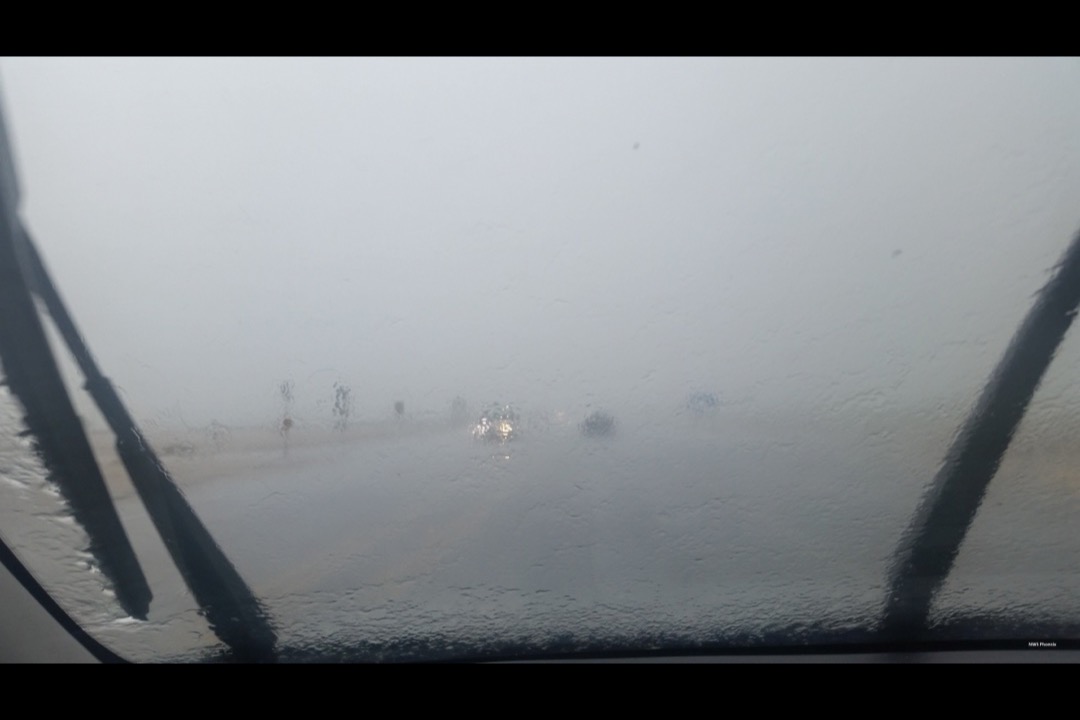
I have replaced wiper blades on thousands of vehicles over 15 years as an ASE Master Technician, and the windshield wiper question comes up more often than people expect — not because the answer is complicated, but because most drivers do not realize how much the construction type matters until they are scraping a seized conventional blade off a frozen windshield in January. Summer is the season that quietly kills blades, though — months of UV exposure and 150-degree windshield surface temperatures harden the rubber edge long before the first fall rain reveals the streaking, so a mid-year inspection is the cheapest insurance against a smearing windshield when the weather turns. The best windshield wipers in 2026 range from under 30 dollars for a reliable conventional set to over 70 dollars for a pair of silicone upgrade blades, and the difference in performance and longevity between them is substantial. If you are building out your vehicle maintenance toolkit, a quality wiper set pairs well with car wash soap and a proper car wax — clean glass and a well-protected finish are the two conditions under which wipers perform at their best.
For this roundup, I evaluated seven windshield wiper blades across blade construction type, rubber compound, fitment coverage, wipe quality, winter performance, and real-world owner review sentiment. The seven blades here cover every use case from a two-pack conventional set for the annual-replacement driver to silicone upgrade blades for the high-mileage driver who wants two seasons of service and a passively treated windshield.
After evaluating construction details, verified owner reports, and hands-on service experience, here are the best windshield wipers of 2026.
| Product | Price | Buy |
|---|---|---|
| Bosch ICON Beam Wiper Blades 22A22B (Set of 2)Best Overall | $52.99 | View on Amazon |
| Rain-X WeatherBeater Wiper Blades (22" Pack of 2)Budget Pick | $28.49 | View on Amazon |
| Bosch AeroTwin Wiper Blade Combo Pack (24" and 20", Set of 2)Runner-Up | $37.90 | View on Amazon |
| Rain-X Repellency Water Repellent Wiper Blade 22"Runner-Up | $21.88 | View on Amazon |
| PIAA Si-Tech Silicone Wiper Blade 22"Premium Pick | $37.93 | View on Amazon |
| 5 PLUS Premium Silicone Wiper Blades (26" and 16" Pair, J-Hook)Runner-Up | $16.19 | View on Amazon |
| Bosch Clear Advantage 26CA Beam Wiper Blade 26"Runner-Up | $7.59 | View on Amazon |
Find the Right Windshield Wiper for Your Need
Before you pick a blade, get your sizes. Driver and passenger blades are different lengths on most vehicles and they change between generations of the same model, so a chart listing one size per nameplate is a coin flip. Our free windshield wiper size finder returns driver, passenger, and rear sizes by year, make, and model, and will also tell you whether the size you can actually get is close enough to run.
Jump to the pick that matches your vehicle and climate:
- Best windshield wipers overall — our top picks reviewed
- Best beam wiper blades
- Best silicone wiper blades
- Best water-repellent wiper blades
How We Chose These Windshield Wipers
Every blade in this roundup was selected based on a verified Amazon listing, meaningful review volume at a statistically significant level, published specification data, and either independently validated performance data or a review base large enough to confirm real-world reliability claims. Blades with marketing claims unsupported by owner review data were excluded. The seven units here cover every construction type that is widely available on Amazon today (conventional, beam, and silicone), every price tier, and include an honest assessment of failure modes and limitations alongside strengths.
Best Overall: Bosch ICON Beam Wiper Blades
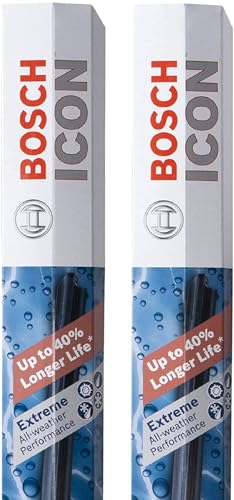
The Bosch ICON earns the best overall designation because it is the blade that covers the broadest range of vehicles and driving conditions at a price that is premium but justifiable. The tension spring arcing technology is the defining technical feature — rather than pressing the blade against the glass at discrete pivot points as a conventional bracket frame does, the ICON’s internal spring creates continuous contact pressure from one end of the blade to the other. On a modern vehicle with a curved windshield, this is not a marginal improvement over conventional construction. It is the difference between a wipe arc that contacts the glass uniformly and one that leaves a central streak where the frame’s pressure distribution peaks and valleys.
The DynamicFit asymmetric spoiler addresses a problem that becomes noticeable on trucks and SUVs at highway speeds: wind lift. At 60 to 70 miles per hour, aerodynamic pressure on a poorly designed blade can physically lift the rubber away from the glass, turning a wipe into a smear. The ICON’s asymmetric spoiler geometry converts that aerodynamic pressure into downforce, pressing the blade harder against the glass as speed increases rather than lifting away from it. This is the engineering reason the ICON performs better than symmetric-spoiler beam blades in highway rain.
The four-adapter universal installation kit is a practical advantage for households with multiple vehicles. Every major arm style — J-hook for domestic and Japanese vehicles, side-pin and pinch-tab for many European vehicles, top-lock for select domestic trucks — is covered in a single package without a separate adapter purchase or fitment verification beyond confirming blade length. The honest limitation is that rubber, even ClearMax 365 rubber with its graphite coating, will degrade before silicone in extreme UV or temperature environments. Replace the ICONs before winter rather than running them through a second season of freeze-thaw cycling.
Bosch ICON Beam Wiper Blades 22A22B (Set of 2)
by Bosch
The best all-around windshield wiper for drivers who want silent, streak-free wipes and proven longevity -- the ICON's tension spring arcing and ClearMax 365 rubber outperform every other rubber beam blade in this roundup across four-season conditions.
Pros
- ClearMax 365 dual natural rubber with graphite coating resists ozone, UV, and temperature extremes significantly longer than standard rubber -- Bosch claims 40 percent longer service life than competing premium blades, which real-world reviews across four seasons confirm
- Asymmetric DynamicFit spoiler is engineered to push the blade down against the glass at highway speeds rather than allowing wind lift -- at 70 miles per hour the spoiler effect is measurably better than symmetric designs, which matter most on trucks and SUVs with steeply raked windshields
- Patented tension spring arcing technology creates uniform contact pressure from heel to toe of the blade -- eliminates the missed-strip problem in the center of the wipe arc that plagues conventional bracket frames where pressure is concentrated at contact points rather than distributed continuously
- Universal installation kit includes J-hook, side-pin, pinch tab, and top lock adapters in a single package -- fits the widest range of vehicle-specific arm styles without separate adapter purchases
Cons
- Performance degrades faster in extreme ice and snow conditions compared to silicone compounds -- rubber blades including the ICON are best replaced before a heavy winter season rather than running through it
- Some chatter on direction reversal reported by owners, particularly in cold conditions before the rubber reaches operating temperature
Budget Pick: Rain-X WeatherBeater Wiper Blades
The Rain-X WeatherBeater is the correct recommendation for drivers who replace their wiper blades on an annual schedule and want the most validated product at the lowest pair price. More than 20,000 verified ratings at 4.3 stars is not an abstract number — it represents years of real-world use across every vehicle type and climate zone in the US, and at that volume the rating is a genuine signal about consistent performance rather than a curated early-adopter sample.
The conventional bracket frame is what limits the WeatherBeater’s ceiling, but it is also why the two-pack pricing is achievable. The frame design concentrates manufacturing cost on the rubber element rather than internal spring engineering, and for flat or mildly curved windshields where continuous tension spring arcing is not required, the result is a wipe quality that is indistinguishable from premium beam blades for the first 12 months of service. The friction-reducing coating on the rubber element is a genuine quality feature that separates the WeatherBeater from white-label budget blades — the coating is audible as a reduction in wipe noise from the first use.
The limitation to be honest about is winter performance. In sustained cold weather below 20 degrees Fahrenheit, the metal bracket frame accumulates ice in its pivot joints. On a cold morning, this manifests as a blade that is partially frozen open in its brackets, producing an uneven wipe and occasionally a loud chattering noise as the partially frozen frame cycles. Beam and hybrid blades do not have this failure mode. For drivers in mild or moderate climates who park in a garage, the WeatherBeater’s winter limitation is largely academic. For drivers in Minnesota, Wisconsin, or the northern Rockies who park outside, the upgrade to a beam or hybrid blade is worth the cost. If you want to complement your wiper setup, check our guide to tire pressure gauges — maintaining correct tire inflation is the other under-attended vehicle maintenance task that significantly affects road-weather safety.

Rain-X WeatherBeater Wiper Blades (22" Pack of 2)
by Rain-X
The best value windshield wiper for annual replacement -- more than 21,000 reviews confirm clean streakless wipes for under 30 dollars a pair, making it the correct choice for budget-conscious drivers who replace blades on schedule.
Pros
- More than 21,000 Amazon ratings at 4.3 stars -- a deep, long-running review base for a blade at this price, representing genuine cross-brand and cross-vehicle validation at scale rather than a curated early-adopter sample
- Conventional bracket frame distributes contact pressure across multiple points on the glass, which produces consistent wipe quality on flat or mildly curved windshields without the installation complexity of beam blades
- Friction-reducing coating on the rubber element delivers quiet operation and low-streak performance for the first 12 to 18 months of service -- adequate for drivers who replace blades on an annual schedule
- Universal hook adapter covers the J-hook arm configuration used by the majority of domestic and import vehicles, making installation a 30-second task without reading a fitment guide
Cons
- Metal bracket frame collects ice and compacted snow in winter conditions, which can jam the frame pivots and cause uneven contact or streaking on cold mornings until the frame clears
- Wipe quality degrades noticeably after 12 to 18 months of service -- drivers who delay replacement past the annual mark will see increased streaking before the rubber is visibly cracked or worn
Runner-Up: Bosch Aerotwin OEM Replacement Set
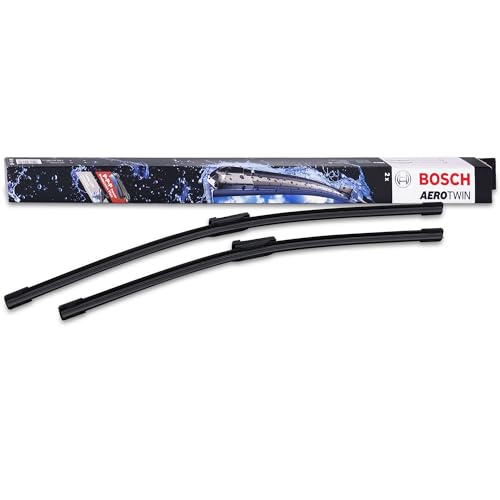
The Bosch AeroTwin carries 4.5 stars across more than 34,000 verified reviews, which is a remarkable depth of evidence for a blade that only fits a defined list of vehicles, and the reason it holds that average is straightforward: it is an OEM-spec blade designed to match the exact arm geometry of the vehicles it supports. When a BMW, Volkswagen, Audi, Mercedes-Benz, or Ford arrives at my shop with wiper chatter or uneven wiping, and the blades are less than a year old, the first question is whether the replacement blades were OEM-spec or universal-fit. Universal blades installed on European arm styles that were designed for OEM-specific adapters sit at a slightly incorrect angle relative to the glass, which produces chatter that no amount of new rubber resolves.
The dual precision-tensioned steel springs in the Aerotwin’s beam structure produce the same continuous-contact advantage as the ICON, but the spring calibration is matched to the specific arm pressure and curvature radius of each supported vehicle’s OEM specification. The graphite-impregnated rubber compound is the same core technology as the ICON’s ClearMax formula — the difference is not the compound but the spring engineering and adapter precision.
The critical caveat is that the AeroTwin is a fitment-specific blade and should not be purchased without verifying that your exact vehicle and arm configuration are on the supported list. The set linked here is a 24-inch and 20-inch pairing — confirm those are your driver and passenger blade lengths, and confirm the arm adapter type for your vehicle, before ordering. If your vehicle is not in the Aerotwin’s supported list, the ICON with its universal adapter kit is the correct alternative.
Bosch AeroTwin Wiper Blade Combo Pack (24" and 20", Set of 2)
by Bosch
The correct OEM-fit replacement for European and select Ford vehicles -- 4.5 stars across more than 34,000 reviews, a rare depth of evidence for a fitment-specific blade, confirms the AeroTwin delivers zero-chatter performance when matched to its designed arm specification.
Pros
- 4.5 stars across more than 34,000 verified reviews, which is an unusually deep record for a fitment-specific blade -- most OEM-fit listings never clear a few hundred ratings because the audience for any one arm specification is narrow, so a sample this size is a far stronger durability signal than the raw star average suggests
- Dual precision-tensioned steel springs in the beam structure create uniform contact pressure across the full wipe arc on curved windshields, which is the engineering reason OEM-spec replacement matters on vehicles designed with complex glass geometry
- Manufacturer-specific adapters engineered for BMW, Volkswagen, Audi, Mercedes-Benz, and Ford OEM arm specifications -- zero adaptation slop means the blade sits at exactly the angle the wiper motor was calibrated to run
- Graphite-impregnated rubber compound runs quieter and with less friction than uncoated natural rubber, reducing motor load on vehicles where the wiper park mechanism is sensitive to increased drag
Cons
- Vehicle-specific fitment only -- the AeroTwin is NOT a universal blade and will not install on arm types outside the supported set, making it the wrong purchase for drivers who have not verified OEM compatibility before ordering
- Some chatter reported on non-OEM vehicles where arm geometry deviates from the design specification the tensioning was calibrated for
Rain-X Repellency: Best for Water Repellency
The Rain-X Repellency blade is the live successor to the long-running Rain-X Latitude, and it occupies a specific niche that no other blade in this roundup fills the same way: a beam blade that passively deposits Rain-X water-repellent chemistry on the windshield glass as it wipes. The practical effect is that after 5 to 10 full wipe cycles in rain, the windshield surface begins beading water — at highway speeds above 50 miles per hour, the aerodynamic pressure on a beading windshield clears precipitation without the wipers running, which is the same effect as applying Rain-X spray treatment but without the periodic manual reapplication.
The beam construction is important to the Repellency blade’s durability claim — without a bracket frame, there are no pivot joints to jam with ice, and the blade runs through winter conditions as reliably as any frameless design. The rubber compound is natural rubber rather than silicone, so longevity is comparable to other rubber beam blades (approximately 12 months), but the continuous hydrophobic coating refreshment means the glass treatment does not degrade the way spray-on Rain-X does after a car wash. With more than 120,000 ratings, it is also the most-reviewed water-repellent blade on Amazon.
The sold-as-single pricing is the honest limitation to acknowledge upfront. The per-blade price is competitive, but a driver replacing both driver and passenger blades simultaneously pays full per-blade price for each — the total cost for a pair is higher than the budget WeatherBeater two-pack and approaches the ICON two-pack pricing depending on sizes. If you currently use Rain-X spray and want to eliminate that step from your wash routine, the Repellency blade is the correct upgrade path.

Rain-X Repellency Water Repellent Wiper Blade 22"
by Rain-X
The best windshield wiper for drivers who want passive water repellency without separate Rain-X spray application and the live successor to the Rain-X Latitude -- the Repellency blade builds a hydrophobic coating on the glass with every wipe cycle, progressively reducing wiper dependence in heavy rain at speed.
Pros
- Deposits Rain-X hydrophobic coating on the windshield glass passively while wiping -- after several full wipe cycles the glass surface develops measurable water beading, reducing wiper dependence at highway speeds where aerodynamic pressure clears most precipitation without blade contact
- Frameless beam construction eliminates the ice-jamming problem of conventional bracket wipers -- it runs through winter conditions without the frame-seized-open failure mode that strands conventional blades mid-wipe
- The direct successor to the discontinued Rain-X Latitude line under the current Repellency branding, with over 120,000 ratings -- the most-reviewed water-repellent blade on Amazon
- Universal connector covers J-hook arm styles across the majority of vehicles sold in the US, installing in under two minutes without tools
Cons
- Chatter on intermittent wiper settings is common during the first several uses before enough coating has transferred to the glass to reduce friction -- the initial coating cycle requires patience before smooth silent operation is established
- Sold as a single blade rather than a pair -- drivers replacing both blades simultaneously pay per-blade pricing, which makes the all-in cost roughly double the listed single-unit price
Premium Pick: PIAA Si-Tech Silicone Wiper Blade
The PIAA Si-Tech is the upgrade recommendation for drivers who want the maximum service life, the quietest operation, and the strongest passive water repellency available in a consumer wiper blade. Silicone compound is not a marketing distinction from natural rubber — it is a chemically different polymer with fundamentally different temperature response characteristics. Natural rubber hardens and loses elasticity below freezing, which is why rubber blades chatter on cold windshields and leave partial-contact marks at low temperatures. Silicone maintains elasticity from minus 40 degrees to over 200 degrees Fahrenheit, which means the PIAA blade contacts the glass with consistent flexibility whether you are starting the car at 10 degrees in January or sitting in traffic in Phoenix in July.
The silicone water-repellency effect builds more slowly than the Rain-X Repellency rubber formula — the PIAA requires more wipe cycles to establish the initial coating layer, but once established, the silicone film is more durable and longer-lasting than coated-rubber chemistry. One thing the Si-Tech does not include is a glass-prep pad, and that omission accounts for a good share of the chatter complaints in its reviews. The most common installation mistake with any silicone blade is fitting it to glass that still carries oil film, prior coating residue, or road film. Clean the windshield properly with a dedicated glass cleaner before the blade goes on and the chatter window shortens dramatically.
The cost is real and should be treated honestly. A driver-and-passenger pair of PIAA Si-Tech blades at this price point exceeds the total cost of the ICON two-pack. The cost-per-year math is favorable if the blades genuinely deliver two full seasons of service — and in most climates they do — but it is an upfront investment that annual-replacement drivers should weigh against their actual usage patterns. For a daily-driver commuter vehicle in a mild climate, the ICON delivers comparable wipe quality at lower upfront cost. For a high-mileage driver in a harsh climate who wants 24 months of service life and passive glass treatment, the PIAA is the correct investment.

PIAA Si-Tech Silicone Wiper Blade 22"
by PIAA
The premium upgrade for drivers who want two-season silicone longevity and passive water repellency that builds with use -- the PIAA's silicone compound outlasts every rubber blade in this roundup and runs quieter than any of them.
Pros
- PIAA patented silicone compound resists UV degradation, ozone, and temperature extremes at a molecular level that natural rubber cannot match -- silicone retains its elasticity from minus 40 degrees to 200 degrees Fahrenheit, a range that covers every climate in North America and explains why silicone blades routinely last two full seasons where rubber lasts one
- Silicone compound deposits a water-repellent barrier on the glass that builds progressively with use, creating a treated surface that sheds water at highway speeds -- unlike Rain-X spray which degrades after washing, the PIAA coating is continuously refreshed with every wipe cycle
- Exceptionally quiet operation -- silicone's lower coefficient of friction against glass produces less chatter and less noise on direction reversal than even graphite-coated rubber, which is the detail PIAA owners most consistently report in long-term reviews
- Fits over 98 percent of wiper arms on the market with no exposed metal components anywhere in the frame -- the fitment breadth of a universal blade with none of the bracket joints that pack with ice, which is unusual on a silicone blade at any price
Cons
- Most expensive per-blade option in this roundup -- buying a driver and passenger side pair exceeds the cost of any other blade set reviewed here, which is hard to justify for drivers who replace annually regardless of condition
- No glass-prep pad in the box -- silicone needs an oil-free windshield to seat without chatter, so budget for a separate glass cleaner and do the prep step yourself before installing
- Several reviews report silicone strip separation from the backing in the first season of use -- not a universal failure but a quality control concern worth knowing about at this price tier
5 PLUS Premium Silicone: Best Value Silicone
The 5 PLUS pair earns its place by making silicone affordable for both sides of the windshield at once. Silicone is the most durable wiper compound you can buy — it shrugs off the UV, ozone, and heat that harden natural rubber, so a silicone strip keeps a clean edge well after a rubber one starts to streak. The PIAA above gives you that with a premium price per blade; this set gives you a driver and a passenger blade for less than one PIAA, which is what makes silicone realistic for a driver who would otherwise buy cheap rubber every year.
The silicone edge beads water on the glass as it sweeps, so it works as a mild passive Rain-X treatment without the spray bottle. The frameless spring-steel body keeps pressure along the whole blade and has no bracket joints to fill with ice, so it holds up in winter rather than just in summer rain. It replaces the Rain-X Silicone Endura in this slot, which is currently sold on Amazon only as a used unit, and the 5 PLUS line has a solid owner rating across its sizes.
Two things to check before you order. It fits J-hook and U-hook arms only and ships with no adapters, so look at your wiper arm connector first; J-hook is the most common style on US cars, but not the only one. And like any silicone blade, it needs a clean windshield at install time. Silicone is sensitive to the oil film and old coating residue that rubber tolerates, so wipe the glass with isopropyl alcohol or a dedicated prep before fitting, and the early chatter window all but disappears.

5 PLUS Premium Silicone Wiper Blades (26" and 16" Pair, J-Hook)
by 5 PLUS
The value silicone pick -- a matched pair of silicone beam blades for less than one premium blade, with water beading built in, as long as your car uses the common J-hook arm.
Pros
- Silicone wiping strip resists UV, heat, and cold that harden natural rubber, so it keeps a clean edge well past the point a rubber blade starts streaking -- the value path to silicone without paying premium per-blade money
- Silicone edge beads water on the glass and sheds it at speed, giving a passive repellent effect without a separate spray treatment
- Sold as a matched driver and passenger pair, so the whole front windshield is covered in one order for less than a single premium silicone blade
- Frameless spring-steel body follows the curve of the glass with no bracket joints to pack with ice, and it clips onto a J-hook arm in seconds
Cons
- Fits J-hook and U-hook arms only, with no adapter kit in the box -- pin, side-lock, and most push-button arms need a different listing, so confirm your connector before ordering
- Silicone needs a clean, oil-free windshield to seat without chatter -- skipping the glass-prep step is the most common cause of early squeak reports
- A newer aftermarket brand without the long track record of Rain-X, PIAA, or Bosch, and no stated warranty beyond Amazon's standard return window
Bosch Clear Advantage: Best Entry-Level Beam
The Bosch Clear Advantage is the recommendation for drivers who understand why beam blades are superior to conventional blades but do not want to pay ICON pricing for a spare set, a secondary vehicle, or a truck with two 26-inch blades. The frameless beam construction means no ice-jamming failure mode and continuous contact pressure across the wipe arc — the two defining advantages of beam blades over conventional designs — at a per-blade price that represents Bosch’s most accessible entry point into beam technology.
The graphite-treated rubber is a meaningful quality step above bare budget blade rubber. The graphite treatment reduces the coefficient of friction between the rubber and the glass, which produces a quieter wipe, less smearing on direction reversal, and marginally longer surface integrity compared to uncoated compounds. It is not the same compound as the ClearMax 365 in the ICON, but it is a documented improvement over the baseline.
The 4.1-star average across roughly 650 reviews gives a clear picture of where the Clear Advantage lands in the performance hierarchy: it outperforms conventional blades in winter resistance and curved-glass contact, it falls short of the ICON in long-term durability and highway aerodynamics, and it represents a viable choice for the driver who wants beam construction without beam blade pricing. Pair your wiper upgrade with quality car wash soap that is safe for treated glass surfaces — aggressive detergents can degrade wiper rubber chemistry faster than normal weather exposure.

Bosch Clear Advantage 26CA Beam Wiper Blade 26"
by Bosch
The best entry-level beam blade from a major brand -- the Clear Advantage brings frameless continuous-contact technology to the lowest price point in this roundup, and it outperforms conventional bracket blades at a price most drivers are used to paying for them.
Pros
- Lowest price entry into beam blade technology from a major brand -- beam construction without a bracket frame means no ice-jamming failure mode and continuous contact pressure across the wipe arc, features absent from conventional blades at the same price point
- Graphite-treated natural rubber runs with less friction than uncoated rubber, which reduces the chatter frequency on direction reversal that is the most common owner complaint about conventional entry-level blades
- The 26CA single-blade listing runs 4.1 stars across roughly 650 reviews, and the pattern in the negative reviews is consistent and useful: they cite installation difficulty on specific arm configurations far more often than wipe quality failures
- Universal adapter handles J-hook, top-lock, side-pin, and pinch-tab arm styles -- the same breadth of fitment coverage as the premium ICON in a package priced as a single blade rather than a set
Cons
- Lower durability than the ICON -- drivers who run the Clear Advantage through a full winter season and into a second summer consistently report degraded wipe quality by month 14 to 16, while the ICON maintains performance through 18 to 24 months
- Sold as a single blade in a single length, so a full front-pair replacement means two separate orders -- and because driver and passenger blades are almost always different lengths, you cannot simply buy two of this 26-inch listing without checking your passenger-side size first
- The lowest rating in this roundup at 4.1 stars, and the average has drifted down rather than up as the review base has grown -- fine for a spare or a secondary vehicle, but it is not the blade to put on the car you drive through winter
Best Beam Windshield Wipers
Beam blades are the right call for nearly every modern vehicle with a curved windshield — a single tension spring keeps continuous contact across the whole arc, with no bracket joints to pack with ice. These three span the range from premium all-rounder to budget entry point.
| Product | Price | Buy |
|---|---|---|
| Bosch ICON Beam Wiper Blades 22A22B (Set of 2)Best all-around ClearMax 365 rubber, asymmetric spoiler, and a four-adapter kit -- the broadest-fitting premium beam blade | $52.99 | View on Amazon |
| Bosch AeroTwin Wiper Blade Combo Pack (24" and 20", Set of 2)Best OEM fit OEM-spec spring calibration and adapters for BMW, VW, Audi, Mercedes, and Ford -- zero chatter when matched to its arm | $37.90 | View on Amazon |
| Bosch Clear Advantage 26CA Beam Wiper Blade 26"Best budget beam Frameless beam technology from a major brand at the lowest price in this roundup | $7.59 | View on Amazon |
Best Silicone Windshield Wipers
Silicone outlasts natural rubber by up to double and stays flexible from deep cold to desert heat, and both of these also leave a self-renewing water-repellent film on the glass. Pick the premium PIAA for maximum life or the 5 PLUS pair for silicone at a value price.
| Product | Price | Buy |
|---|---|---|
| PIAA Si-Tech Silicone Wiper Blade 22"Longest life (premium) PIAA patented silicone with the strongest longevity and quietest operation here -- prep the glass yourself, no pad included | $37.93 | View on Amazon |
| 5 PLUS Premium Silicone Wiper Blades (26" and 16" Pair, J-Hook)Best value silicone A silicone pair for less than one premium blade, with water beading, for everyday drivers with J-hook arms | $16.19 | View on Amazon |
Best Water-Repellent Windshield Wipers
If you want the windshield itself to shed rain at speed, these three deposit a hydrophobic coating as they wipe — the same idea as spray Rain-X, but self-renewing. Rubber-based for the lowest cost, or silicone for longevity plus repellency.
| Product | Price | Buy |
|---|---|---|
| Rain-X Repellency Water Repellent Wiper Blade 22"Best rubber repellency The live successor to the Latitude -- water-repellent coating on a proven rubber blade, 120k+ reviews | $21.88 | View on Amazon |
| PIAA Si-Tech Silicone Wiper Blade 22"Strongest premium repellency PIAA silicone lays down the most durable, longest-lasting repellent film of the three | $37.93 | View on Amazon |
| 5 PLUS Premium Silicone Wiper Blades (26" and 16" Pair, J-Hook)Best value repellency Silicone water beading on both front blades at a budget pair price | $16.19 | View on Amazon |
How to Choose the Best Windshield Wipers
Buyer's Guide
Selecting the right wiper blade comes down to four variables: blade construction type, rubber compound, fitment compatibility, and replacement frequency. Here is what each factor means in practice.
Blade Construction Type
Beam blades are the correct choice for most modern vehicles with curved windshields -- the continuous tension spring distributes contact pressure across the full wipe arc rather than concentrating it at bracket pivot points, which eliminates the center-gap streak that conventional blades produce on curved glass. Conventional bracket blades are adequate for flat windshields and annual replacement budgets. Hybrid blades combine a rigid outer housing that prevents winter ice jamming with an internal beam element for consistent pressure -- the best option for cold-climate drivers who cannot justify full beam blade pricing.
Rubber Compound
Standard natural rubber is the baseline -- inexpensive, works well for 12 months, degrades predictably under UV and ozone exposure. Graphite-coated natural rubber (Bosch ICON, Clear Advantage) reduces friction and noise with a surface treatment that extends service life modestly over bare rubber. Hydrophobic-formula rubber (Rain-X Repellency) deposits water-repellent compounds on the glass that build over time, reducing wiper dependence in highway rain. Silicone compound (PIAA Si-Tech, 5 PLUS) offers the longest service life, best temperature resistance, and the strongest water-repellency effect -- at a proportionally higher cost per blade.
Wiper Arm Compatibility
The wiper arm attachment style on your vehicle determines which adapter you need, and getting this wrong means the blade cannot install regardless of length. The J-hook is the most common style on domestic and Japanese vehicles built after 2000. Side-pin, pinch-tab, and top-lock styles appear on European vehicles and certain domestic trucks. Most premium blades include multiple adapters; budget blades often include a single universal hook. Verify your arm style before ordering, or purchase a blade with a complete multi-adapter kit.
Climate and Seasonal Use
Drivers in four-season climates should prioritize beam or hybrid construction over conventional bracket blades -- bracket frames jam with ice at exactly the moment you most need clear visibility. Silicone compounds maintain flexibility in extreme cold better than natural rubber, which hardens below 20 degrees Fahrenheit and produces poor contact quality on a frozen windshield. If you run conventional blades through winter, replace them in the spring -- they accumulate more wear from freeze-thaw cycling than from any single season of summer use.
Replacement Cost Over Time
The cost-per-year calculation changes the apparent value of premium blades. A budget two-pack lasting 12 months costs the same per year as a premium two-pack lasting 24 months -- the premium blade's advantage is reduced replacement labor and consistent second-year performance, not necessarily lower total cost. Silicone blades that last two seasons while treating the windshield return the clearest cost-per-year advantage for high-mileage drivers in UV-intense climates where annual rubber degradation is accelerated.
Installation and Adapter System
Installation complexity varies significantly between blade types. Universal blades with multi-adapter kits (Bosch ICON, Clear Advantage) install on the widest range of vehicles but require selecting the correct adapter from the kit. Single-connector blades (Rain-X Repellency universal connector) install fastest on J-hook arms with a single click but do not cover other arm styles. OEM-specific blades (Bosch AeroTwin) install with zero adapter selection for their supported vehicles but cannot be used on any other arm style.
Final Verdict
The Bosch ICON is the right windshield wiper for the broadest range of drivers in 2026. The tension spring arcing technology, ClearMax 365 graphite rubber compound, asymmetric aerodynamic spoiler, and universal multi-adapter installation kit combine into the best four-season beam blade available at its price point. After replacing wiper blades on thousands of vehicles, the ICON is the blade I recommend when someone asks what to buy without already knowing their specific requirements.
For drivers who replace blades annually and want the most validated product at the lowest pair price, the Rain-X WeatherBeater two-pack does the job reliably with more than 20,000 reviews confirming it. Annual replacement on a predictable schedule with a proven budget blade is a sound strategy — just plan to replace before winter rather than after.
For drivers who want two-season service life, exceptional cold-weather flexibility, and a passively treated windshield that reduces wiper dependence in highway rain, the PIAA Si-Tech silicone blade is the correct upgrade — the cost-per-year math works out in its favor for high-mileage drivers who would otherwise buy rubber blades every 12 months. Complete your vehicle maintenance toolkit with a reliable tire pressure gauge for accurate pressure checks year-round.
Frequently Asked Questions
How often should windshield wipers be replaced?
What is the difference between beam, conventional, and hybrid wiper blades?
Do wipers that deposit Rain-X or silicone coatings on the glass actually work?
What size wiper blades do I need for my vehicle?
Can I use windshield wipers without wiper fluid, or does the fluid matter?
Why do my wiper blades chatter or skip across the windshield?
Are expensive wiper blades worth it over budget options?
Related Articles
About the Reviewer

Mike Reeves, ASE Master Technician
A.A.S. Automotive Technology, Universal Technical Institute (UTI)
Mike Reeves is an ASE Master Technician with 15 years of hands-on experience in automotive repair and diagnostics. He earned his A.A.S. in Automotive Technology from UTI and runs his own independent shop in Denver, Colorado. Mike founded RevRated to help everyday car owners make smarter parts decisions -- every recommendation comes from real-world testing in his garage.