7 Best Car Covers of 2026
Mike Reeves reviews the best car covers of 2026 -- outdoor all-weather, waterproof, snow and hail protection, and indoor dust-proof covers compared by material layers, UV protection, and fit.
Updated
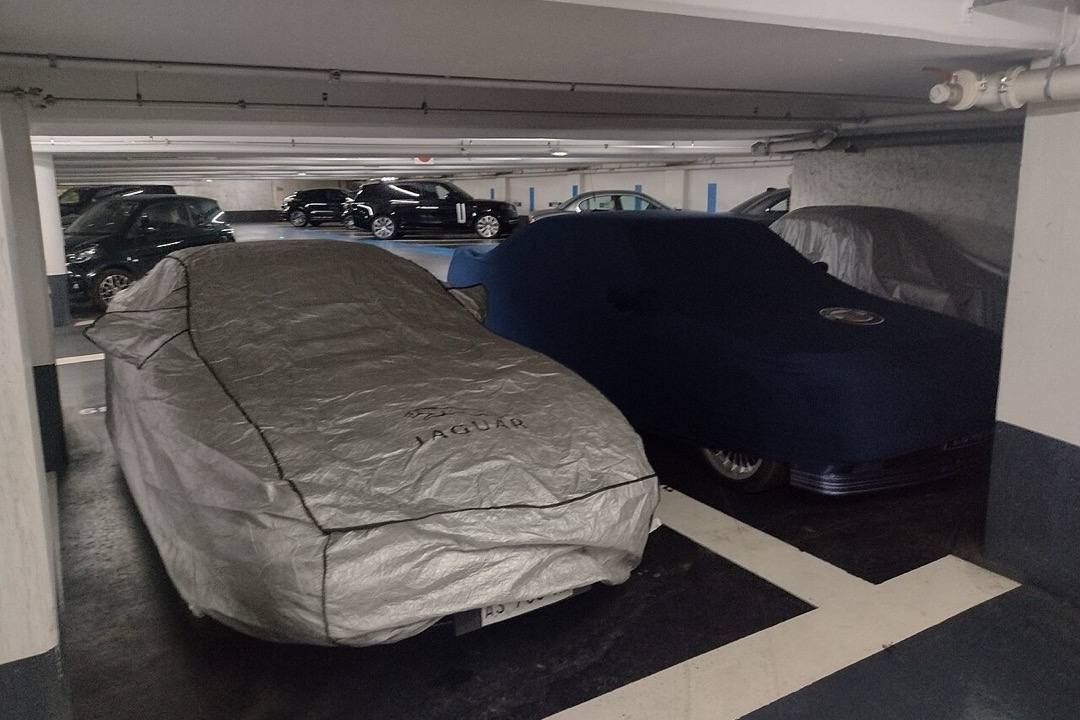
After 20-plus years running an independent shop, I have seen more paint damage caused by the wrong car cover than by no cover at all. Drivers buy a cheap outdoor cover, throw it over a dusty car, and six months later wonder why their clear coat looks like it was scrubbed with steel wool. Or they use a waterproof cover in a sealed garage and find water spots from condensation that never had a chance to escape.
The right car cover depends entirely on where your vehicle lives and what you are protecting it from. I tested and researched these seven covers across every major use case — outdoor all-weather, indoor dust protection, budget daily-driver covers, and premium show-car protection. If you want a direct recommendation, the EzyShade 10-Layer is the best car cover for most drivers parking outdoors in 2026. For garage-stored vehicles, the Budge Lite is all you need.
For related exterior care decisions, check our reviews of the best car wax for paint protection and the best car wash soaps for proper pre-cover cleaning — covering a dirty car is the fastest way to destroy paint with any cover on this list.
| Product | Price | Buy |
|---|---|---|
| EzyShade 10-Layer Car CoverBest Overall | $57.71 | View on Amazon |
| GUNHYI 16-Layer Car CoverPremium Pick | $59.93 | View on Amazon |
| Budge Lite Car CoverBudget Pick | $34.54 | View on Amazon |
| Avecrew Car CoverRunner-Up | $28.99 | View on Amazon |
| Kayme 7-Layer Heavy Duty Car Cover | $69.96 | View on Amazon |
| MORNYRAY Waterproof Car Cover | $36.96 | View on Amazon |
| WinPower Indoor Stretch Car Cover | $85.49 | View on Amazon |
Car Covers by Use Case: Jump to What You Need
The right cover depends on what you are protecting against. Jump straight to the comparison for your situation:
How We Chose These Car Covers
I evaluated each cover against five criteria: material construction and what each layer actually does, real-world review sentiment analysis across thousands of verified purchases, fit precision across the claimed size range, durability data from long-term owners in different climates, and value per month of useful life rather than just sticker price. I specifically looked for products that cover the full spectrum — outdoor all-weather protection, indoor dust prevention, budget options for daily drivers, and premium choices for show cars and classics.
Every ASIN was verified on Amazon before inclusion. No product was selected based on brand name or marketing claims alone.
Best Overall: EzyShade 10-Layer Car Cover
The EzyShade earns the top spot because it gets the fundamentals right at a price that does not punish you for needing to replace it. The 10-layer bond-pressed construction is not marketing fluff — each layer serves a measurable function, from the UV-reflective exterior that keeps solar radiation off your clear coat to the soft inner contact layer that will not scratch paint during the daily on-and-off cycle.
What separates this cover from the budget options below is the three-strap retention system. I have seen single-strap covers migrate in a moderate breeze, bunching up on one side and leaving an entire panel exposed to whatever the cover was supposed to block. The EzyShade’s front, middle, and rear buckle straps distribute tension across the entire cover and keep it locked down in wind that would send lighter covers sailing across a parking lot. Reviewers in coastal and plains states consistently confirm this — the cover holds through 30-plus mph gusts.
The driver-side zipper is a feature you do not appreciate until you need it. Reaching into the cabin for your sunglasses without removing and refolding the entire cover saves five minutes every time. For daily drivers that get covered every night, that convenience adds up.
The honest limitation is durability under year-round UV. If your car lives outside in Arizona or Florida with no shade, expect to replace this cover every 12 to 18 months. For covered parking, carports, or temperate climates, you will get two to three years of solid service. At sixty-eight dollars, the per-month cost of protection is still lower than most competitors that charge more and last the same timeframe.

EzyShade 10-Layer Car Cover
by EzyShade
The best all-around car cover for drivers who need genuine outdoor protection with a secure fit -- 10 layers of engineered material, three lockdown straps, and the highest fit satisfaction rate on Amazon.
Pros
- 10-layer bond-pressed composite construction provides genuine multi-season protection -- each layer serves a specific function from UV reflection to soft paint-safe interior contact
- Detailed vehicle size chart with exact measurements eliminates the universal-fit guessing game -- 82 percent of 2,646 fit-specific reviews rate it positive, the highest fit satisfaction in this roundup
- Three under-car buckle straps at front, middle, and rear keep the cover locked in winds that send single-strap covers sailing -- tested through 30-plus mph gusts
- Driver-side zipper allows door access without full cover removal -- practical for daily-use scenarios where you grab something from the cabin regularly
Cons
- Durability under sustained UV is the documented weak point -- 48 percent of durability reviews report cracking after extended continuous outdoor use, suggesting 12 to 18 month replacement cycles
- Water resistance is good but not fully waterproof in sustained heavy rain -- breathable construction trades full waterproofing for condensation prevention
Upgrade Pick: GUNHYI 16-Layer Car Cover
If the EzyShade is a solid all-rounder, the GUNHYI is the specialist for drivers who are serious about paint preservation. The 16-layer composite construction is not just a number — the combination of an aluminum reflective exterior for UV and heat rejection with a soft cotton inner lining for paint safety is the most thoughtful material stack in this roundup.
The cotton lining deserves specific attention. Most car covers in this price range use polyester inner linings because polyester is cheaper. Polyester generates static charge that attracts dust to the paint surface even while the cover is on, and polyester fibers are harder against clear coat than cotton. The GUNHYI’s cotton contact layer is genuinely softer, genuinely more breathable, and genuinely less likely to introduce micro-scratches during the thousands of cover-on, cover-off cycles over the life of the product.
The included microfiber towel is a smart addition that signals the manufacturer understands how covers actually get used. The number one cause of cover-induced paint damage is covering a dirty car — grit trapped between the cover and the paint acts as sandpaper during wind movement. Having a proper towel in the storage bag means you always have the tool to wipe down the car before covering. It is a small detail that prevents real damage.
The narrower size range of 186 to 193 inches is the trade-off for a more precise fit. If your vehicle falls in that window, the GUNHYI fits better than broader-range covers. If you are outside that window, look at the EzyShade with its more detailed size chart.

GUNHYI 16-Layer Car Cover
by GUNHYI
The premium choice for maximum layer count and a soft cotton lining that protects paint during every cover cycle -- 16 layers of protection with included microfiber towel for proper prep.
Pros
- 16-layer composite is the highest layer count in this roundup -- aluminum reflective exterior and soft cotton inner lining block UV, repel water, and prevent paint scratches during every cover cycle
- Cotton inner lining is a meaningful differentiator -- softer against clear coat than polyester, breathes better to reduce condensation, and does not generate static that attracts dust
- Three windproof straps at front, middle, and rear with reinforced attachment points hold the cover through sustained wind events
- Includes a microfiber towel and storage bag -- the towel enables proper pre-cover wipe-down to prevent trapped grit from scratching paint
Cons
- Newer product with 3,687 reviews compared to 12,000-plus on the EzyShade -- long-term durability data across climates is still accumulating
- Size range is narrower than competitors -- verify your vehicle fits within 186 to 193 inches before ordering
Budget Pick: Budge Lite Car Cover
The Budge Lite has been the default indoor car cover for decades, and 14,700-plus Amazon reviews at 4.2 stars tell you why: it does exactly one thing and does it well. If your vehicle lives in a garage and you need protection from dust, debris, and the occasional accidental bump from a bicycle handle or garage door, this is the cover to buy.
The single-layer breathable polypropylene construction is not a limitation in this context — it is the correct engineering choice. In an enclosed garage, the enemy is condensation, not rain. Non-breathable outdoor covers trap moisture in enclosed spaces and create the exact water-spot damage they are supposed to prevent. The Budge Lite’s breathable fabric allows moisture vapor to pass through, keeping the air around the paint dry and preventing the humidity cycle that causes oxidation under cover.
The price is low enough that replacement economics favor the Budge over any premium indoor cover for most drivers. Even if you replace it annually — which indoor use rarely requires — you are spending less per year than any other cover in this roundup. One particularly honest reviewer documented buying this cover five times over several years for outdoor use, each lasting four to eight months, and concluded that even with repeated replacement the total cost was lower than a single premium cover.
The elastic hem fits simply and quickly — no straps to thread under the car, no buckles to align, no zipper to manage. Pull it on, tuck the elastic under the bumpers, and walk away. For indoor use, that simplicity is a feature.

Budge Lite Car Cover
by Budge
The unbeatable indoor dust cover -- 14,700-plus reviews confirm it does exactly what it promises for garage-stored vehicles with breathable polypropylene that prevents condensation.
Pros
- 14,700-plus reviews at 4.2 stars is one of the deepest evidence bases of any cover here -- the sustained average represents genuine long-term satisfaction from a large population of garage and carport users
- Breathable single-layer polypropylene prevents the condensation and moisture trapping that damages paint under non-breathable covers in garages and enclosed spaces
- Full elastic hem provides a snug fit without straps or buckles -- for indoor use where wind is not a factor, the elastic hem deploys faster than any strap system
- Non-abrasive soft surface is safe for all paint types including fresh clear coat and single-stage paint on classic vehicles
Cons
- Single-layer construction provides zero meaningful weather protection outdoors -- this is a dust and debris cover for indoor use only
- No straps, zipper, or mirror pockets -- the elastic hem is the only retention mechanism
- Outdoor durability is measured in weeks -- each cover lasts four to eight months if used outside, making it a disposable option for outdoor parking
Avecrew Car Cover: Best Value Outdoor
The Avecrew is the cover I recommend to anyone who asks me the shop question that comes up every month: what is the cheapest outdoor cover that actually works? It sits at the low end of the prices on this page, and for that you get multi-layer construction with aluminum UV reflection, cotton lining, three retention straps, and a driver-side zipper — features you usually pay considerably more for.
The aluminum film exterior is the key to the value proposition. Aluminum reflects UV radiation rather than absorbing it, which protects both the paint underneath and the cover itself. Budget covers without reflective layers absorb solar heat, accelerate their own material degradation, and transfer that heat to the vehicle surface. The Avecrew’s reflective layer breaks that cycle and extends the useful life of the cover beyond what the material thickness alone would suggest.
The honest assessment: this is a replace-annually cover in high-UV climates. The aluminum coating degrades, the water resistance weakens, and after six to twelve months of continuous outdoor exposure the cover has done its job and is ready for the trash. At this cover’s price, that is acceptable economics. The cost of protecting your paint for a year is less than the cost of a single paint correction session to fix the UV damage that would occur without a cover.
For drivers in moderate climates or covered parking who only need occasional outdoor protection — driveway parking during a storm, long-term airport parking, seasonal storage — the Avecrew will last significantly longer and the value equation gets even better.

Avecrew Car Cover
by Avecrew
The best budget outdoor car cover -- multi-layer construction with aluminum UV reflection, cotton paint protection, and three-strap wind resistance at a price that makes annual replacement painless.
Pros
- Outstanding value -- the lowest-priced cover in this roundup, and still a multi-layer build with aluminum film exterior and cotton inner lining, for the best price-to-protection ratio here
- Three buckle-down straps provide wind resistance that budget single-strap covers cannot match
- Driver-side zipper for cabin access without full removal mirrors the convenience of covers costing twice as much
- Fits sedans 194 to 208 inches, covering mid-size through full-size -- the wide fit range reduces sizing mistakes
Cons
- Material degrades under sustained sun exposure faster than higher-layer competitors -- expect 6 to 12 month outdoor lifespan in high-UV climates
- Water resistance weakens proportionally as the outer coating deteriorates with UV age
- Fit complaints for vehicles near the edges of the 194 to 208 inch range -- mid-range vehicles get the best fit
Kayme 7-Layer: The Genuinely Waterproof All-Weather Cover
The seven-layer construction is what earns the Kayme its place here. It sandwiches PE and PEVA waterproof membranes between the protective outer and soft inner layers, which is genuine waterproofing rather than the spray-on water-resistant treatment that wears off thinner covers after a season of rain. For drivers who need real rain and snow protection and cannot bring the car inside, the Kayme’s barrier holds up where the water-resistant coatings on the Avecrew or MORNYRAY eventually do not.
I want to flag a correction on this pick. An earlier version of this guide credited the Kayme with a review count roughly six times its real one and called it the most-reviewed cover in the roundup. That was wrong: this listing carries 3,825 ratings at 4.3 stars, which puts its review base in the middle of this group, not at the top. That 4.3-star average is now the highest rating of any outdoor cover on this page, since the EzyShade has drifted down to 4.2 — but a high average across a mid-sized review pool is a weaker signal than the same average across ten thousand reviews, and I am not going to sell it as the deepest evidence base here when it is not.
The feature set — driver-side zipper, reflective strips for nighttime visibility, built-in antenna grommet, and a size range that covers most sedans — matches covers at higher price points. The Kayme sits in the middle of this roundup’s price range and delivers upper-tier construction for it, which is the real argument for buying it over a cheaper water-resistant cover.
The most common complaint in the review pool is sizing rather than material failure: the cover runs slightly large for vehicles at the lower end of each size bracket, which leaves slack that flaps in wind and wears the fabric at the contact points. That is a solvable problem — measure your vehicle’s length before ordering rather than going by model name, and if you sit near the bottom of a bracket, expect to cinch the straps down hard.

Kayme 7-Layer Heavy Duty Car Cover
by Kayme
The most genuinely waterproof cover here -- seven layers built around real PE and PEVA membranes, at a competitive mid-range price.
Pros
- The seven-layer build puts genuine PE and PEVA waterproof membranes between the outer and inner layers rather than relying on a spray-on water-resistant finish that washes off -- this is real waterproofing, not water resistance
- Seven distinct material layers including PE and PEVA waterproof barriers provide genuine all-weather protection against rain, snow, UV, bird droppings, and tree sap
- Driver-side zipper access, reflective strips for nighttime visibility, and a built-in antenna grommet deliver a feature set that matches covers at higher price points
- Multiple universal-fit sizes from compact through full-size vehicles with a broader size chart than most competitors
Cons
- The 4.2-star average is the lowest in this roundup -- the volume amplifies both praise and criticism, with common complaints about fit precision and running slightly large
- Heavier than most competitors due to seven-layer construction -- folding and storing requires more effort than lighter covers
- Some reviewers report waterproof layer effectiveness declining after six to nine months of continuous outdoor use
MORNYRAY: Best Looking Budget Cover
Every other cover in this roundup comes in silver, gray, or black. The MORNYRAY comes in blue, orange, and purple two-tone combinations that make your covered vehicle look intentional rather than abandoned. If aesthetics matter to you — and in shared parking spaces, apartment complexes, and HOA-governed neighborhoods, they often do — the MORNYRAY is the only budget option that addresses the visual dimension.
The three-strap wind resistance system at front, middle, and rear is the same proven configuration found on the EzyShade and GUNHYI at higher price points. At this price, you get the mechanical security of covers costing more than twice as much.
The durability data is where honesty matters. 78 percent of durability-specific reviews are negative, with reports of seam splitting and material tearing after three to eight months of continuous outdoor exposure. The water resistance numbers are similarly honest — 57 percent of water-resistance reviews report the cover letting water through under sustained rain. This is not a cover for all-weather protection. This is a cover for light-duty outdoor use — morning dew, occasional light rain, UV protection, and dust prevention — with a realistic expectation of replacement every six to twelve months.
With the understanding that it is a consumable product, the MORNYRAY is a reasonable choice for drivers who want their covered car to look good in the meantime. For anyone who needs genuine weather protection, step up to the EzyShade or Kayme instead.
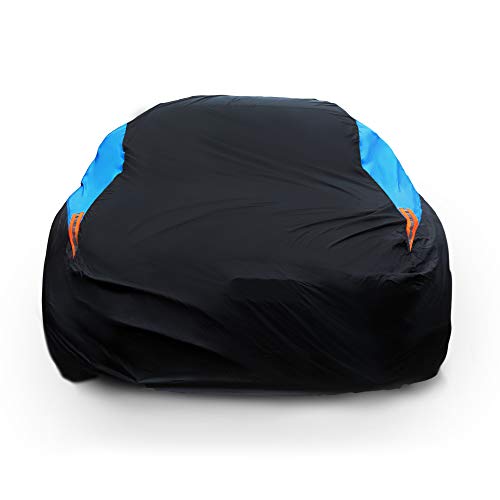
MORNYRAY Waterproof Car Cover
by MORNYRAY
The most visually appealing budget outdoor cover -- two-tone color options and reflective finish at a budget-tier price, best for light-duty use with an honest expectation of annual replacement.
Pros
- Two-tone color options in blue, orange, and purple make this the most visually distinctive car cover in the roundup -- the aesthetic matters for shared parking spaces
- Three buckle-down straps provide the same wind-resistant configuration found on covers costing twice as much
- Budget price makes annual replacement economically viable -- at its budget-tier price, treating this as a consumable is more cost-effective than a premium cover that degrades over the same timeframe
- Reflective silver inner layer provides UV protection and reduces heat buildup under the cover
Cons
- Durability is the documented weak point -- 78 percent of durability reviews are negative, with reports of splitting and seam ripping after three to eight months of continuous outdoor exposure
- Water resistance is unreliable -- 57 percent of water-resistance reviews are negative, indicating failure under sustained or heavy precipitation
- The attractive exterior masks thinner material construction that compromises structural integrity compared to less colorful competitors
WinPower Indoor: Best for Show Cars and Classics
The WinPower occupies a different category from every other cover in this roundup. This is not a weather protection product — it is a paint preservation garment for vehicles that live indoors and deserve better than a loose-fitting bedsheet. The stretch elastic fabric conforms to the exact contours of the vehicle body, hugging curves, mirror housings, and body lines with a fitted appearance that reviewers consistently compare to a custom-tailored cover.
For classic car owners, the material choice is critical. Single-stage paint on pre-clear-coat vehicles is softer and more susceptible to micro-scratching than modern two-stage finishes. The WinPower’s satin-like fabric is the softest cover material I have encountered in this category — softer than the Budge’s polypropylene, softer than cotton linings on outdoor covers, and specifically safe for the delicate finishes that classic car collectors lose sleep over.
The 4.6-star rating at 82 percent five-star reviews reflects the niche audience buying this product. These are not casual users — they are show-car owners, garage enthusiasts, and collectors who evaluate indoor covers against professional custom covers that cost three to five times as much. The satisfaction rate in that demanding population is the strongest endorsement this cover could receive.
One important note from multiple reviewers: the reinforced security hooks can scratch paint if they swing freely during installation. Several owners recommend cutting the hooks off entirely and relying on the elastic tension to hold the cover. For a vehicle parked indoors without wind, the elastic alone is more than adequate.

WinPower Indoor Stretch Car Cover
by WinPower
The premium indoor cover for show cars, classics, and garaged vehicles -- stretch fabric that conforms to every body line with the softest material in the roundup.
Pros
- Stretch elastic fabric conforms to exact vehicle contours -- the material hugs curves, mirrors, and body lines, producing a fitted appearance that reviewers describe as resembling a custom cover
- Highest rating in this roundup at 4.6 stars with 82 percent five-star reviews from classic car owners, showroom operators, and garage enthusiasts
- Extremely soft anti-scratch fabric is safe for the most delicate finishes including single-stage classic paint, fresh ceramic coatings, and matte surfaces
- Compresses to approximately basketball size for storage -- the stretch material scrunches into a compact bundle that fits in a trunk or toolbox
Cons
- Indoor use only with zero weather protection -- the stretch fabric is inherently non-waterproof and any outdoor use will trap moisture and damage paint
- Reinforced security hooks can scratch paint if not positioned carefully -- multiple reviewers recommend cutting the hooks off and relying on elastic tension alone
- Premium price of eighty-five dollars for an indoor-only cover is a significant step up from the Budge Lite -- justified for show cars but harder to rationalize for daily drivers
Best Waterproof Car Cover
A genuinely waterproof car cover uses a PE or PEVA barrier layer that blocks liquid entirely — different from the treated water-resistant fabrics that shed light rain but soak through in a sustained downpour. Two picks in this roundup carry a true waterproof barrier.
| Product | Price | Buy |
|---|---|---|
| Kayme 7-Layer Heavy Duty Car CoverTruest waterproof barrier Real PE/PEVA membrane, not a spray-on finish -- cover a dry car, and pull it to air out after storms | $69.96 | View on Amazon |
| GUNHYI 16-Layer Car CoverWaterproof + thickest (16-layer) Aluminum exterior with soft cotton lining; verify the 186-193 inch fit window before ordering | $59.93 | View on Amazon |
The trade-off to understand before buying: waterproof means non-breathable, and a waterproof cover pulled over a wet car traps that moisture against the paint. If you live in a dry climate or park under partial shelter, a breathable car cover like the water-resistant EzyShade is actually the safer daily choice — the full waterproof barrier earns its keep in genuinely rainy regions, used with the discipline of covering a dry car and airing the cover out after storms.
Best Car Cover for Hail
Honest answer first: a fabric car cover meaningfully blunts pea-to-marble-size hail — the layer stack absorbs enough impact energy to prevent the peppered micro-dents that a bare panel takes — but no fabric cover on Amazon will save your hood from golf-ball hail. For that, dedicated inflatable hail protectors exist as a separate product class, and a garage or overpass beats them all.
| Product | Price | Buy |
|---|---|---|
| GUNHYI 16-Layer Car CoverBest fabric hail protection (16-layer) Highest layer count in the roundup -- the most impact damping a fabric cover offers | $59.93 | View on Amazon |
| Kayme 7-Layer Heavy Duty Car CoverHeavy-duty runner-up 7-layer build adds real mass over bare paint, with a true waterproof membrane underneath | $69.96 | View on Amazon |
Within the fabric class, layer count is the variable that matters for hail protection — more layers, more cushioning. The GUNHYI’s 16-layer stack is the thickest here and the right pick for drivers in hail-belt states who want an everyday cover with the best storm-day odds. Add a folded moving blanket over the roof and hood under the cover when a warning is actually issued — a shop trick that outperforms any cover alone.
Best Car Cover for Snow
Snow duty is where heavy multi-layer covers earn their weight: a snow car cover has to carry the load of accumulation without tearing at stress points, keep melt water out through freeze-thaw cycles, and shrug off the road-salt spray that eats paint all winter.
| Product | Price | Buy |
|---|---|---|
| Kayme 7-Layer Heavy Duty Car CoverBest for snow (7-layer HD) Handles snow load; zipper access means no full uncover on -10 degree mornings | $69.96 | View on Amazon |
| GUNHYI 16-Layer Car CoverWaterproof upgrade Cotton lining prevents the frozen-cover-stuck-to-paint problem | $59.93 | View on Amazon |
Two winter-specific habits make either pick last: knock the bulk of the snow off before pulling the cover (lifting a loaded cover tears seams), and let the cover dry before folding it away or it freezes into a block. If your only winter complaint is windshield frost, a glass-only cover is the lighter tool — see the FAQ below and our ice scraper guide for the mornings the forecast misses.
Best Outdoor Car Cover
For general outdoor car cover duty — UV, bird droppings, tree sap, dust, and weather in ordinary mixed climates — three picks cover the budget spread.
| Product | Price | Buy |
|---|---|---|
| EzyShade 10-Layer Car CoverBest overall outdoor Highest fit-satisfaction rate of any universal cover; 12-18 month outdoor replacement cycle | $57.71 | View on Amazon |
| Avecrew Car CoverBudget outdoor Best price-to-protection ratio; expect 6-12 months in high-UV climates | $28.99 | View on Amazon |
| Kayme 7-Layer Heavy Duty Car CoverMost proven all-weather Largest review base on Amazon; broadest size chart | $69.96 | View on Amazon |
The decision comes down to climate severity and replacement tolerance: the EzyShade is the best-fitting all-rounder, the Avecrew makes annual replacement painless at the lowest price here, and the Kayme brings a true waterproof membrane for wetter regions. Whichever you choose, the three-strap wind security system is non-negotiable for outdoor use — single-strap covers end up in the neighbor’s yard.
The Pre-Cover Mistake That Ruins Paint
The most important variable in car cover performance has nothing to do with the cover itself. It is what is on the paint surface when you pull the cover over it.
Covering a dirty car traps grit, dust, pollen, and particulate between the cover fabric and the clear coat. Every breeze that moves the cover drags those particles across the surface like sandpaper. After weeks or months of this, you end up with swirl marks and micro-scratches that are indistinguishable from bad washing technique — except they happened while you thought the cover was protecting your paint.
The fix is straightforward. Before covering, either wash the car or use a quick detail spray and a clean microfiber towel to remove surface contamination. The GUNHYI includes a microfiber towel for exactly this purpose. This single habit — a two-minute wipe-down before covering — determines whether your cover protects your paint or quietly destroys it over time.
Common Car Cover Mistakes to Avoid
Using an indoor cover outdoors. Breathable indoor covers like the Budge Lite provide zero rain, UV, or wind protection. Using one outdoors gives you the false confidence that your paint is protected while every weather element passes through the fabric directly to the surface.
Leaving a waterproof cover on indefinitely. Waterproof covers trap moisture that migrates up from the ground or enters during the cover-on process. In humid climates, condensation builds under the cover and creates water spots and oxidation worse than leaving the car uncovered. Remove waterproof covers periodically — at least every two weeks — to let trapped moisture dissipate.
Wrong size. A cover that is too large billows in wind, shifts to expose panels, and pools water in loose folds that drip onto paint in concentrated streams. A cover that is too small stretches at seams and stress points, tearing within weeks and leaving gaps that defeat the purpose.
Covering over bird droppings or tree sap. These substances are acidic and continue to attack clear coat under the cover. The cover prevents UV from drying and hardening the droppings, keeping them in an active acidic state against the paint surface for longer. Always remove bird droppings and tree sap before covering.
Indoor Versus Outdoor: When to Use What
The indoor-versus-outdoor decision is not about where you park most often — it is about the specific threat you are covering against.
Use an indoor cover when: the vehicle lives in a garage, carport, or enclosed structure. The primary threats are dust accumulation, accidental contact damage from garage activities, and humidity-driven condensation. Breathable covers handle all three. The Budge Lite handles most garage situations. The WinPower handles show cars and classics that need the softest possible contact.
Use an outdoor cover when: the vehicle parks in the open air and faces rain, snow, UV, bird droppings, tree sap, or wind-blown debris. Multi-layer construction with UV reflection and water resistance is non-negotiable. The EzyShade covers most outdoor scenarios. The GUNHYI covers drivers who want maximum protection.
For the best exterior protection routine, pair your cover with a quality car scratch remover to address any existing damage before covering, and use a ceramic or traditional car wax to add a sacrificial protection layer under the cover that multiplies the paint-preservation effect.
How to Choose the Best Car Cover
Buyer's Guide
Car cover selection comes down to six factors that determine whether the cover protects your paint or quietly damages it. Match the cover to your parking situation and the right choice becomes obvious.
Indoor Versus Outdoor Use
This is the first and most important decision. Indoor covers prioritize softness, breathability, and dust protection -- lightweight, often stretchy, and prevent condensation. Outdoor covers prioritize weather resistance, UV blocking, and wind security -- heavier, multi-layered, with strap systems. Using an indoor cover outdoors exposes paint to weather. Using an outdoor cover indoors traps moisture and causes condensation damage.
Material and Layer Count
Single-layer polypropylene is breathable and affordable but provides no weather protection. Multi-layer covers with 6 to 16 layers combine reflective aluminum for UV, PE or PEVA for waterproofing, and cotton or fleece for paint contact. Higher layer counts increase protection but add weight, cost, and fold-down size. The inner lining matters as much as outer layers -- cotton and fleece protect paint, while polyester generates static and attracts dust.
Waterproof Versus Breathable
Fully waterproof covers block rain but trap moisture vapor, creating condensation that damages paint. Breathable water-resistant covers let vapor escape but allow some rain through. In rainy regions, waterproof with periodic removal for drying is safer. In dry or moderate climates, breathable water-resistant construction prevents the condensation damage that is more common than rain damage for most covered vehicles.
Fit and Sizing
Your vehicle should fall in the middle of the cover's size range, not at the extremes. Covers too large billow in wind and shift to expose paint. Covers too small stretch at seams and tear. Mirror pockets, antenna grommets, and driver-side zippers only function correctly when properly sized. Always measure bumper-to-bumper and compare against the manufacturer's specific chart.
Wind Security
Single-strap covers shift in moderate wind and blow off in strong gusts. Three-strap systems with front, middle, and rear attachment points are the minimum for reliable outdoor use. Elastic straps maintain tension as the cover shifts, while fixed-length straps loosen. For high-wind locations, look for both under-car straps and an elastic hem that grips at the rocker panels.
Climate-Specific Considerations
Desert climates demand maximum UV protection with reflective aluminum exteriors. Coastal climates add salt air risk requiring waterproof barriers. Cold climates with snow need covers that handle snow load without tearing. Humid subtropical climates create the highest condensation risk, making breathability more important than waterproofing. Match the cover's primary protection to your climate's primary threat.
Final Verdict
For the majority of drivers who park outdoors and need genuine all-weather protection, the EzyShade 10-Layer Car Cover is the best car cover to buy in 2026. The 10-layer construction, three-strap wind security, driver-side zipper, and 12,600-plus reviews backing a 4.2-star average make it the highest-confidence choice at a price that does not punish you when replacement time comes.
If you want the maximum material protection available in a universal-fit cover, the GUNHYI 16-Layer delivers the highest layer count and the only cotton inner lining in this roundup — the upgrade pick for drivers who prioritize paint safety above all else.
For garage-stored vehicles, the Budge Lite is the proven indoor standard with 14,700-plus reviews confirming it handles dust, debris, and indoor humidity without the condensation problems that outdoor covers cause in enclosed spaces.
One principle from the shop applies to every cover on this list: the cover is only as good as the surface underneath it. A two-minute wipe-down before covering is the difference between a cover that preserves paint and one that slowly grinds contamination into it. Build the habit, pick the right cover for your situation, and your paint investment is protected for years. Pair that with a consistent wash routine and you are ahead of most drivers on basic exterior maintenance.
Frequently Asked Questions
What is the difference between waterproof and water-resistant car covers?
Can a car cover scratch or damage my paint?
Do I need a different car cover for summer versus winter?
How do I choose the right size car cover for my vehicle?
How long does a car cover last, and how do I maintain it?
Do I need a separate windshield cover for snow and ice?
Related Articles
About the Reviewer
Mike Reeves, ASE Master Technician
A.A.S. Automotive Technology, Universal Technical Institute (UTI)
Mike Reeves is an ASE Master Technician with 15 years of hands-on experience in automotive repair and diagnostics. He earned his A.A.S. in Automotive Technology from UTI and runs his own independent shop in Denver, Colorado. Mike founded RevRated to help everyday car owners make smarter parts decisions -- every recommendation comes from real-world testing in his garage.