Mobil 1 vs Castrol GTX: An ASE Mechanic's Honest Comparison
ASE Master Tech Mike Reeves breaks down Mobil 1 vs Castrol GTX — synthetic vs conventional, drain intervals, LSPI risk, true annual cost, and which oil belongs in your engine.
Updated
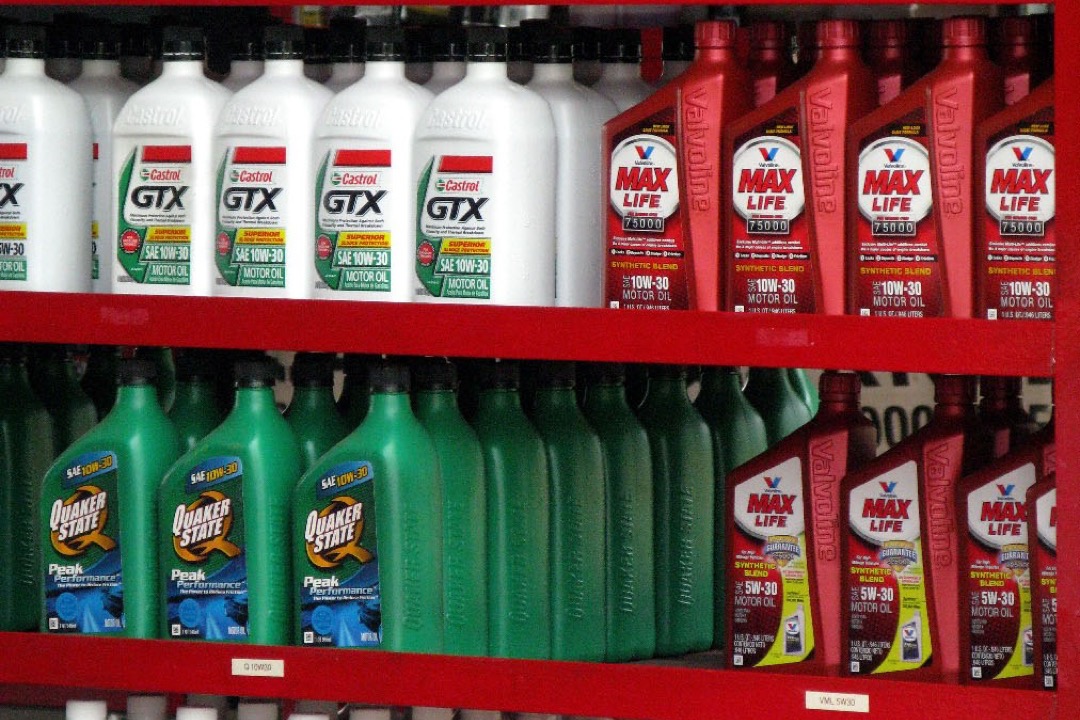
I have changed a lot of oil in my career. I have also seen what happens when the wrong oil goes into the wrong engine, or when a driver trusts a catchy label over the actual chemistry. The Mobil 1 versus Castrol GTX debate comes up constantly — in the shop, in forums, in my inbox. The short answer is that most people asking this question are comparing the wrong things.
This guide will settle it properly. I will cover what Castrol GTX actually is (because it is not one product, and that distinction matters enormously), how the chemistry stacks up across temperature extremes, which certifications and OEM approvals you actually need to care about, and how to do the annual cost math correctly so you stop getting fooled by the per-quart sticker price. If you want to stay on top of your vehicle’s overall health beyond oil changes, our roundup of the best OBD2 scanners is a good companion read — catching early fault codes is how you protect a freshly serviced engine.
Quick Verdict
If you want one sentence: Mobil 1 Full Synthetic is the better lubricant in objective tests. It produces less engine wear at cold start, maintains viscosity stability at higher temperatures, and extends drain intervals significantly compared to Castrol GTX Conventional.
But that comparison is unfair. Castrol GTX Conventional is a conventional oil. Comparing it to a Group IV full synthetic and calling it a loss is like comparing a standard tire to a run-flat and being surprised when the results differ.
Here is the apples-to-apples breakdown:
| Use Case | Winner |
|---|---|
| Cold-start protection (below 0°F) | Mobil 1 |
| High-temperature viscosity stability | Mobil 1 |
| Drain interval | Mobil 1 |
| Everyday driver on a budget, older engine | Castrol GTX Conventional |
| High mileage engine (75k+ miles) | Tie — both have strong HM products |
| Turbocharged GDI engine | Both (if GF-6 certified) |
| Annual cost at 12,000 miles/year | Tie — do the math for your situation |
| Price per quart | Castrol GTX |
| OEM approvals depth | Mobil 1 (broader cross-brand approval list) |
What “Castrol GTX” Actually Means
This is where every other comparison article fails, so pay attention.
When someone says “Castrol GTX,” they could mean four completely different products. The GTX name is a product family, not a single formula. Comparing “Castrol GTX vs Mobil 1” without specifying which GTX is like comparing “Ford trucks vs Toyota Tundra” without specifying which F-series. The gap between a base GTX Conventional and a GTX Full Synthetic is enormous — arguably larger than the gap between GTX Full Synthetic and Mobil 1 Full Synthetic.
GTX Conventional
GTX Conventional is a traditional petroleum-based motor oil using Group I or Group II base stock refined from crude oil. It meets API SP and ILSAC GF-5 or GF-6 depending on the specific grade and batch. Castrol markets it with their “sludge protection” messaging, and the detergent package is legitimate — GTX Conventional does a reasonable job controlling deposits in older, normally aspirated engines under moderate driving conditions. The drain interval is 3,000 to 5,000 miles. This is a perfectly capable conventional oil. It is not a synthetic, and its performance ceiling reflects that.
GTX Full Synthetic
GTX Full Synthetic uses a highly refined Group III base stock, which the API permits to be labeled as “synthetic.” This is the product that directly competes with Mobil 1. It carries API SP and ILSAC GF-6 certification, passes the LSPI prevention test, and supports 7,500-mile drain intervals. Head-to-head against Mobil 1 Full Synthetic at the same viscosity grade, the performance delta in standardized tests is real but modest. For most daily drivers, it is within the noise of real-world operating conditions.
GTX High Mileage
GTX High Mileage is available in both conventional and full synthetic formulations, targeting engines over 75,000 miles. It includes a conditioner package designed to swell and revitalize aged elastomer seals, which helps reduce the minor seepage that develops as rubber ages and hardens. The detergent load is elevated compared to standard GTX to address the accumulated deposits that build up in engines that have been running conventional oil for years. This is a genuinely differentiated product from standard GTX — not a marketing tier, but a different additive profile.
The takeaway: if someone tells you “Castrol GTX is better than Mobil 1,” ask them which GTX. The answer to the comparison question depends almost entirely on which product they are holding.
The Core Difference: Full Synthetic vs Conventional
Mobil 1’s entire lineup is synthetic. There is no conventional Mobil 1. The base stock is either Group IV polyalphaolefin (PAO) in older formulations or highly refined Group III in current ones, and in either case the molecular uniformity of synthetic base stock provides specific advantages over conventional petroleum that are measurable on the test bench.
Viscosity index is the measure of how much an oil’s viscosity changes across temperature extremes. Higher is better — a high VI oil stays close to its rated viscosity from a cold winter start to a hot highway run. Synthetic base stocks have naturally higher viscosity indexes than conventional mineral oil. A synthetic 5W-30 pours more freely at -20°F and holds its viscosity better at 250°F than a conventional 5W-30. This is not a marketing claim — it is a chemistry reality, and it is why the API developed a testing standard for it.
Oxidative stability determines how quickly oil breaks down and forms sludge and varnish deposits. Conventional mineral oil contains naturally occurring impurities including sulfur compounds, aromatics, and waxy components that oxidize and polymerize under heat. Synthetic base stocks, having been either synthesized from clean molecular building blocks (PAO) or stripped of impurities through hydrocracking (Group III), oxidize more slowly. That is the primary mechanism behind the longer drain intervals.
For a 2015 or newer vehicle with a naturally aspirated four-cylinder or V6 engine under normal driving conditions, Castrol GTX Full Synthetic will protect your engine adequately. For a turbocharged engine, a performance engine, a vehicle operating in extreme climates, or a driver who wants the longest possible drain intervals, Mobil 1 Full Synthetic provides a measurable and justified advantage.
API Certifications and OEM Approvals
Both Mobil 1 and Castrol GTX Full Synthetic carry the current API SP rating and ILSAC GF-6 certification. These are the industry-standard benchmarks for 2020 and newer gasoline engines. Any oil lacking these designations should not be in a modern engine.
Where it gets more specific is OEM-required approvals. Several manufacturers require oils that have passed additional manufacturer-specific tests beyond API SP:
GM Dexos Gen 3: Required for 2021 and newer GM vehicles. Mobil 1 5W-30 and 0W-20 are Dexos Gen 3 approved. Castrol GTX Full Synthetic also carries Dexos approval in qualifying grades. Check the top label on the bottle — the Dexos mark appears there specifically.
Mercedes-Benz MB 229.5 / 229.51: Required for many AMG and diesel applications. Mobil 1 ESP Formula carries this approval. Castrol GTX does not — this is a category where Mobil 1’s approval breadth wins outright.
BMW Longlife-01 (LL-01): Required for BMW TwinPower Turbo engines. Mobil 1 5W-30 European Car Formula carries LL-01. Castrol EDGE carries it — but Castrol GTX does not. If you have a BMW, you are not in the GTX conversation at all.
Ford WSS-M2C948-B: Required for most current Ford EcoBoost engines. Both Mobil 1 and select Castrol products carry this approval.
The practical lesson: your owner’s manual lists the required specification. That specification overrides any brand preference. I have seen warranty claims denied because someone ran a non-approved oil in a manufacturer-required-spec engine. The approval matrix is not bureaucratic box-checking — it represents real testing that the oil passed and others did not.
Performance Head-to-Head
Cold-Start Protection
Roughly 70 percent of total engine wear occurs during the first 30 seconds after a cold start, before oil pressure builds and film thickness reaches design specification throughout the engine. The lower an oil’s cold-cranking viscosity, the faster it flows to bearing surfaces during this critical window.
Both Mobil 1 and Castrol GTX Full Synthetic in the same grade (5W-30, for example) perform similarly at moderate cold temperatures. The divergence appears at extreme cold — below 0°F to -20°F and colder. PAO-based Mobil 1 formulations maintain flowability at temperatures where Group III synthetics begin to thicken more meaningfully. For most of the country this is academic. For drivers in Minnesota, Montana, and Canada, it is a real operating condition. If you live where temperatures routinely drop below -10°F, Mobil 1 0W-40 or 0W-20 provides a genuine cold-start advantage over any conventional or Group III synthetic alternative.
High-Temperature Stability
Turbocharged engines produce oil temperatures well above what the factory engineers designed for in the naturally aspirated era. Turbocharger bearing oil temperatures routinely reach 300°F to 350°F. After a highway run, when the engine shuts off and oil circulation stops, the turbocharger coasts down into what is called heat soak — the bearing center housing temperatures spike to 400°F or higher with no cooling flow. This is called “turbo coking” — the oil in the bearing feed passages literally bakes into varnish deposits that slowly restrict oil flow and eventually seize the turbocharger.
Full synthetic oil resists turbo coking significantly better than conventional oil. The oxidative stability of a Group III or Group IV base stock at these temperatures is substantially higher than conventional mineral oil. Castrol GTX Conventional has no business in a turbocharged engine — not because Castrol is a bad oil company, but because conventional petroleum base stock is the wrong chemistry for the application. Castrol GTX Full Synthetic handles the heat adequately. Mobil 1 Full Synthetic handles it marginally better in extended high-temperature cycles based on standardized ASTM oxidation tests.
Sludge and Deposit Control
Castrol’s primary marketing claim for GTX has historically been sludge protection, and it is a legitimate claim with real test data behind it. Sludge forms from oxidized oil, combustion blow-by gases, and water contamination that accumulate during stop-and-go driving and short trips where the engine never fully reaches operating temperature. GTX Conventional’s detergent package is specifically optimized for this use case — the older naturally aspirated engines that run conventional oil and accumulate deposits over long drain intervals.
Mobil 1 Full Synthetic also provides excellent sludge and deposit protection, but through a different mechanism: because synthetic base stock resists oxidation in the first place, there is less oxidized oil available to form sludge. The detergent package handles the rest. In used oil analysis studies comparing conventional versus synthetic oil at equivalent mileage, synthetic oil consistently shows lower Total Base Number depletion and lower levels of oxidation byproducts — meaning more protective additive chemistry remains active at the point of the oil change.
Turbocharged Engine Performance and LSPI
Low Speed Pre-Ignition is the most dangerous failure mode in modern turbocharged gasoline direct injection engines. LSPI events — uncontrolled ignition in the cylinder before the spark plug fires — can generate cylinder pressures of over 200 bar. A single severe LSPI event can destroy a piston or crack a connecting rod. It is not a theoretical risk; I have seen the damage firsthand.
Research published by ILSAC and engine manufacturers has identified high calcium detergent concentrations in motor oil as a contributing factor to LSPI events. This finding is built into the ILSAC GF-6 standard, which includes an LSPI engine sequence test that oils must pass to receive GF-6 certification.
Both Mobil 1 Full Synthetic and Castrol GTX Full Synthetic in current GF-6-certified formulations have passed this test. Castrol GTX Conventional formulations do not carry GF-6 certification and have not necessarily passed LSPI testing. If your vehicle has a turbocharged GDI engine — which includes virtually every Ford EcoBoost, GM turbocharged four-cylinder, Honda 1.5T, Toyota 2.0T, and most European turbocharged engines — you should not use Castrol GTX Conventional regardless of what the oil change reminder says. The GF-6 certification is a non-negotiable baseline for this engine type.
High Mileage: Castrol GTX HM vs Mobil 1 HM
Both brands take high mileage seriously, and both have invested in genuinely differentiated formulations for this segment rather than simply relabeling their standard products.
Castrol GTX High Mileage is available in conventional (3,000 to 5,000 mile intervals) and full synthetic (7,500 miles) versions. The seal conditioner chemistry is effective — it restores flexibility to hardened elastomers through a controlled chemical process, not by simply swelling them with solvent (which is the cheap approach that can cause a different set of problems). Castrol’s detergent package in GTX HM is elevated for cleaning accumulated deposits without disturbing the protective oxide layer that forms on engine surfaces over time.
Mobil 1 High Mileage is a full synthetic with a comparably effective seal conditioning package and a detergent-antioxidant balance that specifically targets the wear patterns of aged engines. Mobil 1 HM supports 10,000-mile drain intervals in normal driving, which is a meaningful advantage over Castrol GTX HM Conventional.
For a vehicle above 100,000 miles with a history of conventional oil and some oil consumption, my recommendation is to switch to the high mileage formulation of whichever brand you have been running, at the grade your OEM specifies. Switching from Castrol GTX Conventional to Mobil 1 Full Synthetic cold in a high-mileage engine with accumulated deposits is not always the right move — the cleaning capacity of fresh synthetic can dislodge accumulated varnish that has been acting as a sealant, and you can end up with leaks you did not have before. Transition gradually using high mileage formulations.
Oil Change Interval and True Annual Cost
The per-quart price comparison is the most misleading metric in the oil debate. Let me show you how to think about it correctly.
Assume a driver covering 12,000 miles per year in a vehicle with a 5-quart sump.
Castrol GTX Conventional at 4,000-mile intervals:
- Three oil changes per year
- Five quarts of oil plus one filter per change
- Labor cost if shop-maintained, or your time if DIY
Mobil 1 Full Synthetic at 10,000-mile intervals:
- One oil change per year, plus a partial second change at roughly the 10,000-mile mark if driving continues
- Effectively 1.2 oil changes per year
- Same five quarts plus filter
The per-quart cost of Mobil 1 is real. But you are buying roughly one-third as many quarts annually. Run those numbers at current prices and the gap narrows considerably. When you add shop labor costs — which for many drivers are a real expense — Mobil 1’s extended drain interval frequently produces equal or lower total annual maintenance cost.
This is also not accounting for the harder-to-quantify wear savings. An engine that starts easier in cold weather, runs cleaner deposits over its life, and receives fresh oil additive chemistry less frequently degraded by oxidation does accumulate less wear. Whether that wear difference is worth the upfront price premium depends on how long you plan to keep the vehicle. For a beater you are driving into the ground, conventional oil and frequent changes is rational. For a vehicle you plan to own for 200,000 miles, the chemistry quality matters. Pair this calculation with the diagnostic capability of a good OBD2 scanner and you have a maintenance program that catches small problems before they become expensive ones.
Which Oil Is Right for Your Vehicle?
Use Mobil 1 Full Synthetic if:
- Your engine is turbocharged (any brand, any displacement)
- You drive in extreme cold (regularly below 0°F)
- You want 10,000-mile-plus drain intervals
- Your vehicle requires Dexos Gen 3, MB 229.x, BMW LL-01, or Ford WSS-M2C948-B approval
- You drive a performance vehicle or track your car
- You want to maximize engine longevity for a vehicle you plan to keep long-term
Use Castrol GTX Full Synthetic if:
- You want a competitive full synthetic at a more accessible price point
- Your vehicle calls for a standard API SP / GF-6 certification
- You prefer brand familiarity with a trusted name
Use Castrol GTX Conventional if:
- You have an older, naturally aspirated engine with high mileage that has run conventional oil its entire life
- Your vehicle manual specifies conventional oil (uncommon but exists in pre-2000 platforms)
- You want the most affordable per-change cost for a vehicle with limited remaining service life
- You do not mind 3,000 to 5,000 mile change intervals
Use Castrol GTX High Mileage or Mobil 1 High Mileage if:
- Your engine has over 75,000 miles
- You have noticed minor oil consumption or seeping gaskets
- You are transitioning from conventional to synthetic on a high-mileage vehicle
Whatever oil you choose, keep accurate service records. A vehicle with documented oil change history commands higher resale value and gives you a baseline for warranty discussions. While you are maintaining your vehicle’s mechanical health, it is worth investing in the right tools — a quality set of car battery chargers and a jump starter round out the kind of shop-ready kit that keeps you from being stranded when it matters.
Can You Mix Mobil 1 and Castrol GTX?
Yes, you can mix them. All API-certified motor oils use additive packages formulated to be chemically compatible — the industry requires it. No dramatic chemical reaction will occur from mixing Mobil 1 and Castrol GTX in the same sump, regardless of whether one is synthetic and one is conventional.
That said, mixing degrades the performance of the better oil toward the level of the lesser one. If you top off five quarts of Mobil 1 Full Synthetic with a quart of Castrol GTX Conventional, you now have four-fifths synthetic and one-fifth conventional. The oil’s overall oxidative stability, viscosity index, and cold-flow properties decline proportionally. You also cannot rely on the extended drain interval of the synthetic anymore — you have changed the blend and the original interval specification no longer applies.
In an emergency — you are a quart low, it is 11 PM, and the only quart available at the gas station is a conventional GTX — add it, drive home, and do a full drain and refill at your next opportunity. That is the correct protocol. Mixing as a routine top-off strategy is a different question, and the answer there is to keep a spare quart of your regular oil in the trunk so you are not making those compromises.
The Castrol “Synthetic” Controversy
This is worth addressing because it comes up constantly in forums and I want to give you a straight answer.
In 1999, Mobil filed suit against Castrol alleging that Castrol’s marketing of Group III hydrocracked mineral oil as “synthetic” was fraudulent. The reasoning was that true synthetics, by the chemist’s definition, are built up from purified molecular building blocks rather than refined down from crude oil. Group III oil is still derived from petroleum — it has been extensively processed to remove impurities, but it started as crude oil, not a chemical synthesis reaction.
The National Advertising Division of the Better Business Bureau ruled in Castrol’s favor. The API subsequently established that highly refined Group III oil can be marketed as “synthetic.” Castrol won the case and the label.
Here is what matters practically: Group III base stocks do perform comparably to Group IV PAO in most real-world driving conditions. The differences emerge at temperature extremes — very cold (below -20°F) and very hot (sustained high-RPM operation or turbocharger heat soak above 350°F). In these edge cases, Group IV PAO maintains better flowability at cold and better oxidation resistance at hot. For a daily driver in a moderate climate, the real-world performance gap between a quality Group III synthetic and a Group IV synthetic is minimal.
Mobil 1 itself transitioned portions of its lineup from PAO to Group III base stocks in the early 2000s, which makes the original lawsuit somewhat ironic in retrospect. Current Mobil 1 formulations use a blend of Group III and Group IV depending on the specific product and viscosity grade.
The practical takeaway: when buying “full synthetic,” verify current GF-6 or API SP certification rather than trying to determine the base stock tier from the label. Both brands meet the current standard. The controversy is historical context, not a current purchasing decision factor.
Final Verdict
Mobil 1 Full Synthetic is the better lubricant. That statement holds up across cold-start protection, high-temperature stability, drain interval extension, oxidation resistance, and OEM approval breadth. If you are choosing between Mobil 1 Full Synthetic and Castrol GTX Full Synthetic, Mobil 1 wins on the technical merits, and the price premium over a true annual cost comparison is smaller than the per-quart sticker suggests.
Castrol GTX Conventional is not the loser in this comparison — it is simply not the right comparison. A conventional petroleum oil competing against a Group III or Group IV synthetic is not a close race, and framing it as one does a disservice to drivers trying to make an informed decision. GTX Conventional belongs in older, naturally aspirated engines with a history of conventional oil and owners who prefer frequent, lower-cost changes. That is a legitimate use case and GTX Conventional serves it well.
For most readers with a vehicle made after 2015, especially anything with a turbocharger, the answer is straightforward: run a GF-6-certified full synthetic at the viscosity grade your OEM specifies. Whether that is Mobil 1 or Castrol GTX Full Synthetic is less important than making sure it is a current-spec full synthetic. Both will protect your engine. Mobil 1 protects it slightly better. That margin matters more as your engine ages, as your climate gets colder, and as your driving demands get harder.
Check your owner’s manual, match the OEM approval requirements, and change on schedule. That is the whole job. If you want to keep your vehicle in peak condition beyond oil changes, our guides to the best car wash soaps and best car wax will help you protect the exterior with the same rigor you are applying under the hood.
Buyer's Guide
Choosing between Mobil 1 and Castrol GTX comes down to six concrete factors. Get these right and you will pick the correct oil for your engine regardless of which brand name ends up on the bottle.
Full Synthetic vs Conventional Base Stock
Mobil 1 uses Group IV polyalphaolefin or Group III highly refined synthetic base stock throughout its lineup. Castrol GTX spans the full spectrum from conventional Group II to full synthetic, depending on which GTX product you buy. If you are comparing Mobil 1 Full Synthetic against Castrol GTX Conventional, you are comparing fundamentally different lubricants — the performance gap is real. If you are comparing Mobil 1 Full Synthetic against Castrol GTX Full Synthetic, you are in the same tier and the differences narrow considerably.
Drain Interval Requirements
Castrol GTX Conventional requires changes every 3,000 to 5,000 miles. Mobil 1 Full Synthetic extends to 7,500 to 15,000 miles depending on the product. Over a year of driving, this difference determines whether you change oil two or three times versus once. The annual cost math often favors the premium synthetic when you factor in labor, filter, and your time — not just the per-quart price at the shelf.
OEM Approvals and Certifications
Both brands carry API SP certification and ILSAC GF-6 compliance in their current formulations, which are the baseline standards for 2020 and newer engines. Where approvals diverge is in OEM-specific requirements: Dexos Gen 3 for 2021+ GM vehicles, MB 229.5 for Mercedes, LL-01 for BMW, and WSS-M2C948-B for Ford. Always cross-reference your owner's manual specification against the bottle's approval list — an oil that does not carry your vehicle's required approval is a liability claim waiting to happen.
High Mileage Vehicle Considerations
If your vehicle has crossed 75,000 miles, both brands offer purpose-built high mileage formulations that include seal conditioners, additional detergents, and higher ZDDP concentrations compared to their standard products. Castrol GTX High Mileage and Mobil 1 High Mileage each address the specific wear patterns — oil consumption, minor seepage, combustion chamber deposits — that emerge as engines age. Standard full synthetic is not always the right choice for a high-mileage engine; the high mileage products are engineered for this use case specifically.
Turbocharged and GDI Engine Compatibility
Modern turbocharged gasoline direct injection engines are significantly more demanding than naturally aspirated engines from a lubrication standpoint. LSPI (Low Speed Pre-Ignition) is a catastrophic failure mode specific to turbo GDI engines that can be triggered by certain additive chemistries — calcium-based detergents in particular. ILSAC GF-6 certification includes an LSPI prevention test, and both Mobil 1 and Castrol GTX Full Synthetic in current GF-6 formulations pass it. If your engine is a turbo GDI unit (most new engines after 2015 are), verify GF-6 compliance on the bottle before you buy — older stock or conventional GTX does not meet this standard.
Price Per Oil Change vs Price Per Quart
Sticker shock at the quart price of Mobil 1 is real, but the relevant metric is cost per oil change and cost per mile of protection. A Castrol GTX Conventional change at 3,500-mile intervals costs less per bottle but more per year in aggregate labor, filter, and disposal costs. For a driver putting 12,000 miles annually, the math on Mobil 1 Extended Performance at 15,000-mile intervals often produces an equal or lower total annual maintenance cost. Run the numbers for your specific mileage and labor rate before deciding the conventional option is the budget choice.
Frequently Asked Questions
Is Mobil 1 really better than Castrol GTX?
Can I mix Mobil 1 and Castrol GTX in my engine?
Does Mobil 1 meet GM Dexos requirements?
What is the Castrol synthetic controversy about?
How often should I change Mobil 1 vs Castrol GTX?
Related Articles
Bosch vs ACDelco Spark Plugs: An ASE Mechanic's Honest Comparison
maintenance-parts
Bosch vs Rain-X Wipers: An ASE Mechanic's Honest Comparison
maintenance-parts
Synthetic vs Conventional Oil: An ASE Mechanic's Honest Breakdown (2026)
maintenance-parts
7 Best Car Wax of 2026
car-care-detailing
7 Best Car Wash Soaps of 2026
car-care-detailing
About the Reviewer

Mike Reeves, ASE Master Technician
A.A.S. Automotive Technology, Universal Technical Institute (UTI)
Mike Reeves is an ASE Master Technician with 15 years of hands-on experience in automotive repair and diagnostics. He earned his A.A.S. in Automotive Technology from UTI and runs his own independent shop in Denver, Colorado. Mike founded RevRated to help everyday car owners make smarter parts decisions -- every recommendation comes from real-world testing in his garage.