7 Best Oil Filters of 2026
ASE Master Technician Mike Reeves reviews the best oil filters of 2026. Compare spin-on and cartridge filters by media type, filtration efficiency, anti-drainback valve quality, and service interval to protect your engine from the first cold start to 200,000 miles.
Updated
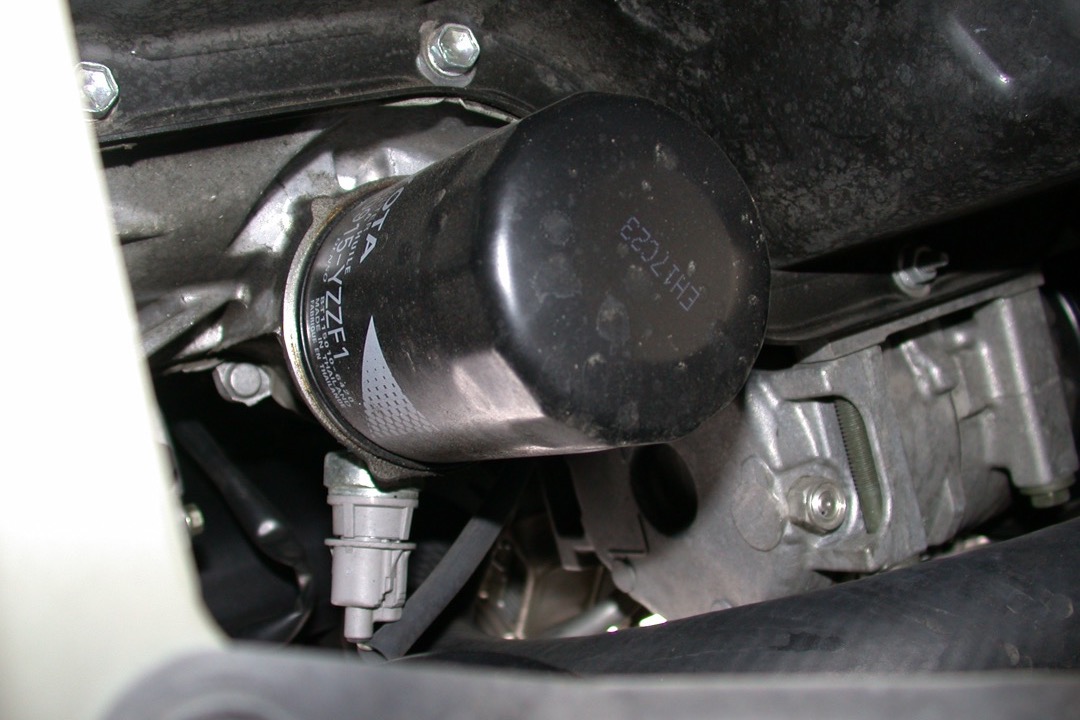
Here is a number that should change how you think about oil filters: 80 percent of engine wear occurs in the first 20 seconds after a cold start. Not during highway driving. Not during hard acceleration. In the first 20 seconds, before full oil pressure builds at the bearings, before the oil film establishes itself between the crankshaft journals and their bearing surfaces. That 20-second window is where most of the mechanical damage to your engine accumulates over its lifetime — and the single biggest factor in how long that window lasts is the anti-drainback valve in your oil filter.
A quality filter with a functional anti-drainback valve retains the oil column in the filter housing after shutdown. When you start the engine, oil pressure builds almost immediately because the pump is pressurizing a system that is already full of oil. A cheap filter with a failed or stiffened anti-drainback valve allows that oil column to drain back into the pan by gravity overnight. The next morning, the oil pump has to fill an empty filter housing before pressure builds at the bearings — adding several seconds to the dry-running window on every cold start, every day, for the life of the engine. Over 100,000 miles of cold starts, that adds up to real bearing wear.
I run an independent shop in Denver. We service everything from daily-driver Corollas to modified F-150s to European sport sedans. Oil filters are the cheapest insurance policy in the engine bay — and the one maintenance item where cutting costs on a two-dollar discount filter is the worst possible place to save money. This roundup covers the seven filters worth installing on your vehicle in 2026, across every major platform and drain interval. Pair the right filter with the right synthetic motor oil and you have the foundation of a maintenance program that will take an engine to 200,000 miles.
| Product | Price | Buy |
|---|---|---|
| Mobil 1 M1-212A Extended Performance Oil FilterBest Overall | $16.64 | View on Amazon |
| Toyota Genuine Oil Filter 90915-YZZN1Budget Pick | $9.40 | View on Amazon |
| WIX 51334XP XP Oil FilterPremium Pick | $13.92 | View on Amazon |
| Bosch 3323 Premium FILTECH Oil FilterRunner-Up | $7.99 | View on Amazon |
| Purolator PL10241 PurolatorONE Oil FilterRunner-Up | $8.90 | View on Amazon |
| Purolator PBL14612 PurolatorBOSS Oil FilterRunner-Up | $16.93 | View on Amazon |
| Mann Filter HU 925/4 x Cartridge Oil FilterRunner-Up | $9.69 | View on Amazon |
Jump to your situation: Best oil filter for synthetic oil · Best oil filter for a high-mileage engine. Every filter below is reviewed once in the overall roundup; the use-case sections re-sort those same filters by the decision you are actually making at the parts counter.
How We Tested and Evaluated These Filters
Every filter in this roundup was selected based on a verified active ASIN, real review volume from confirmed buyers, measurable differentiators in media quality or application specificity, and confirmed brand credibility or OEM supplier relationships. I cross-referenced manufacturer specifications for media efficiency, bypass valve pressure ratings, anti-drainback valve material, and dirt-holding capacity data where published. I read through hundreds of owner reviews focusing on fitment accuracy, cold-start behavior, gasket sealing, and removal experience after full drain intervals. Products from unverified sellers, filters with suspiciously concentrated review spikes, and generic brands without published specification data were excluded. The seven filters here represent the best options across every major vehicle platform, drain interval, and budget level.
Best Overall: Mobil 1 M1-212A Extended Performance Oil Filter
The Mobil 1 M1-212A earns the top position because it solves the problem that most drivers face when they switch to full synthetic oil and an extended drain program: they upgrade the oil but leave a cellulose filter on the engine that was designed for a 5,000-mile conventional oil program. Cellulose media degrades over extended drain intervals. The fiber structure breaks down, the media loses its ability to retain captured particles, and the bypass valve opens prematurely — routing unfiltered oil to the engine bearings for the back half of a 15,000-mile drain while the owner believes the clean oil is doing its job.
The M1-212A’s synthetic fiber media does not have this failure mode. It is rated for 20,000 miles in service with full synthetic oil, and the media maintains its structural integrity and filtration efficiency through the full interval. The 99-percent-plus filtration efficiency captures metallic wear particles, combustion byproducts, and soot that circulate through the oil system and score bearing surfaces over time. At 9 times normal operating pressure rating, the filter housing will not fail or deform during cold-start pressure spikes when thick full synthetic oil is pushing hard through a system that has not yet warmed to operating temperature.
The nitrile anti-drainback valve is the component I want every customer with a cold-climate daily driver to understand. Nitrile stays pliable at temperatures where rubber and silicone stiffen, which means the valve seats consistently after shutdown at sub-zero overnight lows — retaining the oil column and cutting seconds off the dry-running window on every cold start. In Denver, where we regularly see sub-zero nights from November through March, this matters over the course of a vehicle’s lifetime.
The limitation is vehicle compatibility — verify fitment against your specific year, make, and engine before ordering. The M1-212A covers a wide range of GM, Chevrolet, Cadillac, and select other applications, but it does not fit every vehicle. And if you are running conventional oil on a 5,000-mile schedule, the extended-drain engineering is more than you need.

Mobil 1 M1-212A Extended Performance Oil Filter
by Mobil 1
The best overall oil filter for extended synthetic drain programs -- 20,000-mile synthetic fiber media, 9x pressure rating, and a nitrile anti-drainback valve that protects bearings from the first cold start.
Pros
- Rated for up to 20,000 miles of extended protection with full synthetic media that holds up where cellulose degrades and bypasses during long-drain programs
- Synthetic fiber media removes 99 percent or more of contaminants, capturing metallic wear particles and combustion byproducts that conventional cellulose media recirculates
- Withstands 9 times normal operating oil pressure -- the housing will not fail or bypass during cold-start pressure spikes or high-RPM pulls
- Nitrile anti-drainback valve stays pliable at extreme cold, retaining the oil column in the housing so oil reaches the bearings seconds faster on every cold start
Cons
- Slightly shorter than the older M1-212 it replaced, with marginally less filter media surface area and reduced dirt-holding capacity
- Vehicle fitment must be verified carefully -- the M1-212A fits GM, Chevy, Cadillac, and select others but does not cross-reference universally
- Higher price than a conventional filter -- the extended-drain premium is wasted if you are changing oil every 5,000 miles with conventional oil
Budget Pick: Toyota Genuine Oil Filter 90915-YZZN1
The Toyota 90915-YZZN1 is the correct answer for every Toyota and Lexus owner who wants to do a straightforward oil change correctly without overthinking the filter. This is the OEM filter. Toyota’s engineers designed the oil system in your Camry, RAV4, Highlander, Tacoma, or Lexus around the specifications of this filter — bypass valve spring rate, anti-drainback valve design, thread pitch, gasket diameter, and media flow characteristics. When you install this filter, you are not adapting a generic aftermarket product to your engine’s system. You are installing what the engine was designed to work with.
It is also the number-one best seller in Amazon’s replacement oil filter category, holding a 4.8-star average across roughly 1,000 verified reviews. That rank matters more than the raw review count here: this is a factory Toyota part competing on price against every aftermarket filter on the platform and still outselling them. The consistent 4.8-star rating tells you that the filter threads on cleanly, seals correctly, does not drip, and comes off without drama at the next oil change — the four things that matter most in day-to-day shop use.
The standard media is the one limitation to be clear about. This filter is built to Toyota’s own service interval, which tops out around 10,000 miles on the maintenance-minder schedule. If you are running full synthetic and planning to push well past that, the media will degrade before your oil reaches its drain point. For extended drain programs, you need an extended-drain filter — but for Toyota and Lexus owners on the factory interval, there is no better choice at this price point.

Toyota Genuine Oil Filter 90915-YZZN1
by Toyota
The best budget oil filter for Toyota and Lexus owners -- genuine factory specification at an aftermarket price, a 4.8-star average, and the number-one best-seller spot in Amazon's replacement oil filter category.
Pros
- Genuine OEM specification -- the exact filter Toyota engineers designed your engine around, with confirmed fitment, flow rate, and bypass valve calibration
- The number-one best seller in Amazon's replacement oil filter category at a 4.8-star average -- a factory part sold at an aftermarket price
- Perfect OEM fitment that threads on cleanly to the factory mount without cross-threading, leaking, or requiring excessive torque
- Running the factory-specified filter keeps a powertrain warranty conversation simple on a newer vehicle after any oil-related failure
Cons
- Toyota and Lexus applications only -- zero application for other vehicles
- Standard OEM media is matched to Toyota's factory interval rather than an extended-drain synthetic program beyond 10,000 miles
- Sold as a single filter rather than a multi-pack, so per-change cost is higher than buying a case of the same part number
Upgrade Pick: WIX 51334XP XP Oil Filter
WIX has been supplying filtration to OEM manufacturers and the professional service market for decades. The XP line is WIX’s premium tier, and the 51334XP delivers the finest particle filtration of any filter in this roundup: 99 percent efficiency at 23 microns. To put that in concrete terms — 23 microns is the particle size range where wear particles from metal-on-metal contact are large enough to score bearing surfaces but small enough to flow through a filter that is not capturing at this size. Every revolution of the crankshaft on a running engine generates some quantity of metallic wear particles in this range. A filter that captures them at 23 microns removes them before they can be delivered back to the bearing surfaces where they do the most damage.
The full synthetic media is the second reason the XP earns the upgrade position. It is rated for 20,000-mile extended drain service and maintains its structural integrity and filtration efficiency through the full interval — no media breakdown, no fiber shedding, no premature bypass. Pair it with the right synthetic motor oil and you have a complete extended drain system where both the oil and the filter are working at their rated capability through the full interval.
The detail I appreciate most about the WIX XP is the absence of wire backing on the media element. Many spin-on filters use a metal wire mesh to support the filter media against the pressure differential across the element. The wire intersections create local areas of higher pressure drop and can cause media deflection or channeling at high oil flow rates — cold-start pressure spikes being the most demanding case. The WIX XP eliminates the wire backing entirely, relying on the full synthetic media’s structural rigidity to maintain its geometry under pressure. The result is more uniform filtration across the entire media surface at all operating conditions.

WIX 51334XP XP Oil Filter
by WIX
The upgrade pick for extended synthetic drain programs -- 99 percent filtration at 23 microns, the finest in this roundup, with 20,000-mile full synthetic media and no wire backing for cleaner filtration structure.
Pros
- Full synthetic media achieves 99 percent filtration efficiency at 23 microns -- the finest filtration in this roundup, capturing wear particles that pass through lesser filters
- 20,000-mile extended drain capability matches the longest service interval in the roundup for long-drain full synthetic programs
- No wire backing on the media element means cleaner, more uniform filtration without the channeling that occurs around wire mesh intersections at high flow rates
- Broad multi-brand vehicle compatibility makes the WIX XP line the most versatile in the roundup for mixed-fleet households and shops
Cons
- Premium price that is only justified for drivers running extended drain programs -- overkill for 5,000-mile conventional oil change schedules
- Fitment must be verified per application -- the XP line covers many vehicles with different part numbers requiring careful cross-referencing
- Full synthetic media and extended drain capability are unnecessary for conventional or synthetic-blend oil users not running long intervals
Runner-Up: Bosch 3323 Premium FILTECH Oil Filter
The Bosch 3323 occupies the mid-range position between a basic cellulose filter and a full synthetic extended-drain premium. FILTECH is Bosch’s proprietary synthetic-cellulose blend media, and the 14-gram dirt-holding capacity rating is the most useful published specification in this category — most manufacturers will not tell you how much dirt their filter holds before bypassing. Fourteen grams is a substantial capacity that means the filter is actively cleaning oil for a longer portion of the service interval rather than reaching bypass prematurely. When you pair high dirt-holding capacity with the silicone anti-drainback valve, you get a filter that both retains oil between starts and captures more contaminants during operation than a basic cellulose alternative.
The silicone anti-drainback valve is worth specific attention given the cold-start wear context that opened this review. Silicone maintains its elasticity and seating force at temperatures where rubber and nitrile valves stiffen, which makes the Bosch 3323 a stronger cold-climate choice than filters using cheaper valve materials. The strong steel base plate resists warpage and distortion — a practical concern that becomes real when you try to remove a filter that has been on for a full drain interval and the housing has seized or distorted around the mount.
The quality control concern is worth acknowledging directly: some owners have reported differences between units manufactured in Mexico versus Vietnam, with variation in media density and gasket fit. This is not a systematic design failure but rather a manufacturing consistency issue that appears in a subset of production batches. The 5,800-plus reviews at 4.7 stars confirm that the vast majority of buyers receive a filter that performs as specified. For most buyers in most applications, the Bosch 3323 is a reliable mid-range choice.

Bosch 3323 Premium FILTECH Oil Filter
by Bosch
A proven mid-range spin-on with FILTECH media rated at 14 grams of dirt capacity, a silicone anti-drainback valve, and 5,800-plus reviews confirming consistent performance across applications.
Pros
- FILTECH synthetic-cellulose blend media holds up to 14 grams of contaminants -- among the highest dirt-holding capacity in the spin-on category
- Silicone anti-drainback valve maintains cold-start oil retention at extreme temperatures where cheaper valves stiffen and fail
- Over 5,800 verified reviews at 4.7 stars provides substantial real-world validation across production batches and applications
- Strong steel base plate resists warpage during installation and removal, even after a full extended drain interval
Cons
- Quality control inconsistencies noted between Mexico and Vietnam production runs, with some variation in media density and gasket fit
- A subset of owners report brief cold-start oil pressure noise after extended drain intervals, potentially related to anti-drainback valve variation
- Canister on newer production runs appears thinner than earlier units, which may affect resistance to pressure spikes at the upper rating range
Runner-Up: Purolator PL10241 PurolatorONE Oil Filter
The PurolatorONE hits a combination that is rare in the oil filter category: meaningful engineering differentiation at a price that competes with basic cellulose alternatives. The three features that set it apart from a standard filter are the PTFE-treated gasket, the silicone anti-drainback valve, and the double-helix center tube — and each of those features addresses a real failure mode that I have seen cause problems in my shop.
The PTFE gasket coating is the detail I recommend to customers who have ever dealt with a torn or stuck gasket when removing an oil filter. Standard rubber gaskets bond to the aluminum filter mount over a long drain interval — the combination of heat cycling, oil chemistry, and sustained compression causes the rubber to adhere to the mount surface. When you remove the filter, the gasket tears and leaves a fragment behind. The next filter goes on over the old gasket remnant and leaks from the first start. PTFE-treated gaskets resist bonding to the mount surface, releasing cleanly regardless of how long the filter has been on or how many heat cycles it has seen.
The double-helix center tube provides twice the structural strength of a standard single-wall tube, which matters at the cold-start moment when thick oil at high pressure is pushing hard against the media and the center structure is providing the resistance that keeps the media geometry intact. A weak center tube buckles under these conditions, compressing the media pleats and reducing the effective filtration area. The PurolatorONE’s center tube is overbuilt for the application — which is exactly what I want in a component that has to perform reliably on every cold start.
For drivers who want to step up from a basic cellulose filter without paying the full extended-drain premium, the PurolatorONE at its price point is the correct choice. Keep your OBD2 scanner in the glovebox and check for any pressure-related codes after your first oil change with a new filter brand to confirm everything is sealing and flowing correctly.

Purolator PL10241 PurolatorONE Oil Filter
by Purolator
A well-engineered mid-range spin-on with a PTFE-treated gasket, silicone anti-drainback, and double-helix center tube -- 15,000-mile protection under nine dollars for drivers upgrading from basic cellulose.
Pros
- PTFE-treated gasket resists heat and bonding to the filter mount, preventing the torn-gasket failure that causes oil leaks when the filter is removed after a long drain
- Silicone anti-drainback valve retains the oil column after shutdown for faster bearing lubrication on every cold start
- Double-helix center tube provides twice the structural strength of a standard single-wall tube, resisting collapse during high-pressure bypass conditions
- Under nine dollars with a 15,000-mile service rating delivers extended protection at budget pricing -- the right balance for drivers who want more than a basic cellulose filter
Cons
- Dense synthetic blend media may restrict oil flow slightly during cold starts in extreme cold-weather climates with sustained sub-zero temperatures
- Filtration at 99 percent efficiency at 30 microns is effective but not as fine as the WIX XP's 23-micron rating
- Not recommended for extreme duty or track applications where oil temperatures and pressures regularly exceed street driving ranges
Runner-Up: Purolator PBL14612 PurolatorBOSS Oil Filter
The PurolatorBOSS is the top of Purolator’s filter line, and the engineering detail that distinguishes it from the PurolatorONE is the SmartFUSION media construction. Where the PurolatorONE uses a standard synthetic blend, the PurolatorBOSS uses a full synthetic media bonded to a polymer mesh backing — the mesh provides structural support that prevents the media from deflecting under high-pressure cold-start flow rates, keeping the media pleats in their designed geometry even when thick cold oil is pushing hard against them. The result is consistent filtration efficiency at the cold-start moment when oil pressure is highest and the filter is most mechanically stressed.
The BOSS steel casing is the other differentiator. Purolator built the PurolatorBOSS with a heavier gauge steel canister than any other spin-on filter in this roundup. In practical shop use, that means the filter comes off cleanly after a full extended drain interval with a standard filter wrench — no crushing the canister, no grinding the hex flats, no having to resort to a screwdriver-through-the-canister removal because the housing deformed around the mount. For shops and home mechanics doing their own extended-interval service, clean removal is not a luxury.
The PuroSEAL ethylene acrylic gasket is Purolator’s premium gasket material, chosen for its resistance to the additive chemistry in modern full synthetic oils and its ability to maintain sealing properties across the widest temperature range of any gasket in this roundup. This matters for vehicles that see extreme operating conditions — towing in summer heat, cold starts in winter, or extended idling in traffic that pushes oil temperatures above normal operating range.

Purolator PBL14612 PurolatorBOSS Oil Filter
by Purolator
The premium spin-on for demanding long-drain programs -- SmartFUSION full synthetic media, heavy-duty BOSS steel casing, PuroSEAL ethylene acrylic gasket, and 20,000-mile protection from Purolator's top-tier line.
Pros
- SmartFUSION full synthetic media with polymer mesh backing provides top-tier filtration without the media deflection that occurs at high-pressure cold-start flow rates
- Heavy-duty BOSS steel casing resists deformation during installation and removal, even after a full 20,000-mile extended drain interval
- PuroSEAL ethylene acrylic gasket is the most heat-resistant and chemically resistant gasket in this roundup, maintaining its seal across extreme temperature ranges
- 20,000-mile protection rating matched only by the Mobil 1 M1-212A and WIX XP -- engineered specifically for long-drain full synthetic programs
Cons
- Highest price of all spin-on filters in the roundup -- the premium construction is wasted on drivers who change oil every 5,000 miles with conventional oil
- Fewer reviews at roughly 600 compared to thousands on competing filters -- the 4.8-star average is excellent but the smaller sample size provides less long-term reliability confidence
- Vehicle-specific fitment requires careful part number verification across the PurolatorBOSS line
Runner-Up: Mann Filter HU 925/4 x Cartridge Oil Filter
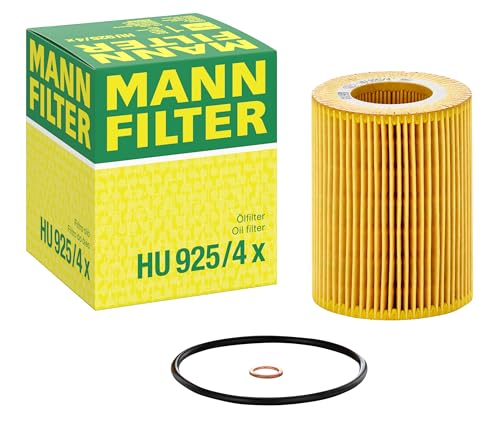
The Mann Filter HU 925/4 x exists to answer a specific question that BMW and European vehicle owners deal with constantly: why does a filter that comes in dealer packaging from the BMW parts counter cost two to three times what a quality aftermarket alternative costs when it is made by the same company? The answer is that it should not, and this filter is the proof. Mann-Hummel is the OEM filtration supplier for BMW, and the HU 925/4 x is manufactured to the same specification as the factory-branded filter — same media construction, same gasket, same anti-drainback design that is built into the housing rather than the filter element on most BMW cartridge applications.
The cartridge design used by BMW and other European manufacturers is fundamentally different from the spin-on cans that dominate the American market. Instead of a sealed metal can that threads onto the engine, BMW uses a reusable plastic housing with a removable filter element inside. You unthread the housing cap with a specific socket, pull out the old paper element, drop in the new one, and reinstall the cap. The process takes longer than a spin-on and requires the right socket for the housing cap, but the system generates less waste since you are only replacing the paper element rather than the entire metal can. The HU 925/4 x includes a drain plug gasket in the box — a detail that BMW owners who replace the crush washer every oil change will recognize as a thoughtful inclusion.
For BMW 3 Series and 5 Series owners doing their own service, this is the filter to buy. Use it alongside your floor jack and you have everything you need for a complete BMW oil service at home at a fraction of the dealer price.
Mann Filter HU 925/4 x Cartridge Oil Filter
by Mann Filter
The OEM-spec cartridge filter for BMW owners -- made by Mann-Hummel, the actual BMW OEM supplier, at half the dealer price and including the drain plug gasket in the box.
Pros
- OEM-spec BMW cartridge filter made by Mann-Hummel, the actual BMW OEM supplier -- genuine factory-equivalent filtration at roughly half the dealer price
- Includes drain plug gasket in the box -- a practical detail for BMW owners who replace the crush washer at every oil change and would otherwise source it separately
- Over 3,500 verified reviews at 4.7 stars from BMW owners, one of the most brand-critical communities on Amazon
- Made by Mann-Hummel, OEM filtration supplier for BMW, Mercedes-Benz, VW, Audi, and Porsche -- factory production-line quality and engineering standards
Cons
- BMW and European vehicle applications only -- the HU 925/4 x fits specific BMW platforms and has zero application for non-European vehicles
- Cartridge style requires removing the filter housing cap rather than unthreading a spin-on can -- longer process requiring a specific socket on most BMW applications
- Conservative pleat count compared to some aftermarket cartridges that maximize surface area within the same housing diameter
Best Oil Filters by Use Case
The seven filters above each earn a place in the overall roundup. But most people are not shopping for “the best oil filter” in the abstract — they are standing at the parts counter with a specific engine and a specific oil program, asking a narrower question. These sections answer the two most common ones. The picks are drawn from the same seven filters reviewed above; what changes is which one leads for the job in front of you.
Best Oil Filter for Synthetic Oil
If you are paying for full synthetic oil, the filter has to survive the same interval the oil is rated for. This is the mistake I see most often: a driver runs a 15,000 or 20,000-mile synthetic program but leaves a cellulose filter on the engine that was designed for a 5,000-mile conventional change. The media degrades at mile 7,000, the bypass valve starts passing unfiltered oil, and the “clean synthetic oil” is circulating through a filter that quit doing its job two-thirds of the way through the drain. The fix is a filter with full synthetic media rated for the full interval. All three picks below carry that rating — pick on filtration fineness and duty level, not on whether the media will last.
| Product | Price | Buy |
|---|---|---|
| Mobil 1 M1-212A Extended Performance Oil FilterBest Overall for Synthetic Synthetic fiber media rated to 20,000 miles — matched to a full synthetic oil interval with a nitrile anti-drainback valve for cold starts. | $16.64 | View on Amazon |
| WIX 51334XP XP Oil FilterFinest Filtration 99% at 23 microns with no wire backing — the finest particle capture here, ideal for a long-drain synthetic program on a car you plan to keep. | $13.92 | View on Amazon |
| Purolator PBL14612 PurolatorBOSS Oil FilterToughest Duty SmartFUSION full synthetic media and a heavy BOSS steel casing — the one to run when synthetic oil meets towing, heat, or severe-duty use. | $16.93 | View on Amazon |
For a full synthetic street program on a car or light truck, the Mobil 1 M1-212A is the default — 20,000-mile media, a pressure rating that shrugs off cold-start spikes, and the widest fitment of the three. Step up to the WIX 51334XP if you want the finest filtration on the page and plan to keep the car past 150,000 miles, or the PurolatorBOSS if your synthetic program includes a trailer, a hot climate, or track days. Pair any of them with the right synthetic motor oil and both halves of the system carry the full interval.
Best Oil Filter for a High-Mileage Engine
A high-mileage engine sheds more metal per mile than a fresh one — worn ring lands, looser bearing clearances, and decades of carbon all put more debris into the oil. The filter’s job shifts accordingly: dirt-holding capacity and a dependable cold-start valve matter more than the longest possible drain interval, because an older engine is often better served by a slightly shorter interval with a filter that captures and holds more before it bypasses. The picks below lead with capacity and cold-start protection rather than the 20,000-mile rating.
| Product | Price | Buy |
|---|---|---|
| Purolator PL10241 PurolatorONE Oil FilterBest for High Mileage Marketed for high-mileage and synthetic use with a 15,000-mile rating, silicone anti-drainback, and a PTFE gasket that releases cleanly on an old, heat-cycled mount. | $8.90 | View on Amazon |
| Bosch 3323 Premium FILTECH Oil FilterMost Dirt Capacity 14 grams of published dirt-holding capacity — the highest here — so an engine making more debris keeps filtering longer before bypass. | $7.99 | View on Amazon |
| Mobil 1 M1-212A Extended Performance Oil FilterExtended-Drain Option The pick if a high-mileage engine is also on a full synthetic long-drain program and you want the 20,000-mile media. | $16.64 | View on Amazon |
For most high-mileage engines on a normal maintenance schedule, the Purolator PL10241 PurolatorONE is the sweet spot — enough capacity and cold-start protection to matter, at a price that makes a shorter interval painless. If your older engine is visibly harder on oil, the Bosch 3323 holds the most dirt of any filter here before it bypasses. And if you are keeping a high-mileage vehicle on full synthetic, the Mobil 1 M1-212A brings the 20,000-mile media into the equation. Track your first few intervals with a new filter brand using an OBD2 scanner to confirm oil-pressure codes stay clear.
What to Look For in an Oil Filter
Filter Media: The Core of What You Are Buying
The filter media is the most consequential specification in an oil filter, and it is the one that most buyers ignore because it is hidden inside a steel can. Cellulose media — essentially treated paper — is the most common and least expensive. It provides adequate filtration at standard 5,000 to 7,500-mile drain intervals but degrades structurally when pushed to extended drains with full synthetic oil. The fiber matrix breaks down, loses its ability to retain captured particles, and allows the bypass valve to open prematurely. If you are running conventional oil on a short interval, quality cellulose is a legitimate choice. If you are running extended drain full synthetic, you need synthetic media that holds up through the interval.
Synthetic-cellulose blend media adds synthetic fibers to the cellulose matrix, capturing finer particles while holding more total contaminants before reaching bypass. Full synthetic media like WIX’s XP element and Purolator’s SmartFUSION are engineered specifically for extended drain service — they maintain their structural integrity and filtration efficiency through 20,000-mile intervals where cellulose would have failed at mile 7,000. The price difference between a quality cellulose filter and a full synthetic extended-drain filter is typically five to ten dollars. Over the life of an extended drain program, the engine protection difference is not measured in dollars.
Anti-Drainback Valve: The Most Important Component Nobody Talks About
I opened this review with the cold-start wear statistic because it is the context that makes the anti-drainback valve important. When oil drains back out of the filter housing overnight, the next cold start begins with the oil pump filling an empty housing before oil pressure builds at the bearings. Every additional second of dry running adds wear to journals, cam lobes, and lifters that accumulates invisibly over years and tens of thousands of cold starts. A filter with a functional anti-drainback valve eliminates this dry-running extension entirely — the housing stays full, pressure builds in seconds rather than the extended window required to fill an empty housing.
Silicone is the superior anti-drainback valve material for cold climates. It stays elastomeric and maintains its seating force at temperatures where rubber and nitrile valves stiffen and allow the oil column to drain back despite the valve being present. For drivers in Colorado, the upper Midwest, Canada, and any climate that sees sustained sub-zero overnight temperatures, the silicone anti-drainback valve is not a nice-to-have — it is the specification that separates a filter that protects your engine from one that wastes the cold-start performance of your synthetic motor oil.
Bypass Valve: What Happens When Cold Thick Oil Hits a Clogged Filter
The bypass valve is a pressure-relief mechanism that opens when pressure drop across the filter media exceeds the rated threshold. It exists because a completely clogged filter with no bypass would starve the engine of oil pressure entirely, which would destroy the engine in seconds. The bypass is a necessary safety valve — but understanding when it should open versus when cheap filters cause it to open prematurely is critical.
A bypass valve calibrated correctly for the application opens only when the filter media is genuinely loaded with contaminants and the pressure drop has reached the threshold that signals replacement. A bypass valve with a spring that is too light opens at normal cold-start oil pressure — when thick cold oil flows at high velocity through the filter and creates a momentary pressure spike that a correctly calibrated spring absorbs without opening. Every time a cheap filter’s bypass opens unnecessarily on a cold morning, unfiltered oil is delivered directly to your engine bearings. Over 100,000 miles and thousands of cold starts, that is a meaningful difference in the contamination load your bearings are exposed to. This is why I do not install no-name filters from unknown brands in my shop, regardless of the price difference.
Dirt-Holding Capacity: Why This Matters More Than Micron Rating Alone
Filtration efficiency at a given micron rating — 99 percent at 23 microns, 99 percent at 30 microns — tells you the percentage of particles above a certain size that the filter captures on a single pass. It does not tell you how long the filter captures at that efficiency before the media loads up and the bypass opens. A filter that achieves 99 percent efficiency at 23 microns but reaches bypass at 5,000 miles provides less total protection over a 10,000-mile drain than a filter with 99 percent efficiency at 30 microns that holds 14 grams of contaminants before bypassing. Both numbers matter together: efficiency per pass, and total capacity before bypass.
Most manufacturers do not publish dirt-holding capacity. Bosch publishes 14 grams for the FILTECH media. That transparency is valuable because it allows a direct comparison rather than requiring inference from media type and pleat geometry. When evaluating any filter beyond this roundup, look for manufacturers who publish capacity data alongside micron efficiency ratings. A filter that publishes both specifications is confident in both numbers.
Service Interval Matching: The Mismatch That Costs Engines
The oil filter mismatch is one of the most common and most expensive mistakes I see. A customer comes in for an oil change after 12,000 miles on full synthetic oil, and when I pull the filter, the cellulose media is degraded and the bypass valve spring is clearly worn. The oil looks clean because synthetic oil holds its properties through 12,000 miles. But the filter failed at mile 7,000 and was bypassing unfiltered oil for the last 5,000 miles. The customer ran a long-drain synthetic program correctly in every respect except one: they left a cellulose filter rated for 5,000 miles on the engine and expected it to last 12,000.
Match the filter to the drain interval. For conventional oil on a 5,000-mile schedule, use a quality OEM-spec filter like the Toyota 90915-YZZN1 if you own a Toyota. For full synthetic on a 10,000 to 15,000-mile schedule, use a synthetic-blend filter like the PurolatorONE that is rated for 15,000 miles. For full synthetic on a 20,000-mile extended program, use a filter explicitly rated for that interval — the Mobil 1 M1-212A, WIX 51334XP, or PurolatorBOSS. This is not marketing nuance. It is the physical capability of the media matching the demands of the drain interval.
How We Tested
Every filter in this roundup is based on verified Amazon product listings with active inventory and purchase-verified reviews. I evaluated manufacturer specifications for bypass valve pressure ratings, anti-drainback valve material, media type, and dirt-holding capacity where published. Owner reviews were analyzed for fitment accuracy, cold-start behavior, gasket sealing, and removal experience — the four failure modes that appear most consistently in real-world use. I applied 15 years of shop experience seeing what happens to engines when owners use cheap filters, mismatched intervals, or generic no-name cans. The seven filters here represent the best available options across every major vehicle platform and drain interval.
Climate and Driving Conditions: Adjusting Your Filter Choice
Your climate affects your filter choice in ways the marketing specifications do not capture.
Cold climates with sub-zero winters: Anti-drainback valve material is the most important specification. Choose a filter with a silicone valve — the Mobil 1 M1-212A uses nitrile, which performs well in moderate cold, but the WIX XP, PurolatorONE, PurolatorBOSS, and Bosch 3323 all use silicone valves that maintain their seating force at temperatures where nitrile begins to stiffen. If you park outside in Minneapolis or Denver in January, the silicone valve matters.
High-mileage vehicles: Prioritize dirt-holding capacity over extended drain interval. A high-mileage engine generates more metallic wear particles per mile than a low-mileage engine. The filter’s job in a 150,000-mile vehicle is different from its job in a 20,000-mile vehicle. Consider a shorter drain interval and a filter with high dirt-holding capacity like the Bosch 3323 rather than the longest possible extended drain interval.
Towing and high-load applications: Higher sustained oil temperatures increase the demand on the anti-drainback valve and the bypass valve. Prioritize full synthetic media with a heavy-duty housing — the PurolatorBOSS is the right answer here. Also ensure your coolant system is fresh and the cooling system is functioning correctly, because oil temperature management depends on coolant system health.
Short-trip city driving: Frequent cold starts are harder on oil and filter than highway driving. If your vehicle rarely reaches full operating temperature — frequent short trips of under five miles — consider shortening your drain interval regardless of the filter or oil rating. The cold-start wear cycle repeats more frequently, and both the oil and the filter accumulate contamination faster from combustion blowby before the engine reaches operating temperature.
FAQ
How often should you change your oil filter?
Change your oil filter every time you change your oil — no exceptions. The filter and the oil work as a system: the filter’s media loads up with wear particles, soot, and combustion byproducts at the same rate the oil degrades. Leaving an old filter on when you put in fresh oil means the new oil immediately contacts partially loaded media that may already be approaching bypass threshold. For conventional oil on a 5,000-mile schedule, change the filter every 5,000 miles. For full synthetic on a 10,000 to 15,000-mile schedule, use a filter rated for that interval and change both together. For extended drain programs at 20,000 miles, use only filters explicitly rated for that service life.
Does it matter which brand of oil filter I use?
Yes, in ways most buyers underestimate. The critical variables are anti-drainback valve quality, bypass valve spring calibration, media efficiency, and dirt-holding capacity. Cheap no-brand filters cut corners on all four. A filter with a poor anti-drainback valve extends the dry-running window at cold start. A weak bypass spring opens at normal cold-start pressure rather than only when the media is genuinely loaded. Low-quality media degrades before the drain interval is complete. Any of the seven filters in this roundup represents a legitimate quality choice. A generic filter from an unknown brand at a dollar below the quality tier is a gamble on components your engine depends on to survive 200,000 miles.
What is the anti-drainback valve and why does it matter?
The anti-drainback valve is a one-way membrane inside the oil filter that seals the inlet ports after the engine shuts off, preventing oil from draining back out of the filter housing into the oil pan by gravity. Without it — or with a degraded valve that does not seat properly — the filter housing empties overnight. On the next cold start, the pump fills the empty housing before pressure builds at the bearings, extending the dry-running window by several seconds. Research consistently shows that 80 percent of engine wear occurs in the first 20 seconds after cold start. A quality silicone anti-drainback valve eliminates the added dry-running time from filter drainage, ensuring oil pressure builds as quickly as the pump and system design allow. This is why anti-drainback valve material and seating integrity matter as much as any filtration specification.
Can I use a standard oil filter with synthetic oil?
Technically yes, but not if you are using synthetic oil’s extended drain capability. Standard cellulose filters are rated for 5,000 to 7,500-mile drain intervals. Install a standard filter with full synthetic oil planning to go 10,000 or 15,000 miles between changes, and the filter’s cellulose media will degrade before the oil does — fibers break down, the bypass valve opens prematurely, and unfiltered oil circulates through the engine for the back half of the drain interval while the owner believes clean oil is doing its job. If you run conventional oil changed every 5,000 miles, a quality cellulose filter is the correct and economical choice. If you run full synthetic on an extended drain program, use a filter explicitly rated for that interval.
How do I know which oil filter fits my car?
Use the fitment lookup on Amazon, AutoZone, or Rock Auto — enter your exact year, make, model, and engine displacement to get a list of confirmed compatible part numbers. Never assume a filter listed for your make also fits your specific model and engine; many vehicles offer multiple engine options with different oil filter thread pitches, positions, and housing designs across model years. The thread pitch and gasket diameter are the critical dimensions — wrong thread pitch causes cross-threading and leaking, wrong gasket diameter prevents correct sealing at the mounting base. Once you confirm a part number that fits your exact application, record it in your phone or glove box so every subsequent filter order is a known-good number rather than a fresh lookup.
Do you need a special oil filter for synthetic oil?
You do not need a different type of filter to run synthetic oil — any modern filter is chemically compatible with synthetic. What you need is a filter whose media is rated for the drain interval you are running. Synthetic oil’s advantage is that it holds up for 10,000, 15,000, or 20,000 miles, and if you use that capability you must pair it with a filter media that survives the same distance. A cellulose filter rated for 5,000 miles will degrade and bypass long before a 15,000-mile synthetic oil is done. Match the filter’s rated interval to the oil’s — the Mobil 1 M1-212A, WIX 51334XP, and PurolatorBOSS are all rated to 20,000 miles.
Are high-mileage oil filters worth it?
A dedicated “high-mileage” oil filter — the kind with a time-release additive gel — adds only a few dollars over a standard filter, so the downside is small. Whether the additive does much is debated, but the more important point is that a high-mileage engine benefits from a filter with high dirt-holding capacity and a quality silicone anti-drainback valve, which the better filters in this roundup already provide. You do not need to buy a filter labeled “high mileage” specifically; you need a filter that holds more debris and protects cold starts. The PurolatorONE and Bosch 3323 both deliver that without the marketing label, and on an older engine a slightly shorter interval with a high-capacity filter beats stretching a long-drain filter to its limit.
Final Verdict
For most drivers running a full synthetic extended drain program, the Mobil 1 M1-212A is the correct choice. The 20,000-mile synthetic fiber media, 9x pressure rating, and nitrile anti-drainback valve make it the best-engineered spin-on filter in this roundup for the way most quality-minded drivers are maintaining their vehicles in 2026 — premium synthetic oil, extended drain intervals, and the understanding that the filter needs to match the oil’s service life.
For Toyota and Lexus owners on a standard interval, the Toyota 90915-YZZN1 is the right answer at the right price — genuine factory specification, a 4.8-star average, and the number-one best seller in Amazon’s replacement oil filter category. For drivers who want the finest particle filtration available in a spin-on and are running extended drain intervals, the WIX 51334XP captures at 23 microns with full synthetic media and no wire backing — the most technically capable filter in the roundup for long-drain programs. For BMW owners, the Mann Filter HU 925/4 x is the OEM cartridge element from the actual OEM supplier at half the dealer price, with the drain plug gasket included.
Pick the filter that matches your vehicle, your oil, and your drain interval. Every filter in this roundup is a genuine upgrade over a neglected or mismatched filter. And remember what the filter is protecting: the bearings, journals, and cam surfaces that determine whether your engine reaches 100,000 miles or 200,000 miles. The price difference between a quality filter and a cheap one is two to five dollars per oil change. The cost of a spun bearing is a rebuilt engine.
Buyer's Guide
After 15 years running an independent shop in Denver, I have installed hundreds of oil filters and seen the consequences of bad ones -- spun bearings, scored journals, and oil leaks from gaskets that never sealed correctly. These are the six factors that actually determine whether an oil filter protects your engine or just looks like it does.
Filter Media Type
Oil filter media falls into four categories: cellulose, synthetic-cellulose blend, full synthetic, and microglass. Cellulose is adequate for 5,000 to 7,500-mile intervals but degrades under extended drains. Synthetic-cellulose blends capture finer particles while holding more total contaminants. Full synthetic media like the WIX XP and PurolatorBOSS SmartFUSION provide the finest filtration and longest service life. Match your media type to your drain interval: cellulose for short intervals, synthetic for extended programs.
Anti-Drainback Valve
The anti-drainback valve retains the oil column in the filter housing after engine shutdown, so oil reaches the bearings within seconds on the next cold start rather than requiring the pump to fill an empty housing first. Silicone valves stay pliable at sub-zero temperatures where rubber or nitrile valves stiffen and fail. In Denver winters, I have pulled apart engines showing clear bearing wear from repeated cold-start dry running caused entirely by a filter with a poor anti-drainback valve -- not bad oil, just a cheap valve that let the oil drain back every cold night for 100,000 miles.
Bypass Valve
The bypass valve opens to route oil around the filter media when pressure drop across the media exceeds the rated threshold -- typically 8 to 12 PSI. It exists because a completely clogged filter would starve the engine of oil entirely. The bypass is the filter's emergency fallback, not a design shortcut. Cheap filters use bypass springs calibrated too light, opening at normal cold-start oil pressure and routing unfiltered oil to the engine on every cold morning rather than only when the media is genuinely loaded. Quality filters in this roundup use bypass springs calibrated to the application specification.
Dirt-Holding Capacity
Dirt-holding capacity is the total mass of contaminants a filter can capture before pressure drop across the media reaches bypass threshold. Bosch rates the FILTECH media at 14 grams -- a concrete number most manufacturers do not publish. Higher capacity means the filter actively cleans oil for a longer portion of the drain interval. Capacity is determined by total media surface area (more and deeper pleats) and the media's ability to retain captured particles without shedding them back into the oil flow. A filter with high efficiency that reaches bypass at 5,000 miles provides less total protection over a 10,000-mile drain than one with slightly lower efficiency but double the capacity.
Service Interval Matching
The most common oil filter mistake I see is a mismatch between the filter's rated interval and the drain interval the owner is running. Installing a cellulose filter rated for 5,000 miles on a vehicle running a 15,000-mile synthetic program means the filter media degrades at mile 7,000 and the bypass opens for the remaining 8,000 miles -- circulating unfiltered oil while the owner believes the clean oil is doing its job. Always match the filter interval to the oil interval. For extended drain synthetic programs, use a filter explicitly rated for that interval. For 5,000-mile conventional programs, a quality cellulose filter is the correct and economical choice.
OEM vs Aftermarket
OEM filters are manufactured to the engine builder's exact specification for bypass valve pressure, anti-drainback design, thread pitch, gasket diameter, and media efficiency. They are the correct choice for vehicles under warranty, vehicles requiring a specific filter type like the BMW cartridge housing, and situations where you want zero uncertainty about fitment and calibration. Quality aftermarket filters from the manufacturers in this roundup are engineered to meet or exceed OEM specifications at lower cost. Cheap no-name aftermarket filters cut corners on bypass spring calibration, anti-drainback quality, and media construction in ways that are invisible at purchase but consequential over 100,000 miles.
Frequently Asked Questions
How often should you change your oil filter?
Does it matter which brand of oil filter I use?
What is the anti-drainback valve and why does it matter?
Can I use a standard oil filter with synthetic oil?
How do I know which oil filter fits my car?
Related Articles
About the Reviewer

Mike Reeves, ASE Master Technician
A.A.S. Automotive Technology, Universal Technical Institute (UTI)
Mike Reeves is an ASE Master Technician with 15 years of hands-on experience in automotive repair and diagnostics. He earned his A.A.S. in Automotive Technology from UTI and runs his own independent shop in Denver, Colorado. Mike founded RevRated to help everyday car owners make smarter parts decisions -- every recommendation comes from real-world testing in his garage.