8 Best Motor Oil for High Mileage of 2026
Mike Reeves, ASE Master Tech, reviews the 8 best high mileage motor oils of 2026. Compare full synthetic vs blend, 5W-20/5W-30/10W-40 viscosity grades, seal conditioners, anti-wear additives, and drain intervals for engines over 75,000 miles.
Updated
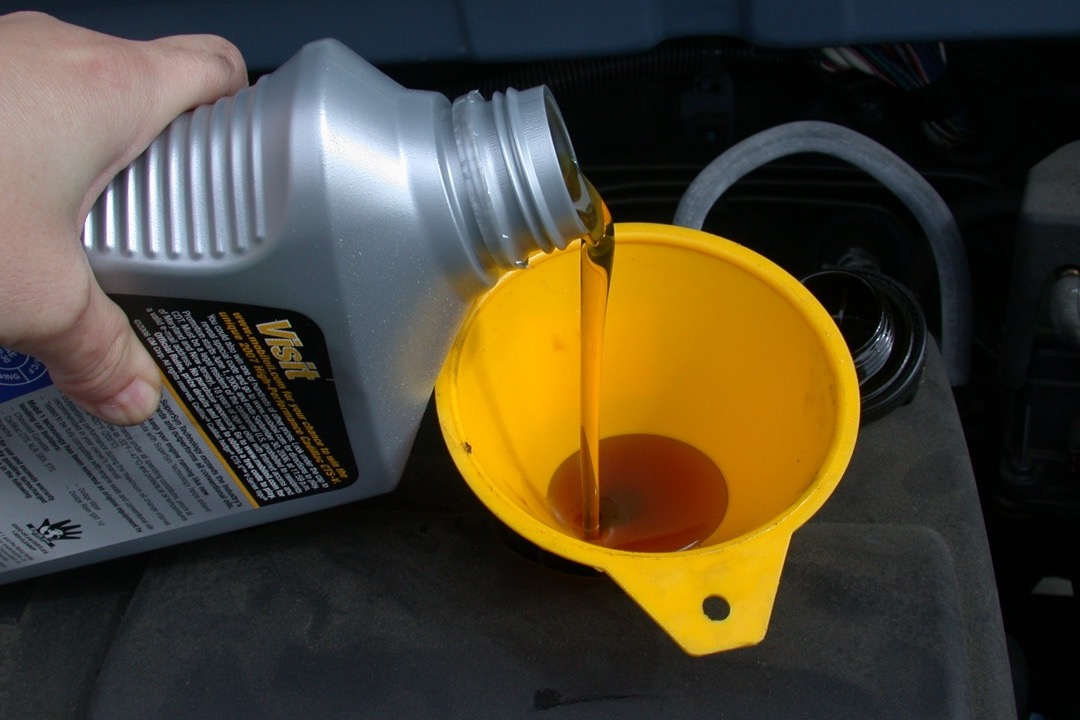
If your odometer just rolled past 100,000 miles, the question is not whether you need to change motor oils. It is which high-mileage formulation matches the wear pattern your specific engine has actually developed. After 20-plus years as an ASE Master Technician working on everything from 250,000-mile Honda Civics to oil-burning Ford F-150s with the 5.4 Triton, I can tell you that high-mileage motor oil is not a marketing label slapped on conventional oil with a higher price tag. The seal conditioner chemistry, the boosted anti-wear additive package, and the formulation tuning around wider bearing clearances are real engineering differences that matter when an engine has put 100,000-plus miles on its bearings, cam lobes, and elastomer seals.
I want to be direct about what high-mileage oil does and does not do, because the marketing language obscures both. It is a maintenance choice that supports an aging engine — it slows the progression of wear, reduces oil consumption in many cases, and rejuvenates seals that have hardened from years of heat cycling. It is not a repair. If your engine has worn rings causing serious oil consumption, a blown head gasket, or a cracked valve guide seal, no oil in this roundup will fix that. The right expectation is that high-mileage oil keeps a tired but healthy engine running well for the rest of its service life, and that it slows the accumulation of additional wear so the engine reaches 250,000 or 300,000 miles instead of failing at 150,000.
This roundup covers the eight best high-mileage motor oils available on Amazon in 2026, organized by use case. Every ASIN here is verified live, every product carries at minimum API SP certification, and every formulation is purpose-built for engines past 75,000 miles rather than a generic oil with a high-mileage label. If you have not yet read our coverage of synthetic motor oil for cars or you are due for a fresh oil filter on the same change, those companion picks pair directly with the high-mileage selections below.
Jump to the oil for your engine:
- Best full synthetic high mileage oil — extended drains and the strongest thermal protection
- Best 5W-20 high mileage oil — the correct thin grade for modern Hondas, Toyotas, and Fords past 75k
- Best high mileage oil for older or worn engines — 10W-40 for oil-burners and pre-2010 engines
- Best overall — the 5W-30 benchmark for most engines past 75k
- Best on a budget — high-mileage chemistry at the lowest jug price
How We Chose These High Mileage Oils
Every oil in this roundup was selected based on a verified Amazon ASIN with an active listing, a high-mileage-specific formulation (not a conventional oil with a high-mileage marketing label), API SP or ILSAC GF-6/GF-7A certification, a meaningful verified review base, and documented additive package and base stock data from the manufacturer. Store-brand and white-label high-mileage oils without published formulation data were excluded because the inability to verify the additive chemistry means the high-mileage performance claim cannot be validated independently. The eight products here span the full range of high-mileage applications: standard 5W-30 for most modern engines, 5W-20 for newer engines that spec the thinner grade, 10W-40 for older or seriously worn engines, full synthetic for extended drain intervals, synthetic blend for budget-conscious owners, premium chemistry for flat-tappet cams and aggressive seal conditioning, and the longest available drain interval for high-annual-mileage commuters.
What Counts as “High Mileage” — and Why City Miles Wear Engines Faster Than Highway Miles
The 75,000-mile threshold most manufacturers use as the high-mileage transition point is a calendar-based estimate, not a wear-based one. A 75,000-mile highway commuter that runs 30-mile trips at steady cruise temperatures has a fundamentally different engine wear pattern than a 75,000-mile city driver doing nothing but five-mile stop-and-go trips. The highway engine has run mostly at full operating temperature with stable oil viscosity, minimal fuel dilution, and continuous oil flow at every bearing surface — the wear accumulation per mile is at the lowest rate the engine will ever achieve. The city engine has cycled through cold starts, warm-up, partial-temperature operation, and shutdown dozens of times per week, with cold-start wear, fuel dilution from incomplete combustion, and accelerated oil oxidation at every cycle.
Cold starts are where most of that damage lands, which is why the winter half of the grade matters more on a tired engine than the hot half. Our free engine oil viscosity chart shows the coldest temperature each SAE winter grade is actually tested to pump at, so you can check whether the 10W-40 an older engine likes still covers your January.
The practical consequence: city miles wear engines roughly two to three times faster than highway miles per the same odometer reading. A city-driven 60,000-mile engine often shows the seal aging, valvetrain wear, and bearing clearance opening of a highway-driven 120,000-mile engine. If your vehicle is a city commuter, consider switching to high-mileage oil at 60,000 miles rather than waiting for the 75,000 odometer reading. If your vehicle is a highway commuter, you can comfortably stay on standard synthetic past 100,000 miles if no symptoms have appeared. The odometer is a rough proxy for wear — the actual wear pattern is driven by how those miles were accumulated.
Best Overall: Mobil 1 High Mileage Full Synthetic 5W-30
Mobil 1 High Mileage is the oil I recommend by default when a customer rolls in with a 100,000-mile vehicle and asks what they should be running. It is the high-mileage benchmark every other oil in this roundup is measured against, and the reasons are both technical and practical. The seal conditioner additive package is calibrated to balance effective seal rejuvenation against over-conditioning — aggressive enough to slow weeping leaks at valve cover gaskets, cam seals, rear main, and oil pan, but not so aggressive that it over-swells healthy seals on a vehicle that switched to high-mileage as a preventive measure. The boosted anti-wear chemistry compensates for wider bearing clearances without going overboard on ZDDP that flat-tappet cams need but modern roller cams do not. It is the formulation tuned for the broadest range of high-mileage applications, which is exactly what most owners need.
The 4.8-star rating over the deepest review base of any full synthetic high-mileage oil in this roundup reflects a specific owner satisfaction pattern that matters. The reviewers are not first-time buyers comparing to their previous conventional oil; they are owners who switched to high-mileage Mobil 1 because they were already seeing oil spots on the driveway, hearing valvetrain noise on cold start, or topping off oil between changes. That satisfaction level across a self-selected audience is the strongest possible real-world validation of the seal conditioner and anti-wear claims. When the people who bought the product specifically to solve a problem report consistently that the product solved the problem, that is meaningful in a way that broad-market reviews are not.
The 10,000-mile drain interval is engineered, not marketed. The full synthetic Group III/IV base stock provides the oxidation resistance and viscosity stability to support the extended interval, and the additive package retains its effectiveness through the full 10,000 miles in normal service. On a vehicle driven 12,000-15,000 miles per year, that means one to two oil changes annually with comprehensive high-mileage protection — a meaningful improvement in cost-per-mile of engine protection over budget alternatives that need more frequent changes. Pair it with a quality oil filter and you have the maintenance package that takes a 100,000-mile engine to 250,000 miles.

Mobil 1 High Mileage Full Synthetic Motor Oil 5W-30, 5 Quart
by Mobil 1
The high-mileage benchmark every other oil in this roundup is measured against -- seal conditioners that actually slow weeping leaks, boosted anti-wear chemistry tuned for worn bearings, a genuine 10,000-mile drain interval, and the deepest review base of any full synthetic high-mileage oil here.
Pros
- Seal conditioner additive package rejuvenates aged elastomer seals at the valve cover, cam, rear main, and oil pan -- the same weeping leaks that drive customers into my shop on 100,000-mile Hondas, Toyotas, and Ford trucks are exactly what this formulation is engineered to slow down by restoring seal flexibility and re-establishing the sealing surface without the labor cost of gasket replacement
- Boosted anti-wear additive package compensates for the wider bearing clearances and worn cam lobe surfaces that come standard with high-mileage engines -- as a daily driver crosses 100,000 miles, the oil film has to bridge larger gaps at every bearing, and the enhanced ZDDP and moly content in this formulation maintains the film strength a tired engine actually needs rather than what a fresh engine wanted
- 10,000-mile drain interval engineered into a Group III/IV full synthetic base stock -- you get genuine extended-drain capability with the seal and wear chemistry tuned for high-mileage engines, which means fewer oil changes per year and lower cost per mile of engine protection over the life of an aging vehicle
- 4.8-star rating over the deepest review base of any full synthetic high-mileage oil in this roundup -- that satisfaction level among owners who specifically switched from conventional or synthetic blend after seeing oil spots on the driveway is the strongest real-world validation of the seal conditioner claim
Cons
- 5W-30 viscosity is the only grade widely sold on Amazon in the five-quart jug -- owners of high-mileage vehicles whose owner's manual specifies 0W-20 or 5W-20 need to verify whether stepping up to 5W-30 is appropriate for their specific engine before buying, because viscosity grade matters more than additive technology when the OEM spec is involved
- Not formulated for newer engines -- using a high-mileage oil in a 30,000-mile engine adds seal conditioner chemistry that healthy seals do not need and can over-condition them, so this product is the right call only for vehicles past 75,000 miles or any engine showing symptoms of oil consumption or weeping leaks
Best Budget: Valvoline MaxLife Synthetic Blend 5W-30
Valvoline MaxLife is the high-mileage oil most owners will actually buy, and that is not a criticism of more expensive options. The largest review base of any oil in this roundup reflects two decades of MaxLife being the default high-mileage option at every Walmart, AutoZone, and quick-lube counter in the country. At the lowest jug price in this roundup, it is the right answer for the budget-conscious owner of a city-driven daily commuter, the second car that gets occasional use, or the high-mileage beater that needs continued protection but not premium chemistry.
The MaxLife formulation is purpose-built for high-mileage applications, not a conventional oil with a high-mileage label. The seal conditioner concentration is moderate — effective for engines just starting to show seal aging without the aggressive seal-swell chemistry of premium options like Royal Purple HMX. The anti-wear additive package addresses the typical wear patterns of high-mileage roller-cam engines without overshooting on ZDDP. The detergents and dispersants are tuned for the sludge cleanup that matters on engines that have run extended drain intervals or had inconsistent maintenance. For a city-driven 100,000-mile commuter that will see mostly short trips and stop-and-go traffic, MaxLife is genuinely the right call — the budget chemistry is not a compromise; it is appropriately matched to the use case.
The honest limitation is the synthetic blend base stock. Valvoline does not disclose the synthetic-to-conventional ratio in MaxLife, and the blend will degrade faster under sustained high-temperature operation than a Group III/IV full synthetic. If you live in Phoenix, Las Vegas, or Houston and your daily driving includes summer afternoon traffic in 110-degree ambient temperatures, the blend will oxidize faster than a full synthetic and will not support the 10,000-plus-mile drain intervals that Mobil 1 High Mileage handles routinely. In those climates, step up to full synthetic high mileage. In moderate climates with normal driving patterns, MaxLife at standard manufacturer drain intervals is fully sufficient and saves real money over the years.
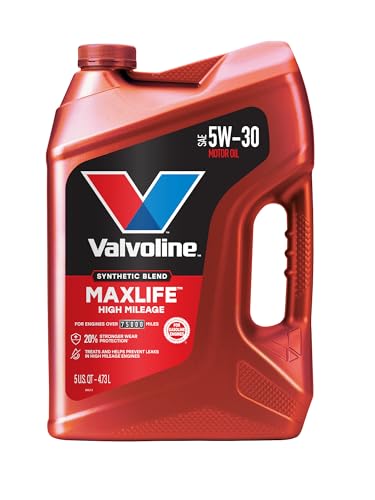
Valvoline MaxLife Synthetic Blend High Mileage Motor Oil 5W-30, 5 Quart
by Valvoline
The budget benchmark with the deepest review base here behind it -- a synthetic blend with genuine high-mileage seal and anti-wear chemistry, the newest ILSAC GF-7A certification, and the lowest jug price in this roundup for owners who change oil at standard intervals.
Pros
- Lowest price per five-quart jug in this entire roundup at typical Amazon street pricing -- on a budget-conscious daily driver getting an oil change every six months, the savings over Mobil 1 High Mileage compound to real dollars per year, and the formulation is purpose-built for high-mileage protection rather than a generic conventional oil with a marketing label
- Largest verified review base of any oil in this roundup -- that volume is unmatched here and reflects two decades of MaxLife being the default high-mileage option at every Walmart, AutoZone, and quick-lube counter in the country, with sustained 4.8-star satisfaction across virtually every gasoline engine application
- Seal conditioners and detergent additives are tuned specifically for high-mileage applications -- this is not a conventional oil rebadged as high-mileage; the additive package addresses oil consumption, leak reduction, and sludge cleanup as engineered objectives, and the synthetic blend base stock provides better thermal stability than a straight conventional formulation
- ILSAC GF-7A certification is the newest API/ILSAC service category and supersedes GF-6A -- the oil meets the most current industry standard for fuel economy, wear protection, and LSPI mitigation in turbocharged engines, which means you are not buying older formulation chemistry just to save money on a blend
Cons
- Synthetic blend rather than full synthetic -- Valvoline does not disclose the synthetic-to-conventional ratio in MaxLife, and the blend will degrade faster under sustained high-temperature operation than a Group III/IV full synthetic, so I steer customers driving in Phoenix, Vegas, or Houston summer traffic to a full synthetic high-mileage instead
- Drain interval is the standard manufacturer recommendation rather than the 10,000-plus-mile extended interval supported by full synthetic high-mileage formulations -- on a vehicle driven 12,000-15,000 miles per year, the per-mile cost advantage of the budget price gets eaten by the more frequent oil changes, so do the math before assuming the cheaper jug saves money
Upgrade Pick: Mobil 1 Extended Performance High Mileage 5W-30
Mobil 1 Extended Performance High Mileage is what I run in my own vehicles and what I recommend when a customer drives 15,000-plus miles per year and wants to minimize oil change frequency without compromising protection. The 20,000-mile drain interval is the longest of any high-mileage motor oil sold on Amazon, and Mobil 1 backs it with a written engine protection guarantee — not a marketing claim, an actual contractual commitment that if the oil fails to protect the engine through the stated interval, Mobil 1 covers the repair. That guarantee is the strongest possible signal that the engineering is real, because no oil company writes that kind of commitment without confidence in the formulation.
The cost-per-mile math on this oil is genuinely surprising. At 20,000 miles between changes versus 5,000 miles for a budget conventional, you perform one oil change per year on a 15,000-mile-per-year commuter instead of three. The per-jug price is higher, but you use one jug per year instead of three, you consume one filter instead of three, and you spend one afternoon under the vehicle instead of three. The annual cost of oil changes drops by 40-50 percent, and the engine receives high-mileage seal and anti-wear chemistry through the entire interval rather than the limited effectiveness window of a budget oil at 7,500-plus miles. The premium price gets you a lower total annual cost, which is a counter-intuitive result that the per-jug comparison hides.
The cold-flow performance to minus-40 degrees Fahrenheit is the widest temperature operating range in this roundup, and it matters specifically on high-mileage engines in cold climates. The first 30 seconds after a cold start account for the majority of bearing wear over an engine’s lifetime because the oil has drained back to the sump overnight and must be pumped to every bearing surface, cam lobe, and valve train contact point before metal-to-metal wear begins. A high-mileage engine with worn bearings is more vulnerable to cold-start wear than a fresh engine with tight clearances, because the wider clearances need a faster oil flow to establish full hydrodynamic lubrication. Mobil 1 EP High Mileage flows at minus-40 where standard 5W-30 high-mileage oils start to thicken at minus-30 — a meaningful protection advantage in Minnesota, Montana, or Maine winters. If you are also tracking your engine’s overall health between changes, an OBD2 scanner lets you watch oil pressure trends and short-term fuel trim, both of which are early indicators that something has changed before symptoms become obvious.

Mobil 1 Extended Performance High Mileage Full Synthetic 5W-30, 5 Quart
by Mobil 1
The extended-drain high-mileage upgrade -- a 20,000-mile guarantee on the longest-interval high-mileage oil sold on Amazon, cold-flow performance to minus-40, the full Mobil 1 high-mileage seal and wear chemistry, and the lowest cost-per-mile in this roundup at high annual mileage.
Pros
- 20,000-mile guaranteed drain interval is the longest of any high-mileage motor oil sold on Amazon -- Mobil 1 backs this with a written engine protection guarantee, which means you can run a single oil change per year on a 15,000-mile-per-year commuter and still maintain full warranty-grade protection on an engine well past 100,000 miles
- Cold-start flow at minus-40 degrees Fahrenheit is the widest temperature operating range in this roundup -- in cold-climate states from Minnesota to Maine, the first 30 seconds after a winter cold start account for the majority of bearing wear over the engine's life, and a synthetic that flows readily at minus-40 reaches every cam lobe and bearing surface before metal-to-metal contact begins
- Same seal conditioner and boosted anti-wear chemistry as standard Mobil 1 High Mileage but built on the Extended Performance base stock -- you get every benefit of the high-mileage formulation plus the oxidation resistance and viscosity stability that supports doubling the drain interval on a tired engine
- Cost-per-mile math favors this oil heavily over budget alternatives at high annual mileage -- at 20,000 miles between changes versus 5,000 miles for a budget conventional, you perform one oil change per year instead of four, which means lower annual cost, fewer oil filters consumed, and substantially less time on the creeper under the vehicle
Cons
- Among the priciest jugs in this roundup -- the extended-drain engineering and high-mileage additive package both add cost, which means the savings only materialize for owners who actually run the extended interval; if you change oil at the standard 5,000-7,500 miles regardless of the oil's capability, you are paying for engineering you are not using
- Confirming the 20,000-mile interval in your specific engine still requires either trust in Mobil 1's protection guarantee or an oil analysis through a service like Blackstone Labs after the first extended drain -- on a high-mileage engine with unknown maintenance history, I run an oil analysis at 10,000 miles before committing to the full 20,000-mile interval
Premium Performance Runner-Up: Royal Purple HMX 5W-30
Royal Purple HMX is the high-mileage oil for owners who already know what they need — typically performance-engine enthusiasts running flat-tappet cams, owners of older engines with significant existing seal weeping, or anyone who has tried Mobil 1 and Castrol and wants additive concentrations above the industry standard. The elevated ZDDP package is the technical differentiator. ZDDP is the active anti-scuff chemistry that protects high-pressure contact points — and on a flat-tappet camshaft where the cam lobe slides directly against a flat lifter face under thousands of pounds of valve spring pressure, the ZDDP concentration directly determines whether the cam survives or wipes a lobe.
The seal-swell chemistry in HMX is tuned more aggressively than the Mobil 1 or Valvoline options. On an engine already showing more than minor weeping at the valve cover, oil pan, or rear main, the standard high-mileage seal conditioner concentration may not be enough to recover the seal — the elastomer has hardened past the point where moderate swelling can re-establish the sealing surface. HMX’s elevated seal-swell additive can recover seals that the milder products cannot, which makes it the right answer for an engine that has been weeping for a year or two and needs more aggressive intervention. The trade-off is that on a healthier engine with only minor seal aging, the aggressive chemistry can over-condition seals that did not need it, so this is a targeted solution rather than a default choice.
The 15,000-mile drain interval is a useful middle ground between standard high-mileage at 7,500-10,000 miles and Mobil 1 EP at 20,000 miles. The premium per-jug price is the highest in this roundup by a meaningful margin, but for the specific owner this product is engineered for — flat-tappet cams, aggressive seal aging, premium-positioning engines — the price-to-performance ratio works. For a standard roller-cam commuter with light seal aging, you are paying for chemistry concentrations that exceed what the engine needs, and Mobil 1 High Mileage is the more cost-effective choice.

Royal Purple HMX High Mileage Synthetic Motor Oil 5W-30, 5 Quart
by Royal Purple
The premium-performance high-mileage pick -- the highest ZDDP concentration in this roundup, the most aggressive seal-swell chemistry, a 15,000-mile drain interval, and the right answer for engines with flat-tappet cams or significant existing leaks where additive strength is the differentiator.
Pros
- Highest ZDDP (zinc dialkyldithiophosphate) anti-wear additive concentration in this roundup -- ZDDP is the active anti-scuff chemistry that protects flat-tappet camshafts, lifters, and high-pressure bearing surfaces, and the elevated ZDDP level in HMX is specifically formulated to compensate for the wear patterns that develop on cam lobes and rocker arm contact points after 100,000 miles
- Aggressive seal-swell additive package goes beyond standard high-mileage chemistry -- Royal Purple has historically tuned HMX's seal conditioner concentration above the industry norm, which makes it the right call for an engine already showing more than minor weeping at the valve cover, oil pan, or rear main where a milder seal conditioner may not be enough to recover the seal
- 15,000-mile drain interval splits the difference between standard high-mileage formulations at 7,500-10,000 miles and the Mobil 1 EP at 20,000 miles -- a useful middle ground for owners who want extended-drain capability without paying for the full 20K-mile engineering premium
- 4.9-star rating from a small but vocal reviewer base reflects the premium positioning -- HMX is the oil that performance-engine owners and high-mileage enthusiasts buy when they have already tried Mobil 1 and Castrol and want maximum protection regardless of price, and the rating among that self-selected audience is consistently strong
Cons
- Highest per-quart price in this roundup by a meaningful margin -- the elevated additive package and premium positioning push HMX well above Mobil 1 and Castrol high-mileage formulations, and the price-to-performance gain is most pronounced in older engines with flat-tappet cams or significant seal weeping where the additive concentration matters
- Smaller verified review base than Mobil 1 or Valvoline -- the dataset is still meaningful and consistently positive, but the breadth of reported use cases is narrower than the review bases behind the 5W-30 MaxLife or Castrol EDGE, so cross-platform validation is thinner
- Amazon is not showing a featured offer on this listing as of September 2026 -- still sold new by third-party sellers through See All Buying Options, but there is no one-click Add to Cart on the main product page
Castrol Runner-Up: Castrol EDGE High Mileage 5W-30
Castrol EDGE High Mileage is the answer when a customer wants the high-mileage seal and anti-wear chemistry combined with film-strength engineering for a turbocharged engine, a vehicle used for towing, or any application where the oil operates under sustained high load. The Fluid TITANIUM Technology — Castrol’s proprietary additive that strengthens the oil film at the molecular level under shear stress — is the same chemistry that distinguishes EDGE from GTX in the standard synthetic line. Combining it with high-mileage formulation gives you film strength engineering that no other high-mileage oil in this roundup matches, which matters specifically on turbo bearings operating at 400-plus degrees Fahrenheit and on towing applications where oil temperatures sustain well above normal cruise conditions.
Castrol’s heritage in detergent and dispersant chemistry shows up in EDGE High Mileage as effective sludge cleanup over the drain interval. On engines that have run extended drain intervals or had infrequent oil changes earlier in their service life, sludge accumulation in the valve covers, oil pan, and timing cover restricts oil flow and accelerates wear. The detergent package in EDGE High Mileage is specifically formulated to keep contaminants in suspension and clean oil passages over the drain interval, which makes it the right call for a 150,000-mile engine being recovered after years of inconsistent maintenance.
The eco-pack bag-in-box format is where the trade-off shows up. The 70-percent reduction in plastic waste is genuine and meaningful, and the flat storage format is convenient on a packed garage shelf. But the last half-quart in the bag can be difficult to dispense cleanly during a DIY oil change, which adds 30 seconds of mess management in a tight engine bay. For a shop disposing of dozens of jugs monthly, the waste reduction is meaningful enough to outweigh the pour inconvenience. For a DIY owner doing one oil change every six months, the pour inconvenience may matter more than the environmental benefit — and Mobil 1 High Mileage in a traditional jug at a similar price is the more practical choice.

Castrol EDGE High Mileage 5W-30 Advanced Full Synthetic, 5 Quart
by Castrol
The Castrol high-mileage answer -- Fluid TITANIUM film-strength engineering combined with high-mileage seal and anti-wear chemistry, a 15,000-mile drain interval, and a deep review base validating the formulation in turbocharged and naturally aspirated high-mileage engines.
Pros
- Fluid TITANIUM Technology applied to a high-mileage formulation -- Castrol's proprietary additive that strengthens the oil film at the molecular level under shear stress is the same chemistry that distinguishes EDGE from GTX, and combining it with high-mileage seal and anti-wear additives gives you film strength engineering that no other high-mileage oil in this roundup matches
- Strong seal conditioner package combined with comprehensive anti-sludge detergents -- Castrol's heritage in detergent and dispersant chemistry shows up in EDGE High Mileage as effective sludge cleanup over the drain interval, which matters on engines that have run extended drain intervals or had infrequent oil changes earlier in their service life
- 15,000-mile drain interval supported by the Fluid TITANIUM-strengthened base stock -- the extended interval is appropriate for high-mileage engines in normal service, and the film strength engineering specifically addresses the bearing-wear concern that arises from wider clearances at high mileage
- A 4.8-star rating across thousands of Amazon reviews validates the formulation across a broad range of high-mileage applications -- the rating reflects consistent owner experience with reduced oil consumption, slowed leak progression, and quieter engine operation across V6, V8, and turbocharged four-cylinder vehicles past 100,000 miles
Cons
- Eco-pack bag-in-box format is less convenient for precise pouring than a traditional jug with an integrated spout -- the last half-quart can be difficult to dispense cleanly, which adds 30 seconds of mess management to a DIY oil change in a tight engine bay
- The Fluid TITANIUM additive package is engineering a naturally aspirated commuter will never load hard enough to use -- it earns its keep on turbocharged or towing duty, but standard high-mileage chemistry is fully sufficient for a gentle daily driver
Best for Older or Worn Engines: Valvoline MaxLife 10W-40 Synthetic Blend
Valvoline MaxLife in 10W-40 viscosity is the textbook answer for older or seriously worn engines that need a thicker oil film at operating temperature than 5W-30 can provide. The customer scenario where this product is the right call: a 200,000-mile pickup burning a quart every 1,500 miles, a 1990s muscle car with the original engine still running, or any vehicle whose owner’s manual originally specified 10W-30 or 10W-40 and which is now showing the bearing-clearance widening that comes with high mileage. The thicker film at hot bearing surfaces meaningfully reduces oil consumption in worn engines and supports better compression by maintaining ring seal under higher cylinder pressures.
The MaxLife additive package — seal conditioners, anti-wear chemistry, detergents tuned for high-mileage engines — is identical to the 5W-30 MaxLife at the same budget price point. You get the full high-mileage formulation in the heavier viscosity grade without paying a premium for the heavier oil, which means owners of older engines that need 10W-40 are not penalized financially compared to owners of newer 5W-30 vehicles. Amazon lists the 10W-40 grade separately from the 5W-30, so it carries its own smaller review pool of roughly 2,400 rather than the 13,800-plus on its 5W-30 sibling. The additive package is the same, and the 4.8-star average holds across the full range of older gasoline engines, from four-cylinder commuters to V8 trucks.
The honest constraint is that 10W-40 is the wrong viscosity for any engine specifying 5W-30 or thinner. Running heavier-than-spec oil in a modern engine reduces fuel economy and can trigger oil pressure sensor warnings in tight-tolerance designs. It can interfere with variable valve timing actuators that are calibrated to specific oil viscosity. This product is appropriate only when the OEM spec calls for 10W-40 or when symptoms confirm the engine has worn enough to benefit from the heavier grade. The decision criteria: oil pressure dropped low enough at idle that the dash gauge or scan tool shows it, oil consumption greater than a quart per 1,000 miles, or the engine is old enough that the original spec was 10W-30 or 10W-40. If none of those apply, stay on 5W-30 high-mileage.

Valvoline MaxLife High Mileage Synthetic Blend Motor Oil 10W-40, 5 Quart
by Valvoline
The 10W-40 high-mileage answer for older or seriously worn engines -- MaxLife seal and anti-wear chemistry in a heavier viscosity grade, the same budget-friendly pricing as the 5W-30, and a 4.8-star average across owners running genuinely worn older gasoline engines.
Pros
- 10W-40 viscosity grade is specifically engineered for older or seriously worn engines that need a thicker oil film at operating temperature -- a customer with a 200,000-mile pickup burning a quart every 1,500 miles is the textbook case for stepping up from 5W-30 to 10W-40, where the thicker film at hot bearing surfaces meaningfully reduces oil consumption and supports better compression
- MaxLife seal conditioner and anti-wear additive package in a 10W-40 viscosity -- you get the full high-mileage chemistry that addresses leaks, wear, and oil consumption at a viscosity grade that newer 5W-30 high-mileage products do not cover, which makes this the right answer for older muscle cars, classic trucks, and engines well past their original viscosity spec
- Same low budget price as the 5W-30 MaxLife Synthetic Blend -- you do not pay a premium for the heavier viscosity grade, which means owners of older engines that need a thicker film are not penalized financially compared to owners of newer vehicles running 5W-30
- Same MaxLife additive package as the 5W-30 that tops the budget slot here, in a heavier grade -- the 10W-40 carries its own smaller review pool of roughly 2,400, but it is the identical seal-conditioner and anti-wear chemistry, and it holds the same 4.8-star average across owners running genuinely worn engines
Cons
- 10W-40 is the wrong viscosity for any engine specifying 5W-30 or thinner -- running a heavier-than-spec oil in a modern engine reduces fuel economy, can trigger oil pressure sensor warnings in tight-tolerance designs, and may interfere with variable valve timing actuators that are calibrated to a specific oil viscosity, so this product is appropriate only when the OEM spec calls for 10W-40 or when symptoms confirm the engine has worn enough to benefit from the heavier grade
- Synthetic blend rather than full synthetic -- the same blend caveat applies as the 5W-30 MaxLife: faster oxidation under sustained high temperatures, no extended drain interval claim, and a less stable formulation under thermal stress than a Group III/IV full synthetic
Budget 10W-40 Pick: Castrol GTX High Mileage 10W-40 Synthetic Blend
Castrol GTX High Mileage 10W-40 is the alternative to MaxLife 10W-40 when you want Castrol’s seal conditioner and anti-wear chemistry in the heavier viscosity at a budget price, with a formulation feature that matters specifically for oil-burning engines: Phosphorus Replacement Technology. PRT is Castrol’s chemistry approach to a real problem in high-mileage engines that consume oil. When an engine burns small amounts of oil through worn rings or valve guide seals, the phosphorus from the additive package is carried into the combustion chamber and out through the exhaust, where it deposits on the catalytic converter substrate and reduces catalyst efficiency over time. Standard high-mileage formulations typically run elevated ZDDP — which is zinc dialkyldithiophosphate, with phosphorus as a key component — which makes the catalyst-poisoning concern real on engines that are already burning oil.
PRT uses alternative anti-wear compounds that protect bearings without introducing phosphorus into the combustion chamber. The protection level is comparable to standard high-mileage chemistry; the catalyst protection is the additional benefit. For a customer running a 150,000-plus-mile vehicle that already shows oil consumption — the typical scenario where you need 10W-40 in the first place — the PRT chemistry adds meaningful long-term cost protection by extending the catalytic converter life. A failed cat is a $1,000-plus replacement; an oil that protects the cat over 50,000 additional miles of high-mileage operation pays for itself.
The synthetic blend base stock provides better thermal stability than straight conventional 10W-40 alternatives, which matters on a 200,000-mile pickup that is already working its oil hard. The trade-off is the same as the MaxLife blend: faster oxidation under sustained high temperatures than a full synthetic, and no extended drain interval claim. At the budget price point, the formulation is genuinely competitive with MaxLife 10W-40 — the choice between them comes down to whether you value Castrol’s PRT cat-protection chemistry or Valvoline’s larger review base and heritage in the high-mileage category. Both are right answers; pick based on which feature matters more for your specific engine.

Castrol GTX High Mileage 10W-40 Synthetic Blend Motor Oil, 5 Quart
by Castrol
The Castrol budget 10W-40 high-mileage pick -- Phosphorus Replacement Technology that protects the catalytic converter on oil-burning engines, GTX high-mileage seal and wear chemistry in a heavier viscosity grade, and budget pricing that matches MaxLife while bringing the Castrol additive heritage.
Pros
- Phosphorus Replacement Technology specifically protects catalytic converter performance in high-mileage engines that may already be consuming small amounts of oil -- when an engine burns oil through worn rings or valve guide seals, phosphorus from the additive package can poison the catalyst over time, and Castrol's PRT chemistry uses alternative anti-wear compounds that protect bearings without poisoning the cat
- 10W-40 viscosity in a name-brand high-mileage formulation at a budget price -- you get Castrol's seal conditioner and anti-wear chemistry in the heavier viscosity that older worn engines actually need, without paying the full synthetic price premium of EDGE High Mileage
- Synthetic blend base stock provides better thermal stability than straight conventional 10W-40 alternatives -- on a 200,000-mile pickup that needs the thicker viscosity, the blend resists oxidation and viscosity breakdown longer than a conventional 10W-40 while keeping the price competitive with the budget tier
- Trusted Castrol GTX heritage with the high-mileage chemistry overlay -- the GTX line has been the default conventional and synthetic-blend oil for older engines for decades, and the high-mileage variant carries that heritage with the seal and wear chemistry refinements that modern high-mileage engines need
Cons
- 10W-40 is appropriate only when the OEM spec calls for it or symptoms confirm the engine has worn enough to benefit -- using 10W-40 in a modern engine designed for 5W-30 or 0W-20 reduces fuel economy and can trigger oil pressure or variable valve timing warnings, so verify your owner's manual or your engine's actual condition before going to the heavier grade
- Smaller review base than MaxLife and not a full synthetic -- the formulation is solid but the verification dataset is narrower than the review base on the 5W-30 MaxLife, and the synthetic blend base stock will not support the extended drain intervals that a full synthetic 10W-40 high-mileage (where available) might
Best 5W-20: Mobil 1 High Mileage Full Synthetic 5W-20
Here is a gap that used to frustrate me every time a customer rolled in with a newer high-mileage car: the whole high-mileage category is built around 5W-30, but most engines built since about 2011 — the bulk of today’s Camrys, Accords, CR-Vs, RAV4s, F-150s, and Sonatas — were designed for 5W-20. For years the owner of a 120,000-mile 2013 Accord had to choose between a standard 5W-20 with no seal conditioners or bumping up to a 5W-30 high-mileage the manual never called for. Mobil 1 High Mileage in 5W-20 closes that gap. It is the exact same seal conditioner and boosted anti-wear chemistry as my best-overall pick, just in the thin grade these engines actually spec, so you get real high-mileage protection without deviating from the factory viscosity.
That distinction matters more than most people realize. Running the OEM-correct 5W-20 keeps oil pressure, fuel economy, and variable-valve-timing behavior exactly where the factory calibrated them, while the seal conditioner package still rejuvenates the hardened valve-cover, cam, and rear-main seals that start weeping on any engine past 75,000 miles. It is a full synthetic on a Group III/IV base stock, so it carries the same genuine 10,000-mile drain capability and minus-40 cold-flow as the rest of the Mobil 1 High Mileage line. The only reason it sits as a runner-up rather than higher is audience size — more of this roundup’s readers drive 5W-30 engines — not any shortfall in the oil. If your manual specifies 5W-20 and your engine is past 75,000 miles, this is the pick; if it specifies 5W-30 or 10W-40, do not switch down to it.

Mobil 1 High Mileage Full Synthetic Motor Oil 5W-20, 5 Quart
by Mobil 1
The 5W-20 high-mileage pick -- the exact Mobil 1 High Mileage seal and anti-wear chemistry as our best overall, in the thin viscosity modern Hondas, Toyotas, and Fords actually spec, so you protect a 75,000-mile engine without deviating from the OEM grade.
Pros
- It is the 5W-20 sibling of my top overall pick, so modern engines that spec the thinner grade -- most 2011-and-newer Hondas, Toyotas, Fords, and Hyundais -- finally get the exact same Mobil 1 high-mileage seal and anti-wear chemistry without being forced up to a 5W-30 the owner's manual never called for
- The seal conditioner package rejuvenates the hardened valve-cover, cam, and rear-main seals that start weeping on any engine past 75,000 miles, and it does it at the OEM-correct viscosity so you keep fuel economy and variable-valve-timing behavior exactly where the factory set them
- Full synthetic Group III/IV base stock supports a genuine 10,000-mile drain interval and cold-start flow that reaches worn bearings in the first 30 seconds after startup -- the window where the majority of high-mileage wear actually happens
- 4.8 stars across more than 2,300 verified reviews, from the brand that sets the high-mileage category benchmark -- the 5W-20 grade sells in lower volume than the 5W-30 simply because fewer engines spec it, not because owners rate it lower
Cons
- 5W-20 is the wrong grade for an engine that specs 5W-30 or 10W-40 -- running thinner than the OEM spec drops oil pressure at hot idle and can trip a pressure warning, so buy this only if your owner's manual (or a worn engine's measured low oil pressure) actually calls for 5W-20
- Like every high-mileage oil, it treats the symptoms of wear, not the cause -- it will slow weeping seals and trim oil consumption from tired valve-guide seals, but it will not recover worn rings or fix a hard mechanical leak
Best Full Synthetic High Mileage Oil
If the deciding factor is base-stock quality — you tow, run a turbo, sit in sustained summer heat, or drive enough miles a year to want a 10,000-to-20,000-mile drain interval — you want a full synthetic high-mileage oil, not a synthetic blend. Full synthetics use Group III/IV base stocks that resist oxidation and hold viscosity under sustained heat, which is exactly what supports the longer drains and the thermal stability a hard-working high-mileage engine needs. The Mobil 1 High Mileage 5W-30 is the balanced full-synthetic default; the Castrol EDGE High Mileage adds Fluid TITANIUM film strength that earns its place on turbo bearings and towing rigs where oil temperatures run high. Both step decisively above the budget Valvoline MaxLife blend — which is a fine oil at standard 7,500-mile intervals, but it is a blend, so it oxidizes faster and carries no extended-drain claim.
| Product | Price | Buy |
|---|---|---|
| Mobil 1 High Mileage Full Synthetic Motor Oil 5W-30, 5 QuartBest Full Synthetic Overall Balanced seal + anti-wear chemistry and a genuine 10,000-mile drain -- the full-synthetic default for most engines past 75k. | $31.97 | View on Amazon |
| Castrol EDGE High Mileage 5W-30 Advanced Full Synthetic, 5 QuartBest for Turbo & Towing Fluid TITANIUM film strength for turbo bearings and towing loads that run oil temperatures high. | $31.97 | View on Amazon |
| Valvoline MaxLife Synthetic Blend High Mileage Motor Oil 5W-30, 5 QuartBlend Alternative (Budget) A synthetic blend, not a full synthetic -- cheaper per jug but standard intervals only and less heat stability. | $22.97 | View on Amazon |
Best 5W-20 High Mileage Oil
For a modern engine that specs 5W-20 — most 2011-and-newer Hondas, Toyotas, Fords, and Hyundais — the correct high-mileage oil is a 5W-20, full stop. The Mobil 1 High Mileage 5W-20 is the pick: identical seal-conditioner and anti-wear chemistry to the 5W-30 best-overall, in the grade your owner’s manual actually calls for. The temptation past 100,000 miles is to “thicken it up” with a 5W-30 to quiet a noisy engine or slow consumption, and that is usually a mistake — a heavier-than-spec oil raises cold oil pressure, costs fuel economy, and can confuse VVT actuators tuned for the thinner grade. Only step up to the 5W-30 if your manual explicitly allows a range and your engine is genuinely worn (measurable low oil pressure at hot idle, or consumption past a quart every 1,000 miles).
| Product | Price | Buy |
|---|---|---|
| Mobil 1 High Mileage Full Synthetic Motor Oil 5W-20, 5 QuartBest 5W-20 (OEM-Correct) The high-mileage chemistry in the thin grade modern engines spec -- protects a worn engine without deviating from the factory viscosity. | $31.97 | View on Amazon |
| Mobil 1 High Mileage Full Synthetic Motor Oil 5W-30, 5 QuartStep Up Only If Manual Allows The 5W-30 sibling -- correct only if your manual allows 5W-30 or the engine is measurably worn; do not run it in a 5W-20-spec engine by default. | $31.97 | View on Amazon |
Best High Mileage Oil for Older or Worn Engines (10W-40)
When an engine is genuinely old or worn — a pre-2010 truck or muscle car originally spec’d for a thicker grade, or a 200,000-mile motor burning a quart every 1,500 miles — a 10W-40 high-mileage oil earns its keep. The thicker film at hot bearing surfaces cuts oil consumption and helps ring seal in a way 5W-30 cannot once clearances have opened up. The Valvoline MaxLife 10W-40 is the overall pick on MaxLife’s proven seal chemistry; the Castrol GTX 10W-40 is the one to choose if your engine already burns oil, because its Phosphorus Replacement Technology protects the catalytic converter from the phosphorus that oil-burning otherwise cooks onto the catalyst. Both are budget-friendly synthetic blends — appropriate here, because a worn engine on a thicker grade is not chasing extended drains.
| Product | Price | Buy |
|---|---|---|
| Valvoline MaxLife High Mileage Synthetic Blend Motor Oil 10W-40, 5 QuartBest 10W-40 Overall MaxLife seal and anti-wear chemistry in the heavier grade older, worn engines need -- the default 10W-40 at parts counters nationwide. | $22.97 | View on Amazon |
| Castrol GTX High Mileage 10W-40 Synthetic Blend Motor Oil, 5 QuartBest for Oil-Burners (Cat Protection) Phosphorus Replacement Technology shields the catalytic converter on engines that are already consuming oil. | $23.97 | View on Amazon |
What High Mileage Oil Will Not Fix
Before walking through the buyer’s guide, I want to set expectations honestly because the marketing language around high-mileage oil consistently overpromises. There are specific failure modes where no oil in this roundup — regardless of price, brand, or additive package — will solve the problem. Knowing what high-mileage oil cannot do is as important as knowing what it can do, because using oil as a substitute for a real repair is how customers end up with destroyed engines.
High-mileage oil cannot fix worn piston rings causing serious oil consumption. If your engine is burning more than a quart every 1,000 miles, the rings have worn enough that the oil control function is compromised, and the only real fix is engine teardown, hone or rebore the cylinders, and install new rings — a multi-thousand-dollar repair. High-mileage oil with seal conditioners can address valve guide seal leaks that contribute to oil consumption, but it cannot recover ring seal once the rings have worn past their tension limit. High-mileage oil cannot fix a cracked cylinder head, a blown head gasket, a failed PCV system causing pressurized crankcase venting into the intake, or any leak caused by hard mechanical failure rather than aged elastomer. It cannot fix a knocking rod bearing, a slapping piston, or any noise that has become continuous rather than transient.
What high-mileage oil does well is slow weeping leaks at aged seals, reduce oil consumption from worn valve guide seals by a meaningful margin (20-40 percent in many cases), provide additional anti-wear protection at wider bearing clearances, and support extended drain intervals on engines that are otherwise mechanically sound. It is a maintenance choice that supports an aging engine, not a repair. If your engine has hard mechanical problems, fix the problems first — then pick the right high-mileage oil to maintain the engine through the rest of its service life.
Buyer's Guide
Choosing the right high-mileage motor oil comes down to matching the formulation to your engine's specific wear pattern and your driving conditions. The six factors below cover the variables that actually matter -- get these right and you will protect a 100,000-plus-mile engine for the rest of its service life without overpaying for chemistry you do not need.
Viscosity Grade
Match the OEM-specified viscosity in your owner's manual first -- this is the single most important selection criterion and overrides every other factor including brand, additive package, and price. For most engines designed to run 5W-30, a 5W-30 high-mileage formulation is the correct answer regardless of mileage. Consider stepping up to 10W-40 only when the OEM spec calls for it, when your engine is past 150,000 miles and consuming more than a quart between changes, when you live in a sustained high-temperature climate where the heavier hot-viscosity provides meaningful film strength benefit, or when oil pressure at idle has dropped low enough to suggest bearing clearances have widened significantly. Running 10W-40 in an engine designed for 5W-30 reduces fuel economy and can trigger oil pressure sensor warnings or variable valve timing actuator faults, so this is not a casual upgrade -- it is a targeted intervention for older or seriously worn engines.
Oil Type: Synthetic Blend vs Full Synthetic
Full synthetic high mileage formulations use Group III, IV, or V base stocks with comprehensive additive packages, support drain intervals of 10,000 to 20,000 miles, and provide the strongest thermal stability and oxidation resistance available. Synthetic blend formulations mix synthetic base stock with conventional mineral oil at an undisclosed ratio, support standard manufacturer-recommended drain intervals (typically 7,500 miles), and provide a meaningful step up over straight conventional oil at a budget price point. For any vehicle driven in sustained high-temperature climates, used for towing, equipped with a turbocharger, or driven 12,000-plus miles per year, full synthetic high mileage is the right answer because the extended drain capability and thermal stability matter. For naturally aspirated engines in moderate climates driven under 10,000 miles per year by an owner who changes oil at conservative 5,000-mile intervals regardless, a synthetic blend high mileage like MaxLife is fully sufficient and saves real money over time.
Seal Conditioner Strength
Every high-mileage formulation includes seal conditioner additives, but the concentration and aggressiveness of the package varies meaningfully across products. Royal Purple HMX and Castrol EDGE High Mileage tune their seal-swell chemistry above the industry average, which makes them the right call for engines already showing more than minor weeping at the valve cover, oil pan, or rear main. Mobil 1 High Mileage runs a balanced seal conditioner package appropriate for engines just starting to show seal aging or as a preventive measure on engines past 75,000 miles with no visible leaks yet. Valvoline MaxLife uses a moderate seal conditioner concentration tuned for the broadest possible application range. The honest reality is that seal conditioners cannot fix a failed gasket -- if you have a dripping leak rather than a weeping one, you need a repair, not an additive package. But for the typical 100,000-plus-mile engine with light weeping at multiple seals, a strong seal conditioner package will slow the leak progression and in many cases reverse it for months or years.
Additive Package: ZDDP, Detergents, Anti-Wear Chemistry
The active anti-wear chemistry in any motor oil is dominated by ZDDP (zinc dialkyldithiophosphate), supported by molybdenum compounds and proprietary additives like Castrol's Fluid TITANIUM. ZDDP concentration matters most in engines with flat-tappet camshafts -- typically pre-1990s domestic V8s and many older inline-sixes -- where the high-pressure contact between cam lobe and lifter requires elevated anti-scuff chemistry. Royal Purple HMX runs the highest ZDDP concentration in this roundup and is the right call for flat-tappet applications. For modern roller-cam engines, the ZDDP differences across these products are small enough that detergent quality and seal conditioner strength matter more. Detergents and dispersants keep oil passages clean by holding contaminants in suspension between oil changes -- Castrol's GTX and EDGE lines have historical strength in detergent chemistry, which matters most on engines that have run extended drain intervals or had inconsistent maintenance earlier in their service life and may have accumulated sludge.
Certifications: API SP, ILSAC GF-6/GF-7A, OEM Specs
API SP is the current top-tier American Petroleum Institute service category for gasoline engine oils, and every product in this roundup carries it. The SP certification guarantees the oil has passed standardized engine tests for wear protection, deposit control, sludge resistance, and LSPI (low-speed pre-ignition) prevention in turbocharged engines -- the same LSPI failure mode that can crack piston ring lands in modern downsized turbos. ILSAC GF-6 is the companion specification adding fuel economy requirements; GF-7A is the newest service category that supersedes GF-6A and tightens the LSPI and turbocharger protection requirements further. For most owners, API SP plus ILSAC GF-6 is sufficient and matches what every product in this roundup carries. If your vehicle is a GM model that specifies dexos1 in the owner's manual, verify the high-mileage formulation you are buying carries that certification or step up to a dexos1-certified product. European vehicles with specific ACEA requirements (Mercedes, BMW, Audi) need to verify OEM compatibility before switching to a high-mileage formulation, because the additive balance these manufacturers specify may differ from the standard API SP package.
Drain Interval and Cost-Per-Mile
The sticker price per jug is a misleading comparison metric. The right metric is annual cost of oil changes -- price per quart times quarts per change times changes per year. On a vehicle driven 15,000 miles per year, Mobil 1 Extended Performance High Mileage at a 20,000-mile interval costs roughly half as much annually as a budget conventional changed every 5,000 miles, even though the per-jug price is higher. The math heavily favors longer drain intervals for higher-mileage drivers and shorter intervals for lower-mileage drivers. For an owner driving 8,000 miles per year, a Valvoline MaxLife synthetic blend at a 7,500-mile interval is genuinely the most cost-effective option -- the extended-drain engineering of a full synthetic is wasted because the calendar will require an annual oil change regardless of remaining oil life. For an owner driving 20,000 miles per year, Mobil 1 Extended Performance at 20,000 miles is the lowest cost-per-mile option even at the highest jug price. Calculate your annual mileage, your target oil change frequency, and the per-mile cost of each option in this roundup -- the right answer depends on your driving pattern, not on the brand.
Final Verdict
For most owners of vehicles past 75,000 miles, Mobil 1 High Mileage Full Synthetic 5W-30 is the right answer. It is the high-mileage benchmark this entire roundup is measured against — a balanced seal conditioner package effective for both preventive and corrective use, boosted anti-wear chemistry tuned for modern roller-cam engines, a genuine 10,000-mile drain interval supported by a full synthetic Group III/IV base stock, and the deepest review base of any full synthetic high-mileage oil here, from owners who specifically switched to address oil consumption, weeping leaks, or valvetrain noise. At a competitive price point that is not the cheapest but is far from the most expensive, the cost-per-mile of engine protection is the best in this roundup for the typical 100,000-plus-mile commuter.
For budget-conscious owners or vehicles that get less attention than the daily driver, Valvoline MaxLife Synthetic Blend 5W-30 is the right call. The review track record is unmatched here, the formulation is purpose-built for high-mileage rather than a relabeled conventional, and the budget jug price keeps annual maintenance costs low for owners who change oil at the standard manufacturer interval anyway. For high-annual-mileage commuters who want to minimize oil change frequency, Mobil 1 Extended Performance High Mileage at the 20,000-mile guaranteed drain interval delivers a lower annual cost than budget alternatives despite the higher per-jug price — counter-intuitive math that favors premium engineering when the drain interval gets stretched. Match the grade to your engine, though, not the roundup: if your owner’s manual specs 5W-20 — as most 2011-and-newer Hondas, Toyotas, and Fords do — the Mobil 1 High Mileage 5W-20 gives you the same chemistry at the correct viscosity, and if your engine is genuinely old or worn and burning oil, step to the Valvoline MaxLife 10W-40 (or the Castrol GTX 10W-40 if it is already consuming oil and you want catalytic-converter protection).
Whatever oil you pick, change it on the schedule the formulation supports, pair it with a quality oil filter, and consider running a fuel injector cleaner periodically to address the carbon buildup that often accompanies the wear patterns of a high-mileage engine. Those three maintenance choices together — right oil, right filter, periodic injector cleaning — are what take a 100,000-mile engine to 250,000 miles. The oil is the foundation; the filter and the injector cleaning are the supporting pieces that keep the foundation working.
Frequently Asked Questions
What is high mileage motor oil and how is it different from regular oil?
When should I switch to high mileage oil -- at 75,000 miles, 100,000 miles, or earlier?
Does high mileage oil actually stop or prevent oil leaks?
Is full synthetic high mileage oil worth the extra cost over a synthetic blend?
How often should I change oil in a high mileage engine?
Is 5W-20 good for high mileage, or should I use a thicker oil?
Related Articles
About the Reviewer

Mike Reeves, ASE Master Technician
A.A.S. Automotive Technology, Universal Technical Institute (UTI)
Mike Reeves is an ASE Master Technician with 15 years of hands-on experience in automotive repair and diagnostics. He earned his A.A.S. in Automotive Technology from UTI and runs his own independent shop in Denver, Colorado. Mike founded RevRated to help everyday car owners make smarter parts decisions -- every recommendation comes from real-world testing in his garage.