7 Best Spark Plugs of 2026
Mike Reeves reviews the best spark plugs of 2026. Compare iridium, platinum, and double iridium plugs by electrode material, service life, gap consistency, and vehicle compatibility for daily drivers, performance builds, and fleet maintenance.
Updated
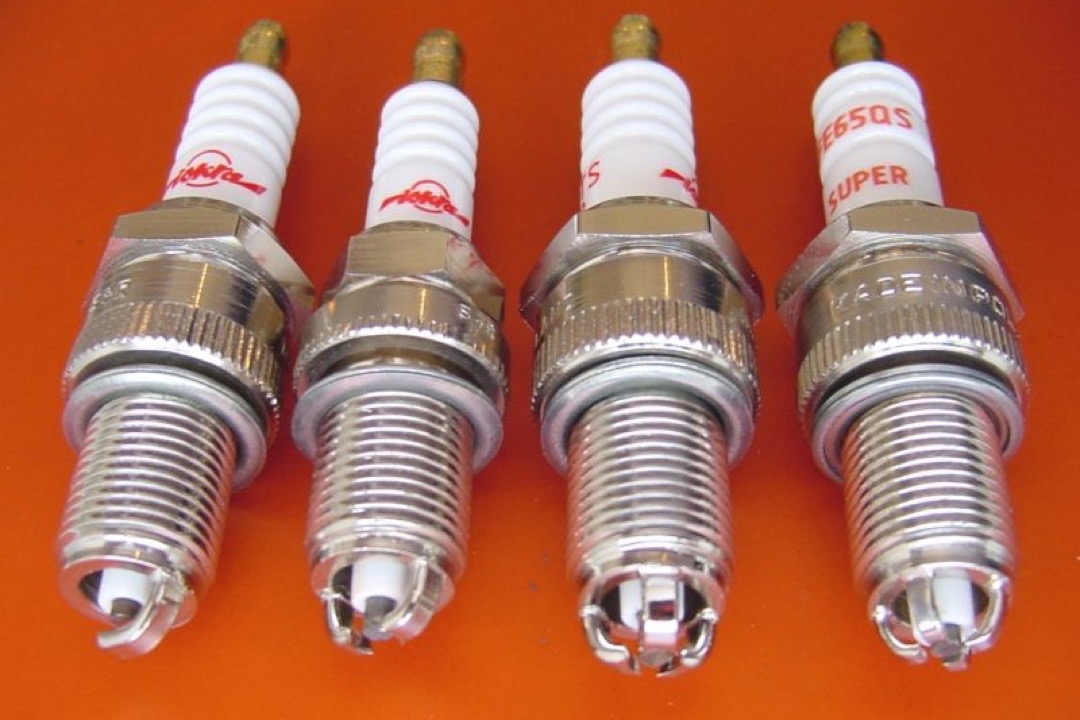
Spark plugs are one of those maintenance items that most owners ignore until something goes wrong — and by the time a plug is misfiring badly enough to set a check engine light, the downstream damage to catalytic converters, oxygen sensors, and fuel economy has already been compounding for thousands of miles. I have replaced spark plugs in everything from commuter sedans to built LS engines over two decades as an ASE Master Tech, and the pattern is always the same: owners who buy the right plug for their engine and replace it on schedule never think about ignition problems. Owners who grab whatever is cheapest or skip the interval end up in the shop diagnosing misfires, rough idle, and failed emissions tests.
This roundup covers seven spark plugs across the three electrode material tiers that matter for modern engines — iridium, platinum, and double precious-metal — plus the specialized waste-spark application that requires double platinum construction. I have deliberately excluded copper-nickel plugs because they belong in a different era of engine design. Any engine built in the last fifteen years with a coil-on-plug ignition system is designed for precious-metal spark plugs, and installing copper in those engines is not saving money — it is creating a shorter replacement cycle that costs more over the ownership period.
Before we get into the individual picks, here is what you need to understand about spark plug technology. The electrode material determines how long the plug lasts and how efficiently it fires. Iridium has the highest melting point of any production electrode material at 2,446 degrees Celsius, which allows manufacturers to use an ultra-fine center electrode (0.6-0.7mm) that concentrates spark energy more precisely than the 1.5-2.5mm electrodes on copper plugs. Platinum sits between copper and iridium in both melting point and electrode fineness. Double precious-metal plugs use the premium material on both the center and ground electrodes, which matters because the ground electrode erodes too — and on single-precious-metal plugs, the nickel ground wears faster than the center electrode, widening the gap asymmetrically.
The heat range tells you how quickly the plug dissipates combustion heat. A plug that is too hot causes pre-ignition that can destroy pistons. A plug that is too cold fouls with carbon deposits and misfires. Every engine has an OEM-specified heat range — never deviate from it unless you are running a modified engine and working with a tuner who understands the combustion dynamics of your specific build.
Find the Best Spark Plugs for Your Engine
The right plug comes down to your engine and how you drive it. Jump straight to the picks built for your situation:
- Overall best spark plugs
- Best for performance and turbocharged engines
- Best iridium spark plugs
- Best long-life spark plugs (100,000+ miles)
- Best budget spark plugs
Best Spark Plugs Overall
These are the seven plugs I keep reaching for across two decades in the shop, each reviewed in full below. The NGK 6619 Iridium IX is the all-around pick most drivers should start with — it fits the widest range of vehicles and has the deepest track record. The use-case tables further down narrow the field for performance builds, long-life intervals, and tight budgets. One rule cuts across every pick: match the OEM heat range and part number for your exact engine before you buy, because the best plug in the wrong application still runs badly.
NGK 6619 Iridium IX — Best Overall
The NGK Iridium IX is my default recommendation for the widest range of vehicles and drivers because it combines genuine iridium electrode technology with the broadest fitment catalog and the largest verified review base of any iridium plug on the market. The 0.6mm ultra-fine center electrode is the engineering detail that matters most — at that diameter, the spark concentrates at the electrode tip with minimal voltage demand, which means the ignition coil has more energy margin for consistent firing across the full RPM range, in cold starts, and in the high-cylinder-pressure environment of modern direct-injection engines.
The trivalent metal plating on the shell is a detail that does not get enough attention. Spark plug seizure in aluminum cylinder heads is one of the most expensive consequences of a maintenance item gone wrong — a seized plug can strip the threads in the head when you try to remove it, turning a routine job into a cylinder head repair. The trivalent coating prevents the galvanic corrosion between the steel shell and aluminum head that causes seizure, and it does so across the full service interval without any additional anti-seize compound on the threads.
The 3,104 reviews at 4.7 stars are not just a large number — they represent a statistically significant cross-section of real-world applications and driving conditions. When a plug performs at 4.7 across that many installations, the data tells you it works consistently rather than working well in some engines and poorly in others.
One note on quantity: the six-pack does not align with every engine configuration. Four-cylinder owners get two spares, and V8 owners need to order two packs. Factor per-plug cost into your comparison rather than pack price.

NGK 6619 Iridium IX LFR6AIX-11 Spark Plug (6-Pack)
by NGK
The best all-around spark plug in this roundup -- ultra-fine iridium center electrode delivers consistent spark energy and smooth combustion across the full RPM range, broadest vehicle compatibility covers import and domestic applications, trivalent metal plating prevents thread seizure in aluminum heads, and 3,104 reviews at 4.7 stars confirm reliable performance across real-world driving conditions.
Pros
- Ultra-fine 0.6mm iridium center electrode requires significantly less voltage to fire than a standard nickel electrode -- lower voltage demand means the ignition coil operates further from its limits, which translates to more consistent spark energy across the full RPM range, smoother idle, and better cold-start reliability in extreme temperatures where marginal ignition systems struggle
- Broadest vehicle compatibility of any plug in this roundup with confirmed fitment across Toyota, Nissan, Subaru, Honda, Lexus, and dozens of other import and domestic applications -- the LFR6AIX-11 part number covers a large cross-reference catalog, and NGK's fitment database is the most accurate in the industry, which means fewer returns from incorrect application matching
- Trivalent metal plating on the shell resists corrosion and seizure in the cylinder head threads -- this is a genuine long-term durability feature because a spark plug that seizes in an aluminum head due to galvanic corrosion turns a routine maintenance job into an expensive cylinder head repair, and the trivalent coating prevents that failure mode across the full service interval
- Pre-gapped from the factory at the correct specification for the applications the plug covers, eliminating the risk of incorrect gap setting during installation -- gap accuracy directly affects combustion efficiency, and a plug that arrives at the correct gap removes the most common DIY installation error that causes misfires, rough idle, and check engine lights after a spark plug change
Cons
- Six-pack quantity does not match all engine configurations -- four-cylinder owners will have two spare plugs, and V8 owners will need to purchase an additional pack, which makes per-plug cost calculations important when comparing against plugs sold individually or in four-packs that may align more efficiently with specific engine cylinder counts
- Iridium IX is NGK's mid-tier iridium line rather than the premium Laser Iridium -- the IX series uses a fine iridium center electrode but pairs it with a standard nickel ground electrode, while the Laser Iridium line uses iridium on both center and ground electrodes for extended service life, so owners who want the absolute maximum longevity should consider stepping up within NGK's lineup
- Service life of 40,000 to 50,000 miles is shorter than double-precious-metal plugs like the Denso Iridium TT that can reach 100,000-plus miles -- for owners who want to install plugs once and not think about them for the next decade, the IX series will require at least one additional replacement cycle over the same ownership period
Denso IKH16TT Iridium TT — Best Upgrade Pick
The Denso Iridium TT is the plug I reach for on any Toyota or Lexus that comes through the shop, because Denso is the OEM supplier and this is built to the same factory standard Denso engineers specify during powertrain development. That distinction matters more than most owners realize — the heat range, electrode geometry, gap, and insulator design are not approximated from a cross-reference chart but engineered specifically for the combustion chamber characteristics of Toyota and Lexus engines. When you install a Denso Iridium TT in a Toyota, you are restoring the ignition system to factory specification, not adapting an aftermarket part to fit.
The dual precious-metal Twin-Tip construction is what earns this plug the upgrade pick. The ultra-fine 0.4mm iridium center electrode is paired with a platinum-tipped ground electrode, which means both wear surfaces erode at comparable rates. On a single-iridium plug with a plain nickel ground, the ground electrode wears faster than the center, progressively widening the gap and increasing voltage demand until the coil can no longer bridge the gap reliably. The Denso’s dual construction maintains gap consistency across the full 100,000-mile service interval — install once, and the plugs outlast most ownership periods.
For owners doing a complete engine tune-up, pair this plug change with fresh engine air filters and a quality synthetic motor oil — the combination of clean air, proper lubrication, and consistent ignition is the foundation of engine performance and longevity.

Denso 4703 IKH16TT Iridium TT Spark Plug (4-Pack)
by Denso
The upgrade pick for owners who want OEM-grade iridium longevity -- Denso's Twin-Tip design combines an ultra-fine iridium center with a platinum-tipped ground for consistent gap and spark across 100,000-plus miles, built to the same factory standard Denso supplies to Toyota and Lexus.
Pros
- Twin-Tip construction pairs a 0.4mm iridium center electrode -- among the finest in production -- with a platinum-tipped ground electrode, so both wear surfaces resist erosion and the gap stays consistent across a 100,000-plus-mile service interval rather than widening progressively as it does on plugs with a plain nickel ground electrode
- Denso is the OEM spark plug supplier for Toyota and Lexus, and the IKH16TT is built to that same factory standard -- the heat range, electrode geometry, and gap are engineered for specific combustion chamber characteristics rather than approximated from a cross-reference chart
- The ultra-fine iridium center concentrates spark energy and requires less voltage to fire than a conventional electrode -- owners consistently describe a noticeable improvement in throttle response and idle smoothness after replacing worn factory plugs, the practical payoff of the twin-tip geometry
- Pre-gapped and 100-percent pre-fired from the factory with machine-rolled threads that resist cross-threading on install -- the plug is drop-in ready, which matters because a fine-wire iridium electrode should never be re-gapped with a conventional tool
Cons
- Smaller review base than the category leaders at 94 ratings -- the rating distribution is strong at 4.7 stars, but owners who want maximum review evidence may prefer the NGK Iridium IX or Denso Platinum TT for their larger sample sizes
- Thread reach differs from the shorter IK16TT variant in Denso's catalog -- verify the exact part number against your engine's fitment guide before ordering rather than assuming any Denso iridium plug crosses over to your application
NGK 7090 G-Power Platinum — Best Budget Pick
The G-Power Platinum is the smart money for owners who want a meaningful upgrade from copper without paying the iridium premium. At the lowest per-plug cost in this roundup, the fine pure-platinum center electrode provides measurably better ignitability and longevity than a copper-nickel plug at a price point that is only marginally higher. The 4,905 reviews at 4.7 stars make this the most extensively validated plug in the roundup — that volume of data across thousands of vehicle applications gives me confidence recommending it for virtually any naturally aspirated engine where the OEM spec calls for a standard platinum plug.
The fine platinum center electrode is worth understanding in context. It is not as fine as the 0.6mm iridium tip on the NGK IX, but it is substantially finer than the 2.5mm center electrode on a standard copper plug. That reduced diameter concentrates spark energy more effectively, producing a cleaner flame kernel and marginally better combustion efficiency. You will not notice a dramatic difference on a dynamometer, but you may notice smoother idle quality and crisper throttle response compared to worn copper plugs.
Where the G-Power falls short is turbocharged and direct-injection applications. The platinum electrode handles normal combustion pressures well, but boosted engines generate pressures and temperatures that favor iridium’s higher melting point and finer electrode geometry. If your engine has a turbocharger or supercharger, step up to the NGK Iridium IX or Denso Iridium TT.

NGK 7090 G-Power Platinum BKR5EGP Spark Plug (6-Pack)
by NGK
The best-value spark plug in this roundup -- fine pure-platinum center electrode delivers precious-metal performance at the lowest per-plug price here, 4,905 reviews at 4.7 stars provide the most extensive real-world validation in the lineup, and NGK's comprehensive fitment database covers the widest range of applications for owners who need reliable ignition without the premium of iridium.
Pros
- The lowest per-plug cost in this roundup, and by a clear margin over the next cheapest -- while the fine pure-platinum center electrode provides measurably better longevity and performance than a standard copper-nickel plug, which makes the G-Power the smart upgrade for budget-conscious owners who want precious-metal electrode benefits without iridium pricing
- Largest review base in this roundup at 4,905 ratings with a 4.7-star average -- that volume of verified purchase data across thousands of different vehicles and driving conditions provides statistical confidence that this plug performs consistently rather than well in some applications and poorly in others
- Fine pure-platinum center electrode fires more efficiently than a conventional nickel electrode -- the smaller-diameter firing point concentrates spark energy at the electrode tip, which produces a more consistent flame kernel and improves combustion efficiency enough to be noticeable in throttle response and idle quality even if the improvement does not show up on a fuel economy calculator
- NGK's fitment database covers the broadest range of domestic and import applications of any spark plug manufacturer -- the BKR5EGP part number cross-references to a large number of vehicles, and NGK's catalog accuracy is the best in the industry, which minimizes the risk of purchasing the wrong plug for a specific engine application
Cons
- Platinum-only electrode technology is one generation behind iridium in terms of longevity and ignitability -- iridium's higher melting point allows a finer electrode tip that requires less voltage to fire, and the service life differential means iridium plugs last roughly twice as long before gap erosion affects performance
- Service life of 40,000 to 50,000 miles matches the NGK Iridium IX but falls well short of double-precious-metal designs like the Denso Iridium TT -- for vehicles driven high annual mileage, the replacement cycle frequency is a practical consideration that favors spending more upfront on a longer-life plug
- Not recommended for turbocharged or direct-injection engines where combustion pressures and temperatures exceed what a platinum electrode handles optimally -- for boosted applications, iridium or double iridium plugs with stronger insulator construction are the appropriate choice
Bosch 9603 Double Iridium — Runner-Up
The Bosch 9603 earns the runner-up position by delivering double-iridium construction at the lowest per-plug cost of any double-iridium plug in this roundup. The iridium firing pin on the center electrode is paired with an iridium inlay on the ground electrode, which provides the same symmetric wear resistance as the Denso Iridium TT’s iridium-plus-platinum approach but at a more accessible price point. Both wear surfaces erode at the same glacial rate, maintaining gap consistency across 80,000-plus miles without the asymmetric wear pattern that degrades single-iridium plugs with nickel ground electrodes.
The laser-welded center wire construction is a manufacturing quality indicator worth noting. The bond between the iridium firing pin and the nickel base electrode is the stress point in any composite electrode design — thermal cycling from combustion repeatedly expands and contracts the metals at different rates, and a weak joint eventually fails as the iridium tip separates from the base. The laser weld creates a stronger and more precise bond than conventional resistance welding, which extends the fatigue life of the joint.
For owners working through a Bosch versus ACDelco spark plug comparison, the 9603 represents Bosch’s strongest offering in the double-iridium category. The ACDelco 41-103 in this roundup is the better choice for GM-specific applications, but the Bosch covers a broader range of domestic and European fitments.
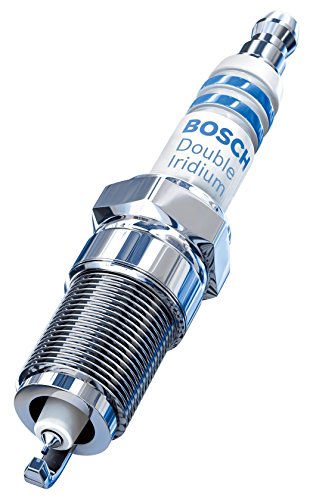
Bosch 9603 OE Fine Wire Double Iridium Spark Plug (4-Pack)
by Bosch
The most affordable double-iridium spark plug in this roundup -- dual iridium electrodes eliminate asymmetric wear, laser-welded construction resists thermal cycling fatigue, four-times-longer service life than copper is supported by the dual precious-metal design, and the per-plug price comes in well under the premium iridium options here while delivering superior longevity.
Pros
- Double iridium construction with iridium on both the firing pin and the ground electrode inlay means both wear surfaces erode at the same slow rate -- single-iridium plugs pair an iridium center with a nickel ground that erodes faster, progressively widening the gap and degrading performance before the center electrode reaches its service limit, and the double iridium design eliminates that asymmetric wear pattern
- Laser-welded center wire construction provides a more precise and durable bond between the iridium firing pin and the nickel base electrode than conventional resistance welding -- the laser weld creates a stronger joint that resists thermal cycling fatigue over the plug's service life, which is the failure mode that causes electrode separation in lower-quality plugs at high mileage
- Four-times-longer service life than standard copper plugs is the claim Bosch documents for the 9603 -- the double iridium construction supports this claim because both electrodes resist erosion at the same rate, maintaining gap consistency across the full service interval rather than requiring replacement when only one electrode wears beyond specification
- Competitive pricing makes this the most affordable double-iridium plug in the roundup on a per-plug basis -- owners who want the longevity benefits of dual precious-metal electrodes without the premium pricing of Denso Iridium TT get a genuine double-iridium design for well under what the Denso Iridium TT and the ACDelco iridium cost per plug
Cons
- Bosch spark plug fitment coverage for Asian import vehicles is narrower than NGK or Denso -- owners of Toyota, Honda, Subaru, and Nissan vehicles should verify fitment availability through Bosch's catalog before assuming the 9603 crosses over to their specific engine application, as NGK and Denso cover those platforms more comprehensively
- Review feedback on certain applications reports the plug running slightly hotter than OEM-specified heat range -- while 714 reviews at 4.6 stars indicate broad satisfaction, owners of vehicles with specific heat range requirements should cross-reference the Bosch heat range against the OEM specification rather than relying solely on part number cross-reference
Denso 4504 Platinum TT — Long-Life Value Pick
The Platinum TT’s twin-tip electrode design is the engineering differentiator that sets this plug apart from conventional single-electrode platinum designs. The ground electrode is cut to a sharp point rather than a flat pad, which means the spark jumps between two precisely aligned tips rather than from a fine center electrode to a broad ground surface. This focused geometry produces a tighter flame kernel that ignites more completely and consistently — the combustion improvement is small per cycle but compounds across tens of thousands of miles into measurable fuel efficiency benefits.
The 100,000-mile service life at this price point is the value proposition that makes the Platinum TT worth considering over the iridium options. The Denso Iridium TT matches that interval but costs more per plug. The NGK Iridium IX costs more per plug and lasts half as long. For a naturally aspirated engine where the owner plans to keep the vehicle for 100,000 miles or more and wants to replace plugs exactly once, the Platinum TT hits the intersection of longevity and cost efficiency.
The 4,397 reviews at 4.7 stars reinforce the reliability claim. That is the second-largest review base in the roundup and represents enough statistical weight to confirm the TT design works consistently across a broad range of applications rather than excelling in a narrow set of conditions.
Worth flagging on price: this six-pack has dropped by about a fifth since our last check, and the seller on the buy box is a reseller rather than Denso, so the number moves around more than it does on the NGK listings. At the moment that drop makes it the lowest per-plug cost in this roundup, narrowly under the G-Power Platinum, on top of being the cheapest route to a 100,000-mile plug here. Reseller pricing moves, so check both against each other before you order rather than assuming the order still holds.

Denso 4504 Platinum TT PK20TT Spark Plug (6-Pack)
by Denso
The longest-life platinum plug in this roundup -- twin-tip electrode geometry produces a focused ignition kernel for efficient combustion, 4,397 reviews at 4.7 stars confirm reliable cross-application performance, and 100,000-mile service life at a sub-premium price point makes this an excellent long-term value for naturally aspirated engines.
Pros
- Twin-Tip (TT) design uses a 1.1mm platinum center electrode paired with a titanium-enhanced ground electrode that is cut to a sharp point rather than a flat pad -- this twin-tip geometry concentrates the spark at two precisely aligned points, producing a focused flame kernel that ignites faster and more completely than conventional flat-ground-electrode designs
- Second-largest review base in this roundup at 4,397 reviews with a 4.7-star average -- the review volume spans a wide range of vehicle applications and driving conditions, providing strong statistical evidence that the TT design delivers consistent performance rather than excelling in some applications and underperforming in others
- 100,000-mile service life documented by Denso makes this one of the longest-lasting plugs in the lineup at a price point significantly below the Denso Iridium TT -- the combination of platinum durability and the TT electrode geometry maintains gap consistency and spark quality across the full service interval without the premium cost of iridium construction
- Excellent fuel efficiency improvement potential from the twin-tip combustion optimization -- the focused ignition kernel reduces the combustion variability that wastes fuel in every cycle, and while the per-cycle improvement is small, it compounds across tens of thousands of miles and partially offsets the cost of the plugs themselves over their service life
Cons
- Platinum center electrode is inherently less refined than iridium -- the 1.1mm electrode diameter is nearly double the 0.6-0.7mm of iridium plugs, which means the voltage demand is higher and the spark concentration is less focused, resulting in marginally less precise combustion than the finest iridium designs in this roundup
- Not the right choice for turbocharged or high-performance applications -- the TT design is optimized for naturally aspirated engines operating within normal combustion pressure ranges, and boosted engines benefit from the higher melting point and finer electrode geometry that iridium construction provides
- Fitment catalog is weighted toward import applications and may not cover all domestic V8 configurations -- owners of American pushrod V8 engines should verify cross-reference availability before purchasing, as Denso's domestic coverage is less comprehensive than their Asian import catalog
ACDelco 41-103 Iridium — OEM Pick for GM Vehicles
For Chevrolet, GMC, Buick, and Cadillac owners, the ACDelco 41-103 is the factory-correct replacement. ACDelco is GM’s OEM parts supplier — these plugs are engineered to the exact specifications that GM powertrain engineers defined during engine development. The heat range, electrode geometry, gap, and resistor value are not cross-referenced from another manufacturer’s catalog but designed specifically for GM combustion chambers. When you install a 41-103 in a GM engine, you are restoring factory ignition specifications, which is the baseline every other modification or diagnostic process assumes.
The six-pack is the right configuration for the GM engines this plug fits — the inline-five and inline-six applications it covers (Colorado, Trailblazer, Envoy, Hummer H3) take five or six plugs, so a single box does the whole job with no second order or leftover inventory. One practical caution: counterfeits circulate through third-party sellers, so inspect for the three-dot marking on the top insulator when the box arrives, and run a feeler gauge across the gap before installing — shipping can occasionally shift a pre-gapped plug, and the three-dot check is the fastest way to confirm you received genuine ACDelco iridium.
For GM owners doing a full ignition service, pairing new plugs with a diagnostic scan using one of the best OBD2 scanners lets you verify that misfire counts reset to zero after installation and confirm the ignition system is operating within specification before closing the hood.
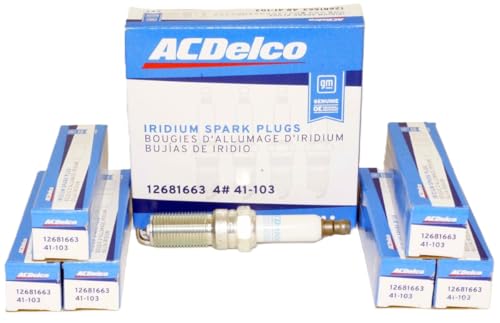
ACDelco 41-103 Professional Iridium Spark Plug (6-Pack)
by ACDelco
The factory-correct iridium plug for GM inline-5 and inline-6 engines -- the 41-103 six-pack matches OEM part numbers, arrives pre-gapped, and restores factory ignition performance at a fraction of dealer pricing; just verify authenticity via the three-dot insulator marking on receipt.
Pros
- True GM Original Equipment iridium plug -- the 41-103 matches the dealer-supplied part numbers for several GM inline-5 and inline-6 applications (Colorado, Trailblazer, Envoy, Hummer H3), so it restores factory ignition specification rather than approximating it from another manufacturer's cross-reference chart
- Sold as a six-pack that covers a full inline-six engine set in a single order, and most buyers report the plugs arrive pre-gapped at the factory 0.040-to-0.042-inch specification -- no gap tool needed on a fine-wire iridium electrode that should never be re-gapped anyway
- Iridium fine-wire center electrode delivers the low-voltage-demand ignition and consistent flame kernel of premium iridium plugs from NGK and Denso -- verified owners report eliminated misfires and restored idle quality even at 100,000-plus miles
- Backed by ACDelco's GM parts distribution network, which makes warranty handling straightforward through a major automotive parts ecosystem rather than the claims process of a small aftermarket brand
Cons
- GM-specific application focus limits the audience -- the 41-103 is engineered for specific GM engine families, and owners of non-GM vehicles should select NGK, Denso, or Bosch plugs designed for their platform rather than cross-referencing an ACDelco part number to a non-GM application
- Counterfeits circulate through third-party sellers -- inspect for the three-dot marking on the top insulator on arrival, and check the gap with a feeler gauge before installing, since shipping can occasionally shift a pre-gapped plug
Bosch 8105 Double Platinum — Best for Waste-Spark Systems
The Bosch 8105 exists for a specific technical reason that most spark plug roundups do not explain clearly. Waste-spark (DIS — Distributorless Ignition System) engines fire each spark plug twice per engine cycle — once normally on the compression stroke and once in reverse on the companion cylinder’s exhaust stroke. That reverse firing means the ground electrode acts as the firing electrode during the waste spark event, which exposes it to the same erosion that normally only the center electrode experiences. Single-precious-metal plugs in a waste-spark system lose their ground electrode material at an accelerated rate, widening the gap prematurely and causing misfires well before the center electrode reaches its service limit.
Double platinum construction solves this by placing platinum on both the firing pin and the ground electrode inlay. Both surfaces resist erosion equally regardless of spark direction, maintaining gap consistency across the full service interval. If your vehicle uses a waste-spark ignition system — common in many engines from the late 1990s through mid-2000s before coil-on-plug became universal — the Bosch 8105 is the technically correct choice.
The yttrium-enhanced ground electrode is a corrosion resistance detail that matters for long-term gap stability. Standard nickel ground electrodes oxidize progressively, which causes the electrode surface to roughen and the gap geometry to change unpredictably. The yttrium alloy maintains a smoother surface profile across the service life, keeping the spark path consistent.
For owners working on waste-spark-equipped vehicles, having the right socket set with a spark plug socket in the correct depth ensures clean removal without cracking the insulator.
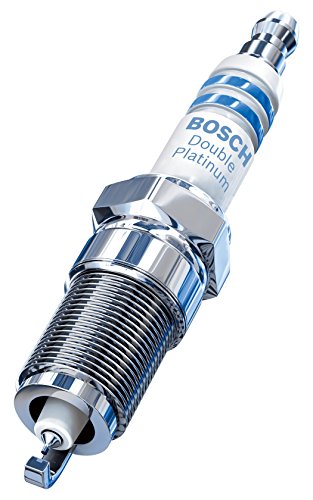
Bosch 8105 OE Fine Wire Double Platinum Spark Plug (4-Pack)
by Bosch
The correct spark plug choice for waste-spark ignition systems -- double platinum construction provides the bilateral precious-metal wear resistance that DIS engines require, laser-welded electrodes and yttrium-enhanced ground strap maintain gap consistency over the service interval, and OE Fine Wire geometry matches factory electrode positioning for accurate combustion chamber performance.
Pros
- Double platinum construction is specifically required for waste-spark (DIS -- Distributorless Ignition System) engines where the spark plug fires in both directions -- in a waste-spark system, the plug fires normally on the compression stroke and fires in reverse on the exhaust stroke of the companion cylinder, which means both the center and ground electrodes experience firing wear, and only a double-platinum design provides precious-metal durability on both surfaces
- Laser-welded platinum firing pin and platinum ground electrode inlay provide the same symmetric wear resistance as double iridium at a lower material cost -- for waste-spark applications where double-precious-metal construction is mandatory for longevity, the double platinum design delivers the required bilateral wear resistance without the premium pricing of double iridium
- OE Fine Wire design positions the electrode geometry to match original equipment specifications rather than using a universal electrode profile -- this attention to OE-matching dimensions ensures the spark plug sits at the correct depth and orientation in the combustion chamber, which affects flame propagation and combustion efficiency in ways that are measurable on an emissions analyzer
- Yttrium-enhanced ground electrode improves the corrosion resistance of the ground strap beyond what standard nickel provides -- the yttrium alloy maintains ground electrode geometry over time and resists the oxidation that causes electrode material to flake and the gap to widen unpredictably on conventional ground electrodes
Cons
- Fitment is vehicle-specific within Bosch's 8-series catalog -- the wrong 8xxx SKU in the wrong application is the source of nearly every low-star review, so cross-reference your exact make, model, and engine against the Bosch lookup before ordering rather than matching by thread size alone
- Double platinum technology is specifically necessary only for waste-spark ignition systems -- vehicles with coil-on-plug (COP) ignition do not fire the plug in reverse and therefore do not need double-precious-metal ground electrode construction, making this plug an unnecessary premium over single-platinum or iridium options for COP-equipped engines
- Platinum electrode material has a lower melting point than iridium (1,768 degrees Celsius versus 2,446 degrees Celsius), which means the electrode erodes faster under high-temperature conditions -- for performance applications or engines operating at elevated combustion temperatures, double iridium plugs provide better thermal margin
Best Spark Plugs for Performance and Turbocharged Engines
Performance and boosted engines put more heat and cylinder pressure through the plug than a stock naturally aspirated motor, and that regime rewards a fine-wire precious-metal electrode that fires with less voltage and holds its edge. Iridium is the material of choice here — it concentrates the spark for sharper throttle response and resists erosion under sustained load. The three below are the plugs I reach for on modified and turbocharged builds, with the NGK Iridium IX as the default upgrade and the double-iridium Bosch for owners who want the longest hold on a tuned engine. On any forced-induction setup, verify whether your tune calls for a colder heat range than stock — and tighten the gap while you are at it. NGK’s published rule is to close the gap about 0.004 inches for every 50 horsepower a power adder puts down, because boost makes the spark harder to jump. Our free spark plug gap chart has your engine’s factory gap and applies that rule live, then warns you if the target lands outside the safe adjustment window for a fine-wire plug.
| Product | Price | Buy |
|---|---|---|
| NGK 6619 Iridium IX LFR6AIX-11 Spark Plug (6-Pack)Best all-around performance Ultra-fine 0.6mm iridium fires with low voltage demand for consistent spark across the RPM range | $45.99 | View on Amazon |
| Bosch 9603 OE Fine Wire Double Iridium Spark Plug (4-Pack)Best for tuned/boosted Double iridium holds gap on both electrodes under the heat of a boosted engine | $32.95 | View on Amazon |
| Denso 4703 IKH16TT Iridium TT Spark Plug (4-Pack)Best OEM-grade upgrade Twin-Tip iridium built to Toyota/Lexus OEM standard for sharp throttle response | $44.97 | View on Amazon |
Best Iridium Spark Plugs
Iridium is the current premium standard: its 2,446-degree-Celsius melting point lets manufacturers run an ultra-fine center electrode that fires more efficiently and lasts far longer than platinum or copper. If you simply want the best material technology for a modern coil-on-plug engine, these are the three iridium picks to compare — the NGK for the broadest fitment, the Denso for the longest life, and the ACDelco for GM owners who want the factory-correct iridium part.
| Product | Price | Buy |
|---|---|---|
| NGK 6619 Iridium IX LFR6AIX-11 Spark Plug (6-Pack)Best overall iridium Broadest fitment catalog and the deepest review base of any iridium plug here | $45.99 | View on Amazon |
| Denso 4703 IKH16TT Iridium TT Spark Plug (4-Pack)Longest-life iridium Twin-Tip iridium-and-platinum design rated to 100,000+ miles | $44.97 | View on Amazon |
| ACDelco 41-103 Professional Iridium Spark Plug (6-Pack)Best iridium for GM GM Original Equipment iridium for Chevy, GMC, Buick, and Cadillac engines | $58.08 | View on Amazon |
Best Long-Life Spark Plugs (100,000+ Miles)
If you would rather install plugs once and forget them, longevity comes from double-precious-metal construction — precious metal on both the center and ground electrodes so the gap stays consistent instead of widening as a nickel ground erodes. These three carry the longest documented service intervals in the roundup, letting a single set cover most of a vehicle’s primary ownership period.
| Product | Price | Buy |
|---|---|---|
| Denso 4703 IKH16TT Iridium TT Spark Plug (4-Pack)Longest life overall Iridium Twin-Tip rated to 100,000+ miles and built to OEM standard | $44.97 | View on Amazon |
| Denso 4504 Platinum TT PK20TT Spark Plug (6-Pack)Best long-life value Platinum Twin-Tip reaches 100,000 miles at a sub-premium price | $30.40 | View on Amazon |
| Bosch 9603 OE Fine Wire Double Iridium Spark Plug (4-Pack)Best double-iridium life Double iridium resists erosion on both electrodes for 80,000+ miles | $32.95 | View on Amazon |
Best Budget Spark Plugs
Budget does not have to mean copper. Both picks here use a precious-metal center electrode that lasts far longer than a copper-nickel plug, so the per-mile cost is lower even though the sticker price stays low. The NGK G-Power has the largest review base in the roundup and NGKs broadest-in-industry fitment catalog; the Denso Platinum TT is currently a shade cheaper per plug and doubles the service life for owners who want to stretch the interval.
| Product | Price | Buy |
|---|---|---|
| NGK 7090 G-Power Platinum BKR5EGP Spark Plug (6-Pack)Best value overall Fine pure-platinum center at the lowest per-plug price here, backed by 4,905 reviews and NGKs widest-in-industry fitment catalog | $26.93 | View on Amazon |
| Denso 4504 Platinum TT PK20TT Spark Plug (6-Pack)Best budget long-life Twin-Tip platinum stretches the interval to 100,000 miles for a little more upfront | $30.40 | View on Amazon |
Final Verdict
For the majority of vehicles on the road today, the NGK 6619 Iridium IX is the best spark plug in this roundup. The ultra-fine iridium center electrode delivers consistent ignition across the full RPM range, the trivalent plating prevents thread seizure in aluminum heads, and the broadest fitment catalog in the industry means the IX covers more vehicle applications than any other plug here. At 3,104 reviews and 4.7 stars, the data confirms what two decades of shop experience has shown me — NGK iridium plugs work reliably across the widest range of engines and driving conditions.
For owners who want to install plugs once and forget them for 100,000 miles, the Denso IKH16TT Iridium TT is the upgrade pick. The dual precious-metal Twin-Tip construction maintains gap consistency across the entire service interval, and Denso’s status as Toyota and Lexus’s OEM supplier means the engineering is factory-grade rather than aftermarket-approximate. The higher per-plug cost is offset by eliminating at least one additional replacement cycle over the vehicle’s life.
For budget-conscious owners, the NGK 7090 G-Power Platinum delivers precious-metal electrode benefits at the lowest per-plug cost in the roundup. The 4,905-review base at 4.7 stars provides the strongest statistical validation of any plug here.
For waste-spark ignition systems, the Bosch 8105 Double Platinum is the technically correct choice — no other plug in this roundup provides the bilateral precious-metal construction that DIS engines require. And for GM owners who want factory-correct specifications without the dealer markup, the ACDelco 41-103 restores OEM ignition performance at a fraction of dealer parts pricing.
Whatever plug you choose, install it on schedule, torque it to specification, and never re-gap a precious-metal electrode. The ignition system is the foundation of engine performance — get it right and everything downstream works better. If you are doing a full maintenance service, pair the plug change with fresh oil filters and quality synthetic motor oil for the complete package.
Frequently Asked Questions
How often should I replace spark plugs?
Can I mix spark plug brands in the same engine?
Should I gap spark plugs myself or trust the factory pre-gap?
What happens if I use the wrong heat range spark plug?
Are iridium spark plugs worth the extra cost over copper?
What are the best spark plugs for a 5.3 Vortec, 5.7 Hemi, or 3.5 EcoBoost?
What is the best spark plug brand -- NGK, Denso, or Bosch?
Related Articles
Bosch vs ACDelco Spark Plugs: An ASE Mechanic's Honest Comparison
maintenance-parts
7 Best Engine Air Filters of 2026
maintenance-parts
9 Best Synthetic Motor Oils of 2026
maintenance-parts
7 Best Oil Filters of 2026
maintenance-parts
How to Change Spark Plugs: An ASE Master Tech's Step-by-Step Guide (2026)
maintenance-parts
About the Reviewer

Mike Reeves, ASE Master Technician
A.A.S. Automotive Technology, Universal Technical Institute (UTI)
Mike Reeves is an ASE Master Technician with 15 years of hands-on experience in automotive repair and diagnostics. He earned his A.A.S. in Automotive Technology from UTI and runs his own independent shop in Denver, Colorado. Mike founded RevRated to help everyday car owners make smarter parts decisions -- every recommendation comes from real-world testing in his garage.