7 Best Winter Tires of 2026
Mike Reeves reviews the best winter tires of 2026. Compare studless, studdable, and all-weather options for cars, trucks, SUVs, EVs, and Teslas by ice grip, tread compound, and real-world snow performance.
Updated
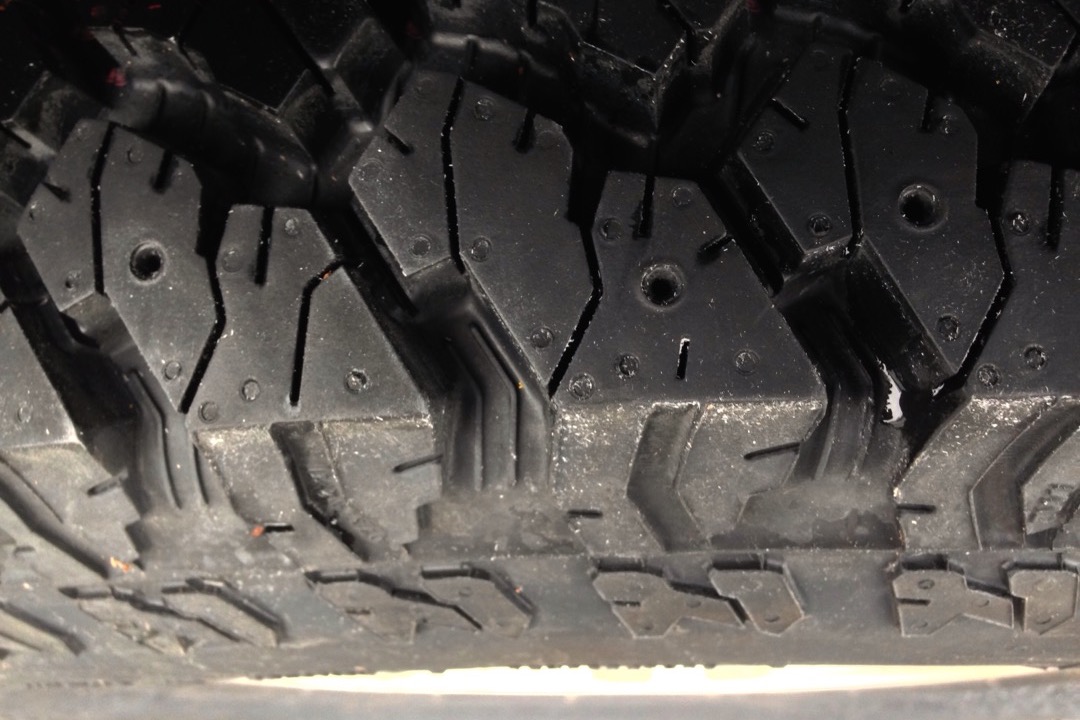
Every winter, I see the same story play out in the service bay: someone comes in with all-season tires that have been shredded by driving on packed snow for two months, or worse, they come in after a fender-bender that happened because their AWD Subaru couldn’t stop on ice any better than a rear-wheel-drive truck would have. All-season tires are not winter tires. AWD is not a substitute for winter tires. And the difference between the right compound and the wrong one in sub-freezing conditions is not a marginal improvement — it is the difference between stopping in 150 feet and stopping in 220 feet. That gap is a parked car, a pedestrian, or an intersection.
I’ve been mounting and diagnosing tires for over fifteen years as an ASE Master Tech, and the single most impactful upgrade you can make to any vehicle’s winter safety is a set of proper winter tires. In 2026, I reviewed the best winter tires available on Amazon — evaluating compound technology, ice and snow performance data from Tire Rack and Consumer Reports independent testing, vehicle application fit, and real-world owner feedback — to help you pick the right tire for your climate, your vehicle, and your budget. If you’re also looking at your tire pressure maintenance tools for the season, see our guide to the best tire pressure gauges for the gauges we trust in the shop.
After reviewing the full field, the Bridgestone Blizzak WS90 is our Best Overall — it has led independent ice-braking and lateral traction testing for multiple consecutive generations, and the NanoPro-Tech compound’s performance advantage on glare ice is real and measurable. For crossover and SUV owners who want to skip the seasonal swap, the Michelin CrossClimate2 CUV is our Upgrade pick — 3PMSF certified, 60,000-mile warranted, and capable year-round. For budget-conscious buyers in studded-tire-legal states, the General Altimax Arctic 12 is the pick — studdable, winter-silica compounded, and backed by the largest review base in this roundup.
| Product | Price | Buy |
|---|---|---|
| Bridgestone Blizzak WS90Best Overall | $193.28 | View on Amazon |
| Michelin X-Ice SnowRunner-Up | $209.08 | View on Amazon |
| Continental VikingContact 7Runner-Up | $190.96 | View on Amazon |
| Michelin CrossClimate2 CUVPremium Pick | $219.99 | View on Amazon |
| General Altimax Arctic 12Budget Pick | $153.97 | View on Amazon |
| Cooper Discoverer Snow ClawRunner-Up | $260.99 | View on Amazon |
| Pirelli Winter Sottozero 3Runner-Up | $231.56 | View on Amazon |
| Nokian Nordman North 9 SUV StuddedRunner-Up | $186.11 | View on Amazon |
Find the Best Winter Tire for Your Vehicle and Climate
Jump straight to the pick that matches what you drive and where:
- Best winter tires overall — every pick reviewed in full
- Best for trucks and pickups
- Best for SUVs and crossovers
- Best for Tesla and electric vehicles
- Best for ice and glare ice
- Best studded and studdable
Why Winter Tires Aren’t Optional Below 45°F
The physics of winter tires start with rubber chemistry, and the chemistry is the reason the 45-degree threshold matters. Standard all-season and summer tire compounds are formulated to stay grippy in a broad temperature range from roughly 20 to 100 degrees Fahrenheit, but that range is a compromise. As temperatures drop toward and below freezing, the polymer chains in all-season compounds begin to stiffen and harden, reducing their ability to conform to road surface irregularities and generate friction. The result is longer stopping distances, reduced lateral grip, and steering feel that doesn’t translate accurately to actual grip levels.
Winter tire compounds are chemically engineered to stay soft and pliable at temperatures where all-season compounds harden. Bridgestone’s NanoPro-Tech formula, Michelin’s EverWinter compound, and Continental’s PolarPlus rapeseed-oil formulation all use polymer architectures that maintain flexibility below zero degrees Fahrenheit. When you put a winter tire on dry pavement at 40 degrees, it generates more grip than an all-season at the same temperature because the contact patch is more compliant and conforming. On snow and ice, that compliance advantage is compounded by the sipe and groove designs that are engineered exclusively for winter conditions.
The 7/7 rule that we use in the shop — install at 7 degrees Celsius (45 Fahrenheit), remove at 7 degrees Celsius — is not arbitrary. It is the compound inflection point. Above 45 degrees, a winter tire’s soft compound wears at two to three times the rate of an all-season compound on the same road surface. The traction advantage below 45 degrees disappears above it, and you’re actively consuming tread you paid for. Get them on early, get them off when spring temperatures stabilize, and run the math: a set of budget winter tires on a separate wheel set, swapped twice a year, costs less per mile over five years than replacing a single set of all-seasons prematurely because you ran them through too many winters. If you would rather run one set year-round, our best all-season tires guide covers the 3PMSF all-weather options that get close to a winter tire in moderate snow.
3PMSF vs. M+S: What the Symbols Actually Mean
Every tire in this roundup has the Three-Peak Mountain Snowflake symbol molded into the sidewall. Most all-season tires do not. The difference matters more than most marketing copy will tell you.
The M+S symbol — Mud and Snow — is a self-applied designation that requires only that the tire’s tread pattern meet minimum geometric criteria: the tread’s net-to-gross contact ratio must be below a specific threshold, and the tread pattern must include grooves in a roughly perpendicular configuration to the direction of travel. No performance test is required. No independent organization checks whether the tire actually performs better in mud or snow than a non-M+S tire. A manufacturer can apply the M+S designation to any tire that meets the tread geometry spec, regardless of how the compound behaves in real winter conditions.
The 3PMSF symbol requires a passing score on ASTM F1805, a standardized acceleration test conducted on a controlled compacted-snow surface. The tire must accelerate to a defined speed threshold at least 10 percent faster than a designated reference tire under the same conditions. It’s not a comprehensive winter performance test — it doesn’t evaluate ice braking, lateral snow traction, or low-temperature compound behavior — but it is an independently verified performance threshold that M+S tires are not required to meet. From a legal standpoint, British Columbia’s mountain highway corridor requires 3PMSF-certified tires from October through April. M+S-only tires do not satisfy that requirement, and travelers from the US should check the tire placard before attempting any Canadian mountain corridor pass in winter.
Best Winter Tires Overall
These are the tires that earned a place in this guide, each reviewed in full below. The Bridgestone Blizzak WS90 is my best overall pick for the widest range of snow-belt drivers; the use-case sections after the reviews then match specific situations — trucks, SUVs, Teslas and EVs, glare ice, and studded setups — to the right pick from this same lineup.
Bridgestone Blizzak WS90 — Best Overall
The Blizzak name has been synonymous with winter tire performance in North America since the 1990s, and the WS90 carries that heritage forward with compound technology that remains the benchmark in independent ice-traction testing. The NanoPro-Tech biting compound works at the molecular level, creating hydrophilic microsurfaces that absorb the thin water film on ice before it can act as a lubricant — this is the mechanism that distinguishes the Blizzak family from competitors on glare ice, and it’s why the WS90 consistently leads Tire Rack’s ice-braking tests by a measurable margin over the Michelin X-Ice Snow and Continental VikingContact 7.
The Multicell compound adds a second layer of ice-management technology: microscopic pores in the compound create a texture that wicks water from the ice interface, similar to the way a sponge draws liquid. The combined effect of NanoPro-Tech and Multicell is a compound that consistently delivers shorter ice-braking distances and higher lateral traction scores than any other studless tire in this roundup. For drivers in persistently icy climates — the Great Lakes corridor, northern New England, the mountain west — this performance margin is meaningful and worth the slightly shorter treadlife versus the Continental VikingContact 7.
The tradeoff is treadlife. The WS90’s soft compound that delivers class-leading ice grip wears faster than harder touring or all-weather compounds. Plan for 12,000 to 15,000 miles of seasonal use over three to four winter seasons, and invest in a separate dedicated wheel set to avoid paying mounting and balancing costs twice a year. That math works out to roughly the same total cost as the CrossClimate2 upgrade pick over a five-year ownership horizon, while delivering better ice performance when you need it most. For brake pads that can complement the improved stopping distances your winter tires enable, check our best brake pads guide for the pads we use in the shop.

Bridgestone Blizzak WS90
by Bridgestone
The best winter tire in independent testing year after year -- NanoPro-Tech and Multicell compounds deliver class-leading ice grip that no other studless tire in this roundup matches, at a price that's competitive with premium alternatives.
Pros
- NanoPro-Tech biting compound is the core of what makes the WS90 work on glare ice -- the formula uses microscopic particles that create biting edges at the molecular level, dramatically increasing the number of contact points between rubber and ice surface and producing ice-braking performance that consistently tops independent Tire Rack and Consumer Reports testing
- Multicell compound technology generates a hydrophilic surface layer that absorbs the thin film of water on ice before it can act as a lubricant between the tire and the ice surface -- this is the mechanism behind Blizzak's class-leading ice traction and explains why WS90 outperforms competitors on both dry ice and wet ice conditions
- T and H speed ratings and load indices to 102 and beyond cover the full passenger car and crossover spectrum, with wide size availability across the most common OEM rim diameters from 15 to 20 inches -- fitment breadth that makes this a realistic choice for a larger proportion of the US fleet than niche-size winter tires
- Decades of Blizzak engineering heritage validated through real-world Alaska Highway testing and professional motorsport winter development -- the WS90 is not a first-generation compound but the refinement of a lineage that has consistently led independent winter tire testing across every generation
Cons
- Treadlife is shorter than premium all-season alternatives at approximately 12,000 to 15,000 miles of seasonal use -- the soft, biting compound that delivers class-leading ice grip wears faster than harder touring compounds, making a dedicated second wheel set financially sensible to preserve both the winter tires and the summer rubber
- Not appropriate for use above 45 degrees Fahrenheit -- the soft compound that provides winter grip wears at two to three times the normal rate on warm pavement, so leaving Blizzaks on through a warm spring actively destroys the tire you paid for
Michelin X-Ice Snow — Runner-Up
The X-Ice Snow replaced the X-Ice Xi3 with a meaningful compound upgrade rather than a cosmetic refresh. The EverWinter compound extends pliability to minus-40 degrees Fahrenheit, which is relevant for drivers in northern Minnesota, Michigan’s Upper Peninsula, northern Wisconsin, and Montana who regularly experience temperatures that challenge even the Blizzak WS90’s compound flexibility. The FlexIce 2.0 sipe architecture generates 15 percent more biting edges than the Xi3 without sacrificing the block stiffness needed for confident steering on wet roads.
The headline differentiator is Michelin’s industry-first treadwear warranty on a dedicated winter tire. Standard winter tires carry no mileage warranty because the soft compounds that deliver winter traction wear quickly on warm pavement — Michelin’s commitment to a guaranteed minimum tread life is an engineering statement about the compound’s durability relative to the competition. The ice grip trails the Blizzak WS90 in head-to-head Tire Rack testing, but the gap is closer in snow acceleration and lateral traction than the ice-braking numbers suggest. The X-Ice Snow is also the studless tire Tesla and EV owners gravitate toward, because its low rolling resistance protects cold-weather range better than grippier, higher-drag winter compounds.

Michelin X-Ice Snow
by Michelin
Michelin's premier winter tire with EverWinter compound rated to minus-40 Fahrenheit, FlexIce 2.0 sipes for enhanced biting edge density, and the segment's only treadwear warranty -- the closest competitor to the Blizzak WS90 for studless ice and snow performance, and a favorite of Tesla and EV owners for its low rolling resistance.
Pros
- EverWinter compound stays pliable and grippy down to minus-40 degrees Fahrenheit -- the polymer formulation resists the thermal hardening that causes standard all-season and even some winter compounds to lose flexibility and grip in extreme cold, making this the right choice for northern climates where temperatures regularly reach subzero
- FlexIce 2.0 sipe architecture generates 15 percent more biting edges than the previous X-Ice Xi3 generation -- more biting edges mean more grip contact points on snow and ice without sacrificing the block stiffness needed for dry and wet road performance when temperatures occasionally rise above freezing
- Industry-first treadwear warranty on a winter tire -- Michelin guarantees more tread life on the X-Ice Snow than any other studless winter tire in the segment, addressing the primary lifecycle objection buyers have when justifying the cost of a dedicated winter tire set
- Quiet, refined ride quality more consistent with a grand touring tire than a winter performance compound -- the directional tread pattern is acoustic-engineered to suppress harmonic noise at highway speeds, making the X-Ice Snow a winter tire you can live with for an entire season without fatigue, and its low rolling resistance protects EV range in cold weather
Cons
- Ice grip is measurably behind the Bridgestone Blizzak WS90 in independent Tire Rack braking and lateral traction testing -- the gap is real but not dramatic, and most drivers in non-extreme ice climates will not notice the difference in everyday driving
- Very low Amazon review count reflects the size-specific ASIN structure of tire listings rather than product immaturity -- the X-Ice Snow has broad third-party testing validation, but buyers relying solely on Amazon review volume will underestimate this tire's real-world track record
Continental VikingContact 7 — Runner-Up
Continental’s PolarPlus compound uses rapeseed oil as a plasticizer base, replacing the petroleum-derived plasticizers that solidify at low temperatures in conventional compounds. The vegetable oil base stays liquid at temperatures where petroleum-based additives would harden, which is the mechanical reason the VikingContact 7 maintains compound flexibility in Scandinavian-climate conditions that challenge more conventional winter formulations. Consumer Reports ranked this tire as their number-two winter tire overall — a significant validation from the most rigorous US consumer testing organization.
The interlocking 3D sipes are the same architecture Continental uses in their performance dry-weather compounds applied to a winter-specific compound: the sipes interlock under braking loads to prevent block deformation, then open during acceleration and cornering to expose biting edges. The result is a winter tire with more block stiffness than most competitors, which translates to more confident steering response and more precise handling on partially cleared roads. Projected treadlife is longer than the Blizzak WS90 — the PolarPlus compound wears more slowly than Bridgestone’s Multicell formula, making the VikingContact 7 a better per-season cost calculation for drivers who prioritize lifecycle value over maximum ice grip. If you drive a European platform and are considering year-round options, compare this against our best all-season tires guide before deciding.

Continental VikingContact 7
by Continental
Consumer Reports number-two winter tire overall -- PolarPlus rapeseed-oil compound and interlocking 3D sipes deliver competitive ice and snow performance with better projected treadlife than the Blizzak WS90, which is what earns back its higher up-front price across a longer service life.
Pros
- PolarPlus compound uses rapeseed oil and a high-silica formulation to maintain pliability at low temperatures -- the vegetable-oil base stays liquid at temperatures where petroleum-based plasticizers solidify, which is the mechanical explanation for why the VikingContact 7 retains grip in Scandinavian-climate conditions that challenge more conventional winter compounds
- Interlocking 3D sipes lock together under braking loads to prevent block deformation while releasing during acceleration to provide biting edges -- this dual-mode sipe behavior is the same architecture that distinguishes Michelin's best dry-weather compounds, applied here to a winter-specific compound
- Consumer Reports ranked the VikingContact 7 as their number-two winter tire overall, citing its balance of ice performance, snow traction, and long-term tread durability -- a consistent independent validation from the most rigorous US consumer testing organization
- Longer projected treadlife than the Blizzak WS90 -- the PolarPlus compound wears more slowly than Bridgestone's Multicell formula while maintaining competitive winter traction, making the VikingContact 7 a better lifecycle value for drivers who prioritize per-season cost
Cons
- Glare ice performance trails the Blizzak WS90 in head-to-head braking tests -- on pure ice surfaces, Continental's compound does not match Bridgestone's Multicell technology, and drivers in persistently icy climates (freezing rain, lake-effect ice, alpine passes) should weight this gap when making their pick
- Less widely available in North American retail channels than Bridgestone or Michelin -- Continental's winter tire distribution leans toward European markets, which means some sizes may have longer lead times or require ordering rather than same-day pickup at local tire shops
Michelin CrossClimate2 CUV — Upgrade Pick
The CrossClimate2 CUV is the tire for drivers who want to stop making the seasonal appointment. 3PMSF certified for severe snow, 60,000-mile warranted, and engineered to perform year-round without the rapid warm-weather wear of a soft winter compound — it is the legitimate all-weather tire for crossovers and CUVs that replaces both the summer and winter sets with a single purchase.
The EverGrip compound and V-shaped tread grooves produce class-leading wet stopping distances in Michelin’s ISO 23671 testing against four leading competitor all-season tires. Wet braking is the most frequently encountered adverse condition for most US drivers, and the CrossClimate2 CUV’s wet performance advantage is the reason crossover owners in variable climates can justify the premium. The 60,000-mile warranty transforms the per-tire cost into the lowest cost-per-mile option in this roundup over a five-year ownership horizon, even though the upfront price is the highest.
The honest limitation is ice performance: the CrossClimate2 CUV’s compound is not a match for the Blizzak WS90 or X-Ice Snow on glare ice. If you regularly drive mountain passes, lake-effect ice corridors, or freezing-rain climates, the all-weather compromise is not the right choice. But for the majority of US drivers in variable-but-not-extreme winter climates, the elimination of seasonal swap costs, storage costs, and scheduling friction makes this the most practical winter-capable tire in the market.

Michelin CrossClimate2 CUV
by Michelin
The all-weather upgrade for crossover and SUV owners who want 3PMSF winter certification without the seasonal swap -- 60,000-mile warranty, class-leading wet braking, and year-round fitment make this the correct tire for drivers in variable climates who value convenience alongside winter capability.
Pros
- 3PMSF severe-snow certification qualifies this tire for jurisdictions that require winter tires, including British Columbia's chain-up and winter tire laws -- the certification is the result of a standardized ASTM F1805 acceleration test on a controlled snow surface, not a marketing claim, and it means you can run this tire year-round in mountain corridor jurisdictions without swapping
- 60,000-mile treadwear warranty is exceptional for a winter-certified tire -- standard studless winter tires carry no mileage warranty because the soft compounds wear quickly on warm pavement; the CrossClimate2 CUV's harder all-weather compound supports a full-lifecycle warranty while still passing severe-snow certification
- V-shaped tread grooves and EverGrip compound deliver class-leading wet stopping distances among all-weather tires -- wet braking is the most frequently encountered adverse condition for most US drivers, and Michelin's compound technology produces shorter wet stop distances than four leading competitor all-season tires in ISO 23671 testing
- Eliminates the seasonal swap for crossover and SUV owners -- one set of tires for all four seasons means no storage cost, no mounting bill twice a year, no scheduling logistics, and no risk of driving on summer tires in an early-season snowstorm while the appointment is a week away
Cons
- Ice grip is meaningfully below dedicated studless winter tires like the Blizzak WS90 and X-Ice Snow -- the CrossClimate2's compound is optimized for the broad temperature range of all-weather driving, not for the extreme cold and glare ice conditions where purpose-built winter compounds excel; in serious ice climates, this is not the right choice
- Premium price per tire sits near the top of this roundup, with only the LT-rated Cooper Snow Claw and the UHP Pirelli Sottozero 3 costing more -- the convenience premium of year-round fitment and the mileage warranty are genuine value drivers, but the upfront cost requires a longer ownership horizon to recoup compared to a separate set of budget winter tires
General Altimax Arctic 12 — Budget Pick
The Altimax Arctic 12 is what a budget winter tire looks like when the manufacturer takes compound performance seriously. The winter silica formulation delivers genuine cold-weather pliability that outperforms standard all-season tires by a meaningful margin — this is not a rebadged all-season with aggressive tread blocks, it is a purpose-built winter compound at a price well below the premium brands.
The 96 stud holes are the key differentiator in the budget tier. Studdable tires give you a decision to make at mounting time rather than forcing you into a studless design regardless of your state’s laws. In states where studs are permitted — which includes most of the northern Great Plains, the Rockies, and New England with seasonal windows — adding studs at mounting costs roughly 15 dollars per tire at most tire shops and produces ice traction that no studless compound can match on glare ice. The Arctic 12 is the only passenger-car budget winter tire in this roundup that gives you that option.
With 390 Amazon reviews at 4.7 stars, this is also the most broadly validated tire in the roundup by review count. That review volume at a 4.7-star average is a genuine quality signal across a diverse range of winter conditions, vehicle types, and driver expectations. For budget-conscious buyers who want a proper winter tire without the premium-brand markup, this is the most defensible choice in the field.

General Altimax Arctic 12
by General Tire
The budget winter tire that doesn't compromise on the essentials -- 96 stud holes give you the option to add studs in legal states, winter silica compound delivers genuine winter traction, and 390 reviews at 4.7 stars validate real-world performance at a price well below premium alternatives.
Pros
- 96 pre-drilled stud holes give you the option to add studs at the time of mounting for maximum glare ice traction in states where studs are legal -- the flexibility to choose studless or studded at installation is unique in the budget tier and means you are not locked into a studless compound if your state and driving conditions support studded tires
- Winter silica compound maintains pliability in sub-zero temperatures without the premium-brand price -- the silica formulation keeps the contact patch flexible on hard-frozen pavement, delivering winter traction that outperforms standard all-season tires by a measurable margin while costing roughly 20 to 50 dollars less per tire than premium studless alternatives
- 391 Amazon reviews at 4.7 stars is the largest verified review base in this roundup and represents the broadest real-world performance dataset available for any budget winter tire on Amazon -- the sustained rating at that review volume confirms the compound performs reliably across a range of winter conditions and vehicle types
- Wide size availability spanning popular compact, sedan, crossover, and small SUV fitments -- General's distribution network ensures consistent availability in the most common OEM sizes, reducing the lead-time risk that can catch drivers unprepared when the first snowstorm arrives
Cons
- Ice performance trails premium studless tires -- the Altimax Arctic 12's compound does not match the NanoPro-Tech or EverWinter formulations of the Bridgestone and Michelin options in head-to-head ice braking, and drivers who regularly encounter glare ice or sustained icy conditions should weight this gap seriously when choosing
- No mileage warranty -- General does not provide a treadwear guarantee on the Altimax Arctic 12, which is typical for dedicated winter tire compounds but means buyers planning total cost of ownership cannot rely on a manufacturer commitment to minimum tread life
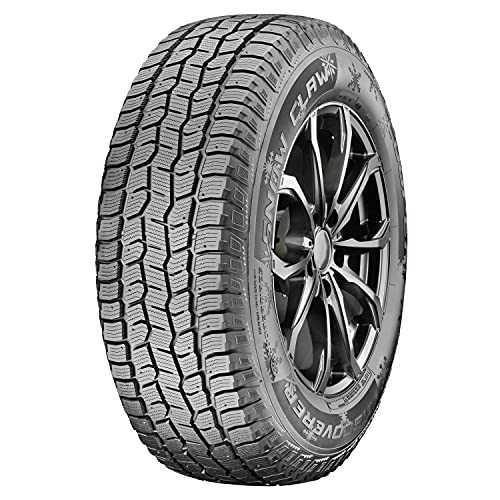
Cooper Discoverer Snow Claw — Runner-Up (Trucks & SUVs)
The Cooper Discoverer Snow Claw is the only LT winter tire in this roundup and the correct choice for F-150, Silverado, RAM 1500, and Wrangler owners who take their trucks seriously in winter conditions. LT Load Range E is a 10-ply construction rating that handles the payload and towing loads of a half-ton or three-quarter-ton truck in conditions where a passenger-car winter tire would be structurally compromised under load.
The tire comes pinned for studs from the factory, which makes it the right pick for truck owners in states with full studded tire allowances. Alaska, Montana, Idaho, Oregon, and Washington all permit studs on LT tires, and in those climates, studded LT winter tires on a pickup truck are the correct answer to serious winter road conditions. The Adaptive-Traction Technology and Whisper Grooves make it livable as a daily driver during the season, which matters for the majority of pickup truck owners who also use their truck for commuting and highway driving between the off-road and towing applications that justify the LT construction.
Cooper Discoverer Snow Claw
by Cooper Tire
The winter tire for full-size pickup trucks and body-on-frame SUVs -- LT Load Range E construction handles truck payload and towing loads, factory stud pinning adds a glare ice option in legal states, and Whisper Grooves make it quieter than competing LT winter tires on the highway.
Pros
- LT Load Range E (10-ply) construction is engineered for the payload and towing demands of full-size pickup trucks and body-on-frame SUVs -- the reinforced carcass handles the weight of a loaded F-150, Ram 1500, or Silverado in winter conditions where a passenger-car winter tire would be dangerously overloaded and structurally compromised
- Pinned for studs from the factory, so you can add studs at mounting for maximum glare ice traction in states where studs are legal on LT tires -- the only studdable LT winter tire in this roundup, making it the right choice for working trucks in Alaska, northern Idaho, Montana, and other states with full studded tire allowances
- Adaptive-Traction Technology uses multiple independent tread elements that flex independently over uneven snow and ice surfaces, maintaining more contact patch on irregular terrain than a rigid block pattern -- relevant for truck owners who use their vehicles on unpaved winter roads, job sites, and off-highway terrain
- Whisper Grooves technology optimizes groove geometry to suppress the harmonic road noise that LT tires typically generate at highway speeds -- owners consistently describe the Snow Claw as meaningfully quieter than competing LT winter tires on the interstate, which matters for trucks used as daily drivers during winter months
Cons
- Price per tire is the highest in this roundup, and a full set of four for a one-ton truck configuration adds up quickly -- the LT construction and stud capability justify the premium for working truck owners, but casual crossover or light-SUV buyers should look at the passenger-car winter tires in this review instead
- Load Range E rating makes this tire appropriate for LT applications only -- mounting Load Range E tires on a passenger car or standard crossover is not recommended and may produce an overly stiff ride that compromises both comfort and cornering compliance on non-truck platforms
Pirelli Winter Sottozero 3 — Runner-Up (Performance & Tesla)
The Sottozero 3 exists for a specific buyer: the owner of a sport sedan, luxury coupe, performance crossover, or Tesla who wants to retain the vehicle’s handling character in winter conditions rather than fitting a soft, compliance-prioritized winter tire that robs the chassis of its precision. BMW, Audi, Mercedes, and Tesla specify the Sottozero 3 as an OEM winter tire in their factory winter packages — those OEM fitments are compound and dimensional validations that the Sottozero 3’s specifications are correct for performance-platform chassis dynamics.
The PNCS (Pirelli Noise Canceling System) foam layer is a legitimate premium feature. Most winter tires generate meaningfully more road noise than the all-season or summer tires they replace, and on a luxury vehicle or a quiet EV cabin, that noise intrusion can undermine the experience the car was built to deliver. The PNCS foam suppresses the cavity resonance that generates tire roar, making the Sottozero 3 the quietest winter tire in this roundup. On the thin Amazon review base: this tire is primarily sold through specialty tire retailers and OEM dealerships, not Amazon’s consumer channel, so a single rating on the reviewed size tells you almost nothing either way. The OEM fitment validation from three premium European brands plus Tesla is the stronger quality signal for this application. Individual sizes also come and go on Amazon, so check that your fitment is actually listed before you commit to the tire.

Pirelli Winter Sottozero 3
by Pirelli
The performance winter tire for sport, luxury, and Tesla platforms -- OEM fitment on BMW, Audi, Mercedes, and Tesla winter packages, PNCS foam noise canceling, a V-rated 245/40R18 sized for sport sedans and coupes, and 3D Full-Depth sipes that maintain steering precision deep into tread wear.
Pros
- UHP winter compound engineered specifically for sport and luxury vehicles, and Tesla-approved as original-equipment winter fitment -- the Sottozero 3 is OE winter fitment on BMW, Audi, Mercedes, and Tesla winter-package vehicles, meaning the compound's handling balance, steering response, and lateral grip were validated against the exact chassis dynamics of the platforms that demand the most from a tire
- Pirelli Noise Canceling System (PNCS) technology uses a polyurethane foam layer inside the tire to absorb road vibration before it resonates through the wheel into the cabin -- a premium feature that makes the Sottozero 3 uniquely appropriate for luxury sedan, coupe, and EV buyers who will not tolerate the increased road noise that standard winter tires introduce
- 3D Full-Depth sipes maintain constant biting edge geometry as the tire wears -- the three-dimensional sipe profile interlocks when the block is under load, preventing deformation and maintaining steering precision throughout the tire's life rather than degrading as the tread wears into a shallower profile
- The Sottozero 3 range runs from V through Y speed ratings so you can match the placard on a sport or luxury platform -- the 245/40R18 reviewed here is V-rated at 149 mph, and running a winter tire below your vehicle's specified rating is technically non-compliant and can affect liability coverage in an accident
Cons
- Effectively no Amazon review base -- a single rating on the reviewed size -- because the Sottozero 3 is primarily sold through specialty tire retailers and BMW/Audi/Mercedes/Tesla dealerships rather than Amazon; third-party validation comes from OEM fitment and European independent testing rather than the Amazon review ecosystem. Sizes also rotate in and out of stock on Amazon, so confirm your exact fitment is listed before planning around it
- Not available in the size ranges appropriate for passenger sedans and crossovers in the budget or mid-tier categories -- this is an explicitly UHP winter tire optimized for performance vehicles, and forcing it onto a non-sport platform delivers none of its compound advantages while paying a performance-tire premium for standard winter capability
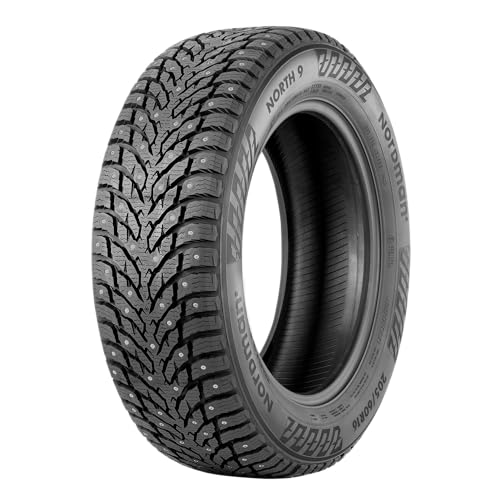
Nokian Nordman North 9 SUV Studded — Best Factory-Studded Option
The Nordman North 9 is the tire I point drivers to when studless simply isn’t enough — when the commute involves sustained glare ice, freezing rain, or lake-effect ice that a compound alone cannot fully answer. It is the only genuinely studded tire in this roundup, and that distinction matters: a metal stud physically penetrates the ice surface and grips it mechanically, which is a fundamentally different traction mechanism than the molecular water-wicking that studless compounds like the Blizzak WS90 rely on. On pure ice, studs win. There is no studless compound that matches them.
Nokian is the brand that invented the studded winter tire back in 1934, and the Nordman line is their value tier — which means you get genuine Finnish studded-tire engineering without paying Hakkapeliitta flagship prices. The Eco Stud system is the feature that makes the Nordman North 9 livable as a daily driver: the studs are anchored in a cushioned design that absorbs impact and reduces the harsh road noise that older rigid-stud tires are notorious for. A studded tire will always be louder than a studless one, but the Nordman North 9 is meaningfully more refined than legacy studded designs, and it carries the 3PMSF severe-snow mark so it performs on snow as well as on the ice its studs are built for.
Two honest caveats. First, the review base is very thin at 6 Amazon ratings, so you’re leaning almost entirely on Nokian’s category pedigree rather than on review volume — defensible, given they define the category, but go in knowing that. Note too that the size reviewed here is the 225/65R17 XL SUV fitment; Nokian lists the North 9 in passenger-car sizes as well, so match your placard rather than assuming this exact size. Second, and more important: studs are banned outright or seasonally restricted in many states, so confirm your state’s law before you buy. In stud-legal ice country — Alaska, the northern Rockies, upstate corridors — this is the most capable tire in the roundup for the conditions it’s built for. Everywhere studs are prohibited, run one of the premium studless compounds instead.
Nokian Nordman North 9 SUV Studded
by Nokian Tyres
The only factory-studded tire in this roundup -- Nokian invented the studded winter tire, and the Nordman North 9 puts real metal-on-ice traction and 3PMSF certification at a mid-tier price, with an Eco Stud system that tames the road noise studded tires are known for. The right pick for sustained glare ice in stud-legal states.
Pros
- Ships factory-studded with metal studs already installed -- this is the only genuinely studded tire in this roundup, and metal studs physically penetrate and grip glare ice in a way no rubber compound, however advanced, can replicate; for drivers in sustained-ice climates in stud-legal states, that mechanical bite is the single largest available traction upgrade
- Nokian's Eco Stud system uses a cushioned stud anchoring design that reduces the road noise and pavement impact that older rigid-stud tires are notorious for -- studded tires will always be louder than studless compounds, but the Eco Stud architecture makes the Nordman North 9 meaningfully more livable as a daily driver than legacy studded designs
- 3PMSF severe-snow certification backs the ice and hardpack traction claim with an independently tested standard rather than marketing language -- the Nordman North 9 passed the same ASTM F1805 acceleration threshold that every tire in this roundup meets, so it delivers on snow as well as on the pure ice its studs are built for
- Nokian invented the studded winter tire in 1934 and remains the reference brand for the category -- the Nordman line is their value tier, which puts genuine Finnish studded-tire engineering at a mid-tier price that undercuts premium studded flagships like the Hakkapeliitta series
Cons
- Very thin Amazon review base at 6 ratings -- far fewer than the mainstream studless picks in this roundup, so buyers relying on Amazon review volume have little verified feedback to work from, and a 5.0-star average across 6 ratings carries almost no statistical weight; Nokian's category pedigree is doing most of the work here
- Studded tires are banned outright or seasonally restricted in many US states (Florida, Texas, Wisconsin, Maryland, and others prohibit them entirely) -- unlike the other picks here, you must confirm your state's stud law before buying, and running illegal studs risks fines and liability
Best Winter Tires for Trucks & Pickups
Full-size pickups and body-on-frame SUVs change the winter tire equation entirely. A loaded F-150, Silverado, or Ram 1500 — especially one that tows or hauls in winter — needs a Light Truck (LT) construction rating that a passenger-car winter tire simply does not have. Load Range E (10-ply) is the specification that matters: it carries the payload without the carcass flexing and overheating under load. Mounting a P-metric passenger winter tire on a working truck is a structural risk, not just a performance compromise.
The Cooper Discoverer Snow Claw is the only true LT winter tire in this roundup and the default pick for a working truck — studdable in stud-legal states, and quiet enough on the highway to daily-drive. For lighter trucks, half-tons that never tow, and crossover-based SUVs that don’t need LT construction, the Michelin CrossClimate2 CUV is the smarter buy: 3PMSF year-round capability with no seasonal swap and a 60,000-mile warranty.
| Product | Price | Buy |
|---|---|---|
| Cooper Discoverer Snow ClawBest truck & LT winter tire LT Load Range E (10-ply) for full-size trucks that haul and tow -- studdable in stud-legal states | $260.99 | View on Amazon |
| Michelin CrossClimate2 CUVBest no-swap truck & CUV 3PMSF all-weather for half-tons and crossover SUVs that skip the seasonal swap and rack up highway miles | $219.99 | View on Amazon |
Best Winter Tires for SUVs & Crossovers
SUVs and crossovers sit between passenger cars and full-size trucks: heavier than a sedan with a higher center of gravity, but rarely needing LT construction. The two things that matter are matching the load index on your door-jamb placard (crossovers frequently need an XL / Extra Load rating) and deciding how much winter capability you actually need versus the convenience of running one tire year-round.
The Michelin CrossClimate2 CUV is the do-everything crossover answer — 3PMSF snow capability with premium wet braking, in CUV and SUV sizes, with no seasonal swap. When your winters are severe enough to need dedicated ice grip, the Blizzak WS90 in its larger fitments delivers the best ice braking of the group. And for body-on-frame SUVs — Tahoe, Sequoia, 4Runner, Wrangler — that carry real weight, the Cooper Snow Claw’s LT construction is the safer structural choice.
| Product | Price | Buy |
|---|---|---|
| Michelin CrossClimate2 CUVBest SUV all-rounder 3PMSF all-weather in CUV/SUV sizes -- the do-everything crossover tire with no seasonal swap | $219.99 | View on Amazon |
| Bridgestone Blizzak WS90Best ice grip for SUVs Class-leading studless ice braking in larger fitments for crossovers in serious ice climates | $193.28 | View on Amazon |
| Cooper Discoverer Snow ClawBest for body-on-frame SUVs LT Load Range E construction for heavy body-on-frame SUVs that tow or carry cargo | $260.99 | View on Amazon |
Best Winter Tires for Tesla & Electric Vehicles
Electric vehicles add three constraints that ordinary winter tires handle poorly. First, weight: an EV is typically 20 to 30 percent heavier than an equivalent gas car because of the battery pack, so the load index requirement is higher than owners expect — check the placard and match or exceed it. Second, instant torque: EV motors deliver full torque from zero RPM and break traction more abruptly on snow, so a compound that grips from the first moment of acceleration reduces traction-control cutouts. Third, range: cold already cuts lithium capacity 20 to 40 percent, and a high-rolling-resistance winter tire compounds the loss — low-rolling-resistance winter compounds protect the range you have left.
For Teslas specifically, the Pirelli Winter Sottozero 3 is Tesla-approved OE winter fitment — validated for the exact chassis dynamics of the Model 3, Y, S, and X, with PNCS foam that keeps the famously quiet EV cabin quiet. The Michelin X-Ice Snow is the studless favorite of EV owners for its low rolling resistance and minus-40 compound. And for a Model Y or heavier crossover EV where the owner would rather skip the swap entirely, the CrossClimate2 CUV’s year-round 3PMSF fitment is the pragmatic call.
| Product | Price | Buy |
|---|---|---|
| Pirelli Winter Sottozero 3Best for Tesla (OE-approved) Tesla-approved OE winter fitment with PNCS foam for a quiet cabin -- the reviewed 245/40R18 suits sport sedans and coupes | $231.56 | View on Amazon |
| Michelin X-Ice SnowBest studless for EV range Low rolling resistance protects cold-weather EV range; minus-40 EverWinter compound for extreme cold | $209.08 | View on Amazon |
| Michelin CrossClimate2 CUVBest no-swap for crossover EVs Year-round 3PMSF fitment for Model Y and heavier crossover EVs whose owners skip the seasonal swap | $219.99 | View on Amazon |
Best Winter Tires for Ice & Glare Ice
Ice is the condition where the gap between a great winter tire and a merely adequate one is widest, and where the wrong tire is most dangerous. On glare ice and freezing rain — lake-effect corridors, alpine passes, and the sustained sub-freezing snap belt — studless ice performance comes down to compound chemistry: how effectively the rubber wicks the thin water film off the ice and how many biting edges the sipes present. If your state permits studs, jump to the studded section below; if it doesn’t, these three studless compounds are the strongest ice performers here.
The Bridgestone Blizzak WS90 is the ice champion of this roundup — its NanoPro-Tech and Multicell compounds top independent ice-braking tests year after year. The Michelin X-Ice Snow trails it only slightly on pure ice while adding a treadwear warranty and minus-40 cold capability. The Continental VikingContact 7 — Consumer Reports’ number-two winter tire overall — gives up a little ice grip for meaningfully longer treadlife, the right trade for drivers who see more cold snow than pure glare ice.
| Product | Price | Buy |
|---|---|---|
| Bridgestone Blizzak WS90Best ice grip overall NanoPro-Tech + Multicell compound tops independent glare-ice braking tests -- the studless ice benchmark | $193.28 | View on Amazon |
| Michelin X-Ice SnowBest ice grip + cold + warranty Trails the WS90 only slightly on ice, adds a treadwear warranty and a minus-40 compound | $209.08 | View on Amazon |
| Continental VikingContact 7Best ice value & treadlife Consumer Reports #2 overall -- slightly less ice grip, but the longest projected treadlife of the three | $190.96 | View on Amazon |
Best Studded & Studdable Winter Tires
Studs are the most effective traction solution that exists for glare ice — a metal stud physically penetrates and grips the ice surface in a way no rubber compound can replicate, which is why they remain standard equipment in the hardest-ice regions of the country. The catch is legality: Florida, Texas, Louisiana, Alabama, Mississippi, Maryland, Wisconsin, and Hawaii prohibit studs entirely, and most other states permit them only in seasonal windows. Before you buy anything in this section, confirm your state’s current stud law through the DMV — running illegal studs generates fines and liability, and studdable tires let you make that call at mounting time.
There are two ways into studs. A factory-studded tire ships with the studs already installed — the Nokian Nordman North 9 is that pick here, the only genuinely studded tire in the roundup and the most capable option for sustained glare ice in stud-legal states. A studdable tire ships with pre-drilled holes so you can add studs at mounting (roughly 15 dollars per tire) or run it studless if your jurisdiction restricts studs. The General Altimax Arctic 12 is the budget studdable pick for passenger cars, and the Cooper Discoverer Snow Claw is the only studdable LT option for trucks. All three carry 3PMSF certification.
| Product | Price | Buy |
|---|---|---|
| Nokian Nordman North 9 SUV StuddedBest factory-studded Ships with metal studs installed -- the most capable glare-ice tire here for stud-legal states | $186.11 | View on Amazon |
| General Altimax Arctic 12Best studdable (passenger) 96 pre-drilled stud holes and a budget price -- add studs at mounting or run it studless | $153.97 | View on Amazon |
| Cooper Discoverer Snow ClawBest studdable (truck/LT) The only studdable LT winter tire -- stud a full-size truck for serious ice country | $260.99 | View on Amazon |
Installation Timing and Cost: The Real Math
The 7/7 rule: install at 7 degrees Celsius (45 Fahrenheit), remove when temperatures consistently stay above 7 degrees Celsius. In the continental US snow belt, that’s typically late October to early November installation and late March to early April removal.
The cost math that most buyers get wrong is comparing the upfront cost of winter tires to the cost of doing nothing. The correct comparison includes: the cost of a crash caused by inadequate winter traction (deductible, premium increase, injury liability), the cost of replacing all-season tires worn out faster because they were running on winter roads, and the cost of mounting and balancing if you’re using the same wheels for both seasons.
Mounting and balancing costs approximately 15 to 25 dollars per tire at most shops, or 60 to 100 dollars per seasonal swap for a four-tire set. Over five years of seasonal swapping — ten total installations — that’s 600 to 1,000 dollars in mounting costs alone. A dedicated winter wheel set eliminates mounting costs at every swap: you run a sensor-compatible steel or alloy wheel for the winter season and swap the whole wheel assembly yourself or at any tire shop for 10 to 15 dollars per corner (balance only, no mount). For budget tire sets, the incremental cost of a basic steel wheel set pays back in two to three years of avoided mounting bills. Keep your tires inflated properly through the season with a reliable inflator — see our best tire inflators guide for what we keep in the shop bay.
How to Read Your Tire Sidewall Code
Every tire sidewall has a standardized code that specifies exactly what vehicle application and performance envelope the tire is designed for. Example: 225/65R17 102H
225 = section width in millimeters (the tire’s width from sidewall to sidewall at the widest point). 65 = aspect ratio (the sidewall height as a percentage of the section width — 65 means the sidewall is 65 percent of 225mm, or approximately 146mm tall). R = radial construction (virtually all modern passenger tires). 17 = rim diameter in inches. 102 = load index (each tire can support 850 kg at rated inflation pressure). H = speed rating (130 mph sustained). The LT prefix (as in LT265/70R17) indicates a Light Truck construction rating, with the load range designation (E = 10-ply equivalent) following the size. To translate any sidewall code into Load Range, ply rating, max cold PSI, and capacity in pounds and kilograms, paste it into our free tire ply rating chart — the cross-reference is filterable by passenger, light truck, trailer, or heavy-duty, and the load-index slider gives you a live kg/lb readout from the ETRTO standard table. Never mount an LT-spec tire on a passenger car or standard crossover, and never substitute a P-metric tire for an LT application on a truck or van that specifies LT construction.
A common winter-tire move is to run a narrower size on a smaller wheel diameter — the so-called “minus-one” winter wheel setup. A narrower tire cuts more aggressively through slush and packed snow, and the smaller wheel keeps the overall diameter close to stock so the speedometer, ABS, and traction control stay calibrated. Run any candidate winter size against your stock spec through our free tire height & diameter calculator before ordering — the plus-size helper tab will list every alternate within ±3% diameter, which is the SAE-standard window for keeping your sensors honest. To check the overall diameter of a single minus-one size on its own, our tire diameter calculator returns the height, section width, and circumference straight from the sidewall code.
Buyer's Guide
Winter tire selection comes down to matching the tire's capabilities to your specific climate severity, vehicle type, and driving pattern. These six factors determine which of the tires in this roundup is right for your application.
Winter Severity
The single most important selection variable is how severe your winters actually are. Occasional light snow on otherwise clear roads -- think Atlanta, Dallas, or Nashville -- calls for an all-weather tire like the Michelin CrossClimate2 CUV that you can run year-round without compromising summer performance. Regular snow accumulation and sub-freezing temperatures through a multi-month season -- the Chicago, Denver, Minneapolis, and Buffalo climates -- justify a dedicated studless winter tire like the Blizzak WS90 or X-Ice Snow. Persistent glare ice, freezing rain, or alpine conditions with sustained sub-zero temperatures make a studdable tire like the General Altimax Arctic 12 or Cooper Snow Claw the right choice in states where studs are permitted. Match the tire to your actual worst-case condition, not your average condition.
Vehicle Type and Weight
Passenger car winter tires are not appropriate for full-size pickup trucks or body-on-frame SUVs that carry cargo loads or tow trailers. Load index is a safety specification: mounting a tire with an insufficient load index for your vehicle's GVWR creates structural overloading risk that can cause tire failure under load. The Cooper Discoverer Snow Claw with LT Load Range E construction is the only truck-appropriate tire in this roundup. EV owners face an additional consideration: EVs are typically 20 to 30 percent heavier than equivalent ICE vehicles due to battery pack mass, so load index requirements are often higher than expected. Check your vehicle's tire placard -- inside the driver's door jamb -- for the OEM-specified load index before purchasing.
Drive System -- FWD, RWD, and AWD
All drive systems benefit from four winter tires, and no drive system eliminates the need for them. FWD vehicles get the biggest real-world improvement from winter tires because the driven front wheels handle both acceleration and steering, so improved compound grip benefits every driving input simultaneously. RWD vehicles -- sports cars, sedans, and rear-drive trucks -- are the most dangerous on winter roads without proper winter tires because the driven rear wheels can break traction independently of the steering front wheels, producing oversteer that catches inexperienced drivers off guard. AWD vehicles improve only in acceleration on winter tires, not in braking or cornering -- see the FAQ above for the full explanation. Regardless of drive system, all four tires need to be the same winter compound to behave predictably as a system.
Studded vs. Studdable vs. Studless
Studded tires deliver the best traction on glare ice -- the metal studs physically bite into the ice surface in a way no rubber compound can replicate. The tradeoff is road noise, pavement wear, and legal restriction. Many states prohibit studs entirely (Florida, Texas, Wisconsin, Maryland, Alabama) while others allow them only in seasonal windows. Studdable tires like the General Altimax Arctic 12 and Cooper Snow Claw give you the flexibility to install studs at mounting if your state allows it, or run studless if you are in a restricted jurisdiction. Studless winter tires use compound technology -- NanoPro-Tech, EverWinter, PolarPlus -- to generate ice traction through molecular chemistry rather than mechanical penetration. For most buyers in the continental US snow belt, a premium studless tire like the Blizzak WS90 or X-Ice Snow provides more than adequate ice performance without the state restriction and noise penalties of studs.
Size, Load, and Speed Ratings
Never substitute a lower speed rating or load index than your vehicle's OEM specification. Speed rating defines the maximum sustained speed the tire is engineered to handle structurally -- H is 130 mph, V is 149 mph, W is 168 mph. Mounting an H-rated tire on a vehicle specifying V is technically non-compliant and can affect insurance liability in an accident. Load index defines the maximum weight each tire can support at rated inflation pressure -- a mismatch creates overloading risk on loaded or towing configurations. Read your vehicle's tire placard (inside the driver's door jamb) for the exact OEM size and minimum ratings. When a winter tire in the reviewed size differs from your vehicle's OEM size, verify the alternate fitment against a tire fitment guide before purchasing.
3PMSF vs. M+S Certification
The Three-Peak Mountain Snowflake (3PMSF) symbol and the M+S designation are frequently confused, and the distinction matters enormously for both safety and legal compliance. M+S is a self-applied manufacturer designation based entirely on tread geometry -- it requires only that the tire's net-to-gross tread ratio and the tread pattern have the geometric characteristics the manufacturer considers appropriate for mud and snow. No performance test is required, and no independent organization verifies M+S claims. A 3PMSF certification, by contrast, requires the tire to pass ASTM F1805 testing on a controlled snow surface, demonstrating at least 10 percent better acceleration traction than a reference all-season tire. Some Canadian provinces and US mountain corridor jurisdictions (including British Columbia's chain-up zones) legally require 3PMSF-certified tires during winter months -- M+S-only tires do not satisfy that requirement. Every tire in this roundup carries 3PMSF certification.
Final Verdict
For the majority of drivers in US snow belt climates — passenger cars, crossovers, and light SUVs running in conditions ranging from packed snow to occasional glare ice — the Bridgestone Blizzak WS90 is the correct pick. It leads independent ice-braking and lateral-traction testing year after year, the compound technology has decades of real-world winter performance behind it, and the H-rated 102 load index covers the full passenger car and crossover spectrum. The shorter treadlife is the cost of the compound’s performance advantage, and it’s a cost worth paying for the best studless ice grip available.
Budget-conscious buyers who want a genuine winter tire without the premium price should put the General Altimax Arctic 12 on their short list, especially in stud-legal states where the 96-hole studdable design adds a glare ice option at mounting time. The 4.7-star average across 391 reviews confirms it delivers real winter performance, not marketing. Crossover and SUV owners who would rather eliminate the seasonal swap entirely should step up to the Michelin CrossClimate2 CUV — the 3PMSF certification, 60,000-mile warranty, and year-round fitment make it the most practical premium pick for variable-climate driving. If you run a full-size truck or body-on-frame SUV, the Cooper Discoverer Snow Claw is the only LT-rated tire in this roundup — don’t put a passenger-car winter tire on a truck that carries payload. And for sustained glare ice in a stud-legal state, the factory-studded Nokian Nordman North 9 is the most capable tire here for the conditions it’s built for.
Whatever you mount this season, stay on top of inflation pressure. Cold temperatures drop tire pressure roughly one PSI for every 10-degree Fahrenheit drop in ambient temperature, and an underinflated tire loses both traction and treadlife faster. A quality tire pressure gauge and inflator are the two cheapest tools in your winter driving safety kit.
Frequently Asked Questions
Do I need 4 winter tires, or can I just put 2 on the drive axle?
Are studded tires legal in my state?
What is the difference between winter tires, snow tires, and all-season tires with the M+S symbol?
I have AWD -- do I still need winter tires?
When should I install winter tires, and when should I take them off?
Related Articles
About the Reviewer

Mike Reeves, ASE Master Technician
A.A.S. Automotive Technology, Universal Technical Institute (UTI)
Mike Reeves is an ASE Master Technician with 15 years of hands-on experience in automotive repair and diagnostics. He earned his A.A.S. in Automotive Technology from UTI and runs his own independent shop in Denver, Colorado. Mike founded RevRated to help everyday car owners make smarter parts decisions -- every recommendation comes from real-world testing in his garage.