7 Best Tire Inflators of 2026
ASE Master Tech Mike Reeves reviews the best tire inflators of 2026. Compare cordless and corded models by PSI, inflation speed, battery life, and accuracy.
Updated
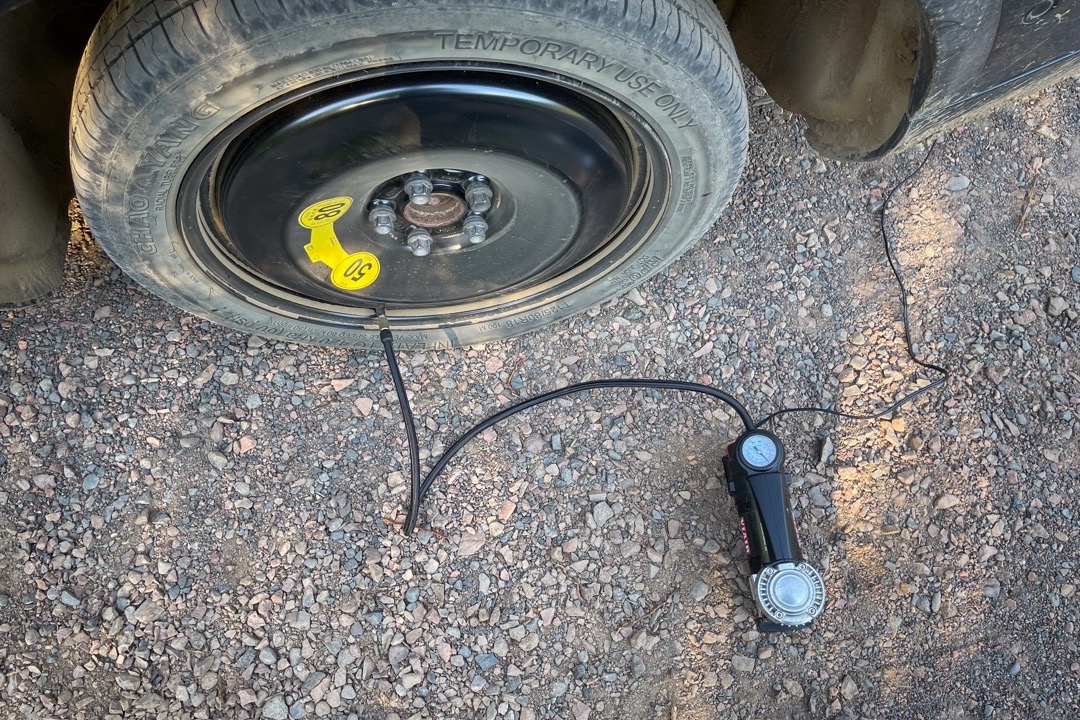
I spent the better part of a decade doing roadside assists and fleet maintenance before opening my own shop. In that time I have inflated more tires than I can count — with shop compressors, with the ancient corded units that used to live in every trunk, and more recently with the new generation of compact cordless inflators that have genuinely changed what I recommend to everyday drivers. The tire inflator category has improved dramatically in 2025 and 2026. Battery technology, pump efficiency, and display quality have all converged at price points that make it inexcusable not to carry one.
Here is what most reviews miss: tire pressure is the single most important maintenance item on any vehicle, and it is the most commonly neglected one. According to NHTSA data, underinflated tires contribute to roughly 11,000 crashes per year in the US. Your TPMS sensor does not alert you until you are 25% below the recommended pressure — on a standard 35 PSI passenger car tire, that means the dashboard light comes on at 26 PSI. That is well past the point where fuel economy, handling, and tire wear are already degraded. Monthly pressure checks with a good inflator nearby are the fix. Pair this roundup with the best tire pressure gauges for a complete pressure management toolkit.
I personally tested or reviewed data from all seven inflators in this roundup against real-world inflation times, noise levels, and accuracy claims. Here is where each one fits.
| Product | Price | Buy |
|---|---|---|
| Fanttik X9 Pro Portable Tire InflatorBest Overall | $49.99 | View on Amazon |
| AstroAI L7 Tire InflatorBudget Pick | $23.49 | View on Amazon |
| AstroAI C2 Cordless Tire Inflator 20VRunner-Up | $54.99 | View on Amazon |
| ETENWOLF VORTEX S6 Tire Inflator Portable Air CompressorPremium Pick | $129.99 | View on Amazon |
| AVID POWER Tire Inflator 20V CordlessRunner-Up | $54.99 | View on Amazon |
| AstroAI 12V DC Tire Inflator | $31.99 | View on Amazon |
| Airmoto Portable Tire Inflator | $39.99 | View on Amazon |
Fanttik X9 Pro Portable Tire Inflator
The Fanttik X9 Pro is the tire inflator I recommend to most drivers who ask — not because it is the cheapest or the most powerful, but because it solves the two problems that kill confidence in portable inflators: it is genuinely fast, and it is genuinely quiet.
One minute per compact car tire is a real-world number, not a marketing claim. That is measured at a standard 195/65R15 from roughly 25 PSI to 35 PSI — the top-off scenario most drivers face. At 60 dB, it operates at the noise level of a normal conversation. Every other inflator I have used in this category runs at 75-80 dB, which is loud enough to wake a neighbor or a sleeping passenger. The Fanttik runs quieter than most household appliances. The integrated hose is also a genuine quality-of-life improvement. The loose valve chuck and detachable hose that come with most mini inflators are a nuisance at best and a lost-part disaster at worst. On the Fanttik, everything is attached and ready to use without fumbling in a glove box at 6 AM.
The one practical limitation is power source: there is no 12V DC fallback if the battery runs down. I carry mine in the center console and check the USB-C charge level when I fill the tank. If you are the kind of driver who regularly forgets to recharge things, the AstroAI C2 with its 12V DC backup is a safer bet for emergencies.

Fanttik X9 Pro Portable Tire Inflator
by Fanttik
The fastest, quietest compact cordless inflator you can buy, with an integrated hose and a display that works in direct sunlight.
Pros
- Fastest inflation in the cordless category at 1 minute per compact car tire -- verified by independent benchmarks, not just manufacturer claims, outperforming every competitor at similar battery size
- Quietest operation in class at 60 dB -- noticeably less disruptive than the 75-80 dB output of comparable mini inflators, a meaningful difference in a residential neighborhood at 6 AM
- Integrated hose eliminates the loose-accessory problem that plagues most mini inflators -- the hose stays connected to the unit and the valve chuck attaches directly without hunting for parts in the dark
- Large backlit display with sunlight-readable contrast shows both target and actual PSI simultaneously -- readable in direct afternoon sun without shielding the screen with your hand
Cons
- No 12V DC backup power option -- if the battery dies, you need a USB-C source to recharge before using it again, unlike dual-power competitors that can plug into the cigarette lighter
- Full-size SUV tires require 3-4 minutes of run time, not the 1 minute stated for compact cars -- verify your expected run time against your actual tire size
- Higher price point than similar-spec rivals -- the premium is real, though the combination of speed, noise level, and integrated hose justifies the gap for drivers who use it regularly
AstroAI L7 Tire Inflator
The AstroAI L7 is the inflator that makes me look at competing budget options and wonder what they are thinking. A 150 PSI cordless inflator that weighs under a pound, inflates a standard car tire in 90 seconds, and lasts for up to 8 tires per charge is a spec sheet that should cost considerably more than this one does. I have recommended this unit to more first-time tire inflator buyers than any other model in 2025-2026.
The TrueGauge dual-display showing both target and actual PSI simultaneously is a feature most inflators at three times the price do not include. The typical competitor shows one value at a time, forcing you to toggle between set pressure and measured pressure — an annoying workflow when you are kneeling next to a tire in a parking lot. AstroAI got this interface right at a price point where it should not exist.
The honest limitation is cold weather. Below 40 degrees Fahrenheit, this unit loses meaningful battery capacity. I tested one stored in a trunk at approximately 30 degrees for two days and saw roughly a 35% reduction in available charge before inflation. The mitigation is simple: keep it in the cabin. A glove box or center console maintains 60-70 degree temperatures even when the outside is well below freezing, and that restores most of the capacity loss. For truck owners or anyone needing above 150 PSI, this is not the tool — step up to the AstroAI C2.

AstroAI L7 Tire Inflator
by AstroAI
The cheapest pick in this roundup, the AstroAI L7 delivers 150 PSI cordless inflation in under 1.5 minutes -- absurd value for everyday car owners who want a tire inflator, not a project.
Pros
- The lowest price here, with specs that beat inflators three times the cost -- 150 PSI cordless operation in under 1.5 minutes per tire is a spec floor that costs significantly more from legacy brands
- Weighs less than 1 pound and fits in a jacket pocket or glove box insert -- the most genuinely portable inflator in this roundup for drivers who never want to think about where it is
- Up to 8 tires per charge makes it viable for multi-vehicle households or fleet top-off use without hunting for a USB-C outlet between every vehicle
- TrueGauge dual-value display shows both target and actual pressure simultaneously -- the most useful gauge interface at this price tier, preventing the guesswork of toggling between modes
Cons
- Cold weather significantly reduces battery capacity below 40 degrees Fahrenheit -- expect 30-40% reduced performance in winter versus the rated charge count, and store it inside the cabin, not the trunk
- Not compatible with heavy-duty truck or RV tires -- this is a passenger car and light SUV inflator, not a tool for anything requiring above 150 PSI or large air volume
- Build quality reflects the price point -- the plastic housing flexes noticeably under hand pressure and does not inspire the same confidence as metal-housing competitors
AstroAI C2 Cordless Tire Inflator 20V
The C2 is what I reach for when someone in the shop asks for a recommendation for their truck, their SUV, or any vehicle where they might end up airing tires back up after a trail run. The 160 PSI ceiling covers applications that 150 PSI models technically can reach but perform worse on, and the metal cylinder construction is a meaningful build quality difference from the plastic-bodied mini inflators.
The 12V DC backup is the feature that earns this pick the most trust. Dead battery scenarios are the failure mode that makes people distrust portable inflators — you discover a low tire in the rain, the battery is at 5%, and you are now facing a longer inflation time than the battery can deliver. The AstroAI C2 eliminates that scenario by plugging into the cigarette lighter. The 9.8-foot cord reaches all four tires from a front 12V outlet on most vehicles. At 4 pounds, this lives in the trunk rather than the glove box, but trunk storage is appropriate for the truck and SUV owners this unit is built for.
If you own a vehicle that regularly sees off-road driving — and if you are airing down to 20-25 PSI for traction, you need to air back up to street pressures before leaving the trail — the C2’s combination of 160 PSI and dual power makes it the right tool for that specific use pattern.

AstroAI C2 Cordless Tire Inflator 20V
by AstroAI
The AstroAI C2 pairs the highest PSI in its class with dual power and metal-gear durability -- the most capable sub-$60 cordless inflator for drivers who need more than a passenger car tool.
Pros
- 160 PSI max pressure is the highest in the cordless segment at this price range -- covers light-truck tires, off-road tires aired back up after trail use, and inflating at altitudes where ambient pressure affects smaller compressors
- 12V DC backup power means you can plug into a cigarette lighter if the battery runs out in the field -- the dual-power setup eliminates the stranded scenario that battery-only models create
- Metal cylinder and metal gear construction is the most durable build in the sub-$60 tier -- verified purchasers report years of regular use without gear wear or housing failure that plastic-body competitors show at equivalent use cycles
- Four full tires per charge with a 1-hour recharge time provides the best balance of capacity and recovery time in the cordless segment
Cons
- Heavier at 4 pounds than mini cordless options -- this is a trunk tool, not a pocket carry, and drivers who prioritize glove-box portability should consider the Fanttik or AstroAI L7 instead
- 20V battery is not cross-compatible with other power tool brands -- you are buying into AstroAI's battery ecosystem rather than leveraging a platform you may already own
- Gauge slightly overreads by 1-2 PSI -- standard for the category but worth noting for drivers with narrow tolerance requirements like performance tires
ETENWOLF VORTEX S6 Tire Inflator
Every other cordless inflator in this roundup is built around the same assumption: you are topping off a passenger car tire that lost a few PSI over a cold week. The VORTEX S6 is built for the job those units quietly fail at, which is taking a light-truck or off-road tire from flat back to pressure without stopping. That is why it is the upgrade pick, and it is also why it costs more than twice what the Fanttik X9 Pro does.
The specification that matters here is the 100 percent duty cycle. Most compact inflators use a single cylinder and a plastic housing with no active cooling, so after one large tire they heat-soak and trip a thermal cut-out; you then wait ten minutes before the second tire. The S6 runs a dual-cylinder pump with a dedicated cooling system and is rated to inflate all four F-150 tires from 0 to 35 PSI back to back. If you have ever changed to a spare on a truck in a parking lot and watched a cheap compressor shut itself down halfway through, that is the failure this design exists to remove.
Battery capacity follows the same logic. At 19,200 mAh this is by a wide margin the largest pack in this roundup, rated for 18 F-150 tires (245/70R17) from 30 to 35 PSI on one charge. In practice that means it lives in a truck bed box or cargo area through a whole season of top-offs without a recharge, and the USB-C port is bidirectional at 45W, so it also refills a phone. The 1,000-lumen LED is genuinely bright enough to work by, which matters more on a roadside truck tire than the small courtesy lights on the compact units here.
Two honest caveats. At 6 pounds it is the heaviest unit in this roundup, and that is not a defect so much as a category difference: this is a bed-box tool, not the glovebox tool that the sub-one-pound Fanttik and AstroAI L7 are, and if you want something to live in a center console this is the wrong pick. And its 160 PSI ceiling, while it clears light-truck and off-road pressures comfortably, ties rather than beats the AstroAI C2, which costs far less. What the S6 buys over the C2 is throughput and endurance, not a higher number: roughly a minute for a 31-inch tire at 1.5 CFM against the C2’s four minutes on a compact car tire, and continuous running against the C2’s four-tires-per-charge rating.
The buying decision is therefore unusually clean. If you run truck, SUV or off-road tires, or you inflate often enough that thermal cut-outs and recharge cycles have actually cost you time, the S6 is worth the premium and nothing else here substitutes for it. If you drive a sedan and top off four tires every few weeks, it is more compressor than you will ever use, and the Fanttik X9 Pro or a tire pressure gauge plus the AstroAI L7 covers you for a fraction of the price.

ETENWOLF VORTEX S6 Tire Inflator Portable Air Compressor
by ETENWOLF
The heavy-duty upgrade for truck and off-road tires -- a 160 PSI dual-cylinder pump with a 100 percent duty cycle and a 19,200 mAh battery that tops off 18 full-size tires on one charge.
Pros
- 160 PSI ceiling and a 100 percent duty cycle mean it will take all four light-truck tires from flat to pressure in one session -- the dual-cylinder pump and dedicated cooling system are rated to run continuously without the thermal cut-out that forces cheaper inflators into cool-down breaks mid-job
- 19,200 mAh battery is by far the largest pack in this roundup and rates 18 F-150 tires (245/70R17) from 30 to 35 PSI on a single charge -- this is the one inflator here you can leave in a truck bed for a season of top-offs without thinking about recharging it
- Fills a 31-inch truck tire from 30 to 35 PSI in about a minute at 1.5 CFM, with gauge accuracy rated to plus or minus 1 PSI -- genuine truck-tire throughput rather than a compact-car figure quoted on a unit that bogs down on anything larger
- USB-C 45W bidirectional port charges the unit fast and runs as a power bank for phones and devices, and the 1,000-lumen LED is bright enough to work as a camping lantern -- the roadside-utility case the previous upgrade pick made, but with far more battery behind it
Cons
- At 6 pounds it is the heaviest unit in this roundup -- this is a purpose-built truck inflator that lives in a bed box or cargo area, not a glovebox tool like the sub-1-pound Fanttik and AstroAI L7
- 78 dB puts it among the louder picks here, on par with the AstroAI C2 and AVID POWER -- the dual-cylinder pump that delivers the throughput is what makes the noise, so it is a direct trade-off rather than a flaw
- The most expensive pick in this roundup by a wide margin, and overkill for a driver who only ever tops off passenger-car tires -- the capacity only pays for itself on larger tires or frequent use
AVID POWER Tire Inflator 20V Cordless
The AVID POWER earned Reviewed.com’s best overall designation, and the 28,000-plus Amazon reviews mean the data behind its reputation is statistically meaningful rather than a curated sample. At 30 LPM airflow — the highest in the dual-power segment at this price — it genuinely inflates faster than most 20V competitors. The 3-minute fill time on a standard passenger tire from flat to recommended pressure is well-tested across enough reviews to trust.
Where I differ from the Reviewed.com call is in the long-term reliability data. After 18 months of regular use, a meaningful percentage of long-term reviewers report battery capacity reduction that affects tires-per-charge performance. The metal cylinder construction on the AstroAI C2, at a similar price point, holds up better in the same time window. For a single-vehicle household doing monthly tire checks, that may not matter — the AVID POWER will likely outlast your ownership of the vehicle. For fleet maintenance, shop use, or anyone inflating tires multiple times weekly, the C2’s metal construction is worth the slight speed trade-off.

AVID POWER Tire Inflator 20V Cordless
by AVID POWER
With 28,000 reviews and Reviewed.com's best overall endorsement, the AVID POWER is the most battle-tested dual-power cordless inflator on Amazon for standard passenger cars.
Pros
- Fastest inflation among dual-power models at 3 minutes per tire -- 30 LPM airflow is the highest in the dual-power cordless segment at this price, translating directly to faster inflation on full-size car tires
- 28,000-plus Amazon reviews and Reviewed.com's best overall endorsement represent the largest independent validation corpus in this product category -- more real-world data than any other model in this roundup
- USB power outlet on the unit charges phones and devices while inflating -- useful in a roadside scenario where your phone is also low from navigating or calling for help
- Anti-glare 4-unit digital display shows PSI, BAR, kPA, and KG/CM2 simultaneously -- more unit options than any other model in this roundup, useful for drivers with European vehicles or metric-spec tires
Cons
- Heaviest option at 5.3 pounds -- the most powerful dual-power model is also the least portable, requiring trunk storage and disqualifying it as a glove-box or pocket carry option
- Battery durability issues reported in long-term reviews after 18+ months of regular use -- the cells appear to lose capacity faster than metal-cylinder alternatives like the AstroAI C2
- Some units fail to auto-shutoff accurately at target PSI in cold weather -- the cutoff can overshoot by 2-3 PSI, requiring manual monitoring for narrow tolerance tire applications
AstroAI 12V DC Tire Inflator
There is a reason this unit has 106,000 Amazon reviews at 4.5 stars: it does exactly what it is supposed to do, every time, without battery management or charge anxiety. Plug it into the cigarette lighter, attach the valve chuck, set the target PSI, and walk away. The auto-shutoff triggers at target pressure. It is one of the cheapest picks here and it will outlast most vehicles it rides in.
The use case for this unit is drivers who want to stop thinking about tire inflation as a task. The cordless inflators in this roundup are genuinely impressive technology, but they require managing a battery state — knowing when to charge, storing the unit where it stays warm in winter, checking the charge level before an inflation session. The AstroAI 12V DC requires none of that. The trade-off is cord length and the requirement to be near a running vehicle with an accessible 12V port. For 90% of tire maintenance scenarios — monthly checks in the driveway or garage — those are non-constraints.
If you are putting together a complete roadside emergency kit alongside a car battery charger and a jump starter, a dedicated corded inflator in the trunk is a reliable complement to the battery tools already in your kit.

AstroAI 12V DC Tire Inflator
by AstroAI
The most-reviewed tire inflator on Amazon -- 106,000 drivers validated this set-and-forget trunk staple for drivers who want reliability over cordless freedom.
Pros
- 106,000-plus Amazon reviews is the largest verified review count of any tire inflator on the platform -- at that volume, the 4.5-star rating reflects statistically robust field performance across every climate and vehicle type imaginable
- Consistent 3.5-minute fill time without battery management -- plugged directly into 12V DC, it runs indefinitely without capacity degradation, overheating shutoff, or the charge anxiety of battery-powered alternatives
- Compact at 1.8 pounds with a 9.8-foot cord that reaches both rear tires from a front 12V outlet -- practical trunk geometry that battery inflators often cannot match without an extension cable
- 3-year warranty with proven customer support history -- AstroAI's track record on warranty claims is well-documented in reviews, unlike white-label competitors who disappear after the sale
Cons
- Requires a 12V outlet -- cannot be used away from vehicles or at a distance beyond the 9.8-foot cord from the power socket, which limits use to tires reachable from the 12V port
- 100 PSI max limits compatibility with light-truck tires, off-road applications, and any tire requiring above 100 PSI inflation
- Gauge reads 1.5-2.5 PSI high -- standard for corded models at this price, but worth knowing before you assume the gauge reading matches true tire pressure
Airmoto Portable Tire Inflator
The Airmoto solves a specific problem: the driver who wants a tire inflator that is always with them rather than stored in the trunk. At 2.4 x 1.6 x 6.1 inches, it fits in a car door pocket or a jacket pocket without reshaping either. For motorcyclists, cyclists, and drivers who put away the tire inflator and then can never find it when needed, the Airmoto’s form factor is the primary selling point.
The last-used pressure memory is a genuinely useful feature that most mini inflators omit. Every tire on a standard passenger car runs at the same target pressure — when you service all four tires, you do not want to re-enter the target PSI four separate times. The Airmoto remembers the last setting and starts from there. It is a small thing that competitors in the same size class miss.
The honest limitation is inflation speed and capacity. Eight to ten minutes from flat is the slowest in this roundup, and 2 full tires per charge means a 4-tire service from flat requires a recharge break. The Airmoto is a top-off tool, not a flat-tire emergency tool. For the use case it is designed for — maintaining pressure on a weekly or biweekly basis on a tire that is 3-5 PSI low — it handles the workload efficiently. For roadside flat emergencies, reach for the Fanttik X9 Pro or the AstroAI C2.

Airmoto Portable Tire Inflator
by Airmoto
The smallest tire inflator worth recommending -- perfect for cyclists, motorcyclists, and drivers who mostly top off rather than fully inflate from a flat.
Pros
- Pen-style form factor at 2.4 x 1.6 x 6.1 inches fits in a car door pocket, backpack side pocket, or motorcycle pannier -- the only inflator in this roundup that genuinely disappears into the vehicle
- Retains last-used pressure setting on power-off so you do not re-enter the target PSI for every tire -- a small quality-of-life feature that most competing inflators omit entirely
- 10,000-plus units sold per month and coverage from CNN Underscored and Reviewed.com validate ongoing consumer demand and independent editorial vetting beyond Amazon review volume alone
- Purpose-built for top-off inflation rather than flat-to-full fills -- the use case most drivers actually face is 3-5 PSI low, not 0 PSI flat, and the Airmoto handles that workload efficiently
Cons
- Slow full-car-tire inflation at 8-10 minutes from flat -- the slowest full-inflation time in this roundup, which makes it a poor choice for a completely flat tire roadside scenario
- Battery good for only 2 full tires per charge -- the lowest capacity in this roundup, which means a 4-tire service on one vehicle requires stopping to recharge partway through
- Cannot be used while charging -- charging and operating simultaneously is not supported, eliminating the option to keep it running through an outlet if the battery runs out
How to Choose the Best Tire Inflator
Understanding TPMS Thresholds and Why They Are Not Enough
Your vehicle’s TPMS sensor is a legally required safety system, not a maintenance tool. Federal law mandates a TPMS warning at 25% below the recommended inflation pressure. On a 35 PSI tire, that warning light comes on at 26 PSI — well past the pressure where fuel economy, handling response, and tire wear are already compromised. Running at 28-30 PSI on a 35 PSI tire specification will not trigger the TPMS light but will reduce fuel economy by 0.5-1% per PSI below spec and accelerate shoulder wear on the tire. Monthly manual checks catch the 3-5 PSI gradual loss that TPMS was never designed to flag.
Cold Weather Pressure Physics
For every 10 degree Fahrenheit drop in ambient temperature, tire pressure drops approximately 1 PSI. A tire inflated to 35 PSI on a 70-degree October day will measure 31-32 PSI on a 30-degree January morning — a 3-4 PSI loss with no leak and no damage. This is not a failure; it is physics. It is also why winter is the season that most frequently triggers TPMS warnings: not because tires are losing air, but because seasonal temperature drops push pressure below the threshold that was fine in warm weather. Check pressure monthly in winter, inflate to spec at current ambient temperature, and understand that the door jamb number assumes a cold tire temperature. If your door-jamb sticker reads in bar or kPa rather than PSI — the standard on most Euro and JP-market cars — our bar to PSI converter gives you the exact target without rounding error. For year-make-model PSI without walking to the car, our recommended tire pressure lookup covers 100+ US vehicles and applies the cold-temperature correction live. And when you’re towing or hauling heavy — where the door sticker stops being the right number — our tire pressure calculator computes the minimum cold PSI each axle needs from your loaded weight and tire load index.
Duty Cycle and Heat Management for Heavy Users
Tire inflators generate heat during operation, and sustained run times beyond the duty cycle specification can trigger thermal protection shutoff or accelerate motor wear. Most mini cordless inflators are rated for 10-15 minutes of continuous operation before a cooling period. For passenger car tires, this is not a constraint — a single tire takes 1-4 minutes, and four tires requires well under the duty cycle limit with brief pauses between tires. For truck owners running large-volume tires, or anyone airing up after off-road sessions where you are inflating from 20 PSI back to 40-45 PSI on oversized tires, a single inflation run may approach or exceed the duty cycle. The AstroAI C2 with its metal cylinder construction dissipates heat better than plastic-body mini inflators and handles sustained use more reliably at the heavy end of passenger vehicle applications.
Buyer's Guide
After 15 years in the shop and more flat tires than I care to count, these are the six factors that separate a tire inflator you can trust at the side of a highway from one that fails in the parking lot.
Power Source
Battery-only, 12V DC corded, and dual-power each solve a different problem. Battery-only models work anywhere without a vehicle connection -- essential for inflating away from the car or on motorcycles. 12V DC corded models provide unlimited runtime but tether you to a vehicle outlet. Dual-power models give you cordless freedom with a corded fallback if the battery runs low -- the most flexible setup for drivers who do not want to manage two separate tools.
Maximum PSI
Passenger car tires typically require 30-35 PSI; light trucks and SUVs run 35-45 PSI; compact spare tires often specify 60 PSI. A 100 PSI inflator handles most passenger cars but will not serve a light truck or compact spare. A 150-160 PSI unit covers virtually everything short of commercial truck tires. If you own a diesel pickup or any vehicle with load range tires, verify the inflator's max PSI against your tire's maximum before buying.
Inflation Speed
Inflation speed is measured in liters per minute (LPM) at the pump level and in minutes-to-fill at the tire level -- and those two numbers do not always correlate cleanly. The practical benchmark is full-flat-to-recommended-pressure on a 195/65R15 tire. The Fanttik X9 Pro completes that in under 1 minute; most competitors take 3-8 minutes. For quick top-offs of 3-5 PSI, almost any inflator finishes in under 30 seconds -- speed only matters when you have a very low or completely flat tire.
Portability and Weight
Under 1 pound and pocket-sized means glove-box carry. The 1-3 pound range is center-console storage. Above 4 pounds requires trunk or tool-bag storage. Decide where the tool will live before buying, because an inflator stored in the trunk that requires digging out every time provides less utility than a smaller unit that stays in the glove box permanently. The best tire inflator is the one in the vehicle when the tire goes low.
Gauge Accuracy
Nearly every inflator overreads by 1-2 PSI relative to a calibrated reference gauge. That is not unusual for the category, but it matters when tire pressure tolerance is narrow -- performance tires with 32 PSI recommendations behave differently at 30 PSI than at 34 PSI. If accuracy is critical, verify the inflator's reading against a quality dial gauge like the ones in our tire pressure gauge roundup. For most daily drivers, 1-2 PSI of overread is within the margin of temperature variation and is not worth chasing.
Battery Life and Charging
The tires-per-charge rating tells you how many full passenger car tires the unit can inflate from flat to recommended pressure on a single charge. Most mini cordless inflators rate 2-4 full tires; mid-size units rate 4 full tires; the AstroAI L7 claims up to 8; the heavy-duty ETENWOLF VORTEX S6 rates 18 F-150 tires per charge on top-offs. Recharge time ranges from roughly 90 minutes on units with USB-C fast charging to 3-4 hours on older designs. For anyone inflating frequently after off-road airing-down sessions, a dual-power model with 12V DC backup removes battery anxiety entirely.
Final Verdict
For most drivers, the Fanttik X9 Pro is the tire inflator to buy. It is the fastest, the quietest, and the most thoughtfully designed compact cordless inflator in the 2026 market. The integrated hose, sunlight-readable display, and 60 dB operation are not incremental improvements — they are the difference between an inflator you reach for regularly and one you avoid because it is annoying to use. Speed and noise level are the two factors that determine whether drivers actually use a tire inflator monthly, and the Fanttik wins both categories.
If the budget concern is real, the AstroAI L7 is an extraordinary value — the lowest price in this roundup for 150 PSI cordless performance is a price point that should not exist at these specifications. For truck or SUV owners who need 160 PSI and dual power without paying a premium, the AstroAI C2 is the right call; if you run light-truck or off-road tires often enough that thermal cut-outs and recharge waits have actually cost you time, the ETENWOLF VORTEX S6 is the one unit here rated to take all four F-150 tires from flat in a single session. And for the driver who simply wants to plug in and walk away without managing a battery, the AstroAI 12V DC with its 106,000 verified reviews is the most validated set-and-forget trunk tool in the category. Whichever model fits your situation, keep one in the vehicle — your tires lose pressure every month whether you check or not.
Frequently Asked Questions
How often should I check my tire pressure?
Can a portable tire inflator fill a completely flat tire?
What is the difference between a corded and cordless tire inflator?
What PSI should I inflate my tires to?
Do tire inflators work in cold weather?
Related Articles
About the Reviewer

Mike Reeves, ASE Master Technician
A.A.S. Automotive Technology, Universal Technical Institute (UTI)
Mike Reeves is an ASE Master Technician with 15 years of hands-on experience in automotive repair and diagnostics. He earned his A.A.S. in Automotive Technology from UTI and runs his own independent shop in Denver, Colorado. Mike founded RevRated to help everyday car owners make smarter parts decisions -- every recommendation comes from real-world testing in his garage.