When to Put On Winter Tires (and When to Take Them Off): The 45°F Rule
An ASE Master Tech explains exactly when to install and remove winter tires — the 45-degree rule, install windows by US region, studded tire legal deadlines, and what the 3PMSF sidewall symbol actually promises.
Updated
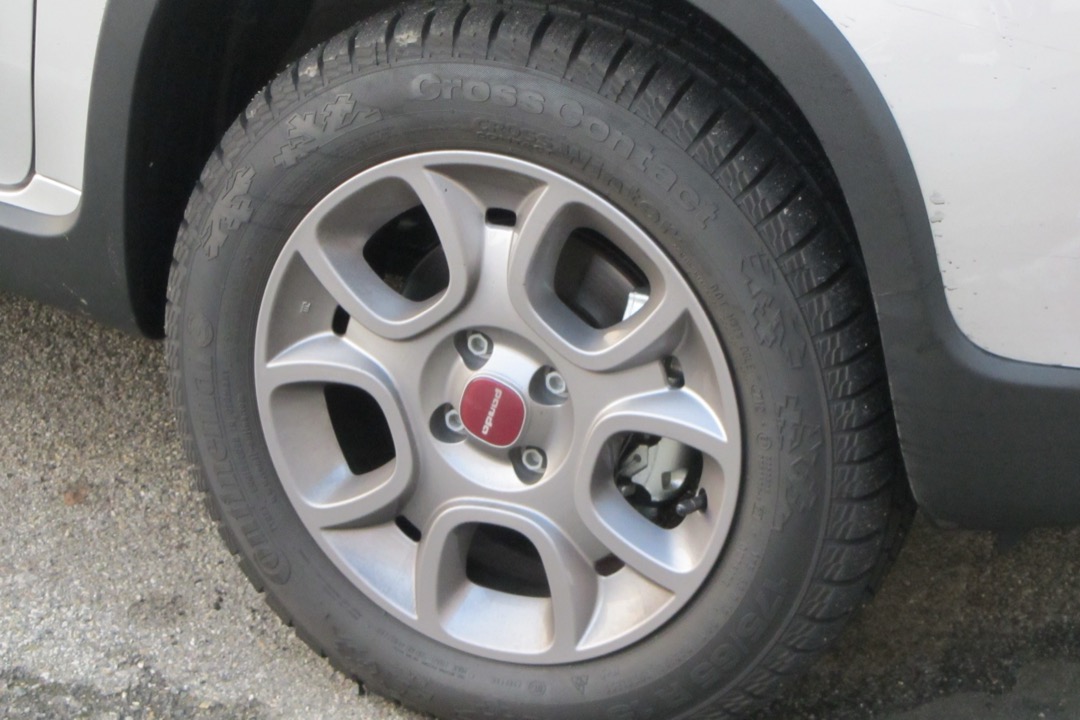
Every October my phone starts ringing with the same question, and it is almost always asked the wrong way. People call and ask whether it has snowed enough yet to put the winter tires on. Snow is not the trigger. Temperature is the trigger, and by the time there is snow on the ground you are already several weeks late.
Here is the rule I have given customers for twenty years behind the wheel and under the lift: install winter tires when daily average temperatures drop consistently below 45 degrees Fahrenheit, which is roughly 7 degrees Celsius. Take them off when temperatures climb consistently back above that same line in spring. Everything else in this guide is detail on top of that one number.
What follows is the full picture — why 45 degrees is the threshold, what the install window looks like in different parts of the country, what your sidewall markings actually promise, and the legal deadlines that catch out drivers who run studs.
The Short Answer
| Question | The answer |
|---|---|
| What temperature? | Below 45°F / 7°C daily average, sustained for about a week |
| What month, typically? | Mid-October in the northern tier, November in transition zones |
| What about the first snow? | Too late. Snow is a lagging indicator, not a trigger |
| When do they come off? | When temperatures hold above 45°F, typically March to April |
| How many tires? | All four. Never two |
| Do I need them with AWD? | Yes. AWD helps you go, tires help you stop |
| Studded tires? | Legal calendar varies by state, banned outright in about a dozen |
Why 45 Degrees Is the Number
The 45-degree threshold has nothing to do with snow and everything to do with chemistry. Rubber compounds are formulated to be flexible across a target temperature range, and flexibility is what lets a tire conform to the microscopic texture of the road surface. That conformity is grip.
An all-season or summer tire is compounded to stay flexible in warm conditions. As temperature falls, the compound stiffens progressively, and somewhere around the mid-40s the loss becomes significant enough to measure in stopping distance. Push it toward freezing and an all-season tire is noticeably hard to the touch. It skims across pavement texture instead of keying into it.
Winter tire compounds run high silica content and different polymer blends specifically to resist that stiffening. A winter tire at 20 degrees is roughly as pliable as an all-season at 60. Layered on top of the compound advantage is the tread design — deep blocks that pack with snow, and dense sipes that open thousands of biting edges as the tread flexes under load.
The part most drivers miss is that the compound advantage shows up on bare, dry, cold pavement, with no snow anywhere in sight. This is the single most useful thing to understand about the 45-degree rule. You are not installing winter tires in anticipation of snow. You are installing them because your current tires have already started losing grip on the roads you drive every day. If you want the deeper background on how contact patch and pressure interact in cold weather, our tire pressure guide covers the 1 PSI per 10 degrees relationship that makes autumn the season when half the cars on the road are quietly underinflated.
Install Windows by Region
Use these as a starting point and let your local forecast make the final call. The right question is always when your area crosses the 45-degree line, not what the calendar says.
| Region | Typical install | Typical removal |
|---|---|---|
| Upper Midwest, northern New England, mountain states | Early to mid October | Mid to late April |
| Great Lakes, upstate New York, northern Rockies | Mid to late October | Early to mid April |
| Mid-Atlantic, Ohio Valley, lower Midwest | Late October to mid November | Mid to late March |
| Interior Pacific Northwest, high desert | Late October to November | Late March |
| Coastal Pacific Northwest, mid-South | November, if at all | March |
| Sun Belt, Gulf Coast, coastal Southern California | Not needed | Not applicable |
The old American rule of thumb — winter tires from Thanksgiving to Tax Day — lines up reasonably well with the transition zone and is genuinely too late for the northern tier. If you are in Minnesota waiting for Thanksgiving, you have already driven through six weeks of cold pavement on the wrong compound.
There is also a practical argument for going early that has nothing to do with physics. Every tire shop in a snow region books solid the week of the first storm. Drivers who schedule in early October get a convenient appointment at a normal price. Drivers who wait for the forecast to turn spend two weeks on a waiting list, driving on all-seasons in exactly the conditions they were trying to avoid.
Reading Your Sidewall: 3PMSF vs. M+S
Two markings appear on tire sidewalls and drivers routinely confuse them. They do not mean the same thing and the difference is not subtle.
M+S stands for mud and snow. It is a self-certified designation based purely on tread pattern geometry — void ratio, block shape, that sort of thing. No performance test is required to earn it. Nearly every all-season tire on the market carries M+S, and the marking tells you essentially nothing about how the tire behaves in cold weather. Treat it as a description of the tread picture, not a promise.
3PMSF, the three-peak mountain snowflake, is a performance standard. To earn it, a tire must pass the ASTM F1805 test on packed snow and achieve a traction index of at least 110 against a reference tire rated at 100 — in plain terms, at least 10 percent better snow traction than the baseline. That is a real, measured, meaningful bar.
Two caveats matter, and this is where most articles stop short. First, the ASTM test measures snow acceleration traction only. It does not measure braking and it does not measure cornering, which are the two things that actually keep you out of a ditch. Tires with the symbol generally do perform better at braking and cornering too, but the symbol itself does not certify it. Second, and more important: every dedicated winter tire carries 3PMSF, but not every 3PMSF tire is a winter tire. A great many all-terrain and all-weather tires now carry the symbol, and the industry expects it to become near-universal on all-seasons over time. The symbol is a floor, not a category.
The practical takeaway is simple. Use 3PMSF to disqualify tires that lack it if you need winter capability. Do not use it to conclude that two tires that both carry it are equivalent. For how the actual product tiers compare, our best winter tires roundup breaks down the studless, studdable, and performance-winter categories, and our best all-season tires guide covers where a 3PMSF all-weather genuinely substitutes for a dedicated set.
All-Weather Tires: The Legitimate Middle Ground
For years the honest answer to “can I just run one set?” was no. That has changed, and the change is worth knowing about.
All-weather tires are a distinct category from all-seasons, despite the confusing naming. They carry 3PMSF, use a compound that stays workable in cold, and are built to run year-round without the wear penalty of a true winter tire on summer pavement. They are a real engineering compromise rather than a marketing label.
Who they suit: transition-zone drivers who see maybe five to ten snow events per season, have no storage space for a second set, or simply will not commit to swapping twice a year. An all-weather tire that stays on the car beats a winter tire that sits in a garage because nobody scheduled the appointment.
Who they do not suit: anyone in the northern tier or the mountains. On glare ice and in deep snow, a dedicated winter tire remains meaningfully better, and in conditions that severe the margin is exactly what you are paying for. Compromise tires are compromises. Our best tire brands breakdown covers which manufacturers have invested most heavily in this category, because the gap between a good all-weather and a mediocre one is wider than in almost any other segment.
Studded Tires Have a Legal Deadline
This is where drivers who cross state lines get caught, and it is genuinely the least-covered part of the topic in US-focused writing.
Studs are small tungsten carbide pins set into the tread. On glare ice they are still the best thing available. On bare pavement they chew up road surfaces, which is why every state has taken a formal position on them.
Roughly speaking, the country splits three ways. About a dozen states ban metal studs outright, including Minnesota, Michigan, and Wisconsin, generally with narrow exceptions written for rural mail carriers and emergency vehicles rather than for ordinary drivers. Around thirty states permit studs only within a defined seasonal window, commonly running from somewhere in October to somewhere in April. A small handful impose no seasonal restriction at all.
Three details worth knowing:
- The dates are hard deadlines with fines attached, not guidelines. Washington, for example, sets a firm spring removal date and publicizes it every year precisely because so many drivers miss it.
- Non-resident exceptions are narrower than people assume. Several ban states allow visiting vehicles registered elsewhere to run studs, but only for limited stretches — Minnesota’s provision, for instance, turns on not using the vehicle in-state beyond a capped number of days within a six-month period.
- Some states regulate the studs themselves, not just the calendar. Colorado limits how far a stud may protrude from the tread face.
Because these windows are set by state legislatures and DOTs and do get amended, verify your own state’s current dates with its DOT before you install, especially if your route crosses borders. A set that is perfectly legal at home can be a citation two states over.
For most drivers, none of this is a problem worth having. Modern studless winter tires close most of the gap on ice, carry no legal calendar anywhere in the country, and are quieter and better on the dry pavement that makes up the majority of even a hard winter’s driving. Studs earn their keep on untreated rural roads that freeze and stay frozen, and not many places else.
Taking Them Off in Spring
The removal decision uses the same 45-degree line, read in the other direction, and it is the half of the cycle people most often neglect. A winter tire left on into a warm spring is losing tread depth fast, and tread depth is the thing you need next December.
Watch for daytime highs holding consistently above 45 degrees for a week or more. In most of the country that means March in the transition zones and April up north. Do not remove them after one warm week in February — a late cold snap on all-seasons is a bad trade for two weeks of marginal wear savings.
If you run studs, the legal removal date in your state may arrive before the temperature threshold does. The law wins. Book the appointment ahead of the deadline rather than on it, because every other studded-tire owner in the state is working from the same date.
Whichever direction you are swapping, treat it as an inspection opportunity. Both sets are off the car and in your hands twice a year, which is the ideal moment to check tread depth with a gauge, look for uneven wear that signals an alignment problem, inspect sidewalls for cracking or bulges, and read the DOT date codes.
Storing the Off-Season Set
Storage quality directly determines how many seasons you get out of a set, and it costs nothing to do right.
Clean them first. Brake dust, road grime, and especially road salt are corrosive and will sit against the rubber and the wheel finish for six months. A wash and a full dry before storage is fifteen minutes well spent — our best wheel cleaners guide covers the acid-free formulas that are safe on both alloy and steel wheels.
Then follow four rules. Store them somewhere cool, dry, and dark, since UV light and heat both age rubber. Keep them away from electric motors, furnaces, and generators, because those produce ozone and ozone attacks rubber more aggressively than almost anything else in a garage. Bag them individually in opaque tire bags with the air pressed out, which limits the evaporation of the oils in the compound. And orient them correctly: tires mounted on wheels can be stacked flat or hung from a rack, while unmounted tires should stand upright, never stacked, to avoid deforming the sidewalls.
Set stored tires to a moderate pressure rather than full spec, and check them before they go back on the car.
Doing the Swap Yourself
If your winter set is mounted on its own wheels, the seasonal swap is one of the most approachable jobs in DIY car care — roughly 45 minutes on a level driveway, and no special skill beyond care.
You need a proper floor jack, jack stands, a lug wrench or impact tool, and a torque wrench. That last item is not optional and it is the tool most home mechanics skip. Overtightened lug nuts warp brake rotors and stretch studs; undertightened ones back off and cost you a wheel. Our best floor jacks and best jack stands guides cover the lifting gear, and our best torque wrenches roundup explains why a click-type wrench in the right range beats guessing with a breaker bar. A cordless impact makes the job dramatically faster for removal, and our best impact wrenches guide covers what actually has the breakaway torque for rusted lugs — but never use one for final tightening.
The procedure, in order:
- Loosen the lug nuts a quarter turn while the wheel is still on the ground and the vehicle’s weight is holding it still.
- Jack at the manufacturer’s designated lift point and immediately place a jack stand. Never work under or beside a vehicle held up only by a jack.
- Remove the wheel, then clean the hub face. Rust and debris between hub and wheel cause vibration and can let lugs loosen.
- Mount the winter wheel and hand-thread every lug nut before tightening any of them, which prevents cross-threading.
- Snug them in a star pattern, lower the vehicle, then torque to your manufacturer’s specification in the same star pattern.
- Re-torque after 50 to 100 miles. Wheels seat slightly after installation and this step is skipped constantly. It takes five minutes.
Set the pressure to the door-jamb specification once all four are on, remembering that cold ambient temperatures mean the number you set in a warm garage will read lower outside. A quality gauge from our best tire pressure gauges roundup and a compact compressor from our best tire inflators guide make this a two-minute job rather than a trip to a gas station air pump.
Common Mistakes I See Every Autumn
Waiting for snow. The most common one, and the whole reason this guide leads with temperature. By first snowfall you have driven weeks on stiffened rubber and the shops are booked.
Installing two instead of four. Covered in the FAQs below, but worth repeating here because it is the mistake with the worst consequences. Two winter tires create a grip imbalance that turns a predictable car into an unpredictable one.
Assuming AWD substitutes for tires. All-wheel drive is a traction aid for acceleration. Braking and cornering are pure tire.
Leaving them on through summer. Burns tread you paid for, in a season when the tire delivers nothing, and leaves you short next winter.
Ignoring the DOT date. Tread depth is the obvious check. Age is the invisible one. A set with plenty of tread and eight years on the clock has lost the compound flexibility that made it a winter tire.
Forgetting the rest of the car. Tires are the highest-leverage winter upgrade, but they are one item on a longer list. Our how to winterize your car checklist covers the battery load test, coolant freeze point, and visibility items that strand drivers just as reliably as bad tires — and a decent scraper from our best ice scrapers roundup handles the part of winter that happens before you have even moved the car.
Final Thoughts from the Shop
Winter tires are the rare upgrade where the engineering case, the safety case, and the economic case all point the same direction. You are not consuming tire life by running two sets, you are dividing it between them — the all-seasons rest all winter and the winters rest all summer, and both sets last considerably longer in calendar terms than one set worked year-round.
What people are really buying is margin. Not the ability to drive fast in a storm, but the extra car length or two of stopping distance on an icy intersection approach, and the ability to make an emergency lane change without the rear end stepping out. Most of the time you never notice it. The one time you do, it is the only thing that matters.
Watch the thermometer, not the sky. Book the appointment in early October before everyone else does. Install all four. Torque them properly and re-torque after the first drive. Then do the whole thing in reverse when spring holds above 45 degrees.
Buyer's Guide
Six variables decide your personal install date, your removal date, and whether you need a dedicated winter set at all. Work through them once and your seasonal calendar sets itself for good.
Your Climate Zone, Not Your State Line
Weather does not respect borders, and the single biggest mistake drivers make is copying a neighbor's schedule from a different microclimate. Northern-tier drivers in Minnesota, Wisconsin, upstate New York, northern New England, Michigan, and the mountain states cross the 45-degree threshold in early to mid October and stay below it into April, which means a long winter tire season and a clear-cut case for a dedicated set. Transition-zone drivers across the Mid-Atlantic, Ohio Valley, lower Midwest, and interior Pacific Northwest cross it in late October or November and come back out in March, giving a shorter season where all-weather tires become a legitimate alternative. Sun Belt drivers in Florida, the Gulf Coast, south Texas, and coastal Southern California rarely cross it at all and should not buy winter tires. The wrinkle is elevation. If you live at low elevation but commute over a pass, or drive to ski country on weekends, your effective climate zone is the harshest terrain on your regular route, not the one outside your front door.
Whether You Can Store a Second Set
Two sets of tires means storing four tires for roughly half of every year, and that constraint is what actually decides the question for a lot of drivers. Mounted on their own wheels, a set takes up roughly the footprint of a large trash can and can be stacked flat or hung on a wall rack. Unmounted tires need to stand upright and take more floor space. Either way you need a cool, dry, dark space away from direct sunlight and away from electric motors, because motors generate ozone and ozone attacks rubber. A garage corner, a basement, or a shed all work. An outdoor spot under a tarp on a sunny south wall does not. If you have no storage at all, most tire shops offer seasonal storage for a modest fee, and the math often works out in favor of paying it. If neither is available, an all-weather tire on one set of wheels is the honest answer rather than pretending you will find space in October.
Dedicated Wheels vs. Remounting Every Season
You can either buy a second set of wheels and bolt the whole assembly on twice a year, or keep one set of wheels and have the tires dismounted and remounted each time. Dedicated wheels cost more upfront and pay that back in three ways. The swap becomes a driveway job you can do yourself in under an hour with a jack, stands, and a torque wrench. You avoid two mount-and-balance charges every year, which add up quickly over the life of the tires. And you eliminate the bead damage and valve-stem wear that repeated dismounting causes. A cheap steel wheel set is the classic choice for winter because road salt destroys finishes and steel does not care. Remounting on one set of wheels makes sense only if you are truly short on storage space, since a bare tire stores more compactly than a mounted one, or if you plan to run the winter set for only a season or two.
Studded, Studless, or All-Weather
Three distinct products for three distinct situations. Studless winter tires are what most drivers should buy — modern compounds and dense siping deliver excellent ice and snow grip with no legal restrictions anywhere in the country and no noise penalty. Studded tires still beat studless on one specific surface, glare ice, and are worth it if your commute includes untreated rural roads that freeze and stay frozen. They come with a legal calendar in most states, they are banned outright in a dozen or so, and they are loud and slightly worse on dry pavement. All-weather tires carry the three-peak mountain snowflake symbol but are built to run year-round, which makes them the right call for transition-zone drivers who see a handful of snow events per year and do not want to manage two sets. They will not match a dedicated winter tire on ice, and no honest technician will tell you otherwise, but they are dramatically better than a standard all-season and they eliminate the swap entirely.
Your Realistic Worst Trip, Not Your Average Day
Buy for the worst conditions you will actually drive in, not the ones you see most days. A driver whose commute is four miles of well-plowed city arterial has a very different risk profile from one whose identical-looking commute ends with a steep unplowed private road, and the second driver needs more tire even though the two live in the same zip code. Ask three questions. Does your route include a hill you must climb from a stop, since that is where all-seasons fail first and most memorably. Does anyone in the household have to drive regardless of conditions for work, medical, or childcare reasons, which removes the option of simply staying home during a storm. And are you regularly on the road during or immediately after a storm rather than after the plows have run. Two or three yes answers put you firmly in dedicated-winter-tire territory regardless of what the annual snowfall average for your area suggests.
The Age of the Set You Already Own
Before you schedule any swap, inspect what is coming out of storage, because a winter tire can fail either of two independent tests. Tread depth is the first. A winter tire needs roughly 6/32 inch to work properly in snow and is functionally done as a winter tire somewhere around 5/32, which is well above the 2/32 legal wear limit that applies to ordinary tires. The depth is not just about water evacuation here — the tread voids physically pack with snow, and snow-on-snow grips better than rubber-on-snow, which is why a worn winter tire loses its advantage so abruptly. Age is the second test and it is independent of miles. The four-digit DOT date code on the sidewall gives week and year of manufacture, and the soft compound that makes a winter tire work hardens with time regardless of use. Past about six years the set is on borrowed time no matter how much tread remains. Check both every autumn before you book the appointment, not while the car is on the lift.
Frequently Asked Questions
What temperature should I put winter tires on?
Is it bad to leave winter tires on all year?
Can I just put winter tires on the drive wheels?
Do I need winter tires if I have all-wheel drive?
How many seasons do winter tires last?
Related Articles
About the Reviewer

Mike Reeves, ASE Master Technician
A.A.S. Automotive Technology, Universal Technical Institute (UTI)
Mike Reeves is an ASE Master Technician with 15 years of hands-on experience in automotive repair and diagnostics. He earned his A.A.S. in Automotive Technology from UTI and runs his own independent shop in Denver, Colorado. Mike founded RevRated to help everyday car owners make smarter parts decisions -- every recommendation comes from real-world testing in his garage.