7 Best Jack Stands of 2026
ASE mechanic Mike Reeves reviews the best jack stands of 2026. Compare capacity, locking mechanism, height range, and ASME certification for trucks, SUVs, and sports cars.
Updated
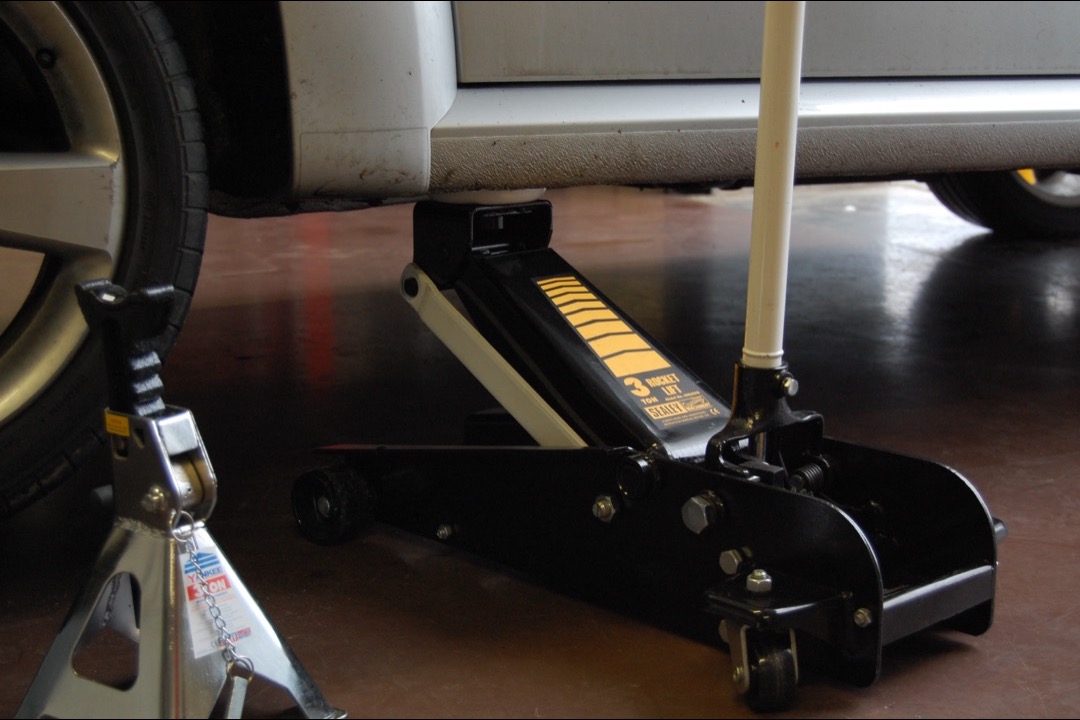
I have been wrenching for over twenty years and I have seen two categories of failure in home garages that produce genuinely catastrophic outcomes: brake jobs done wrong, and jack stands that collapsed. The first sends a car into something. The second pins someone under the vehicle. In 2020 the CPSC and Harbor Freight recalled roughly 1.7 million Pittsburgh jack stands (model numbers 56371, 61196, and 61197) because a ratchet pawl design flaw allowed the pawl to disengage under load — multiple reported injuries, a follow-up recall in 2021 because the replacements had the same defect, and a clear industry message: ratchet-only stands built to the cheapest possible spec are not safe. The best jack stands of 2026 are the ones that absorbed that lesson — double-lock mechanisms (ratchet plus independent safety pin), ASME PASE-2019 certification, wide stable bases, and real quality control behind the stamp.
For this roundup I evaluated seven jack stand sets against six specifications that actually predict safe outcomes: weight capacity (per stand vs per pair — the #1 buyer confusion point), locking mechanism, height range, base footprint, saddle geometry, and independent safety certification. I prioritized stands with double-lock designs or current ASME/ANSI certifications, real review volume, and published specs I could verify against manufacturer documentation. None of these stands are Pittsburgh units. If you are building out a complete garage setup, pair your stands with a floor jack whose maximum lift height exceeds the stand’s minimum saddle height — our floor jack guide walks through that pairing in detail, and the mechanic tool set guide covers the rest of the starter kit.
After working through specifications, verified reviews, and the safety-certification landscape for each unit, here are the seven best jack stands available in 2026.
| Product | Price | Buy |
|---|---|---|
| Pro-Lift Heavy Duty 6 Ton Jack Stands PairBest Overall | $83.99 | View on Amazon |
| Amazon Basics Steel Jack Auto Stands, 3 TonBudget Pick | $37.78 | View on Amazon |
| OTC S06 6-Ton Jack StandsPremium Pick | $165.99 | View on Amazon |
| Pro-LifT T-6903D Double Pin Jack Stands, 3 TonRunner-Up | $67.99 | View on Amazon |
| VEVOR Jack Stands 6 Ton Double LockingRunner-Up | $47.90 | View on Amazon |
| Jack Boss Jack Stands Low Profile 2 TonRunner-Up | $29.99 | View on Amazon |
| BIG RED T43202 Torin Heavy Duty Steel Jack Stands, 3 TonRunner-Up | $31.31 | View on Amazon |
Jack Stands by Use Case: Jump to What You Need
The right jack stands depend on your vehicle’s weight and ride height. Jump straight to the comparison for your situation:
- 3 ton jack stands
- 6 ton jack stands
- Jack stands for trucks and lifted vehicles
- Low-profile jack stands for lowered cars
How We Chose These Jack Stands
Every stand in this roundup was selected based on verified Amazon listings, meaningful review volume or established brand credibility, published specifications cross-referenced against manufacturer data, and either independent safety certification (ASME PASE, ANSI/PALD, or CE) or documented market validation. Stands with no verifiable capacity specifications, no certification claims, or review patterns consistent with the 2020 Pittsburgh recall-era failures were excluded outright. The seven stands here cover every realistic home-garage use case — from lowered sports car to full-size diesel pickup — with an honest assessment of what each does well and where each falls short. No Pittsburgh-branded stands appear here regardless of price, and no stand is included solely because it is cheap.
Pro-Lift Heavy Duty 6 Ton Jack Stands Pair — Best Overall
The Pro-Lift 6-ton pair is the jack stand I recommend when a customer is outfitting a serious home garage and wants a single set that handles everything from a half-ton truck up to a loaded three-quarter-ton diesel. The double-lock design — a self-locking ratchet bar paired with a separate mobility safety pin — is the gold-standard configuration that emerged after the 2020 Pittsburgh recall reshaped the industry. Two independent load paths. If the ratchet pawl partially disengages, the safety pin catches the load. If the safety pin somehow shears, the ratchet still holds. The only way both fail simultaneously is a catastrophic structural event that would have destroyed any stand in this category, and by that point the floor jack you left in place as a backup is doing its job.
ANSI/PALD certification is the other specification that matters here. That stamp means an independent body has tested the stand against the Portable Automotive Lifting Devices standard and confirmed it meets the US safety specification for this application. Most consumer-grade stands at this price skip certification and rely on manufacturer claims. Pro-Lift does not. Combine ANSI/PALD with a ductile iron ratchet bar (not stamped steel), a wide pyramid base with reinforced foot pads, and 6,700 reviews at 4.8 stars, and you have the single most defensible purchase decision in this entire category at well under 100 dollars.
The honest limitations are the 16-inch minimum saddle height and the overall bulk. If you own a Miata, a Civic on coilovers, or any lowered performance car, 16 inches is too tall — the Jack Boss stands lower in this roundup exist specifically for that use case. And if your garage only sees compact cars and crossovers, 6 tons is overkill; the 3-ton Pro-Lift T-6903D covers that use case for meaningfully less. But for any home shop that regularly lifts full-size trucks, SUVs, or heavy-duty pickups, the 6-ton Pro-Lift is the answer without a close second.
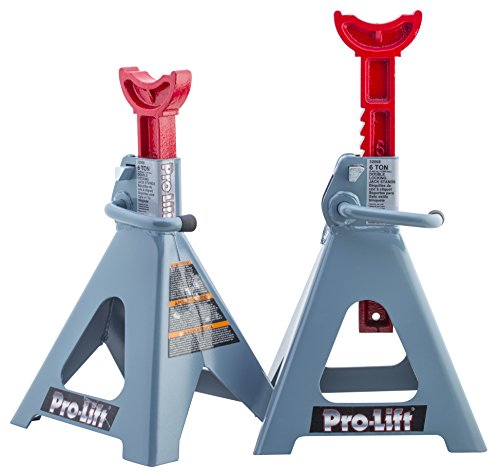
Pro-Lift Heavy Duty 6 Ton Jack Stands Pair
by Pro-Lift
Double-lock 6-ton stands with ANSI/PALD certification at a price that belongs in every serious home shop -- the pick I would buy again without thinking about it.
Pros
- Double-lock safety system (self-locking ratchet plus a separate mobility safety pin) is the gold-standard design that survived the industry shakeout after the 2020 CPSC recall of ratchet-only stands -- two independent load paths instead of one
- 6-ton capacity per pair (12,000 lbs) handles full-size trucks, SUVs, and three-quarter-ton diesel pickups with meaningful headroom -- no working near the rated limit the way a 3-ton stand does under a loaded F-250
- ANSI/PALD certified against the same US portable automotive lifting device standard that commercial shop equipment is held to -- independent validation, not manufacturer claim
- Ductile iron ratchet bar holds under load without the creep or tooth deformation that stamped-steel ratchets exhibit when worked near capacity for years -- this is the component that fails first on lower-tier stands
Cons
- 16-inch minimum height is too tall to fit under lowered vehicles, many sedans, or most stock passenger cars when paired with a low-profile floor jack that only lifts to 18 inches -- this is a truck and SUV stand by design
- Physically heavier and bulkier than 3-ton units -- overkill for a garage that only sees compact cars and crossovers
Amazon Basics Steel Jack Auto Stands, 3 Ton — Budget Pick
The Amazon Basics 3-ton pair is the most-reviewed jack stand set on Amazon, period. Thirteen thousand plus verified purchases at 4.7 stars is not a statistic — it is a validation dataset that represents roughly a decade of real-world field use across every imaginable climate, vehicle type, and DIY skill level. When that many people buy the same set of stands and consistently rate them high, the stands work. That is the single strongest signal available in the budget tier of this category.
ASME PASE-2014 certification at this price is the other thing that makes this pick defensible. Most stands at this price skip independent certification entirely — they rely on manufacturer claims and hope the buyer does not look too closely. Amazon Basics, via its supplier, paid to have an independent body certify these against the ASME Portable Automotive Service Equipment standard. That is a meaningful commitment at this price point and the reason this is the right starter set for a first home garage. The self-locking ratchet engages automatically as you raise the saddle column, so there is no pin to forget to install and no two-step adjustment to rush — the simplest possible operation.
The honest limitation is that this is ratchet-only, not double-lock. There is no secondary safety pin. For sedans, crossovers, and light duty work, the self-locking ratchet is adequate and 18,000 buyers confirm it holds. For full-size trucks or any application where you want two independent load paths, the Pro-Lift double-lock units are the right upgrade. Also remember: 3-ton is the rating for the pair, meaning 3,000 pounds per stand. Keep single-point loads under that limit and this set does its job indefinitely.

Amazon Basics Steel Jack Auto Stands, 3 Ton
by Amazon Basics
Most-reviewed stands on Amazon, ASME PASE-2014 certified at the lowest 3-ton price here, and Amazon-backed -- the sanest cheap starting point for a first home shop setup.
Pros
- Most-reviewed jack stands on Amazon at 18,500-plus verified purchases -- that review volume is a statistically meaningful signal about real-world reliability across a huge cross-section of vehicles and climates
- ASME PASE-2014 certified at the lowest price in this roundup, which is the cheapest entry point to independently verified US safety certification in this category -- most stands at this price skip certification entirely
- Self-locking ratchet engages automatically as you raise the saddle column, so there is no separate pin to forget to install -- simple, foolproof operation for newer DIYers
- Backed by the Amazon warranty return path, which matters on a category where off-brand stands from unknown sellers vanish when you need support
Cons
- Single ratchet locking mechanism only -- no secondary safety pin or double-lock redundancy, which is the one limitation to know before you buy
- 3-ton rating is the combined capacity across the pair (1.5 ton per stand) -- a distinction buyers routinely miss, so keep a single-point load under 3,000 pounds on each stand
OTC S06 6-Ton Jack Stands — Upgrade Pick
The OTC S06 is the jack stand I buy when a customer asks what commercial shops actually use. OTC is the professional automotive tool brand under the Bosch umbrella, and the S06 is a direct lineage piece of commercial-grade equipment, not a DIY-only SKU. ASME PASE-2019 certification is the most current revision of the US standard and represents independent validation one version newer than the PASE-2014 stamp on the Amazon Basics and most certified consumer stands. That revision tightened several failure-mode test requirements, and the S06 carries the updated certification.
The self-locking ratchet on the S06 has a specification most competitors lack: it physically cannot release while under load. The mechanism requires the weight to be lifted off the saddle before the pawl will disengage — which eliminates the single most common DIY error mode on jack stands, which is accidentally kicking or bumping a release lever while working under the vehicle. On a consumer-grade ratchet, a lateral bump can partially disengage the pawl. On the S06, nothing the mechanic does under the car can release the stand unless the vehicle weight comes off first. That is a design choice that costs real engineering work and is the reason this stand is priced where it is.
Welded anti-sink foot pads are the other professional-grade detail. On asphalt driveways in summer, soft shop floors, or any surface less rigid than cured concrete, a stand with narrow pointed feet will sink under concentrated load — and a stand that sinks is a stand that leans, tips, or drops. The S06’s welded foot pads spread load across a larger contact area and prevent the failure mode entirely. The real caveat here is price — at roughly 160 dollars the pair, this is a meaningful premium over the 6-ton Pro-Lift. For professional mechanics and serious enthusiasts who want shop-equipment reliability at home, the premium is worth it. For first-time home buyers who have not worn out a cheaper set yet, start with the Pro-Lift and upgrade later.

OTC S06 6-Ton Jack Stands
by OTC
Professional-grade stands with current ASME PASE-2019 certification and a ratchet that cannot release under load -- the upgrade pick for mechanics who want shop-equipment reliability at home.
Pros
- ASME PASE-2019 certified -- the current US safety standard, one revision newer than the PASE-2014 certification that most competitors still list -- so the most up-to-date independent validation available in this category
- Self-locking ratchet design that physically cannot release while the stand is under load -- the mechanism requires the weight to be lifted off before the pawl will disengage, which removes the single most common DIY error mode of kicking a release lever
- OTC is the professional tool brand under the Bosch umbrella used in commercial shop equipment -- the same engineering lineage and quality control that stocks professional automotive bays, not a DIY-only supply chain
- Welded anti-sink foot pads prevent the stand legs from sinking into asphalt driveways or soft shop floors under concentrated load -- the detail that professionals notice and consumer-grade stands ignore
Cons
- Pair price at roughly 160 dollars is meaningfully higher than consumer-grade 6-ton competitors -- the certification and build quality justify it for a professional, but it is a real premium over the Pro-Lift
- Relatively modest 275-review sample means the long-term field durability record is thinner than the Pro-Lift or Amazon Basics units -- buy on brand reputation and specification rather than review volume
Pro-LifT T-6903D Double Pin Jack Stands, 3 Ton — Runner-Up
The 3-ton Pro-Lift T-6903D is the runner-up because it delivers the same double-lock safety philosophy as the 6-ton flagship — ratchet plus a separate safety pin — on a platform sized for sedans, crossovers, and compact trucks. ANSI/PALD certification carries over from the bigger model, which is independent safety validation that virtually no other 3-ton stand can match. Popular Mechanics and The Drive have both called out this set specifically in editorial roundups, which is independent validation beyond Amazon review aggregation.
One caveat worth stating plainly: this set has drifted upward in price and now sits above the 6-ton VEVOR pair below it. If you want the Pro-Lift name and the ANSI/PALD stamp on a 3-ton platform, it is still the best-built option at that capacity. If you are shopping on price alone, check the VEVOR and the Amazon Basics set first — both cost less today, and the VEVOR carries double the rated capacity.
The ductile iron ratchet bar is a quiet but important upgrade over stamped-steel ratchets on cheaper competitors. Stamped-steel teeth deform under cycle loading over three to five years of use — the teeth round off, the engagement gets sloppy, and the ratchet starts to creep under load. Ductile iron does not. This is the component-level decision that separates stands that last a decade from stands that start feeling unsafe at year three. Paying the small premium for ductile iron over stamped steel is the correct choice every time.
The honest limitations are the safety pin retention and the height range. The pins are not spring-clip retained, which means they can fall out during adjustment if you are not paying attention — keep a finger on the pin head when repositioning the saddle height. And the 11.3 to 16.75-inch range is sized for sedans and compact crossovers, not lifted trucks or vehicles needing serious undercarriage clearance. If your primary vehicle is a sedan, hatchback, or compact SUV, this is the clearest value in the category.

Pro-LifT T-6903D Double Pin Jack Stands, 3 Ton
by Pro-Lift
The sedan and crossover answer to the 6-ton Pro-Lift flagship -- the same double-lock safety and ANSI/PALD certification on a platform sized for lighter vehicles.
Pros
- Double-lock (self-locking ratchet plus a separate mobility safety pin) -- very few 3-ton stands at any price offer two independent locking systems instead of ratchet-only
- ANSI/PALD certified to the same US standard as the 6-ton Pro-Lift flagship, so you get certified safety validation on the 3-ton tier
- Ductile iron ratchet bar instead of stamped steel -- the material upgrade that prevents tooth wear and ratchet creep under cycle loading, which is the most common failure mode on budget stands after two to three years
- Expert-recommended in roundups from Popular Mechanics and The Drive -- independent editorial validation, not just Amazon review aggregation
Cons
- Safety pins are not retained by spring clips, so they can fall out during adjustment if you are not paying attention -- keep a finger on the pin head when you reposition the saddle
- Height range of 11.3 to 16.75 inches is sized for sedans and compact crossovers, not lifted trucks or vehicles needing serious undercarriage clearance
VEVOR Jack Stands 6 Ton Double Locking — Budget Heavy-Duty Pick
The VEVOR 6-ton pair exists to answer a very specific question: what if I need truck-capable capacity with double-lock safety but cannot stretch to the 6-ton Pro-Lift price? For the least money of any 6-ton pair here, the VEVOR delivers genuine double-lock (ratchet plus metal safety pins) with a 6-ton rated capacity, which is the single strongest capacity-per-dollar combination in this entire roundup. If a buyer cannot stretch to the Pro-Lift flagship and the Amazon Basics 3-ton is not enough capacity for their vehicles, the VEVOR is the answer.
The triangular foot pad design is a real stability upgrade over standard pyramid bases. By spreading the load across three wide contact points instead of four narrow feet, the VEVOR gains roughly four times the ground contact area of a conventional stand, which dramatically reduces tipping risk on imperfectly level shop floors or on asphalt driveways where a narrow foot would sink. The V-notch saddle is the other practical upgrade — instead of relying on friction to hold a frame rail or solid axle in place, the V-notch cradles the contact point with mechanical engagement. For solid rear axles on pickups, tubular frame rails on body-on-frame trucks, and most subframe cradle geometries, that V-notch grip is meaningfully safer than a flat top.
The real caveat is certification. VEVOR carries CE certification, which is the European safety standard — legitimate validation, but less recognized by US buyers who prioritize ASME PASE or ANSI/PALD stamps. If you need documented US certification, the 6-ton Pro-Lift remains the right pick. If you are comfortable with CE validation and want the cheapest double-lock 6-ton option on the market, the VEVOR fills that gap. Pair this with a torque wrench rated for lug nut specifications and you have the core of a truck-capable suspension and brake toolkit.

VEVOR Jack Stands 6 Ton Double Locking
by VEVOR
Double-lock confidence and truck-capable 6-ton capacity at a price that barely beats 3-ton competitors -- the budget heavy-duty pick if the CE-only certification does not bother you.
Pros
- 6-ton capacity with genuine double-lock (ratchet plus metal safety pins) at a budget price, the single strongest capacity-per-dollar combination in this entire roundup, period
- Triangular foot pads provide roughly four times the ground contact area of standard pyramid-base stands, which dramatically reduces tipping risk on uneven shop floors and soft surfaces
- V-notch saddle grips frame rails, solid axles, and subframe cradles more securely than flat-top saddles -- engages the lifting point geometry rather than hoping friction holds
- Cast iron ratchet bar paired with a carbon steel base gives better material specification than most stands in this price range
Cons
- CE certification rather than ASME PASE or ANSI/PALD -- the European standard is legitimate but less recognized by US buyers who prioritize domestic certification bodies
- VEVOR is a newer brand with less long-term field track record than Pro-Lift or Torin -- the 1,057-review sample is respectable but still an order of magnitude behind the legacy stands here
Jack Boss Jack Stands Low Profile 2 Ton — Best for Lowered Vehicles
The Jack Boss 2-ton low-profile pair occupies a narrow niche that no other stand in this roundup can fill: the lowered sports car, the performance sedan on coilovers, and the genuinely low-slung track car. At a 9.8-inch minimum saddle height, this is the only set in this category that physically fits under a lowered Miata, a WRX on a meaningful suspension drop, or a Mustang on lowering springs without first driving the vehicle onto ramps to gain clearance. Every other stand in this roundup starts at 11 inches or higher, which rules out the application entirely.
The concave saddle top is the other detail that matters on performance vehicles. Lowered cars often have aftermarket pinch welds, fragile unibody rocker panels, or painted frame sections where you absolutely do not want a flat-top saddle sliding laterally during a lift. The concave saddle cradles the contact point mechanically instead of relying on friction, which protects paint, prevents unibody deformation, and keeps the vehicle positioned correctly on the stand. At 4.7 stars, the ratchet engagement and saddle geometry have been validated across real-world use on exactly the vehicles this set was designed for.
The honest limitations are capacity and certification. Two tons per pair means one ton per stand, which is strictly passenger-car territory — do not use these on any vehicle over roughly 4,000 pounds total, and never on trucks or SUVs regardless of weight. No secondary safety pin and no listed ASME or ANSI certification means you are trusting the ratchet mechanism alone and the manufacturer’s internal quality control. For the specific use case — lowered sports car or performance coupe on a home driveway or track paddock — these trade-offs are the price of the unique height spec. For any other vehicle type, buy a properly certified double-lock set instead.
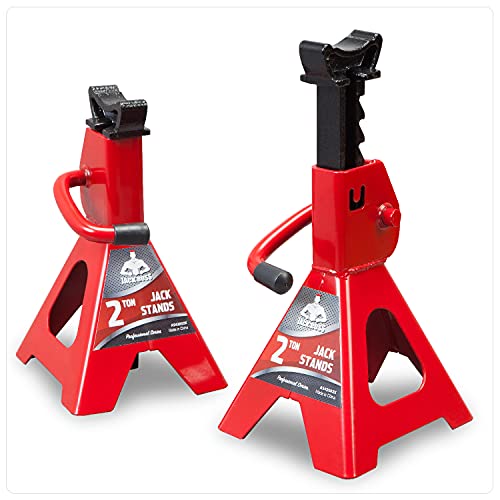
Jack Boss Jack Stands Low Profile 2 Ton
by Jack Boss
Purpose-built for lowered sports cars and performance vehicles -- the 9.8-inch minimum saddle height is a specification no standard jack stand can match, and the reason this pair earns a spot despite limited certification.
Pros
- 9.8-inch minimum saddle height is the single lowest in this roundup -- the spec that determines whether the stands physically fit under a lowered sports car, a performance sedan on coilovers, or a Miata on stock ride height
- Compact and lightweight construction makes these practical to toss in a trunk for track days, autocross, or roadside emergency work -- no other stand in this roundup is realistically portable
- Concave saddle top cradles frame rails and pinch welds without pinching the paint or digging into unibody sheet metal -- a detail that matters on vehicles with expensive paint work
- A 4.7-star rating confirms that the ratchet engagement holds reliably over real-world use -- this is not a novelty item despite the unusual short height
Cons
- 2-ton capacity (1 ton per stand) is strictly for lightweight passenger cars -- do not use on any vehicle over roughly 4,000 pounds total weight, and never on trucks or SUVs
- No secondary safety pin and no listed ASME or ANSI certification -- the lowest safety validation in this roundup, which is the trade-off for the unique height specification
BIG RED T43202 Torin Heavy Duty Steel Jack Stands, 3 Ton — Legacy Budget Pick
The BIG RED T43202 Torin is the legacy reference point for affordable 3-ton stands. Twelve thousand five hundred plus verified reviews at 4.7 stars — that review volume represents roughly two decades of field durability data across every climate, every vehicle, and every skill level of home mechanic. When that many buyers accumulate that many reviews on the same model over that long a production run, you are seeing a real durability dataset, not marketing. High-grade forged steel welded frame construction is the reason Torin has held its market position as the default budget-tier brand since the early 2000s.
ASME certification with a double-locking pawl-and-tooth ratchet is the other specification that makes this pick defensible. The double-locking ratchet engages on two tooth positions simultaneously rather than a single pawl, which reduces the chance of partial engagement slipping under load. This is different from the double-lock designs on the Pro-Lift and VEVOR stands — those combine a ratchet with a separate safety pin, while the Torin uses a dual-engagement ratchet only. Both are legitimate safety approaches; the Pro-Lift/VEVOR approach gives you two independent mechanisms, the Torin approach gives you one mechanism with redundant engagement.
Two caveats buyers must internalize before ordering this set. First, no secondary safety pin — if you want two independent locking systems, this is not the set. Second, and this is critical: the manufacturer explicitly states these stands are NOT rated for SUV or truck use despite the 3-ton label. Three tons means 3,000 pounds per stand (the pair rating), and a single point on a full-size SUV or pickup can exceed that. Do not use this set on any truck or SUV regardless of how the math on curb weight works out — Torin’s disclaimer is there because they do not want the liability of the edge case where you are working on a loaded truck with an extra 500 pounds of cargo in the bed. For sedans, crossovers, and hatchbacks, this set has more field validation than any other stand in this roundup.

BIG RED T43202 Torin Heavy Duty Steel Jack Stands, 3 Ton
by BIG RED
The 12,000-review legacy standard for affordable sedan stands -- trusted, ASME-certified, and proven across decades of home-garage use, but heed the manufacturer's explicit no-trucks-or-SUVs rating.
Pros
- 12,563 verified reviews at 4.7 stars is a massive real-world durability dataset for an affordable legacy stand -- that volume represents decades of field use across every imaginable climate and vehicle combination
- High-grade forged steel welded frame construction is the reason Torin has held its market position as the default budget-tier brand -- build quality consistent across multi-decade production runs
- ASME certified with a double-locking pawl-and-tooth ratchet design -- the mechanism engages on two tooth positions simultaneously rather than one, which reduces the chance of partial engagement slipping under load
- Torin is one of the longest-established brands in the category with a strong safety record predating the 2020 Harbor Freight recall -- not a rebadge of a short-run supplier
Cons
- No secondary safety pin -- relies entirely on the double-locking pawl-and-tooth ratchet, which is less reassuring than the Pro-Lift double-lock design for buyers who remember the 2020 recall
- Manufacturer explicitly states these stands are NOT rated for SUV or truck use despite the 3-ton label -- this is the 3-ton-per-pair capacity confusion that trips up the most buyers, and these are genuinely not a truck stand
3 Ton Jack Stands
A 3-ton (6,000 lb per pair) set is the right capacity for sedans, crossovers, and half-ton trucks — the most common home-garage choice. These three lead the tier:
| Product | Price | Buy |
|---|---|---|
| Amazon Basics Steel Jack Auto Stands, 3 TonBest budget 3-ton ASME PASE-certified with 13,000+ reviews -- the sanest cheap 3-ton pick for sedans and crossovers | $37.78 | View on Amazon |
| Pro-LifT T-6903D Double Pin Jack Stands, 3 Ton3-ton double-pin safety Ratchet plus separate safety pin for two independent load paths at the 3-ton tier | $67.99 | View on Amazon |
| BIG RED T43202 Torin Heavy Duty Steel Jack Stands, 3 TonLegacy budget 3-ton Torin's double-locking pawl-and-tooth ratchet -- a proven low-cost 3-ton for cars (not rated for SUVs or trucks) | $31.31 | View on Amazon |
6 Ton Jack Stands
Step up to 6-ton (12,000+ lb) capacity for full-size trucks, heavy SUVs, and anyone who wants a large safety margin under the 3/4 rule:
| Product | Price | Buy |
|---|---|---|
| Pro-Lift Heavy Duty 6 Ton Jack Stands PairBest overall 6-ton Double-lock, ANSI/PALD-certified 6-ton pair -- the value benchmark for heavy vehicles | $83.99 | View on Amazon |
| OTC S06 6-Ton Jack StandsPremium per-stand 6-ton Rated 6 tons per stand (12,000 lb each) with anti-sink foot pads -- shop-grade for daily heavy use | $165.99 | View on Amazon |
| VEVOR Jack Stands 6 Ton Double LockingBudget heavy-duty 6-ton 13,000 lb double-lock pair -- the lowest-cost route into true 6-ton capacity | $47.90 | View on Amazon |
Jack Stands for Trucks and Lifted Vehicles
Lifted trucks and tall SUVs need both high capacity and enough saddle height to reach the frame — these deliver the tallest lift in the roundup:
| Product | Price | Buy |
|---|---|---|
| OTC S06 6-Ton Jack StandsTallest lift (23.7 in) 15.6 to 23.7 in range reaches the frame on lifted trucks and tall SUVs; rated 6 tons per stand | $165.99 | View on Amazon |
| Pro-Lift Heavy Duty 6 Ton Jack Stands PairBest truck value 23.5 in max lift and double-lock safety at a truck-friendly price -- the everyday pickup pick | $83.99 | View on Amazon |
| VEVOR Jack Stands 6 Ton Double LockingWidest-base 6-ton 23 in lift with a wide triangular foot for stability on shop floors under heavy trucks | $47.90 | View on Amazon |
Low-Profile Jack Stands for Lowered Cars
Lowered sports cars and low-clearance vehicles need a minimum saddle height a standard stand cannot reach. Match the stand’s minimum height to your floor jack’s lift:
| Product | Price | Buy |
|---|---|---|
| Jack Boss Jack Stands Low Profile 2 TonLowest entry (9.8 in) 9.8 in minimum height with a concave saddle -- the only pick here that fits under lowered sports cars | $29.99 | View on Amazon |
| Amazon Basics Steel Jack Auto Stands, 3 TonLow 3-ton (11 in) ~11 in minimum clears most stock sedans and crossovers at the budget 3-ton price | $37.78 | View on Amazon |
| Pro-LifT T-6903D Double Pin Jack Stands, 3 TonLow 3-ton double-pin 11.3 in minimum with double-lock safety -- low clearance without giving up the pin lockout | $67.99 | View on Amazon |
How to Choose the Best Jack Stands
The Capacity Confusion: Per Stand vs Per Pair
The single most dangerous mistake in this category is misreading the capacity rating. A 3-ton jack stand set on Amazon almost always means 3 tons combined across the pair — 3,000 pounds per stand. The product listing shows 3 tons in big letters, the Amazon search filter categorizes it as 3-ton, and the first-time buyer reasonably assumes each stand holds 3 tons. It does not. Professional-grade stands like the OTC S06 are rated per individual stand (6 tons each, 12,000 pounds each), and the listing will make that clear because the professional market demands clarity. Consumer stands do not always make the distinction obvious.
Before placing a vehicle on any jack stand, confirm the per-stand capacity by reading the certification label, the manufacturer manual, or the product listing disclaimer. Then apply the 3/4 rule: never load a single stand to more than 75 percent of its rated capacity. A 3-ton pair (3,000 pounds per stand) working at 75 percent means 2,250 pounds per stand maximum. For a 4,500-pound sedan with 55/45 weight distribution, each front stand sees about 1,238 pounds — plenty of margin. For a 7,500-pound diesel pickup, that same pair is working at 90 percent of per-stand capacity on the rear axle, which is why the 6-ton stands exist.
Ratchet vs Pin vs Double-Lock
Three mechanisms, three different safety profiles. Ratchet stands use a spring-loaded pawl engaging with teeth on the saddle column — simple, fast to adjust, and vulnerable to the single failure mode that caused the 2020 Pittsburgh recall: partial pawl engagement that can release under load. Pin stands use a solid steel pin through aligned holes in the column — mechanically the strongest configuration, but slower to adjust and limited to the discrete height positions where pin holes exist. Double-lock combines a ratchet for fine height adjustment with a separate safety pin for final lockout, giving two independent load paths.
For any serious lifting on trucks or heavy SUVs, double-lock is the right answer. Period. Pro-Lift’s 6-ton and 3-ton stands and VEVOR’s 6-ton set use the ratchet-plus-pin double-lock design. Torin uses a double-locking pawl-and-tooth ratchet, which is a valid alternative approach — redundant engagement in one mechanism rather than two independent mechanisms. Both are safer than single-pawl ratchets. Avoid single-pawl ratchet stands without independent certification (ASME PASE or ANSI/PALD) regardless of price.
EV and Modern Unibody Guidance
Electric vehicles add a critical constraint that internal combustion vehicles do not have: the structural battery pack mounted under the floor is not a lifting point. Placing a jack stand saddle against the battery case will damage expensive structural components and void warranty coverage. Every EV manufacturer publishes designated jacking and support points in the owner manual, typically located on reinforced frame sections outboard of the battery pack.
Some EVs — Tesla Model S, Model Y, Ford Mustang Mach-E — require specific rubber jack pad adapters or pucks to protect pinch welds because the battery pack eliminates typical frame rail access points. Always use a rubber-padded saddle or a vehicle-specific jack pad adapter on EVs, consult the owner manual for the exact support points, and do not improvise. On modern unibody gas vehicles, pinch weld contact through a flat-top saddle is risky because lateral slide can crush the weld — the V-notch saddle on the VEVOR or the concave saddle on the Jack Boss addresses this by engaging the contact geometry rather than relying on friction.
The Double-Jack Rule
This is the safety procedure that is not optional. After raising the vehicle with your floor jack and placing the jack stands, lower the floor jack so it just touches the frame or subframe without transferring load — then leave it there as a backup support while you work. If a jack stand fails, shifts, or gets bumped, the floor jack catches the vehicle before it drops the full height to the ground. That is the difference between a scare and a crushing injury.
Do not remove the floor jack to use it elsewhere while you are under the car. If you need the jack for another task, get a second jack or do the tasks sequentially. Add wheel chocks on the axle that stays on the ground, confirm jack stand placement visually before any part of your body goes under the vehicle, and never trust any single point of failure. These procedures cost seconds and prevent the accidents that put home mechanics in the emergency room. Our jump starter guide covers the other backup system every garage needs — dead battery insurance — but the double-jack rule is the one that matters when you are under a two-ton vehicle.
Final Verdict
For most home garages and serious DIY mechanics who work on full-size trucks and SUVs, the Pro-Lift Heavy Duty 6 Ton Jack Stands Pair is the standard I hold everything else against. Double-lock safety with ANSI/PALD certification at this price is the clearest value decision in this entire category, and the 6-ton capacity means you are not working anywhere near the rated limit on any consumer vehicle. If your budget is tighter and your garage primarily sees sedans and crossovers, the Amazon Basics 3-Ton Jack Auto Stands deliver ASME PASE-2014 certification and the deepest review base here at the lowest price of any certified stand in this roundup — the sanest cheap starting point.
For professional mechanics who want shop-grade reliability at home, the OTC S06 with current ASME PASE-2019 certification is the upgrade that justifies itself over years of regular use. For lowered sports cars, the Jack Boss 2-ton set is the only answer in this price range. Whatever you choose, apply the double-jack rule every time, respect the per-stand capacity rating, and pair your stands with a floor jack whose lift range matches — the floor jack guide walks through that pairing in detail, and the impact wrench guide covers the powered tool that makes brake and suspension work genuinely fast. The jack stand is the single piece of garage equipment that literally cannot be allowed to fail. Buy accordingly.
Buyer's Guide
Choosing the right jack stands comes down to matching six specifications to your actual vehicles -- weight capacity (per stand vs per pair), locking mechanism, height range, base footprint, saddle geometry, and independent safety certification. Get those six right and you have the one piece of shop equipment that literally cannot be allowed to fail.
Weight Capacity (Per Stand vs Per Pair)
This is the single most misunderstood specification in the entire category. Most consumer stands under 100 dollars are rated per pair, not per stand -- a 3-ton rating means the pair supports 6,000 pounds combined, or 3,000 pounds per stand. Professional-grade stands like the OTC S06 are rated per individual stand. Always confirm which rating applies by checking the product listing, certification label, or manufacturer documentation. Then apply the 3/4 rule: never load a stand to more than 75 percent of its rated capacity at a single support point. For a 5,000-pound half-ton truck, a 3-ton pair has ample margin. For a 7,500-pound diesel pickup, the 6-ton pair from Pro-Lift or VEVOR is the defensible choice, not a 3-ton pair working at 90 percent of capacity.
Locking Mechanism
The three options are ratchet, pin, and double-lock. Ratchet stands use a spring-loaded pawl engaging with teeth on the saddle column -- simple to operate but vulnerable to partial engagement if the pawl does not seat fully, which was the failure mode behind the 2020 Harbor Freight recall. Pin stands use a solid steel safety pin through aligned holes in the column -- mechanically the strongest configuration, but slower to adjust. Double-lock combines both -- the ratchet for fine height adjustment and a separate pin for final lockout, which is the gold standard used by the Pro-Lift 6-ton and 3-ton stands and VEVOR 6-ton in this roundup. Double-lock gives two independent load paths so that a single-point failure does not drop the vehicle. For any serious lifting on trucks or heavy SUVs, double-lock is the right answer.
Height Range
Minimum and maximum saddle height together determine which vehicles the stand works on and how much working clearance you get beneath the car. Standard stands at 11 to 16 inches cover most sedans, crossovers, and light trucks paired with a low-profile or mid-range floor jack. Heavy-duty stands at 15 to 24 inches are sized for trucks, SUVs, and lifted vehicles that need serious undercarriage access. Ultra-low stands at 9 to 15 inches like the Jack Boss are purpose-built for lowered sports cars and performance vehicles. The critical check: the stand's minimum height must be less than or equal to your floor jack's maximum lift height -- otherwise the jack cannot get the vehicle high enough to place the stand. Measure your floor jack's maximum lift before buying stands, especially if mixing brands.
Base Footprint and Stability
The base of a jack stand is the only thing keeping the column vertical under load -- a narrow, flimsy base is the single biggest predictor of tipping failures. Wide pyramid bases (7 inches or more per side) with reinforced foot pads are the minimum specification for safe home-garage use. The VEVOR's triangular foot design with roughly four times the standard contact area is a legitimate stability upgrade, and the OTC S06's welded anti-sink foot pads prevent the legs from sinking into asphalt driveways or soft shop floors under concentrated load. Avoid any stand with a narrow folded-sheet-metal base, no matter the price -- that is the component that fails catastrophically when the floor is not perfectly level.
Saddle Type and Vehicle Contact Point
The saddle is where the stand meets the vehicle, and its shape determines both grip and damage risk. Flat-top saddles rely on friction to hold position -- fine for rough subframe contact but risky on painted rocker panels or pinch welds where the vehicle can slide laterally. V-notch saddles like the VEVOR cradle frame rails and solid axles with mechanical engagement rather than friction, which is meaningfully safer on round or tubular contact points. Concave saddles like the Jack Boss are designed to sit against pinch welds without pinching the paint or deforming unibody sheet metal. For EVs and modern unibody vehicles with delicate rocker panels, a rubber-padded or concave saddle paired with a dedicated jack pad adapter prevents paint damage and battery pack contact.
Safety Certification
ASME PASE (Portable Automotive Service Equipment) and ANSI/PALD (Portable Automotive Lifting Devices) are the two US certifications that matter for jack stands. ASME PASE-2019 is the most current revision and represents the strongest validation available today -- the OTC S06 carries this certification. ASME PASE-2014 is the prior revision, still widely used on certified consumer stands like the Amazon Basics. ANSI/PALD is an older but equivalent standard used by Pro-Lift on both their 3-ton and 6-ton flagship stands. CE certification is the European equivalent used by VEVOR -- legitimate validation but less recognized by US buyers. Uncertified stands are not inherently dangerous but you are trusting the manufacturer's internal quality control instead of an independent body. For any stand supporting a vehicle you plan to work under, pay the small premium for documented certification.
Frequently Asked Questions
Does a 3-ton jack stand mean 3 tons per stand or 3 tons per pair?
Which is safer: a ratchet-type or pin-type locking mechanism?
Can I use jack stands on an electric vehicle?
How do I identify Harbor Freight jack stands affected by the CPSC recall?
Do I need 3-ton, 4-ton, or 6-ton jack stands?
Should I leave the floor jack under the car while I work on it?
Related Articles
About the Reviewer

Mike Reeves, ASE Master Technician
A.A.S. Automotive Technology, Universal Technical Institute (UTI)
Mike Reeves is an ASE Master Technician with 15 years of hands-on experience in automotive repair and diagnostics. He earned his A.A.S. in Automotive Technology from UTI and runs his own independent shop in Denver, Colorado. Mike founded RevRated to help everyday car owners make smarter parts decisions -- every recommendation comes from real-world testing in his garage.