7 Best Torque Wrenches of 2026
Mike Reeves reviews the best torque wrenches of 2026 for lug nuts, spark plugs, and inch-pound precision work. Compare click, digital, and beam types by accuracy, drive size, torque range, build quality, and value for automotive work from wheels to engine rebuilds.
Updated
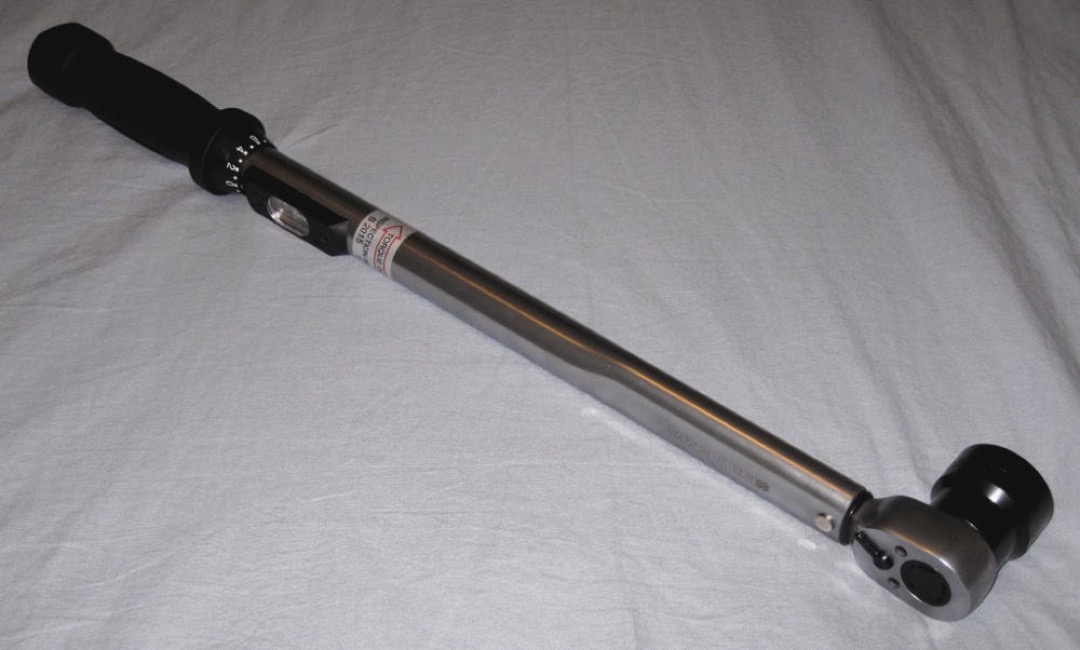
A torque wrench is not a luxury tool — it is the line between a properly secured fastener and one that is either backing itself out or stretching toward failure. I have been doing this for over twenty years as an ASE Master Technician, and the number of problems I have traced back to improper torque is staggering: warped brake rotors from over-torqued lug nuts, cracked exhaust manifolds from unevenly tightened bolts, oil leaks from drain plugs that were “tight enough” by feel. A quality torque wrench eliminates every one of these failure modes, and at the prices these tools sell for, there is no excuse for guessing.
This roundup covers seven torque wrenches across three drive sizes and three mechanism types, spanning the full range from entry-level budget picks to professional-grade precision tools. The selection includes click-type wrenches (the standard for automotive work), a digital hybrid for precision applications, and a beam wrench for the owner who wants a tool that never needs calibration. Every product covers a different combination of drive size, torque range, and price point because the right torque wrench depends on the jobs you actually do.
Before the picks, understand the fundamental types. Click (micrometer) wrenches use a spring-loaded mechanism that breaks with an audible click when the target torque is reached — they are the most popular type for automotive work because the feedback is immediate and does not require watching a scale. Digital wrenches use strain gauges and an electronic display for higher accuracy and real-time torque readings, with some models adding a click mechanism for dual confirmation. Beam wrenches use the deflection of a calibrated steel beam to indicate torque on a pointer scale — the simplest design, the most reliable long-term, and the only type that never needs recalibration.
Find the Best Torque Wrench for Your Job
Shopping for a specific job rather than a general-purpose wrench? Jump straight to the exact-match comparison, each pulled from the seven wrenches reviewed below:
- Best torque wrench for lug nuts
- Best torque wrench for spark plugs
- Best 1/4-inch and inch-pound torque wrench
- Best digital torque wrench
LEXIVON 1/2-Inch Drive Click — Best Overall
The LEXIVON 1/2-inch is my best overall pick because it is the one torque wrench that covers the work most car owners actually do — lug nuts, brakes, and suspension — and it does so with the deepest track record of any wrench in this roundup. At 4.7 stars across 8,881 ratings it is the most-reviewed wrench here and the highest-rated of any with more than a thousand ratings behind it, and consistency at that scale tells you more about long-term reliability than any single controlled test can.
That said, controlled testing matters too. Project Farm’s independent YouTube comparison tested the LEXIVON against Snap-on and found accuracy within two to three percent of target across multiple torque settings — well within the plus-or-minus four percent specification and competitive with professional tools that cost three to five times more. The included calibration certificate with a traceable serial number gives you a documented baseline that most competitors in this price range do not provide.
The 25-to-250 ft-lb range covers every standard lug nut specification (80-140 ft-lb depending on vehicle), brake caliper brackets (70-90 ft-lb), suspension bolts, and drivetrain fasteners. If you own one torque wrench, this is the range and drive size it should be. Pair it with a 3/8-inch wrench for engine work and you have covered virtually every fastener on the car.
Not sure what torque a specific bolt should hit? Plug the size, grade, and lubrication into our free bolt and lug-nut torque calculator — it runs the industry T = K x D x F formula for any size and grade combo and outputs ft-lb, Nm, and in-lb at once. Working in metric? Our metric bolt torque chart lays out every value from M6 to M24 in Class 8.8, 10.9, and 12.9, and recomputes the whole table for dry vs. oiled vs. anti-seize.
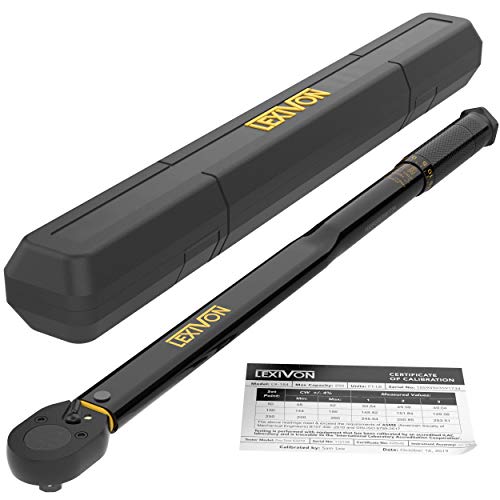
LEXIVON 1/2-Inch Drive Click Torque Wrench (25-250 ft-lb)
by LEXIVON
The best torque wrench for most car owners -- the most-reviewed wrench in this roundup at 8,881 ratings and 4.7 stars, independent accuracy testing that matches Snap-on, a traceable calibration certificate in the box, and the 25-to-250 ft-lb 1/2-inch range that covers lug nuts, brakes, and suspension: the one wrench to buy if you buy only one.
Pros
- The most-reviewed wrench in this roundup at 8,881 ratings, and at 4.7 stars the highest-rated of any wrench here with more than a thousand ratings behind it -- consistency at that scale gives a far more meaningful picture of long-term reliability and failure modes than a wrench with a few dozen or a few hundred ratings can
- Independent testing by Project Farm on YouTube demonstrated accuracy rivaling Snap-on torque wrenches at a fraction of the price -- the LEXIVON consistently hit within two to three percent of target across multiple torque settings in controlled testing, which is within the plus-or-minus four percent specification and competitive with professional-grade tools costing three to five times more
- Includes a calibration certificate with a traceable serial number in the box -- this is a meaningful differentiator for home mechanics who want documentation of factory calibration accuracy and for professionals who need a baseline reference before putting the wrench into service or scheduling their own NIST-traceable calibration
- The 25-to-250 ft-lb range on a 1/2-inch drive covers every standard lug nut specification (80-140 ft-lb), brake caliper brackets (70-90 ft-lb), suspension bolts, and drivetrain fasteners -- if you own only one torque wrench, this is the range and drive size it should be, which is exactly why it is the best overall pick
Cons
- Yellow paint on the barrel and markings can fade and wear from repeated handling with greasy or solvent-contaminated hands -- after approximately 12 months of regular shop use, the yellow accents lose their contrast advantage over standard chrome finishes, which reduces the low-light readability that is one of the wrench's selling points when new
- Click mechanism produces a quieter, softer break compared to the CRAFTSMAN -- in a loud shop environment with air tools running, the click can be missed if you are not paying close attention to the tactile feedback in the handle, which increases the risk of over-torquing critical fasteners
- The 25 ft-lb floor means it is not the right tool for low-torque work -- spark plugs and valve-cover bolts fall below its accurate range, so pair it with a 3/8-inch wrench rather than trying to cover everything with one tool
CRAFTSMAN 3/8-Inch Drive — Runner-Up (Best for Engine Work)
The CRAFTSMAN earns its 4.6-star rating and its runner-up spot as the wrench I reach for on engine work. The bi-material handle sounds like a minor feature until you are 45 minutes into a valve cover job torquing a dozen small bolts in sequence, and the difference between a comfortable grip that provides consistent click detection and a rigid chrome handle that fatigues your hand and makes you rush through the last few fasteners is the difference between a job done right and one that develops a leak.
The 20-to-100 ft-lb 3/8-inch range is tuned exactly for the mid-range engine fasteners a 1/2-inch wrench is too coarse to set reliably: spark plugs, oil drain plugs, thermostat housings, and intake bolts. The stamped scale markings are the kind of manufacturing detail that separates a quality tool from one that looks quality for the first six months — machined into the metal itself, they are readable in five years the same way they are on day one, where printed and painted markings wear off from greasy hands and solvent exposure.
The one-year warranty is the CRAFTSMAN’s weakness relative to the TEKTON’s lifetime coverage, and the 100 ft-lb ceiling means it is an engine-work wrench, not a wheel wrench. But paired with the LEXIVON 1/2-inch, the CRAFTSMAN completes a two-wrench set that covers the full range of DIY automotive fasteners. For the related tools that make engine work efficient, check our best socket sets roundup for the 3/8-inch drive sets that pair with this wrench.

CRAFTSMAN 3/8-Inch Drive Torque Wrench (20-100 ft-lb)
by CRAFTSMAN
The runner-up overall and the wrench I reach for on engine work -- a bi-material handle that stays comfortable through a long valve-cover job, permanent stamped scale markings, the crispest low-end click of any 3/8 here, and a 20-100 ft-lb range tuned exactly for spark plugs, drain plugs, and intake work, making it the ideal engine-side companion to a 1/2-inch wheel wrench.
Pros
- A solid 4.6 stars across 1,741 ratings, and the specific praise in those reviews is consistently about accuracy and handling on engine fasteners rather than general satisfaction -- that is the profile you want in a wrench you will use on spark plugs and drain plugs, and the sample is large enough to be meaningful rather than a handful of early reviews
- Bi-material handle provides a combination of grip and comfort that single-material handles cannot match -- the softer outer layer absorbs vibration and prevents slipping with greasy or oily hands while the rigid inner core maintains the structural stiffness needed for accurate torque delivery, which matters during extended sessions where hand fatigue degrades your ability to detect the click consistently
- Torque scale is stamped directly into the metal housing rather than printed or applied as a label -- stamped markings are permanent and will not fade from solvent exposure, wear from handling, or chip from impacts the way printed scales do, which means the wrench remains readable for the full service life of the tool
- The 20-to-100 ft-lb 3/8-inch range is the sweet spot for spark plugs (7-20 ft-lb), oil drain plugs (25-35 ft-lb), thermostat housings, and intake fasteners -- the mid-range engine work a 1/2-inch wrench is too coarse to set reliably, which makes it the ideal companion to the LEXIVON 1/2-inch
Cons
- Click is less pronounced at torque settings below 20 ft-lb where the spring tension is minimal -- for fasteners requiring low-torque precision (valve cover bolts at 5-10 ft-lb, small sensor fittings), the click at the bottom of the range is harder to detect than at mid-range and high settings, which means this wrench is better suited to its 20-100 ft-lb sweet spot than to precision low-torque work
- Only a one-year limited warranty compared to the lifetime warranty offered by TEKTON -- for a wrench in this price range, the shorter warranty period means the cost-of-ownership calculation changes if the wrench needs repair or replacement after 13 months
- The 100 ft-lb ceiling rules it out for lug nuts on most vehicles -- it is an engine-work wrench, not a wheel wrench, so it must be paired with a 1/2-inch drive for tire rotations and suspension work
eTORK 1/2-Inch Drive Digital — Best Upgrade
The eTORK is the wrench for owners who want precision beyond what a click mechanism alone can deliver. The hybrid design — a digital LCD display showing real-time torque combined with a traditional click at the target value — gives you two independent confirmation systems on every fastener. When you are torquing head bolts on a rebuilt engine or setting critical suspension fasteners, that dual confirmation eliminates the uncertainty that comes from relying on either a display or a click alone.
The plus-or-minus three percent accuracy specification is the tightest in this roundup and matters most at the extremes of the torque range where click wrenches are least reliable. At low settings near the bottom of the 25-250 ft-lb range, the eTORK’s strain gauge provides a consistent reading where a click mechanism’s spring tension may not produce a reliable break. At high settings where the physical consequences of over-torque are most severe, the digital display shows you exactly how close you are to the target in real time.
The four-unit instant conversion (ft-lb, in-lb, Nm, kg-cm) is a practical advantage for anyone who works on both domestic and import vehicles. Japanese service manuals specify in Nm, older American manuals use ft-lb, and small-fastener specifications sometimes appear in in-lb. Rather than keeping a conversion chart in the toolbox, you press a button and read the target in whatever unit the manual specifies. If you are doing engine rebuilds, professional work requiring torque documentation, or you simply want the most accurate tool available at a reasonable price, the eTORK is the upgrade that justifies its premium over click-only alternatives.
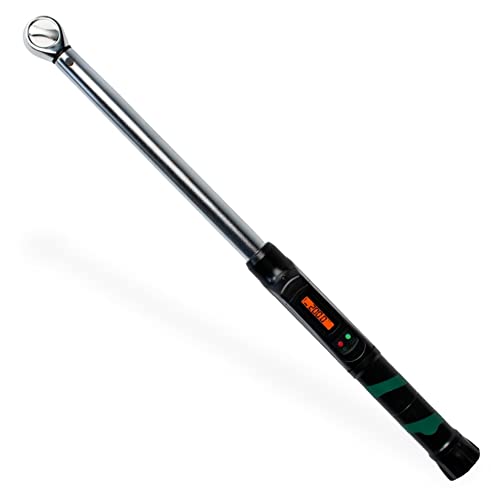
eTORK 1/2-Inch Drive Digital Torque Wrench (25-250 ft-lb)
by eTORK
The most accurate torque wrench in this roundup at plus-or-minus three percent -- hybrid digital display and click mechanism provides both real-time precision readings and tactile confirmation, backlit LCD is readable in the low-light conditions where torque work actually happens, and instant four-unit conversion eliminates manual math when switching between ft-lb, Nm, in-lb, and kg-cm specifications.
Pros
- Hybrid design combines a backlit digital LCD display with a traditional click mechanism -- you get both the precision of a digital readout showing exact torque in real time and the tactile confirmation of a physical click at the target value, which eliminates the guesswork that comes with relying on either system alone and is the most reliable way to hit critical torque specs on engine and suspension fasteners
- Backlit LCD display is readable in the low-light conditions where most torque work actually happens -- under a vehicle on jackstands, inside an engine bay, or in a dimly lit garage, the backlit screen provides a clear torque reading that analog scales and unlit digital displays cannot match without a separate work light
- Instant unit conversion between four measurement systems (ft-lb, in-lb, Nm, kg-cm) with a button press rather than mental math or conversion charts -- this matters when working on import vehicles with Nm-specified fasteners, older vehicles with in-lb specifications for small components, or when following a service manual that uses different units than your primary system
- Locking adjustment knob prevents accidental torque setting changes during use -- a bump against a fender or engine component cannot shift the target value mid-job, which is a genuine safety consideration on critical fasteners like lug nuts and suspension bolts where the wrong torque can cause a failure
Cons
- No progressive visual or audio alert as you approach the target torque -- the display shows current torque in real time but does not change color, beep, or otherwise warn you when you are within five or ten percent of the target, which means you must watch the screen continuously rather than torquing by feel and waiting for an alert near the target
- 48-tooth ratchet mechanism requires a 7.5-degree swing arc to advance -- in confined spaces around exhaust manifolds, steering components, and tight engine bays where socket clearance is measured in fractions of an inch, the wider arc is a functional limitation compared to 72-tooth or 90-tooth mechanisms that need only five or four degrees respectively
- 24-inch overall length makes the wrench unwieldy for jobs in tight quarters where a shorter 3/8-inch drive wrench would be more practical -- the length is necessary for the 250 ft-lb capacity but is a trade-off for precision work on smaller fasteners where a compact tool is more maneuverable
Amazon Basics 1/2-Inch Drive Click — Best Budget
The Amazon Basics is the torque wrench that makes proper torque accessible to every DIY mechanic, and that accessibility matters more than the tool’s individual specifications. The most common torque-related failures I see in the shop — warped rotors, broken wheel studs, leaking oil drain plugs — come from owners who skipped the torque wrench entirely and went by feel with a ratchet. The Amazon Basics removes the cost barrier that leads to those shortcuts.
The accuracy is genuine. Pre-calibrated to plus-or-minus four percent and meeting ISO 6789 specifications, this wrench delivers the same measurement tolerance as click wrenches at two to three times the price. The Chrome Vanadium ratchet head is hardened steel, the mechanism clicks reliably across the working range, and the storage case encourages the correct habit of returning the wrench to its lowest setting between uses. For a home mechanic doing tire rotations, brake jobs, and oil changes, the accuracy and reliability are indistinguishable from a 100-dollar wrench in daily use.
The limitations are proportional to the price. The click is quieter than the CRAFTSMAN, which means relying more on feel than sound. The 150 ft-lb maximum excludes heavy-duty truck applications. And the internal mechanism will drift from calibration faster under heavy use than a premium wrench will. For weekend automotive work on passenger cars, none of these limitations affect the value proposition. If this is your first torque wrench and you are pairing it with a new socket set, the Amazon Basics plus a quality 1/2-inch drive socket set is the combination that covers the large majority of DIY automotive fasteners for well under 100 dollars total.

Amazon Basics 1/2-Inch Drive Click Torque Wrench (20-150 ft-lb)
by Amazon Basics
The best entry-level torque wrench for DIY mechanics -- the lowest-cost 1/2-inch drive here, covering lug nuts, brake bolts, and oil drain plugs with ISO 6789-compliant accuracy, includes a storage case that encourages proper low-setting storage, and 4,031 reviews confirm reliable performance for weekend automotive work.
Pros
- Exceptional value for a 1/2-inch drive torque wrench that covers the 20-to-150 ft-lb range needed for the most common automotive fasteners including lug nuts, brake caliper bolts, and oil drain plugs -- the price point makes proper torque accessible to first-time DIY mechanics who might otherwise skip the torque wrench and guess with a breaker bar, which is exactly the scenario that leads to stripped threads and broken studs
- Hardened Chrome Vanadium steel ratchet head provides durability that matches wrenches at two to three times the price -- the ratchet mechanism engages cleanly and the head dimensions are standard enough to accept any 1/2-inch drive socket without clearance issues, which is not guaranteed on all budget torque wrenches where slightly out-of-spec square drives cause socket retention problems
- Pre-calibrated to plus-or-minus four percent accuracy out of the box with a corrosion-resistant finish that protects the scale markings -- the calibration is consistent across the working range and sufficient for every common automotive application where plus-or-minus four percent is the accepted tolerance for click-type wrenches under ISO 6789
- Includes a sturdy plastic storage case that protects the wrench and keeps it stored at the lowest torque setting -- proper storage is the single most important factor in maintaining calibration on a click-type wrench, and including a case that encourages correct storage habits extends the useful accuracy life of the tool significantly
Cons
- Click mechanism produces a faint, quiet break that is harder to detect in noisy environments than the more pronounced click of the CRAFTSMAN -- in a home garage with an air compressor running or a shop with impact tools cycling, the subtle click can be missed, which means you must rely more heavily on tactile feedback in the handle than auditory confirmation
- Not built for heavy-duty professional use where the wrench sees daily cycling across hundreds of fasteners -- the internal spring mechanism and click assembly are adequate for weekend DIY use but will drift from calibration faster under the sustained use patterns of a professional shop
- 150 ft-lb maximum torque limits the wrench to standard passenger car applications -- trucks, SUVs, and heavy-duty vehicles with lug nut specifications above 150 ft-lb (common on three-quarter-ton and one-ton trucks at 140-165 ft-lb) require a wrench with a higher range, making the LEXIVON the better choice for those applications
LEXIVON 3/8-Inch Drive Click — Best-Value 3/8
The LEXIVON 3/8-inch is the value pick for engine work — it brings the same all-steel construction, calibration certificate, and enormous review base of the 1/2-inch Best Overall pick down to the 3/8-inch drive and the 10-to-80 ft-lb range, for under 40 dollars. If the CRAFTSMAN’s ergonomics are not worth the extra 28 dollars to you, or you simply want the lowest-cost accurate 3/8 wrench with a deep reliability record, this is the one.
The 7,765-rating review base is the same kind of statistical depth that makes the 1/2-inch model my top pick, and it is rare to find that volume on a 3/8 wrench at this price — though note the 4.5-star average sits a notch below the 1/2-inch model’s 4.7, mostly on the cosmetic wear complaints below. The all-steel internals avoid the cracked-sleeve and deformed-pawl failures that end budget 3/8 wrenches after a year, and the laser-etched dual ft-lb and Nm scale will not wear off from greasy hands or solvents.
The 10-to-80 ft-lb range is the mid-range engine band: spark plugs at 7-20 ft-lb, valve cover bolts, intake fasteners, and thermostat housings. The trade-offs are the same cosmetic ones as its larger sibling — the yellow scale paint fades after about a year, and the finish chips on concrete — neither of which affects accuracy. For an owner building a two-wrench set on a budget, the LEXIVON 1/2-inch and LEXIVON 3/8-inch cover the full fastener range for well under 120 dollars.
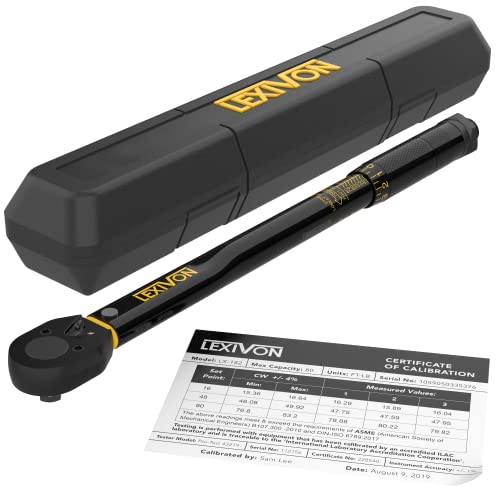
LEXIVON 3/8-Inch Drive Click Torque Wrench (10-80 ft-lb)
by LEXIVON
The most-reviewed 3/8-inch click wrench in this roundup and the value pick for engine work -- an all-steel build, a traceable calibration certificate, and a 7,765-rating reliability record in the 10-80 ft-lb band that spark plugs and valve covers need, all for under 40 dollars.
Pros
- By far the most-reviewed 3/8-inch wrench in this roundup at 7,765 ratings -- more than four times the CRAFTSMAN's review base, which gives it a deeper reliability record than any other 3/8 option here, and it covers the 10-80 ft-lb band that spark plugs, valve covers, and intake bolts live in
- All-steel construction with no plastic internal parts -- the adjustment mechanism, ratchet, and barrel are metal, so it avoids the cracked-sleeve and deformed-pawl failures that end budget 3/8 wrenches after a year, and the laser-etched dual ft-lb and Nm scale will not wear off from greasy hands or solvents
- Includes a calibration certificate with a traceable serial number in the zippered case -- documented factory accuracy in a sub-40-dollar 3/8 wrench is rare and gives you a baseline reference before you ever put it in service
- Reversible 3/8 ratchet head and pre-set plus-or-minus four percent accuracy under ISO 6789 make it a true drop-in companion to a 1/2-inch wrench -- it covers the mid-range engine fasteners the larger drive is too coarse to set reliably, for the lowest cost of any accurate 3/8 wrench in this roundup
Cons
- Yellow scale paint fades from repeated handling with oily hands after about a year, the same cosmetic wear pattern as the 1/2-inch LEXIVON -- accuracy is unaffected but the low-light readability advantage diminishes over time
- The click is a bit softer than the CRAFTSMAN's at the very bottom of the 10-80 ft-lb range, so on 8-to-10 ft-lb valve-cover work you lean more on feel than sound
- Electro-black finish chips on contact with concrete and toolbox steel -- purely cosmetic, but exposed steel can surface-rust in humid garages if it is not wiped down after use
TEKTON 1/4-Inch Drive Micrometer — Best for Small Fasteners
The TEKTON 1/4-inch brings all-steel, no-plastic build quality down to the compact drive size used for spark plugs, small engine fasteners, and precision work. This is TEKTON’s current-generation 1/4 micrometer, and its most important upgrade over the previous model is the 90-tooth dual-direction ratchet — the fine four-degree swing arc directly fixes the wide-swing complaint that dogged the older low-tooth version, which matters because a 1/4-inch drive is chosen precisely for the confined spaces where clearance is tight.
The 200 in-lb (22.6 Nm) range is higher than most competing 1/4-inch wrenches that top out at 150 in-lb, and that extra capacity matters for spark plug specifications in the 10-20 Nm range that would be at or above the rated maximum of a 150 in-lb wrench. The permanently marked dual in-lb and Nm scale is part of the metal rather than applied on top of it, and the lifetime warranty applies with no proof-of-purchase or registration required.
At 85 dollars, this is a premium price for a 1/4-inch wrench, and the Neiko beam covers the same drive size at under 35 dollars. The difference is click convenience versus beam precision: the TEKTON lets you torque by feel and sound, the Neiko requires watching a scale. For owners who do regular spark plug changes and small-fastener work, the TEKTON’s click mechanism makes the job faster and more consistent.

TEKTON 1/4-Inch Drive Micrometer Torque Wrench (20-200 in-lb)
by TEKTON
The precision small-fastener pick -- TEKTON's current all-steel 1/4-inch micrometer upgrades to a 90-tooth ratchet that erases the old wide-swing complaint, reaches 200 in-lb for high-spec spark plugs, and backs it with a no-questions lifetime warranty for the confined, low-torque work the bigger drives handle poorly.
Pros
- All-steel, zero-plastic construction -- the current-generation TEKTON 1/4 micrometer (TRQ50402) keeps the no-plastic build that makes TEKTON's torque wrenches outlast budget tools, so the adjustment mechanism and ratchet will not develop the internal play that degrades click consistency over time
- A 90-tooth dual-direction ratchet head fixes the single biggest complaint about the previous TEKTON 1/4 -- the fine four-degree swing arc lets you advance small fasteners in the confined spaces (behind trim, around sensors, deep in the bay) where a 1/4-inch drive is chosen precisely for its compactness
- The 20-to-200 in-lb (2.3-22.6 Nm) range covers spark plugs in the 10-20 Nm band that many 1/4-inch wrenches capped at 150 in-lb cannot reach -- so you are not forced up to a coarser 3/8 wrench for high-spec plugs and small precision fasteners
- TEKTON's lifetime warranty applies with no proof-of-purchase or registration required, and the permanently marked dual in-lb and Nm scale will not wear off -- the same reasons TEKTON's larger wrenches earn their keep, delivered in the compact drive size
Cons
- As the current SKU it carries a thin review history -- 86 ratings at 4.8 stars is a strong early signal but nothing like the thousands behind the LEXIVON and Neiko, so buyers who weight review volume heavily may prefer a higher-volume option for occasional use
- At 85 dollars it is a premium price for a 1/4-inch drive -- owners who only set spark plugs a couple of times a year may find a sub-35-dollar click wrench or the Neiko beam sufficient for the job
- Like all click wrenches it should never be used to loosen fasteners and must be dialed back to its lowest setting for storage -- habits that matter more on a precision low-torque tool where a set spring drifts calibration fastest
Neiko 03727A 1/4-Inch Drive Beam — Best Calibration-Free
The Neiko beam wrench occupies a unique position in this roundup: it is the only torque wrench here that will read accurately in ten years without any maintenance, calibration, or battery changes. The beam design has no springs to fatigue, no click mechanism to wear, no electronics to fail. The steel beam deflects under load and a pointer indicates the current torque on a printed scale. As long as the beam is not physically bent, it reads correctly — indefinitely.
That reliability has trade-offs. The beam wrench requires watching the pointer reach the target value, which means you need line of sight to the scale during the entire torquing motion. In the confined spaces where a 1/4-inch drive is typically used — behind dashboards, around wiring harnesses, deep in engine bays — maintaining that visual contact is sometimes impractical. There is no audible click and no tactile break to tell you when to stop.
For the applications where a beam wrench makes sense — bicycle maintenance, small engine work, electrical connections, and as a backup calibration reference for checking your click wrenches — the Neiko is reliable, affordable, and will outlast every other tool in this roundup without asking for anything in return.

Neiko 03727A 1/4-Inch Drive Beam Torque Wrench (0-80 in-lb)
by NEIKO
The torque wrench that never needs recalibration -- beam-style deflection mechanism eliminates the springs and click assemblies that drift over time, dual SAE and metric scales cover both measurement systems without conversion, and ambidextrous operation handles both thread directions without adjustment.
Pros
- Never requires recalibration -- the beam-style deflection mechanism has no springs, ratchets, or click assemblies that can fatigue or drift over time, which means the wrench reads accurately for its entire service life as long as the main beam is not physically bent, making it the most reliable long-term torque measurement tool in this roundup for owners who do not want to deal with calibration schedules
- Dual SAE and metric scale (in-lb and Nm) printed on both sides of the pointer scale allows reading in either measurement system without conversion -- for owners working on import vehicles with Nm-specified fasteners and domestic vehicles with in-lb specifications, the dual scale eliminates the conversion step that introduces rounding errors
- Ambidextrous operation -- the beam style works equally in clockwise and counterclockwise directions without any mode switch or mechanism change, which is useful for left-hand-thread fasteners, reverse-thread applications, and working from either side of a vehicle where socket access determines the torque direction
- Ball detent and chamfered square drive ends hold sockets securely without the retention pin or friction ring that some 1/4-inch drive tools require -- the socket stays seated during use and releases cleanly when pulled, which speeds up socket changes during jobs that require multiple sizes across different fasteners
Cons
- Requires visual reading of a pointer against a scale rather than providing audible or tactile feedback -- in confined spaces under a dashboard, behind an engine, or anywhere the scale is not directly visible, reading the torque value accurately is difficult or impossible, which limits the beam wrench to applications where you can see the pointer during the entire torquing motion
- Low maximum torque of 80 in-lb (approximately 9 Nm) restricts this wrench to small fasteners -- bicycle components, lawn mower bolts, electrical connections, HVAC fittings, and similar light-duty applications, not automotive work beyond the smallest sensor fittings and trim fasteners
- Slower to use than click-type wrenches because each fastener requires watching the pointer reach the target rather than torquing until you feel the click -- for jobs with many fasteners at the same torque setting, the cumulative time difference between a click wrench and a beam wrench is significant
Best Torque Wrench for Lug Nuts
Lug nuts are the single most common fastener DIY mechanics torque, and they demand a 1/2-inch drive in the 80-140 ft-lb band — a 3/8-inch drive can flex or break under wheel torque. All three picks below are 1/2-inch wrenches that cover the full passenger-car and light-truck lug range; the choice comes down to whether you want the deepest track record, the lowest price, or a digital readout that confirms each wheel to spec.
| Product | Price | Buy |
|---|---|---|
| LEXIVON 1/2-Inch Drive Click Torque Wrench (25-250 ft-lb)Best overall for lug nuts 25-250 ft-lb covers 80-140 ft-lb wheel specs with headroom for heavy-duty trucks | $69.97 | View on Amazon |
| Amazon Basics 1/2-Inch Drive Click Torque Wrench (20-150 ft-lb)Best budget for lug nuts The budget pick here, covering passenger-car lug specs up to its 150 ft-lb ceiling | $40.30 | View on Amazon |
| eTORK 1/2-Inch Drive Digital Torque Wrench (25-250 ft-lb)Best digital for lug nuts Digital readout confirms each wheel to exact spec with no missed clicks | $114.95 | View on Amazon |
For most drivers the LEXIVON 1/2-inch is the right lug-nut wrench — it has the range for any vehicle and the accuracy record to trust on a safety fastener. Choose the Amazon Basics if you are on a budget and drive a standard passenger car under 150 ft-lb, or the eTORK if you want a visual confirmation of every wheel. Whatever you pick, torque lug nuts in a star pattern and re-torque after the first 50 to 100 miles.
One fastener does sit above everything in this roundup, and it catches people out because it looks trivial. A trailer hitch ball nut wants 160 ft-lb on a 3/4-inch shank, 250 on a 1-inch, and 450 ft-lb on a 1-1/4-inch shank — past the ceiling of every 1/2-inch drive wrench here, so a heavy ball is a 3/4-inch drive job or a torque multiplier. Our free trailer ball size chart gives the torque figure for whichever shank your ball uses, alongside what each published ball is actually rated to tow.
Best Torque Wrench for Spark Plugs
Spark plugs live in the low-torque band — 7-20 ft-lb for most 14mm plugs — where a 1/2-inch wrench is too coarse to set reliably. A 3/8-inch drive is the standard recommendation, with a high-range 1/4-inch as the precision alternative for tight rear cylinders. Over-torque a plug and you strip aluminum head threads; under-torque and it backs out under heat cycling, so this is a job worth the right wrench.
| Product | Price | Buy |
|---|---|---|
| CRAFTSMAN 3/8-Inch Drive Torque Wrench (20-100 ft-lb)Best 3/8 for spark plugs 20-100 ft-lb 3/8 with a crisp low-end click for the 7-20 ft-lb plug band | $67.99 | View on Amazon |
| LEXIVON 3/8-Inch Drive Click Torque Wrench (10-80 ft-lb)Best value 3/8 10-80 ft-lb, 7,765 ratings, lowest-cost accurate 3/8 option | $39.97 | View on Amazon |
| TEKTON 1/4-Inch Drive Micrometer Torque Wrench (20-200 in-lb)Best 1/4 for tight plugs Reaches 200 in-lb for high-spec plugs in cramped rear cylinders | $85.00 | View on Amazon |
The CRAFTSMAN 3/8-inch is the best spark-plug wrench for most owners — its low-end click is the most pronounced of the three, which matters at 8-10 ft-lb. The LEXIVON 3/8-inch does the same job for less if you do not need the CRAFTSMAN’s ergonomics. Reach for the TEKTON 1/4-inch when access is tight and you want a compact wrench that still reaches spark-plug torque in in-lb. Confirm your exact plug spec first with our ft-lbs to Nm converter if your manual lists Nm.
Best 1/4-Inch and Inch-Pound Torque Wrench
For small fasteners below 25 ft-lb — bicycle components, electronics, sensor fittings, small-engine bolts — you need a 1/4-inch drive that reads in inch-pounds, because a 3/8 or 1/2 wrench cannot set those low values accurately. The two picks below are the click and the beam approach: one gives you audible feedback, the other never needs calibration.
| Product | Price | Buy |
|---|---|---|
| TEKTON 1/4-Inch Drive Micrometer Torque Wrench (20-200 in-lb)Best click 1/4 90-tooth all-steel, 20-200 in-lb, lifetime warranty, torque by feel | $85.00 | View on Amazon |
| Neiko 03727A 1/4-Inch Drive Beam Torque Wrench (0-80 in-lb)Best calibration-free 1/4 Beam design never needs calibration; 0-80 in-lb for the smallest fasteners | $29.99 | View on Amazon |
Choose the TEKTON 1/4-inch if you want the speed and feel of a click wrench and the higher 200 in-lb ceiling for spark plugs. Choose the Neiko beam if you value a tool that will read accurately for a decade with zero maintenance and you mostly work on the smallest fasteners where you can see the scale.
Best Digital Torque Wrench
Digital wrenches trade batteries and cost for tighter accuracy and a real-time readout. They are worth it for engine builds, torque documentation, and frequent SAE-to-metric switching — but for lug nuts and brakes, a quality click wrench delivers the accuracy you need for less. The comparison below is the honest either-or: the best digital wrench in this roundup against the best click alternative at a third of the price.
| Product | Price | Buy |
|---|---|---|
| eTORK 1/2-Inch Drive Digital Torque Wrench (25-250 ft-lb)Best digital Plus-or-minus 3 percent hybrid digital-plus-click, four-unit conversion, backlit readout | $114.95 | View on Amazon |
| LEXIVON 1/2-Inch Drive Click Torque Wrench (25-250 ft-lb)Best click alternative Plus-or-minus 4 percent click at a third of the price if you do not need a screen | $69.97 | View on Amazon |
Buy the eTORK digital if you build engines, need documented torque values, or routinely work across ft-lb and Nm specs — the real-time display and four-unit conversion earn their premium there. For everything else, the LEXIVON 1/2-inch click delivers ISO-compliant accuracy without batteries, and the money saved buys a second wrench in another drive size.
Buyer's Guide
A torque wrench is the difference between a fastener tightened to spec and one that is either too loose to hold or too tight and already stretching toward failure. The six factors below cover every variable that determines which torque wrench is right for your work -- match these to the jobs you actually do and you will choose a tool that delivers accurate, repeatable torque for years rather than guessing with a ratchet and hoping for the best.
Torque Wrench Type
The four primary torque wrench types -- click, digital, beam, and split-beam -- have meaningfully different strengths. Click (micrometer) wrenches are the most popular for automotive work because they provide a clear audible and tactile signal at the target torque, require no batteries, and are accurate to plus-or-minus four percent under ISO 6789. Digital wrenches use strain gauges for plus-or-minus two to three percent accuracy with real-time display and unit conversion, making them the precision choice for engine building and professional documentation requirements -- but they cost more and depend on batteries. Beam wrenches are the simplest and most reliable design because they have no internal mechanism to calibrate or maintain -- the deflection of the beam itself shows torque in real time -- but they lack audible feedback, are slower to use, and are harder to read in confined spaces. Split-beam wrenches combine the click mechanism with a dial adjustment that does not require returning to the lowest setting after use, which makes them more convenient for professional environments where the wrench cycles through many torque values per day. For most home mechanics, a click-type wrench covers every common automotive application. Digital is worth the premium for precision work or professional use. Beam is the backup wrench that never needs calibration.
Drive Size
Drive size determines which sockets the wrench accepts and directly correlates with the torque range the wrench is designed for. A 1/2-inch drive is the standard for automotive work and covers lug nuts (80-140 ft-lb), suspension bolts, brake calipers, and drivetrain fasteners -- this is the first torque wrench every car owner should buy. A 3/8-inch drive covers the mid-range for spark plugs (7-20 ft-lb), valve cover bolts (5-10 ft-lb), intake manifolds, and general engine work where the fasteners are smaller and the torque specifications are lower. A 1/4-inch drive handles precision work on small fasteners, bicycle components, and applications below 25 in-lb where the larger drives are too coarse to provide accurate control. Using an adapter to run a 3/8-inch socket on a 1/2-inch drive wrench technically works but introduces compliance in the adapter joint that can affect accuracy by one to two percent -- for critical fasteners, use the correct drive size.
Torque Range and Accuracy
Every torque wrench has a rated range, and accuracy is only guaranteed between 20 percent and 100 percent of that range. A wrench rated 25-250 ft-lb is only calibrated-accurate from approximately 50 ft-lb to 250 ft-lb -- below 50 ft-lb, the internal spring tension is too low for the click mechanism to trigger reliably and consistently. This is why you need multiple wrenches for different ranges rather than one wrench covering everything. Accuracy specifications follow ISO 6789, which defines plus-or-minus four percent for click-type wrenches and plus-or-minus two percent for digital. In practical terms, plus-or-minus four percent on a 100 ft-lb lug nut specification means the actual torque falls between 96 and 104 ft-lb -- well within safe operating range for every standard automotive fastener. The accuracy specification matters most at the extremes of the range, which is where click wrenches are least reliable and where a beam or digital wrench provides better measurement.
Build Quality and Durability
The internal mechanism of a torque wrench is a precision instrument, and build quality determines how long that precision lasts. All-steel construction like TEKTON's and LEXIVON's eliminates the plastic internal components that are the primary failure point in budget wrenches -- plastic adjustment sleeves crack, plastic ratchet pawls deform under load, and plastic spring guides wear and introduce play that degrades click consistency. The ratchet head tooth count affects both durability and usability: higher tooth counts (72-tooth, 90-tooth) allow finer positioning in tight spaces but use smaller teeth that wear faster under heavy loads, while lower tooth counts (24-tooth, 36-tooth) have larger, more durable teeth but require wider swing arcs. Scale markings should be etched or stamped into the metal rather than printed or applied as labels -- etched markings survive solvents, oil, grease, and years of handling where printed markings fade within months. A rigid storage case is not a luxury accessory -- it protects the barrel from impacts that can affect calibration and encourages storing the wrench at its lowest setting, which is the single most important habit for maintaining accuracy.
Calibration and Maintenance
Every click-type and digital torque wrench drifts from its factory calibration over time, and understanding the maintenance requirements prevents you from using a wrench that reads accurately on the scale but delivers inaccurate torque to the fastener. ISO 6789 recommends recalibration every 12 months or 5,000 cycles. Professional calibration costs 50 to 75 dollars per wrench, which is why many home mechanics simply replace budget wrenches every 12 to 18 months rather than paying to calibrate a 30-dollar tool. For wrenches in the 60-to-115-dollar range, calibration is cost-effective and extends the useful life by years. The daily maintenance that matters most is returning click wrenches to the lowest torque setting after every use -- this relaxes the internal spring and prevents the permanent set that causes calibration drift. Never use a torque wrench as a breaker bar, never drop it, and never exceed its rated capacity -- each of these actions can permanently damage the internal mechanism. Beam wrenches are the exception to all calibration requirements because their measurement is purely mechanical deflection with no spring or mechanism to drift.
Common Automotive Torque Specifications
Knowing the torque specs you will encounter most often determines which wrench range and drive size to prioritize. Lug nuts are the most frequently torqued fastener for DIY mechanics at 80-100 ft-lb for most passenger cars and 120-140 ft-lb for trucks and SUVs -- a 1/2-inch drive wrench is required. Spark plugs typically require 7-15 ft-lb for 14mm plugs and 15-25 ft-lb for 18mm plugs -- a 3/8-inch drive covers this range precisely, and a high-range 1/4-inch like the TEKTON reaches the same band in in-lb. Oil drain plugs run 25-35 ft-lb on most engines, squarely in the CRAFTSMAN 3/8-inch sweet spot. Brake caliper slide pins require 30-50 ft-lb and bracket bolts 70-90 ft-lb. Valve cover bolts are typically 5-10 ft-lb. One critical detail that most guides miss: torque specifications assume clean, dry threads unless the service manual explicitly states otherwise. Applying anti-seize compound or thread lubricant to a fastener reduces the friction in the threads and effectively increases the clamping force by 15 to 25 percent at the same torque reading -- which means a lubricated bolt torqued to 100 ft-lb sees the equivalent clamping force of 115-125 ft-lb on dry threads. Always follow the manufacturer's lubrication specification for each fastener to avoid over-clamping.
Final Verdict
For most automotive work, the LEXIVON 1/2-Inch Drive Click is the best torque wrench you can buy. The deepest review base here at 8,881 ratings and 4.7 stars, independent accuracy testing that matches Snap-on, and a traceable calibration certificate back a 25-to-250 ft-lb range that covers lug nuts, brakes, and suspension — the jobs most car owners actually do. If you buy one torque wrench, buy this one.
For engine work in the 20-100 ft-lb range, the CRAFTSMAN 3/8-Inch Drive is the right complement. The crispest low-end click of any 3/8 here, a comfortable bi-material handle for long sessions, and a permanent stamped scale make it the ideal spark-plug and drain-plug wrench to pair with a 1/2-inch drive.
For budget-conscious first-time buyers, the Amazon Basics 1/2-Inch Drive is what makes proper torque accessible. It covers lug nuts, brake bolts, and oil drain plugs with ISO-compliant accuracy — and any torque wrench is infinitely better than guessing by feel.
For precision work, engine builds, or professional documentation needs, the eTORK Digital at plus-or-minus three percent accuracy with hybrid digital and click confirmation is the upgrade that justifies its premium.
The most useful torque wrench setup for a home garage is two wrenches: a 1/2-inch for wheels and suspension plus a 3/8-inch for engine work. The LEXIVON 1/2-inch and CRAFTSMAN 3/8-inch combination covers virtually every fastener specification on a passenger car. Pair them with a quality impact wrench for loosening and a complete socket set for coverage, and you have the foundation of a serious home garage.
Frequently Asked Questions
How often should I calibrate my torque wrench?
Can I use a torque wrench to loosen bolts?
What torque do I need for lug nuts on my car?
Click versus digital torque wrench -- which should I buy?
Do I need more than one torque wrench for automotive work?
Related Articles
About the Reviewer

Mike Reeves, ASE Master Technician
A.A.S. Automotive Technology, Universal Technical Institute (UTI)
Mike Reeves is an ASE Master Technician with 15 years of hands-on experience in automotive repair and diagnostics. He earned his A.A.S. in Automotive Technology from UTI and runs his own independent shop in Denver, Colorado. Mike founded RevRated to help everyday car owners make smarter parts decisions -- every recommendation comes from real-world testing in his garage.