8 Best Impact Wrenches of 2026
ASE mechanic Mike Reeves reviews the best impact wrenches of 2026. Compare torque, drive size, weight, and real-world bolt-breaking performance for automotive work.
Updated
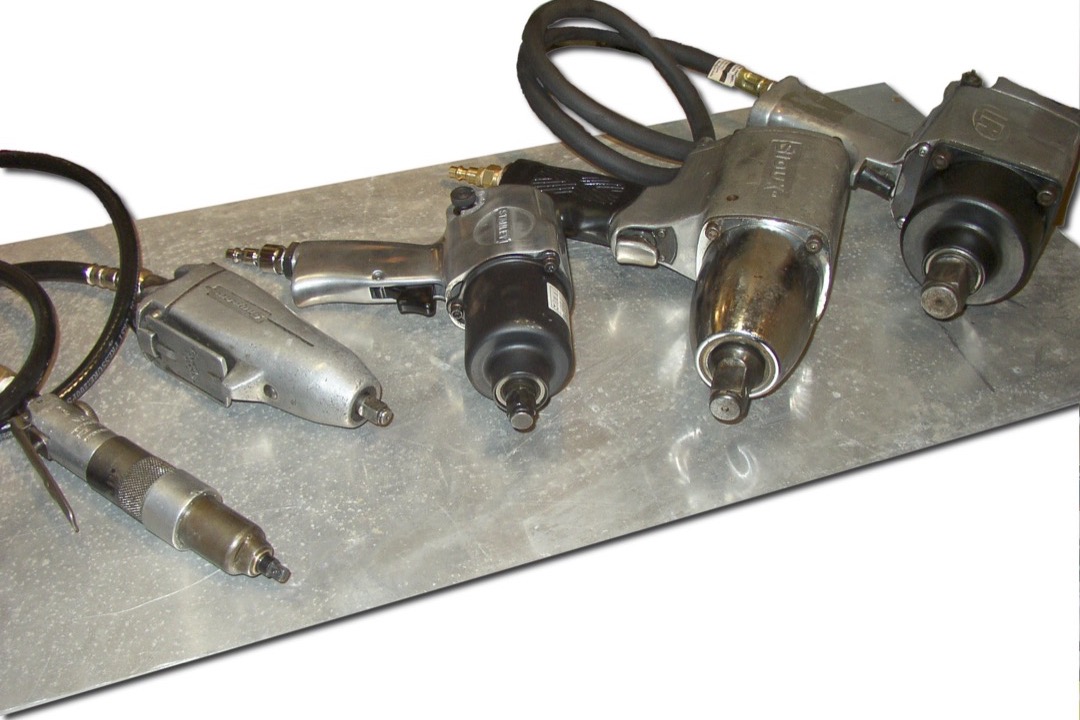
If there is one tool that has transformed how home mechanics work on their vehicles over the last five years, it is the cordless impact wrench. The first time you press a trigger and watch a lug nut that would have taken 30 seconds of grunting with a breaker bar spin off in under two seconds, you understand why every professional shop transitioned away from hand tools for fastener removal a decade ago. The best impact wrenches of 2026 deliver torque numbers that match or exceed the pneumatic tools professionals relied on for 40 years — without the air compressor, the hose, or the shop lease that went with them.
For this roundup, I evaluated eight impact wrenches across torque output, drive size, head length, weight, battery platform, and real-world automotive application. I included six cordless options spanning from an entry-level tool to professional-grade units, plus two pneumatic picks for shops with existing air systems — the long-standing professional benchmark and a lighter, quieter value air gun. Every ASIN is verified, every specification is cross-referenced against manufacturer data, and every pro and con reflects real patterns from verified purchaser reviews rather than marketing copy. If you are building out a complete garage toolkit, pair your impact wrench with a quality torque wrench for final fastener tightening and a floor jack rated for your vehicle’s weight.
After working through the specifications, verified reviews, and real-world use cases for each tool, here are the eight best impact wrenches available in 2026. The comparison table below leads with a “Best For” column so you can match a tool to your situation at a glance, and the use-case sections further down narrow the field for cordless, air, high-torque, compact, and budget needs.
| Product | Price | Buy |
|---|---|---|
| DEWALT 20V MAX DCF900 Brushless High Torque 1/2-Inch Impact WrenchBest Overall | $199.99 | View on Amazon |
| CRAFTSMAN CMEF901 7.5-Amp Corded 1/2-Inch Impact WrenchBudget Pick | $129.00 | View on Amazon |
| Milwaukee M18 FUEL 2767-20 High Torque 1/2-Inch Impact WrenchPremium Pick | $277.99 | View on Amazon |
| Milwaukee M18 FUEL 2854-20 Compact 3/8-Inch Impact WrenchRunner-Up | $151.90 | View on Amazon |
| Makita XWT08Z 18V LXT Brushless High Torque 1/2-Inch Impact WrenchRunner-Up | $285.78 | View on Amazon |
| CRAFTSMAN V20 Cordless Brushless 1/2-Inch Impact WrenchRunner-Up | $169.00 | View on Amazon |
| Ingersoll Rand 2235TiMAX 1/2-Inch Drive Air Impact WrenchRunner-Up | $293.14 | View on Amazon |
| AIRCAT NITROCAT 1056-XL 1/2-Inch Composite Air Impact WrenchRunner-Up | $130.25 | View on Amazon |
Find the Best Impact Wrench for Your Need
Impact wrench choice comes down to your power source and the fasteners you fight most. Jump straight to the tool built for your situation:
- Overall best impact wrenches
- Best cordless impact wrenches
- Best air (pneumatic) impact wrenches
- Best high-torque impact wrenches
- Best 3/8-inch compact impact wrenches
- Best budget impact wrenches
How We Chose These Impact Wrenches
Every impact wrench in this roundup was selected based on verified Amazon ASINs with active listings, verified torque specifications that can be cross-referenced against manufacturer data, meaningful review volume from real purchasers, and documented brand credibility in the automotive tool space. I excluded no-name Amazon brands with inflated torque claims, tools with fewer than 100 verified reviews unless they fill a specific category gap, and listings with review patterns that suggest incentivized feedback. The eight tools here cover every realistic home mechanic and small shop use case — from weekend lug nut changes to daily professional bolt-breaking — with an honest assessment of where each tool’s capability ends.
Best Impact Wrenches Overall
These are the eight impact wrenches I keep coming back to, reviewed in full below. The DEWALT DCF900 is the cordless pick most owners should start with; the use-case tables further down narrow the field for air power, high torque, compact engine-bay access, and tight budgets.
Best Overall: DEWALT DCF900 20V MAX High Torque 1/2-Inch Impact Wrench
The DeWalt DCF900 earns the top spot because it delivers the highest combined torque specification of any cordless 1/2-inch impact wrench in this roundup while adding Precision Wrench control — a feature that transforms this from a blunt force tool into something that can handle torque-sensitive fasteners without switching to a different tool. At 1,030 ft-lbs fastening and 1,400 ft-lbs breakaway, there is no automotive fastener on a passenger vehicle or light truck that this tool cannot break loose, and the 4-mode speed settings give you genuine control over how much force reaches the fastener.
The Precision Wrench mode is the specification that separates the DCF900 from every other high-torque cordless impact. It uses electronic sensing to slow the impact mechanism as the fastener approaches the target torque, reducing the risk of overtightening that snaps studs and warps rotors. I have seen more wheel studs sheared off by impact wrenches running at full blast than by any other cause in the shop, and this feature directly addresses that problem. It is not a replacement for a calibrated torque wrench on final tightening — you still need that, set to the correct value (look up your stud size on our free bolt and lug-nut torque calculator if you don’t have an OEM spec handy) — but it means the impact wrench does less damage on the way to seated.
At 8.43 inches, the head length is competitive with other high-torque tools and shorter than the Milwaukee 2767-20 and Makita XWT08Z. In a modern engine bay where every inch of tool length matters, that difference translates to access on exhaust manifold bolts and subframe fasteners that a longer tool cannot reach without an extension or universal joint. The 6.4-pound bare tool weight is mid-pack, heavier than the budget options but lighter than the Makita at 7 pounds.
The honest limitation is ecosystem cost. As a bare tool, buyers who do not already own DeWalt 20V MAX batteries are looking at a meaningful added outlay to have a working tool. If you already own DeWalt cordless tools, this is the natural upgrade. If you are starting from zero, the total investment is a factor — but the tool’s capability justifies it for anyone doing regular automotive work beyond basic maintenance.

DEWALT 20V MAX DCF900 Brushless High Torque 1/2-Inch Impact Wrench
by DEWALT
The highest-torque cordless 1/2-inch impact wrench with Precision Wrench control -- handles every automotive fastener from lug nuts to axle nuts with genuine overtorque protection.
Pros
- 1,030 ft-lbs fastening torque and 1,400 ft-lbs breakaway torque cover every automotive fastener from lug nuts to axle nuts without switching tools -- the highest combined torque output of any cordless 1/2-inch impact wrench in this roundup
- Precision Wrench control mode prevents overtightening on torque-sensitive fasteners like wheel studs and brake caliper bolts -- a feature that eliminates the most common DIY mistake I see in the shop
- 4-mode speed settings with variable-speed trigger give genuine application control rather than just full-blast -- mode 1 for interior trim bolts, mode 4 for seized suspension hardware
- 8.43-inch head length is compact enough to reach recessed lug nuts and work in tighter engine bay spaces than the Makita or CRAFTSMAN alternatives
Cons
- Bare-tool pricing means you are committed to the 20V MAX platform before buying batteries and charger -- total system cost climbs meaningfully for first-time DeWalt buyers
- Hog ring anvil retains sockets quickly but does not lock as securely as a pin detent under heavy vibration -- working overhead or at angles requires checking socket seating
- 6.4 pounds bare tool weight is mid-pack but noticeably heavier than the Milwaukee compact -- fatigue becomes real during extended exhaust or suspension work
Budget Pick: CRAFTSMAN CMEF901 Corded 1/2-Inch Impact Wrench
The CRAFTSMAN CMEF901 is the right recommendation for the home mechanic who changes their own oil, rotates tires twice a year, and occasionally tackles a brake job — and who does not want to overspend on a tool they use 10 times a year. Because it is corded, there is no battery or charger to buy on top of the tool and nothing to replace in three years, so the sticker price is the whole price — and 450 ft-lbs of torque handles every lug nut on a passenger car without issue.
The no-battery economics are the practical advantage that makes this pick work for most home users. A cordless tool’s real cost is the tool plus batteries plus a charger plus the eventual battery replacement; a corded tool skips all of it. If your garage has an outlet — and it does — the CMEF901 delivers real 450 ft-lb torque for the price of the tool alone. Two tools here now carry a lower sticker price — the AIRCAT air gun and the Milwaukee compact — but both need something you probably do not own yet, a compressor for one and a battery and charger for the other, so the corded CRAFTSMAN still gets you working for the least money.
I want to be straight about why this pick changed. The corded budget slot here used to belong to the PORTER-CABLE PCE211, and that tool is no longer reliably buyable on Amazon — its listing has lost its main offer and now sells only through scattered third-party sellers. That is the pattern across corded electric impact wrenches generally: the category has thinned out badly as cordless brushless tools took it over, and the CMEF901 is one of the few name-brand corded units left with a real listing behind it. Its 713 reviews are a thinner track record than anything else on this page, and I would rather say so than pretend the corded aisle is what it was five years ago.
The cord itself is the other honest trade-off. Every cordless option in this roundup frees you from an extension cord and works at a roadside tire change; the CMEF901 does not, and at 8.7 lbs it is the heaviest tool here — a big, blunt instrument rather than a precise one, and genuinely tiring overhead. For a mechanic who needs portability or fine torque control, that is a real limitation, and it is why the cordless CRAFTSMAN V20 sits alongside it as the go-anywhere step-up on the same brand. But for a home garage where the car comes to the outlet, this one gets it done at a price that makes impact wrenches accessible to anyone with a garage and a Saturday.

CRAFTSMAN CMEF901 7.5-Amp Corded 1/2-Inch Impact Wrench
by CRAFTSMAN
The lowest all-in cost of any tool here -- 450 ft-lbs of corded power with no battery, charger, or compressor to buy makes the CRAFTSMAN CMEF901 the least expensive way to actually get working on a stubborn lug nut.
Pros
- The lowest total cost of entry of any tool here -- it is corded, so there is no battery or charger to buy now or replace in three years, which is exactly why it makes sense for a home garage that already has an outlet
- 450 ft-lbs of torque from a 7.5-amp motor comfortably breaks 80-to-100 ft-lb passenger-car lug nuts and most brake and suspension fasteners -- the same output class as the corded tools that built this category's reputation
- Variable-speed trigger at up to 2,200 RPM gives it throttle control a single-speed budget tool does not have -- you can feather it onto a fastener instead of hammering it at full blast from the first trigger pull
- Corded power never sags -- there is no battery to drain mid-job, so it delivers the same full torque on the last lug nut of the day as the first, and it stores for months and works instantly when you need it
Cons
- Corded means you are tethered to an extension cord and an outlet -- it is not the tool for roadside tire changes or work away from power, where a cordless unit wins
- At 8.7 lbs and 13 inches it is the heaviest tool in this roundup -- fine for lug nuts and big fasteners you approach straight on, but tiring overhead and too much tool for small, delicate bolts
- Its 713 reviews are a much thinner track record than the cordless picks here, and the corded impact category has thinned out on Amazon -- stock and sellers rotate, so availability is less dependable than a mainstream cordless tool
Premium Pick: Milwaukee M18 FUEL 2767-20 High Torque 1/2-Inch Impact Wrench
The Milwaukee 2767-20 is the tool I see in more professional automotive shops than any other cordless impact wrench, and the reason is not brand loyalty — it is the combination of 1,400 ft-lbs breakaway torque, the 4-mode DRIVE CONTROL system, and the M18 battery platform that most professional mechanics are already invested in. When a mechanic already owns an M18 ratchet, an M18 die grinder, and an M18 work light, buying the M18 impact wrench is a bare-tool purchase, not a whole-ecosystem commitment.
The 4-mode DRIVE CONTROL is the feature that earns the upgrade premium over the DeWalt for certain users. Mode 1 provides controlled low-speed operation for interior trim and sensor fasteners. Mode 2 covers general-purpose work. Mode 3 is optimized for automotive fastening. Mode 4 delivers maximum power for removal. The bolt removal mode specifically applies progressive force that reduces the risk of rounding damaged hex heads on corroded fasteners — a daily reality in rust-belt automotive work.
The 9.65-inch head length is the limitation I flag for every buyer. This is the longest tool in this roundup, and in a modern engine bay — particularly on turbocharged four-cylinder engines where the turbo, intake manifold, and exhaust downpipe occupy every available cubic inch — that extra length means the Milwaukee physically cannot reach fasteners that the shorter DeWalt can. For underhood work, the Milwaukee M18 FUEL compact 3/8-inch is the complement this tool needs. For wheel, suspension, and open-access work where length is not a constraint, the 2767-20 is the professional-grade answer.
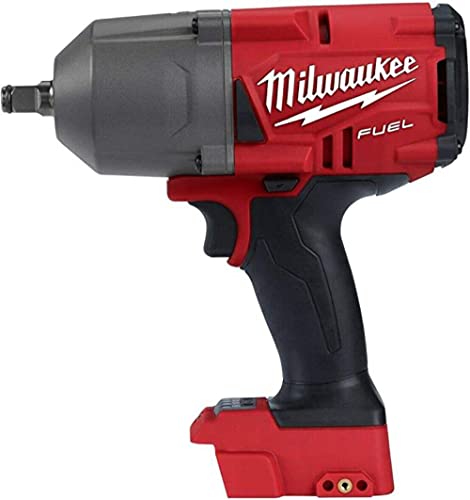
Milwaukee M18 FUEL 2767-20 High Torque 1/2-Inch Impact Wrench
by Milwaukee
The professional shop standard -- Milwaukee's M18 FUEL delivers 1,400 ft-lbs breakaway with the deepest verified review history and the most widely adopted professional battery platform.
Pros
- 1,000 ft-lbs fastening torque and 1,400 ft-lbs breakaway torque match the DeWalt's raw output while delivering it through Milwaukee's POWERSTATE brushless motor -- the engine bay workhorse that professional mechanics reach for by default
- M18 FUEL platform is the dominant professional cordless ecosystem in automotive shops -- more mechanics own M18 batteries than any competing platform, which makes the bare tool purchase a natural extension of existing inventory
- 4-mode DRIVE CONTROL with bolt removal mode provides electronic torque management specifically designed for automotive fastener work -- the bolt removal setting delivers controlled power that prevents rounding damaged fasteners
- More than 2,500 verified Amazon reviews at 4.7 stars represents the deepest long-term reliability dataset of any high-torque cordless impact wrench -- professional users have validated this tool across hundreds of thousands of collective shop hours
Cons
- 9.65-inch head length is the longest in this roundup -- in tight engine compartments and around exhaust manifolds, the extra length limits access compared to the shorter DeWalt and Makita
- Bare-tool pricing plus M18 battery investment makes this the highest total system cost for new Milwaukee buyers -- factor in a high-output battery and charger on top of the tool
Best Compact: Milwaukee M18 FUEL 2854-20 3/8-Inch Impact Wrench
The Milwaukee compact 3/8-inch is the impact wrench that changed how I work. I bought my first 1/2-inch high-torque impact 15 years ago and thought it was the only one I needed. The first time I used a compact 3/8-inch on an alternator bolt in a space where my 1/2-inch literally could not fit, I understood why every working mechanic owns both. At 4.8 inches and 2.7 pounds, this tool fits in your hand like an oversized screwdriver and reaches fasteners that make 1/2-inch impact wrenches irrelevant.
The 250 ft-lbs fastening and 500 ft-lbs breakaway sweet spot is calibrated precisely for the mid-torque range that covers the majority of engine bay work: brake caliper bolts, alternator mounting bolts, starter bolts, intake manifold fasteners, power steering pump bolts, and A/C compressor brackets. None of these fasteners require 1,000+ ft-lbs — they require a tool that fits in the space and delivers enough force to break them loose without rounding the head. The 3/8-inch drive and compact head profile accomplish that where no 1/2-inch tool can.
The 4.8-star rating across just over 2,000 reviews is not accidental. This is the impact wrench that professional mechanics consistently describe as the tool they use most in a typical workday — not the highest-torque tool, not the most powerful, but the one that fits in the most spaces and handles the most frequent tasks. The limitation is clear: this is not a wheel tool, not a suspension tool, and not an axle nut tool. Those jobs belong to the high-torque 1/2-inch wrenches. The 2854-20 handles everything else, and in a professional shop, everything else is 80 percent of the work. Check our OBD2 scanner guide for the diagnostic tool that pairs naturally with this level of engine bay work.

Milwaukee M18 FUEL 2854-20 Compact 3/8-Inch Impact Wrench
by Milwaukee
The compact impact wrench that professional mechanics use more than their high-torque tools -- 3/8-inch drive at 2.7 pounds fits where nothing else can and handles 80 percent of engine bay work.
Pros
- 4.8-inch head length is the most compact impact wrench in this roundup by a significant margin -- fits into engine bay spaces, around turbo plumbing, and behind dashboard components where no 1/2-inch tool can physically reach
- 250 ft-lbs fastening and 500 ft-lbs breakaway torque is calibrated for the mid-torque sweet spot -- covers brake caliper bolts, alternator bolts, starter bolts, and most engine accessories without the overkill of a high-torque tool
- 2.7 pounds bare tool weight means extended overhead work on exhaust systems and undercarriage components without the arm fatigue that 6-pound tools guarantee after 30 minutes
- Shares the top star rating in this roundup across a deep review base, and verified purchasers consistently describe it as the tool they reach for most often in a professional shop
Cons
- 3/8-inch drive limits socket selection and maximum torque transfer -- lug nuts, axle nuts, and heavy suspension work require stepping up to a 1/2-inch tool
- 500 ft-lbs breakaway torque cannot handle seized or heavily corroded fasteners that a 1,400 ft-lbs high-torque wrench will break loose -- this is a complement to a high-torque tool, not a replacement
Makita XWT08Z: Best for Raw Torque-Per-Dollar on the LXT Platform
The Makita XWT08Z earns its position on two strengths: the highest peak impact force among cordless options in independent testing, and the broadest cordless tool ecosystem of any single-voltage platform. At 740 ft-lbs fastening and 1,180 ft-lbs nut-busting torque, the raw bolt-breaking capability is genuine — independent tests from Pro Tool Reviews show Makita’s impact mechanism produces the highest measured peak torque output among mid-to-high torque cordless impact wrenches, even when competing tools have higher published specifications.
The Makita LXT 18V platform encompasses over 300 tools on a single battery, which is the largest single-voltage ecosystem in the industry. For a mechanic or trades worker who uses cordless tools across automotive, construction, and woodworking applications, the LXT platform provides maximum cross-discipline coverage without managing multiple battery chargers and chemistries. That platform advantage is the reason Makita maintains its market position despite the DeWalt and Milwaukee having higher published torque specifications.
The electric brake that stops the anvil immediately on trigger release is a safety feature I want to highlight specifically. When working near wiring harnesses, fuel lines, and brake lines — which is most engine bay work — a spinning anvil after trigger release can snag, cut, or damage components that are expensive and dangerous to compromise. The instant-stop brake eliminates that risk. The 10-inch head length and 7-pound weight are the honest limitations. This is the longest and heaviest cordless option in this roundup, and in tight engine bays that length costs you access. For open-access work like wheels, suspension, and underbody components, the Makita’s raw power is the advantage. For confined spaces, pair it with a compact 3/8-inch tool.
Worth knowing before you click through, as of September 2026: Amazon has no featured offer on this listing, so there is no single Add to Cart button and you choose from a list of third-party sellers instead. The price above is the cheapest New offer. There is a cheaper Used listing, and on a high-torque tool that someone may have leaned on for a year, I would pass. Check the seller’s rating and return terms first.

Makita XWT08Z 18V LXT Brushless High Torque 1/2-Inch Impact Wrench
by Makita
Makita's highest-torque 18V impact wrench with the peak impact force to match -- best for mechanics already invested in the LXT platform who need raw bolt-breaking power.
Pros
- 740 ft-lbs fastening and 1,180 ft-lbs nut-busting torque from Makita's brushless motor delivers genuine high-torque performance -- independent testing shows Makita produces the highest peak impact force in the mid-to-high torque class
- 4.8 stars across 2,230 verified reviews matches the Milwaukee compact for the highest rating in this roundup -- Makita's long-term quality reputation is validated by the review corpus, not just brand loyalty
- Makita LXT 18V platform has the broadest tool selection of any single-voltage cordless ecosystem -- over 300 tools on one battery platform means maximum flexibility for mechanics who also do construction or woodworking
- Electric brake stops the anvil immediately when the trigger is released -- a genuine safety feature when working near wiring harnesses, brake lines, or other components that a spinning anvil can damage
Cons
- 10-inch head length and 7 pounds make this the longest and heaviest cordless option in this roundup -- access in compact engine bays and around turbo plumbing is more restricted than the DeWalt or Milwaukee
- No multi-mode speed control beyond the variable-speed trigger -- DeWalt's Precision Wrench and Milwaukee's DRIVE CONTROL provide more granular electronic torque management for sensitive fasteners
- As of September 2026 Amazon shows no featured offer on this listing, so there is no one-click Add to Cart and you pick a seller from the buying-options list. The price here is the lowest New offer; the cheapest listing overall is a Used one, which I would not buy on a high-torque tool that may have been run hard. Third-party tool sellers also vary a lot on warranty support, so check the seller before ordering
CRAFTSMAN V20: The Budget Cordless Brushless Pick
The CRAFTSMAN V20 occupies a specific and valuable niche: it is one of the least expensive brushless 1/2-inch cordless impact wrenches from a mainstream tool brand, and for home mechanics who want a cordless brushless tool without stepping up to professional-grade pricing, it is the right answer. Brushless-and-cordless is what justifies its price over a basic corded budget tool like the CMEF901 — brushless motors deliver more torque per amp-hour of battery, run cooler under load, and have a significantly longer service life because there are no carbon brushes to wear and replace, and you can carry it to a roadside tire change.
At 275 ft-lbs fastening torque, the V20 sits below the corded CMEF901’s 450 ft-lbs and the mid-torque Milwaukee’s 500 ft-lbs. CRAFTSMAN reports fastening torque conservatively, and in practice the brushless motor delivers consistent sustained torque under load — enough for passenger-car lug nuts, brake work, and light suspension fasteners without strain. What you are really buying over the corded pick is portability and a finer trigger, not more raw torque.
The CRAFTSMAN V20 platform has a meaningful cost advantage at the ecosystem level. V20 batteries and chargers are consistently priced 20 to 30 percent below Milwaukee M18 and DeWalt 20V MAX equivalents at Lowe’s and Amazon, and the battery starter kits frequently go on promotional pricing. For a home mechanic assembling a first cordless tool collection, V20 provides the lowest total ecosystem cost while maintaining brushless motor quality. The 234-review count is the honest limitation — less durability data than tools with 2,000-plus reviews, which means long-term reliability is projected rather than proven. Note too that this is a bare tool, so a battery and charger are still on top of the sticker price, which is exactly the cost the corded pick avoids. For weekend automotive work at home, the CRAFTSMAN V20 delivers genuine value at a price point that makes brushless impact wrenches accessible.
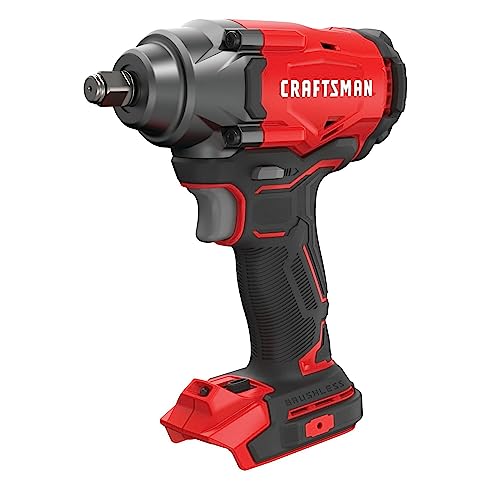
CRAFTSMAN V20 Cordless Brushless 1/2-Inch Impact Wrench
by CRAFTSMAN
The best-value brushless impact wrench here -- CRAFTSMAN's V20 delivers cordless brushless efficiency at a price point that undercuts professional brands -- the go-anywhere budget pick alongside the corded CMEF901.
Pros
- Its brushless motor makes this among the most affordable brushless 1/2-inch cordless impact wrenches available -- it is the cordless budget step-up for anyone who needs to work away from an outlet, where the corded CMEF901 cannot go
- 275 ft-lbs fastening torque handles passenger vehicle lug nuts and standard brake and suspension fasteners -- calibrated for the home mechanic who needs more than a drill but does not need professional-grade 1,000+ ft-lbs
- CRAFTSMAN V20 platform batteries are widely available at Lowe's and Amazon with frequent promotional pricing -- the ecosystem cost of entry is lower than Milwaukee or DeWalt for first-time cordless tool buyers
- Hog ring anvil allows fast one-handed socket changes without a pin and clip -- practical when you are cycling between socket sizes during brake or wheel work
Cons
- 275 ft-lbs fastening torque is the second-lowest in this roundup -- seized bolts, axle nuts, and any heavy-duty truck work will exceed this tool's output
- Only 234 verified reviews at the time of evaluation -- less long-term reliability data than the DeWalt, Milwaukee, or Makita options with 2,000+ reviews each
- 2-mode speed setting is basic compared to the 4-mode control on the DeWalt and Milwaukee -- less flexibility for torque-sensitive applications
Ingersoll Rand 2235TiMAX: The Professional Pneumatic Benchmark
The Ingersoll Rand 2235TiMAX exists in this roundup for one reason: it is the impact wrench against which every cordless tool is ultimately measured, and for mechanics with an air compressor already plumbed in their shop, it remains the superior tool for sustained heavy-duty work. With more than 2,700 verified Amazon reviews at 4.7 stars — the highest review count of any impact wrench in this roundup — the 2235TiMAX has been validated across more collective professional shop hours than any cordless tool can claim.
The pneumatic advantage is not torque — modern cordless tools match or exceed the 2235TiMAX’s 1,350 ft-lbs reverse. The advantage is consistency and endurance. An air-powered impact wrench delivers the same torque on the thousandth bolt as the first, without battery degradation, thermal throttling, or the runtime ceiling that every cordless tool hits during extended work sessions. In a professional shop where a mechanic breaks loose 50 to 100 fasteners per day, that consistency matters. The titanium hammer case keeps weight at 4.6 pounds — lighter than most cordless high-torque wrenches with their batteries installed — which reduces fatigue during all-day use.
The mechanical simplicity supports a realistic 20-year service life with nothing more than periodic air line oiling and occasional O-ring replacement. Verified reviewers report 8 to 12 years of daily professional use with zero degradation — a lifespan that no cordless tool with electronic speed controllers, lithium batteries, and brushless motor windings can realistically match. The limitation is obvious: you need an air compressor rated at minimum 5.3 CFM at 90 PSI, plus air hoses, moisture separators, and the floor space to house it all. If you already have that infrastructure, the 2235TiMAX costs less per year of service than any cordless alternative. If you do not, the total system investment runs high and cordless is the smarter path. For complete jump starter coverage in your shop, check our dedicated guide.

Ingersoll Rand 2235TiMAX 1/2-Inch Drive Air Impact Wrench
by Ingersoll Rand
The professional pneumatic benchmark -- unlimited runtime, 20-year service life, and nearly 2,800 verified reviews make this the impact wrench that built the reputation every cordless tool is measured against.
Pros
- 1,350 ft-lbs max reverse torque from a pneumatic motor delivers consistent, unlimited runtime without battery degradation -- the air-powered impact wrench that has been the professional shop standard for decades
- Titanium hammer case reduces weight to 4.6 pounds while maintaining the structural integrity required for professional daily use -- lighter than most cordless high-torque wrenches despite housing a pneumatic motor
- 4.7 stars across nearly 2,800 verified reviews represents the most validated impact wrench in this entire roundup -- mechanics who have used this tool for 5 to 10 years report zero functional degradation with basic oiling maintenance
- No battery to charge, no motor to burn out, and no electronics to fail -- the mechanical simplicity of an air tool means a 20-year service life is realistic with proper air line maintenance and periodic oiling
Cons
- Requires an air compressor rated at minimum 5.3 CFM at 90 PSI -- if you do not already own a shop compressor, the total system cost (compressor plus air lines plus tool) runs high and takes up significant garage floor space
- Tethered to an air hose eliminates the portability advantage that makes cordless tools dominant for roadside, driveway, and mobile mechanic applications
AIRCAT NITROCAT 1056-XL: Best Value Air Impact Wrench
The AIRCAT NITROCAT 1056-XL is the air impact wrench I point home mechanics toward when they have a compressor but do not want to spend Ingersoll Rand money. Its patented twin-clutch mechanism delivers around 1,050 ft-lbs of nut-busting torque — genuine high-torque capability that breaks loose the seized lug nuts and suspension bolts a lightweight air gun simply cannot move. For a shop already plumbed with air, this tool covers the vast majority of automotive removal work at a price that undercuts most cordless high-torque units once you account for battery and charger cost.
Two things set the NITROCAT apart from a generic air gun. First, the tune-up muffler and patented exhaust design bring the operating noise down to roughly 86 dBA — that is a meaningful difference in a home garage where you are not wearing shop-grade ear protection for eight hours straight, and where a screaming 100-plus dBA air gun makes the whole job unpleasant. Second, the composite housing keeps the tool near 3.9 pounds, among the lightest 1/2-inch air impacts available, which spares your wrist and forearm during a long brake or suspension job. It also sips air at about 4.0 CFM at 90 PSI, so a mid-size compressor keeps up where a thirstier gun would starve. The honest limitations are the ones inherent to any air tool: you need a compressor and hose, the twin-clutch mechanism wants periodic oiling, and its 1,050 ft-lbs trails the Ingersoll Rand’s 1,350 ft-lbs of reverse torque for the most stubborn rust-belt hardware. For the value-minded mechanic with shop air, it is the smart pick.
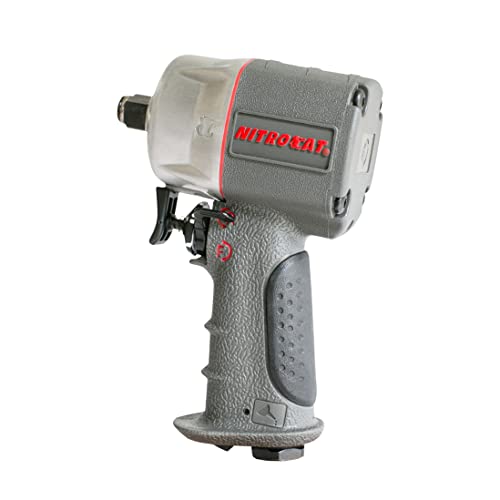
AIRCAT NITROCAT 1056-XL 1/2-Inch Composite Air Impact Wrench
by AIRCAT
The value air impact wrench -- twin-clutch 1,050 ft-lbs of nut-busting torque in a light 3.9-pound composite body that runs quieter and on less air than most high-torque air guns.
Pros
- 1,050 ft-lbs of maximum nut-busting torque from a patented twin-clutch mechanism breaks loose seized lug nuts and suspension hardware that lighter air guns cannot touch -- genuine high-torque air performance in a value-priced tool
- Patented tune-up muffler and exhaust design drop the operating noise to roughly 86 dBA -- noticeably quieter than the 100-plus dBA screech of a typical air impact, which matters in a home garage where you are not wearing shop-grade hearing protection all day
- Composite housing keeps the tool at about 3.9 pounds -- among the lightest 1/2-inch air impacts available, which cuts wrist and forearm fatigue during extended brake or suspension jobs
- Feathering trigger and forward/reverse dial give precise control for running fasteners down without blasting them, and the tool only demands about 4.0 CFM at 90 PSI -- lower air consumption than most high-torque air impacts, so a mid-size compressor can keep up
Cons
- Requires an air compressor and hose -- there is no cordless option, so a garage without shop air cannot use this tool at all
- 1,050 ft-lbs nut-busting torque trails the 1,350 ft-lbs of the Ingersoll Rand 2235TiMAX -- for the most stubborn axle nuts and rust-belt truck hardware, the Ingersoll Rand has more headroom
- Twin-clutch mechanism needs periodic oiling like any air tool -- skip the maintenance and the impact mechanism wears faster than a sealed cordless motor
Best Cordless Impact Wrenches
For most home mechanics buying their first impact wrench, cordless is the right call — no hose, no compressor, and full portability for driveway, roadside, and mobile work. The four cordless picks below span the full range: pick the DEWALT DCF900 or Milwaukee 2767-20 if you fight seized truck and suspension hardware, the Makita if you already own LXT tools, or the CRAFTSMAN V20 if you want brushless efficiency on a budget.
| Product | Price | Buy |
|---|---|---|
| DEWALT 20V MAX DCF900 Brushless High Torque 1/2-Inch Impact WrenchBest cordless overall 1,400 ft-lbs breakaway plus Precision Wrench control handles every fastener | $199.99 | View on Amazon |
| Milwaukee M18 FUEL 2767-20 High Torque 1/2-Inch Impact WrenchBest pro-platform pick M18 FUEL platform most pro shops already own | $277.99 | View on Amazon |
| Makita XWT08Z 18V LXT Brushless High Torque 1/2-Inch Impact WrenchBest for LXT owners Highest peak impact force on the 300-plus tool LXT platform | $285.78 | View on Amazon |
| CRAFTSMAN V20 Cordless Brushless 1/2-Inch Impact WrenchBest budget cordless Brushless efficiency at the lowest 1/2-inch cordless price point | $169.00 | View on Amazon |
Best Air (Pneumatic) Impact Wrenches
If your garage already has a compressor and air lines, an air impact wrench delivers unlimited runtime and a service life no cordless tool can match. The two air picks below cover both ends: the Ingersoll Rand 2235TiMAX is the decades-proven professional benchmark with the most torque headroom, while the AIRCAT 1056-XL is the lighter, quieter, lower-air value choice for a home shop.
| Product | Price | Buy |
|---|---|---|
| Ingersoll Rand 2235TiMAX 1/2-Inch Drive Air Impact WrenchBest air impact overall 1,350 ft-lbs reverse and a realistic 20-year service life | $293.14 | View on Amazon |
| AIRCAT NITROCAT 1056-XL 1/2-Inch Composite Air Impact WrenchBest value air impact 1,050 ft-lbs at 3.9 lbs, ~86 dBA, and only 4.0 CFM demand | $130.25 | View on Amazon |
Best High-Torque Impact Wrenches
When the job is axle nuts, harmonic balancers, or seized rust-belt suspension hardware, breakaway torque above 1,000 ft-lbs is the specification that matters. All three high-torque cordless picks below clear that bar — choose based on the battery platform you own and how tight your engine-bay access is.
| Product | Price | Buy |
|---|---|---|
| DEWALT 20V MAX DCF900 Brushless High Torque 1/2-Inch Impact WrenchHighest combined torque 1,400 ft-lbs breakaway with the shortest head of the three | $199.99 | View on Amazon |
| Milwaukee M18 FUEL 2767-20 High Torque 1/2-Inch Impact WrenchDeepest pro track record 1,400 ft-lbs breakaway validated across ~2,500 reviews | $277.99 | View on Amazon |
| Makita XWT08Z 18V LXT Brushless High Torque 1/2-Inch Impact WrenchHighest peak impact force 1,180 ft-lbs nut-busting with an electric anvil brake | $285.78 | View on Amazon |
Best 3/8-Inch Compact Impact Wrenches
A compact 3/8-inch impact wrench is the tool that fits where a 1/2-inch gun physically cannot — alternator bolts, starter bolts, intake fasteners, and anything buried in a modern engine bay. The Milwaukee 2854-20 is the standout here: at 4.8 inches and 2.7 pounds it is a fraction of the size of its 1/2-inch siblings, and its 500 ft-lbs breakaway covers the mid-torque work that makes up most underhood jobs. Think of it as a complement to a high-torque 1/2-inch tool, not a replacement — it will not touch a seized axle nut, but it handles roughly 80 percent of engine-bay fasteners with room to spare.
| Product | Price | Buy |
|---|---|---|
| Milwaukee M18 FUEL 2854-20 Compact 3/8-Inch Impact WrenchBest compact 3/8-inch 4.8-inch head and 2.7 lbs reach engine-bay fasteners no 1/2-inch tool can | $151.90 | View on Amazon |
Best Budget Impact Wrenches
You do not need to spend professional-tool money to remove lug nuts and do basic brake work on a passenger car. Both budget picks below handle standard automotive fasteners, and both are CRAFTSMAN — the split between them is power source, not brand. The corded CMEF901 is the lowest total cost of entry because there is no battery or charger to buy, while the cordless V20 adds portability and a brushless motor for a bare-tool price that climbs once you add a battery.
| Product | Price | Buy |
|---|---|---|
| CRAFTSMAN CMEF901 7.5-Amp Corded 1/2-Inch Impact WrenchBest budget overall 450 ft-lbs of corded power with no battery or charger to buy | $129.00 | View on Amazon |
| CRAFTSMAN V20 Cordless Brushless 1/2-Inch Impact WrenchBest budget brushless Cordless brushless efficiency and longer motor life at a mid-range price | $169.00 | View on Amazon |
Other Impact Wrench Types Worth Considering
Beyond the main power-source and torque categories, a few specialized picks fill specific gaps. If space is your constraint above all else, the mini/stubby angle below is worth a look.
| Product | Price | Buy |
|---|---|---|
| Milwaukee M18 FUEL 2854-20 Compact 3/8-Inch Impact WrenchBest mini/stubby impact wrench The shortest, lightest impact here for the tightest engine-bay spaces | $151.90 | View on Amazon |
How to Choose the Best Impact Wrench
The Torque You Actually Need — An Automotive Guide
The most common mistake home mechanics make when buying an impact wrench is buying for the highest torque number without understanding what torque their work actually requires. Here is the practical map:
Standard passenger car lug nuts are torqued to 80 to 100 ft-lbs from the factory. Any impact wrench in this roundup — including the corded CMEF901 — can break those loose easily. Brake caliper mounting bolts range from 25 to 70 ft-lbs. Suspension control arm bolts range from 90 to 150 ft-lbs. These are all comfortably within the capability of a 450 ft-lbs tool.
The work that requires high-torque tools starts at axle nuts (150 to 250 ft-lbs, but often seized and corroded to effective holding values of 500+ ft-lbs), harmonic balancer bolts (60 to 200 ft-lbs but notoriously seized), and exhaust manifold bolts (which can be seized by rust and heat cycling to effective holding values that exceed their original torque by multiples). Full-size truck lug nuts torqued to 140 to 165 ft-lbs are comfortably within mid-range tools, but corroded truck fasteners in salt-belt states require high-torque tools to break loose reliably.
Match the tool to the work: if you change tires and do basic brake work on passenger vehicles, a 300-to-400 ft-lbs tool is adequate. If you do suspension work, exhaust work, or service trucks, 1,000+ ft-lbs breakaway is the right specification.
Why You Cannot Skip the Torque Wrench
An impact wrench is a removal tool and a rough-installation tool. It is not a torque wrench, and no amount of electronic speed control or precision modes changes that fundamental limitation. Final tightening of safety-critical fasteners — lug nuts, caliper bolts, suspension bolts, cylinder head bolts — requires a calibrated torque wrench set to the manufacturer’s published specification.
The impact wrench runs the fastener down to near-seated quickly. The torque wrench finishes the job precisely. Skipping the second step is the cause of more wheel-off incidents, warped brake rotors, and stripped threads than any other single practice in home garages. A calibrated torque wrench is the tool that completes the workflow.
Impact Sockets Are Non-Negotiable
Standard chrome vanadium sockets are engineered for hand tools where force is applied gradually. Impact wrenches deliver force in rapid, high-energy hammer blows that chrome sockets are not designed to absorb. Under impact loading, chrome sockets can crack, chip, or shatter — sending metal fragments at high velocity in an enclosed space. This is not a theoretical risk; it happens in shops where someone grabs the wrong socket tray.
Impact sockets are manufactured from chrome molybdenum steel, which is softer and more ductile than chrome vanadium. The ductility allows impact sockets to absorb repeated hammer blows by flexing microscopically rather than fracturing. Impact sockets are identifiable by their black oxide or phosphate finish and thicker wall construction. Never use a shiny chrome socket on an impact wrench. If you are building your first impact socket set, buy a complete metric and SAE set in the drive size that matches your wrench — individual sockets cost three to five times more per piece than a set.
Final Verdict
For the home mechanic doing regular automotive work beyond basic maintenance, the DEWALT DCF900 is the impact wrench I recommend. The combination of 1,400 ft-lbs breakaway torque, Precision Wrench control, and a compact 8.43-inch head length covers the widest range of automotive applications with the best balance of power and control. If you are already invested in the Milwaukee M18 ecosystem, the Milwaukee 2767-20 delivers equivalent capability with the DRIVE CONTROL system and the professional shop’s most widely adopted battery platform.
For budget-conscious buyers who change their own tires and do basic brake work, the CRAFTSMAN CMEF901 gets the job done. For the mechanic who wants one tool that fits everywhere in the engine bay, the Milwaukee 2854-20 compact 3/8-inch is the impact wrench I personally use more than any other tool in my shop. And for the professional with air lines already plumbed, the Ingersoll Rand 2235TiMAX remains the benchmark that cordless tools are still catching — not on torque, but on the decades-long service life that only mechanical simplicity provides.
Whatever you choose, pair it with impact sockets, a calibrated torque wrench, and the understanding that the impact wrench starts the job and the torque wrench finishes it. That workflow is the difference between a well-maintained vehicle and a roadside emergency.
Buyer's Guide
Choosing the right impact wrench comes down to matching torque output, drive size, and power source to the specific fasteners you work with most. Every choice in this guide flows from one question: what are you actually unbolting?
Torque Class and Automotive Application
Impact wrenches fall into three torque classes that map directly to automotive work. Compact or light-duty tools under 400 ft-lbs handle lug nuts on passenger cars, brake caliper bolts, and most engine accessories -- this is the corded CMEF901 and cordless CRAFTSMAN V20 tier. Mid-torque tools from 500 to 800 ft-lbs cover everything the light-duty class does plus suspension bolts, exhaust manifold fasteners, and moderately corroded hardware -- the Milwaukee compact and Makita occupy this range. High-torque tools above 1,000 ft-lbs handle axle nuts, harmonic balancers, heavily seized suspension components, and truck lug nuts -- the DeWalt DCF900 and Milwaukee 2767-20 live here. Match the torque class to your vehicle type and the fasteners you encounter most frequently. Buying more torque than you need wastes money; buying less means a tool that cannot finish the job.
Drive Size -- 1/2-Inch vs. 3/8-Inch
Drive size determines socket compatibility and maximum torque transfer. A 1/2-inch drive is the universal standard for automotive impact work -- the broadest socket selection, the highest torque capacity, and compatibility with every wheel and suspension application. A 3/8-inch drive is the specialist choice for engine bay and underhood work where the smaller head profile fits into spaces a 1/2-inch tool physically cannot reach. Professional mechanics typically own one of each. Home mechanics buying their first impact wrench should choose 1/2-inch for maximum versatility. Only choose 3/8-inch as your sole impact wrench if your work is exclusively engine-internal and you never need to remove wheels or suspension components.
Cordless vs. Air-Powered
Cordless impact wrenches now match air tools on torque output and dominate on convenience -- no hose, no compressor, full portability. The trade-off is battery runtime, weight with battery installed, and long-term motor lifespan. Air-powered impact wrenches deliver unlimited runtime at lower weight with mechanical simplicity that supports 20-year service lives, but require a compressor rated at minimum 5 CFM at 90 PSI -- a significant space and cost investment. For a home garage without an existing compressor, cordless is the rational choice. For a professional shop with air lines already plumbed, the Ingersoll Rand 2235TiMAX remains the benchmark for sustained heavy-duty work. Do not buy an air impact wrench planning to pair it with a pancake compressor -- small compressors cannot maintain the CFM these tools demand under load.
Battery Platform and Ecosystem Cost
The bare tool price is never the real cost of a cordless impact wrench. The actual investment includes batteries, charger, and future tools on the same platform. Milwaukee M18, DeWalt 20V MAX, Makita 18V LXT, and CRAFTSMAN V20 are all closed ecosystems -- batteries from one brand do not work with another. If you already own cordless tools, buying within your existing platform eliminates a chunk of battery and charger costs. If you are starting fresh, factor total system cost: the DeWalt DCF900 bare tool becomes noticeably more with a battery and charger. A corded tool like the CMEF901 sidesteps the ecosystem question entirely -- there is no battery to buy, ever; among cordless platforms CRAFTSMAN V20 has a low cost of entry, and Milwaukee M18 has the widest professional tool selection. Choose the platform, then choose the tool.
Head Length and Weight
Head length determines access in tight spaces. The Milwaukee compact at 4.8 inches fits where nothing else can. The DeWalt DCF900 at 8.43 inches is mid-pack. The Makita at 10 inches requires the most clearance. In automotive work, engine bay access, exhaust manifold bolts, and subframe fasteners are frequently in spaces where a longer tool cannot physically reach the fastener or cannot achieve the angle needed to seat a socket. Weight compounds the access problem -- a 7-pound tool held at arm's length overhead becomes a fatigue issue within 15 minutes. If you frequently work in confined engine bays, prioritize head length over raw torque. If you primarily do wheel, suspension, and open-access work, torque matters more than length.
Anvil Type -- Hog Ring vs. Friction Ring
The anvil retains the socket on the drive square. Hog ring anvils use a spring-loaded ring that snaps into the socket groove -- sockets go on and come off quickly with one hand, which is valuable when cycling through multiple socket sizes during brake or wheel work. Friction ring anvils use a rubber or spring ring that grips the socket by friction -- sockets are slightly harder to change but are retained more securely under vibration and angular loading. For general automotive work at ground level, hog ring is more convenient. For overhead work, work at angles, or situations where a dropped socket means 20 minutes of retrieval, friction ring is the safer choice. Neither is objectively better -- match the retention type to how and where you use the tool most.
Frequently Asked Questions
What is the difference between fastening torque and breakaway torque?
Do I still need a torque wrench if I have an impact wrench?
What size impact wrench do I need for automotive work?
How much torque do I need to remove lug nuts?
Is a cordless impact wrench as powerful as an air-powered one?
Can I use chrome sockets with an impact wrench?
Related Articles
About the Reviewer

Mike Reeves, ASE Master Technician
A.A.S. Automotive Technology, Universal Technical Institute (UTI)
Mike Reeves is an ASE Master Technician with 15 years of hands-on experience in automotive repair and diagnostics. He earned his A.A.S. in Automotive Technology from UTI and runs his own independent shop in Denver, Colorado. Mike founded RevRated to help everyday car owners make smarter parts decisions -- every recommendation comes from real-world testing in his garage.