How to Winterize Your Car: A 20-Point ASE Technician's Checklist (2026)
An ASE Master Tech's complete 20-point car winterization checklist — battery, tires, oil, coolant, brakes, visibility, and the emergency kit that actually keeps you alive when things go wrong.
Updated
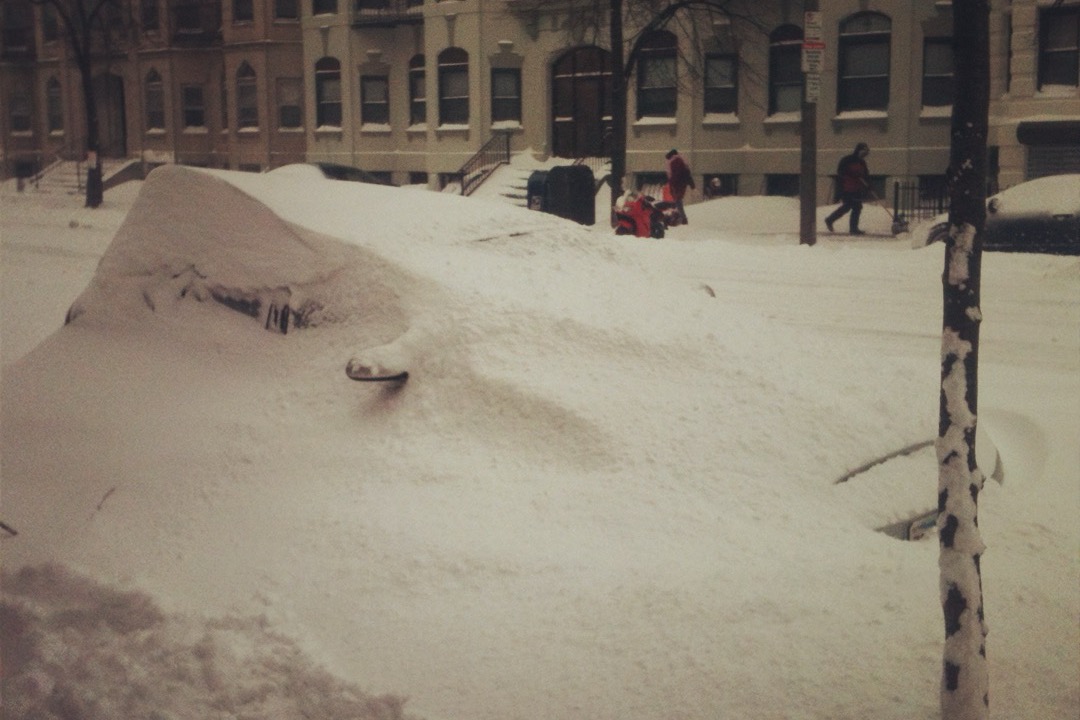
A few winters ago, on the second-coldest morning of January, a regular customer rolled into the lot on the back of a flatbed. His Subaru Outback — the kind of car that should have shrugged off a Northeast winter — had died on the side of I-91 at three in the morning with his wife and two kids in the cabin. Not a flat. Not an accident. The battery, an original-equipment unit on its sixth winter, had simply given up halfway home from a holiday visit. He had jumped it twice in the prior week and ignored what those jumps were telling him. The tow alone cost more than the battery I would have sold him in October. The hour his family spent in a freezing car waiting for the truck cost more than that. And his wife, who had not been quiet about her opinion of his maintenance philosophy on the way home, made the long-term cost considerably higher.
Winter is when the bill comes due for everything you have been putting off. Marginal batteries that started fine in July do not start in January. Worn wipers that streaked a little in October streak so badly in a sleet storm that you cannot see the road. Tires that gripped well enough on dry pavement turn into hockey pucks below 40 degrees. Brake fluid that has been quietly absorbing moisture for three summers boils on the first long downhill in the snow. None of these are dramatic failures in isolation — they are the slow, predictable consequences of skipping the inspection that takes an afternoon and prevents the breakdown that ruins a week.
I am Mike Reeves, an ASE Master Technician with over twenty years on the shop floor. This is the winterization checklist I would give a family member — twenty specific things to check, in priority order, with the honest reasoning for each one. No marketing fluff. No “consult a professional” hedging on the items you can actually do yourself. Read it once before the first hard freeze, work through it on a Saturday, and your vehicle will start every morning, see clearly through every storm, and get you home from every drive. That is the deal.
Winterize Your Car at a Glance
The full 20-point checklist in one scannable table. Detail by section follows.
| Task | What to Check | DIY or Shop | When to Do It |
|---|---|---|---|
| Battery load test | CCA capacity, age, terminal corrosion | DIY (parts store does it free) | Late October |
| Battery terminals | Clean, tight, no corrosion | DIY — 10 min | Late October |
| Tire tread depth | 6/32” minimum for snow, 4/32” min for wet | DIY — penny or quarter test | Late October |
| Tire pressure | Set to door-jamb spec, recheck monthly | DIY — gauge and inflator | Monthly through winter |
| Winter tires (if applicable) | Mount and balance, store summer tires | Shop — 60 min | Before sustained sub-45° |
| Engine oil | Full synthetic, correct viscosity | DIY or shop | Per service schedule |
| Coolant freeze point | 50/50 mix protects to -35°F | DIY — refractometer | Annually |
| Coolant condition | Clear, correct color, no rust particles | DIY visual + test | Annually |
| Brake fluid | 2-year flush regardless of mileage | DIY (with kit) or shop | Every 2 years |
| Brake pad thickness | Above 4mm front, 5mm rear | DIY visual or shop | Late October |
| Wiper blades | Front and rear, replace if streaking | DIY — 5 min | Late October |
| Washer fluid | Winter blend rated for your low temp | DIY — drain and refill | Late October |
| Headlights and tail lights | All bulbs working, lenses clear | DIY — replace bulbs | Late October |
| Defroster grid | Rear defroster fully clears glass | DIY visual | Late October |
| Belts and hoses | No cracks, glazing, or soft spots | DIY visual + squeeze | Late October |
| Block heater (diesel/cold) | Cord intact, plug works | DIY visual | Late October |
| Fuel anti-gel (diesel) | Treat at every fill below 20°F | DIY at the pump | All winter |
| Tire chains or traction aids | Sized correctly, practiced installation | DIY purchase, practice | Before mountain trips |
| Emergency kit — everyday | Phone charger, flashlight, basic kit | DIY assembly | Late October |
| Emergency kit — severe weather | Blankets, water, food, shovel | DIY assembly | Before Snow Belt drives |
Now the detail. Skip ahead to whatever section matters for your climate.
Battery — The Most Common Winter Failure
Number one cause of winter no-starts, every year, in every shop in the country. A battery that turned the engine over fine on a 60-degree October morning has roughly 35 percent less effective cranking capacity at zero degrees Fahrenheit, while the engine itself needs roughly twice the cranking power to overcome cold-thickened oil. The math is brutal — a battery that was at the edge of acceptable in fall is no longer enough by January.
Cold-Cranking Amps and Why They Matter
Every battery is rated for two capacities. Cranking Amps (CA) measures performance at 32 degrees Fahrenheit. Cold-Cranking Amps (CCA) measures performance at zero degrees. The CCA number on the battery’s label is what your engine actually needs in winter. Match or exceed the original-equipment CCA spec for your vehicle — going below saves a few dollars on the battery and costs hundreds on the eventual no-start tow.
A new, fully charged battery delivers full rated CCA. By year three, most batteries are delivering 70 to 80 percent of original capacity. By year five, often less than 50 percent. A battery that reads a healthy 12.6 volts at rest can still fail under load — voltage testing alone is not enough, which is why every legitimate battery test is a load test.
Load Test, Not Voltage — The Difference
A voltage test measures what the battery can output at rest. A load test measures what the battery can output under simulated cranking load — typically half its rated CCA for 15 seconds. Healthy batteries hold above 9.6 volts under load. Failing batteries sag well below that, and the technician sees the failure in real time.
Every parts store will load-test a battery free in about 10 minutes. There is no excuse to skip it. Have the test done in late October every year, and the conversation with the technician afterward — pass, marginal, or fail — tells you everything you need to know about your winter starting situation.
Age Threshold and the Pre-Emptive Replace Decision
Most lead-acid batteries are done at four to seven years. Past four years, the math starts favoring pre-emptive replacement before the failure stranding cost rather than waiting for the actual failure. The cost of a quality battery is a fraction of one tow plus one missed appointment plus the inconvenience of a no-start in a parking lot. If your battery is past four years and shows any weakness on the load test, replace it before winter, not during.
Terminal Cleaning — The Free Capacity Recovery
Corrosion on the battery terminals — the white, blue, or green crusty deposits — adds resistance to the circuit and effectively reduces available cranking amps. A terminal-cleaning job is 10 minutes with a wire brush, no tools beyond the wrench to disconnect the cables and a dollar-store brush to clean the posts. Many marginal batteries return to acceptable performance after a thorough terminal cleaning. If the cables themselves show corrosion under the insulation (squeeze them — soft or crusty cable means corrosion has wicked up the wire), the cables need replacement too.
What Battery Failure Actually Costs You
A no-start in your driveway is 30 minutes and a jump from a neighbor. A no-start at work is a tow truck and a missed afternoon. A no-start on a remote highway in winter is a survival situation — the engine cannot run to power the heater, cabin temperature drops to outside ambient within 30 minutes, and you are now waiting for a tow truck in conditions that can be dangerous within hours. Our best jump starters guide covers compact lithium jump packs that live in your trunk and turn that worst-case scenario into a five-minute inconvenience, and our best car battery chargers roundup covers the smart maintainers that keep batteries healthy in vehicles that sit (the leading cause of premature winter battery death).
Tires — Pressure, Tread, and the Winter Tire Question
The four contact patches between you and the road are the last thing standing between control and a guardrail when the weather turns. Tire prep is non-negotiable.
The 1 PSI per 10°F Rule
Tire pressure changes about 1 PSI for every 10-degree change in ambient temperature. A tire set to 35 PSI on a 75-degree afternoon will read 30 PSI on a 25-degree morning. Underinflated tires wear faster, hurt fuel economy, increase stopping distance, and overheat at highway speed in ways that cause sudden failure. The fix is monthly pressure checks through the cold months, set to the door-jamb spec on cold tires (driven less than a mile).
A quality pressure gauge that reads accurately within 1 PSI is the most leveraged tool in winter prep — our best tire pressure gauges guide covers digital and analog options that work in cold weather where pencil-style gauges become unreliable. Pair it with a portable inflator that handles cold-temperature pressure adjustments without a trip to a gas station.
Penny vs. Quarter Test — Why 4/32” Matters in Winter
The classic penny test — Lincoln’s head pointing down, if you can see the top of his head, the tire is at or below 2/32 inch and legally bald — is the bare minimum. For winter, the better test is the quarter test (Washington’s head, 4/32 inch) which represents the threshold below which wet-weather and snow performance fall off a cliff. A tire that is fine for summer at 4/32 inch is marginal for winter. Below 4/32, replace before winter starts, not during.
All-Season vs. Winter Tire Decision Matrix
The decision is not personal preference — it is climate. Below 45 degrees, all-season tire compounds harden and lose grip on dry pavement, before snow even enters the equation. The tradeoff matrix, as I present it to customers:
Sun Belt (rare freezing, no snow): All-season tires, full stop. Winter tires would wear out in summer for no benefit.
Transition zone (regular freezing temperatures, occasional snow): All-season tires with adequate tread are acceptable. All-weather tires carrying the three-peak mountain snowflake symbol are better. Dedicated winter tires are excellent if you commute in poor weather.
Snow Belt (sustained sub-freezing, regular snow and ice): Dedicated winter tires are not optional. The 30 to 40 percent reduction in stopping distance on ice is the difference between stopping at the intersection and sliding through it into traffic.
When the time comes to replace summer tires, our best all-season tires guide covers options for daily driving across mixed conditions. For dedicated winter rubber, look at performance studless options for plowed-road regions and studded or aggressive-tread options for areas that see regular ice.
Engine Oil — Viscosity Matters More in Cold
Oil that is fine in summer can starve a cold engine for the first critical seconds after startup. The fix is the right viscosity, and synthetic in any climate that sees freezing temperatures.
The W-Number System Explained Plainly
Modern oil grades use two numbers separated by a W. The W stands for winter. The number before the W (like the 5 in 5W-30) indicates cold-weather flow performance — lower number means better cold flow. The number after (the 30) indicates protection at full operating temperature. So 0W-20 flows better in cold than 5W-30, but 5W-30 protects better at high temperatures than 0W-20. Modern engines specify exact viscosity grades because their oil passages, bearing clearances, and oil pump volumes are designed for that specific oil.
The single most important rule: use exactly what your owner’s manual specifies. Substituting heavier oil “for protection” in winter is wrong — heavier oil flows slower at startup and bearings run dry for longer in the seconds that matter most. Use the spec on the oil cap or in the manual. Period.
Synthetic vs. Conventional Cold Flow
Where you have flexibility is the synthetic-versus-conventional choice. Full synthetic oil flows significantly better at extreme cold temperatures than conventional oil of the same viscosity grade. At zero degrees Fahrenheit, a 5W-30 full synthetic reaches engine bearings several seconds faster than a 5W-30 conventional. Those seconds are when most engine wear happens — the cold-start dry-bearing window before oil pressure fully builds.
In any climate that sees consistent freezing temperatures, full synthetic is the right choice regardless of cost — the wear reduction over the life of the engine is real, and the cold-flow advantage is meaningful. Our best synthetic motor oil guide ranks the formulations with verified cold-flow performance for daily drivers and turbocharged engines. For older vehicles, our best motor oil for high mileage roundup covers formulations with seal conditioners that matter more as engines age and seals shrink.
Coolant — Don’t Trust the Color or the Strip Test
Coolant does three jobs in winter: prevents freezing, raises boiling point, and protects metal cooling system components from corrosion. All three depend on the right concentration of the right chemistry, and the tests most owners use are unreliable.
50/50 Mix and Freeze Point
Standard coolant is mixed 50 percent antifreeze concentrate and 50 percent distilled water. That mixture protects against freezing down to roughly minus 35 degrees Fahrenheit, which covers almost all of North America in almost all winters. Climates that see consistent sub-zero conditions can run a 60/40 mix (more concentrate, less water) for additional freeze protection down to roughly minus 60 degrees. Going beyond 70 percent concentrate actually reduces cooling efficiency in summer and is not worth the tradeoff.
If your coolant freezes in the engine, the resulting expansion can crack the engine block, the cylinder head, the radiator, or the heater core. A cracked block is typically a totaled engine. The cost of testing freeze point annually is essentially zero. Skip the test once and pay for the entire engine.
Refractometer vs. Test Strips — Why One Lies
The cheap floating-ball hydrometers and the chemical test strips at parts stores are unreliable. Hydrometers depend on fluid temperature, are easily fooled by old coolant chemistry, and frequently give false readings within the safe range when the coolant is actually marginal. Strips test pH and one or two additive markers but cannot measure freeze protection directly.
A proper digital or optical refractometer measures the refractive index of the fluid, which corresponds directly to freeze point regardless of additive package. They run a fraction of the cost of one cooling system repair and last forever. Test annually, and replace coolant when freeze protection has dropped or when the fluid is past the manufacturer’s age interval.
Signs of Coolant Degradation
The coolant in the overflow tank should be clear (or whatever color the chemistry uses — green, orange, pink, blue, yellow — but transparent within that color, not muddy). Cloudy coolant means contamination. Rust-colored particles mean internal corrosion is already happening, often a warning of an aging water pump or a degrading head gasket. An oily film on top of the coolant means oil is mixing in, typically a head gasket failure or a transmission cooler failure. Any of these signs means the cooling system needs immediate inspection, not just topping off.
Cracked Block Failure Cost
A cracked engine block from frozen coolant is the worst-case winter failure. Repair cost typically exceeds the value of the vehicle on anything outside a luxury or specialty car. The vehicle gets junked. All to save the 30 minutes annually it takes to test coolant freeze point. Our best coolant and antifreeze guide breaks down the major chemistry types (IAT, OAT, HOAT, P-OAT) and which vehicles use each — and emphatically, never mix types when topping off.
Brakes and Brake Fluid — The Winter Gap Nobody Talks About
Brakes are the most-skipped winter prep item and one of the most consequential. Every component matters more in winter because every braking event is closer to the limit of grip.
Why Brake Fluid Absorbs Moisture (and Why That Kills You in Winter)
Brake fluid is hygroscopic — it actively absorbs water from the atmosphere through every microscopic pathway in the brake system. Two-year-old brake fluid in a typical climate has typically absorbed enough water that the boiling point has dropped from new-fluid spec (above 400 degrees Fahrenheit) to potentially below 300 degrees. Heavy braking — long downhills in snow, repeated panic stops on icy roads, towing in winter — generates brake temperatures that can exceed the contaminated fluid’s lowered boiling point. The result is vapor in the brake lines, a brake pedal that goes to the floor with no resistance, and brake failure at exactly the moment you need brakes the most.
The fix is a brake fluid flush every two years regardless of mileage. The cost is minimal at a shop. DIY is possible with a one-person bleeder kit and patience. There is no skip-it option on this one.
Vapor Lock at Cold Temperatures
The same hygroscopic property that lowers boiling point also creates a different cold-weather problem. Water in the brake fluid can freeze at the right concentration in extreme cold, particularly in the long brake lines that run along the underside of the vehicle. Frozen brake lines cause partial brake failure or pedal sponginess that resolves once the vehicle warms up — but the underlying contamination is still present and the next heavy-braking event still risks vapor lock. Annual brake fluid checks (visual on the reservoir level, plus moisture testing with a brake fluid tester strip) catch developing problems before they become roadside failures.
ABS Performance on Ice
Modern ABS systems are tuned for the friction coefficient of a healthy brake system. Worn brake pads, contaminated brake fluid, and corroded brake rotors all change how the ABS responds in an emergency stop on ice. Pads should be above 4mm of remaining material front and 5mm rear before winter — measure with a flashlight through the wheel spoke or by removing the wheel briefly. Rotors should be free of deep scoring, hot spots (visible discoloration), and obvious lip wear at the outer edge. Anything questionable should be inspected at a shop, not gambled on through winter.
Visibility — Wipers, Washer Fluid, Lights, and Defrosters
Winter visibility is poor in conditions where seeing the road and being seen by other drivers both matter more than in any other season. Visibility prep is fast and cheap and should not be skipped.
Winter-Specific Wiper Blades
Standard summer wiper blades stiffen in cold weather, develop ice buildup along the metal frame, and chatter or skip across the windshield in conditions where you most need a clean sweep. Winter or all-season hybrid blades use rubber compounds that stay flexible at low temperatures plus designs that resist ice buildup — typically a beam-style design without exposed metal frames or a covered hybrid with a protective shroud over the linkage.
Replace wipers every six months in active climates, more often in salt-belt regions. The five-minute job in your driveway is the difference between cleaning your windshield in a sleet storm and white-knuckling the next exit. Our best windshield wipers guide covers traditional, beam, and hybrid blades by climate and vehicle compatibility.
Washer Fluid Temperature Ratings
Washer fluid is rated for the lowest temperature at which it will not freeze in the reservoir or on the windshield. Summer fluid is essentially water with detergent and freezes at 32 degrees Fahrenheit — useless in winter. Winter blends use methanol or ethanol additives that prevent freezing down to typical ratings of 0 degrees, minus 20 degrees, or minus 40 degrees Fahrenheit depending on the formulation.
Match the rating to your climate’s expected lows. A Mid-Atlantic driver needs at least 0-degree fluid; a New England or upper-Midwest driver needs 20-below or 40-below. Drain summer fluid completely (run washers until the reservoir is empty) before refilling with winter blend — mixing dilutes the freeze protection.
Defroster Grid Test
Every modern vehicle has a rear defroster — a grid of resistive elements baked into the rear glass that warms the glass to clear ice and condensation. Test it before winter by activating the defroster on a cold morning and watching whether the entire grid clears the glass evenly. Any sections that stay foggy or icy mean broken grid lines, which can be repaired with a conductive-paint kit at low cost. Front defrosters work through the climate control system — verify both modes (defrost and defrost-floor) blow at full force from the windshield vents.
Bulbs and Lens Clarity
Walk around the vehicle with a buddy and check every exterior bulb. Headlights both high and low. Fog lights if equipped. Turn signals front, rear, and side markers. Brake lights all three (including the high center brake light). Reverse lights. License plate light. Any burned-out bulb is a five-minute fix and a safety issue compounded by winter visibility conditions.
Cloudy headlight lenses (the yellowed plastic that develops on most vehicles after several years) reduce light output by 40 to 70 percent measured in independent tests. A headlight restoration kit is a one-evening DIY job that recovers most of the lost output. In winter, that recovery is the difference between seeing a deer at the edge of the road and not seeing it at all.
Belts, Hoses, and the Stuff That Strands You Roadside
The least-glamorous items on a winterization list and disproportionately responsible for cold-weather breakdowns. Cold makes rubber brittle, and brittle rubber fails on the road instead of in the driveway.
Why Cold Makes Rubber Brittle
Rubber compounds in serpentine belts, radiator hoses, vacuum lines, and CV boots stiffen at low temperatures. Components that flexed acceptably in summer can crack, split, or fail entirely in winter cold. Belts develop visible cracks across the ribs that look like tiny chevron lines — five or more cracks per inch means the belt is at the end of its life. Hoses become hard to the touch at the ends near the clamps, where they should still feel slightly pliable, and develop swelling or bulges where the rubber is internally separating.
The check takes 15 minutes with the engine cold. Open the hood, look at the serpentine belt with a flashlight (rotate the engine by hand or by turning the front wheel with the vehicle in neutral if you cannot see the back side), and squeeze every accessible hose at the ends and in the middle. Anything that looks worn or feels wrong is a fall replacement, not a winter gamble.
Serpentine Belt Inspection
The serpentine belt drives the alternator, water pump (on most engines), power steering pump, and AC compressor. A broken serpentine belt in winter means immediate loss of charging (battery starts draining), loss of cooling system circulation (engine overheats within minutes), and eventual loss of all the accessories. The visible signs of impending failure are crack patterns across the ribs, glazing (a shiny, hardened surface where the belt should look matte), missing chunks of rib material, and audible squealing especially on cold startup. Belts typically last 60,000 to 90,000 miles. If yours is older or showing any of those signs, replace before winter.
Hose Squeeze Test (Engine Cold)
Upper and lower radiator hoses, heater hoses, and any visible coolant lines all get a squeeze test with the engine completely cold. Healthy hoses feel firm but slightly pliable, similar to a fully inflated bicycle tire. Hoses that feel rock hard at the ends but soft in the middle are degrading internally — the inner liner has separated from the outer reinforcement, and the hose can rupture under pressure. Hoses that feel soft and mushy throughout are also failing. Either condition means replacement, and the labor at a shop is far less than the labor plus tow on a roadside hose burst.
Diesel and EV/Hybrid Owners — Extra Steps Required
Two vehicle types need additional cold-weather prep beyond the standard checklist.
Diesel: Anti-Gel and Block Heaters
Diesel fuel contains paraffin wax that begins to crystallize at temperatures around 32 degrees Fahrenheit and forms a thick gel at temperatures below 10 to 20 degrees depending on the fuel. Gelled fuel cannot pass through fuel filters and the engine cannot run. The fix is winter-blend diesel (which most stations sell automatically in cold months) plus an anti-gel additive at every fill below about 20 degrees. The Cold Filter Plugging Point (CFPP) is the temperature at which untreated fuel will clog filters — anti-gel additives lower the CFPP significantly.
Block heaters warm the coolant in the engine block before startup, allowing the engine to start at temperatures where it would otherwise refuse. Most diesel pickups in cold regions come with factory block heaters; verify the cord is intact and the receptacle works. Plug in for two to four hours before startup at temperatures below zero. Some diesels in extreme climates also benefit from oil pan heaters and battery blankets.
EV and Hybrid: Range Loss, Pre-Conditioning, Charging in Cold
Electric vehicles and plug-in hybrids lose 20 to 40 percent of usable range at temperatures below 20 degrees Fahrenheit, depending on the model and use pattern. The lithium-ion battery loses capacity in cold and needs to be heated before fast-charging accepts full power. Cabin heating (which uses electricity rather than waste heat from a combustion engine) consumes 5 to 10 percent of battery capacity per hour of use.
The fixes: pre-condition the battery and cabin while plugged in (most modern EVs have a pre-conditioning function that warms the battery and cabin from grid power rather than battery power). Plan winter range with the assumption of 30 percent loss. Use seat heaters and steering-wheel heaters preferentially — they use far less power than cabin heat. Park indoors when possible. Keep the battery state of charge between 20 and 80 percent for daily use to minimize the cold-weather capacity stress.
Build Your Winter Emergency Kit
The kit is the difference between a delayed trip and a survival situation. Two tiers, sized to your worst-case winter conditions.
Everyday Kit (Daily Driver in Any Cold Climate)
Phone charger and a backup power bank charged to full. Compact LED flashlight with fresh batteries plus a spare set. Basic first-aid kit. Tire pressure gauge and a portable inflator for cold-weather adjustments. Jump starter or jumper cables. Reflective triangles or roadside flares. A multi-tool. Paper map of your region for the day cell service fails. Window scraper and a basic snow brush. A set of gloves and a knit hat that live in the trunk full-time.
A glass-breaker and seatbelt-cutter combo tool covers the worst-case scenario where the vehicle ends up off the road or partially submerged and the doors will not open. Our best car escape tools guide covers compact units that mount to the dashboard or ride in the center console.
Severe Weather Kit (Snow Belt or Winter Road Trips)
Everything from the everyday kit plus: blankets or sleeping bags rated for the temperatures you might realistically see overnight (a 0-degree-rated bag is not overkill in regions that see sub-zero conditions). Bottles of water — at least two liters per person, stored in a cooler bag to slow freezing. Calorie-dense, freeze-resistant food (energy bars, jerky, trail mix — anything that does not become inedible when cold). A folding shovel. Tire chains or traction aids if your route includes mountain passes that may require them. A bag of cat litter or sand for traction under wheels. An extra layer of warm clothing per person. Hand warmers — the disposable air-activated kind. A camp stove or candle warmer in extreme conditions, used with proper ventilation.
The principle behind the severe kit is simple — you should be able to survive 24 hours stranded in your vehicle in the worst weather your route is likely to see. That standard sets the kit list, not “what is convenient to carry.”
Regional Guide — How Much Prep You Actually Need
Not every driver needs every item. Match the prep to the realistic conditions.
| Region | Climate Profile | Required Prep |
|---|---|---|
| Sun Belt (FL, TX, S. CA, AZ) | Rare freezing, no snow | Battery health, all-season tires, basic emergency kit, windshield washer fluid for the rare freeze night |
| Transition Zone (Mid-Atlantic, NC, lower Midwest, PNW) | Regular freezing, occasional snow | Full battery test, all-season or all-weather tires, full synthetic oil, coolant freeze test, winter wipers, winter washer fluid, moderate emergency kit |
| Snow Belt (New England, upper Midwest, Mountain West, upstate NY) | Sustained sub-freezing, regular snow and ice | Everything above plus dedicated winter tires, severe-cold-rated washer fluid, block heater for some diesels, severe-weather emergency kit, traction aids |
| Extreme Cold (Alaska, northern Plains, Mountain West above 6,000 ft) | Sub-zero common, extended freeze periods | All of the above plus 60/40 coolant mix, oil pan heater on diesels, extra battery capacity, full-survival emergency kit, pre-trip planning for any drive |
DIY vs. Shop — What You Can Actually Do in Your Driveway
The honest matrix for the winterization checklist.
| Task | DIY Feasibility | Time | When to Call a Pro |
|---|---|---|---|
| Battery load test | DIY (parts store does it free) | 10 min | If results are marginal, have a shop verify |
| Battery terminal cleaning | Easy DIY | 15 min | Never — this is a wire-brush job |
| Battery replacement | Easy DIY on most vehicles | 30 min | Vehicles with battery monitoring that needs reset |
| Tire pressure check and adjust | Easy DIY | 10 min | Never |
| Tire tread inspection | Easy DIY | 5 min | Never |
| Winter tire mount and balance | Shop only | 60 min | Always — needs balancing equipment |
| Oil change (winter viscosity) | Confident DIY | 45 min | If you do not have safe lift equipment |
| Coolant freeze test (refractometer) | Easy DIY | 5 min | Never |
| Coolant flush | Confident DIY | 90 min | Vehicles with complex air-bleed procedures |
| Brake fluid flush | DIY with bleeder kit | 90 min | ABS-equipped vehicles for owners without proper tools |
| Brake pad inspection | Easy DIY (visual through wheel) | 10 min | Detailed measurement with caliper micrometer |
| Wiper blade replacement | Easy DIY | 5 min | Never |
| Washer fluid swap to winter blend | Easy DIY | 15 min | Never |
| Bulb replacement | Easy DIY | 15 min | Sealed beam units or vehicles with hidden access |
| Belt and hose inspection | Easy DIY (visual) | 15 min | Replacement of any failing component |
| Block heater inspection (diesel) | Easy DIY (visual) | 5 min | Replacement is a shop job |
A driver willing to invest a Saturday morning and basic tools can complete the entire DIY column in one session. The shop items are honest about being shop items.
Final Thoughts from the Shop
Every winter I see the same vehicles roll in on the same flatbeds for the same preventable failures. Marginal batteries that the owner knew were marginal. Tires with tread the owner knew was thin. Coolant that had not been tested in three years. Brake fluid that had not been flushed in five. The cost of every one of those breakdowns — the tow, the missed work, the rental car, the inconvenience — exceeds the cost of the maintenance that would have prevented it, often by an order of magnitude.
If you do nothing else from this guide, do these three things. First, get a battery load test in late October and replace the battery if it is marginal — do not wait for the no-start. Second, verify your tires have at least 4/32 inch of tread and your tire pressures are set to the door-jamb spec on cold tires. Third, test your coolant freeze point with a refractometer and confirm it protects to at least minus 20 degrees Fahrenheit, lower if you live somewhere that sees regular sub-zero conditions. Those three checks take less than two hours combined and prevent the three most common winter failures I see in the shop.
Winter is not the season to find out which of your maintenance shortcuts catches up with you. The honest checklist is twenty items, the work is one Saturday, and the payoff is every cold morning your engine starts on the first try and every storm you drive through with a clear windshield and tires that grip. That is the deal winter offers — preparation, or consequences. Choose the easy one.
Buyer's Guide
Six factors determine how much winter prep your specific vehicle and situation actually need. Get these right and the checklist writes itself.
Climate Severity in Your Region
Sun Belt drivers in Florida, Texas, and Southern California can skip most of this checklist — battery health, washer fluid, and a basic emergency kit cover the realistic risk. Transition-zone drivers in the Mid-Atlantic, lower Midwest, and Pacific Northwest see meaningful freezing weather but rarely sustained sub-zero conditions, and need the full battery, tire, oil, coolant, and visibility checks plus a moderate emergency kit. Snow Belt drivers in the upper Midwest, New England, mountain states, and any area that regularly sees temperatures below 10 degrees Fahrenheit need all of the above plus dedicated winter tires, severe-cold-rated washer fluid, a block heater for some diesel applications, and an emergency kit built for survival rather than convenience. The cost of preparation scales with the cost of being unprepared. A breakdown in 60-degree weather is annoying. A breakdown in minus 20 degrees is potentially fatal.
Vehicle Age and Condition
A vehicle under 75,000 miles in good service condition needs basic seasonal prep — battery test, fluid checks, visibility items. A vehicle in the 75,000 to 150,000 range needs the same checks plus closer attention to the items that fail with age in cold weather: original-equipment battery (likely on its second one by now and worth pre-emptive replacement before winter), serpentine belt and hoses (rubber stiffens and cracks in cold), and original wiper blades. Anything past 150,000 miles needs an honest mechanical inspection before winter — small problems that are tolerable in summer become roadside breakdowns in 10-degree weather. The vehicles I see stranded in winter are disproportionately older vehicles where the owner was hoping to get one more season out of a marginal component. Winter is when marginal components fail.
Daily Use Pattern
Short-trip commuters in cold weather face the harshest conditions for the engine and battery. Trips under five miles in sub-freezing temperatures mean the engine never reaches full operating temperature, fuel dilution into the oil is high, moisture accumulates in the exhaust system, and the battery never fully recharges from the starting load. Owners with this pattern need shorter oil change intervals (treat as severe service), a battery maintainer if the vehicle sits for days, and longer occasional drives — a 30-minute highway run every couple of weeks burns off accumulated moisture and fully recharges the battery. Long-distance commuters fare better mechanically but face higher exposure to severe weather and stranding risk on highways. Both patterns benefit from the same prep, prioritized differently — short-trippers prioritize battery and oil discipline, long-haulers prioritize tires and the emergency kit.
Garage or Outdoor Storage
A heated garage solves several winter problems at once — battery stays warmer and starts cleaner, oil stays at higher viscosity at startup, the engine bay stays dry, and rubber components age more slowly. An unheated garage solves some of those problems and creates one new one (condensation when warm engines hit cold concrete). Outdoor parking is the worst case for the vehicle in winter and demands the most preparation. Outdoor-stored vehicles need a battery in better-than-marginal condition because every cold-soak start uses more capacity, full synthetic oil because cold-flow performance matters more, and a quality car cover or at minimum a windshield cover to keep ice off the glass. The level of preparation required scales inversely with how protected the vehicle is during the cold months.
DIY Skill and Available Tools
Most of the winterization checklist is DIY-friendly with basic tools and a Saturday morning. Battery terminals can be cleaned with a dollar-store wire brush. Tire pressure adjustments need only a pressure gauge and an inflator. Wiper blade replacement is tool-free on most vehicles. Coolant testing with a refractometer is a 30-second job. Even a cooling system flush is within reach of a confident DIYer with a drain pan and patience. The jobs that need a shop are honest about being shop jobs: anything involving the AC system, brake bleeding on ABS-equipped vehicles for owners without proper tools, and any cooling system work where the vehicle has a known air-bleed procedure that requires a vacuum filler. A driver willing to invest a couple of hours and basic tools can complete 80 percent of the winter checklist in their driveway. The remaining 20 percent is what shops are for.
Regional Road Treatments
What goes on the road in your area changes the maintenance calculus more than most owners realize. Salt-belt regions — anywhere east of the Rockies and north of the Mason-Dixon line, plus mountain states — apply road salt aggressively in winter, and salt-spray reaches every undercarriage component. Brake lines, fuel lines, frame rails, exhaust components, and electrical connectors all corrode faster in salt environments. Winter prep in salt regions includes more frequent washing (especially the undercarriage), inspection of brake and fuel lines for corrosion, dielectric grease on exposed electrical connectors, and an honest assessment of whether the vehicle's frame and structural components are still sound enough for another winter. Brine treatments and magnesium chloride are even more corrosive than rock salt and are increasingly common on highways. If you live where the road is treated, plan for accelerated corrosion and shorter service life on every undercarriage component.
Frequently Asked Questions
How do I know if my battery will survive winter?
Do I really need winter tires, or are all-seasons good enough?
How long should I warm up my car in cold weather?
What viscosity oil should I use in winter?
Can I mix different antifreeze colors?
What's the most important thing to check before a winter road trip?
Related Articles
How to Prepare Your Car for a Long Road Trip: An ASE Master Tech's Pre-Trip Inspection (2026)
roadside-safety
7 Best Car Battery Chargers of 2026
car-electronics
7 Best Car Escape Tools of 2026
tools-car-owners
How to Jump Start a Car Safely: A Step-by-Step Guide From an ASE Master Tech (2026)
roadside-safety
8 Best Tire Pressure Gauges of 2026
tires-wheels
About the Reviewer

Mike Reeves, ASE Master Technician
A.A.S. Automotive Technology, Universal Technical Institute (UTI)
Mike Reeves is an ASE Master Technician with 15 years of hands-on experience in automotive repair and diagnostics. He earned his A.A.S. in Automotive Technology from UTI and runs his own independent shop in Denver, Colorado. Mike founded RevRated to help everyday car owners make smarter parts decisions -- every recommendation comes from real-world testing in his garage.