7 Best Car Escape Tools of 2026
Mike Reeves reviews the best car escape tools of 2026. Compare spring-loaded punches, hammer-strike tools, and seatbelt cutters -- with the laminated glass truth most reviews skip.
Updated
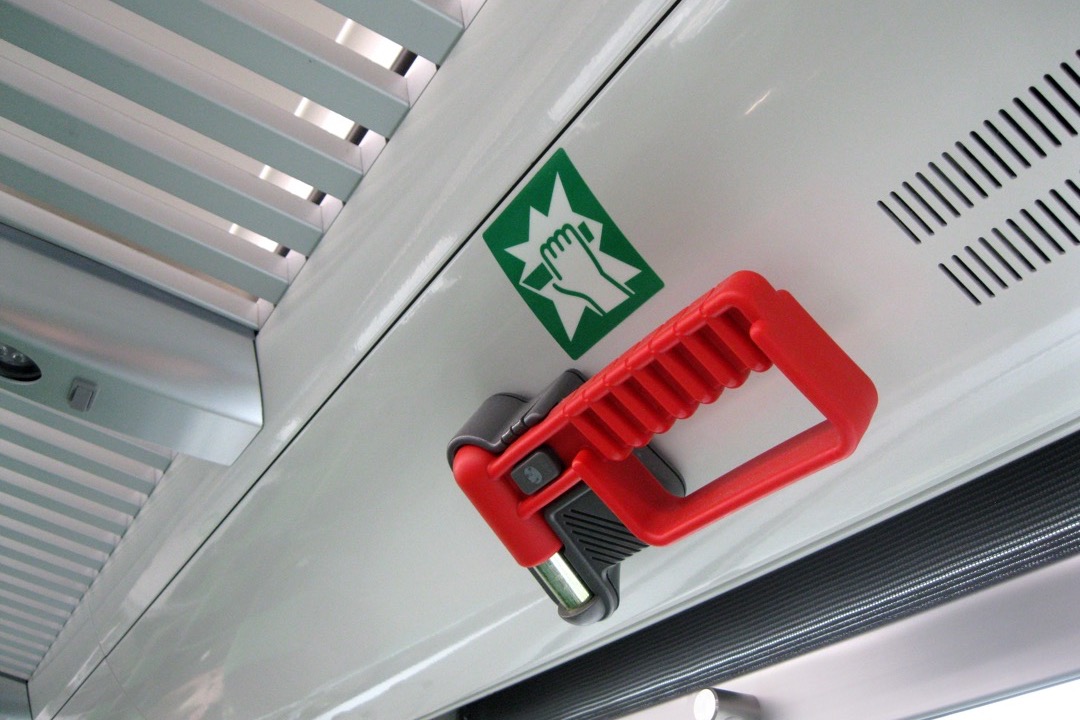
I have spent 15 years running an independent shop in Denver, and the vehicles I see arrive after rollovers, fires, and submersions tell a consistent story: the occupants who got out fast had a tool within arm’s reach, and the ones who did not, did not. A good car escape tool is the cheapest piece of safety equipment you can put in a vehicle — under 25 dollars buys you the difference between waiting for a tow truck and waiting for the fire department. The problem is that most escape tools sold today carry the same fatal blind spot, one that AAA documented in formal testing and that almost no Amazon listing acknowledges: roughly one in three vehicles built since 2018 has laminated side windows, and no consumer escape tool will break them.
For this roundup, I evaluated seven car escape tools across mechanism reliability, mounting accessibility, seatbelt cutter quality, glass-type compatibility, and multi-year storage durability. Every product has a verified Amazon ASIN with an active listing and a documented review history — and I am explicit throughout this guide about what these tools cannot do, because the laminated-glass gap is the single most important fact a buyer needs to walk away with. If you are building out a complete vehicle preparedness kit, pair the right escape tool with our jump starter guide, our tire inflator guide, and our dash cam guide — the four together cover the most common roadside scenarios short of a serious collision.
After comparing real-world deployment data, third-party safety certifications, and verified owner reports, here are our top picks for 2026.
| Product | Price | Buy |
|---|---|---|
| Lifehammer Safety Hammer EvolutionBest Overall | $19.49 | View on Amazon |
| Amazon Basics Emergency Escape Tool 2-PackBudget Pick | $8.88 | View on Amazon |
| StatGear T3 Tactical Auto Rescue ToolPremium Pick | $39.95 | View on Amazon |
| resqme The Original Keychain Car Escape ToolRunner-Up | $9.89 | View on Amazon |
| Swiss Safe 5-in-1 Car Safety HammerRunner-Up | $9.99 | View on Amazon |
| THINKWORK 3-in-1 Car Safety HammerRunner-Up | $9.99 | View on Amazon |
| Gerber Strap Cutter Personal Safety ToolRunner-Up | $31.99 | View on Amazon |
Find the Right Car Escape Tool for Your Situation
Jump to the pick that matches how you plan to carry and use the tool:
- Best car escape tools overall — our top picks reviewed
- Best keychain car escape tools — always-on personal carry
- Best emergency hammer-style escape tools — budget, swing-to-break
- Best spring-loaded car escape tools — single-push, works in any orientation
How We Chose These Car Escape Tools
Every tool in this roundup was selected based on verified Amazon ASINs with active listings, meaningful review volume relative to its price tier, a documented mechanism (spring-loaded, hammer-strike, or manual), and a real seatbelt-cutter component that has been confirmed across owner reports to function on modern three-point belts. I cross-referenced each product against AAA’s published escape-tool testing summary, Wirecutter’s most recent category review, and my own shop experience with vehicles that have arrived after real escape events. Tools with no verifiable cutter geometry, no documented mechanism, or significantly inflated marketing claims relative to their actual mechanical design were excluded — the seven listed here are the units I would feel comfortable putting in a customer’s vehicle.
Best Overall: Lifehammer Safety Hammer Evolution
The Lifehammer Evolution is the escape tool I keep in my own truck, and it is the one I recommend to every customer who asks. The reason is simple: spring-loaded mechanism, hand-protection geometry, GS TÜV third-party certification, and a door-bracket mount that puts it within arm’s reach of a belted driver. Wirecutter has selected it as their Top Pick for the same reasons I do, and the underlying engineering is materially better than the rest of the field.
The spring-loaded ceramic punch is the differentiator that matters most. A hammer-strike tool requires the user to generate a swing arc — which assumes the user is upright, has full use of both arms, and is not pinned by an airbag, deformed body panel, or restraining seatbelt. The Lifehammer fires with a single push and works equally well upside down, partially submerged, or with one arm immobilized. Those are exactly the scenarios where escape tools are needed and exactly the scenarios where hammer-style designs fail.
The honest limitation — which applies to every tool in this roundup, not just the Lifehammer — is that no consumer escape tool will break laminated side glass. AAA testing has confirmed this, and the laminated-glass population is now roughly one in three 2018-and-newer vehicles. Check the corner of your side windows for a ‘T’ or ‘L’ marking before you assume any of these tools will work for your specific vehicle. The Lifehammer is the right answer for tempered side glass and the right answer to keep mounted in any vehicle for the additional value of its seatbelt cutter alone.

Lifehammer Safety Hammer Evolution
by Lifehammer
The Wirecutter Top Pick and the only escape tool I keep in my own truck -- spring-loaded action, hand-protection geometry, GS TÜV certification, and a door bracket that puts it in reach without unbuckling.
Pros
- Spring-loaded ceramic punch fires with a single push -- works upside-down, underwater, or with one hand pinned, where every hammer-style tool in this roundup requires a free swing
- Long ergonomic handle keeps your hand eight inches outside the strike zone -- tempered glass shatters explosively, and hand-grip geometry is the difference between a clean break and a cut hand
- Quick-click door bracket puts the tool within arm's reach without unbuckling -- mount placement is the single biggest predictor of whether an escape tool gets used in a real event
- GS TÜV certified and Wirecutter Top Pick -- third-party validation that the spring mechanism functions reliably across temperature, age, and use cycles
Cons
- Will not break laminated side glass -- a hard limitation that applies to every consumer escape tool sold on Amazon, not a Lifehammer-specific defect
- Recessed seatbelt cutter is integrated into the handle and works well but requires deliberate motion -- a one-handed driver will find the cutter awkward compared to a dedicated cutter tool
Amazon Basics Emergency Escape Tool 2-Pack — Best Budget
The Amazon Basics 2-pack solves a problem that most escape-tool reviews ignore: the second vehicle in the household that nobody bothered to outfit. At this price for a pair of tools, there is no logistical excuse for the spouse’s car, the teenager’s first car, or the secondary household vehicle to go uncovered. The mechanism is the simplest possible design — hardened steel double-cone strike head with a hammer-and-swing motion — which is also why it is the most reliable hammer-style design over very long storage periods. There is nothing to wear out.
Bright orange high-visibility housing is the right color choice for a tool meant to be located in a panicked exit scenario. Black escape tools that disappear under seats during a rollover are a documented failure mode, and the Amazon Basics design avoids it. The Best Sellers Rank #1 position with 35,000-plus ratings at 4.8 stars is statistically meaningful validation — this is not a curated launch promotion but a long-running product with field data across millions of vehicles.
The honest limitations are mechanism-specific. Hammer-strike tools require a swing arc and work poorly for an upside-down driver or a passenger pinned by an airbag. The included bracket has a friction-fit snap that I have seen pop loose in hard braking — I recommend zip-tying the mount to the bracket as a five-cent insurance policy. For households where the primary vehicle has a Lifehammer and the secondary vehicles need basic coverage, the Amazon Basics 2-pack is the right answer.

Amazon Basics Emergency Escape Tool 2-Pack
by Amazon Basics
The right answer for households with multiple vehicles -- two tools for the price of one mid-range unit, with 35,000 ratings at 4.8 stars confirming the budget design works as advertised on tempered glass.
Pros
- Two units in one inexpensive pack -- one tool in the driver's vehicle, one in the spouse's vehicle, no excuse for the second car to go unprotected
- Hardened steel double-cone strike head with the simplest possible mechanism -- the fewest moving parts to fail over multi-year storage in a hot trunk
- Bright orange housing is visible in low light or under debris -- panic-friendly color matters more than fancy features in a real exit scenario
- Best Sellers Rank #1 in the category with 35,000-plus ratings at 4.8 stars -- statistically meaningful field performance, not a curated launch promotion
Cons
- Hammer-strike requires a swing -- in an upside-down rollover or any scenario where you cannot generate momentum, this is harder to use than a spring-loaded punch
- Bracket snap-fit is loose enough that hard braking can dislodge it -- I recommend zip-tying the mount to the bracket rather than relying on the friction fit alone
StatGear T3 Tactical Auto Rescue Tool — Best Upgrade
The StatGear T3 is the multi-tool I recommend when a customer wants escape capability plus a real folding knife and an LED light — and crucially, when they are willing to carry the tool on a belt sheath rather than mount it in the vehicle. The design provenance matters here: the T3 was designed by a working NYC paramedic from real extrication experience, not by a marketing team trying to inflate feature counts. Every component on the tool is load-bearing in a documented EMS use case.
The spring-loaded carbide window punch is the same single-push mechanism as the Lifehammer Evolution but in a folding-knife form factor that rides in a pocket or belt sheath. The 440c stainless folding knife is a real cutting tool with the kind of edge retention that mall-kiosk multi-tools cannot match. The 440c hook seatbelt cutter is paramedic-grade — it slices through a stretched and locked seatbelt in one pull, where recessed-blade cutters typically require two or three passes. The five-lumen LED is small but practical for finding latches in a nighttime rollover.
The trade-off is form factor. A belt sheath means the tool is on you, not on the door — if you are not wearing the sheath when an event occurs, the tool may be in your luggage or center console where reach is no better than a glove-box hammer. For drivers who carry the tool daily as part of their EDC routine, the T3 is the most capable single device in this roundup. For drivers who want a tool that lives in the vehicle full time, the Lifehammer is the right answer.

StatGear T3 Tactical Auto Rescue Tool
by StatGear
The professional pick designed by a NYC paramedic -- spring-loaded carbide punch, 440c folding knife, hook seatbelt cutter, and an LED in a belt-carried package for drivers who treat emergency gear the way EMS does.
Pros
- Designed by a working NYC paramedic from real extrication experience -- a professional emergency response design, not a marketing-driven multi-tool
- Spring-loaded carbide window punch in a folding-knife form factor -- single-push mechanism in a body that rides on a belt sheath instead of bolted to a door
- 440c stainless folding knife and 440c hook seatbelt cutter are real cutting tools, not stamped-steel multi-tool stand-ins -- paramedic-grade hook slices a stretched belt in one pull
- Five-lumen LED light on the body for finding latches, locating an injured passenger, or signaling at night
Cons
- Folding-knife form factor requires deployment -- knife and carbide punch both need to be opened from a closed position, a real time cost compared to bracket-mounted always-deployed tools
- Belt sheath storage means the tool is on you, not on the door -- if you are not wearing the sheath when an event occurs, reach is no better than a glove-box hammer
resqme The Original Keychain Car Escape Tool — Runner-Up (Always-On Carry)
The resqme is the tool that solves the rideshare and multi-vehicle problem. It is a 0.7-ounce keychain unit, which means it is with you every time you are within reach of any vehicle — your car, your spouse’s car, an Uber, a rental, a friend’s truck. The spring-loaded auto-punch mechanism is the same single-push design as the Lifehammer in a form factor small enough to live on your actual keys. Wirecutter selected it as their Budget Pick for exactly this reason: a tool you carry universally is more useful than a tool that lives in one specific door pocket.
The Made-in-USA construction with documented manufacturing oversight is the longest verified shelf life in the consumer category. I have inspected resqme units that are over a decade old and still function on the first push. The recessed seatbelt blade is shielded against accidental contact, which makes the tool safe for keychain carry around children, in pockets, and in purses. With 4,400-plus Amazon ratings at 4.6 stars on the single-pack listing, the feedback base is deep enough to be meaningful, and it stretches back far enough to say something about how these units age.
Two real limitations to acknowledge. First, the resqme is single-shot — after one window break the spring is fully extended and the tool is spent. That is fine for a real emergency but it means professional users who train with the tool need a separate practice unit. Second, keychain carry depends on the keys being in your hand — in a submersion scenario where you cannot reach the keys, a door-bracket-mounted tool will be faster. For most drivers the right setup is a resqme on the keys plus a Lifehammer on the door, both spring-loaded and both within reach in different scenarios.

resqme The Original Keychain Car Escape Tool
by resqme
The Wirecutter Budget Pick and the right answer for drivers who use multiple vehicles or take rideshares -- spring-loaded, USA-made, 0.7-ounce keychain footprint that goes everywhere with you.
Pros
- Spring-loaded auto-punch in a 0.7-ounce keychain form -- the only tool in this roundup that lives on your keys and is with you any time you are within reach of any vehicle
- Made in USA with documented manufacturing oversight -- sealed spring mechanism with the longest verified shelf life in the consumer category
- Recessed seatbelt blade is shielded against accidental contact -- safe for keychain carry around children, in a pocket, or in a purse
- Wirecutter Budget Pick with 4,400-plus ratings at 4.6 stars and a decade-plus sales history behind the design
Cons
- Single-shot mechanism is designed for one deployment per unit -- after one window break the spring is fully extended and the tool is spent
- Keychain carry means the tool is in the ignition or your hand when you exit -- in a submersion where you cannot reach the keys, a door-bracket-mounted tool is faster
Swiss Safe 5-in-1 Car Safety Hammer — Runner-Up (Versatile Value)
The Swiss Safe 5-in-1 is the only tool in this roundup that ships with both a keychain loop and a bracket mount in the same package, which means the buyer can decide carry mode after the purchase rather than at point of sale. That flexibility is genuinely useful for buyers who are not sure whether they want vehicle-mounted or always-on personal carry until they have lived with the tool for a few weeks.
The tungsten-capped strike spike at this price point is unusual — most budget hammer-style tools use plain hardened steel, and tungsten holds an edge longer through repeated cold-storage cycles in a hot trunk. Bright orange high-visibility housing matches the panic-friendly design philosophy of the Amazon Basics 2-pack. The 4.7-star rating across 5,400 reviews confirms that the tool functions as advertised on tempered glass and that the seatbelt cutter cuts modern three-point belts reliably.
The 5-in-1 marketing label is mostly noise. Whistles and compasses are not load-bearing in a real escape, and treating this as a hammer with a seatbelt cutter while ignoring the auxiliaries is the right framing. The hammer-strike mechanism shares the swing-required limitation of every non-spring-loaded tool, which is why I recommend it as a runner-up rather than a primary pick. For buyers who want the option of either carry mode and a slightly upgraded strike spike at a budget price, the Swiss Safe is a credible choice.

Swiss Safe 5-in-1 Car Safety Hammer
by Swiss Safe
The flexible-mounting pick -- includes both the keychain loop and the door bracket so you can decide carry mode after the purchase, with a tungsten-capped strike spike at a budget-tier price.
Pros
- Includes both a keychain loop and a bracket mount -- the only tool in this roundup that lets you decide between always-on personal carry and permanent vehicle mounting after the purchase
- Tungsten-capped strike spike at the budget tier is unusual -- holds an edge longer through repeated cold storage cycles than plain hardened steel
- Recessed seatbelt cutter shielded for safe pocket carry, with cutting performance verified across 5,400 reviews at 4.7 stars
- Bright orange high-visibility housing -- in a smoke-filled or dimly lit cabin, panic-friendly color matters more than auxiliary features
Cons
- Hammer-strike mechanism rather than spring-loaded -- works on tempered glass with a normal swing but a driver pinned by an airbag will struggle to generate enough swing arc
- 5-in-1 marketing label includes whistle and compass features that are not load-bearing in a real escape -- treat this as a hammer with a seatbelt cutter and ignore the auxiliaries
THINKWORK 3-in-1 Car Safety Hammer — Runner-Up (Visor-Clip Mount)
The THINKWORK earns its spot for one specific reason: visor clip mounting. The visor is the first place a driver’s hand naturally goes during a panicked exit, and a tool mounted there is reachable without unbuckling and without any horizontal arm movement. Mount placement is the single biggest predictor of whether an escape tool gets used in a real event, and the visor is arguably the best location in the entire vehicle for primary-driver reach.
Reflective strips on the housing are a small detail with real value — if you are searching for the tool by ambient streetlamp light through a smoke-filled cabin, the reflective strips buy you seconds. Multiple color options including bright orange, red, and pink let buyers either match interior aesthetics or maximize visibility based on their typical lighting conditions. The 4.8-star rating across 2,600 reviews is the highest individual-product rating in this roundup outside the Amazon Basics 2-pack.
The trade-off is mount security. A visor clip is the right location for accessibility but a hard impact can dislodge the tool from the visor, leaving it loose in the cabin where it may slide out of reach. I recommend tethering the tool with a small loop of paracord through the visor frame as a tether — a thirty-cent fix that ensures the tool stays accessible even after the visor itself moves. For drivers who want the best mount placement at a budget price, the THINKWORK is a credible choice with one easy modification.

THINKWORK 3-in-1 Car Safety Hammer
by THINKWORK
The visor-clip pick -- mounts directly above the driver where reach is best, with reflective strips for low-light visibility and the highest individual-product rating in this roundup.
Pros
- Visor clip mount puts the tool directly above the driver where it is reachable without unbuckling -- mount placement is the single biggest predictor of escape-tool use in a real event
- Reflective strips on the housing make the tool easier to find in low-light scenarios -- if you are searching by ambient streetlamp light, reflectivity buys you seconds
- Multiple color options including orange, red, and pink let buyers match interior or pick the most visible color for their lighting conditions
- 4.8-star rating across 2,600 reviews is the highest in this roundup outside the Amazon Basics 2-pack -- meaningful satisfaction from buyers who have used the tool
Cons
- Visor clip is the right location for accessibility but not the most secure -- a hard impact can dislodge the tool, and I recommend tethering with a small loop of paracord through the visor frame
- Hammer-strike mechanism shares the swing-required limitation -- consider this a budget alternative to the Amazon Basics with better mount placement, not an alternative to a Lifehammer
Gerber Strap Cutter — Runner-Up (Seatbelt-Cutter Primary)
The Gerber Strap Cutter is in this roundup as the seatbelt-cutter-primary tool for a specific buyer: someone whose dominant scenario is cutting a belt rather than breaking a window. Gerber is a real US knife brand with decades of reputation behind it, and the 420HC razor hook on this tool is a true professional-grade cutting blade — the same geometry firefighters and EMS personnel use during vehicle extrication. It slices through a fully stretched and locked seatbelt in a single pull, where recessed-blade cutters require two or three passes.
The one-piece USA-made stainless construction is the longest reasonable storage life of any tool in this roundup. There is no plastic body to crack, no spring to lose tension, no battery to die, and no exposed mechanism to corrode. The manual steel punch on the back of the handle works on tempered glass with a deliberate strike. The nylon belt sheath is the same form factor EMS uses for boot or belt carry — the right choice for off-road drivers, motorcyclists, and anyone who already carries Gerber gear daily.
The honest framing is that this is a seatbelt cutter first and a window punch second. If your dominant use case is window-breaking, the Lifehammer Evolution is a better dedicated tool. If your dominant use case is cutting belts — a parent or caregiver who needs to extract a child from a deformed restraint, an EMS volunteer, an off-road driver who has seen real extrication scenarios — the Gerber is the right answer. The manual punch is harder to use than a spring-loaded mechanism, especially for an injured user, which is why this is a runner-up rather than a primary pick.

Gerber Strap Cutter Personal Safety Tool
by Gerber
The seatbelt-cutter-first pick from a real US knife brand -- 420HC razor hook for genuine extrication-grade cutting, USA-made one-piece stainless, and a belt sheath for EMS-style carry.
Pros
- 420HC razor hook seatbelt cutter is true professional-grade -- the same geometry firefighters and EMS use for vehicle extrication, slicing through a stretched belt in a single pull
- One-piece USA-made stainless construction has no plastic to crack, no spring to fail, no battery to die -- the longest reasonable storage life of any tool in this roundup
- Manual steel punch on the back of the handle works on tempered glass with a deliberate strike -- mechanically simple and effectively impossible to render inoperable through age
- Nylon belt sheath in EMS form factor -- the right choice for off-road drivers, motorcyclists, and anyone who already carries Gerber gear
Cons
- Manual punch is harder to use than a spring-loaded mechanism -- for an injured driver or upside-down occupant, the Lifehammer or resqme will be faster and require less force
- Primary function is the seatbelt cutter, not the window punch -- if window-breaking is your dominant use case, the Lifehammer Evolution is a better dedicated tool
Best Keychain Car Escape Tools
If you drive more than one vehicle, take rideshares, or want the tool with you the moment you touch any car, a keychain escape tool is the right form factor — it lives on your actual keys instead of a door pocket you might not be able to reach. Both of these clip to a keyring; the resqme is the purpose-built keychain unit, while the Swiss Safe hedges its bet by including a bracket too.
| Product | Price | Buy |
|---|---|---|
| resqme The Original Keychain Car Escape ToolBest keychain overall Spring-loaded auto-punch on a 0.7 oz keychain, USA-made and rated 4.6 stars -- the one to clip to the keys you carry every day | $9.89 | View on Amazon |
| Swiss Safe 5-in-1 Car Safety HammerBest keychain + mount combo Ships with both a keychain loop and a door bracket, so you decide carry mode after buying -- tungsten-capped strike spike at a budget price | $9.99 | View on Amazon |
Best Emergency Hammer-Style Car Escape Tools
Hammer-style tools break tempered glass with a swing rather than a spring, which makes them mechanically simple, cheap, and reliable over years of trunk storage — the right choice for a second household car or a spare you hand to a new driver. The trade-off is that they need room to swing, so they are a backup to a spring-loaded primary, not a replacement for it.
| Product | Price | Buy |
|---|---|---|
| Amazon Basics Emergency Escape Tool 2-PackBest budget 2-pack Two hardened-steel hammers with the simplest mechanism and 35,000+ ratings -- the way to cover every car in the family | $8.88 | View on Amazon |
| THINKWORK 3-in-1 Car Safety HammerBest visor-clip mount Visor-clip mount puts it right above the driver with reflective strips for low light -- the highest-rated hammer here | $9.99 | View on Amazon |
| Swiss Safe 5-in-1 Car Safety HammerBest flexible carry Tungsten-capped spike plus both keychain and bracket mounts in one package | $9.99 | View on Amazon |
Best Spring-Loaded Car Escape Tools
Spring-loaded tools fire the glass punch with a single push and work in any body position — upside down after a rollover, pinned by an airbag, or partially submerged — which is exactly when a swing is impossible. This is the mechanism to choose for the primary tool that lives where you sit; these three span a door mount, a keychain, and a belt-carried EDC knife.
| Product | Price | Buy |
|---|---|---|
| Lifehammer Safety Hammer EvolutionBest mounted spring-loaded Spring-loaded ceramic punch on a Quick-Click door bracket, GS TÜV certified -- our best overall and the one to mount in your own vehicle | $19.49 | View on Amazon |
| resqme The Original Keychain Car Escape ToolBest keychain spring-loaded The same single-push mechanism shrunk to a keychain -- fires with one press, no swing required | $9.89 | View on Amazon |
| StatGear T3 Tactical Auto Rescue ToolBest EDC spring-loaded Spring-loaded carbide punch in a folding-knife body designed by a NYC paramedic, with a 440c hook cutter and an LED | $39.95 | View on Amazon |
Buyer's Guide
I have spent 15 years in shops where vehicles arrive after rollovers, fires, and submersions -- often after the occupants have escaped, sometimes not. These are the six factors that separate an escape tool you can trust in the worst three minutes of your life from one that fails when you need it.
Mechanism: Spring-Loaded vs Hammer-Strike vs Manual Punch
Spring-loaded tools (Lifehammer, resqme, StatGear T3) require only a single push and work in any body orientation -- upside down, pinned by an airbag, partially submerged. Hammer-strike tools (Amazon Basics, Swiss Safe, THINKWORK) require a swing arc and depend on the user being in a normal seated position with full arm function. Manual punches (Gerber) require a deliberate two-handed strike. For the primary tool in your own vehicle, choose spring-loaded. The other mechanisms are appropriate for backup tools or seatbelt-cutter-primary use.
Glass Type Compatibility (Tempered vs Laminated)
Every windshield is laminated and unbreakable by consumer tools -- by design. Side and rear windows have historically been tempered, but AAA testing has documented that roughly one in three 2018-and-newer vehicles uses laminated side glass, often only on the front doors. None of the seven tools in this roundup will break laminated glass. Check the corner of each side window for a 'T' or 'L' marking before you assume your tool will work. If your front side windows are laminated, the door is your primary escape and the rear window is your secondary.
Mounting and Accessibility
The tool you cannot reach while belted does not exist. Door bracket (Lifehammer) and visor clip (THINKWORK) are the two best accessible-while-seated locations. Keychain carry (resqme, Swiss Safe) is excellent for personal carry across multiple vehicles. Belt sheath carry (StatGear, Gerber) is appropriate for off-road or EMS use but fails completely if you are not wearing the sheath. Glove box and console storage are last resort -- a tool four feet from where you sit is a tool you cannot use after impact.
Seatbelt Cutter Quality
Two geometries dominate: recessed shielded blades (most consumer tools) and exposed razor hooks (Gerber, StatGear T3). Recessed blades are safer for general carry and cut a stretched belt in two or three passes. Razor hooks slice through in a single pull but require careful storage. For drivers carrying older passengers or children who may have difficulty under stress, the razor hook is the more capable tool. Verify the cutter slot is wide enough for modern wide-format three-point belts.
Multi-Function vs Single-Purpose
Marketing labels like '5-in-1' and '7-in-1' inflate the feature count with whistles and compasses that are not load-bearing in a real escape. The two functions that matter are window-breaking and seatbelt-cutting. The StatGear T3 is the rare multi-tool where additional functions (folding knife, LED) are genuinely useful in EMS or off-road contexts. Be skeptical of any tool whose marketing copy emphasizes auxiliary features -- the more attention spent on whistles, the less attention is being paid to escape mechanics.
Build Quality and Multi-Year Reliability
Escape tools sit unused for years and need to function on the one day they are required. Springs lose tension. Plastic housings become brittle from UV and heat cycling. Steel blades corrode in humid trunks. Longest-lived designs are one-piece metal (Gerber) and well-sealed spring mechanisms (resqme, Lifehammer). Avoid exposed springs, thin plastic housings, and visible quality compromises. Inspect annually -- replace any unit where the housing has yellowed, cracked, or become brittle.
How to Choose the Best Car Escape Tool
Identify Your Glass Type Before You Buy
This is the most important sentence in this entire guide: check your side windows for a ‘T’ or ‘L’ marking before you spend money on an escape tool. The mark is in the bottom corner of each window and is usually a small printed code that includes the manufacturer, the certification number, and a single letter or full word indicating glass type. A ‘T’ means tempered glass that any tool in this roundup will break. An ‘L’ means laminated safety glass that no tool in this roundup will break. AAA’s published testing has confirmed this — the laminated-glass gap is real and it applies to every consumer escape tool sold on Amazon.
If your front side windows are laminated, your realistic escape strategies are the door (always try the door first), the rear hatch in an SUV, or breaking the rear window if it is tempered. Many manufacturers laminate only the front side windows and leave the rear windows tempered, so check every window in your vehicle. The only widely-discussed consumer-grade laminated-capable tool is the Lifeline Evac-Pro, which is not currently sold on Amazon and which I do not personally recommend without having tested it. For laminated-window vehicles, the seatbelt cutter on any tool in this roundup is still the load-bearing function — buy the tool for the cutter alone if the windows will not break.
Strike at the Corner of the Window, Not the Center
Even on tempered glass with the right tool, technique matters. Tempered glass is engineered to fracture explosively under impact, and the corner of the window is the structurally weakest point. A strike to the center of a tempered side window may bounce off or produce only a small spider-crack, while the same strike to the corner produces a complete shattering of the entire pane. This is documented in fire department training materials and reinforced in every Wirecutter review that has tested escape tools hands-on.
Practice the motion in your driveway with an old window pane if you can find one safely — the muscle memory of striking the corner instead of the center matters more than which specific tool you bought. For spring-loaded tools, the punch automatically concentrates the force into a single small contact area, which is why corner placement is less critical than with a hammer-strike. For hammer-style tools, corner placement is the difference between a clean break and a failed exit.
Mount the Tool Where You Can Reach It Belted
The tool you cannot reach while belted does not exist as far as a real escape is concerned. Spend ten minutes after the purchase mounting the tool somewhere reachable from the driver’s seat without releasing the seatbelt: door card, sun visor, or a custom mount on the center console lid. Glove box and trunk storage are last-resort locations. If you have multiple drivers in the vehicle, consider redundant mounts — a Lifehammer on the driver’s door and a resqme keychain unit accessible to the front passenger.
For more on building out a complete vehicle preparedness setup, our jump starter guide covers the second-most-common roadside scenario after a flat tire, and our tire inflator guide covers the first.
Final Verdict
For most drivers, the Lifehammer Safety Hammer Evolution is the right answer. The combination of spring-loaded mechanism, hand-protection handle geometry, GS TÜV third-party certification, and the door-bracket mount that puts the tool within arm’s reach of a belted driver is materially better than any hammer-style or manual-punch alternative in this roundup. Wirecutter has independently selected it as their Top Pick, and 15 years of shop experience has me agreeing with that conclusion. Pair it with a jump starter and a tire inflator and your basic vehicle emergency kit is complete for under 150 dollars.
If you are outfitting a second vehicle in the household and the budget is tight, the Amazon Basics 2-pack is the right answer — the simplest possible mechanism with the longest reasonable storage life and 35,000 ratings of field validation. If you want a tool that goes everywhere with you across rideshares, rentals, and multiple personal vehicles, the resqme keychain is the universally-carried complement to whatever you mount in your own car. And if your vehicle has laminated side windows — check the corner markings before you assume otherwise — accept that no Amazon-sold tool will break them and buy a Lifehammer or resqme for the seatbelt cutter alone, treating the door as your primary escape and the rear window as your secondary.
Frequently Asked Questions
Will a car escape tool break a windshield?
How can I tell if my car has tempered or laminated side windows?
Where should I keep my escape tool in the car?
Do car escape tools expire or wear out?
Spring-loaded vs hammer-style -- which is better?
Related Articles
About the Reviewer

Mike Reeves, ASE Master Technician
A.A.S. Automotive Technology, Universal Technical Institute (UTI)
Mike Reeves is an ASE Master Technician with 15 years of hands-on experience in automotive repair and diagnostics. He earned his A.A.S. in Automotive Technology from UTI and runs his own independent shop in Denver, Colorado. Mike founded RevRated to help everyday car owners make smarter parts decisions -- every recommendation comes from real-world testing in his garage.