Tire Pressure Guide: What PSI Your Car Actually Needs (2026)
An ASE Master Tech explains how to find your real tire pressure spec, what cold PSI means, how temperature changes it, what TPMS does and doesn't do, and how to check and fill tires correctly.
Updated
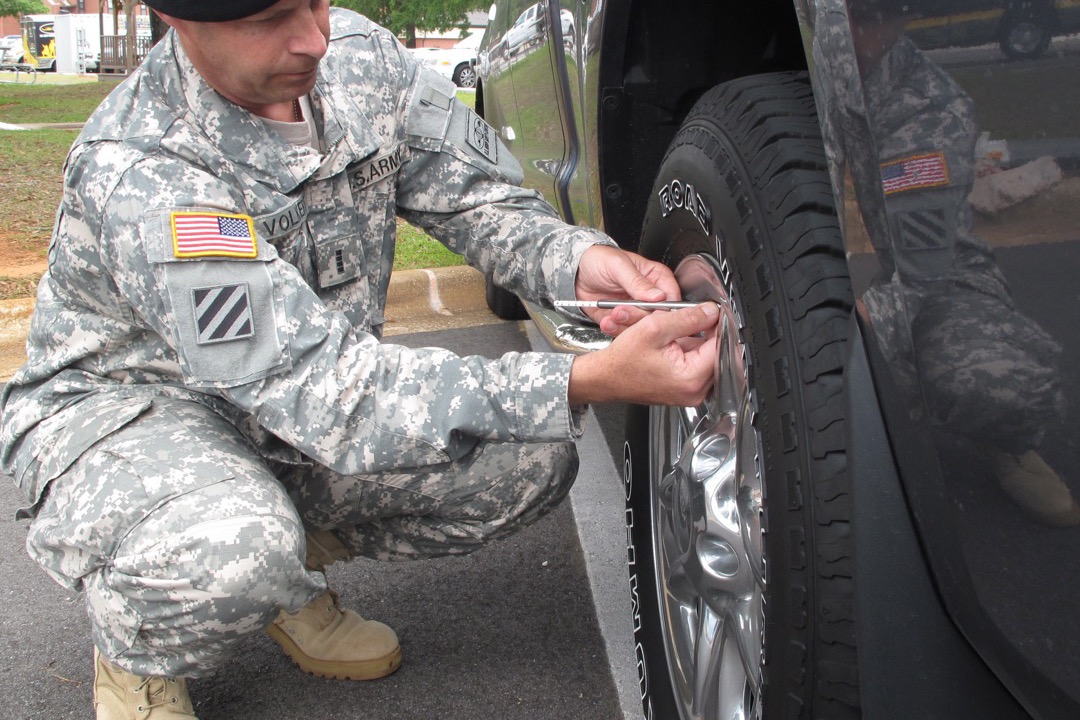
I have mounted, balanced, and replaced more tires than I can count, and I have also cut open plenty of failed ones to see why they died. The number one killer is not nails, not potholes, and not age. It is air — specifically, not enough of it. Underinflation runs a tire hot, flexes the sidewall until the rubber and steel belts separate, and eventually ends in a blowout, usually at highway speed with a family in the car. I am Mike Reeves, an ASE Master Technician with more than two decades on the shop floor, and tire pressure is the single cheapest, fastest, highest-payoff thing you can stay on top of as a driver. It costs nothing but two minutes a month and a decent gauge.
Here is a number that should stop you cold. Michelin’s own engineering data shows that a tire running 14 PSI below spec adds roughly 11 extra meters — about 36 feet — to your wet braking distance. That is more than two car lengths of pavement between stopping safely and ending up in the intersection. Most drivers have no idea they are even low, because a tire can lose a quarter of its air before it looks visibly soft and before the dashboard warning ever comes on. This guide fixes that. By the end you will know exactly what pressure your vehicle needs, where to find that number, why it changes with the weather, and how to check and correct it like someone who does it for a living.
Where Your Real Tire Pressure Spec Lives (It’s Not on the Tire)
This is the mistake I correct most often, so I am putting it first. The correct tire pressure for your vehicle is not the big number molded into the tire’s sidewall. That sidewall number — commonly 44, 50, or 51 PSI — is the maximum pressure the tire is rated to hold. It is a structural ceiling, not a recommendation.
Your actual target lives on a white-and-yellow sticker, called the tire placard, located on the driver’s door jamb. Open your driver’s door and look at the B-pillar or the edge of the door itself. On some older vehicles it is in the glovebox, the fuel door, or the trunk lid. That placard lists the manufacturer’s recommended cold inflation pressure — front and rear, sometimes different from each other — for the original tire size. Those are the numbers the engineers settled on after balancing ride comfort, handling, braking grip, load capacity, and tread life for your exact car.
Inflate to the sidewall maximum instead and you get a smaller contact patch where the tire meets the road, a buzzy harsh ride, faster wear down the center of the tread, and less grip in the wet. Inflate to the placard and the tire does the job it was engineered to do. If you have changed to a different tire size than the original, the placard is your starting point but the optimal pressure may shift — that is a conversation worth having with a good tire shop, and a reason to choose a quality set in the first place. Our guide to the best tire brands walks through which manufacturers hold pressure and wear evenly over a long service life.
What “Cold Tire Pressure” Actually Means
Every number on that placard is a cold inflation pressure. Cold does not mean winter — it means the tire has not been driven enough to heat up. Specifically, the tire should have been parked for at least three hours, or driven less than a mile at low speed, before you check or set it.
Here is why it matters. As a tire rolls down the road, the rubber flexes and friction with the pavement heats the air inside. Warm air expands, so pressure rises — typically 4 to 6 PSI above the cold reading after 20 minutes of highway driving. If you pull into a gas station after a half-hour drive and set your tires to the 35 PSI on the placard, you have actually set them to about 30 PSI cold, because they will lose that heat-related pressure once they sit. You just left yourself 5 PSI low.
The reverse mistake is just as common and more dangerous in reasoning: never bleed air out of a hot tire to bring it “down” to the placard number. That reading is high because the tire is warm, not because it is overinflated. Let it cool and check again. The honest, simple rule is to check tire pressure first thing in the morning before you have driven anywhere, when the tires are at the same temperature as the air around them. That is the only reading that matches what the placard is asking for.
How Temperature Changes Your PSI — and What to Do About It
Air pressure and temperature move together, and the rule of thumb is precise enough to live by: for every 10°F drop in ambient temperature, tire pressure falls about 1 PSI. It works the other way too — pressure climbs as it warms up.
Run the numbers on a real season change. You set your tires to 35 PSI on a pleasant 70-degree afternoon in October. A January cold snap drops the morning temperature to 20 degrees. That is a 50-degree fall, which costs you roughly 5 PSI — your 35 is now 30. Add the ordinary 1-PSI-per-month leakage every tire has, and by mid-winter you can easily be 7 or 8 PSI below where you started without a single puncture. That is exactly why so many TPMS lights flicker to life on the first hard freeze of the year. It is not a coincidence and it is not a malfunction; it is physics doing what physics does.
The fix is a seasonal adjustment. In the fall, as temperatures trend down, check more often and add air to bring tires back to the placard number on a cold morning. In the spring, as it warms, recheck — you may need to bleed a little out so you are not running over-pressure in summer heat. A portable inflator in the trunk makes the fall top-off a 90-second job in your own driveway instead of a cold trip to the gas station; our roundup of the best tire inflators covers compact 12V units that handle exactly this. If you live where winters get serious, the same temperature drop that lowers your pressure is also the cue to think about a dedicated cold-weather set — our best winter tires guide explains why rubber compound matters as much as pressure once the thermometer falls below 45 degrees. For a full seasonal rundown, our car maintenance schedule maps every check worth doing as the year turns.
Tire Pressure by Vehicle Type — A Reference Chart
The chart below orients you to the typical range for each class of vehicle. Use it to sanity-check a reading, not to set your tires — the only authoritative number for your exact vehicle and trim is on the door jamb placard.
| Vehicle Type | Typical Cold PSI (Front / Rear) | Notes |
|---|---|---|
| Compact sedan | 30–33 / 30–33 | Civic, Corolla class |
| Mid-size sedan | 32–35 / 32–35 | Camry, Accord class |
| Compact crossover | 33–36 / 33–36 | RAV4, CR-V, Escape |
| Mid-size SUV | 35–38 / 35–38 | Pilot, Explorer |
| Full-size SUV | 38–42 / 38–42 | Suburban, Expedition |
| Minivan | 35–38 / 35–40 | Often higher rear for cargo |
| Light pickup (unloaded) | 35–40 / 35–45 | F-150, Silverado, Ram 1500 |
| Light pickup (towing/loaded) | Standard front / 40–60 rear | Use the door jamb load spec |
| Heavy-duty pickup | 50–65 / 50–80 | Varies widely by load |
| EV (compact/mid-size) | 38–42 / 38–42 | Higher for battery weight |
Two patterns are worth understanding rather than memorizing. First, trucks and many SUVs list a higher rear pressure, and often a separate higher load spec, because the back axle carries cargo and trailer tongue weight. Second, electric vehicles run higher pressures across the board — an EV can weigh 800 to 1,500 pounds more than a comparable gas car thanks to the battery, and the OEM raises the spec to carry it. If you drive an EV and the number on the placard looks high compared to your old gas car, that is by design, not an error. The right rubber matters here too — our best all-season tires guide flags the load-rated and EV-friendly options that hold up to the extra weight.
What Under- and Over-Inflation Do to Your Car
Underinflation is the dangerous one. A soft tire flexes more with every revolution, and that flexing generates heat. Heat is what kills tires — it breaks down the bond between the rubber and the steel belts until they separate, and separation at speed is a blowout. A chronically underinflated tire also wears out its outer shoulders prematurely, drags down your fuel economy by 3 to 5% when it is around 6 PSI low, and lengthens your braking distance significantly on wet roads. That 14-PSI-low, 11-meter wet-braking penalty I opened with is the worst case, but even a few PSI low costs you grip when you need it most.
Overinflation is the milder problem, but still a problem. A rock-hard tire has a smaller contact patch — less rubber touching the road — which reduces grip, especially in the wet, and makes the ride harsh and jittery. Over time it wears out the center of the tread while the shoulders stay fine, so you throw away a tire with usable rubber left on the edges. It also makes the tire more vulnerable to impact damage from potholes, because there is less give to absorb the hit.
Correct pressure sits right in the middle: full contact patch, even wear across the whole tread, the ride the engineers intended, and the safety margin you paid for when you bought good tires. There is no “tougher” or “more efficient” setting hiding above the placard number — the placard is the optimized setting.
How to Check and Fill Your Tires the Right Way
None of this matters without an accurate measurement, and here is where most people go wrong: the gauge built into the air pump at the gas station is frequently off by 3 to 5 PSI, and it has been beaten on by thousands of strangers. Buy your own. A good handheld gauge — our roundup of the best tire pressure gauges compares digital, dial, and pencil styles — costs less than a single tank of gas and lives in the glovebox. Digital is the easiest to read accurately; a quality dial gauge is also excellent; the cheap stick gauges are better than nothing but the least precise.
The shop-grade routine is simple:
- Check cold. First thing in the morning, or after the car has sat at least three hours. Write down your placard numbers so you are not guessing.
- Press the gauge squarely onto the valve stem until the hissing stops and you get a clean reading. A crooked gauge leaks and reads low.
- Add air in short bursts, rechecking after each, until you reach the placard number. It is easy to overshoot, so go in small increments.
- If you overshoot, bleed a little out by pressing the small pin in the center of the valve, then recheck.
- Replace every valve cap. It keeps grit and moisture out of the valve and is your last line of defense against a slow leak.
A portable inflator turns this into a driveway job you can do at the correct cold temperature, instead of driving to a station and checking the tires warm. And do not forget the one tire nobody checks — keep reading.
The Spare Tire Almost Nobody Checks
Pop your trunk or look under your truck bed. That spare has air requirements too, and they are easy to get wrong. A compact spare — the skinny “donut” — is a completely separate system from your road tires and is almost always specced at 60 PSI, far higher than the 32 to 35 on your door jamb. People assume their main tire pressure applies to the donut; it does not. A donut also carries a hard limit: roughly 50 mph and 50 miles, just enough to get you to a shop, not a substitute tire for the week. A full-size spare, by contrast, matches your regular placard pressure. Either way, a spare slowly loses air sitting unused, so the morning you actually need it is the worst time to discover it is flat. Check it once a season when you do the others. A spare in the trunk is part of a complete emergency kit — our road trip essentials checklist covers what else belongs back there before a long drive.
Understanding Your TPMS — What It Does and Doesn’t Do
Every new vehicle sold in the US since the 2008 model year has a Tire Pressure Monitoring System, mandated after a wave of underinflation-related rollovers. It is a genuine safety improvement, but drivers misunderstand it constantly, so let me draw the lines clearly.
TPMS only warns at about 25% below the placard spec. That threshold is set by federal standard, and it is lower than you would expect. On a vehicle specced at 35 PSI, the light may not illuminate until the tire drops to around 26 PSI. You can be meaningfully, fuel-wastingly, grip-robbingly underinflated and still have a dark dashboard. The warning catches dangerous lows and sudden leaks; it does not keep your tires optimal.
TPMS reads live, warm pressure — not cold pressure. The sensor reports whatever is in the tire right now. So a tire that is a little low cold can warm up over a 15-minute drive, gain a few PSI, and shut the light off while still being under spec when cold. And the January-morning light that vanishes after ten minutes of driving is the same effect in reverse: cold tire trips the warning, friction warms it, pressure climbs back over the threshold, light goes out. In both cases the answer is the same — add air to the placard number on a cold tire and stop chasing the light.
One shop note that trips people up: many vehicles, especially GM trucks and SUVs, tie each TPMS sensor to a specific wheel position for the per-corner pressure display. After a tire rotation, those positions are scrambled until someone performs a TPMS relearn — a quick procedure with a scan tool or the vehicle’s built-in sequence. If your dash shows the wrong corner as low after a rotation, that is why, and it is worth asking your shop to do the relearn as part of the job.
The bottom line on TPMS: treat it as the smoke detector, not the thermostat. It tells you when something is badly wrong. Your monthly check with a real gauge — cold, all four tires plus the spare each season — is what actually keeps the rubber where it needs to be. Two minutes a month buys you better grip, better mileage, longer tire life, and a real margin of safety the warning light alone will never give you.
Buyer's Guide
Six things determine whether your tires are at the pressure your vehicle was engineered for. Get these right and you protect your safety, your fuel economy, and the life of an expensive set of tires.
The Door Jamb Placard, Not the Sidewall
The single most important fact in this entire guide: your correct tire pressure is printed on a sticker inside the driver's door jamb, not on the tire itself. The big number molded into the sidewall — often 44, 50, or 51 PSI — is the maximum the tire can safely hold, not your target. The placard number, usually somewhere between 30 and 40 PSI for passenger vehicles, is what the engineers chose by balancing ride, handling, braking, load capacity, and tread life for your specific car. Inflating to the sidewall maximum is one of the most common mistakes drivers make, and it gives a harsh ride, a shrunken contact patch, and center-tread wear. Open your door, find the sticker, and use those numbers.
Cold Inflation Pressure
Every placard number is a cold inflation pressure, meaning the tire has been parked for at least three hours or driven fewer than a mile at low speed. As a tire rolls it heats up, the air inside expands, and the pressure climbs 4 to 6 PSI above the cold reading. That is why checking pressure right after a highway drive gives you a falsely high number — and why bleeding air down to the placard spec on a hot tire leaves you badly underinflated once it cools. Check in the morning before you drive, or after the car has sat for a few hours. If you must check warm, set it about 4 PSI above your cold target and re-verify cold the next morning.
Temperature and the 1-PSI-Per-10-Degrees Rule
Air pressure tracks temperature. For every 10°F drop in ambient temperature, your tires lose roughly 1 PSI. A tire set to 35 PSI on a 70-degree fall afternoon will read about 30 PSI on a 20-degree winter morning — a 5 PSI loss with no leak at all. This is why the TPMS light is a winter ritual for so many drivers, and why pressure needs a seasonal adjustment: add air as temperatures fall, and recheck (often bleeding a little out) when spring warms things back up. Tires also lose about 1 PSI per month through normal permeation through the rubber, so cold weather and slow leakage stack on top of each other.
Vehicle Type and Load
Different vehicles carry different weight on different footprints, so their specs vary widely. Compact sedans typically run 30 to 35 PSI; mid-size and full-size SUVs often want 35 to 42; light-duty pickups run 35 to 45 unloaded and significantly higher in the rear when towing or hauling; and EVs commonly call for 38 to 45 PSI because the battery pack adds 800 to 1,500 pounds over a comparable gas car. Trucks and many SUVs carry a separate, higher load or towing spec on the placard for when you are near capacity. The reference chart below orients you, but only the door jamb number is authoritative for your exact vehicle and trim.
A Gauge You Can Trust
You cannot manage what you cannot measure accurately, and the gauge built into a gas-station air pump is often 3 to 5 PSI off. A quality handheld gauge — digital is easiest to read, but a good dial gauge works — is the foundation of everything in this guide. Keep one in the glovebox, use it on cold tires, and press it squarely onto the valve stem until the hiss stops to get a clean reading. The difference between a tire at 32 PSI and one you think is at 32 but is actually at 27 is the difference between correct and dangerously underinflated, and only a reliable gauge tells you which one you have.
TPMS — A Warning Light, Not a Gauge
Since the 2008 model year, every new vehicle sold in the US has a Tire Pressure Monitoring System, and it is a safety net, not a substitute for checking. It only warns when a tire falls to about 25% below the placard spec — on a 35 PSI car that means the light may not come on until you are down around 26 PSI, well into underinflation. It also reads live, warm pressure, so a tire that is low when cold can warm up enough on a short drive to switch the light off while still being under spec cold. Treat the light as a last-resort alarm. Your monthly gauge check is what actually keeps the tires right, with TPMS catching the sudden leaks between checks.
Final Word from the Shop
Tires are the only four patches of your car that ever touch the road, each one about the size of your palm. Every bit of steering, braking, and accelerating you do is transmitted through those four contact patches, and their size and grip depend almost entirely on having the right amount of air behind them. It is the cheapest insurance in all of vehicle ownership and the one most people skip.
So here is the whole guide in three habits. First, find your placard number today and write it on a card in the glovebox next to a good gauge. Second, check all four tires cold once a month and top them up to that number — add a seasonal adjustment as the weather turns cold or hot. Third, check the spare every season so it is ready the day you need it, and never trust the dashboard light to do the job your gauge is supposed to do. Do those three things and you will stop more of your tire failures in the driveway than I will ever see come through the shop door.
Frequently Asked Questions
Is 40 PSI too high for my tires?
Should all four tires be at the same PSI?
Why does my TPMS light come on every cold morning in winter?
What tire pressure should I use when towing or hauling a heavy load?
Does tire pressure really affect my gas mileage?
Related Articles
About the Reviewer

Mike Reeves, ASE Master Technician
A.A.S. Automotive Technology, Universal Technical Institute (UTI)
Mike Reeves is an ASE Master Technician with 15 years of hands-on experience in automotive repair and diagnostics. He earned his A.A.S. in Automotive Technology from UTI and runs his own independent shop in Denver, Colorado. Mike founded RevRated to help everyday car owners make smarter parts decisions -- every recommendation comes from real-world testing in his garage.