OEM vs Aftermarket Parts: An ASE Master Tech's Honest Breakdown (2026)
ASE Master Tech Mike Reeves gives an honest, category-by-category breakdown of OEM vs aftermarket auto parts — with the Magnuson-Moss Warranty Act explained, brand recommendations, and a clear decision table.
Updated
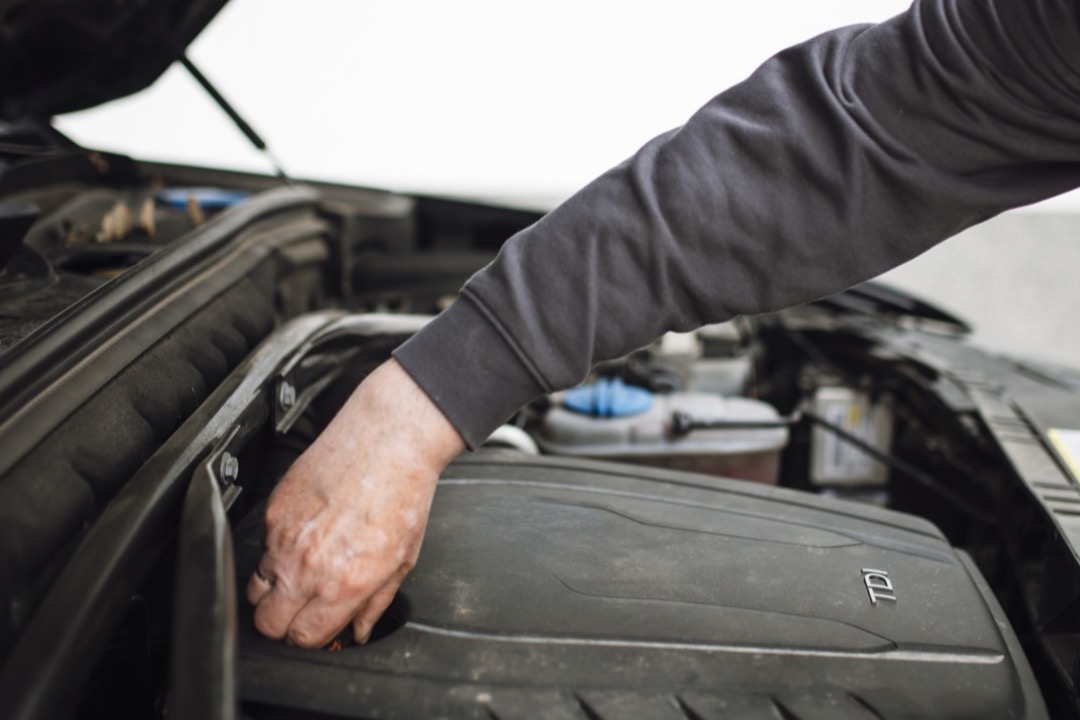
I have been turning wrenches for over 20 years. ASE Master Technician certification, independent shop owner, and enough hours under vehicles to have strong opinions about every category of auto parts. The OEM versus aftermarket debate is one I have had with customers, with counter guys at parts stores, and with other technicians more times than I can count. Most of the advice available online is thin — 900 words from a financial site or a parts retailer with an obvious incentive to send you one direction.
This guide is the breakdown I give to people I actually know. It covers the real differences between OEM and aftermarket parts, explains the federal law that protects your warranty rights, names the specific brands I trust by category, lists the parts I will never buy aftermarket regardless of price, and gives you a decision table you can actually use at the parts counter. If you want to understand how to choose motor oil with the same level of detail, our synthetic vs conventional oil breakdown applies the same approach to your lubrication choices.
What Does OEM Mean — and What Is Aftermarket?
Before the cost debate starts, the terminology needs to be precise — because it is routinely misused in ways that lead to bad purchasing decisions.
OE (Original Equipment) refers to the specific part installed on your vehicle when it rolled off the assembly line. The automaker — Ford, Toyota, GM, BMW — does not manufacture most of those parts themselves. They source them from Tier 1 suppliers under long-term contracts. The Denso fuel pump in your Toyota Camry is an OE part. The NGK iridium spark plug in your Honda Civic is an OE part. The Bosch oxygen sensor in your Volkswagen is an OE part. These suppliers engineer and manufacture the parts to the automaker’s specifications.
OEM (Original Equipment Manufacturer) technically refers to those same Tier 1 suppliers. But in everyday usage at parts counters and dealerships, “OEM parts” has come to mean parts purchased through the vehicle manufacturer’s official dealer parts network — which are typically the original supplier’s parts in manufacturer-branded packaging, sometimes at a significant markup.
Aftermarket parts are produced by companies that were not part of the original vehicle manufacturing supply chain — or, in some cases, are the original Tier 1 supplier selling their part through retail channels under their own brand rather than the automaker’s label.
This distinction matters enormously. When your Toyota dealer sells you a “Toyota Genuine Parts” fuel pump, it is very likely a Denso pump in Toyota packaging. When you buy a Denso-branded fuel pump from an auto parts retailer, you may be buying the identical component at significantly lower cost. Knowing who actually made the OE part for your specific vehicle is the single most valuable piece of research you can do before ordering parts.
The “Same Factory” Secret
The aftermarket is not a monolithic category of inferior copies. A significant portion of the aftermarket — particularly from established Tier 1 suppliers — represents genuine OE-equivalent or OE-identical parts sold outside the dealer distribution channel.
Here are specific examples I have confirmed over years of sourcing parts:
Denso manufactures fuel pumps, oxygen sensors, starters, and alternators as OEM supplier for Toyota, Honda, Lexus, and Acura. Denso’s retail-branded parts for these platforms are frequently identical to the dealer parts at 20 to 40 percent lower price.
NGK is the OEM spark plug supplier for the majority of Japanese domestic market vehicles and a substantial number of European platforms. The NGK Iridium IX and Laser Iridium plugs you buy at an auto parts store are the same product specification as what came in the vehicle from the factory. Our best spark plugs roundup covers the full NGK lineup alongside Bosch and Denso options.
Bosch supplies OEM sensors, starters, alternators, and fuel system components to BMW, Mercedes-Benz, Volkswagen, and Audi — among others. Bosch-branded aftermarket parts for German vehicles are the shortest possible distance from OE specification.
Monroe manufactures struts and shocks as OEM supplier for several platforms and offers their Monroe Quick-Strut assemblies as aftermarket alternatives that meet or exceed OE specifications.
Akebono produces OEM brake friction materials for Lexus, Toyota, Honda, Acura, Toyota, and several luxury European brands. Their ProACT and Euro Ultra aftermarket lines use the same friction compound formulations as the OEM applications.
Gates is a primary OEM supplier of timing belts, serpentine belts, and coolant hoses for multiple manufacturers. Gates retail products are OEM quality by definition.
The practical lesson: before you pay dealer prices, identify who made the OE part for your specific vehicle, then look for that supplier’s branded product in the aftermarket.
Cost Comparison: What You Actually Save
OEM parts from a dealership typically cost 30 to 65 percent more than equivalent aftermarket parts for the same application. On a $40 OEM air filter, that might mean $24 aftermarket — a $16 savings with essentially zero downside risk. On a $280 OEM catalytic converter, the aftermarket alternative at $110 to $160 represents real money, but introduces more complexity around emissions compliance and quality variance.
The cost differential is not uniform — it depends heavily on vehicle make, part category, and whether the OEM supplier sells through retail channels.
Scenario 1: Regular maintenance items over 5 years
A vehicle owner replacing oil filters, engine air filters, cabin air filters, and windshield wipers on schedule over five years using OEM dealer parts versus quality aftermarket alternatives might spend approximately $400 to $600 more in OEM parts over that period — for no measurable performance difference using established aftermarket brands.
Scenario 2: Brake job on a mainstream domestic vehicle
OEM pads and rotors through a dealer for a typical front axle brake job runs approximately $180 to $260 in parts. Quality aftermarket alternatives from Akebono, Brembo, or EBC run approximately $80 to $140 in parts — a $80 to $120 savings with equivalent or, in the case of Brembo, superior performance.
Scenario 3: Electronic component (oxygen sensor)
OEM O2 sensor: approximately $90 to $200 dealer price. Generic aftermarket: $18 to $35. Denso or Bosch branded aftermarket: $40 to $90. In my shop, I use Denso or Bosch. The $18 generic has a failure and calibration drift rate that generates far more diagnostic labor cost than the $50 premium brand savings. For sensors, the generic aftermarket savings are not real savings — they are deferred costs.
Total cost of ownership always includes diagnostic risk. That is the number most price comparisons omit.
The Warranty Question
This is where misinformation costs people real money. Dealerships, dealer service advisors, and manufacturer customer service lines sometimes imply — or directly state — that using aftermarket parts voids your vehicle warranty. This is largely false.
The Magnuson-Moss Warranty Act of 1975 is a federal consumer protection law that governs written warranties on consumer products, including vehicles. Under this law, a manufacturer cannot void your vehicle warranty simply because you used aftermarket parts, aftermarket fluids, or had service performed by an independent shop rather than a dealer.
To deny a warranty claim on the basis of an aftermarket part, the manufacturer must demonstrate — with evidence — that the specific aftermarket part directly caused the specific failure being claimed. The burden of proof is on the manufacturer, not on you.
Practical example: You install aftermarket brake pads. Your air conditioning compressor fails. The manufacturer cannot deny your AC warranty claim because you used aftermarket brake pads — there is no causal relationship. They would need to prove the brake pads somehow caused the AC failure, which is impossible.
Where it gets complicated: If you install an aftermarket tune (ECU recalibration), the manufacturer has a much stronger case that any drivetrain or engine failures could be attributable to the tune. If you use a fluid that does not meet the specification in your owner’s manual, and a component lubricated by that fluid fails, the manufacturer has a credible argument. Stick to parts that meet or exceed the manufacturer’s specifications, use branded products with clear specifications, and document your maintenance.
One more nuance: If your vehicle was sold with specific dealer-add-on warranties or service contracts, those may have their own terms and conditions beyond Magnuson-Moss protections. Read those documents specifically.
Part-by-Part Guide: When to Go OEM, Aftermarket, or Remanufactured
This is the section that the generic articles never write. Blanket “OEM is always better” or “aftermarket is always fine” advice is useless at the parts counter. Here is my category-by-category assessment.
Brake Pads and Rotors
Verdict: Quality aftermarket is preferred.
This is where I spend the most time pushing back on the “always use OEM” advice. Dealer OEM brake pads are frequently sourced from budget-tier friction suppliers — they are not necessarily the highest-performance product available. Meanwhile, aftermarket options from Akebono (which, as noted, supplies OEM friction material for Lexus and Acura), Brembo, EBC, and Hawk use advanced friction compounds that in many cases deliver better stopping distances, lower dust, and longer life than the base OEM alternative.
Rotors are similar — replacement OEM rotors are not better than quality aftermarket rotors from Centric, Brembo, or DBA. Avoid the absolute cheapest unbranded rotors — they warp faster and can have metallurgical inconsistencies. But Centric Premium rotors or Brembo OE replacements at 20 to 35 percent below OEM pricing are the right call on most vehicles.
Always replace pads and rotors together on an axle, and always use the same friction compound on both sides. Our best brake pads guide covers the top aftermarket options across performance, daily driving, and economy categories.
Spark Plugs
Verdict: Aftermarket is almost always correct — buy the OEM supplier’s retail brand.
As covered in the “same factory” section, the OEM spark plug for most vehicles is manufactured by NGK, Denso, Bosch, or Champion. Buying those brands’ retail products is buying OEM quality at aftermarket pricing. Iridium and platinum plug specifications are specific to the vehicle — match the gap and heat range to what the manufacturer specifies, and the brand question mostly answers itself.
The one caution: do not go cheap on spark plugs. Standard copper plugs have a legitimate role in certain classic and performance applications, but for modern engines with coil-on-plug ignition systems and close-tolerance combustion chambers, the specified iridium or platinum plug is not optional. The ignition system is calibrated around that plug specification.
See our best spark plugs roundup for the top NGK, Denso, and Bosch options, and our Bosch vs ACDelco spark plugs comparison if you are deciding between those specific brands.
Oil and Oil Filters
Verdict: Aftermarket oil filters from established brands are superior to many OEM options.
This is where I am bluntest. Dealer-supplied OEM oil filters are often rebranded commodity cellulose-media filters at premium prices. A Wix XP, Mobil 1, K&N Performance, or Purolator PureOne synthetic-media filter — all available at auto parts stores — provides finer filtration, higher capacity, and better anti-drainback valve performance than most OEM filters at comparable or lower cost.
For motor oil, the brand is less important than the specification — use the viscosity grade and API/ILSAC specification listed in your owner’s manual, buy from a reputable brand, and change it on schedule. Our best oil filters guide ranks the top media types, and our synthetic vs conventional oil breakdown covers the oil selection decision in depth. If you want brand-specific head-to-head data, our Mobil 1 vs Castrol GTX comparison runs the two most popular formulations side by side.
Engine and Cabin Air Filters
Verdict: Aftermarket is the clear choice.
Air filters are commoditized parts with well-understood specifications. Wix, K&N, and Fram Extra Guard filters match or exceed OEM filtration performance at lower prices. K&N’s washable high-flow air filters provide a measurable airflow improvement for engines where intake restriction is a limiting factor.
The cabin air filter market has similarly strong aftermarket options — FRAM Fresh Breeze, Bosch Cabin, and K&N cabin filters all perform well against OEM equivalents. Our best engine air filters guide covers the top options by filtration efficiency and airflow, and our best cabin air filters roundup covers in-cabin air quality options.
Windshield Wipers
Verdict: Aftermarket — and the best options are often significantly better than OEM.
Dealer OEM wipers are almost universally standard beam or conventional blade designs. The aftermarket offers superior beam-blade technology from Bosch (ICON, Envision), Rain-X Latitude, and Michelin Cyclone — all of which outperform OEM wipers in streak resistance, ice performance, and service life. This is a category where aftermarket is the rational choice even for new vehicles still under warranty.
Our best windshield wipers roundup covers the full range of beam, conventional, and hybrid blade options.
Oxygen Sensors and Electronic Components
Verdict: OEM or Tier 1 supplier branded only.
This is my “never buy generic” category, and I have strong opinions backed by shop experience.
Oxygen sensors have tight calibration requirements. The engine management system interprets the sensor’s voltage signal to calculate fuel trims and closed-loop fueling correction. An O2 sensor that is within spec but reads slightly lean biases the ECU toward richer fueling, increasing fuel consumption and potentially causing catalyst damage over time. A sensor that reads slightly rich has the opposite effect. An off-spec sensor may cause a check engine light immediately, or it may cause subtle driveability issues that take hours of diagnostic time to trace.
I have replaced more “new” aftermarket O2 sensors than I can count — sensors that were installed elsewhere and blamed for problems that turned out to be the sensors themselves. The diagnostic labor to identify a substandard sensor typically runs $150 to $400. The OEM-quality alternative from Bosch or Denso costs $40 to $90 more than a generic. The math is not close.
ABS wheel speed sensors, crankshaft and camshaft position sensors, MAF sensors, and throttle position sensors fall into the same category. Buy Bosch, Denso, Standard Motor Products, or dealer OEM for these components. The savings from a generic are real; the diagnostic risk when they fail is realer.
Headlight Bulbs
Verdict: Quality aftermarket, with specific brand guidance.
For halogen headlight replacement bulbs, Sylvania, Philips, and GE produce excellent OEM-equivalent and upgraded options. Sylvania SilverStar Ultra and Philips X-treme Vision bulbs provide meaningfully brighter output than standard OEM halogens.
For LED headlight upgrades — whether replacing factory halogens or supplementing existing LED housings — the market has significant quality variance. Stick to established brands with DOT and SAE compliance markings, not bare boards from anonymous sellers. Our best LED headlight bulbs guide covers the verified performers with beam pattern testing data.
Batteries and Battery Chargers
Verdict: Battery — quality aftermarket is fine. Charger — a non-negotiable maintenance investment.
Interstate, Odyssey, DieHard, and ACDelco batteries are legitimate aftermarket options that match OEM battery specifications at comparable or lower prices. Match the CCA rating, reserve capacity, and BCI group size to your vehicle’s spec and you will have equivalent performance regardless of whether it came from the dealer.
Car batteries are perishable — the average service life is 3 to 5 years regardless of brand. The more important investment is a quality battery maintainer to extend life on vehicles that sit for extended periods. Our best car battery chargers roundup covers the top maintainers and smart chargers, and if you drive a vehicle prone to leaving you stranded, our best jump starters guide covers the portable lithium options worth keeping in your trunk.
Suspension Components
Verdict: Quality aftermarket for shocks and struts; OEM-preferred for bushings and control arms on newer vehicles.
Monroe, KYB, and Bilstein manufacture shocks and struts for both OEM and aftermarket applications. Monroe’s Quick-Strut complete assembly kits — which include the strut, spring, and bearing plate as a pre-assembled unit — are a legitimate OEM-quality alternative that also saves significant installation labor. KYB Gas-a-Just and Bilstein B6 options are performance-equivalent or performance-superior to factory dampers.
Suspension bushings and control arms are where I recommend more caution. On newer vehicles with complex multi-link suspension geometries, polyurethane or economy-grade rubber bushings from unknown brands can change suspension compliance characteristics in ways that affect tire wear and handling balance. For late-model vehicles, OEM or branded name-brand (Mevotech, Moog, Dorman) suspension hard parts are worth the premium.
How to Vet Aftermarket Brand Quality
Not all aftermarket brands are trustworthy. Here is the framework I use when evaluating a brand I am less familiar with.
Look for ISO 9001 certification. This is a quality management system standard that ensures the manufacturer has documented, auditable processes for consistent production. Legitimate parts manufacturers will show this certification. It does not guarantee product quality, but it filters out the most chaotic suppliers.
Look for CAPA certification on collision parts. The Certified Automotive Parts Association independently tests aftermarket collision replacement parts — hoods, bumpers, fenders, lights — against OEM fit, finish, and structural specifications. A CAPA-certified hood has been tested to confirm it mounts correctly and performs comparably to the OEM part in fit and finish. NSF International provides a similar certification. For collision repairs, insist on CAPA or NSF certified parts.
Red flags for generic parts: No brand name on the part itself (just generic packaging), pricing that is 60 to 80 percent below OEM with no explanation, no return policy, marketplace listings with a one-month-old seller account, no warranty stated. These are not reliable parts.
Trusted aftermarket brands by category:
- Filters: Wix, K&N, Fram Extra Guard/Ultra, Bosch, Purolator
- Brakes: Akebono, Brembo, Centric, EBC, Hawk, StopTech
- Spark plugs: NGK, Denso, Bosch, Champion
- Shocks/struts: Monroe, KYB, Bilstein, Gabriel
- Belts/hoses: Gates, Dayco, Continental
- Sensors: Bosch, Denso, Standard Motor Products
- Lighting: Sylvania, Philips, Hella
Collision Repairs and Insurance Claims
This deserves its own section because it is where the OEM versus aftermarket debate has legal and safety dimensions that most people do not understand until they are dealing with a claim.
When your vehicle is repaired through an insurance claim, the insurer will typically specify aftermarket parts to minimize their cost — this is standard practice. Their right to specify aftermarket parts varies by state law. As of 2026, a number of states have regulations that require insurers to disclose when aftermarket parts are specified, and some states give policyholders the right to request OEM parts (typically with a cost differential charged to the policyholder).
The IIHS conducted crash tests in 1987 and 1999 comparing OEM and CAPA-certified aftermarket hoods and front bumper reinforcements. The conclusion: certified aftermarket parts performed equivalently to OEM in structural crash testing. Uncertified aftermarket collision parts — the ones without CAPA or NSF certification — are a different story, with documented fit and structural issues.
Your rights: Ask your insurer specifically whether aftermarket parts are specified in your repair estimate. Request that any aftermarket structural parts be CAPA or NSF certified — this is a reasonable request and many insurers will accommodate it. For safety systems (airbag modules, SRS components, side impact protection), insist on OEM. The cost difference on safety components is trivial relative to the risk.
OEM vs Aftermarket for EV and Hybrid Owners
Electric and hybrid vehicles introduce additional complexity to the parts equation that deserves specific attention.
High-voltage battery packs and HV components: Do not buy aftermarket. Full stop. High-voltage battery cells, modules, and pack components for EVs and hybrids require precise chemistry matching, thermal management compatibility, and BMS calibration. Aftermarket alternatives range from mediocre to dangerous. OEM or certified rebuilds from the original manufacturer are the only rational choice.
12-volt accessory battery: Standard automotive battery rules apply. Match the AGM or flooded specification to your vehicle’s BMS requirements.
Thermal management components: Hybrid and EV cooling systems manage battery and power electronics temperatures with greater precision than conventional engine cooling. Use OEM specifications for coolant type and concentration — our best coolant antifreeze guide covers the OAT, HOAT, and silicate-based variants and which platforms require which chemistry.
Regenerative braking systems: Hybrid brake systems integrate regenerative and friction braking through a hydraulic-by-wire system on some platforms. These systems have specific brake pad friction requirements. Check the manufacturer specification carefully before substituting aftermarket pads — the friction coefficient matching to the regen system calibration matters.
HVAC compressors and inverters: OEM or OEM-quality preferred. These are high-value, software-integrated components where the cost consequences of a premature failure are significant.
For conventional wear items on EVs and hybrids — cabin filters, wiper blades, standard suspension components — the same aftermarket logic as conventional vehicles applies.
The Remanufactured Option
Most conversations about OEM versus aftermarket ignore a legitimate third category: remanufactured (reman) parts. These are core components that have been returned, disassembled, inspected, repaired or rebuilt to specification, and re-certified for service.
Reman makes the most sense for high-value mechanical assemblies where the core has inherent value and the labor to rebuild it is less than manufacturing new:
- Alternators and starters (Remy, Bosch, Denso reman programs)
- Brake calipers (Cardone, Raybestos reman lines)
- Power steering gear boxes and rack and pinion assemblies
- Transmission assemblies (extensive rebuilder market)
- AC compressors
Quality reman programs disassemble 100 percent of returned cores, replace all wear parts and seals, test each assembly to OEM specification, and warrant the finished product. A quality reman alternator from a Tier 1 rebuilder costs 40 to 60 percent less than OEM new and carries a two to three year warranty.
The caveats: reman quality is highly brand-dependent. Cardone Industries and Remy are among the more reputable reman operations. Be cautious with deeply discounted reman parts from unknown rebuilders — there is no standard reman certification equivalent to CAPA’s collision part testing.
6 Biggest Myths About OEM vs Aftermarket — Debunked
Myth 1: Aftermarket Parts Always Void Your Warranty
False — and this myth costs consumers real money every year by pushing them toward unnecessary dealer pricing. As explained in the warranty section above, the Magnuson-Moss Warranty Act of 1975 prohibits manufacturers from voiding warranties simply because aftermarket parts were used. The manufacturer must prove the aftermarket part caused the specific failure. The only parts where extra caution is warranted are components directly related to a powertrain or emissions warranty with specific fluid requirements.
Myth 2: Dealer OEM Parts Are Always Manufactured by the Automaker
False. The automaker brands the box; the Tier 1 supplier manufactured the part. Toyota, Honda, Ford, and GM do not make their own spark plugs, sensors, starters, alternators, or the vast majority of vehicle components. Understanding who made the OE part is the key to finding equivalent quality at lower cost.
Myth 3: The Cheapest Aftermarket Part Is Basically the Same as an Established Brand
False — and ignoring this gets people into expensive diagnostic trouble. The price range within the aftermarket for any given part can span from a few dollars to near-OEM pricing. That price variance reflects real differences in material quality, dimensional tolerances, and engineering investment. For sensors and electronics, a $20 generic versus an $80 Bosch unit represents a meaningful difference in calibration precision and failure rate.
Myth 4: Collision Parts Must Be OEM to Maintain Structural Integrity
Partially false. CAPA-certified and NSF-certified aftermarket collision parts have been independently tested against OEM structural and fit specifications. The IIHS crash test data from controlled studies found no meaningful structural difference between OEM and certified aftermarket hoods and bumper reinforcements. Uncertified aftermarket collision parts — common in insurance repairs that do not specify certification — are a different story and warrant scrutiny.
Myth 5: High-Performance Aftermarket Parts Are Better Than OEM for Street Use
Mostly false for daily drivers. High-performance aftermarket brake pads (aggressive friction compounds), high-performance suspension components, and performance air intake systems are optimized for conditions that do not reflect most daily driving. Aggressive brake compounds operate at optimal friction coefficient at temperatures that typical street driving rarely generates — at cold temperatures, they may provide less stopping power than OEM. Performance suspension tuning trades ride quality for handling sharpness. For street use, OEM-equivalent or quality OEM-replacement parts are almost always the correct choice unless the vehicle is used for specific performance applications.
Myth 6: You Can Always Find an Aftermarket Alternative
Not for everything. For older, less-common vehicles — particularly older European luxury vehicles, commercial vehicles, and specialty platforms — aftermarket coverage can be thin or nonexistent for many components. And for cutting-edge new vehicle platforms, OEM may be the only available source for several years after introduction. Know your vehicle’s parts ecosystem before assuming aftermarket options exist.
The Verdict: A Decision Table by Situation
| Part Category | Recommendation | Trusted Aftermarket Brands |
|---|---|---|
| Engine air filter | Aftermarket | Wix, K&N, Bosch, Purolator |
| Cabin air filter | Aftermarket | FRAM, Bosch, K&N |
| Oil filter | Aftermarket (quality media) | Wix XP, Mobil 1, Purolator Boss |
| Spark plugs | Aftermarket (OEM supplier brand) | NGK, Denso, Bosch |
| Windshield wipers | Aftermarket | Bosch ICON, Rain-X Latitude, Michelin |
| Brake pads | Aftermarket | Akebono, Brembo, EBC, Hawk |
| Brake rotors | Aftermarket | Centric Premium, Brembo OE, DBA |
| Shocks and struts | Aftermarket | Monroe, KYB, Bilstein |
| Belts and hoses | Aftermarket (Gates/Dayco) | Gates, Dayco, Continental |
| Oxygen sensors | OEM or Tier 1 brand only | Bosch, Denso |
| ABS/wheel speed sensors | OEM or Tier 1 brand only | Bosch, Denso, Standard |
| MAF/MAP sensors | OEM or Tier 1 brand only | Bosch, Denso, Standard |
| Timing belt/chain | OEM or Gates only | Gates, OEM |
| Alternator/starter | Quality reman or OEM | Remy, Bosch reman, OEM |
| Brake calipers | Quality reman or OEM | Cardone, Raybestos, OEM |
| Airbag/SRS components | OEM only | N/A |
| ECU/PCM | OEM only | N/A |
| EV/HV battery components | OEM only | N/A |
| Collision sheet metal | CAPA-certified aftermarket or OEM | CAPA-certified only |
| Headlight bulbs | Aftermarket | Sylvania, Philips, Hella |
Here is the honest summary after 20 years of turning wrenches: the blanket statements — “always OEM” or “aftermarket is always fine” — are both wrong. The correct answer is category-dependent, brand-dependent, and vehicle-dependent.
For commodity wear items — filters, wipers, spark plugs from the OEM supplier’s brand, quality brake pads and rotors — aftermarket from established brands is the rational choice for most vehicles. The savings are real, the quality is equivalent, and the warranty protection under Magnuson-Moss is real.
For electronic sensors, safety-critical systems, and complex calibrated components, OEM or Tier 1 branded parts are worth the premium — not because aftermarket options do not exist, but because the diagnostic and repair cost consequences of a marginal component failure often dwarf the purchase price savings.
The most expensive mistake you can make is buying generic no-name parts to save $30, then spending $400 in diagnostic labor when they fail in an ambiguous way that takes three shop visits to trace. I have watched that scenario play out more times than I want to count. Buy from named brands with reputations to protect, verify the OEM supplier for your specific platform, and use the decision table above as your starting framework.
For parts-specific research before you buy, our best oil filters, best spark plugs, best brake pads, best engine air filters, and best windshield wipers roundups cover the top aftermarket options in each category with hands-on assessment.
Buyer's Guide
Six factors determine whether OEM or aftermarket is the right call for any specific repair. Work through these before you order the part.
Safety and Failure Consequence
The higher the safety consequence of a premature failure, the stronger the case for OEM or a rigorously certified aftermarket equivalent. Brake pads, rotors, steering components, and suspension bushings affect vehicle control directly — use a quality brand you trust. Oxygen sensors, ABS sensors, and airbag components have tight electronic tolerances where off-spec alternatives cause diagnostic cascades far more expensive than the OEM price difference. Conversely, an air filter or wiper blade that fails prematurely causes mild inconvenience, not a safety hazard. Let failure consequence guide your risk tolerance.
Part Complexity and Calibration
Mechanical wear parts — filters, belts, pads, plugs — have relatively forgiving tolerances and are straightforward for quality aftermarket manufacturers to replicate. Electronic sensors, modules, and actuators are calibrated precisely to the vehicle's ECU and communication protocols. The more software-dependent a part is, the greater the risk that an aftermarket alternative has calibration differences that cause false fault codes, rough operation, or outright incompatibility. For any part that interacts heavily with the vehicle's electronics, OEM provides certainty that a quality aftermarket alternative cannot always match.
Brand Reputation and Certification
Not all aftermarket brands are equal. Established Tier 1 suppliers — Bosch, Denso, NGK, Akebono, Monroe, Gates, Wix, K&N — manufacture parts for OEM applications and sell equivalent products under their own brand. These are the safe bets in the aftermarket. For collision parts, CAPA (Certified Automotive Parts Association) and NSF International certification means the part has been independently tested against OEM fit, finish, and structural specifications. Avoid unnamed generics, marketplace sellers with no brand, and parts priced 60 to 80 percent below OEM with no brand information — the savings evaporate the first time they fail.
Vehicle Age and Repair Economics
A three-year-old vehicle under manufacturer warranty or a high-value enthusiast car warrants OEM parts for the peace of mind and warranty integrity. A 12-year-old daily driver with 140,000 miles changes the math completely — the vehicle's market value may not justify OEM pricing on every repair, and using quality aftermarket parts to keep the car running cost-effectively is entirely rational. The average U.S. vehicle on the road in 2026 is 12.6 years old. For most real-world repairs on high-mileage vehicles, quality aftermarket parts are the economically sound choice.
The "Same Factory" Factor
Before paying dealer OEM prices, verify whether the Tier 1 OEM supplier sells an identical or equivalent part under their own brand. Denso supplies OEM fuel pumps and sensors for Toyota and Honda — and sells the same components under the Denso brand at significantly lower prices. NGK manufactures the OEM spark plugs for numerous Japanese and European platforms — and sells them retail under the NGK brand. Akebono makes OEM brake pads for Lexus, Toyota, Honda, Acura, and several luxury European brands — and offers identical friction compounds in their ProACT aftermarket line. In these cases, buying the Tier 1 supplier's branded product is technically buying OEM quality at aftermarket pricing.
Total Cost Including Diagnostic Risk
A cheap aftermarket O2 sensor might save 80 dollars versus OEM. If that sensor has calibration drift that causes the engine management system to run rich, triggering a check engine light, requiring two diagnostic sessions to identify the root cause, and then a second repair visit — the total cost exceeds the OEM alternative by several hundred dollars. This is not hypothetical; I have seen it play out dozens of times. True cost comparison must include the probability and consequence of the part failing or performing poorly, not just the purchase price. For low-risk commodity parts, the savings are real. For sensors and electronics, the math often favors OEM.
Frequently Asked Questions
Are aftermarket parts as good as OEM?
Does using aftermarket parts void my warranty?
What is the difference between OEM, OE, and aftermarket parts?
Can you mix OEM and aftermarket parts on the same vehicle?
What aftermarket parts should I avoid?
Related Articles
About the Reviewer
Mike Reeves, ASE Master Technician
A.A.S. Automotive Technology, Universal Technical Institute (UTI)
Mike Reeves is an ASE Master Technician with 15 years of hands-on experience in automotive repair and diagnostics. He earned his A.A.S. in Automotive Technology from UTI and runs his own independent shop in Denver, Colorado. Mike founded RevRated to help everyday car owners make smarter parts decisions -- every recommendation comes from real-world testing in his garage.