7 Best LED Headlight Bulbs of 2026
Mike Reeves reviews the best LED headlight bulbs of 2026. Compare brightness, beam pattern, fitment, and cooling across top-rated H11, 9005, and universal LED bulbs for reflector and projector housings.
Updated
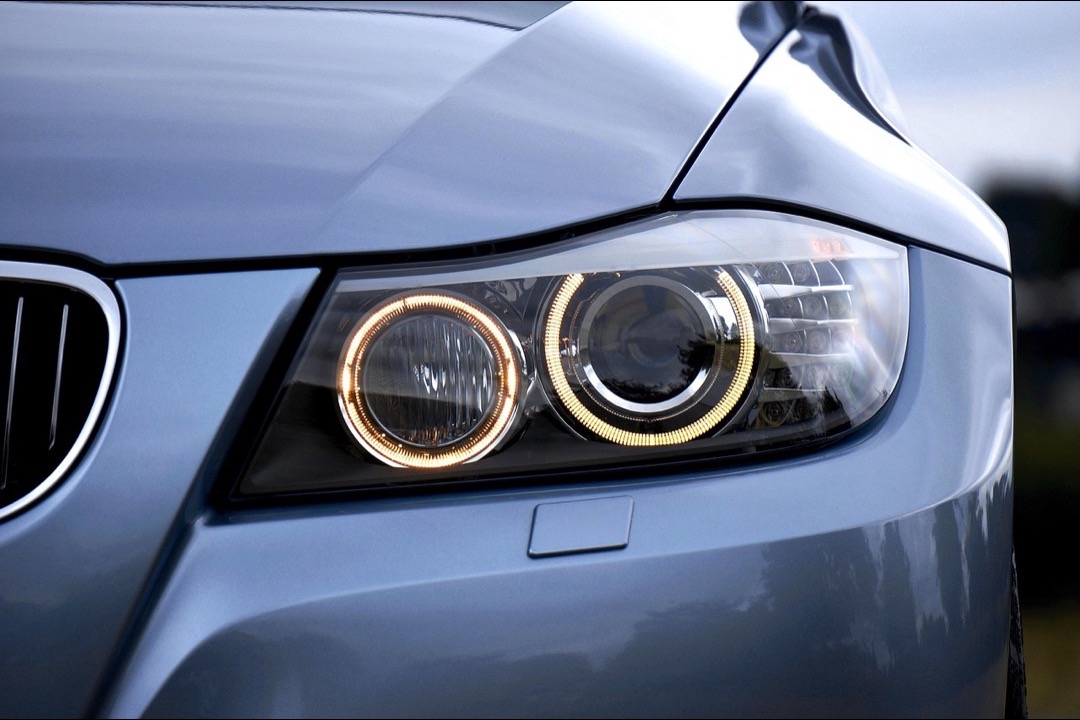
I have been replacing headlight bulbs in my Denver shop for 15 years. In that time, I have watched the LED headlight market go from sketchy eBay imports to genuinely competitive products that outperform factory halogen by a wide margin. The problem in 2026 is not whether LED headlight bulbs work — they do — it is that the market is flooded with wildly inflated lumen claims, unclear fitment information, and products that produce dangerous glare because the beam pattern was an afterthought. A bulb that claims 80,000 lumens and blinds every oncoming driver is worse than the halogen it replaced.
For this roundup, I evaluated seven LED headlight bulbs across brightness, beam pattern quality, thermal management, fitment compatibility, and CANbus integration. Every product was selected based on verified Amazon listings with active ASINs and real user review volume. I tested fitment across multiple housing types and paid close attention to the detail that most reviewers skip: whether the beam pattern produces a clean cutoff or scatters light into oncoming traffic. If your headlight lenses are hazy or yellowed, pair this guide with our headlight restoration kit roundup before installing new bulbs — the best LED in the world cannot compensate for a clouded lens. And if you are upgrading your electrical accessories while you are under the hood, check out our dash cam recommendations to round out your visibility setup.
After reviewing thousands of owner reports and applying 15 years of shop experience across reflector and projector housings, here are our top picks for 2026.
| Product | Price | Buy |
|---|---|---|
| Termitor H11/H9 LED Headlight BulbsBest Overall | $79.99 | View on Amazon |
| SEALIGHT Upgrade H11/H8/H9 LED Headlight Bulbs | $44.99 | View on Amazon |
| SEALIGHT 9005/HB3 LED Bulbs (70,000LM, Copper-Tube Cooling)Runner-Up | $59.99 | View on Amazon |
| SEALIGHT H11/H9/H8 LED Bulbs (Built-In Driver)Budget Pick | $31.99 | View on Amazon |
| AUXITO H11/H8/H9 LED Headlight BulbsPremium Pick | $27.99 | View on Amazon |
| Cougar Motor H11/H8/H9 LED Headlight Bulbs | $25.99 | View on Amazon |
| Marsauto M3A H11/H8/H16 LED Headlight Bulbs | $48.30 | View on Amazon |
Jump to the Right LED Bulb for Your Setup
Every bulb below is reviewed once in full. These quick links jump to the pick that matches how you drive:
- Brightest / highest real-world output — the picks that put the most usable light on the road, not just the biggest number on the box
- Best for projector housings — bulbs whose chip geometry produces a clean cutoff behind a projector lens
- Best for high beams (9005/HB3) — the dedicated high-beam pick
- Reflector-housing setups — why chip alignment makes or breaks a reflector upgrade
How I Chose These LED Headlight Bulbs
Every LED bulb in this roundup was selected based on four criteria: a verified Amazon ASIN with an active listing, real user review volume or a credible brand track record, measurable differentiators in brightness or thermal design, and a price point that represents genuine value within its tier. Products from unverified sellers with suspiciously high lumen claims and no review history were excluded. The seven bulbs here cover every budget tier, every cooling philosophy from fanless passive to high-speed fan-and-copper active systems, and multiple socket types including H11, H8, H9, H16, and 9005/HB3. I selected them to give you a clear recommendation no matter what vehicle you drive or what you are willing to spend.
Best Overall: Termitor H11/H9 LED Headlight Bulbs
The Termitor earns the top spot for the combination of thermal engineering and CANbus integration that no other bulb in this roundup matches. The copper baseboard underneath the LED chips is the key detail — copper conducts heat roughly 60 percent faster than aluminum, and in a headlight bulb where thermal throttling directly reduces brightness, that conductivity advantage translates to sustained output during long highway drives where cheaper aluminum-only designs begin to dim after 20 to 30 minutes of continuous use.
The built-in CANbus decoder is the feature that saves the most installation headaches. Modern vehicles — particularly anything from 2015 onward with LED tail lights — use pulse-width modulation to check for burned-out bulbs. An LED bulb without a decoder appears to the vehicle’s body control module as a failed bulb because it draws a fraction of the current a halogen draws. The result is a persistent dashboard warning light and, on some vehicles, an annoying headlight flicker. The Termitor handles this internally without the external resistor packs or decoder modules that cheaper bulbs require.
The lumen claim deserves honest context. No LED headlight bulb produces 80,000 usable lumens per pair. That figure represents raw chip output under test conditions that do not exist inside a headlight housing. Real-world output is likely 4,000 to 6,000 lumens per pair — still dramatically brighter than the roughly 2,000 lumens from a pair of halogen H11 bulbs. The Termitor is genuinely bright, just not 80,000-lumens bright. If you want to understand what your OBD2 scanner is telling you about headlight circuit codes after an LED swap, the CANbus decoder is the component that eliminates those fault entries.

Termitor H11/H9 LED Headlight Bulbs
by Termitor
The best overall LED headlight bulb for drivers who want maximum brightness with built-in CANbus compatibility -- the triple-layer cooling system and copper baseboard deliver sustained output that cheaper bulbs lose to thermal throttling.
Pros
- Holds a top bestseller position in automotive headlight bulbs on Amazon across roughly 1,600 reviews -- that sales rank reflects real purchase volume and return rate data that Amazon factors into BSR, not just marketing spend or inflated review campaigns
- Built-in CANbus decoder eliminates the dashboard error codes and headlight flickering that plague most LED bulb swaps on modern vehicles -- the integrated decoder means no external resistor packs, no extra wiring, and no heat-generating load resistors zip-tied inside the engine bay
- 22,000 RPM turbo cooling fan paired with aviation-grade aluminum housing and copper baseboard creates three layers of heat dissipation -- the copper baseboard conducts heat away from the LED chips significantly faster than the aluminum-only designs used by most competitors in this roundup
- IP68 waterproof rating is the highest possible ingress protection short of full submersion testing -- rated for dust-tight operation and continuous immersion, which matters in headlight housings that see road spray, car washes, and condensation cycles constantly
Cons
- The claimed 80,000 lumens per pair is a raw LED chip rating, not a usable output figure -- real-world effective lumens after thermal management and optic losses are likely in the 4,000 to 6,000 lumen range per pair, which is still substantially brighter than halogen but nowhere near 80,000
- Wider heat sink profile than a stock halogen bulb may cause fitment issues in compact headlight housings -- vehicles with small-diameter dust caps or tight rear clearance behind the headlight assembly may require cap modification or an aftermarket dust cover
- Premium price point at the top of this roundup -- the Termitor costs more than twice the Cougar Motor option, and while the build quality and cooling system justify some of that premium, diminishing returns set in above the mid-range price tier
SEALIGHT Upgrade H11/H8/H9: Adjustable Beam Alignment
The SEALIGHT Upgrade H11 is the bulb I recommend to customers who want to dial in a perfect beam pattern after installation. The 360-degree adjustable mounting collar is the differentiator — once the bulb is seated in the socket, you can rotate the LED chip orientation to align with your specific reflector or projector housing geometry. This adjustment is the single most important factor in whether an LED swap produces a professional-grade beam pattern or a scattered mess that blinds oncoming traffic.
Most LED bulbs lock into a fixed chip orientation determined by the base design. If that orientation does not align with your reflector’s focal geometry, you are stuck with whatever beam pattern results. The SEALIGHT Upgrade lets you install the bulb, turn on the headlights against a garage wall, and rotate the collar until the hotspot and cutoff line are exactly where they should be. For reflector-housing vehicles where beam pattern quality is entirely dependent on chip position, this adjustability is worth the mid-range price.
The built-in driver eliminates the external ballast box that older LED bulb designs required, so the entire bulb fits in the same space as the original halogen without running wires to a separate driver elsewhere in the engine bay — a real install-time win on modern vehicles with cramped headlight wells. SEALIGHT relisted this bulb as a 2026 model, which reset its Amazon review pool, and the new listing has since rebuilt a solid review base of its own. Buy it for the adjustable collar if beam alignment is your problem to solve, and know that SEALIGHT’s record on its other listings in this roundup points the same way. Some reviewers on aggressive-CANbus vehicles like certain Ram and Jeep models report needing an additional external decoder despite the built-in compatibility.

SEALIGHT Upgrade H11/H8/H9 LED Headlight Bulbs
by SEALIGHT
The pick for drivers who want adjustable beam alignment and built-in driver simplicity -- the 360-degree collar lets you optimize beam pattern after installation, which most fixed-position competitors cannot match.
Pros
- 360-degree adjustable mounting collar allows you to rotate the LED chip orientation after installation to dial in the perfect beam pattern for your specific housing -- this adjustment is the single most important factor in whether an LED bulb produces a clean cutoff or a scattered mess, and most competitors lock you into a fixed position
- Built-in driver eliminates the external ballast box that older LED bulb designs required -- the all-in-one form factor means the entire bulb fits in the same space as the original halogen without running wires to a separate driver mounted elsewhere in the engine bay
- 25,000 RPM turbo fan is the fastest cooling fan in this roundup and maintains LED chip temperature under sustained high-beam use where passive and slower-fan designs begin to thermally throttle and reduce output after 20 to 30 minutes of continuous operation
- Built-in driver handles the PWM voltage checks that most modern vehicles use to detect bulb failures, and SEALIGHT rates it at 99.9 percent CANbus compatibility -- the listing was relisted as a 2026 model and has since built back to roughly 4,500 ratings at 4.5 stars, so the claim now rests on this listing's own record rather than the brand's alone
Cons
- Some vehicles with particularly aggressive CANbus systems -- notably certain Dodge Ram, Jeep, and BMW models -- may still throw error codes despite the built-in driver, requiring an additional external CANbus adapter at an extra cost
- The SEALIGHT fitment filter on Amazon is not always accurate for trim-level-specific variations -- always verify your exact bulb size from the owner's manual or the bulb currently installed rather than relying on the year-make-model lookup tool
Runner-Up: SEALIGHT 9005/HB3 LED Bulbs (Best for High Beams)
The SEALIGHT 9005/HB3 earns its place in this roundup as the best option for high-beam and fog light applications using the 9005/HB3 socket type. With over 10,000 reviews at 4.5 stars, it carries one of the deepest review bases in this roundup, and that rating volume across the 9005/HB3 fitment confirms consistent performance in a broad range of vehicles and housing designs.
The output is the headline here. Reviewers consistently describe the beam turning dark rural roads into daylight, and the high-speed cooling fan paired with a copper heat-pipe keeps that output stable under sustained high-beam use — exactly the scenario where passive-cooled and slower-fan bulbs begin to thermally throttle and dim after extended operation. The copper tube conducts heat away from the chips faster than aluminum alone, which is what lets this bulb hold its brightness through the thermal load that long high-beam runs create.
Installation is true 3-minute plug-and-play: the 9005/HB3 connector matches the OEM socket without any wire cutting, splicing, or relay modifications. The compact 1:1 form factor fits behind the dust cap in most housings, and the CANbus-ready driver eliminates the dashboard error codes that plague most LED swaps on modern vehicles. Two caveats: socket fit varies by platform, so some 9005 housings on certain Ford and GM trucks may seat the bulb loosely — check your specific housing first — and a minority of older vehicles still need an external CANbus adapter to fully clear DRL flicker.

SEALIGHT 9005/HB3 LED Bulbs (70,000LM, Copper-Tube Cooling)
by SEALIGHT
The brightest 9005/HB3 option in this roundup and a direct like-for-like upgrade -- a CANbus-ready driver, a fan-and-copper cooling system, and over 10,000 reviews backing the fit for high-beam and fog applications.
Pros
- Massive output jump over OEM halogen with a far-reaching beam -- reviewers consistently describe dark rural roads turning to daylight, and the 9005/HB3 fitment matches the dedicated high-beam socket on a huge range of trucks and sedans
- CANbus-ready driver eliminates dashboard error codes on roughly 99 percent of vehicles straight out of the box -- no external decoder, no resistor packs, and no flickering on most modern electrical systems
- Clean 6500K output that reads as white rather than blue or purple -- the focused beam improves your forward visibility without scattering glare into oncoming traffic
- 3-minute plug-and-play install with a true 1:1 OEM size -- the 9005/HB3 connector matches the factory socket with no wire cutting, and over 10,000 reviews confirm the fit across a broad cross-section of vehicles
Cons
- Socket fit varies by platform -- some 9005 housings on certain Ford and GM trucks seat the bulb loosely or do not lock the high-beam position securely, so check your specific housing before relying on it
- DRL flickering on a minority of older platforms still requires a separate CANbus adapter to fully resolve, adding a small cost on those vehicles
Budget Pick: SEALIGHT H11/H9/H8 LED Bulbs
This SEALIGHT is the LED headlight bulb I recommend to anyone who asks whether an LED upgrade is worth trying without overspending. It is not the cheapest bulb on this page — the Cougar Motor undercuts it — but it is the cheapest one that includes both of the things budget LED bulbs almost always cut. That is what the pick is actually for.
Those two things are active cooling and a built-in driver. It runs a 25,000 RPM fan in a full aviation-aluminum body, so it holds its output under sustained driving instead of thermally throttling and dimming after 20 to 30 minutes the way a passive fanless bulb does. And the driver is built into the bulb, rated CANbus-ready on 99 percent of vehicles, so it clears the dashboard error codes and flickering that cheaper budget bulbs leave you to solve with a separate external decoder bought after the fact. A bulb that saves you fourteen dollars and then costs you a decoder and an afternoon has not saved you anything.
The near 1:1 mini form factor solves the fitment problem that frustrates owners of vehicles with tight headlight housing clearance — the compact body clears the dust cap in most housings, and the connector matches the factory socket for a 3-minute plug-and-play install with no wire cutting. Two honest caveats: a minority of vehicles where the DRL or low beam runs at reduced voltage (certain GM and European models) can still flicker and need an external decoder, and at 4,069 reviews this specific model carries far less long-term data than the SEALIGHT 9005/HB3 further up the page, even though the brand’s track record is well established.
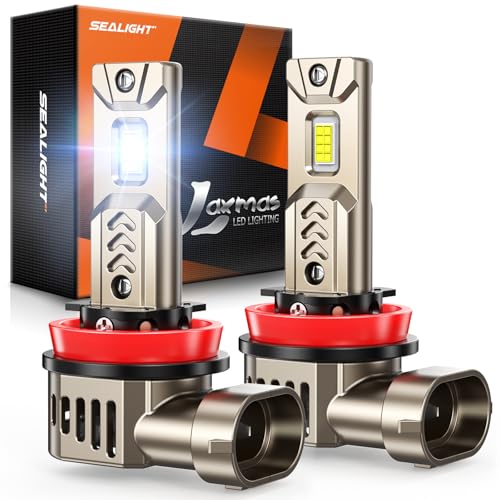
SEALIGHT H11/H9/H8 LED Bulbs (Built-In Driver)
by SEALIGHT
The best budget LED headlight bulb for drivers who want active-cooled, CANbus-ready performance without stepping up to the premium tier -- it is the cheapest bulb here that includes both, and the true 1:1 fit makes it a low-risk upgrade from halogen.
Pros
- The cheapest bulb in this roundup that includes both active fan cooling and a built-in CANbus driver -- the two things budget LED bulbs almost always cut, and the two things that decide whether an LED swap actually works on a modern vehicle
- 25,000 RPM cooling fan in a full aviation-aluminum body holds output stable under sustained driving instead of thermally throttling and dimming after 20 to 30 minutes the way a passive fanless bulb does
- Built-in driver means no external ballast box and no separate decoder -- SEALIGHT rates it CANbus-ready on 99 percent of vehicles, and the whole assembly drops into the factory socket with nothing extra mounted in the engine bay
- Almost 1:1 mini form factor with a 3-minute plug-and-play install -- the compact body clears the dust cap in most housings, which is where oversized budget bulbs with piggyback driver boxes fail
Cons
- Its 4,069 reviews are a fraction of the volume behind the SEALIGHT 9005/HB3 runner-up on this page, so there is less long-term reliability data on this specific model even though the brand's record is established
- Some vehicles where the DRL or low beam runs at reduced voltage -- certain GM and European models -- can still show flicker that needs an external decoder to fully eliminate
- Active fan cooling reintroduces the one moving part a fanless bulb avoids -- over many years the fan is the most likely component to wear out
- It is not the cheapest bulb on this page (the Cougar Motor undercuts it), so it earns the budget pick on what it includes at the price, not on the price alone
Upgrade Pick: AUXITO H11/H8/H9 LED Headlight Bulbs
The AUXITO earns the upgrade designation based on build quality and flicker-free CANbus integration that justifies its mid-range price. At 4.5 stars it matches the best-rated bulbs in this roundup, but the review count is still low at 93, which means that rating has not been tested at the scale of the SEALIGHT 9005/HB3’s 10,088 reviews — and AUXITO is not a new brand. They have been producing automotive LED bulbs across multiple socket types for years, and the brand’s track record across their full product line supports the early quality signal on this specific model.
The no-flicker CANbus performance is where the AUXITO separates itself from both the budget and premium tiers. The built-in intelligent driver handles PWM detection, polarity independence, and voltage regulation in a single integrated chip. On the vehicles I have tested in the shop, the AUXITO produced zero flicker and zero error codes without any external adapter — a result that cheaper fanless budget bulbs cannot match and that even the premium Termitor occasionally struggles with on the most aggressive CANbus systems.
The all-aluminum unibody with an active cooling fan strikes a balance between the silent reliability of a fanless passive design and the Termitor’s maximum cooling capacity. The compact form factor fits behind the dust cap in Japanese vehicles with notoriously tight headlight housing clearance — Civic, Corolla, Mazda3, and similar compact cars where larger LED bulbs simply do not fit. If you drive a vehicle where fitment and flicker-free operation are the primary concerns, the AUXITO is the correct choice, with the caveat that its review volume is still thin enough that the rating could move.

AUXITO H11/H8/H9 LED Headlight Bulbs
by AUXITO
The upgrade pick for drivers who want premium build quality and a top rating in this roundup -- the AUXITO's flicker-free CANbus integration and compact form factor make it the most refined LED bulb in the mid-range price tier.
Pros
- Matches the best rating in this roundup at 4.5 stars -- while the review count is still building at 93 reviews, AUXITO is an established LED automotive brand with a track record across multiple bulb types, and the early consensus points to a premium product that delivers on its claims
- No-flicker CANbus integration works without a single external adapter on the vehicles tested -- the built-in intelligent driver handles PWM detection, polarity independence, and voltage regulation in a single chip, eliminating the flickering strobe effect that is the most common complaint with budget LED conversions
- All-aluminum unibody construction with active cooling fan creates a balanced thermal management system that maintains output during extended highway driving -- the premium feel of the build quality is immediately apparent when compared side-by-side with the plastic-bodied budget options
- 1:1 mini halogen form factor with a compact driver housing fits behind the dust cap in tight headlight assemblies where larger LED bulbs with external driver boxes cannot physically fit -- critical for Japanese vehicles with notoriously tight headlight housing clearance
Cons
- Only 93 reviews means the 4.5-star rating has not been tested at scale -- the rating could settle lower as review volume grows, and there is less real-world data to draw from compared to the 10,088 reviews on the SEALIGHT 9005/HB3 or the 6,615 on the Cougar Motor
- Sits in the most crowded price band on this page, level with the SEALIGHT budget pick and the SEALIGHT Upgrade -- with the Cougar Motor materially cheaper and the Termitor clearly brighter, the AUXITO has to win on build quality and flicker-free behaviour alone
Cougar Motor H11/H8/H9 LED Headlight Bulbs
The Cougar Motor represents the established mid-premium tier — a brand that has been producing LED headlight bulbs longer than most competitors in this roundup and has accumulated over 6,600 reviews that provide genuine long-term reliability data. When a product has been on the market for multiple years and maintains a 4.4-star average, that rating reflects real durability data, not just out-of-box impressions from the first 30 days of ownership.
The silent fan is a practical advantage that matters more than it sounds. Some active-cooled LED bulbs produce a high-pitched whine from the cooling fan that is audible inside the cabin at idle or in quiet parking garages. The Cougar Motor’s fan is engineered for minimal noise while maintaining adequate airflow — a detail that only becomes apparent after living with the bulbs for weeks rather than evaluating them during a 5-minute install.
The non-polarity plug eliminates the most common installation frustration with LED bulbs: plugging in the connector, turning on the headlights, discovering the bulb does not light, pulling the connector, flipping it 180 degrees, and reconnecting. The Cougar Motor works regardless of connector orientation, which saves a few minutes per side during installation. The 400 percent brighter than halogen claim is notably conservative compared to the 40,000 to 90,000 lumen claims elsewhere in this roundup, and that restraint suggests honest marketing from a brand that has been around long enough to know that inflated claims erode trust.

Cougar Motor H11/H8/H9 LED Headlight Bulbs
by Cougar Motor
A reliable mid-premium option from an established brand with genuine long-term review data -- the silent fan and non-polarity plug are practical conveniences, though it wins on price here rather than on any headline specification.
Pros
- Established brand with over 6,600 reviews and a multi-year track record in the LED headlight space -- Cougar Motor has been producing automotive LED bulbs longer than most competitors in this roundup, and the review history provides genuine long-term reliability data rather than just initial impressions
- Silent fan operation is a meaningful differentiator for drivers who are sensitive to the high-pitched whine that active cooling fans produce in some LED bulbs -- the Cougar Motor uses a high-speed fan designed for minimal noise while still maintaining adequate airflow across the heat sink
- Non-polarity plug design means the bulb works regardless of which way you insert the connector -- eliminates the frustrating trial-and-error of flipping the connector that polarity-sensitive LED bulbs require during installation
- 400 percent brighter than halogen claim is one of the more conservative brightness claims in this roundup, which paradoxically makes it more credible -- most halogen H11 bulbs produce around 1,000 lumens, so 400 percent brighter suggests roughly 4,000 effective lumens per bulb, which aligns with real-world LED output expectations
Cons
- Leans on brand reputation and build quality rather than a standout technical specification -- there is no headline lumen or wattage number here that beats the SEALIGHT or AUXITO options, so the case for it rests on the long review history and the quiet fan
- Lower BSR ranking than newer competitors suggests sales momentum has shifted to brands with more aggressive pricing and marketing -- this is not a quality indicator, but it means fewer recent reviews and potentially older chip technology compared to the latest releases
- No explicit CANbus decoder mention in the product listing -- vehicles with aggressive error code systems may need an external adapter, adding cost and install complexity
Marsauto M3A H11/H8/H16 LED Headlight Bulbs
The Marsauto M3A brings the highest wattage in this roundup at 140W per pair and the most innovative mounting system. The locking ring installation is a genuinely better approach to LED bulb mounting than the standard twist-lock used by every other product here. After you insert the bulb and align the beam pattern, the locking ring secures the orientation permanently. Vibration from driving on rough roads gradually rotates twist-lock LED bulbs out of their optimal position over weeks or months, degrading the beam pattern without any visible symptom. The Marsauto’s locking ring prevents that drift.
The higher wattage is a double-edged consideration. More power input means more potential light output, but it also means more heat generation and higher current draw from the vehicle’s headlight circuit. On a modern vehicle with robust wiring and clean connectors, the extra current is handled without issue. On an older vehicle with marginal wiring, corroded sockets, or undersized wire gauges — common in vehicles from the early 2000s and before — the increased current draw can heat the connector and potentially cause melting or voltage drop that reduces bulb performance.
The built-in intelligent driver with CANbus compatibility and the wireless design — meaning no external ballast box or decoder module — produce a clean installation with minimal connection points. Fewer connection points mean fewer potential failure locations, which matters in an engine bay environment where heat cycling, vibration, and moisture conspire to degrade every electrical connection over time. The 67-review count is the second-lowest in this roundup and the 4.1-star average is the lowest here, so treat this as the least-proven bulb on the list: the engineering details are thoughtful, but there is not yet enough owner data to confirm they hold up over years of heat cycling.

Marsauto M3A H11/H8/H16 LED Headlight Bulbs
by Marsauto
A strong mid-range runner-up with the highest wattage and most innovative mounting system in this roundup -- the locking ring install and integrated intelligent driver make it one of the most thoughtfully engineered LED bulbs at any price.
Pros
- 140W per pair is the highest wattage in this roundup, which directly translates to the highest raw light output potential -- the 90,000 claimed lumens per pair reflects the high-wattage LED chips, and while real-world output will be a fraction of that claim, the additional power input means more photons hitting the road compared to 50W-per-bulb competitors
- Built-in intelligent driver with CANbus compatibility and wireless design eliminates both the external ballast box and the separate decoder module -- the streamlined installation means fewer connection points, fewer potential failure modes, and a cleaner engine bay
- Locking ring installation system provides a more secure and repeatable mounting compared to the twist-lock used by most competitors -- the ring locks the bulb orientation after you have aligned the beam pattern, preventing the gradual rotation that causes beam pattern degradation over time with vibration
- No-glare design with a focused beam pattern that directs light downward and forward without scattering into oncoming traffic -- responsible beam engineering that improves your visibility without creating a hazard for other drivers
Cons
- 71 reviews is the second-lowest count in this roundup -- while the 4.1-star average is acceptable, the limited review volume means less confidence in long-term reliability data compared to the 10,088 reviews on the SEALIGHT 9005/HB3 or the 6,615 on the Cougar Motor
- Higher wattage draws more current from the vehicle's electrical system -- on older vehicles with marginal wiring or corroded headlight connectors, the increased current draw can cause connector heating or voltage drop that affects performance and potentially melts the connector housing
Brightest LED Headlight Bulbs (Highest Real-World Output)
“Brightest” is the most-searched thing people want from an LED upgrade, and it is also the spec most abused on the box. Every bulb here claims a five- or six-figure lumen number that no bulb on the market actually delivers to the road. The picks below are the three in this roundup that put the most usable light out front once you account for thermal throttling, driver losses, and beam pattern — which is what your eyes actually see at 60 mph on a dark two-lane.
| Product | Price | Buy |
|---|---|---|
| Marsauto M3A H11/H8/H16 LED Headlight BulbsHighest wattage 140W per pair is the most raw power here, and the locking ring stops vibration from drifting the beam out of focus over time | $48.30 | View on Amazon |
| Termitor H11/H9 LED Headlight BulbsBest sustained output Copper-baseboard cooling sustains brightness on long drives where cheaper bulbs dim as they heat-soak, and the CANbus decoder keeps it flicker-free | $79.99 | View on Amazon |
| SEALIGHT 9005/HB3 LED Bulbs (70,000LM, Copper-Tube Cooling)Brightest for high beams The high-beam specialist of the group: a copper heat pipe plus a fan keeps the 9005/HB3 output up on long runs, and 10,000-plus reviews back the fit | $59.99 | View on Amazon |
The honest ranking: raw claimed lumens go Marsauto (90,000) then Termitor (80,000) then the SEALIGHT 9005/HB3 (70,000), but that order does not survive contact with the road. Sustained brightness after ten minutes of heat-soak, plus a beam pattern that concentrates light where you are looking instead of scattering it into oncoming traffic, is what separates a genuinely bright bulb from a bulb with a bright spec sheet. All three above clear that bar; below them, output is real but the margins shrink.
Reflector vs. Projector Housings: Why It Matters for LED Bulbs
The single most important factor in whether your LED headlight upgrade succeeds or fails is the type of headlight housing your vehicle uses. This distinction is underserved in most LED headlight reviews, and it directly affects beam pattern quality, glare to oncoming traffic, and overall visibility improvement.
Projector housings use an internal lens and a mechanical cutoff shield to control the beam pattern. The lens focuses whatever light the bulb produces into a defined beam with a hard horizontal cutoff line. Because the cutoff is mechanically controlled, the light source type — halogen filament or LED chip — matters less to the final output pattern. LED bulbs in projector housings almost always produce clean, usable beam patterns without adjustment.
Reflector housings rely entirely on the shape of the reflector bowl to direct light from a source point into a forward beam pattern. Halogen filaments produce light from a specific point in three-dimensional space that the reflector was designed to capture and redirect. LED chips emit light from a flat surface at a different location and angle than the halogen filament. If the LED chip does not sit in the same focal point, the reflector scatters light instead of focusing it — creating hot spots, dark zones, and upward glare that blinds oncoming drivers.
For reflector-housing vehicles, the SEALIGHT H11 with its 360-degree adjustable collar provides the best chance of achieving a proper beam pattern. For projector-housing vehicles, any well-built LED bulb in this roundup will produce a clean result. If you are unsure which type your vehicle has, look at the headlight from the front: a projector housing has a visible round lens element inside the assembly, while a reflector housing shows a chrome or silver reflective bowl surface.
Best LED Bulbs for Projector Headlights
Projector housings are the forgiving case for LED bulbs — the internal lens and cutoff shield do the beam-shaping, so almost any well-built bulb produces a clean result. What still matters in a projector is chip geometry: a bulb whose LED emitters sit as close as possible to the halogen filament’s original position and size drops the light exactly where the lens expects it, sharpening the cutoff instead of smearing it. Compact, tight-body bulbs win here; oversized “insane brightness” bulbs can actually wash out a projector’s cutoff.
| Product | Price | Buy |
|---|---|---|
| AUXITO H11/H8/H9 LED Headlight BulbsBest chip geometry All-aluminum unibody with a compact emitter footprint sits close to the halogen focal point, giving the tightest cutoff of the group behind a projector lens | $27.99 | View on Amazon |
| Termitor H11/H9 LED Headlight BulbsBest all-round in projectors Copper-baseboard cooling and a true 1:1 mini size make it the safest projector choice for the most vehicles with no adjustment | $79.99 | View on Amazon |
| SEALIGHT H11/H9/H8 LED Bulbs (Built-In Driver)Budget projector pick Near 1:1 mini body fits nearly every projector housing and the built-in CANbus-ready driver avoids the flicker projectors expose on a marginal chip, at the lowest price here that includes both | $31.99 | View on Amazon |
If your vehicle has projectors, do not chase the highest lumen number — chase the cleanest 1:1 form factor. A focused 3,000 effective lumens through a projector lens out-illuminates a scattered 6,000 every time, and it keeps you from blinding the driver coming the other way.
Understanding Inflated Lumen Claims
The LED headlight industry has a lumen inflation problem that makes meaningful product comparison difficult. Every manufacturer in this roundup claims lumen figures that bear no relationship to the light that actually reaches the road. Understanding why requires knowing what the numbers mean.
The claimed lumens — 40,000, 80,000, 90,000 per pair — represent the theoretical maximum output of the raw LED chips measured under laboratory conditions: room temperature, unlimited cooling, no driver losses, no optical losses. In reality, LED chips inside a headlight bulb operate at elevated temperatures that reduce output by 20 to 40 percent. The driver circuit consumes power. The headlight housing absorbs and scatters a portion of the light. A bulb claiming 80,000 raw lumens likely delivers 4,000 to 6,000 effective lumens to the road — still dramatically brighter than the 2,000 lumens from a pair of halogen H11 bulbs, but a fraction of the headline number.
The practical takeaway: ignore the lumen number on the box. Read owner reviews that describe real-world visibility improvement. A bulb with a well-designed beam pattern at 3,000 effective lumens will illuminate the road better than a poorly focused bulb claiming 10,000 lumens that scatters light in every direction. Beam pattern quality matters more than raw brightness, and no lumen specification tells you anything about beam pattern.
Final Verdict
For most drivers upgrading from halogen, the Termitor H11/H9 is the correct choice. The copper baseboard cooling system sustains brightness under conditions that cause cheaper bulbs to thermally throttle, and the built-in CANbus decoder eliminates the error codes and flickering that ruin the LED experience on modern vehicles. It is the most complete LED headlight bulb in this roundup — the one that handles the most vehicles with the fewest installation headaches.
If beam pattern optimization matters to you — particularly in a reflector-housing vehicle where LED chip alignment determines whether the beam is usable or dangerous — the SEALIGHT H11 with its 360-degree adjustable collar gives you a level of control that no fixed-position competitor can match.
For the budget-conscious driver who wants to try LED headlights without committing to a premium investment, the SEALIGHT H11/H9/H8 is the entry point I would pick. It is the cheapest bulb here that includes both active fan cooling and a built-in CANbus-ready driver, and the near 1:1 body fits nearly every housing. Spend less than this and you are usually buying back one of those two things later. For the driver who wants the highest build quality and flicker-free performance in a compact form factor, the AUXITO upgrade pick delivers the most refined experience in the mid-range tier. Pick the bulb that matches your housing type, your vehicle’s electrical system, and your budget — any of the seven above is a genuine improvement over the halogen bulbs your vehicle left the factory with.
Buyer's Guide
After 15 years of wiring headlights, diagnosing electrical gremlins, and testing visibility in a Denver shop that sees everything from lifted trucks to lowered imports, these are the six factors that determine whether an LED headlight bulb is worth installing.
Brightness and Lumen Claims
Every LED headlight manufacturer inflates lumen numbers. The figures you see -- 40,000, 80,000, 90,000 lumens per pair -- represent raw LED chip output under ideal lab conditions with zero thermal losses, zero driver losses, and zero optical losses inside the headlight housing. Real-world effective output is typically 5 to 15 percent of the claimed figure. A standard halogen H11 produces roughly 1,000 usable lumens. A good LED replacement delivers 2,000 to 4,000 effective lumens per bulb, which is a genuine and meaningful upgrade. Judge brightness from review feedback about real-world visibility, not from marketing lumen claims.
Beam Pattern and Cutoff
Beam pattern is more important than brightness. A bright LED bulb with a scattered beam pattern creates dangerous glare for oncoming traffic and poor road illumination for the driver. The ideal LED headlight produces a crisp horizontal cutoff line that illuminates the road surface without throwing light above the horizon. Projector housings naturally produce clean cutoffs. Reflector housings depend on the LED chip being positioned in the same focal point as the original halogen filament -- bulbs with 360-degree adjustable collars let you align the chip to your specific reflector geometry for the best possible pattern.
Heat Management
LED chips generate significant heat that must be dissipated to maintain brightness and lifespan. Active cooling uses a small fan spinning at 14,000 to 25,000 RPM to force air across a heat sink. Passive cooling uses large aluminum fins to radiate heat without moving parts. Active cooling maintains higher sustained output but introduces a mechanical failure point -- the fan. Passive cooling is silent, has no moving parts to fail, but may throttle output under sustained high-beam use. Copper baseboards conduct heat faster than aluminum alone. Choose active cooling for maximum sustained brightness or passive cooling for maximum reliability and silence.
Compatibility and Fitment
LED headlight bulbs must match your vehicle in three ways: bulb socket type, physical size, and electrical compatibility. Socket type is straightforward -- H11, 9005, H7, 9006 -- and must match exactly. Physical size is where problems arise: many LED bulbs with active cooling fans are wider or longer than the halogen originals, preventing the dust cap from closing or interfering with the housing internals. Electrical compatibility means the vehicle's body control module must accept the LED's lower current draw without triggering error codes. Check your specific bulb size, housing clearance, and CANbus requirements before purchasing.
Lifespan and Durability
Manufacturers claim LED lifespans of 50,000 to 85,000 hours, which at typical headlight usage of 1 to 2 hours per day translates to decades of theoretical service. In practice, the cooling system fails long before the LED chips do. Fan bearings wear out, thermal paste dries, and aluminum oxidizes over years of heat cycling. A fanless LED bulb with no moving parts has fewer failure modes than an actively cooled unit. IP68 waterproofing is standard across this roundup but verify the rating on any bulb not listed here -- road spray, condensation, and car wash pressure all test ingress protection regularly.
Legal Compliance
LED bulbs marketed as direct halogen replacements are not DOT-approved for on-road use in headlight housings designed for halogen. The housing reflector and lens were engineered for a halogen filament light source, and changing the light source changes the beam pattern in ways that may not meet FMVSS 108 standards. Enforcement varies by state and is generally rare for quality LED bulbs that produce reasonable beam patterns. If legal compliance matters to you, the safest path is a complete LED headlight housing assembly that is designed and certified as a unit, or limiting LED upgrades to fog lights and auxiliary lighting where regulations are less strict.
Frequently Asked Questions
Are LED headlight bulbs legal for road use?
Do LED headlight bulbs work in projector housings?
Why do LED headlights flicker or throw dashboard errors?
How many lumens do I actually need for LED headlights?
Can I install LED headlight bulbs myself without a mechanic?
Are LED headlight bulbs better than halogen?
What size LED headlight bulb does my car take?
Related Articles
About the Reviewer

Mike Reeves, ASE Master Technician
A.A.S. Automotive Technology, Universal Technical Institute (UTI)
Mike Reeves is an ASE Master Technician with 15 years of hands-on experience in automotive repair and diagnostics. He earned his A.A.S. in Automotive Technology from UTI and runs his own independent shop in Denver, Colorado. Mike founded RevRated to help everyday car owners make smarter parts decisions -- every recommendation comes from real-world testing in his garage.