What Does the Check Engine Light Mean? Common Codes, Causes, and What to Do (2026)
An ASE Master Tech explains what your check engine light actually means — flashing vs. solid, the 10 most common causes, 30 real trouble codes with repair costs, and when to stop driving.
Updated
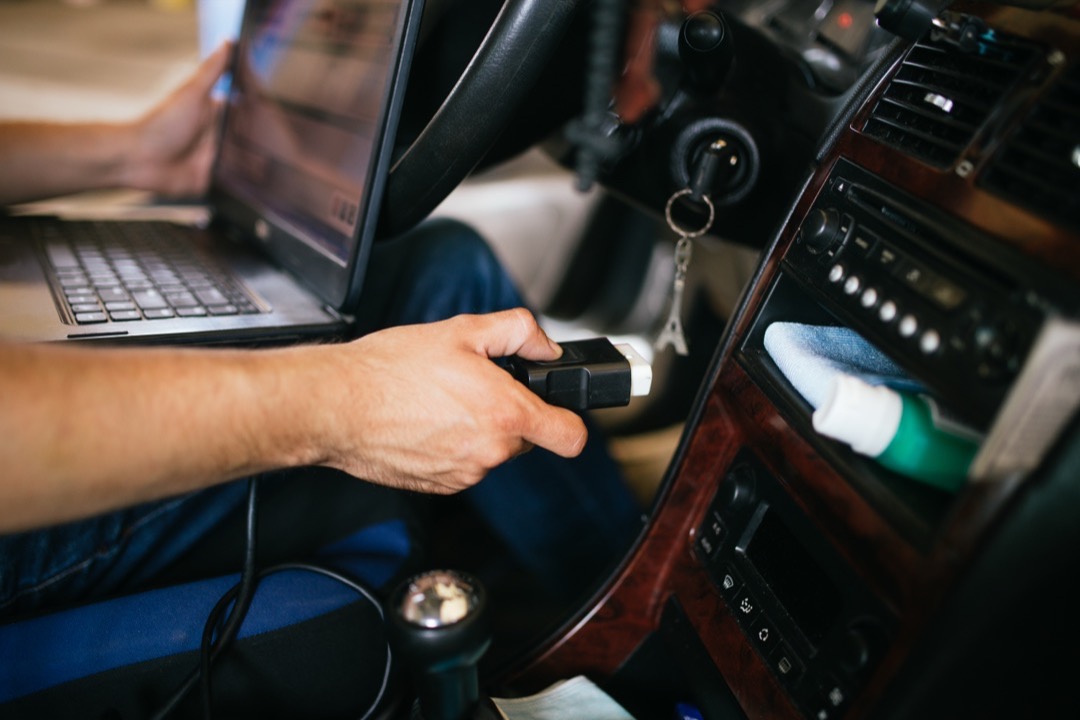
The check engine light comes on and the temperature in the car changes. I have watched it happen from the passenger seat and I have watched customers describe it at my counter, and it is always the same two questions in the same order: how bad is this, and how much is this going to cost me. Nobody’s first thought is “what an interesting diagnostic opportunity.” The light is a small amber threat on the dash and it tells you nothing about how frightened you should actually be.
So let me answer the real question up front, because the honest answer is more reassuring than most people expect. In my bay, the majority of check engine lights are not catastrophes. A large share of them are a gas cap, a lazy oxygen sensor, a worn set of spark plugs, or a dirty airflow sensor — problems that cost less than a set of tires and, in a couple of cases, cost nothing at all. The catastrophic ones announce themselves clearly, and I am going to show you exactly how to tell the difference in about ten seconds without any tools.
I am Mike Reeves, an ASE Master Technician, and I have spent over twenty years watching people get talked into repairs they did not need because they walked into a shop with a lit dash and no information. This guide is the information. What the light actually means, the one distinction that determines whether you keep driving or call a tow, the ten causes I actually pull out of cars, a reference table of thirty real trouble codes with honest cost ranges, and a straight answer on when a shop is helping you and when it is fishing. If you want the mechanics of physically plugging in a tool and pulling the code, that is a separate job and I wrote it up in detail in our guide to how to read OBD2 codes. This one is about what the light means.
What the Check Engine Light Actually Means
The check engine light — its formal name is the Malfunction Indicator Lamp, or MIL — is the visible output of a system that has been running silently in your car since the moment you started it. Your engine control unit (the ECU, sometimes called the PCM) monitors dozens of sensors continuously and compares what they report against what it expects to see. When a reading falls outside the expected range, or a self-test fails, the computer stores a Diagnostic Trouble Code (DTC) — a five-character string like P0420 — and, if the fault repeats across enough drive cycles to be confirmed, it turns on the light.
Here is the part that most drivers never get told, and it is the whole ballgame: the light is a warning, not a diagnosis. It does not know what is broken. It knows that a value is wrong. A P0420 does not mean your catalytic converter is bad; it means the computer compared two oxygen sensor signals and did not like the ratio, and there are at least four different reasons that ratio could go wrong, only one of which is a dead converter. The code is the beginning of an investigation. Anyone who reads you a code and immediately quotes you a part is skipping the entire job.
The second thing to understand is that the light covers an enormous range of severity with the exact same amber glyph. The gas cap you did not tighten and the misfire that is currently melting your catalytic converter both light up the same lamp. That is a genuine design flaw in how the system communicates with drivers, and it is why the next section is the most important thing in this article.
Solid vs. Flashing: The One Distinction That Matters
Stop and look at your dash right now. Is the light steady, or is it flashing? These are two completely different messages, and confusing them is the most expensive mistake a driver can make with a check engine light.
A Flashing Check Engine Light Means Stop
A flashing or blinking check engine light means a severe misfire is happening right now. A cylinder is failing to burn its fuel-air mixture, and the raw, unburned fuel from that cylinder is being pumped straight down the exhaust into your catalytic converter.
The converter is a ceramic honeycomb coated in precious metals, and it is designed to oxidize small trace amounts of unburned hydrocarbons at a few hundred degrees. It is emphatically not designed to burn a cylinder’s worth of raw gasoline. When that fuel ignites inside it, the internal temperature spikes past the melting point of the substrate. The honeycomb slumps, melts, and can partially or completely block the exhaust. This happens in minutes, not miles. I have cut open converters that turned into a fused ceramic brick after a customer drove twenty minutes on a flashing light because they wanted to make it home.
What to do, in order:
- Reduce load immediately. Ease off the throttle. No highway speeds, no hard acceleration, no climbing hills under power. Every bit of load makes the misfire worse and dumps more fuel.
- Get off the road as soon as it is safe. Exit the highway. Find a parking lot.
- If a shop is genuinely close — a mile or two — limp there gently. If it is not, stop and call a tow.
I want to be blunt about the economics, because people talk themselves into driving anyway. A tow is cheaper than a catalytic converter. Not slightly cheaper — dramatically cheaper. A tow across town runs a hundred-odd dollars. A converter on a modern vehicle runs from around $900 on a common four-cylinder to well over $2,500 on a V6 or V8 with multiple units, and on some vehicles it is far worse. And the thing that started it — often a single failed ignition coil — is one of the cheapest parts on the engine. Driving on a flashing light is how a small repair becomes a huge one. Do not do it.
A Solid Check Engine Light Means Investigate Soon
A steady, non-flashing light is a different message entirely. It means: the computer has stored a confirmed fault and it wants you to look into this. “Soon” means days to a couple of weeks, not months. The car is usually safe to drive in the meantime, especially if it feels normal.
That is not permission to ignore it. It is permission to not panic, read the code, and make a plan.
Why Is My Check Engine Light On? The 10 Most Common Causes
Here is the honest ranking — not what a listicle says, but what I actually find when I put cars on the lift. If your light is on, the odds are overwhelming that it is one of these ten.
1. A loose, cracked, or failed gas cap. By a wide margin the most common single cause. The EVAP system is sealed and the computer pressure-tests it while you drive; the cap is the weakest point in that seal. Check it before you do anything else.
2. A failing oxygen sensor. O2 sensors are consumables. They do not usually die outright — they get slow and lazy, and a lazy sensor sets its own code, ruins your fuel economy, and frequently gets blamed on the catalytic converter downstream of it.
3. Worn spark plugs and failing ignition coils. The misfire pair. Plugs wear their gap open over tens of thousands of miles until the coil can no longer jump the gap under load, and coils fail from heat cycling. This is the number one cause of every misfire code I see.
4. A dirty or failing mass airflow sensor. The MAF’s hot-wire element gets coated with oil film and dust and starts under-reporting how much air is entering the engine, which throws the fuel mixture off and sets lean or range/performance codes. Very often it just needs cleaning, not replacing.
5. A degraded catalytic converter. Real, but far rarer than people fear — and when it is genuinely dead, it is almost always because something upstream (a misfire, a rich condition, a leaking injector) killed it. Fix the cause or you will kill the new one too.
6. An EVAP purge or vent valve stuck open or closed. These are small solenoids that control fuel vapor flow. They stick with age and set EVAP leak or flow codes. They are cheap and usually easy to reach.
7. A vacuum leak. A cracked intake hose, a perished gasket, a broken PCV hose — anything that lets unmetered air into the engine after the airflow sensor. Classic cause of lean codes, and the classic false diagnosis is to replace an innocent MAF sensor instead.
8. A stuck-open thermostat. The engine never reaches full operating temperature, the computer notices, and it sets a P0128. Cheap part, real effect on fuel economy and emissions.
9. A clogged or stuck EGR valve. Carbon builds up in the exhaust gas recirculation passages until flow drops below what the computer expects. Common on higher-mileage engines, especially short-trip city cars.
10. Low battery voltage or a bad ground. The dark horse, and the one that fools the most people. When system voltage sags or a ground strap corrodes, modules across the car start misreporting, and you get a shotgun blast of unrelated codes that looks like five simultaneous failures. It is one problem. Before you chase a pile of weird codes, load-test the battery — our best car battery testers guide covers units that give you a real conductance or load test rather than a meaningless resting voltage number.
Common Check Engine Light Codes: A Mechanic’s Reference
This is the table I wish every driver had before they walked into a shop. Thirty real, generic SAE trouble codes — what they actually mean in plain English, what most often causes them, how urgent they are, and an honest cost range for a typical repair at an independent shop including parts and labor. DIY costs are usually a fraction of these.
A word on the cost ranges: they are ranges for a reason. Labor rates vary enormously by region, and access to the part varies enormously by vehicle — an oxygen sensor that takes fifteen minutes on one car takes two hours on another because it is buried behind a subframe. Use these to know which bucket you are in, not to argue with your mechanic over twenty dollars.
Fuel and Air Metering Codes
These are the codes about how much air is going in and how much fuel is being matched to it. When the ratio is off, the computer notices and complains. They are among the most common codes on the list, and they are also where the most money gets wasted, because a lean code names the fuel system while the actual cause is very often a five-dollar cracked vacuum hose.
| Code | What It Means | Most Likely Cause | Severity | Typical Fix Cost |
|---|---|---|---|---|
| P0101 | Mass airflow sensor circuit range/performance | Contaminated MAF element, clogged air filter, intake leak | Moderate | $20–$400 |
| P0102 | Mass airflow sensor circuit low input | Dirty or failed MAF, unplugged connector, wiring fault | Moderate | $20–$400 |
| P0113 | Intake air temperature sensor circuit high input | Failed IAT sensor, corroded connector, broken wire | Low | $60–$200 |
| P0171 | System too lean, bank 1 | Vacuum leak, dirty MAF, weak fuel pump, clogged injectors | Moderate | $20–$600 |
| P0172 | System too rich, bank 1 | Leaking injector, failed fuel pressure regulator, bad O2 sensor, clogged air filter | Moderate | $50–$600 |
| P0174 | System too lean, bank 2 | Same causes as P0171, opposite cylinder bank | Moderate | $20–$600 |
If you get a P0171 and P0174 together on a V-engine, that is a strong tell — a leak affecting both banks is almost always upstream of the split, meaning a big intake vacuum leak or a MAF sensor reading low, not two coincidental fuel problems. And if the lean condition is deposit-related on a higher-mileage port-injected engine, a quality PEA-based cleaner is genuinely worth trying before you start buying injectors; our best fuel injector cleaners guide covers which chemistry actually dissolves hardened deposits and which is just expensive fuel. On the airflow side, before you spend money on a mass airflow sensor, put a fresh element in the airbox — a restrictive or shedding filter is a common contributor, and our best engine air filters guide explains why oiled high-flow filters are a bad match for a hot-wire MAF.
Misfire, Ignition, and Timing Codes
A misfire means a cylinder is not burning its charge properly. These are the codes to take most seriously, because the misfire family is the one that flashes the light and melts converters. I have grouped the ignition and timing sensor codes here alongside them, because when a crank sensor, cam sensor, knock sensor, or variable-valve-timing phaser goes wrong, a misfire is very often how you find out.
| Code | What It Means | Most Likely Cause | Severity | Typical Fix Cost |
|---|---|---|---|---|
| P0300 | Random / multiple cylinder misfire | Worn plugs, failing coils, vacuum leak, fuel delivery, low compression | High | $50–$1,200 |
| P0301–P0308 | Misfire detected on a specific cylinder (1 through 8) | Bad coil or plug on that cylinder, failed injector, low compression | High | $50–$800 |
| P0316 | Misfire detected on startup (first 1,000 revolutions) | Cold-start misfire — worn plugs, weak coil, injector, low compression | High | $50–$800 |
| P0325 | Knock sensor 1 circuit malfunction, bank 1 | Failed knock sensor, corroded connector, wiring fault | Moderate | $150–$700 |
| P0335 | Crankshaft position sensor A circuit malfunction | Failed crank sensor, damaged reluctor ring, wiring | High | $150–$500 |
| P0340 | Camshaft position sensor A circuit malfunction | Failed cam sensor, connector, timing chain stretch | High | $150–$500 |
| P0011 | Camshaft position timing over-advanced (bank 1) | Low or sludged oil, failed VVT cam phaser, stuck oil control solenoid | Moderate | $60–$1,000 |
A cylinder-specific misfire is the easiest diagnosis on this whole list, because the code tells you which cylinder. Swap that cylinder’s coil with a neighboring one, clear the code, and drive: if the misfire follows the coil to the new cylinder, you found it. If it stays put, the problem is the plug, the injector, or compression. If your plugs are anywhere near their service interval, replace the whole set before you chase anything else — our best spark plugs guide covers matching heat range and electrode material to your engine, which matters more than most people realize. P0011 is the sleeper on this list: check your oil level and condition first, because a variable-valve-timing phaser starved of clean oil sets that code and an oil change occasionally cures it outright.
Emissions and Catalyst Codes
This family is where the scare tactics live. Read this section before you let anyone quote you a converter.
| Code | What It Means | Most Likely Cause | Severity | Typical Fix Cost |
|---|---|---|---|---|
| P0131 | O2 sensor circuit low voltage (bank 1, sensor 1) | Failed upstream O2 sensor, exhaust leak, wiring short | Moderate | $150–$450 |
| P0133 | O2 sensor circuit slow response (bank 1, sensor 1) | Aged / lazy upstream O2 sensor, exhaust leak, contamination | Moderate | $150–$450 |
| P0135 | O2 sensor heater circuit malfunction (bank 1, sensor 1) | Failed sensor heater element, blown fuse, wiring | Low | $150–$450 |
| P0138 | O2 sensor circuit high voltage (bank 1, sensor 2) | Failed downstream O2 sensor, shorted signal wire, rich condition | Low | $150–$400 |
| P0141 | O2 sensor heater circuit malfunction (bank 1, sensor 2) | Failed downstream sensor heater, fuse, wiring | Low | $150–$400 |
| P0401 | EGR flow insufficient detected | Carbon-clogged EGR passages, stuck EGR valve, failed DPFE sensor | Moderate | $100–$600 |
| P0420 | Catalyst system efficiency below threshold (bank 1) | Lazy O2 sensor, exhaust leak, prior misfire damage — or a genuinely dead cat | Moderate | $200–$2,500 |
| P0430 | Catalyst system efficiency below threshold (bank 2) | Same as P0420, opposite bank | Moderate | $200–$2,500 |
P0420 is the most misdiagnosed code in the business, full stop. The code does not measure your converter directly. It compares the signal from the upstream O2 sensor with the signal from the downstream O2 sensor, and if the downstream one is swinging around too much like the upstream one, the computer concludes the converter is not doing its job. That conclusion is wrong at least as often as it is right. A lazy downstream sensor produces the same signal pattern. So does an exhaust leak upstream of the sensor, which lets fresh air in and skews the reading. So does a converter that was never bad but is currently coated in fuel residue from an untreated misfire.
Before anyone replaces a converter on your car, they should have: verified there are no misfire codes, checked for exhaust leaks, and confirmed the O2 sensors are responding properly on live data. If a shop quotes you a converter on a P0420 with no other diagnostic work, that is the single clearest signal in the entire trade that you should get a second opinion.
EVAP System Codes
The EVAP system captures fuel vapors from the tank so they do not vent to atmosphere. It has zero effect on how the engine runs, which is why an EVAP code is the classic “light is on but the car drives perfectly” scenario. It is also the family with the cheapest possible fix.
| Code | What It Means | Most Likely Cause | Severity | Typical Fix Cost |
|---|---|---|---|---|
| P0442 | EVAP system small leak detected | Loose or worn gas cap, cracked hose, leaking purge/vent valve | Low | $0–$400 |
| P0455 | EVAP system large / gross leak detected | Missing or badly failed gas cap, disconnected hose, cracked canister | Low | $0–$400 |
| P0456 | EVAP system very small leak detected | Gas cap O-ring, pinhole in a hose, stuck vent valve | Low | $0–$400 |
The floor of that cost range is genuinely zero. Tighten the cap until it clicks, drive normally for a few days, and a real percentage of these lights go out by themselves. Start there before you spend anything.
Idle, Sensor, and Engine Management Codes
| Code | What It Means | Most Likely Cause | Severity | Typical Fix Cost |
|---|---|---|---|---|
| P0128 | Coolant temp below thermostat regulating temperature | Thermostat stuck open, failed coolant temp sensor, low coolant | Low | $120–$500 |
| P0506 | Idle control system RPM lower than expected | Carbon in the throttle body, vacuum leak, dirty IAC valve | Low | $80–$400 |
| P0507 | Idle control system RPM higher than expected | Vacuum leak, stuck throttle plate, failed IAC valve, PCV leak | Low | $80–$400 |
| P0521 | Engine oil pressure sensor / switch range or performance | Failed pressure sensor, low oil level, genuinely low oil pressure | High | $80–$500 |
P0128 is one of the few codes where the cause is nearly always the obvious one: a thermostat stuck open, letting coolant circulate before the engine has warmed up. It is a modest repair and it is worth doing, because an engine that never reaches operating temperature runs rich, wastes fuel, and accumulates fuel dilution in the oil. While you are in the cooling system, verify you refill with the correct chemistry — our best coolant and antifreeze guide breaks down the types, and mixing incompatible coolants creates a problem worse than the one you just fixed.
P0521 deserves a hard warning. An oil pressure code can be a failed sensor — cheap and harmless — or it can be genuinely low oil pressure, which will destroy an engine. Check the oil level immediately. If the red oil pressure warning light is also on, shut the engine off and do not restart it until someone qualified has looked at it. Do not gamble on that one being “just the sensor.”
Transmission and Network Codes
| Code | What It Means | Most Likely Cause | Severity | Typical Fix Cost |
|---|---|---|---|---|
| P0700 | Transmission control system malfunction (MIL request) | A flag only — the TCM has set its own separate code | High | $100–$4,000+ |
| U0100 | Lost communication with ECM/PCM “A” | Low battery voltage, bad ground, corroded connector, CAN bus wiring, failed module | High | $50–$1,500 |
P0700 is not a diagnosis at all — it is the engine computer saying “the transmission controller has a problem, go look over there.” On its own it tells you nothing. You need a scan tool that can read the transmission control module separately to pull the actual sub-code, which is why the cost range on that row spans from a hundred dollars to a rebuild. Do not let anyone quote you a transmission on a P0700 alone.
U0100 and its relatives are the codes I mentioned earlier as the battery-voltage tell. Communication codes appear in clusters when the electrical system is unstable. Before you condemn a module, test the battery and the grounds.
Check Engine Light On but the Car Runs Fine — Can I Ignore It?
This is the situation most drivers are actually in when they search for answers: the light is on, the car feels completely normal, and it is very tempting to conclude that the light is wrong. It is not wrong. But you can, and should, triage it.
The honest answer is no, do not ignore it — but you probably do not need to panic either. Here is the reasoning.
A car that runs fine with a lit light is very often running an emissions or EVAP fault, which by definition has no effect on drivability. A gas cap leak does not change how the engine feels. A downstream oxygen sensor heater failure does not change how the engine feels. A P0420 usually does not change how the engine feels. Those codes are real and they matter, but they are not going to leave you stranded tomorrow.
There are three reasons you still cannot just leave it on indefinitely.
First, the light is now blind to new problems. This is the argument almost nobody makes and it is the one that convinces people. Once the check engine light is illuminated for a gas cap, it cannot come on again for the misfire that starts next month. It is already on. You have disabled your car’s ability to warn you about anything else, and you will not notice the second, more serious fault until it produces a symptom you can feel — which is much later and much more expensive than the light would have been.
Second, you will fail your emissions test. In any state with an OBD-based inspection, an illuminated MIL is an automatic failure regardless of what the code is. There is no arguing with the machine. If your registration renewal is coming, the light has a hard deadline attached to it.
Third, cheap problems become expensive ones. A slightly lazy oxygen sensor costs you fuel economy every day and eventually contaminates the converter. A small EVAP leak becomes a cracked canister. Nothing on a car gets better by being ignored.
The right move is to spend twenty minutes and pull the code. Once you know whether you are looking at an EVAP leak or a misfire, you can make an informed decision about urgency instead of a superstitious one. That is precisely what a scanner is for, and the best OBD2 scanners for home use cost about what a tank of gas costs.
Can I Keep Driving? A Severity Triage
Here is the decision framework I would give a family member. Find your row and act on it.
Flashing light → stop driving now. Not “soon.” Now. Reduce load, exit the road, tow if a shop is not within a mile or two. This is the only row on this list with no judgment call in it.
Solid light + a real drivability symptom → days, not weeks. If the car is stumbling, hesitating, idling roughly, losing power, surging, or hard to start, the fault is affecting how the engine runs. Get it diagnosed this week. Avoid long trips and highway runs until you know what it is.
Solid light + the car feels completely normal → a week or two is acceptable. Read the code, find out which family it is in, and schedule accordingly. If it is EVAP or an emissions monitor, you have breathing room. If the code is a misfire or an oil pressure code even without symptoms, move it up.
Tow it now — no negotiation — if any of these are true:
- The check engine light is flashing.
- The red oil pressure light is on, or you hear knocking, ticking, or rattling from the engine.
- The temperature gauge is in the red or you see steam. An overheating engine warps heads and blows gaskets, and every additional mile makes it worse.
- The car is losing power dramatically, bucking violently, or has gone into limp mode with a hard RPM ceiling.
- You smell raw fuel or see any smoke.
- The battery/charging light is on with the check engine light. You are running on stored battery charge and you will stop, possibly in traffic.
Everything else is a schedule-it problem, not a roadside problem.
What It Costs to Fix a Check Engine Light
Let me be honest about the money, because this is where drivers get worked over.
The diagnostic fee is real and it is fair. Most independent shops charge somewhere in the range of $100 to $200 for diagnostic time on a check engine light, and dealers charge more. People resent this because they assume the shop “just plugs in a computer.” That is not what you are paying for. Reading the code takes ninety seconds. Determining why the code set — testing sensors on live data, smoke-testing for leaks, checking compression, verifying wiring — is skilled labor with expensive equipment behind it. A shop that charges nothing for diagnosis has to recover that time somewhere, and it usually recovers it by selling you parts. Most reputable shops will credit the diagnostic fee toward the repair if you have them do the work; ask.
Free parts-store scans are useful and they have a catch. Most national parts chains will read your codes for free in the parking lot. Take them up on it — free information is free information. The catch is what happens next: the counter staff reads you the generic code description and points you at the part most commonly associated with it, which is exactly the parts-changer trap. They are a retailer. Their diagnostic tool is a sales tool. Use the code they give you, then do the thinking yourself.
The cheap end of the distribution is bigger than you think. A gas cap. Cleaning a MAF sensor with a $10 can of cleaner. A thermostat. An air filter. A set of plugs. Between them, these account for an enormous share of the check engine lights I see, and every one of them is a driveway job for someone with a basic socket set — the best mechanic tool sets roundup covers kits that handle nearly everything in this article.
The expensive end is real too, and it is where the upsell lives. Here is the trap, stated plainly. You get a P0420. A shop tells you that you need a catalytic converter, and quotes you a number with a comma in it. That may be true. It is more often not.
Catalytic converters almost never die of old age. They die because something upstream killed them. A misfire that dumped raw fuel into the converter and cooked it. A rich condition from a leaking injector that coated the substrate. A failed oxygen sensor that had the computer running the wrong mixture for two years. In every one of those cases, the converter is the victim, not the culprit — and if you replace the converter without fixing the upstream cause, you have bought yourself a very expensive part that will fail exactly the same way.
So: fix upstream first, always. Clear the misfire codes. Test the oxygen sensors. Find the exhaust leak. Then, and only then, if the P0420 comes back with a clean bill of health everywhere else, talk about a converter. A shop that skips those steps and goes straight to the converter quote is either lazy or fishing, and either way you should walk.
How to Reset the Check Engine Light
Let me start with the sentence that matters most: resetting the light does not fix anything. Clearing a code erases the computer’s memory of the fault. It does not erase the fault. If the underlying problem is still there, the computer will detect it again on the next drive cycle, or the one after that, and the light comes right back on. Clearing a code to make a light go away is the automotive equivalent of taking the battery out of a smoke detector.
With that said, there is a right way and a wrong way, and one genuinely dangerous mistake.
The right way: use a scanner. Plug in an OBD2 scanner, navigate to “Clear Codes” or “Erase,” and confirm. This does exactly what you want and nothing else — it clears the stored codes and turns off the light. Do this after you have repaired the problem, so that you can drive the car and confirm the light stays off. That confirmation is the entire point.
The wrong way: disconnecting the battery. This is the internet’s favorite trick and I wish it would die. Yes, pulling the negative terminal for a few minutes dumps the computer’s volatile memory and clears the codes as a side effect. It also does three things you do not want. It wipes the freeze-frame data — the snapshot of exactly what the engine was doing when the fault occurred, which is the single most valuable diagnostic clue you have and which you have now destroyed before anyone could read it. It resets all your I/M readiness monitors to “not ready” (more on why that matters in a second). And it resets your radio presets, your clock, and on many vehicles your adaptive transmission and fuel-trim learning, so the car drives slightly worse for a few hundred miles while it relearns. Use the scanner.
The light may also reset itself. If the fault stops recurring, most vehicles turn the light off automatically after roughly three consecutive clean drive cycles. Tighten a loose gas cap, drive normally for a few days, and the light very often goes out on its own with no intervention at all. The code stays in memory as history, which is why a scan can still tell you what happened.
Never Clear Codes Right Before an Emissions Test
This is the trap, and I watch people fall into it every single year.
Your car runs a set of internal self-tests called I/M readiness monitors — typically eight to eleven of them, covering the catalyst, EVAP system, oxygen sensors, EGR, and so on. Each one has to run and complete before it reports “ready.” When you clear codes — by scanner or by battery disconnect — every one of those monitors resets to “not ready.”
A vehicle with monitors in the “not ready” state automatically fails an OBD emissions test in most jurisdictions, even if it has no faults at all, because the testing equipment cannot verify that the systems have been checked. And the monitors only reset to “ready” after the car completes a full drive cycle — generally 50 to 100 miles of mixed city and highway driving over several trips with cold starts in between, and the EVAP monitor in particular is notoriously fussy about fuel level and ambient temperature.
So the person who clears their code the morning of their emissions test, thinking they have solved something, fails automatically. If you need to clear codes before a test, do it at least a week and a hundred miles of normal driving beforehand, and use a scanner that shows you the readiness monitor status so you can confirm they have all flipped to “ready” before you drive to the testing station.
The Gas Cap Myth — and the Two-Minute Check to Do Before You Pay Anyone
People call it the gas cap myth, as though it were an old wives’ tale. It is not a myth. It is the single most common cause of a check engine light, and it is the reason the first thing I do — before the lift, before the scanner, before anything — is walk to the back of the car and look at the fuel filler.
Here is the two-minute check. Do this before you spend a dollar with anybody.
- Open the fuel door and remove the cap. Look at the rubber O-ring or gasket around its neck. Is it cracked, flattened, hardened, dry, or missing entirely? That seal is what the entire EVAP system depends on, and it hardens with age and heat cycling.
- Look inside the filler neck. Is there debris, a torn seal surface, or damage to the threads?
- Reinstall the cap and turn it until it audibly clicks at least three times. Most caps are ratcheting and the clicks are the torque limiter telling you the seal is compressed correctly. Under-tightening is exactly as common as a failed seal.
- Drive normally for two or three days. Do not clear the code. Just drive — a mix of trips, ideally including some highway. The EVAP monitor will run on its own and, if the cap was the problem, the light will go out by itself.
If the light goes out, you are done. That is the whole repair, and it cost you nothing. If the light comes back, you now know for certain it is not the cap, and you have lost nothing but a few days. A replacement cap, if the seal is visibly shot, is one of the cheapest parts on the entire vehicle.
I am not being cute about this. A meaningful number of the people who pay a shop a diagnostic fee for a check engine light are paying that fee to have someone tighten their gas cap. Check it yourself first.
When to Stop DIYing and See a Mechanic
I am on your side against the parts-changers, but being on your side means being honest about limits. Reading a code and doing a driveway repair is genuinely empowering, and most of the ten common causes at the top of this article are within reach of a careful owner with a socket set and a Saturday. Plugs, air filters, a gas cap, a thermostat on an accessible engine, cleaning a MAF, an accessible oxygen sensor — these are real DIY jobs, and knocking them out yourself is the single biggest money-saver in car ownership.
Stop and hand it to a professional when any of the following is true:
- The light is flashing. Active misfire. Not a driveway job while it is happening.
- The car will not start, stalls, or drops into limp mode. You need live data and possibly compression or fuel-pressure testing to go further.
- You are looking at a P1xxx manufacturer-specific code that your scanner cannot decode. You need make-specific coverage.
- The code involves the transmission (P0700 and its friends) or an internal engine problem. The diagnostic depth required here is beyond what a generic scan tool gives you.
- You have replaced the obvious part and the code came back. That is the universe telling you the obvious answer was wrong. Stop buying parts. Every additional part you throw at a misdiagnosed problem is money set on fire, and the total will exceed the diagnostic fee you were trying to avoid.
- Anything safety-critical is involved — brakes, airbags, steering, or an oil pressure warning.
And here is the most valuable thing you can do with everything in this article: walk into the shop informed. Do not walk in and say “my light is on, fix it.” Walk in and say: “I have a stored P0171 and a pending P0300, the freeze-frame shows the fault set at idle on a warm engine, I have already checked the gas cap and replaced the air filter, and the plugs have 80,000 miles on them.” That customer does not get sold a catalytic converter. That customer gets a real diagnosis, because the shop knows immediately that they cannot get away with anything less.
That is the whole game. The code is a starting point, not a verdict. Fix upstream before downstream, cheap before expensive, and mechanical before emissions. Check the gas cap before you check your wallet. Never, ever drive on a flashing light. And put a scanner in your glovebox — our guide to the best OBD2 scanners covers the live-data tier that actually helps you diagnose rather than just blinking a number at you, and if you want the step-by-step on pulling and interpreting the codes once it is plugged in, how to read OBD2 codes walks through the entire procedure. Most of the lights on this list never had to become expensive. They became expensive because nobody looked at them until they had to. Staying ahead of that is what our car maintenance schedule is for — the light is the alarm, but maintenance is the reason it does not go off.
Buyer's Guide
The check engine light almost never points at an exotic part. It points at the same short list of components over and over — and most of them are things a reasonably handy owner can buy and install in a driveway. Here is what actually matters when you go shopping for each of the six things most likely to be behind your light.
An OBD2 Scanner — Your First Purchase, Not Your Last
This is the one tool that pays for itself the first time you use it, and the buying decision comes down to how deep you intend to go. A bare read-and-clear unit tells you the code number and turns the light off, which is enough to find out whether you are looking at a gas cap or a converter. The tier that actually earns its keep adds live data and freeze-frame — the ability to watch fuel trims, sensor voltages, and engine load stream in real time, and to see the exact conditions the computer captured when the code set. That is the difference between knowing a code exists and knowing what caused it. Look for a tool that reads both stored and pending codes, displays freeze-frame properly, shows I/M readiness monitor status if you live in an emissions-test state, and receives software updates for new model years. Bluetooth dongles are cheaper and live in the glovebox; handhelds boot instantly and never fight with your phone.
Spark Plugs and Ignition Coils — The Misfire Pair
If you are chasing a P0300 or a P030x cylinder-specific misfire, plugs and coils are where you start, and buying them correctly matters more than most people think. Match the heat range and the electrode material to what the manufacturer specified — do not upgrade from copper to iridium or platinum on an engine that was not designed for it, and do not downgrade to save money on an engine that wants a long-life plug. Gap matters: many plugs come pre-gapped for a generic application and are wrong for your engine, so check the gap against spec with a feeler gauge before installation even if the box says pre-gapped. Buy plugs in complete sets, never one at a time, because a fresh plug next to five worn ones creates its own imbalance. For coils, OEM or a reputable OE-supplier brand is worth the premium — cheap aftermarket coils are the single most common comeback repair I see, and a coil that fails again in eight months costs you the labor twice.
Oxygen Sensors — Upstream vs. Downstream, and Why Brand Matters
Oxygen sensors are consumables — they get slow and lazy with age long before they fail outright, and a lazy sensor throws codes like P0133 or contributes to a bogus P0420. The first thing to get right is position. Upstream sensors (sensor 1) sit before the catalytic converter and control the fuel mixture; downstream sensors (sensor 2) sit after it and only monitor converter efficiency. They are not interchangeable, and the bank and sensor number in your code tells you exactly which one to buy. The second thing is brand. This is a component where I do not recommend saving money — most factory sensors are made by a handful of OE suppliers, and buying the same brand that supplied your manufacturer gives you a sensor with the correct response curve and connector. Cheap universal sensors that require splicing wires are a false economy: they read slowly, throw new codes, and you will be back under the car. Buy the direct-fit sensor with the correct plug for your vehicle.
Mass Airflow Sensor and Engine Air Filter — Buy the Filter First
A P0101 or P0102 code names the mass airflow sensor, but the sensor is frequently innocent. The hot-wire element inside a MAF gets coated with oil film, dust, and filter fibers, and a contaminated sensor under-reports airflow exactly the way a failing one does. Before you buy a MAF — which is one of the pricier sensors on the engine — buy a can of dedicated MAF cleaner (never brake cleaner, never carb cleaner, both destroy the element) and a fresh air filter, and clean the sensor properly. On air filters, the honest advice is to buy a quality OEM-equivalent paper element and skip the oiled high-flow filters entirely if you have a hot-wire MAF: over-oiled filters are one of the leading causes of MAF contamination, and the horsepower claims are marketing. If you do end up replacing the MAF, buy the OE-supplier part — aftermarket MAFs have a genuinely poor reputation for calibration accuracy and you will chase the same code a second time.
Fuel and Injector Cleaner — What It Fixes and What It Cannot
A good injector cleaner is one of the few bottled products in the auto aisle that actually does something measurable, but it only helps with a specific problem: carbon and varnish deposits on port fuel injectors and intake valves. That makes it genuinely worth trying on a lean code (P0171/P0174) or a rough-idle misfire on a higher-mileage port-injected engine before you start replacing injectors. What to look for is the active chemistry, not the marketing. Polyetheramine, usually listed as PEA, is the detergent that actually dissolves hardened deposits at combustion temperatures; polyisobutylene amine (PIBA) and lighter detergents are cheaper and mostly clean the fuel system upstream of where the problem is. Check the label for PEA content and a treat rate that matches your tank size. And be realistic about what it cannot do: it will not fix a vacuum leak, a failed sensor, a bad coil, or a mechanically failed injector, and on a direct-injection engine it never touches the intake valves at all because the fuel never washes over them.
A Battery Tester — The Cheapest Way to Rule Out a Whole Category
This is the tool nobody thinks to buy and the one that saves the most wasted money. Low system voltage and bad grounds cause modules across the car to misbehave, and the result is a cluster of unrelated codes that make it look like six things failed simultaneously — communication codes like U0100, sensor range codes, transmission codes, misfires. Every one of them is a symptom of a battery that cannot hold voltage or a corroded ground strap, and replacing any of the named parts fixes nothing. What you want in a tester is a genuine load test or conductance test, not a voltmeter — a battery can read a perfectly healthy 12.6 volts at rest and still collapse under cranking load. Look for a unit that lets you enter your battery's rated cold-cranking amps and reports state of health as a percentage, and one that also tests the alternator's charging output and ripple, because a failing diode in the alternator throws exactly the same kind of electrical chaos. It is a small purchase that eliminates an entire branch of the diagnostic tree in five minutes.
Frequently Asked Questions
What is the most common cause of the check engine light?
Is it okay to drive when the check engine light is on?
Can low oil cause a check engine light?
What is the average cost to fix a check engine light?
Will the check engine light reset itself?
Related Articles
About the Reviewer

Mike Reeves, ASE Master Technician
A.A.S. Automotive Technology, Universal Technical Institute (UTI)
Mike Reeves is an ASE Master Technician with 15 years of hands-on experience in automotive repair and diagnostics. He earned his A.A.S. in Automotive Technology from UTI and runs his own independent shop in Denver, Colorado. Mike founded RevRated to help everyday car owners make smarter parts decisions -- every recommendation comes from real-world testing in his garage.