10 Best Manual Transmission Fluids of 2026
Mike Reeves reviews the 10 best manual transmission fluids of 2026: GL-4 gear oils, synchromesh fluids, and OEM fills for Honda, Subaru, GM, and Chrysler boxes.
Updated
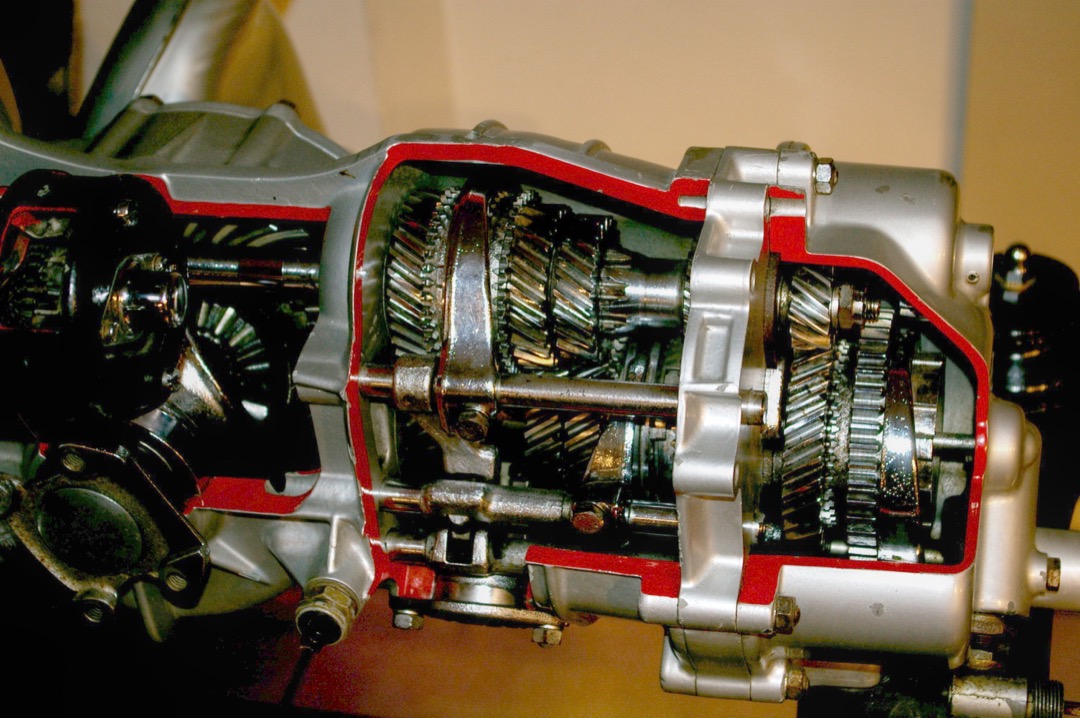
A manual gearbox is the simplest major assembly on a car and the one most owners never service. There is no pump, no valve body, no cooler line, and on most boxes no filter and no dipstick. Two or three quarts of fluid get thrown around the case by the gears themselves, and that fluid has to lubricate the teeth, cool the bearings, hold the wear metal in suspension, and set the friction characteristic of the synchronizer rings. Pick the wrong manual transmission fluid and you will feel it: notchy cold shifts, a second gear that refuses to go in below freezing, or a grind on downshifts that was not there before you changed the oil.
I have been diagnosing manual gearboxes as an ASE Master Technician for over two decades, and the single most common mistake I see in 2026 is not neglect. It is the wrong bottle. Somebody reads “75W-90 gear oil” on a forum, buys the highest-reviewed 75W-90 on Amazon, pours it in, and never notices it is an API GL-5 axle oil that will slowly glaze the brass synchro rings. That failure is completely avoidable, and most of this article exists to make sure it does not happen to you.
This roundup covers ten manual transmission fluids: GL-4 gear oils, dedicated synchromesh fluids, and genuine OEM fills for Honda, Subaru, GM, and Chrysler boxes. If your car has two pedals rather than three, this is the wrong page and you want our automatic transmission fluid guide instead, which covers ATF and CVT fluid for automatics. Everything below is for a gearbox you shift yourself.
Find the Right Manual Transmission Fluid for Your Car
Manual transmission fluid is a fitment decision more than a quality decision. Jump straight to the section that matches your car:
- Best manual transmission fluid overall
- Best for Honda and Acura
- Best GL-4 75W-90 gear oil
- Best synchromesh fluid
- Best for Subaru and WRX
- Best for track and towing
- Best for cold-weather shifting
- Best for GM and Dodge trucks
How We Chose These Fluids
Every fluid on this page was selected against a published specification first and a review record second. That order matters here more than in almost any other automotive category, because a highly-rated product in the wrong spec is worse than a mediocre product in the right one. I checked each fluid’s API rating, viscosity grade, published OEM cross-references, and whether the manufacturer makes a yellow-metal compatibility claim, then cross-checked the shift-quality reports in the owner reviews against what the chemistry would predict.
I also weighted seller stability. Fluid is a repeat purchase, and a listing sold and shipped by Amazon behaves differently from one where a third-party seller holds the buy box. Where that distinction matters to what you will pay or how fast a bottle arrives, I have said so in the review. Every ASIN here was verified live and in stock as this guide was published.
Best Manual Transmission Fluid Overall
These are the ten fluids I keep recommending in the shop, reviewed in full below. The Red Line MT-90 is the right starting point for most GL-4 gearboxes; the use-case sections further down narrow the field by make, climate, and how hard the box works.
Red Line MT-90 75W-90 GL-4: Best Overall
The MT-90 is the fluid I recommend first for any gearbox whose manual calls for a GL-4 75W-90, and the review record backs that up: 5,093 ratings at a 4.9 average is not just the deepest pool on this page, it is the deepest pool in the category on Amazon by a wide margin. When a fluid has been poured into that many different gearboxes and the average has not moved, you are looking at something closer to a consensus than a marketing claim.
What makes it work is what it leaves out. The MT-90 is a straight GL-4 with no hypoid-grade sulfur-phosphorus package, so there is nothing in the bottle that is chemically active toward the brass and bronze synchronizer rings. The ester base carries the shear loads a gearbox generates without the additive chemistry that a differential needs and a gearbox cannot tolerate. That combination is why it cross-applies across such a wide fitment list: Miata, BRZ and 86, Ford T-5 and T-45, the Dodge and GM NV3500, and a long run of VW, Audi, and Jeep boxes.
The most common owner report is the one that matters most in practice. Boxes that were notchy and baulky when cold, particularly into second, come back cleaner after a fill. Not every box: a genuinely worn synchro is a mechanical problem and no fluid fixes it. But on a high-mileage gearbox where the factory fill has been in there for a hundred thousand miles, the difference is usually obvious on the first cold morning. One honest caveat: a minority of owners find the shift effort lighter than the OEM fluid and say the gate feels less defined. That is a preference, not a fault, and it is worth knowing before you commit four quarts.

Red Line 50304 MT-90 75W-90 GL-4 Manual Transmission and Transaxle Lubricant - 1 Quart
by Red Line
The default choice for most manual gearboxes: a straight GL-4 synthetic ester with the deepest review record in the category and a fitment list spanning Miata, BRZ, Mustang, NV3500, and a long run of European boxes.
Pros
- The deepest review record of any manual transmission fluid on Amazon at 5,093 ratings and a 4.9 average, which is a far larger sample than anything else in this roundup and the closest thing this category has to a consensus pick
- Straight GL-4 rating with no hypoid-grade extreme-pressure package, so the brass and bronze synchronizer rings inside a synchronized gearbox are not chemically attacked the way a GL-5 axle oil attacks them
- Cross-applies across an unusually wide fitment list: Mazda Miata, Subaru BRZ and Toyota 86, Ford T-5 and T-45 Mustang boxes, Dodge and GM NV3500, and a long run of VW, Audi, and Jeep gearboxes
- Owners consistently report it cures notchy, baulky cold shifting compared with the factory fill, especially the second-gear hang that shows up on high-mileage boxes
Cons
- The buy box is held by a third-party FBA seller rather than Amazon itself, so the price moves around more than an Amazon-sold listing and is worth re-checking before you order three or four quarts
- A minority of owners find the shift effort lighter than the OEM fluid they came from and describe the gate as feeling less defined, which is a preference issue rather than a defect
- Sold by the quart, so a gearbox with a three or four quart capacity means buying multiple bottles
TRIAX Synergy Gear MT 75W-90: Best Value GL-4
The TRIAX is the value play on this page, and I want to be precise about what that means. It is not the lowest sticker in this roundup. Valvoline Synchromesh and Honda MTF both cost less, but neither is a broad-application fluid: one fits GM and Chrysler synchromesh boxes, the other fits Honda and Acura only. Within the category that actually competes with the Red Line, a full synthetic GL-4 75W-90 that will go into almost anything, the TRIAX is the best value available and undercuts the MT-90 by roughly thirty percent.
The spec is genuinely equivalent, not approximately equivalent. Same GL-4 rating, same 75W-90 grade, full synthetic base, and TRIAX makes an explicit claim that the additive package contains no reactive sulfurs. That is the right claim to make, because reactive sulfur compounds are the exact mechanism by which a GL-5 oil damages yellow metal. The published OEM cross-reference list is unusually broad for a smaller brand: Jeep, BMW, VW and Audi, Ford, GM, Mercedes 235.11, Toyota, and Mazda all appear on it, which means one case covers a mixed household fleet.
The caution is sample size. At 374 reviews this is a much thinner record than the Red Line, the Royal Purple, or the Honda fluid, and there is no twenty-year forum history behind it to fall back on. For a filter that would not concern me much. For a fluid that lives inside a gearbox for the next 40,000 miles, it is worth knowing you are ahead of the crowd rather than behind it.
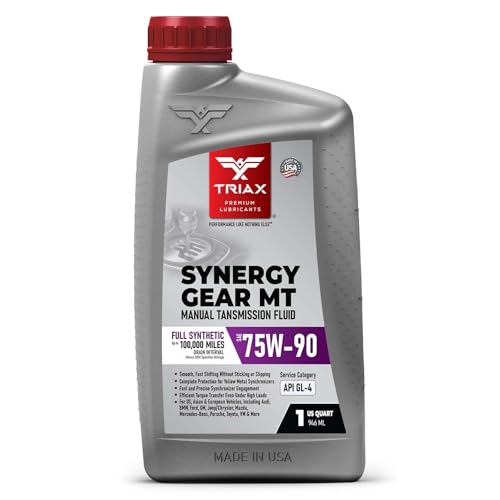
TRIAX Synergy Gear MT 75W-90 GL-4 Full Synthetic Manual Transmission Fluid - 1 Quart
by TRIAX
The best value in a broad-application GL-4 fluid: the same 75W-90 GL-4 spec as the Red Line at a meaningfully lower price, with a published no-reactive-sulfur claim and a wide OEM cross-reference list.
Pros
- Roughly thirty percent under the Red Line MT-90 for the same GL-4, 75W-90 specification, which is the largest saving available on this page without dropping to an application-narrow fluid
- The additive package is explicitly free of reactive sulfurs, which is the specific chemistry that attacks brass and bronze synchro rings, so it is safe in a yellow-metal box
- Broad published OEM cross-reference covering Jeep, BMW, VW and Audi, Ford, GM, Mercedes 235.11, Toyota, and Mazda, so one bottle covers a mixed home fleet
- Full synthetic base rather than a group II mineral oil, which holds shift feel better through a cold morning and a hot afternoon than a conventional GL-4
Cons
- 374 reviews is a much thinner pool than the established names here, so there is less real-world data to lean on when something goes wrong
- No decades-long forum track record behind it the way Red Line and the OEM fluids have, which carries more weight in a fluid than in a filter
- Not the lowest sticker on this page: Valvoline Synchromesh and Honda MTF both cost less, but both are application-narrow rather than broad GL-4 fluids
Motul Gear 300 75W-90: Upgrade Pick
The Gear 300 is what I put in a gearbox that gets worked. Ester base stocks hold their film strength and their viscosity across a much wider temperature band than a conventional synthetic, which is why this fluid keeps showing up in BMW, Porsche, and Miata builds that see real track time. On a car that spends twenty minutes at a time with the box heat-soaked, the difference between an ester and a group III synthetic shows up as shift quality that does not degrade over a session.
The dual GL-4 and GL-5 rating is the part that confuses people, so let me address it directly. A GL-5 rating on its own tells you the oil passed a high-load test; it does not tell you how the formulator got there. Most GL-5 oils get there with an aggressive sulfur-phosphorus package that attacks yellow metal. Motul formulates this one to pass GL-5 while remaining synchro-safe, and states the manual transmission approval on the product data sheet. That is why the dual rating exists and why it is useful: the same bottle can go into a synchronized gearbox and into a conventional differential.
Two practical notes. It is sold in liters rather than quarts, so a six-quart box needs six liters and a little arithmetic, and you will usually buy one bottle more than you expect. And it is the priciest broad-application fluid here per quart-equivalent. On a daily driver that is money you do not need to spend. On a car that gets driven hard, it is the fluid I would choose. If you are building a car for track days, this pairs naturally with the fluid and filter choices in our synthetic motor oil roundup.

Motul Gear 300 75W-90 100% Synthetic Gear Oil - 1 Liter
by Motul
The upgrade fluid for a gearbox that actually gets worked: an ester-core synthetic that holds shift quality at temperature extremes and carries a deliberately synchro-safe dual GL-4/GL-5 rating.
Pros
- Ester base stock holds its film and its shift feel at both ends of the temperature range, which is why it turns up in BMW, Porsche, and Miata track builds where the box sees sustained heat
- Dual GL-4 and GL-5 rating means one bottle can serve a synchronized gearbox and a conventional differential in the same garage
- Motul formulates the extreme-pressure package to stay synchro-safe rather than simply meeting GL-5 with an aggressive sulfur additive, which is the distinction that matters in a yellow-metal box
- Consistent owner reports of quieter gear whine and cleaner rev-matched downshifts after switching over from a conventional 75W-90
Cons
- Costs more per quart-equivalent than any other broad-application fluid in this roundup
- Sold in one-liter bottles rather than quarts, so filling a six-quart box takes a little arithmetic and usually one extra bottle
- The GL-5 half of the dual rating confuses shoppers who have been told to avoid GL-5 in a synchronized box, and the listing does nothing to explain why this one is different
Royal Purple Synchromax: Runner-Up
Synchromax has been the mainstream alternative to Red Line for a long time, and the 1,895-rating record behind it is the second-deepest on this page. Two things account for its staying power. It is a synthetic synchromesh-viscosity fluid rather than a 75W-90 gear oil, which is what a lot of GM, Chrysler, and older import boxes actually specify. And it is sold and shipped by Amazon directly, which removes the buy-box uncertainty that follows several of the enthusiast fluids in this category.
The reports that show up over and over are about notchiness. Miata owners and BMW E36 and E46 owners in particular describe a box that goes from fighting them into second when cold to shifting cleanly after a fill. That tracks with the chemistry: a lighter synchromesh fluid reaches the synchro cones faster and imposes less drag on the ring than a heavy gear oil does when the case is cold.
Where it falls short is documentation. Royal Purple publishes very little on this listing: no temperature range, no full OEM cross-reference table, nothing you can hold up against your service manual. That leaves you relying on the manual telling you it wants a synchromesh-class fluid and trusting the product to be one. A few owners also report it feels marginally thicker on a cold start than the Red Line fluids, which is worth weighing if you live somewhere with real winters.

Royal Purple Synchromax Synthetic Manual Transmission Fluid - 1 Quart
by Royal Purple
The widely stocked synthetic synchromesh fluid: sold by Amazon, backed by the second-largest review record here, and a repeat fix for notchy shifters in Miata and E36/E46 boxes.
Pros
- Sold and shipped by Amazon directly, so there is no buy-box ambiguity and no third-party seller pricing to keep an eye on
- Second-deepest review record on this page at 1,895 ratings, behind only the Red Line MT-90
- Long reputation as the mainstream alternative to Red Line, with repeated owner reports of quieting notchy shifters in Miata and BMW E36 and E46 boxes
- Light synchromesh viscosity rather than a 75W-90 gear oil, which is what a lot of GM, Chrysler, and older import boxes actually call for
Cons
- Thin spec documentation on the listing: no published temperature range and no full OEM cross-reference, so you are working from the vehicle manual rather than the bottle
- Some owners report it feels slightly thicker on a cold start than the Red Line fluids, which matters in a northern winter
Red Line MTL 75W-80: Best for Cold Climates and Honda Boxes
The MTL is the MT-90’s lighter sibling, and the grade difference is the whole point. A 75W-80 is thinner at low temperature than a 75W-90, which means it reaches the synchronizer cones sooner after a cold start and imposes less viscous drag on the ring while it is trying to match shaft speeds. That is precisely the mechanism behind the cold second-gear grind that Honda and Acura manuals are famous for, and it is why the MTL has become the community-standard fix for it in S2000, Civic Si, RSX, and TSX boxes.
The chemistry is otherwise the same as the MT-90: GL-4, ester base, no hypoid additive package, safe with brass and bronze. Nothing about synchro compatibility changes when you drop a grade. What changes is film thickness at operating temperature, which is the trade-off you are making. In a hot climate, or in a car that sees sustained track use where the box runs genuinely hot, the 75W-90 is the better choice. In Minnesota in February, the 75W-80 is.
Its reach extends well past Honda. Plenty of VW, Audi, and BMW gearboxes call for a lighter GL-4, and the MTL is a common answer there too. The one thing to watch is the ordering step: Red Line’s MT-90 and MTL sit next to each other in search results with nearly identical bottles, and it is easy to tap the wrong one on a phone. Check the grade on the label before you check out.

Red Line 50204 MTL 75W-80 GL-4 Manual Transmission and Transaxle Lubricant - 1 Quart
by Red Line
The cold-climate and Honda answer: a 75W-80 GL-4 ester that flows to the synchros faster than a 75W-90 and is the community-standard fix for cold second-gear grind.
Pros
- A 75W-80 is thinner cold than a 75W-90, so it reaches the synchros faster on a subzero morning and blunts the cold second-gear grind Honda and Acura boxes are known for
- Same GL-4, yellow-metal-safe ester chemistry as the MT-90, just in a lighter grade, so nothing about synchro compatibility changes
- Popular well beyond Honda: S2000, Civic Si, RSX and TSX, plus VW, Audi, and BMW boxes that call for a lighter GL-4
- 1,767 ratings at 4.8 stars is a substantial record for a grade this specific
Cons
- Less film thickness than a 75W-90 for hot-climate or sustained track use, where the heavier grade is the better call
- Smaller review pool than the MT-90, and the two Red Line SKUs are easy to confuse on a phone screen
Honda Genuine MTF 08798-9031: Best OEM Match for Honda and Acura
If you own a Honda or Acura with a manual, this is the simplest correct answer available, and at 2,044 ratings it is also the most-reviewed OEM fluid on this page. Honda MTF is not a GL-rated gear oil at all. It is a proprietary formulation closer to automatic transmission fluid in viscosity, developed alongside the synchro geometry and shift effort that Honda’s engineers tuned the box around. When a manufacturer builds the fluid and the hardware together, matching the factory fluid removes an entire class of guesswork.
That also means the usual shortcuts do not apply here. There is no GL-4 substitute that is chemically the same thing, and cross-shopping this into another make is a mistake. People do ask what the Honda MTF equivalent is, and the honest answer is that the closest widely available alternative is the Red Line MTL, which many Honda owners run deliberately for its cold-flow behaviour, not a generic 75W-90 gear oil.
For a car that lives in a cold climate and grinds into second on winter mornings, I would give the MTL a serious look. For everything else, and especially for anyone who wants to remove the decision entirely, the factory bottle is cheap, correct, and the least expensive genuine OEM fluid in this roundup. One logistical note: stock on this listing ran to roughly twenty units when I last checked, so if you are planning a weekend fluid change around it, order early.
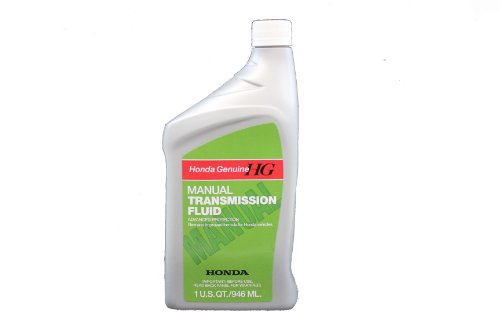
Honda Fluid 08798-9031 Manual Transmission Fluid - 1 Quart
by Honda
The exact factory fill for Honda and Acura manuals and the cheapest genuine OEM option here: a light, ATF-range proprietary fluid rather than a GL-rated gear oil.
Pros
- Exact factory-match fluid, which removes the guesswork entirely on a Honda or Acura gearbox
- The least expensive genuine OEM fluid on this page by a wide margin
- 2,044 ratings at 4.8 stars, the deepest review record of any OEM fluid in this roundup
- Light, ATF-range viscosity shifts easily when cold, which is what Honda tuned the synchro geometry and shift effort around in the first place
Cons
- Honda and Acura only. It is chemically distinct from a GL-4 gear oil and should not be cross-shopped into another make
- Stock ran to roughly twenty units at last check, so availability moves and a planned weekend fluid change can get held up
- Not GL-rated at all, so the usual GL-4 versus GL-5 shorthand does not apply and the owner manual is the only reference that counts
Valvoline Synchromesh: Best Value for GM and Chrysler Boxes
Valvoline Synchromesh is the cheapest bottle on this page, and for the boxes it is designed for it is also the right one. The value here is not that it costs the least in absolute terms, it is that the OEM cross-reference is printed right on the label: GM 12345349 and 12345577, Chrysler 4874464, and the Mopar C-series specs. If one of those numbers is what your service manual calls for, there is nothing to interpret. Buy it, pour it, done.
What it is not is a universal GL-4 substitute, and this is where people get into trouble. Synchromesh fluid sits in the ATF viscosity range and carries a friction-modifier package tuned to a particular synchro design. That is exactly what a GM NV3500 or a Chrysler manual wants. It is not what a Miata, a Honda, or any box specifying a GL-4 75W-90 wants, and running it in one of those leaves the gear teeth under-protected at operating temperature.
Within its own lane it does the job well. The light viscosity makes cold shifts genuinely easy in a box that was engineered around a thin fluid, and being sold by Amazon keeps pricing and delivery predictable. The 836-rating record is mid-sized rather than deep, but the pattern in it is consistent and unremarkable in the best way: it goes in, the box shifts the way it should, nobody writes an essay about it.

Valvoline Synchromesh Manual Transmission Fluid - 1 Quart
by Valvoline
The value pick for GM and Chrysler boxes that specify a synchromesh fluid: a direct OEM cross-reference on the label, Amazon fulfillment, and the lowest sticker on the page within its own fitment.
Pros
- Direct OEM cross-reference printed on the bottle: GM 12345349 and 12345577, Chrysler 4874464, and the Mopar C-series specs, so there is no interpretation involved
- Sold by Amazon, which keeps pricing and fulfillment stable compared with the third-party listings elsewhere in this category
- Lowest sticker price of any fluid on this page for the boxes it actually fits
- ATF-range viscosity makes for genuinely easy cold shifts in a GM or Chrysler box that was engineered around a light fluid
Cons
- Not a universal GL-4 substitute. The viscosity and friction-modifier package suit the GM and Chrysler synchromesh spec, not a Miata or Honda box calling for a 75W-90
- 836 reviews is a mid-sized pool, well short of the Red Line and Royal Purple records
ACDelco 10-4014 Friction Modified Synchromesh: Best for High-Mileage GM Trucks
This one is a specific fix for a specific complaint, and it is the most precisely targeted product on this page. GM issued the friction-modified reformulation through service bulletins to address hard shifting and grinding in aging NV3500 and NV4500 gearboxes. The change is in the friction-modifier package: as a synchro cone wears, the ring needs a slightly different friction characteristic to keep pulling shaft speeds together before the collar engages. The reformulated fluid supplies it.
That is why I would reach for this over a generic synchromesh fluid on a domestic truck with 150,000 miles and a shifter that fights you into second and third. It will not restore a synchro that is physically worn out, and nobody should buy it expecting a rebuild in a bottle. But on a box that is worn rather than failed, owners repeatedly report that this fluid restored usable shift quality where a generic synchromesh fluid did not, and that is a result worth the price of one quart to test.
Two things to get right when ordering. First, this is the most expensive fluid per quart in the roundup, so on a healthy box that shifts fine there is no reason to reach for it. Second, an older ACDelco 10-4006 part number still circulates and is not the friction-modified formula. Match 10-4014 exactly. If you are working through a broader service on a high-mileage truck, our high-mileage motor oil guide covers the same logic applied to the engine.
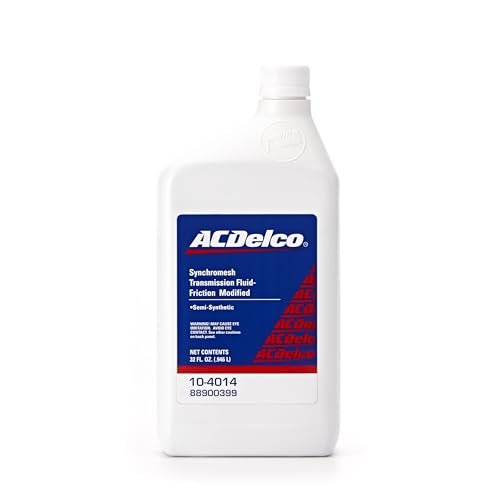
ACDelco GM Original Equipment 10-4014 Friction Modified Synchromesh Transmission Fluid - 1 Quart
by ACDelco
The targeted fix for a GM truck that shifts hard: the friction-modified synchromesh reformulation GM issued for NV3500 and NV4500 hard-shift complaints, rated from roughly minus 40 to 300 degrees Fahrenheit.
Pros
- This is the friction-modified reformulation GM issued through service bulletins to address hard shifting and grinding complaints in aging NV3500 and NV4500 boxes, which makes it the most precisely targeted product here for a worn-synchro complaint on a domestic truck
- Rated across a wide operating window, roughly minus 40 to 300 degrees Fahrenheit, so one fill covers a northern winter and a loaded summer grade
- Genuine GM Original Equipment part rather than an equivalent, so it matches exactly what a dealer would pour in
- Owners of high-mileage GM trucks repeatedly report that a fill of this fluid restored usable shift quality where a generic synchromesh fluid did not
Cons
- The most expensive fluid per quart in this roundup
- Narrow to GM truck applications, so there is no reason to buy it for an import box
- An older 10-4006 part number still circulates and is not the friction-modified formula. Match the number exactly
Subaru Genuine 75W-90 High Performance: Best OEM Match for Subaru
Subaru part SOA427V1700 is the factory fluid for Subaru manual gearboxes, and it is also the single best illustration on this page of why “always use GL-4” is a rule of thumb rather than a law. This fluid is API GL-5, and Subaru specifies it deliberately. Subaru’s synchronizer material tolerates the higher-sulfur extreme-pressure package that would attack a brass ring in another manufacturer’s box, so the general warning does not apply to this application. The owner manual outranks the internet, every time.
That distinction matters in a Subaru drivetrain for a mechanical reason too. On most Subaru manuals the transmission and the front differential share a case and share the same oil, so the fluid is doing hypoid-gear duty and synchro duty simultaneously. A 75W-90 with a GL-5 additive package is the sensible answer to that combined requirement, which is why the factory picked it. WRX, STI, and BRZ owners running the factory fluid consistently report shift feel that stays predictable across seasons.
Do not carry the exception anywhere else. This is the wrong bottle for a Miata, a Honda, or a T-5 Mustang box, and buying it because it says 75W-90 on the front is exactly the mistake this article is trying to prevent. Two practical notes: stock on the genuine OEM listing is thin and moves, so verify availability before you plan a fluid change around it, and at 315 ratings this is the smallest review pool of the OEM fluids here.

Subaru 75W-90 High Performance Gear and Transmission Fluid - 1 Quart (Genuine OEM)
by Subaru
The documented factory fill for Subaru manual gearboxes, and the clearest example of why the manual outranks the GL-4 rule of thumb: Subaru specifies GL-5 here deliberately.
Pros
- Factory part SOA427V1700, the exact fluid Subaru specifies for its manual gearboxes, so there is no interpretation and no cross-referencing involved
- Subaru documents GL-5 for this application because its synchro material tolerates the higher-sulfur additive package, which is a useful reminder that the owner manual outranks any general rule of thumb
- A 75W-90 grade suits a boxer drivetrain where the transmission and front differential share the same oil and the same heat load
- Owners of WRX, STI, and BRZ boxes report consistent, predictable shift feel across seasons on the factory fluid
Cons
- Stock is thin and moves, so verify availability before planning a weekend fluid change around it
- 315 ratings is the smallest review pool of the OEM fluids here
- The GL-5 rating makes this the wrong bottle to grab for a yellow-metal box from another make. Subaru's exception does not travel
Motul Gear 300 LS 75W-90: Best for Limited-Slip Track Builds
Gear 300 LS is the standard Gear 300 with a limited-slip additive package, and the addition is not cosmetic. A clutch-type limited-slip differential relies on friction plates that have to slip smoothly under load. Without the right modifier package, those plates stick and release rather than sliding, and you get the chatter and shudder through a tight low-speed turn that anyone who has run the wrong oil in an LSD will recognise instantly. The LS package tunes the friction so engagement is progressive.
Underneath the additive it is the same ester core as the standard Gear 300, so it holds film strength through repeated heat cycles the way the standard fluid does. That combination has made it a common choice in Miata, BRZ, and 86 track builds running an aftermarket limited-slip unit, and Motul publishes a full technical data sheet for it, which is more documentation than most of this category offers.
I want to be plain about the evidence, though, because the star rating on this listing is misleading in isolation. There are 44 reviews behind that 5.0 average. Forty-four. That is not a settled number, and it should not carry the same weight as the 5,093 ratings behind the MT-90 or the 1,895 behind the Synchromax. The engineering case for this fluid is strong and Motul’s reputation is earned, but the review record is thin and you should treat it that way. It is also a genuinely narrow product: with no limited-slip unit in the housing, the LS package does nothing for you and the standard Gear 300 is the better buy.

Motul Gear 300 LS 75W-90 Limited Slip Differential and Manual Transmission Fluid - 1 Liter
by Motul
The limited-slip specialist: an ester-core GL-5 gear oil built for LSD-equipped track builds, though a 44-review record is far too thin to treat the 5.0 average as settled.
Pros
- Purpose-built for limited-slip units, with a friction-modifier package tuned so the clutch packs engage progressively instead of chattering through a tight turn
- Same ester core as the standard Gear 300, so it holds film strength through repeated heat cycles on a track day
- A common choice in Miata, BRZ, and 86 track builds running an aftermarket limited-slip differential
- Motul publishes a full technical data sheet for it, which is more documentation than most fluids in this category provide
Cons
- Only 44 reviews. The 5.0 average is not a settled figure at that sample size and should not be read as though it were
- Premium price, the second-highest per quart-equivalent on this page
- Narrower use case than the standard Gear 300: with no limited-slip unit in the housing, the LS additive package buys you nothing
Best Manual Transmission Fluid for Honda and Acura
Honda and Acura manual boxes have one dominant complaint, and it is seasonal: second gear grinds or refuses to engage on a cold morning until the car has been driven for a few miles. That is a viscosity problem, not a synchro failure. Honda’s proprietary MTF is a light, ATF-range fluid that the synchro geometry was designed around, so the factory bottle is the safest answer and the cheapest OEM option here. Owners in genuinely cold climates often go a step further and run the Red Line MTL 75W-80, which flows even better cold while keeping GL-4 yellow-metal safety. That is the honest answer to the “Honda MTF equivalent” question: the MTL, not a generic 75W-90 gear oil.
| Product | Price | Buy |
|---|---|---|
| Honda Fluid 08798-9031 Manual Transmission Fluid - 1 QuartBest factory match Exact Honda spec fluid, the fluid the synchro geometry was developed around | $18.50 | View on Amazon |
| Red Line 50204 MTL 75W-80 GL-4 Manual Transmission and Transaxle Lubricant - 1 QuartBest enthusiast upgrade 75W-80 GL-4 ester that reaches the synchros faster on a cold start and is the standard cold-grind fix | $24.09 | View on Amazon |
| Royal Purple Synchromax Synthetic Manual Transmission Fluid - 1 QuartBest widely-stocked alternative Synthetic synchromesh fluid sold by Amazon, easy to source when the OEM bottle is out of stock | $19.99 | View on Amazon |
Best GL-4 75W-90 Gear Oil for Manual Transmissions
This is the most common specification in the category and the one most owner manuals list. GL-4 means the additive package is dosed for gearbox loads rather than hypoid differential loads, which keeps it from attacking the brass and bronze synchro rings. The 75W-90 grade gives you film thickness for warm climates, towing, and sustained hard driving. All three fluids below meet that spec with a full synthetic base; the difference between them is price, documentation, and how hot the box gets in your use.
| Product | Price | Buy |
|---|---|---|
| Red Line 50304 MT-90 75W-90 GL-4 Manual Transmission and Transaxle Lubricant - 1 QuartBest overall GL-4 Deepest review record in the category and the widest fitment list here | $23.10 | View on Amazon |
| TRIAX Synergy Gear MT 75W-90 GL-4 Full Synthetic Manual Transmission Fluid - 1 QuartBest value GL-4 Same GL-4 75W-90 spec for meaningfully less, with a published no-reactive-sulfur claim | $15.68 | View on Amazon |
| Motul Gear 300 75W-90 100% Synthetic Gear Oil - 1 LiterBest for heat and hard use Ester core holds shift quality through sustained heat, dual-rated and synchro-safe by design | $21.95 | View on Amazon |
Best Synchromesh Manual Transmission Fluid
Synchromesh fluid is a different class of product from a 75W-90 gear oil, and the distinction trips up more buyers than anything else in this category. It sits in the automatic transmission fluid viscosity range and carries a friction-modifier package tuned to a specific synchronizer design, which is what GM, Chrysler, and a number of import boxes actually specify. If your manual says synchromesh, do not substitute a gear oil: it will shift heavy until the case warms up. The three below cover the value pick, the widely-stocked synthetic, and the targeted fix for a worn GM truck box.
| Product | Price | Buy |
|---|---|---|
| Valvoline Synchromesh Manual Transmission Fluid - 1 QuartBest value synchromesh OEM cross-reference printed on the label for GM and Chrysler part numbers | $10.99 | View on Amazon |
| Royal Purple Synchromax Synthetic Manual Transmission Fluid - 1 QuartBest all-round synthetic Synthetic synchromesh fluid sold by Amazon with the second-deepest review record here | $19.99 | View on Amazon |
| ACDelco GM Original Equipment 10-4014 Friction Modified Synchromesh Transmission Fluid - 1 QuartBest for worn GM synchros Friction-modified GM reformulation issued for NV3500 and NV4500 hard-shift complaints | $30.79 | View on Amazon |
Best Manual Transmission Fluid for Subaru and WRX
Subaru is the exception that proves the GL-4 rule. Subaru specifies an API GL-5 gear oil for its manual gearboxes, and that is not an error in the manual. Subaru’s synchronizer material tolerates the higher-sulfur extreme-pressure package, and on most Subaru manuals the gearbox shares its oil with the front differential, which needs hypoid-grade protection. That is why the factory bottle is GL-5 and why you should not carry the exception over to any other make. The genuine OEM fluid is the safest choice; the Motul Gear 300 is the aftermarket alternative most commonly run in built Subaru boxes because it satisfies both ratings.
| Product | Price | Buy |
|---|---|---|
| Subaru 75W-90 High Performance Gear and Transmission Fluid - 1 Quart (Genuine OEM)Best OEM match Factory part SOA427V1700, the exact GL-5 75W-90 Subaru documents for its manual gearboxes | $24.59 | View on Amazon |
| Motul Gear 300 75W-90 100% Synthetic Gear Oil - 1 LiterBest aftermarket alternative Dual GL-4 and GL-5 ester synthetic that covers the shared gearbox and differential duty | $21.95 | View on Amazon |
Best High-Performance Manual Transmission Fluid for Track and Towing
Track sessions and towing put the same stress on a gearbox from opposite directions: sustained heat with no cooldown. That is where a conventional gear oil thins out and shift quality goes away toward the end of a session or a long grade. Ester base stocks are the answer, because they hold viscosity and film strength further up the temperature curve. If there is a clutch-type limited-slip unit sharing the case, you also need an LS-specific friction modifier or the plates will chatter through tight turns. Choose by whether you have an LSD, then by budget.
| Product | Price | Buy |
|---|---|---|
| Motul Gear 300 LS 75W-90 Limited Slip Differential and Manual Transmission Fluid - 1 LiterBest for LSD builds LS friction-modifier package stops clutch-pack chatter in a limited-slip unit, though only 44 reviews back it | $36.58 | View on Amazon |
| Motul Gear 300 75W-90 100% Synthetic Gear Oil - 1 LiterBest for non-LSD track use Ester core rated for sustained heat with a deliberately synchro-safe dual rating | $21.95 | View on Amazon |
| Red Line 50304 MT-90 75W-90 GL-4 Manual Transmission and Transaxle Lubricant - 1 QuartBest all-round performance value GL-4 ester that holds up to hard road use at a much lower cost per quart | $23.10 | View on Amazon |
Best Manual Transmission Fluid for Cold-Weather Shifting
This is the complaint I hear most in winter, and it is the one nobody online answers properly: below freezing the shifter feels like you are stirring it through molasses, second gear will not go in cleanly for the first mile or two, and everything comes right once the car warms up. That is not a broken synchro. It is fluid viscosity at low temperature.
Here is the mechanism. A synchronizer ring works by dragging against a cone on the gear until the two are turning at the same speed, at which point the collar can slide across and lock the gear to the shaft. That drag depends on the ring squeezing the fluid film out from between itself and the cone. When the oil is cold and thick, the film does not squeeze out fast enough, the ring cannot build the friction it needs, and you either wait or you force it and grind. Every part of the fix is about getting a thinner film at low temperature.
Three things follow from that. First, the cold-side number in the grade is what matters: a 75W-80 flows faster at low temperature than a 75W-90 with the same first number, because the cold-flow rating is measured at a fixed low temperature while the second number describes behaviour when hot. Second, a synthetic base is a genuine advantage, because it has a flatter viscosity curve than a mineral oil and a much lower pour point. Third, a synchromesh-class fluid in the ATF viscosity range is thinner still, which is why boxes specified for it shift easily cold. Do not go thinner than the manual allows, though. Film thickness at operating temperature is what protects the gear teeth, and a fluid that shifts beautifully at minus 20 and runs too thin at 200 is a bad trade.
Practical advice beyond the bottle: give the car thirty seconds after start before you select a gear, use the clutch fully, and if second still fights you when cold, try shifting into third and then back to second on the way up, which uses the third-gear synchro to pull the shaft speed most of the way there first. And if the car lives outside all winter, our winter preparation guide covers the rest of the drivetrain and cooling side of the same problem.
| Product | Price | Buy |
|---|---|---|
| Red Line 50204 MTL 75W-80 GL-4 Manual Transmission and Transaxle Lubricant - 1 QuartBest in deep cold 75W-80 GL-4 ester with the fastest cold flow of any gear oil on this page | $24.09 | View on Amazon |
| Valvoline Synchromesh Manual Transmission Fluid - 1 QuartBest budget cold-weather ATF-range synchromesh fluid that shifts easily cold in the GM and Chrysler boxes that specify it | $10.99 | View on Amazon |
| Honda Fluid 08798-9031 Manual Transmission Fluid - 1 QuartBest for cold Honda boxes Light factory MTF that Honda tuned its synchro geometry around, the safest cold fix for a Honda or Acura | $18.50 | View on Amazon |
Best Manual Transmission Fluid for GM and Dodge Trucks
Domestic truck gearboxes, mainly the NV3500 and NV4500 families, share a failure pattern: as the miles accumulate the synchros wear and the box starts to fight you into second and third, worse when cold and worse under load. GM’s answer was a friction-modified reformulation of its synchromesh fluid, issued through service bulletins specifically for that complaint, and it is the fluid to try first on a high-mileage truck that shifts hard. If your box shifts fine and you just want fresh fluid on schedule, the Valvoline covers the same OEM specs for much less. Trucks that see real towing and run the heavier GL-4 spec are better served by the Red Line.
| Product | Price | Buy |
|---|---|---|
| ACDelco GM Original Equipment 10-4014 Friction Modified Synchromesh Transmission Fluid - 1 QuartBest for worn synchros The friction-modified GM reformulation issued for NV3500 and NV4500 hard-shift complaints | $30.79 | View on Amazon |
| Valvoline Synchromesh Manual Transmission Fluid - 1 QuartBest value OEM-spec Same GM and Chrysler OEM part numbers on the label at the lowest cost per quart here | $10.99 | View on Amazon |
| Red Line 50304 MT-90 75W-90 GL-4 Manual Transmission and Transaxle Lubricant - 1 QuartBest synthetic upgrade GL-4 ester for NV3500 boxes specifying 75W-90, with the best heat capacity of the three | $23.10 | View on Amazon |
Best Manual Transmission Fluid by Vehicle
A few more common applications, each with the fluid I would pull off the shelf for it. Always confirm against your own service manual first, since manufacturers changed specifications between model years on the same nameplate more than once.
| Product | Price | Buy |
|---|---|---|
| Red Line 50304 MT-90 75W-90 GL-4 Manual Transmission and Transaxle Lubricant - 1 QuartBest for Toyota and Tacoma boxes GL-4 75W-90 covers the Toyota and Tacoma manual boxes that specify a gear oil rather than a synchromesh fluid | $23.10 | View on Amazon |
| TRIAX Synergy Gear MT 75W-90 GL-4 Full Synthetic Manual Transmission Fluid - 1 QuartBest for Jeep Wrangler TRIAX publishes Jeep applications on its OEM cross-reference list, and the GL-4 spec suits the yellow metal in those boxes | $15.68 | View on Amazon |
| Motul Gear 300 75W-90 100% Synthetic Gear Oil - 1 LiterBest for Ford and Tremec gearboxes Ester-core synthetic handles the heat a Tremec box generates in a V8 application better than a conventional 75W-90 | $21.95 | View on Amazon |
| Royal Purple Synchromax Synthetic Manual Transmission Fluid - 1 QuartBest all-round synthetic Synthetic synchromesh fluid sold by Amazon, the easiest fluid here to source when you need it today | $19.99 | View on Amazon |
Buyer's Guide
Choosing manual transmission fluid comes down to matching a specification rather than shopping for a brand. Get the GL rating, viscosity, and fluid class right and almost any quality product on this page will work. Get any one of them wrong and you can damage the synchronizers in a few thousand miles.
GL-4 vs GL-5 and the Yellow-Metal Question
API GL-4 and GL-5 are extreme-pressure specifications, and GL-5 carries roughly twice the additive concentration. That package is chemically active toward copper alloys, which is exactly what brass and bronze synchronizer rings are made of. In a hypoid differential there is no yellow metal to attack and GL-5 is correct. In a synchronized gearbox, a GL-5 axle oil glazes the synchro friction cones so they can no longer match shaft speeds, and the box begins to grind. Buy GL-4 unless your manufacturer documents an exception, as Subaru does.
Viscosity: 75W-80, 75W-85, or 75W-90
The first number describes cold flow and the second describes film thickness at operating temperature. A 75W-90 is the most common manual gearbox grade and the right default for warm climates, towing, and track use. A 75W-80 reaches the synchros faster on a cold morning, which is why it is the standard fix for cold-weather notchiness in Honda, Acura, and several European boxes. Some manufacturers specify 75W-85 as a middle ground. Match what the manual specifies first, then adjust within the manufacturer's allowed range for your climate.
OEM Fluid vs Aftermarket Synthetic
OEM fluid is the safe answer when a manufacturer uses a proprietary formulation rather than a GL rating. Honda MTF and Subaru's own 75W-90 exist because the synchro material and shift geometry were developed around those specific fluids, and substituting a generic gear oil produces exactly the complaints those fluids were formulated to avoid. Where the manual simply calls for a GL-4 75W-90, a quality aftermarket synthetic will usually shift better than the factory fill and cost less than the dealer bottle.
Synchromesh Fluid Is Not Gear Oil
Synchromesh fluid is a distinct class, closer to automatic transmission fluid in viscosity than to a 75W-90 gear oil, with a friction modifier package tuned for a specific synchro design. GM and Chrysler use it extensively. Pouring a 75W-90 gear oil into a box that specifies synchromesh fluid gives you heavy cold shifts and a shifter that fights you until the car warms up. Pouring synchromesh fluid into a box that specifies 75W-90 leaves the gear teeth under-protected. The two are not interchangeable in either direction.
Change Interval and What Actually Drives It
Thirty to sixty thousand miles covers most manufacturers, with severe service pulling toward the short end. A manual gearbox has no filter, so every particle of wear metal the gears shed stays in suspension until you drain it. That is the real argument for the shorter interval on a high-mileage box or one that tows. Fresh fluid on a worn box will not rebuild a synchro, but it consistently improves cold shift quality, and a drain is cheap enough that there is no good reason to stretch it.
How to Check the Level and Fill the Box
Most manual transmissions have no dipstick. The level is set by a fill plug on the side of the case: with the vehicle level, remove the fill plug and the fluid should sit right at the bottom edge of that hole. Always loosen the fill plug before you pull the drain plug, so you do not end up with an empty box you cannot refill. Filling takes a hand pump or a squeeze bottle with a hose, since gravity will not push fluid uphill into a side port. Torque both plugs to spec and use new crush washers where the vehicle uses them.
How to Choose the Best Manual Transmission Fluid
Start with the service manual, not the parts store shelf. Look up the fluid specification for your exact year, make, model, and transmission code. Manufacturers changed specs mid-generation more than once, and the fluid a 2005 model wants is not always what the 2008 wants. Once you have the spec, three things determine which bottle you buy: the GL rating, the viscosity grade, and whether it is a gear oil or a synchromesh fluid. Everything else is preference.
There is one specific trap in this category worth naming outright. Valvoline FlexFill Advanced Full Synthetic 75W-90 Gear Oil is the highest-review-count 75W-90 on Amazon, with well over 3,000 ratings, and it is API GL-5. Its own listing states it is intended for non-synchronized manual transmissions in applications calling for GL-4. If you search “75W-90 gear oil” and sort by reviews, this is what you will land on, and in most synchronized gearboxes it is the wrong fluid. Its rating and review count are earned. They are earned in differentials. Read the API rating on the bottle, not the star count.
Two more cautions. If you ride, do not carry car fluid onto a motorcycle: car MTF and GL-4 gear oil carry friction modifiers that make a wet clutch slip, and those bikes need a JASO MA or MA2 rated oil, which is a different product class entirely. And this category has a real counterfeit problem, particularly with premium synthetic bottles offered by unverified third-party sellers at prices that look too good. Buy listings fulfilled by Amazon where you can, and treat a steep discount on a premium brand as a reason to look harder rather than to buy faster.
One brand you will search for and not find: Amsoil does not sell its manual synchromesh fluid through Amazon retail. It is dealer-direct only. That is not a listing problem or a stock problem, and no amount of searching will produce it, so if that is what your manual or your forum recommends, buy it from an Amsoil dealer.
Finally, use symptoms to narrow the diagnosis before you buy. Notchy into second when cold and fine when warm points at viscosity that is too heavy for your climate: go a grade lighter within what the manual allows. Grinding on downshifts that started right after a fluid change points at the wrong GL rating or the wrong friction modifier: drain it and put in the specified fluid. A whine that rises and falls with road speed rather than engine speed points at level, not at fluid choice: check the fill plug and look for a leak before you buy anything.
Final Verdict
For most manual gearboxes, the Red Line MT-90 75W-90 GL-4 is the fluid to buy. It is a straight GL-4 with no hypoid additive package to attack the synchro rings, it cross-applies to an unusually wide range of boxes from Miata to Mustang to NV3500, and 5,093 ratings at 4.9 stars is the deepest evidence base in the category by a wide margin. If your manual specifies a GL-4 75W-90 and you want one decision made well, that is it.
If you want the same specification for less, the TRIAX Synergy Gear MT 75W-90 is the best value in a broad-application GL-4: same rating, same grade, full synthetic, a published no-reactive-sulfur claim, and a wide OEM cross-reference list, at roughly thirty percent less than the Red Line. The trade is a much thinner review record, which is a fair thing to weigh. For a gearbox that sees track days or sustained heat, step up to the Motul Gear 300, and add the LS version only if there is a clutch-type limited-slip unit in the housing.
Where the manufacturer publishes its own fluid, use it. Honda MTF, the Subaru 75W-90, and the ACDelco friction-modified synchromesh all exist because the hardware was developed around them, and each one solves a complaint that a generic bottle will not. Whichever you land on, the fluid matters far less than getting the specification right, and the specification is in your owner manual rather than in the review count. If you are working through a full service while the car is up on stands, our oil filter roundup and the synthetic versus conventional oil breakdown cover the engine side of the same afternoon.
Frequently Asked Questions
Do manual cars have transmission fluid?
What happens if you use GL-5 instead of GL-4?
How often should you change manual transmission fluid?
Can you use ATF in a manual transmission?
What are the symptoms of low manual transmission fluid?
Related Articles
About the Reviewer

Mike Reeves, ASE Master Technician
A.A.S. Automotive Technology, Universal Technical Institute (UTI)
Mike Reeves is an ASE Master Technician with 15 years of hands-on experience in automotive repair and diagnostics. He earned his A.A.S. in Automotive Technology from UTI and runs his own independent shop in Denver, Colorado. Mike founded RevRated to help everyday car owners make smarter parts decisions -- every recommendation comes from real-world testing in his garage.