7 Best Transmission Fluid of 2026
Mike Reeves reviews the 7 best transmission fluids of 2026. Compare ATF and CVT formulas, OEM specifications, multi-vehicle vs vehicle-specific compatibility, and shop-tested performance.
Updated
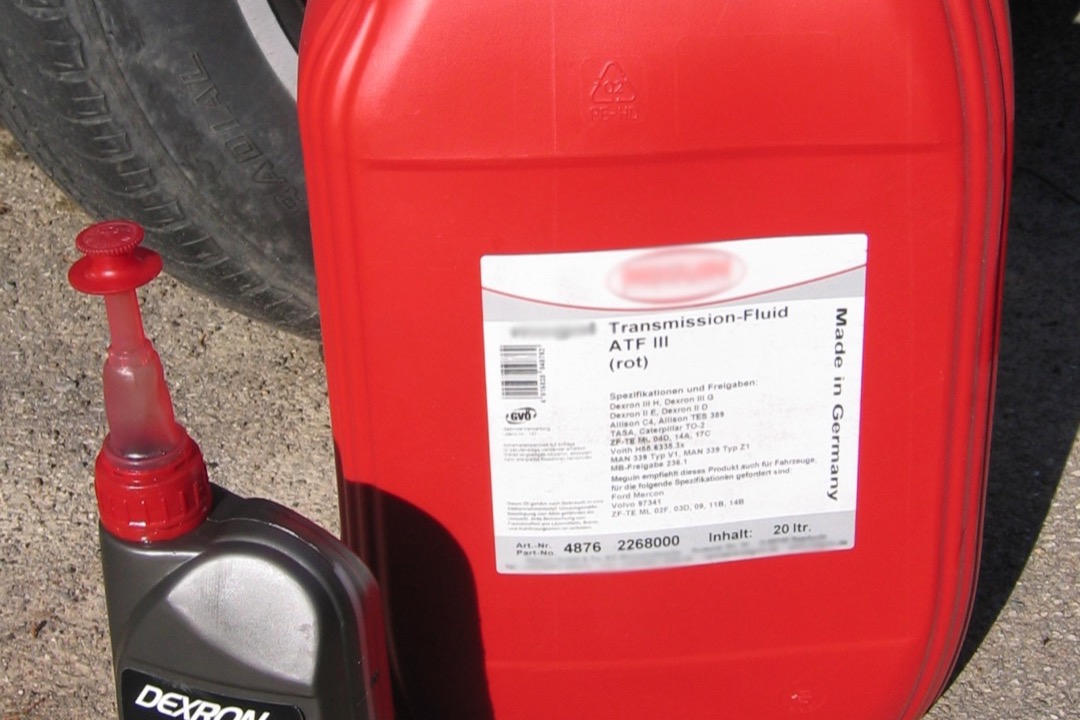
I have been an ASE Master Technician for 15 years, and I have drained tens of thousands of quarts of transmission fluid in that career — some of it black, burned, and metallic from neglected transmissions on the verge of failure, some of it still pink and clean at 80,000 miles in a well-maintained truck. The transmission is the second most expensive component in your vehicle after the engine, and the fluid inside it is the cheapest insurance policy you can buy against a $4,000 to $7,000 replacement. The problem is that transmission fluid is also the maintenance item where the wrong choice causes more damage than skipping the service entirely. Pour multi-vehicle ATF into a CVT and you have just destroyed the transmission. Pour Dexron VI into a transmission that requires Dexron HP and you will produce shift quality complaints within a week. Get the specification right, change the fluid on schedule, and the transmission will outlast the rest of the vehicle.
This roundup covers the seven best transmission fluids of 2026, organized by the application each one is designed to serve. The selection includes a multi-vehicle full synthetic that covers approximately 95 percent of U.S. vehicles, OEM-licensed fluids for the manufacturers whose transmissions are most sensitive to specification match (GM, FCA/Stellantis), a high-performance upgrade for towing and modified applications, a dedicated CVT fluid for the continuously variable transmissions that now dominate the import market, and a universal ATF/CVT option for multi-vehicle households. Every product here is a fluid I either keep on the shelf in my own shop or recommend without reservation to customers doing their own service. None of them are products I would refuse to install in my own vehicles.
| Product | Price | Buy |
|---|---|---|
| Valvoline MaxLife Multi-Vehicle ATF Full Synthetic 1 GallonBest Overall | $29.88 | View on Amazon |
| ACDelco GM Original Equipment Dexron VI Full Synthetic ATF 1 QuartBudget Pick | $14.66 | View on Amazon |
| Royal Purple 01320 Max ATF High Performance Synthetic 1 QuartPremium Pick | $18.94 | View on Amazon |
| Valvoline CVT Full Synthetic CVT Fluid 1 QuartRunner-Up | $11.88 | View on Amazon |
| Valvoline ATF+4 Full Synthetic Automatic Transmission Fluid 1 QuartRunner-Up | $10.97 | View on Amazon |
| ACDelco GM OE 10-9395 Dexron VI 1 GallonRunner-Up | $37.78 | View on Amazon |
| Castrol Transmax ATF/CVT Universal 1 GallonRunner-Up | $28.48 | View on Amazon |
Find the Right Transmission Fluid for Your Situation
Our top pick overall is the Valvoline MaxLife multi-vehicle ATF reviewed first below, but the right fluid depends on what you drive and why. Jump to the shortlist that matches your situation:
- Best transmission fluid for CVTs — Nissan, Honda, Toyota, and Subaru continuously variable transmissions
- Best transmission fluid for high-mileage vehicles — transmissions past 75,000 miles with hardening seals
- Best transmission fluid for performance and towing — heavy loads, modified builds, and shift-quality priority
Every fluid in these shortlists is one of the seven reviewed in full below — the sections just match the right fluid to each situation. And before anything else: confirm your transmission is a conventional automatic or a CVT, because the two fluids are not interchangeable.
How We Chose These Transmission Fluids
Every product in this roundup was selected based on a verified Amazon ASIN with an active listing, meaningful review volume from verified purchasers, published OEM specification licensing, and documented compatibility with a specific vehicle category or transmission family. Generic fluids making vague “works in all transmissions” claims without licensed specification names were excluded — the transmission fluid market has too many unlicensed formulations to justify recommending products that have not passed OEM validation testing. The seven products here cover every major transmission specification on U.S. roads: Dexron III/VI for GM, Mercon V for older Ford, ATF+4 for FCA/Stellantis, Toyota WS and Honda DW-1 (via multi-vehicle licensing), universal CVT fluid for the import CVT market, and high-performance synthetic for towing and modified applications. Each fluid is evaluated on the specification match for its intended application, not on a generic best-overall ranking that ignores the fundamental truth that transmission fluid selection is specification-specific.
Best Overall: Valvoline MaxLife Multi-Vehicle ATF Full Synthetic
Valvoline MaxLife earns the best overall position because it solves the largest single problem in the transmission fluid market: the buyer who knows their vehicle takes “automatic transmission fluid” but does not know whether that means Dexron VI, Mercon V, ATF+4, or some combination. MaxLife is licensed against virtually all of those specifications simultaneously, which means a single gallon services the overwhelming majority of automatic transmissions on the road. For multi-vehicle households, independent shops, and DIY mechanics who do not want to inventory five different OEM fluids, MaxLife is the simplest correct answer.
The seal conditioner package is what separates MaxLife from a basic multi-vehicle ATF. After 100,000 miles, the rubber elastomers in transmission seals harden and lose their sealing geometry — this is the mechanism behind the slow leaks, harsh shifts, and torque converter shudder that high-mileage vehicles develop. The conditioner additives in MaxLife soften those elastomers back toward their original durometer, which restores proper sealing and produces the smoother shift quality that owners report after switching. I have seen this validated dozens of times in the shop — a customer comes in with a 150,000-mile transmission that is shifting harshly, we drain the dark factory fluid and refill with MaxLife, and the next day the customer reports that the transmission shifts like new. That is not marketing; that is the seal conditioner doing its job.
The major caveat is the GM 8-speed and 10-speed transmissions that specify Dexron HP. The 8L45, 8L90, and 10L80 transmissions in newer GM trucks and SUVs use a higher-friction fluid than Dexron VI, and substituting MaxLife in those applications produces the harsh shifting that GM service bulletins document. If you drive a 2015-or-newer GM truck with an 8-speed or 10-speed transmission, MaxLife is not the right fluid — use Dexron HP per the factory specification. For everything else, MaxLife is the correct answer at a competitive gallon price. Pair it with a quality oil filter at your next oil change and you have covered two of the three most important fluid services on the same shop visit.

Valvoline MaxLife Multi-Vehicle ATF Full Synthetic 1 Gallon
by Valvoline
The best overall transmission fluid for the majority of U.S. vehicles -- a full synthetic multi-vehicle ATF that covers Dex III/VI, Mercon V, ATF+4, and most CVTs in one gallon, with the seal-conditioning chemistry that high-mileage transmissions need to shift smoothly again.
Pros
- Covers virtually all domestic and import vehicles in one jug -- the multi-vehicle formula is licensed against Dexron III/VI, Mercon V, ATF+4, and most CVT specifications, which means a single gallon services approximately 95 percent of the automatic transmissions on U.S. roads without the buyer needing to cross-reference six different OEM part numbers
- Full synthetic base oil with seal conditioners specifically formulated for high-mileage transmissions where the original elastomers have hardened -- the conditioner package softens the seal material to restore proper sealing geometry, which is the mechanism behind the smoother shifts and reduced shudder that high-mileage owners report after switching
- Reviewers consistently report shudder elimination and shift quality improvement after a drain-and-fill, particularly on torque converter lockup at highway cruise -- the friction modifier package in MaxLife is tuned to deliver consistent clutch engagement across temperature ranges, which is the variable that drives perceptible shift smoothness
- Gallon container at competitive per-gallon pricing relative to OEM fluid -- a typical drain-and-fill replaces 4 to 6 quarts and a full flush requires 12 quarts or more, and the gallon format reduces the cost-per-quart penalty that quart bottles impose on a multi-quart service
Cons
- Not recommended for the GM 8L45/8L90 8-speed and 10-speed transmissions that require Dexron HP -- the HP specification carries higher friction performance requirements than Dexron VI, and using a multi-vehicle ATF in a Dexron HP application can produce the harsh shifting and shudder that GM service bulletins document
- Broad-spectrum compatibility means the formula is engineered as a compromise across multiple OEM specifications rather than precisely matched to any one of them -- vehicles with strict OEM requirements like Toyota WS or Honda DW-1 will get adequate protection from MaxLife, but the OEM fluid is the closer specification match
Budget Pick: ACDelco GM OE Dexron VI 1 Quart
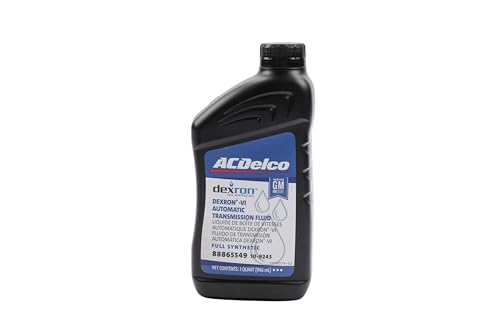
ACDelco Dexron VI in quart format is the budget answer for GM owners who want the OEM fluid without paying dealer counter prices. This is the identical fluid GM dealers install in your transmission during a service visit — same specification, same additive package, same factory licensing — at a price below what the dealer charges per quart. For a routine drain-and-fill on a Chevrolet Silverado, GMC Sierra, Buick Enclave, or Cadillac Escalade with the 6L80 transmission, ACDelco Dexron VI is the correct fluid at the correct price.
The backward compatibility is the feature that matters for older GM vehicles. If your owner’s manual specifies Dexron III, Dexron IIE, or even Dexron II, the modern Dexron VI is the GM-recommended replacement. The earlier Dexron grades have been discontinued, and Dexron VI is engineered to be compatible with all of them while providing better oxidation resistance and longer service life. There is no scenario in which a GM vehicle with an original Dexron III specification is better served by trying to source the discontinued fluid — Dexron VI is the answer, and ACDelco is the OEM source.
The quart format is the trade-off. For a complete pan drop and filter service on a 6L80 transmission, you need about 6 quarts, which puts the cumulative cost above the per-gallon price of the ACDelco gallon option later in this roundup. The quart format is ideal for the owner doing a partial drain-and-fill (replacing 4 to 5 quarts in a routine service) or for top-offs after a transmission cooler or lines repair. For a complete fluid replacement, the gallon format is the better value. For the routine drain-and-fill that most GM owners do every 30,000 to 50,000 miles, the quart format is the right size at the right price.
ACDelco GM Original Equipment Dexron VI Full Synthetic ATF 1 Quart
by ACDelco
The budget-friendly choice for GM owners who want the OEM fluid -- genuine ACDelco Dexron VI in quart format, backward compatible to all earlier Dexron grades, at a per-quart price below the GM dealer counter.
Pros
- Genuine GM OEM Dexron VI specification with zero compatibility guesswork for Chevrolet, GMC, Buick, Cadillac, and Pontiac applications -- this is the identical fluid GM dealers use, which means matching the factory fill and the maintenance schedule referenced in the owner's manual without aftermarket interpretation
- Backward compatible with all earlier Dexron grades including Dexron III, Dexron IIE, and Dexron II -- a Dexron VI fill in any GM vehicle that originally specified an earlier Dexron grade is the correct service path and is the GM-recommended replacement for the discontinued earlier specifications
- Improved foam control and oxidation resistance compared to prior Dexron generations -- the modern additive package extends fluid life under high-temperature conditions and resists the foam-induced shifting issues that older Dexron grades developed near the end of their service intervals
- Real-world drain samples at 50,000-plus miles show the fluid still in clean condition with the correct color and viscosity profile -- the extended service life designed into Dexron VI delivers in service rather than just on the spec sheet, which is the validation that matters for owners stretching change intervals
Cons
- GM-specific application only -- this fluid does not meet Mercon V, ATF+4, or Toyota WS specifications, and using it in non-GM vehicles is a chemistry mismatch that can produce shudder and harsh shifts in transmissions designed around different friction modifier profiles
- Quart format means the per-gallon price is significantly higher than the gallon options in this roundup -- for a full pan drop and filter service requiring 5 to 7 quarts, the cumulative cost adds up faster than buying a single gallon jug
Upgrade Pick: Royal Purple 01320 Max ATF High Performance Synthetic
Royal Purple Max ATF is the fluid I install when the customer asks for the best-shifting fluid available, regardless of price. Do not buy it on the star rating — at 4.8 stars across 758 reviews it sits level with most of this field rather than above it, and transmission fluid as a category clusters so tightly in the high fours that the rating separates almost nothing. What separates this one is film strength. The user base skews heavily toward truck owners doing serious towing, performance car owners with modified transmissions, and DIY mechanics who measure shift quality with the precision that only experienced wrenches develop, and that is the demographic whose reviews are worth reading on this listing.
The high film strength is the technical property that justifies the premium price for towing applications. Under sustained high load — a heavy-duty pickup pulling a fifth-wheel trailer up a Sierra Nevada grade, for example — transmission fluid temperature climbs into the 230 to 260 degree Fahrenheit range where conventional ATF starts breaking down. Royal Purple’s proprietary additive chemistry maintains film thickness at those temperatures longer than standard fluids, which translates into reduced clutch pack wear and extended fluid life under conditions that destroy lesser fluids. For a daily-driven sedan that never tows, this thermal margin is invisible. For a tow rig that works hard, it is the difference between a transmission that lasts 250,000 miles and one that needs a rebuild at 150,000.
The shift quality improvement is the property that makes Royal Purple worthwhile for non-towing applications. On transmissions in the 60,000 to 120,000-mile window where factory fluid is degrading but no major mechanical issues exist, switching to Max ATF produces noticeably smoother shifts and reduced transmission noise. This is the same friction-modifier-tuning effect that drives MaxLife’s high-mileage reputation, except Royal Purple’s chemistry is engineered toward the firmer end of the spectrum that performance owners prefer. If your priority is shift smoothness and you want the best fluid available rather than the most economical, Royal Purple is the answer. If your priority is cost-effective adequate protection on a daily driver, MaxLife or the OEM fluid is the more sensible choice.

Royal Purple 01320 Max ATF High Performance Synthetic 1 Quart
by Royal Purple
The premium upgrade for owners who want the best-shifting fluid available -- Royal Purple's high-performance synthetic with the highest film strength in this field, ideal for towing, modified vehicles, and high-mileage transmissions where shift quality is the priority.
Pros
- Highest film strength of any fluid in this roundup, which is what the upgrade price actually buys -- the proprietary additive package is built to hold an oil film on clutch and gear surfaces under the loads that thin a standard ATF, and performance-focused mechanics consistently rank Royal Purple Max ATF as the best-shifting fluid available across the broadest application range
- High film strength reduces operating temperature under load by measurable margins -- on a transmission cooler-equipped truck towing at gross combined weight, the temperature reduction extends fluid life and reduces the thermal stress on clutch packs that drives transmission failure in heavy-duty applications
- Reviewers consistently report noticeably smoother shifts and reduced transmission noise after a switch -- the proprietary additive package delivers shift quality improvements that owners describe as transformative, particularly on transmissions in the 60,000 to 120,000-mile window where factory fluid is degrading
- Multi-spec licensing covers Dexron III/VI, Mercon V, ATF+4, and Type F -- the same broad compatibility as Valvoline MaxLife but with the high-performance additive chemistry that sets Royal Purple apart from standard multi-vehicle formulas, making it correct for premium applications and modified vehicles
Cons
- Premium per-quart pricing makes a full 12-quart flush significantly more expensive than universal alternatives -- for a complete fluid replacement on a high-capacity transmission, the cost differential against a single gallon of MaxLife is substantial and difficult to justify on a daily driver
- Relatively low review count at 758 for an upgrade pick -- it carries the same 4.8-star average as most of this field rather than standing above it, and the smaller review corpus means less statistical validation across diverse vehicles, climates, and use cases than the volume leaders with thousands of reviews
Runner-Up: Valvoline CVT Full Synthetic CVT Fluid
Valvoline CVT is the fluid I recommend to every Nissan, Honda, Toyota, and Subaru owner with a continuously variable transmission whose factory CVT fluid is past its 30,000-mile service interval. CVT fluid is fundamentally different from conventional ATF — the friction requirements are essentially opposite, because a CVT transfers torque through belt-on-pulley friction rather than clutch-pack engagement, and a fluid engineered for clutch packs will cause immediate slippage and damage in a CVT. Purpose-built CVT fluid is the only correct answer.
The anti-shudder additive performance is the standout feature in this product, and it solves the most common CVT complaint I see in the shop. Nissan Xtronic CVTs in particular develop a noticeable jerking and surging behavior around 60,000 to 80,000 miles when the factory fluid degrades — the friction modifier package depletes, the belt-on-pulley friction characteristic becomes inconsistent, and the result is a transmission that lurches between speeds rather than transitioning smoothly. A drain-and-fill with Valvoline CVT consistently resolves this complaint when the underlying transmission is mechanically healthy. I have done this service on dozens of Nissan Rogues, Altimas, and Sentras, and the customer feedback is reliable: the CVT shifts smoothly again after the fluid change.
The quart format is the limitation for full CVT services. A complete fluid replacement on a Nissan CVT requires 4 to 8 quarts depending on the vehicle and the service procedure (drain-and-fill versus pan drop with filter), so plan for multiple quart bottles when doing a full service. For a partial drain-and-fill of 3 to 4 quarts — which is the routine service most CVT owners need every 30,000 miles — two bottles is enough. Pair the CVT service with a transmission cooler line inspection and a check of the cooling system, because CVT fluid temperature is a major variable in CVT longevity.

Valvoline CVT Full Synthetic CVT Fluid 1 Quart
by Valvoline
The right fluid for CVT-equipped vehicles -- a purpose-built full synthetic universal CVT fluid with anti-shudder chemistry that resolves the jerking and surging high-mileage CVTs develop, at a price below OEM Nissan or Honda CVT fluid.
Pros
- Purpose-built for continuously variable transmissions rather than a diluted universal ATF -- CVT fluid has fundamentally different friction requirements than conventional ATF because the steel pushbelt or chain transfers torque through friction against the pulley faces, and a fluid engineered for clutch-pack engagement will not deliver correct CVT behavior
- Anti-shudder additive performance is the standout feature -- reviewers report resolution of jerking, surging, and transmission shudder symptoms on high-mileage CVTs, particularly Nissan Xtronic units that develop these issues around 60,000 to 80,000 miles when the factory fluid is degrading
- Excellent low-temperature flow characteristics for cold-climate cold-starts -- CVT pulley response and clutch engagement degrade significantly when fluid viscosity is too high at startup, and the synthetic base oil maintains proper flow at temperatures where conventional CVT fluid becomes sluggish
- Full synthetic at competitive per-quart pricing -- a Nissan dealer charges substantially more for OEM NS-2 or NS-3 fluid, and the Valvoline alternative provides equivalent CVT performance at a price that makes regular drain-and-fill service economical rather than a major maintenance expense
Cons
- Sold per quart -- a full CVT fluid change requires 4 to 8 quarts depending on the vehicle, which means multiple bottles for a single service and the corresponding inventory management compared to a gallon container
- Some Nissan owners specifically prefer the OEM NS-2 or NS-3 fluid for warranty-period applications and strict factory adherence -- while Valvoline CVT meets the multi-CVT specification, owners with active powertrain warranties may want to verify their specific warranty terms before deviating from the OEM fluid
Runner-Up: Valvoline ATF+4 Full Synthetic 1 Quart
A Dodge, Chrysler, Jeep, or Ram transmission gets ATF+4 or it gets nothing. The FCA/Stellantis transmission family is unusually sensitive to friction modifier profile, and I have had customers come into the shop with shudder, harsh shifts, and torque converter lockup that traced back to a multi-vehicle fluid claiming general compatibility rather than a fluid actually licensed against ATF+4. The fix every time was draining it and refilling with a licensed ATF+4. What matters is the license, not the badge on the bottle.
That distinction is worth spelling out because the OEM option has quietly become hard to buy. The genuine Mopar quart listings are still on Amazon under their factory part numbers, but as of this update they show a price with no Add to Cart button — the Buy Box is gone and you land on a third-party offer page instead. Valvoline is one of the blenders licensed against the ATF+4 specification, it stays in stock, and it runs roughly a third the per-quart cost of the dealer parts counter. If you have a Mopar dealer nearby and prefer the OEM bottle, buy it there; if you are ordering online, this is the licensed ATF+4 that will actually arrive.
The narrow application is both a limitation and a clarity benefit. ATF+4 is correct for 1998-and-newer Dodge, Chrysler, Jeep, and Ram vehicles — the specification superseded ATF+3 in 1998 and has been the FCA standard since. Older Chrysler vehicles that originally specified ATF+2 or ATF+3 should use those specifications, although ATF+4 is backward compatible with ATF+3 in most applications (consult the owner’s manual for the specific vehicle). For any non-FCA vehicle, ATF+4 is the wrong fluid and should not be substituted. The narrow application is the trade-off for the precise specification match.

Valvoline ATF+4 Full Synthetic Automatic Transmission Fluid 1 Quart
by Valvoline
The correct fluid for Dodge, Chrysler, Jeep, and Ram -- a fully licensed ATF+4 that is actually purchasable on Amazon, at roughly a third the per-quart cost of dealer OEM fluid, with the friction modifier profile FCA transmissions specifically require.
Pros
- Licensed against the ATF+4 specification for Chrysler, Dodge, Ram, Jeep, and other Stellantis vehicles -- this is a validated ATF+4 fluid rather than a multi-vehicle formula claiming general compatibility, which is the distinction that matters on a transmission family known to be sensitive to friction modifier profile
- Consistently purchasable on Amazon with a live Buy Box, which the genuine Mopar quart listings currently are not -- the OEM part numbers still appear on Amazon but route to third-party offer pages with no Add to Cart button, making this the ATF+4 you can actually order today
- Roughly a third the per-quart cost of dealer-counter OEM fluid, so a full drain-and-fill on a Ram or Grand Cherokee that needs 5 to 6 quarts costs meaningfully less without stepping outside the licensed specification
- Full synthetic formulation with seal conditioners that protect elasticity and prevent the weeping front pump and output shaft seals that high-mileage FCA transmissions commonly develop
Cons
- Extremely narrow application -- only correct for FCA/Stellantis vehicles (Dodge, Chrysler, Jeep, Ram) and not interchangeable with any other transmission specification, which means non-FCA owners gain no benefit and should not buy this fluid
- Sold by the single quart, so a complete drain-and-fill needs 5 or 6 bottles and a pan-drop service on a larger Ram can need more -- buy the count your service actually requires up front rather than discovering you are a quart short mid-job
- Not the correct fluid for older Chrysler vehicles that specified ATF+3 or ATF+2, so cross-reference the owner's manual before ordering
Runner-Up: ACDelco GM OE Dexron VI 1 Gallon
ACDelco Dexron VI in gallon format is the right size for a complete GM transmission flush. The 6L80 transmission in late-model Silverados and Sierras requires approximately 12 quarts for a full fluid replacement, the 8L45 takes 10 quarts, and the older 4L60E and 4L65E take about 7 quarts for a pan drop and filter service plus another 5 to 6 quarts for a torque converter flush. The gallon format reduces the per-quart cost by approximately 40 percent compared to buying individual quart bottles, which is a meaningful savings on a multi-quart service.
The 7,928 reviews at 4.8 stars represent the largest validation corpus among OEM GM fluids on Amazon, and the volume reflects what the product actually is: the GM service-bay standard for owners doing their own fluid changes rather than paying dealer rates. There is no mystery to this fluid — it is the same Dexron VI that comes out of the dealer service bays, in a gallon container at a lower per-quart price than the dealer counter.
The two practical limitations to plan around: first, the gallon jug is awkward to pour into a transmission filler tube, so a hand pump or fluid transfer pump is essentially required for a clean install. Second, this is Dexron VI, not Dexron HP, which means it is not compatible with the GM 8-speed and 10-speed transmissions that require the higher-friction HP specification. For pre-2015 GM vehicles with the 6L80, 6L90, 4L60E, 4L65E, or earlier transmissions, ACDelco Dexron VI is the correct fluid in the correct format. For 2015-and-newer GM trucks with 8L45, 8L90, or 10L80 transmissions, you need Dexron HP. Verify your transmission specification before buying.

ACDelco GM OE 10-9395 Dexron VI 1 Gallon
by ACDelco
The correct gallon-format fluid for a complete GM transmission flush -- ACDelco Dexron VI in a one-gallon jug at the best per-quart price for the multi-quart services that GM transmissions require.
Pros
- Highest review count among OEM GM fluids at 7,928 reviews -- the volume of validation across diverse Chevy, GMC, Buick, and Cadillac applications confirms this is the GM service-bay standard for owners doing their own fluid changes rather than paying dealer rates
- Best value per gallon for a complete GM ATF flush -- a full transmission flush on a 6L80 or 8L45 GM transmission requires 10 to 14 quarts, and the gallon format reduces the per-quart cost by approximately 40 percent compared to buying individual quart bottles
- Enables extended drain intervals per GM specification -- the modern Dexron VI additive package is engineered for the 100,000-mile service intervals that GM lists in current owner's manuals, which is double the interval of older Dexron III formulations
- Consistent cold-weather shift quality reported across diverse climates -- the synthetic base oil maintains proper viscosity at low temperatures, which means the same shift behavior in a Wisconsin winter that you get in a Texas summer rather than the cold-shift harshness common to some older transmissions
Cons
- Gallon jug is awkward to pour into the transmission filler tube -- a hand pump, funnel tube, or fluid transfer pump is essentially required because pouring directly from a one-gallon jug into a small filler opening is a guaranteed mess and risks fluid loss
- Not compatible with GM 8-speed and 10-speed transmissions that require Dexron HP -- the 8L45, 8L90, and 10L80 transmissions specify the higher-friction Dexron HP fluid, and using Dexron VI in those applications produces the shudder issues that GM service bulletins document
Runner-Up: Castrol Transmax ATF/CVT Universal
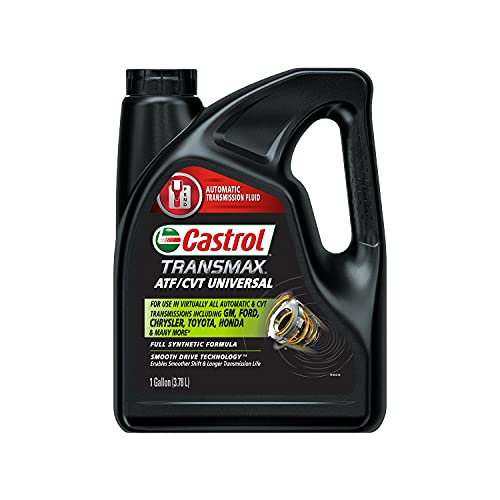
Castrol Transmax ATF/CVT is the fluid for the multi-vehicle household that runs both conventional automatics and CVTs and does not want to stock separate fluids for each. The dual-spec licensing covers both transmission types in a single gallon, which simplifies inventory and prevents the cross-fill mistake where someone grabs the wrong jug from the garage shelf and pours ATF into a CVT (or vice versa). At competitive gallon pricing against Valvoline MaxLife while delivering broader specification coverage, Transmax fills a niche that single-purpose fluids do not address.
The copper corrosion protection is the technical feature that distinguishes Transmax from basic universal fluids. Modern transmissions contain electronically controlled solenoids with copper-bearing internal components, and copper corrosion is one of the leading causes of solenoid failure on neglected transmissions. The additive package in Transmax is specifically formulated to prevent this corrosion, which extends solenoid life and reduces the likelihood of the electronic shift quality problems that develop when solenoids degrade. For the modern transmission with a complex valve body and multiple solenoids, this protection matters.
The one specification compromise is the synthetic blend base oil rather than full synthetic. Transmax mixes synthetic base stock with conventional petroleum stock, which provides less long-term oxidation resistance than a pure synthetic alternative like Valvoline MaxLife. In a moderate climate with normal driving conditions, this difference is essentially invisible — the fluid will reach its scheduled change interval with adequate protection remaining. In hot climates with sustained high-temperature operation or heavy-duty use, the full synthetic alternative provides longer service life. For the household running both an automatic and a CVT in normal conditions, Transmax is a sensible single-fluid solution. For owners prioritizing maximum service life, MaxLife or a vehicle-specific full synthetic is the closer match.
Castrol Transmax ATF/CVT Universal 1 Gallon
by Castrol
The runner-up universal fluid for households running both automatics and CVTs -- a synthetic blend that covers conventional ATF and CVT applications in one gallon, with strong copper corrosion protection for modern solenoid-equipped transmissions.
Pros
- Single fluid covers both conventional automatic transmissions and CVTs -- the dual-spec licensing eliminates the need to stock separate ATF and CVT fluids in a multi-vehicle household where one car runs a conventional automatic and another runs a CVT, which simplifies inventory and prevents accidental cross-fills
- Excellent copper corrosion protection for solenoids and valve body components -- modern transmissions contain electronically controlled solenoids with copper-bearing internal components, and the additive package in Transmax is specifically formulated to prevent the copper corrosion that causes solenoid failure on neglected transmissions
- Competitive gallon pricing against Valvoline MaxLife while delivering broader specification coverage -- the inclusion of CVT applications in the same product expands the use case without a price premium, which is unusual for dual-purpose fluids that typically cost more than single-purpose alternatives
- Strong high-temperature oxidation resistance praised in hot-climate reviews -- Phoenix, Las Vegas, and South Texas owners report consistent fluid color and condition at 30,000-mile drain intervals, which is the validation that matters for the high-thermal-stress applications where transmission fluid degrades fastest
Cons
- Synthetic blend rather than full synthetic -- the base oil mix includes some conventional petroleum stock alongside the synthetic component, which provides less long-term oxidation resistance than a true full synthetic and may shorten service life under sustained high-temperature operation
- Lower review count than Valvoline MaxLife at 2,169 reviews -- while the rating is solid, the smaller review corpus means less statistical validation across the diverse range of CVTs and automatic transmissions that the universal claim promises to cover
Best Transmission Fluid for CVTs
If your vehicle has a continuously variable transmission — most late-model Nissans, many Hondas, Toyotas, and every modern Subaru — do not use conventional ATF under any circumstances. A CVT transfers torque through a steel belt or chain gripping variable-diameter pulleys, and a fluid tuned for clutch-pack engagement will let that belt slip and destroy the transmission. You need a purpose-built CVT fluid. The two picks below are both proven against the major CVT specifications; the choice comes down to whether you own only a CVT or a mix of transmissions in the garage.
| Product | Price | Buy |
|---|---|---|
| Valvoline CVT Full Synthetic CVT Fluid 1 QuartBest dedicated CVT fluid Purpose-built full synthetic with the anti-shudder additive that resolves the jerking and surging Nissan Xtronic CVTs develop around 60,000 miles -- the quart format suits the partial drain-and-fills most CVT owners do | $11.88 | View on Amazon |
| Castrol Transmax ATF/CVT Universal 1 GallonBest if you also run an automatic Dual-spec ATF/CVT gallon that covers both a conventional automatic and a CVT from one jug -- the pick for a multi-vehicle household that does not want to stock two separate fluids | $28.48 | View on Amazon |
For strict warranty-period vehicles, verify your owner’s manual specification (Honda HCF-2, Nissan NS-3, Subaru CVT-II) before switching from the factory fluid.
Best Transmission Fluid for High-Mileage Vehicles
Once a transmission passes about 75,000 miles, the rubber seals harden and lose their sealing geometry, which is the root cause of the slow leaks, harsh shifts, and torque-converter shudder that older transmissions develop. The fix is a fluid with a seal-conditioner package that softens those elastomers back toward their original shape. Both picks below deliver that, with the multi-vehicle MaxLife the value choice and Royal Purple the option when shift quality is the priority.
| Product | Price | Buy |
|---|---|---|
| Valvoline MaxLife Multi-Vehicle ATF Full Synthetic 1 GallonBest for seal conditioning The seal-conditioner chemistry that restores hardened seals and quiets harsh shifts on neglected high-mileage transmissions -- licensed across Dexron, Mercon, ATF+4, and most CVTs so one gallon fits nearly any high-mileage vehicle | $29.88 | View on Amazon |
| Royal Purple 01320 Max ATF High Performance Synthetic 1 QuartBest for shift quality Highest film strength in this roundup, which is what holds up under sustained heat and load -- the pick when a high-mileage transmission is shifting rough and you want the best shift feel regardless of a small price premium | $18.94 | View on Amazon |
On a badly neglected transmission, use sequential drain-and-fills rather than a single power flush — replacing all the fluid at once can dislodge varnish and change friction behavior abruptly.
Best Transmission Fluid for Performance and Towing
Heavy towing, modified builds, and hard driving push transmission fluid temperature into the 230-to-260-degree range where standard ATF starts to break down, thin out, and lose the film strength that protects clutch packs. A high-performance synthetic holds viscosity and film thickness at those temperatures, which is the difference between a transmission that survives a loaded grade and one that cooks its clutches. Royal Purple is the specialist here; MaxLife is the value alternative that still covers most performance daily-drivers.
| Product | Price | Buy |
|---|---|---|
| Royal Purple 01320 Max ATF High Performance Synthetic 1 QuartBest for towing & heat High film strength that reduces operating temperature under sustained load -- the pick for a tow rig working at gross combined weight or a modified transmission where thermal margin protects the clutch packs | $18.94 | View on Amazon |
| Valvoline MaxLife Multi-Vehicle ATF Full Synthetic 1 GallonBest value for daily performance Full synthetic multi-vehicle ATF that covers most performance daily-drivers at a lower per-quart cost -- the sensible choice when the vehicle sees occasional spirited driving rather than dedicated track or heavy-tow duty | $29.88 | View on Amazon |
For any towing application, a transmission cooler and disciplined fluid-change intervals matter more than the fluid brand — heat is what kills transmissions, and no fluid compensates for a transmission running chronically hot.
What Transmission Fluid Does Your Vehicle Actually Take?
The single most important step in selecting transmission fluid is identifying the exact specification your vehicle requires, because the fluid market is full of products that look identical in the bottle but have fundamentally different chemistry. The owner’s manual is the authoritative source — the maintenance section lists the required transmission fluid by specification name. If the manual is missing, the dipstick or the fill cap usually has the specification stamped or printed on it. The major specifications break down by manufacturer:
General Motors: Dexron VI is the current GM specification, backward compatible with all earlier Dexron grades (III, IIE, II) for pre-2015 vehicles. The 2015-and-newer GM trucks and SUVs with 8-speed (8L45, 8L90) and 10-speed (10L80) transmissions specify Dexron HP, which is a higher-friction formulation than Dexron VI and is not interchangeable with it.
Ford and Lincoln: Pre-2016 Ford vehicles with 4-speed, 5-speed, and 6-speed automatics specify Mercon V. The 2016-and-newer Ford vehicles with 6-speed, 8-speed, and 10-speed transmissions specify Mercon LV, which is a lower-viscosity formulation than Mercon V and is not interchangeable in the wrong direction (Mercon V can be used in Mercon LV applications in an emergency, but the reverse causes shift quality problems).
FCA/Stellantis (Dodge, Chrysler, Jeep, Ram): ATF+4 has been the FCA specification since 1998, replacing the earlier ATF+3 and ATF+2 specifications. ATF+4 is backward compatible with ATF+3 in most applications. The Chrysler MS-9602 specification reference is sometimes listed instead of the ATF+4 designation — they refer to the same fluid.
Toyota and Lexus: Toyota WS (World Standard) is the current specification for Toyota and Lexus conventional automatics. Toyota CVTs use Toyota Genuine CVT Fluid TC or FE depending on the model. Toyota transmissions are notoriously sensitive to friction modifier profile, which is why I recommend either OEM Toyota fluid or a multi-vehicle alternative specifically licensed against Toyota WS like Valvoline MaxLife.
Honda and Acura: Honda DW-1 is the specification for Honda and Acura conventional automatic transmissions, replacing the earlier Z-1 specification. Honda CVTs use Honda HCF-2 (replacing the earlier HCF-1 specification). Honda transmissions are also sensitive to friction modifier profile — multi-vehicle ATF works in most applications, but OEM Honda fluid provides a tighter specification match for warranty-period vehicles.
Nissan and Infiniti: Nissan CVTs use NS-2 or NS-3 specifications (NS-3 superseded NS-2 in 2013 — check your owner’s manual for which specification applies to your vehicle). Older Nissan conventional automatics use Matic K, J, S, or D specifications depending on the model. Multi-vehicle CVT fluids like Valvoline CVT meet NS-2 and NS-3 specifications.
Subaru: Subaru CVTs use Subaru CVT-II specification. Older Subaru 4-speed and 5-speed automatics use Subaru ATF-HP. Multi-vehicle CVT fluids meet the CVT-II specification for most applications.
This specification matrix is what most generic transmission fluid roundups skip, and it is the single most important piece of information for choosing the right fluid. If you buy fluid that does not match your specification, the fluid quality is irrelevant — you have just installed the wrong product, and the consequences range from poor shift quality to outright transmission damage.
Drain-and-Fill vs Power Flush: Which Service Do You Actually Need?
The torque converter retains approximately 50 percent of the total transmission fluid even after a complete pan drop — the geometry of a torque converter does not allow gravity drainage. A standard drain-and-fill replaces only the fluid in the pan, which means the new fluid mixes with the retained old fluid in the converter to produce a 50/50 blend rather than a complete refresh. This is why a single drain-and-fill on a transmission with badly degraded fluid does not fully restore performance.
A power flush uses a machine connected to the transmission cooler lines to circulate fresh fluid through the entire system, including the torque converter, replacing nearly 100 percent of the fluid in a single service. This sounds ideal in theory and is appropriate for transmissions that have been maintained on schedule and contain healthy fluid that simply needs replacement. The problem is that power flushing a neglected transmission with degraded fluid carries genuine risk — the depleted, contaminated fluid has been holding worn clutch material and varnish in suspension and providing degraded but functional friction characteristics. Replacing all of it at once with fresh fluid can dislodge varnish deposits, change clutch friction behavior abruptly, and trigger shift quality issues or torque converter shudder that the transmission was tolerating with its old fluid.
The protocol I follow in the shop for high-mileage neglected transmissions is sequential drain-and-fills. Replace 4 to 6 quarts (a standard pan drop), drive the vehicle 500 to 1,000 miles, replace another 4 to 6 quarts, drive it again, and repeat for a total of three drain-and-fills over a few thousand miles. This achieves 90-plus percent fluid replacement gradually rather than abruptly, which most transmissions tolerate well. The total fluid quantity used is about the same as a single power flush, but the gradual replacement avoids the abrupt friction characteristic change that causes problems on neglected transmissions. For transmissions that have been maintained on schedule and have healthy fluid, a single drain-and-fill or a power flush both work fine. For neglected transmissions, sequential drain-and-fills is the safer approach.
When Multi-Vehicle ATF Is the Wrong Choice
Multi-vehicle ATF like Valvoline MaxLife and Royal Purple Max ATF covers approximately 95 percent of the automatic transmissions on U.S. roads, but the remaining 5 percent are the applications where multi-vehicle ATF is genuinely the wrong choice and a vehicle-specific fluid is required. Three categories matter:
GM 8-speed and 10-speed transmissions (2015+): The 8L45, 8L90, and 10L80 transmissions specify Dexron HP, which is a higher-friction formulation than Dexron VI. Multi-vehicle ATF is licensed against Dexron VI but not Dexron HP, and using a multi-vehicle fluid in a Dexron HP application produces the harsh shifting and torque converter shudder that GM service bulletins document. For these specific GM transmissions, Dexron HP is required.
Toyota WS-sensitive applications: Toyota transmissions are unusually sensitive to friction modifier profile, and some Toyota owners report shift quality changes after switching from Toyota Genuine WS to a multi-vehicle alternative. Multi-vehicle fluids licensed against Toyota WS work adequately in most cases, but for warranty-period Toyota vehicles or owners who want zero ambiguity, Toyota Genuine WS is the safer choice. The same applies to some Honda DW-1 applications, though Honda transmissions are generally less specification-sensitive than Toyota.
FCA/Stellantis ATF+4 applications: I covered this earlier, but it bears repeating — ATF+4 is licensed only to specific suppliers, and some non-licensed aftermarket ATF+4 substitutes cause shift quality problems on Dodge, Chrysler, Jeep, and Ram vehicles. A licensed fluid eliminates that risk, whether that is Valvoline ATF+4, Valvoline MaxLife (also licensed against ATF+4), or the genuine Mopar bottle from a dealer parts counter. Avoid generic ATF+4 substitutes that do not display the licensing.
For everything outside these three categories — the vast majority of U.S. vehicles — multi-vehicle ATF is the correct and economical choice. Identify whether your vehicle falls into one of the specification-sensitive categories before defaulting to a multi-vehicle fluid, and you have made the right decision either way.
Buyer's Guide
Choosing the right transmission fluid comes down to matching the OEM specification in your owner's manual to a fluid that meets that specification -- there is very little brand preference involved when the chemistry match is correct, and there is no amount of premium fluid that compensates for using the wrong specification.
Fluid Type and Transmission Compatibility
The first and most important decision is identifying whether your vehicle has a conventional automatic transmission or a continuously variable transmission (CVT), because the fluids are not interchangeable. Conventional automatics use ATF formulated for clutch-pack engagement -- Dexron VI for GM, Mercon V or LV for Ford, ATF+4 for FCA/Stellantis, Toyota WS for Toyota and Lexus, Honda DW-1 for Honda automatics. CVTs require purpose-built CVT fluid formulated for steel-belt or chain friction against pulley faces -- Honda HCF-2, Nissan NS-2 or NS-3, Subaru CVT-II, or universal CVT fluids like Valvoline CVT or Castrol Transmax ATF/CVT. Putting ATF in a CVT damages the transmission immediately. Putting CVT fluid in a conventional automatic produces shudder and clutch wear. Identify your transmission type before selecting a fluid.
OEM Specification Match
The owner's manual lists the exact transmission fluid specification by name -- Dexron VI, Mercon LV, ATF+4, Toyota WS, Honda DW-1, or a CVT specification. That spec is the baseline requirement, not a suggestion. Aftermarket fluids that claim to meet a specification should be licensed against that specification by the OEM -- look for the specific spec name on the bottle (for example, 'meets Dexron VI requirements' or 'licensed against ATF+4 specification'). Generic claims like 'works in all automatic transmissions' without specific spec names are warning signs of a fluid that has not been validated against the chemistry your transmission requires. When in doubt, OEM-branded fluid (Mopar ATF+4, Toyota Genuine WS, Honda Genuine DW-1) eliminates the specification question entirely at a modest price premium.
Synthetic vs Conventional
Modern transmission specifications are essentially all full synthetic at this point -- Dexron VI, Mercon LV, ATF+4, Toyota WS, and most CVT specifications require synthetic base oil. Synthetic blend fluids exist but provide less oxidation resistance and shorter service life than full synthetic alternatives, which matters for the long change intervals modern transmissions are engineered around. The only category where conventional ATF still has a role is older transmissions originally specified for Dexron III, Mercon (original), or pre-1996 specifications -- and even in those applications, modern Dexron VI is backward compatible and provides better long-term protection than the original conventional fluid. For any transmission built after about 2005, full synthetic is the correct choice.
Multi-Vehicle vs Vehicle-Specific
Multi-vehicle transmission fluids like Valvoline MaxLife and Royal Purple Max ATF are licensed against multiple OEM specifications simultaneously -- typically Dex III/VI, Mercon V, ATF+4, and sometimes additional specifications. They work adequately in most applications and are the right choice for multi-vehicle households where stocking three or four different OEM fluids is impractical. Vehicle-specific fluids -- Mopar ATF+4, ACDelco Dexron VI, Toyota Genuine WS -- provide a tighter chemistry match for vehicles with strict OEM requirements and are appropriate for warranty-period vehicles, performance applications, and any transmission that has shown sensitivity to friction modifier profile. The practical difference between a licensed multi-vehicle fluid and the OEM fluid is small in most applications and significant in a few -- Toyota WS, Honda DW-1, and GM Dexron HP are the specifications most likely to favor OEM fluid over multi-vehicle alternatives.
Change Interval and Cost Per Mile
Transmission fluid is sold by the quart or gallon, and the cost-per-mile equation depends on both the fluid price and the change interval the formulation supports. A 15-dollar quart of OEM fluid changed every 30,000 miles in a 6-quart drain-and-fill costs about $3 per 1,000 miles in fluid alone. A 30-dollar gallon of multi-vehicle fluid changed at the same interval and quantity costs a little over $1.50 per 1,000 miles, because the gallon format removes the per-bottle markup. A premium quart fluid like Royal Purple pushes the per-mile cost roughly a third higher again, which is justified by the shift quality improvement on transmissions where that matters and difficult to justify on a daily driver where the standard fluid would shift identically. The most expensive fluid mistake is not which brand you bought -- it is missing the change interval entirely and running 200,000-mile fluid that should have been replaced at 100,000 miles.
Brand Approvals and Licensing
The transmission fluid market is unusual in that brand reputation matters less than specification licensing. ACDelco Dexron VI and Valvoline Dexron VI both carry the GM Dexron VI license, which means both fluids passed the same GM-required performance tests. The same is true across all major OEM specifications -- if a fluid is licensed against the spec, it has passed the validation testing. Where brand reputation legitimately matters is in multi-vehicle and premium applications where the specification licensing is broader and the formulation differences become meaningful. Valvoline MaxLife's seal conditioner package is genuinely different from a basic multi-vehicle ATF, and Royal Purple's high-performance additive chemistry produces measurable shift quality differences. For OEM-licensed fluids meeting a specific specification, brand is largely interchangeable. For multi-vehicle and premium applications, brand and formulation differentiation matter.
Final Verdict
For the majority of U.S. vehicles — domestic and import, automatic and most CVTs — Valvoline MaxLife Multi-Vehicle ATF Full Synthetic is the correct overall choice. The licensing covers Dexron III/VI, Mercon V, ATF+4, and most CVT specifications in a single gallon, the seal conditioner package is a genuine high-mileage advantage, and the gallon pricing makes multi-quart services economical. For the GM owner who wants the OEM fluid at the best price, ACDelco GM OE Dexron VI in quart format is the budget-friendly answer, with the gallon format the better value for complete flushes. For owners prioritizing the best shift quality available regardless of price, Royal Purple 01320 Max ATF is the premium upgrade that performance mechanics consistently rank above the rest of the field.
For specific applications, the specification-matched fluids are the correct choice: Valvoline CVT Full Synthetic for Nissan, Honda, Toyota, and Subaru CVTs; Valvoline ATF+4 Full Synthetic for any Dodge, Chrysler, Jeep, or Ram vehicle (a licensed ATF+4 resolves the shudder and shift quality issues that unlicensed substitutes can cause, and unlike the OEM listings it is reliably in stock); and Castrol Transmax ATF/CVT Universal for households running both conventional automatics and CVTs that want a single fluid for both. Match the specification, change the fluid on schedule, and the transmission will outlast the rest of the vehicle. For a complete maintenance approach, pair your transmission service with a quality synthetic motor oil and a properly specified oil filter at your next service interval — the fluids that protect your powertrain are the cheapest insurance you can buy against the most expensive repairs.
Frequently Asked Questions
What transmission fluid does my car actually take?
How often should I change my transmission fluid?
Can I use multi-vehicle ATF in my Toyota or Honda?
Is it safe to change transmission fluid on a high-mileage vehicle that's never been serviced?
What's the difference between ATF and CVT fluid?
Related Articles
About the Reviewer

Mike Reeves, ASE Master Technician
A.A.S. Automotive Technology, Universal Technical Institute (UTI)
Mike Reeves is an ASE Master Technician with 15 years of hands-on experience in automotive repair and diagnostics. He earned his A.A.S. in Automotive Technology from UTI and runs his own independent shop in Denver, Colorado. Mike founded RevRated to help everyday car owners make smarter parts decisions -- every recommendation comes from real-world testing in his garage.