9 Best Car Sun Shades of 2026
ASE Master Tech Mike Reeves reviews the best car sun shades of 2026. Compare pop-up, accordion, umbrella, and 2-piece shades by material, thread count, size, and UV block.
Updated
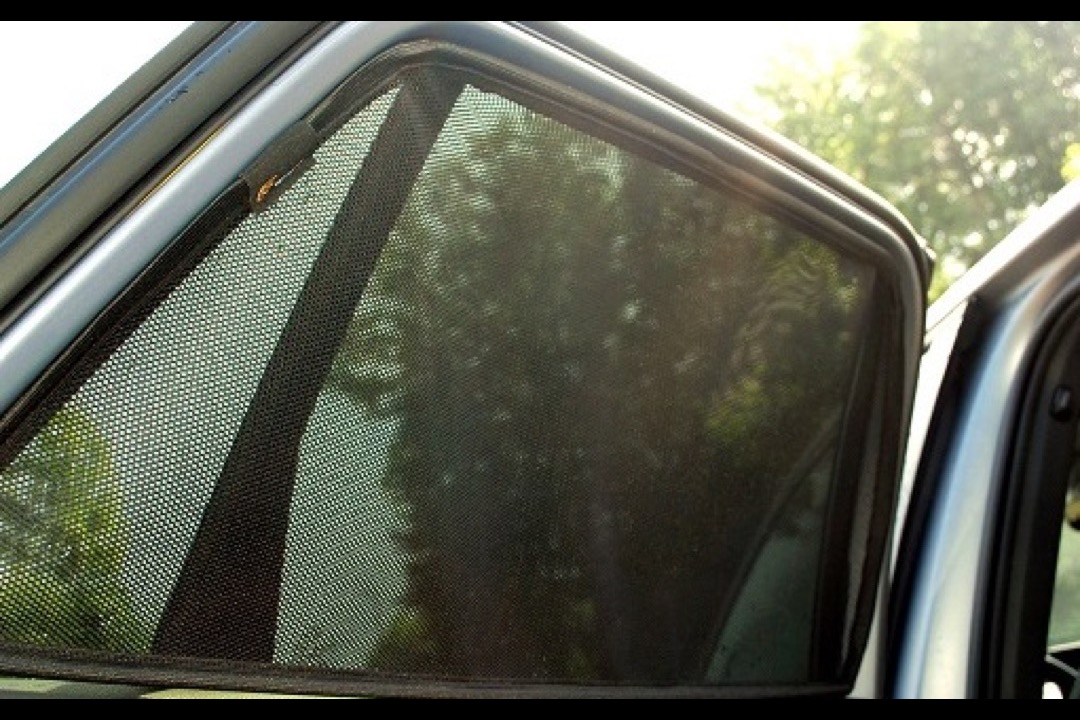
In twenty-plus years of working on cars, I have torn apart a lot of sun-baked interiors, and the damage is always the same story: a cracked dashboard, a faded leather seat, and an infotainment screen that has started to delaminate at the edges. Every one of those repairs traces back to the same root cause — months of unfiltered sun pouring through the windshield into a parked car. The best car sun shade is the cheapest insurance policy in your vehicle, and most drivers skip it.
Here is the math that only a mechanic tends to spell out. A parked car interior in direct summer sun reaches 140 to 180 degrees Fahrenheit — a 2018 University of Texas at Dallas study clocked the dashboard at 180 degrees after eight hours. That heat and the UV riding with it slowly destroy interior surfaces. A replacement dashboard runs 500 to 1,500 dollars installed. Re-dyeing faded leather is 200 to 600. A delaminated infotainment screen is 300 to 1,200. And if the sun has cooked the trim around a forward-facing ADAS camera, recalibrating those sensors after the repair adds another 150 to 400. A windshield shade that costs about the same as a tank of gas prevents all of it.
I researched and compared nine sun shades across every format and price tier — pop-up, accordion, umbrella, two-piece, side-window film, and retractable — so every driver and every vehicle finds the right match. If you want the short answer, the EcoNour Car Windshield Sun Shade is the best car sun shade for most drivers in 2026. While you are protecting the interior, it is worth pairing a shade with quality floor mats and a steering wheel cover, since the wheel and carpet take the same UV and heat abuse the dashboard does.
| Product | Price | Buy |
|---|---|---|
| EcoNour Car Windshield Sun ShadeBest Overall | $15.99 | View on Amazon |
| EcoNour 2-Piece Foldable Windshield Sun ShadeBudget Pick | $16.99 | View on Amazon |
| Nmoiss Upgraded Umbrella Sun ShadePremium Pick | $33.99 | View on Amazon |
| EzyShade Shield-X 2-Piece Windshield Sun ShadeRunner-Up | $16.97 | View on Amazon |
| Autoamerics Windshield Sun ShadeRunner-Up | $19.99 | View on Amazon |
| EcoNour Truck & SUV XL Windshield Sun ShadeRunner-Up | $17.99 | View on Amazon |
| Magnelex Double-Layer Windshield Sun ShadeRunner-Up | $16.99 | View on Amazon |
| Kinder Fluff Car Side Window Sun Shades (4-Pack) | $14.90 | View on Amazon |
| Dash Designs 25" Retractable Windshield Sunshade | $50.75 | View on Amazon |
Find the Right Sun Shade for Your Situation
Most drivers land on this page with a specific vehicle or need in mind. Jump straight to the recommendation that fits:
- Best foldable car sun shades — flat shades that fold, twist, or pleat away
- Best car side window sun shades — protection for backseat passengers and door panels
- Best retractable car sun shades — permanently mounted, one-handed deployment
- Best for trucks and large SUVs — the XL panel for tall, wide windshields
- Best overall for most drivers — the proven default pick
How We Chose These Car Sun Shades
I evaluated each shade against five criteria: reflective material quality measured by weave thread count and layer construction, coverage measured against the windshield sizes for each vehicle class, deployment and folding ease because the shade you skip protects nothing, storage footprint in a real cabin, and validated owner satisfaction measured by review volume and rating rather than marketing claims. I deliberately spanned every shade format and price point so a compact-sedan driver and a full-size-truck owner both find their match.
Every ASIN was verified live and in stock on Amazon before inclusion. No shade made this list on brand name or marketing language alone.
Best Overall: EcoNour Car Windshield Sun Shade
There is a reason this shade sits at 123,928 reviews and a 4.4-star average — it does the fundamental job better than anything else at the price, and it does it in two seconds flat. The EcoNour is the windshield shade I point most drivers toward because it gets the two things that matter most right: the reflective material and the daily-use convenience.
The material is where this shade quietly beats its competition, and it is the spec almost no one explains. The face is 240T polyester — a denser weave than the 210T or 150T fabric the budget shades use. From a heat-rejection standpoint, a tighter weave means a tighter, more continuous reflective surface bouncing solar load back out the glass before it converts to interior heat. From a durability standpoint, the dense weave holds its shape across summers instead of stretching and sagging in the middle the way thin shades do after one season. With 99 percent UV block across a 64-by-32-inch panel, it keeps the dashboard, steering wheel, and infotainment screen out of the direct line of fire that causes the cracking and delamination I see every summer.
The one-piece twist-fold is the convenience that makes you actually use it. The spring-steel hoop collapses to a flat disc and pops back to full size on its own — no accordion creases to fight, no two pieces to line up against a curved windshield. That sounds minor until you are running late on a 95-degree morning. A shade that takes two seconds gets deployed every time; a fiddly one ends up abandoned in the trunk doing nothing. The honest trade-off is a short learning curve on the fold — the wrist motion to flatten the hoop feels awkward for the first day, then becomes automatic. It is sized for standard sedans and crossovers; truck and large-SUV drivers should jump to the XL version further down this list.

EcoNour Car Windshield Sun Shade
by EcoNour
The best car sun shade for most drivers -- 123,928 reviews at 4.4 stars, a dense 240T reflective weave, and a one-piece twist-fold that deploys in seconds across any standard windshield.
Pros
- 123,928 reviews at 4.4 stars makes this the most validated windshield shade on Amazon -- at that volume the rating reflects real-world performance across every vehicle, climate, and parking situation in the country, not a handful of cherry-picked testimonials
- The 240T polyester face is a meaningfully denser weave than the 210T or 150T fabric most budget shades use -- higher thread count means a tighter reflective surface that bounces more solar load back out the glass and holds its shape instead of sagging after one summer
- One-piece twist-fold collapses to a flat disc in about two seconds and pops back to full 64-by-32-inch size on its own -- no accordion creases to fight, no separate pieces to align, which is the difference between a shade you actually deploy daily and one that lives in the trunk
- Blocks 99 percent of UV rays across a generous 64-by-32-inch footprint that covers full-size sedan and crossover windshields edge to edge -- the coverage is what keeps the dashboard, steering wheel, and infotainment screen out of direct sun
Cons
- The twist-fold collapse has a learning curve -- the first few attempts to flatten the spring-steel hoop into the storage disc feel awkward until the wrist motion clicks, usually within the first day
- At 64 by 32 inches it is sized for standard sedans and crossovers and will leave gaps in full-size trucks and large SUVs -- those drivers want the XL version reviewed below
- The collapsed disc is roughly the diameter of a steering wheel, so it stores against a door pocket or behind a seat rather than in a glovebox
Best Budget: EcoNour 2-Piece Foldable Windshield Sun Shade
The EcoNour 2-Piece answers a simple question: how little can you spend and still get genuine heat and UV protection? The answer is this set, and the reason it works is that it gives up nothing where it counts.
Coverage is the spec that separates a real budget shade from a false economy, and this one does not compromise on it. The two halves combine to a 64-by-32-inch footprint — the same full-size area as our best overall pick, across standard sedan and crossover windshields edge to edge. The silver reflective face blocks 99 percent of UV, so the dashboard, steering wheel, and infotainment screen get the same protection the shades further up this list deliver. A cheap shade that leaves a band of glass exposed is worse value than no shade; this one covers the whole windshield. Across 22,931 reviews at 4.3 stars, it is a proven product rather than an unknown bargain.
The trade-offs are inherent to the two-piece format. You align two panels every time you deploy it, which costs a few seconds against a single twist-fold disc, and where the halves meet there is a center seam — a thin strip of slightly less-shaded glass. The folded pieces are flatter than a twist-fold disc but cover more surface area, so they store best lying flat behind a seat rather than tucked into a door pocket. It is also silver-only with no dark frost side, making it a summer-first tool. For the driver who wants full windshield coverage from a proven brand in a shade that stows compactly, those are easy trades to make.

EcoNour 2-Piece Foldable Windshield Sun Shade
by EcoNour
The best budget car sun shade -- the same full 64-by-32-inch coverage as our top pick in a two-piece that stows compactly, EcoNour's proven reflective material, and 22,931 reviews at 4.3 stars.
Pros
- A two-piece shade that stows far smaller than a one-piece and is still full-size -- the two halves combine to the same 64-by-32-inch footprint as our best overall pick, so the compact storage costs you nothing in coverage
- 22,931 reviews at 4.3 stars give it a large, validated buyer base -- this is a proven shade, not an unknown budget gamble
- Silver reflective face blocks 99 percent of UV across the full panel, keeping the dashboard, steering wheel, and infotainment screen out of direct sun -- the protection that actually matters is identical to the shades above it
- Each half folds compactly on its own, so the pieces slide flat behind a seat or into a door pocket instead of riding around as a single steering-wheel-sized disc
Cons
- Two panels require alignment each time and leave a center seam where they meet, a small strip of less-shaded glass versus a continuous one-piece shade
- Foldable panels are flatter than a twist-fold disc but cover more surface area folded, so they store best lying flat behind a seat
- Silver reflective only -- no dark frost side, so this is a summer-first shade
Upgrade Pick: Nmoiss Upgraded Umbrella Sun Shade
The Nmoiss takes a different approach from every flat-panel shade in this roundup, and it is built around one idea: make deployment so effortless that you never skip it. It opens like an umbrella — one push on the center post and the canopy springs open against the glass in about a second. Collapsing it is just as fast.
That ease of use is not a gimmick. The single biggest reason interior sun damage happens is that drivers do not bother with a shade on hot, rushed mornings. A shade that deploys in one motion removes the friction that makes people skip it, and from a protection standpoint, the shade you use every single day beats the technically better shade that lives folded in the trunk. The canopy itself is coated in a vinyl heat-shield layer that is more aggressive about rejecting radiant heat than standard polyester film, and the center-post rib structure holds the canopy taut against the glass with no creases or sagging center the way a large flat panel can develop over time. It folds into a compact holster that tucks into a door pocket more easily than a collapsed twist-fold disc.
The honest considerations: at 56 by 31 inches the canopy is sized for sedans and smaller crossovers, not trucks or large SUVs. The umbrella mechanism also has more moving parts than a dead-simple twist-fold shade, so over years of daily use there is marginally more that can wear or jam. And its review base is thinner than most shades here because the design is newer. But if frictionless daily deployment is what will actually keep you using a shade, this is the one to buy.

Nmoiss Upgraded Umbrella Sun Shade
by Nmoiss
The easiest sun shade to deploy -- a one-push umbrella that opens in a second, a vinyl heat-shield canopy, and a compact holster, for drivers who want zero friction on hot mornings.
Pros
- The umbrella spring-structure opens in one to two seconds with a single push and collapses just as fast -- it is the easiest shade in this roundup to deploy, which matters more than any spec because the shade you use every time beats the better shade you skip on hot mornings
- Vinyl heat-shield coating over the umbrella canopy is a more aggressive reflective layer than standard polyester film -- the coating is engineered specifically to reject radiant heat, not just block visible light
- The center-post umbrella design means there are no creases, folds, or panels to align -- the ribs hold the canopy taut against the glass for full, even contact with no sagging center the way large flat panels can develop
- Collapses into a compact included holster that stows neatly in a door pocket or under a seat -- the folded umbrella is narrower than a collapsed twist-fold disc
Cons
- At 56 by 31 inches the canopy is sized for sedans and smaller crossovers -- it will not cover a full-size truck or large SUV windshield
- The umbrella mechanism has more moving parts than a simple twist-fold shade, so there is more that can eventually wear or jam over years of daily use
- A thinner review base than most shades in this roundup because the design is newer, so long-term durability data is still accumulating
Runner-Up: EzyShade Shield-X 2-Piece Windshield Sun Shade
The EzyShade Shield-X solves the one complaint that follows every large one-piece shade around: storage. By splitting the shade into two independent halves, each piece folds to half the bulk of a single-panel shade, which means each half slides flat behind a seat or into a roomy door pocket instead of riding around as a steering-wheel-sized disc.
Despite the split format, you give up nothing on coverage. The two panels combine to a 64-by-32-inch footprint — the same full-size area as our best-overall EcoNour, just achieved with two smaller, more manageable pieces. In a cramped cabin, wedging two half-panels behind the visors and against a curved windshield is genuinely easier than fighting one large sheet into place. The Shield-X reflective material and the format are validated across 23,315 reviews at 4.3 stars.
The trade-offs are inherent to any two-piece design. You have two pieces to align every time, which adds a few seconds over a single twist-fold disc, and where the halves meet there is a center seam — a thin strip of slightly less-shaded glass compared to a continuous panel. It is also a silver summer-first shade with no dark frost side. If easy storage in a tight vehicle is your priority and you can live with the seam, this is an excellent pick.

EzyShade Shield-X 2-Piece Windshield Sun Shade
by EzyShade
The easiest shade to store -- a 2-piece design where each half folds to half the bulk, with the same 64-by-32-inch coverage as our top pick.
Pros
- Two-piece design folds each half independently, so each panel is half the size of a one-piece shade when collapsed -- that makes the folded pieces small enough to slide flat behind a seat or into a large door pocket instead of riding as a bulky disc
- 23,315 reviews at 4.3 stars confirms the Shield-X reflective material and the split-panel format work in real-world daily use across a wide range of vehicles
- The two panels combine to a 64-by-32-inch coverage area -- the same full-size footprint as the best-overall EcoNour, but achieved with smaller individual pieces that are easier to handle in a tight cabin
- Splitting the shade into two halves makes it easier to wedge each piece behind the visors and against the glass without wrestling one large panel into a curved windshield
Cons
- Two pieces mean two pieces to align every time you deploy it -- it is a few seconds slower than a single twist-fold disc and there is a seam down the middle where the panels meet
- The center seam between the two halves leaves a thin strip of less-shaded glass compared to a continuous one-piece panel
- No dark winter-frost side -- this is a silver summer-first shade, so cold-climate frost duty is not its job
Autoamerics Windshield Sun Shade: Simplest to Store
If twist-fold shades feel fiddly and two-piece shades feel like too much alignment, the Autoamerics is the antidote. It uses a straightforward accordion fold-in-half design — it pleats flat like a road map, with no spring-hoop wrist trick and no separate pieces to manage. For drivers who have ever stood in a parking lot fighting a pop-up shade back into its disc, this is the most intuitive format in the category.
At 8,520 reviews and 4.4 stars, buyer satisfaction here is consistently high, and it comes straight from that simplicity. The 61-by-32-inch silver reflective panel covers most sedan and crossover windshields with margin to spare, and the accordion pleats give the panel enough rigidity to stay seated flat against the glass rather than slumping. It folds flat enough to slide under a seat or lay against a trunk floor — it stores in places a round twist-fold disc simply will not fit.
The trade-off is folded footprint. The accordion panel is flatter than a twist-fold disc but covers more surface area when folded, so it stores best lying flat rather than tucked into a pocket. At 61 by 32 inches it is right for sedans and crossovers but stops short of full-size truck coverage, and it is silver-only with no winter frost side. For the driver who wants the least fussy fold in a standard vehicle, this is the easy choice.

Autoamerics Windshield Sun Shade
by Autoamerics
The simplest shade to fold and store -- an accordion fold-in-half panel with no twist-fold trick, 8,520 reviews at 4.4 stars, and flat storage that slides under a seat.
Pros
- Accordion fold-in-half design is the simplest storage method in this roundup -- it folds flat like a road map with no twist-fold wrist trick and no separate pieces, which is the most intuitive option for drivers who find pop-up shades fiddly
- 8,520 reviews at 4.4 stars reflect consistent satisfaction with the simple fold-and-store format
- The 61-by-32-inch silver reflective panel covers most sedan and crossover windshields with margin, and the accordion pleats hold the panel rigid against the glass without sagging
- Folds flat enough to slide under a seat or lay against a trunk floor -- the flat-folded profile stores in places a round twist-fold disc will not fit
Cons
- The accordion panel is bulkier when folded than a collapsed twist-fold disc -- it is flatter but takes up more surface area, so it stores best lying flat rather than tucked into a pocket
- At 61 by 32 inches it suits sedans and crossovers but stops short of full-size truck and large-SUV coverage
- Silver reflective only, with no dark frost-side option for winter use
EcoNour Truck & SUV XL: Best for Trucks and Large SUVs
This is the shade for everyone the standard panels leave out. Truck and large-SUV windshields are taller and far wider than a sedan’s, and a 64-inch shade in an F-150 or Suburban leaves a band of exposed glass right where the dashboard and screen sit. The EcoNour XL exists specifically to close that gap with a 69-by-35-inch panel — the largest in this roundup.
The size is the reason to buy it, but the build quality is what makes it the easy recommendation. This is the same EcoNour reputation that earned 123,928 reviews on the standard model, scaled up. You get the identical dense 240T polyester weave and silver reflective face — the premium thread count that bounces more heat and holds its shape — just stretched across a truck-sized footprint. It covers the windshields on an F-150, Silverado, RAM, Tacoma, or full-size SUV edge to edge, which is exactly where standard shades fall short. And despite the oversized panel, the one-piece twist-fold still collapses it down to a manageable disc, so you are not wrestling a giant flat sheet into the cab.
The flip side is that this shade is matched to large vehicles only. In a sedan or compact crossover, 69 by 35 inches overhangs the glass and bunches against the dash. The collapsed XL disc is also larger than the standard model’s and needs more storage room behind a seat or in the rear cab. Match it to the right vehicle and it is the best truck and SUV windshield shade you can buy.

EcoNour Truck & SUV XL Windshield Sun Shade
by EcoNour
The best sun shade for trucks and large SUVs -- a 69-by-35-inch XL panel in EcoNour's proven 240T build, sized for the F-150, Silverado, RAM, Tacoma, and full-size SUVs.
Pros
- The 69-by-35-inch XL footprint is the largest in this roundup and is the reason to buy it -- it covers the tall, wide windshields on an F-150, Silverado, RAM, Tacoma, or full-size SUV edge to edge where standard 64-inch shades leave a band of exposed glass
- Same EcoNour build quality as our best overall pick, carried by the same 123,928-review reputation -- the XL is the larger sibling of the most-validated shade in the category, not a separate unproven product
- 240T polyester with a silver reflective face is the same dense, shape-holding weave as the standard model, just scaled up -- you get the premium thread count across a truck-sized panel
- One-piece twist-fold collapses the oversized panel down to a manageable disc, so even at XL size you are not wrestling a giant flat sheet into the cab
Cons
- At 69 by 35 inches it is oversized for sedans and compact crossovers -- in a smaller car it overhangs the glass and bunches against the dash, so match it to a truck or large SUV
- The collapsed XL disc is larger than the standard model's, so it needs more storage room behind a seat or in a truck's rear cab area
- The bigger spring hoop takes more deliberate force to twist-fold flat than the standard-size shade
Magnelex Double-Layer: The Densest Build for a Compact Sedan
The Magnelex is the shade to buy when material quality matters more to you than saving the last few dollars. It is built around double-layer construction, and that is the whole argument for it.
Most flat shades in this category use a single ply of reflective film. The Magnelex bonds two reflective layers together, and that second layer measurably improves how much solar load it rejects — it closes a good chunk of the gap to shades costing considerably more. You still get the same one-piece twist-fold deployment as our best overall pick, so convenience is not the compromise here, and an Amazon’s Choice badge across 53,549 reviews at 4.3 stars is one of the largest validated buyer bases in the category. With 99 percent UV block across a 59-by-31-inch panel, it protects the interior surfaces that matter.
The trade-off is size. At 59 by 31 inches, this is the smallest panel in the roundup, dimensioned for compact and midsize sedans. In a larger sedan, a crossover, or any SUV, you will see exposed glass at the edges where heat and UV slip past. If you drive a compact or midsize car and want the densest reflective build on this page, this is the shade — if you drive anything bigger, step up to a wider panel, because an undersized shade leaves the very surfaces you are trying to protect partially exposed. While you are dialing in interior protection, our reviews of the best dash cams cover the other piece of gear that lives on the windshield and earns its keep.

Magnelex Double-Layer Windshield Sun Shade
by Magnelex
The double-layer pick for compact and midsize sedans -- two bonded reflective layers that reject more heat than single-ply panels, twist-fold convenience, and 53,549 reviews at 4.3 stars.
Pros
- Amazon's Choice with 53,549 reviews at 4.3 stars gives it one of the largest validated buyer bases in the category -- the satisfaction rate holds up across tens of thousands of buyers
- Double-layer construction is the reason to choose it -- two bonded reflective layers reject more solar load than the single-ply film most flat shades use, which is what separates it on interior temperature reduction
- One-piece twist-fold collapses and pops open exactly the way our best overall pick does, so you get the no-creases, no-alignment convenience in a different build
- Blocks 99 percent of UV across a 59-by-31-inch panel that covers compact and midsize sedan windshields completely -- the right size for the cars most people actually drive
Cons
- The 59-by-31-inch panel is the smallest in this roundup and is sized for compact and midsize sedans -- larger sedans, crossovers, and any SUV will see exposed glass at the edges
- The double-layer build is slightly heavier and stiffer to twist-fold than a single-layer shade, so the collapse takes a touch more wrist force
- Silver reflective finish only -- there is no dark winter-frost side, so it is a summer-first tool rather than a true year-round panel
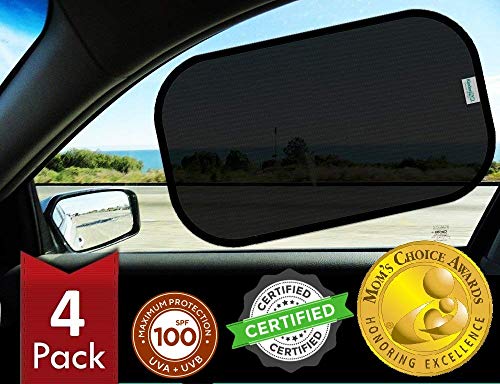
Kinder Fluff Side Window Shades: Best for Side and Rear Windows
Every shade above protects the windshield, but the windshield is the one piece of glass in your car that already blocks most UV — laminated windshield glass filters the majority of UVA on its own. The side windows do not. Tempered side glass passes a substantial share of UVA straight through, which is why the driver’s-side arm and face take measurably more sun damage over years of commuting, and why a child in a car seat behind tempered glass is getting far more UV exposure than the windshield numbers suggest. Side window shades are the fix, and the Kinder Fluff 4-pack is the most validated option on Amazon.
The certification is the reason this pick is easy. Kinder Fluff publishes third-party lab results — 99.79 percent UVA and 99.95 percent UVB block — rather than a round marketing number, and 27,383 reviews at 4.2 stars back the real-world performance across sedans, SUVs, and minivans. The static-cling films press onto the glass in seconds with no suction cups to fail in the heat and no magnets to scratch the trim, and they peel off cleanly when you sell the car or change vehicles.
Know what you are buying: the semi-transparent mesh dims and diffuses light rather than blacking out the window, so it kills glare and UV without making the glass illegal to see through. Each film is 20 by 12 inches, which covers most sedan and crossover side windows but leaves edges exposed on very large truck glass — measure first. And a side shade does nothing for the windshield; pair it with one of the windshield picks above for full-cabin coverage.
Kinder Fluff Car Side Window Sun Shades (4-Pack)
by Kinder Fluff
The best car side window sun shade -- lab-certified UV block, 27,383 reviews at 4.2 stars, and a four-pack of static-cling films that protect backseat passengers and door panels without suction cups.
Pros
- Laboratory-certified 99.79 percent UVA and 99.95 percent UVB block is independently verified rather than a marketing claim -- the only shade in this roundup with published third-party UV lab numbers, which matters most on side glass because side windows block far less UV than a laminated windshield does
- 27,383 reviews at 4.2 stars makes this the most-validated side window shade on Amazon -- the static-cling film format has been proven across sedans, SUVs, and minivans in every climate
- Static-cling installation needs no suction cups, magnets, or adhesive -- each 20-by-12-inch film presses onto the glass in seconds, stays put through window operation on most frames, and peels off without residue when you want it gone
- Four shades in the pack cover both rear side windows plus the rear quarter or front passenger glass -- one purchase covers every passenger position where sun hits a child seat or bakes the door panels
Cons
- Semi-transparent mesh film dims and diffuses sunlight rather than blacking it out -- backseat passengers get real glare and UV relief, but it is not a privacy blackout panel
- At 20 by 12 inches per film, very large SUV and truck side windows will have uncovered glass at the edges -- measure your side glass before ordering
- Side windows only -- this does nothing for the windshield, which remains the largest heat-gain surface and still needs a dedicated windshield shade
Dash Designs Retractable: Best Retractable Sun Shade
The retractable format solves the real reason sun shades fail: not performance, but abandonment. A flat shade only works if you deploy it at every stop, and after the third week of wrestling a twist-fold disc in a hot parking lot, a lot of drivers quietly stop bothering. The Dash Designs retractable mounts in the vehicle once, and from then on shading the windshield is a single one-handed pull — the shade is always there, always the right size, and never needs folding or storing.
Dash Designs is the company whose retractable design dominates this category — the 4.5-star rating across 833 Amazon reviews sits on top of an 18,000-plus review history on the company’s own store, so the mechanism’s durability under daily cycling is well established. The pleated fabric panel blocks 99 percent of UV across the full windshield width and the 25-inch height suits the raked glass on sedans, SUVs, and pickups.
The honest trade-offs: at around fifty dollars it costs three to four times what a quality reflective panel does, and the pleated fabric blocks heat by absorption rather than reflection, so peak temperature reduction trails a silver shade by a few degrees. You are paying for consistency — a shade that gets used at every single stop beats a marginally better shade that stays in the trunk. For a daily commuter parked in the same exposed lot five days a week, that math works.
Dash Designs 25" Retractable Windshield Sunshade
by Dash Designs
The best retractable car sun shade -- a permanently mounted Dash Designs roller that deploys one-handed in seconds, for drivers who will pay for the convenience of never folding a shade again.
Pros
- Stays installed in the vehicle permanently -- the roller housing mounts once and the accordion panel pulls across the windshield in one motion, which removes the deploy-fold-store cycle that makes most drivers abandon flat shades within a season
- Dash Designs is the manufacturer whose retractable design dominates this product category -- 4.5 stars across 833 Amazon reviews on top of an 18,000-plus review base on the company's own store confirms the mechanism holds up to daily cycling
- One-handed open and close is genuinely faster than any twist-fold or two-piece shade once mounted -- for a daily commuter parking in the same sun-blasted lot every day, the friction removal is the whole value proposition
- The 25-inch panel height suits the raked windshields on sedans, SUVs, and pickups, and the pleated fabric blocks UV and heat across the full width without sagging
Cons
- The most expensive shade in this roundup by a wide margin -- you are paying for the retracting mechanism and permanent-install convenience, not more UV block than a twelve-dollar reflective panel delivers
- Pleated fabric panel is not a silver reflective surface, so it absorbs and blocks heat rather than bouncing it back out the glass -- interior temperature reduction trails a quality reflective shade by a few degrees
- Initial mounting requires positioning the housing and anchors correctly for your windshield -- a one-time setup step that flat shades do not have
Best Foldable Car Sun Shades
Foldable is the broadest category in this roundup — every flat shade here folds, twists, or pleats down for storage, and the right one depends on which folding motion you will actually tolerate every day. These are the three foldable formats ranked by how their fold works in practice:
| Product | Price | Buy |
|---|---|---|
| EcoNour Car Windshield Sun ShadeBest foldable overall Twist-fold pop-up: collapses to a disc in two seconds; the fold takes a day to learn and then becomes reflex. | $15.99 | View on Amazon |
| Autoamerics Windshield Sun ShadeBest accordion fold Accordion: pleats flat like a road map -- the most intuitive fold with zero technique, stores flat under a seat. | $19.99 | View on Amazon |
| EzyShade Shield-X 2-Piece Windshield Sun ShadeBest 2-piece fold Two-piece: each half folds independently to half the bulk -- easiest to stash in door pockets, at the cost of a center seam. | $16.97 | View on Amazon |
The twist-fold EcoNour is the default answer because its fold is fastest once learned. If you have fought a pop-up hoop in a parking lot and hated it, the Autoamerics accordion trades a few seconds of deployment for a fold anyone can do the first try. The EzyShade two-piece wins when storage space is the constraint.
Best Car Side Window Sun Shades
Side glass is the most under-protected surface in the cabin — tempered side windows pass far more UV than the laminated windshield, and they are the glass your kids, pets, and door panels actually sit behind. Two formats cover it:
| Product | Price | Buy |
|---|---|---|
| Kinder Fluff Car Side Window Sun Shades (4-Pack)Best side window shade Static-cling films with lab-certified UV numbers -- four to a pack, no suction cups, peel off clean. The default answer for backseat UV protection. | $14.90 | View on Amazon |
For rear side windows with a rear-facing car seat behind them, the Munchkin Brica roller shade in the more shades table below adds a pull-down roller format with a heat-alert indicator that turns white when the glass is dangerously hot — a genuinely useful signal for parents. For the rear windshield, the same cling-film format works, but measure the glass first; most dedicated rear-window mesh shades on Amazon rate poorly, and a correctly sized cling film outperforms them.
Shading a baby is a different job from shading a parked car, and it has its own product set — magnetic and sock-style shades that let the window still roll down, carrier canopies that mount to the seat instead of the glass, and a real question about what you should clamp to a door frame next to a curtain airbag. That is covered separately in our infant car sun shade roundup.
Best Retractable Car Sun Shades
Retractable shades trade money for consistency: mount once, deploy one-handed forever. Two picks depending on how you define “retractable”:
| Product | Price | Buy |
|---|---|---|
| Dash Designs 25" Retractable Windshield SunshadeBest retractable (permanent mount) The category benchmark -- roller housing mounts in the vehicle, panel pulls across the glass in one motion. | $50.75 | View on Amazon |
| Nmoiss Upgraded Umbrella Sun ShadeFastest non-mounted alternative Not technically retractable, but the one-push umbrella collapses nearly as fast without any permanent install. | $33.99 | View on Amazon |
The Dash Designs is the real retractable — the one that lives mounted in the car. If you want near-retractable deployment speed without committing to a mounted housing, the Nmoiss umbrella opens and collapses in about a second each way and stows in a door-pocket holster.
More Sun Shades Worth a Look
One more shade earns a spot for a specific job even though it did not make the main nine:
| Product | Price | Buy |
|---|---|---|
| Munchkin Brica Sun Safety Car Window Roller Shade (2-Pack)Best roller shade for rear-facing car seats Amazon's Choice baby roller shade -- the White Hot heat-alert strip turns white when the glass is dangerously hot, and the roll-up format adjusts to partial coverage. | $11.99 | View on Amazon |
A Mechanic’s View: What the Sun Actually Does to Your Interior
Most drivers think of a sun shade as a comfort item — a way to avoid burning their hands on the steering wheel. That is real, but it is the smallest reason to use one. The bigger story is what unfiltered sun does to the vehicle over months and years, and it shows up in my shop constantly.
The dashboard cracks from the top down. Sustained heat cycling — 180 degrees by afternoon, cool by night, every single day — combined with UV makes dashboard plastics and vinyls brittle. They craze, then crack, usually starting at the defroster vents where the sun hits hardest. A replacement dash is one of the more labor-intensive interior jobs there is.
Leather and electronics are the expensive casualties. Leather seats fade and dry out under UV until the surface checks and splits. And modern interiors are full of glued-up laminated assemblies — the most vulnerable is the infotainment screen, where heat breaks down the adhesive bonding the layers and the display delaminates at the edges into bubbles and dark blotches. That is a screen-assembly replacement, not a cheap fix.
ADAS is the new wrinkle. A lot of cars now run forward-facing cameras and sensors mounted at the top of the windshield for lane-keeping and emergency braking. When sun damage forces you to replace surrounding trim or the glass itself, those systems often require recalibration afterward to aim correctly. That is a real line item on top of the original repair, and it is a cost that did not exist on older cars.
A 99-percent-UV reflective shade across the windshield — the largest single heat-gain surface in the car — is what keeps all of that out of the sun’s path. It is the highest-return-on-investment accessory you can put in a vehicle, full stop.
Beyond Damage: AC Efficiency, Compressor Life, and How Cooling Works
There is a mechanical payoff too. When you climb into a 160-degree interior, the air conditioning system has to drag that temperature down before the cabin is comfortable — which means the compressor runs at full load longer on every hot-weather start. A shade that cuts the starting interior temperature by 20 to 40 degrees means the AC has less heat to remove, reaches comfortable temperature faster, burns less fuel doing it, and puts fewer hard-load cycles on the compressor over the life of the car. The compressor is one of the more expensive AC components to replace, so easing its workload is a small longevity win that compounds over years.
On the physics of cooling: not all reflective surfaces are equal. White reflects more solar energy than silver, and silver reflects dramatically more than black, so a lighter reflective face cools better than a dark one. That is also why the multi-layer and double-layer shades pull ahead — a single silver layer drops interior temperature by roughly 20 to 40 degrees, while a multi-layer foam-core panel can reach 40 to 50 degrees of reduction by rejecting more radiant heat before it converts inside the cabin.
One safety rule applies to every shade on this list: they are parking-only tools. Never drive with a windshield shade installed — it blocks your forward view completely. A shade goes up when you park and comes down before you pull out.
How to Match a Sun Shade to Your Vehicle
The single most common mistake I see is buying the wrong size, so use this as a quick decision tree. If you drive a compact or midsize sedan, a 58-to-64-inch-wide panel like the Magnelex or the standard EcoNour fits. If you drive a larger sedan, a crossover, or a midsize SUV, target 64 to 70 inches — the standard EcoNour, EzyShade, Autoamerics, or EcoNour 2-Piece all land here. If you drive a full-size truck or a large SUV, you need 70 inches or wider, which means the EcoNour XL. When you are genuinely between sizes, size up: an oversized shade just overhangs the glass harmlessly, while an undersized one leaves the surfaces you are protecting exposed. If you are unsure, measure your windshield corner to corner with a tape measure and compare to the shade’s expanded dimensions before you buy.
Buyer's Guide
Choosing a car sun shade comes down to six factors. Get the shade type and the sizing right for your specific vehicle and the rest falls into place -- here is what actually matters from a mechanic's perspective.
Shade Type
Four formats dominate the category. Pop-up (twist-fold) shades use a spring-steel hoop that collapses to a flat disc and snaps open on its own -- fastest to deploy, slight learning curve to fold. Accordion (fold-in-half) shades pleat flat like a road map -- the most intuitive to fold, but bulkier folded. Umbrella shades open in one push on a center post -- the easiest to deploy, with more moving parts. Two-piece shades split into halves that each fold compact -- best for storage, but they have a center seam and need alignment.
Custom-Fit vs Universal
Custom-fit shades are cut to a specific make, model, and year for edge-to-edge coverage with no gaps, but they cost more and only fit that one vehicle. Universal shades come in standard sizes that cover most windshields in their class with a little overhang. For most drivers, a correctly sized universal shade delivers nearly all the protection of a custom shade at a fraction of the price and the flexibility to use it across vehicles.
Material & Thread Count
This is the spec no one explains, and it separates a shade that lasts five summers from one that sags after one. Thread count (the T number) measures weave density -- 240T polyester is denser than 210T, which is denser than 150T. A higher thread count means a tighter reflective surface that bounces more solar load and holds its shape instead of stretching and sagging. Double-layer and vinyl heat-shield coatings add reflective capability on top of the base weave. When two shades cost the same, the higher thread count is the better buy.
Sizing for Your Vehicle Type
Size to your vehicle class. Sedans want a panel roughly 58 to 64 inches wide; crossovers and midsize SUVs want 64 to 70 inches; full-size trucks and large SUVs need 70 inches or wider. Measure your windshield corner to corner if you are unsure. An undersized shade leaves exposed glass that defeats the purpose, while a slightly oversized shade just overhangs harmlessly. When you are between sizes, size up.
Storage & Portability
A shade you cannot store conveniently is a shade you stop using. Twist-fold discs collapse small but store as a round disc against a door pocket or behind a seat. Accordion shades fold flat but cover more area, storing best lying flat. Two-piece and umbrella shades collapse to the most compact footprint and slide into door pockets or holsters. Think about where the shade will live in your specific vehicle before you choose the format.
Year-Round Use
The best value comes from a shade you use in every season. Silver reflective shades are summer tools that bounce heat and UV outward. Reversible shades add a dark, non-reflective side that goes against the outside glass overnight in winter to block frost and ice, saving you the morning scrape. If you live somewhere with real winters, a reversible shade earns double duty; in a warm climate, prioritize the densest, most reflective summer-only panel.
How to Choose the Best Car Sun Shade
Start with size matched to your vehicle class, because an ill-fitting shade fails no matter how good the material is. Next, weigh the shade format against your own patience — a twist-fold pop-up is fastest to deploy, an accordion is simplest to fold, an umbrella is the easiest of all, and a two-piece stores most compactly. Then look at material: a higher thread count like 240T, or a double-layer or vinyl heat-shield build, rejects more heat and lasts more summers. Finally, if you face real winters, a reversible shade with a dark frost side earns its keep year-round. Get those four right and the shade pays for itself in protected interior surfaces.
Final Verdict
For the majority of drivers who want proven heat and UV protection that they will actually deploy every day, the EcoNour Car Windshield Sun Shade is the best car sun shade to buy in 2026. The dense 240T reflective weave, 99 percent UV block, two-second twist-fold deployment, and a very large body of consistent buyer feedback make it the highest-confidence pick for any standard sedan or crossover — and the XL version covers truck and large-SUV owners with the same build quality.
If you are watching the budget, the EcoNour 2-Piece Foldable Windshield Sun Shade is the lowest-priced shade on this page and still covers a full 64-by-32-inch windshield with the same 99 percent UV block, backed by 22,931 reviews at 4.3 stars — the most protection per dollar in the category. Whichever you choose, remember the principle that makes a shade worth it: a few seconds of deployment on every hot park prevents the dashboard cracking, leather fading, and screen delamination that cost hundreds to fix. Pair a shade with quality floor mats and fresh wiper blades and you have the core of a vehicle-protection routine that keeps your interior looking new for the life of the car.
Frequently Asked Questions
Do car sun shades actually work?
How much does a sun shade reduce interior temperature?
What size sun shade do I need?
Can I use a sun shade in winter?
How do I keep my sun shade from falling down?
Which side of a car sun shade faces out?
How do you fold a pop-up (twist-fold) sun shade?
Related Articles
About the Reviewer

Mike Reeves, ASE Master Technician
A.A.S. Automotive Technology, Universal Technical Institute (UTI)
Mike Reeves is an ASE Master Technician with 15 years of hands-on experience in automotive repair and diagnostics. He earned his A.A.S. in Automotive Technology from UTI and runs his own independent shop in Denver, Colorado. Mike founded RevRated to help everyday car owners make smarter parts decisions -- every recommendation comes from real-world testing in his garage.