7 Best Car Paint Sealants of 2026
Mike Reeves, ASE Master Tech, ranks the best car paint sealants of 2026. Real-world durability, application sequence, and ceramic-layering compatibility from the bay.
Updated
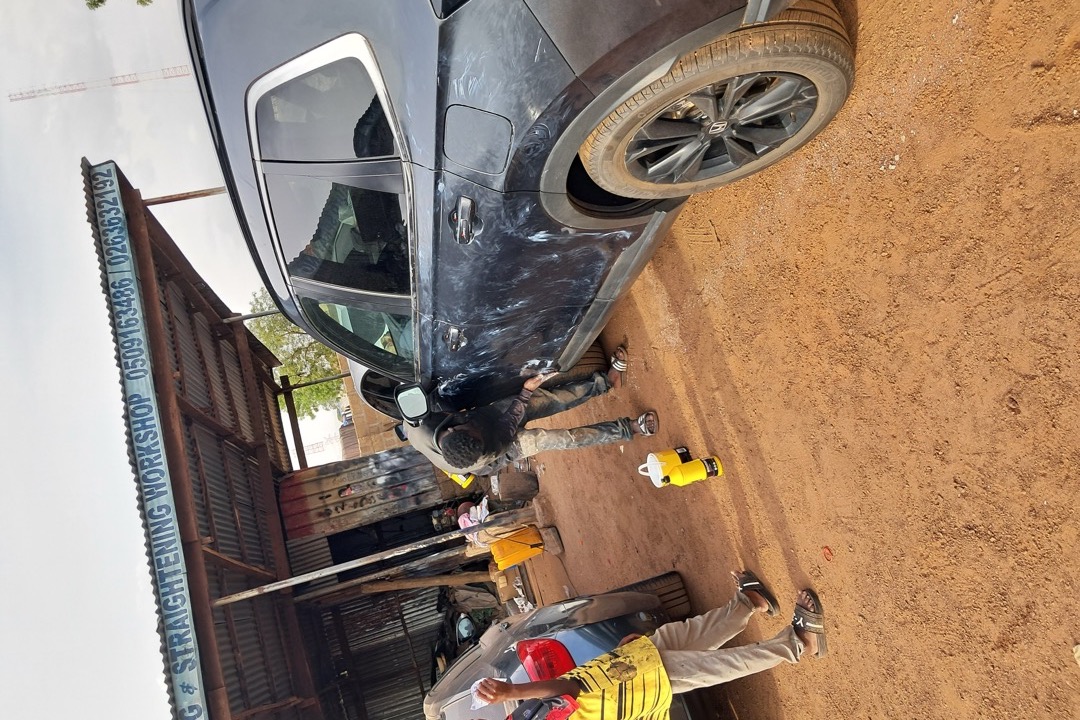
After 20-plus years running an independent shop and detailing customer cars between service appointments, I can tell you that paint sealant is one of the most over-promised product categories in the automotive aftermarket. Bottles claim 12-month durability, marketing copy promises ceramic-coating-level protection at car-wax prices, and drivers walk into the auto parts store expecting a product that simply does not exist at any price point. The reality is more nuanced: a good paint sealant lasts 2 to 5 months in normal driving, costs about 40 dollars per year for DIY application, and protects your clear coat from the UV oxidation, road salt, and contamination that cause paint to fade and fail over a vehicle’s life.
The truth is that the right sealant depends entirely on your situation: paint color, climate, wash routine, whether you have a professional ceramic coating already applied, and how much time you want to spend on application. I tested and researched these seven products with those variables in mind, covering every major sealant chemistry from SiO2 spray to traditional liquid polymer to glaze hybrid. If you want a direct recommendation, the Turtle Wax Hybrid Solutions Ceramic Spray is the best paint sealant for most drivers in 2026 — the 29,300-plus review base is the strongest evidence available that the chemistry actually works in real-world conditions across thousands of vehicles.
For related detailing decisions, see our reviews of the best car wax, the best ceramic coatings, and the best clay bar kits for surface prep before sealant application. Sealant performance is determined as much by what you do BEFORE you open the bottle as by which bottle you buy.
| Product | Price | Buy |
|---|---|---|
| Turtle Wax Hybrid Solutions Ceramic Spray CoatingBest Overall | $15.99 | View on Amazon |
| P&S Bead Maker Paint SealantRunner-Up | $18.99 | View on Amazon |
| Chemical Guys JetSeal Anti-Corrosion SealantPremium Pick | $39.99 | View on Amazon |
| Chemical Guys Black Light Hybrid Radiant FinishRunner-Up | $29.99 | View on Amazon |
| Meguiar's Professional Synthetic Sealant 2.0Runner-Up | $23.93 | View on Amazon |
| Griot's Garage Ceramic 3-in-1 WaxBudget Pick | $17.59 | View on Amazon |
| Chemical Guys Hybrid V7 Optical SelectRunner-Up | $19.97 | View on Amazon |
Find the Best Paint Sealant for Your Situation
Jump to the pick that matches your paint, chemistry preference, and wash routine:
- Overall best paint sealants
- Best spray car paint sealant
- Best ceramic car paint sealant
- Best paint sealant for black and dark cars
- More use cases
How We Chose These Paint Sealants
I evaluated each product against six criteria: chemistry type and what it means for your specific situation, real-world application experience rather than lab conditions, review sentiment analysis across thousands of verified purchases, durability data from long-term owners across diverse climates, ceramic-coating compatibility for drivers with professionally coated vehicles, and value per application rather than per bottle. I specifically looked for products that cover the full spectrum of use cases — daily driver owners who want simplicity, enthusiast detailers who want maximum gloss, ceramic coating owners who need safe maintenance toppers, and dark-paint owners who want optical depth.
Best Paint Sealants Overall
These are the seven sealants I recommend across every chemistry and use case. Each is reviewed in full below, and the use-case sections that follow narrow the field to the right pick for your paint and routine.
Every ASIN was verified on Amazon before inclusion. No product was included based on brand name alone or without a substantial verified-review base. The shop has used five of these seven products on customer cars and the other two come from detailing communities I trust. This is the kind of recommendation I would give a friend who just bought a new car and asked what to put on it.
Best Overall: Turtle Wax Hybrid Solutions Ceramic Spray Coating
The 29,300-plus verified Amazon reviews on the Turtle Wax Hybrid Solutions Ceramic are not a marketing metric — they are the most important piece of evidence for or against any sealant’s real-world performance. At that review volume, a problematic formula would have been review-bombed into a 3-star rating years ago. The sustained 4.6-star average tells you this is a product that genuinely performs for a broad population of drivers across every climate, paint condition, and skill level. In the bay we use Turtle Wax professional-tier products on fleet maintenance accounts because cost-per-vehicle matters more than absolute best-in-class performance, and the consumer-grade Hybrid Solutions Ceramic delivers comparable results to competitors charging 40 to 50 percent more per ounce.
The application story is what makes this the right pick for most drivers. Spray it on a clean, cool panel. Wipe it off with a fresh microfiber. You are done. There is no foam pad, no dwell time, no buffing pass, no machine polisher required. On a full-size sedan, the entire job takes 12 to 15 minutes from cracking the bottle to walking back into the garage. That accessibility matters because the best sealant is the one you actually apply on a consistent schedule, and a product that takes 45 minutes per application gets skipped more often than one that takes 15.
The honest limitation is durability. The 12-month claim on the bottle assumes laboratory conditions and pH-neutral hand washing. In real-world driving with the occasional automatic car wash, sun-belt UV, and seasonal road salt, plan on 2 to 3 months of meaningful protection before reapplication. That is still a strong number at this price, and the cost-per-application math is the best in this roundup. Streaking is the other failure mode — apply this in direct sun on a warm panel and the SiO2 will flash too quickly, leaving haze that requires a second pass. Park in the shade, wait 30 minutes for the panel to cool, and the product is nearly foolproof.

Turtle Wax Hybrid Solutions Ceramic Spray Coating
by Turtle Wax
The most-reviewed sealant on Amazon -- easy, affordable, and effective for any driver who wants reliable paint protection without the learning curve.
Pros
- The most-reviewed sealant on Amazon at over 29,300 ratings -- that volume of real-world feedback at a sustained 4.6-star average is the strongest evidence available that the chemistry actually performs across thousands of climates, paint conditions, and skill levels
- Beginner-friendly spray-and-wipe application means no foam pad, no dwell time, no buffing pass -- spray it onto a clean cool panel, wipe it off with a fresh microfiber, and you have ceramic-grade hydrophobics in under 15 minutes on a full-size sedan
- SiO2 hybrid chemistry produces strong water beading that confirms protection is intact -- when beading degrades you know it is time to reapply, no calendar guesswork required
- Outstanding value at the price -- this is the lowest cost of entry to legitimate ceramic-spray protection, and the sticker price undercuts every other ceramic spray in this roundup
Cons
- Real-world durability is 2 to 3 months in normal driving conditions, not the 12 months that marketing copy implies -- automatic car washes and harsh UV cut that further
- Streaks on dark paint when applied in direct sunlight or on a warm panel -- the SiO2 flashes too quickly and requires a second pass to clean up
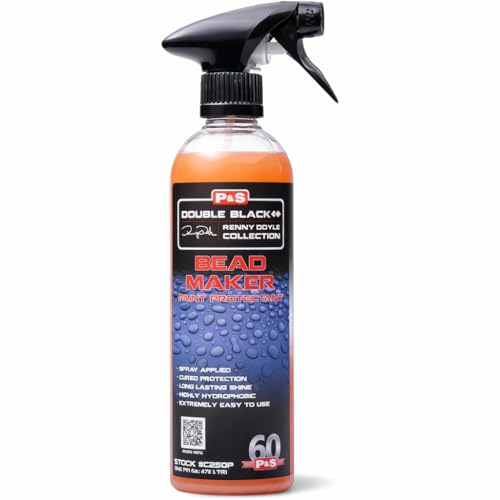
Best Spray Topper: P&S Bead Maker Paint Sealant
P&S Bead Maker is the spray sealant the professional detailing community defaults to when nobody is asking for a brand-name recommendation, and there is a good reason for that. P&S Detail Products has been making professional-grade chemistry for 50 years, primarily selling through detail-supply distributors rather than retail shelves, which means the formula is engineered for working detailers rather than marketing-driven consumer rollouts. The chemistry shows up in the application — this is the most forgiving spray sealant I have used, and that forgiveness matters enormously for first-time DIY users who do not yet have the technique to recover from over-application or warm-panel mistakes.
The killer feature is the drying-aid application protocol. After a wash, while the panels are still wet from the rinse, mist Bead Maker over the surface and wipe dry with a clean microfiber. The drying motion lays down the sealant in the same pass that dries the car. There is no separate detailing session. There is no scheduling a sealant application around the weather. Every wash becomes a partial reapplication, which means cumulative protection grows over time rather than degrading between sessions. For drivers who wash their own cars weekly or biweekly, this approach delivers near-continuous sealant protection with zero added effort.
The honest trade-off is that standalone durability is shorter than dedicated liquid polymer sealants. If you apply Bead Maker once and never wash the car, you will see degradation within a month or so. The product is engineered for the every-wash protocol, not for set-and-forget. For drivers who want a true one-and-done sealant, the JetSeal upgrade pick or the Meguiar’s Synthetic 2.0 are better matches. For drivers who already have a car wash soap routine and want to layer in protection at every wash, Bead Maker is a category killer at the price.
P&S Bead Maker Paint Sealant
by P&S Detail Products
The detailing community's favorite spray sealant -- apply it as a drying aid after every wash and your car stays protected year-round with zero extra effort.
Pros
- Apply directly to a wet vehicle as a drying aid -- spray over the wet panels after rinsing, then wipe dry with a microfiber, and the sealant is laid down in the same motion as drying the car (no separate detailing session required)
- Near-impossible to streak or leave high spots even for first-time users -- the formula is the most forgiving in this roundup and recovers cleanly from over-application or warm-panel mistakes
- Built-in UV filters and stabilizers protect clear coat from oxidation and fade -- a real benefit for vehicles parked outside in sun-belt climates where UV is the primary paint enemy
- Pro-grade product from a 50-year detail brand that is stocked by professional detail shops and supply houses -- this is the spray sealant the detailing community defaults to, not a marketing-driven retail product
Cons
- Best used as a maintenance topper rather than a set-and-forget standalone -- standalone durability is shorter than dedicated liquid polymer sealants, which is why most users layer it over a base sealant or coating
- Application as a drying aid requires consistent wash routine -- the every-wash protocol is what makes the chemistry shine, and skipping washes means protection degrades faster
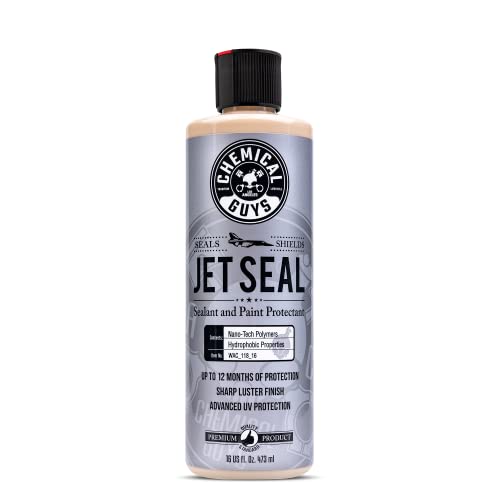
Upgrade Pick: Chemical Guys JetSeal Anti-Corrosion Sealant
If you wax twice a year and want the protection to last until the next application, Chemical Guys JetSeal is the right liquid sealant in 2026. The 3 to 5 month real-world durability is documented across nearly 5,000 reviews and validated by professional detailers who use this on customer vehicles where the customer is paying premium pricing for premium protection. The chemistry explains the gap between JetSeal and spray ceramics: a liquid sealant lays down a thicker, more uniform polymer layer than any spray atomizer can deliver, and that layer thickness translates directly into longer durability and deeper gloss on dark paint.
The anti-corrosion additives are the feature that justifies the upgrade pricing for drivers in road-salt climates. Northern winters destroy paint at panel seams, weld points, and any exposed metal where road salt can sit — and once corrosion starts at those points, it spreads under the clear coat and the panel is on borrowed time. JetSeal’s anti-corrosion polymer prevents salt-laden water from bonding to those vulnerable metal points. For a vehicle that lives outside in upstate New York or Minnesota, this is a meaningful protection upgrade over basic ceramic chemistry that focuses on paint surface only.
In the shop I have applied JetSeal by hand, with a dual-action orbital, and with a DA polisher over the years. The formula tolerates all three application methods without flashing or burning, which gives experienced users more options. For most drivers, hand application with a foam pad delivers 95 percent of the result with zero risk of polisher-induced damage. The 12-month durability claim on the bottle is optimistic — plan reapplication every 4 to 6 months in normal use, and the cost-per-application math still works out favorable to most premium sealants.
Chemical Guys JetSeal Anti-Corrosion Sealant
by Chemical Guys
Chemical Guys' flagship liquid sealant delivers a noticeable gloss upgrade and multi-surface protection -- the choice for detailing enthusiasts who want more than spray-and-wipe.
Pros
- Excellent gloss depth and color clarity that reviewers consistently describe as a noticeable upgrade over their previous sealant -- the polymer chemistry produces a wet-look reflectivity that ceramic sprays do not match on dark paint
- Multi-surface formula safe on paint, glass, and unpainted metal in a single product -- one bottle replaces three specialty sealants for headlight covers, chrome trim, and exhaust tips
- Anti-corrosion additives protect exposed metal at panel seams, weld points, and fastener heads -- a meaningful benefit for vehicles in road-salt climates where rust is the long-term enemy
- Compatible with hand application, dual-action orbital, or rotary polisher -- the formula tolerates machine application without flashing or burning, giving experienced users more application options
Cons
- Real-world durability of 3 to 5 months falls short of the 12-month claim on the bottle -- still excellent for a sealant, but plan reapplication twice a year rather than once
- Higher price per ounce than spray alternatives -- the upgrade is justified for enthusiasts who want maximum gloss and corrosion protection but overkill for a casual daily driver
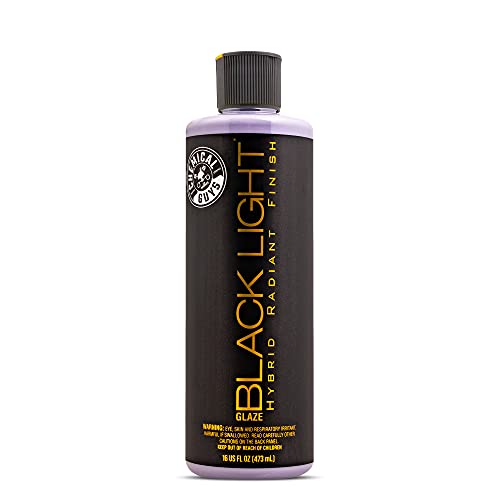
Chemical Guys Black Light: Best for Dark Paint
The debate between sealant types is partly technical and partly optical. SiO2 ceramic sealants produce a crisp, reflective, almost industrial gloss that looks spectacular on silver, white, and light paint. Polymer-and-glaze hybrids like Chemical Guys Black Light produce a warm, dimensional depth that on dark metallic paint appears almost lit from within. If you own a black, dark blue, or deep burgundy vehicle and have ever wished your paint looked deeper and more reflective, this is the chemistry to reach for. The optical effect is most dramatic on dark colors precisely because dark paint shows micro-swirls and surface imperfections most aggressively, and the gloss oils in Black Light fill those imperfections optically.
This is best understood as a glaze-and-sealant hybrid rather than a pure sealant. The gloss oils that produce the visual depth do not provide the long-term polymer bonding of a dedicated sealant. The product is engineered to be applied as a base layer, then topped with a final wax or sealant for durability. That two-step approach takes more time than spray-and-wipe ceramics, but the visual result on dark paint is in a different category. For drivers preparing a black show car or restoring depth on a dark daily driver that has lost its luster, this is the product detailers reach for.
The anti-static formulation is a smaller benefit that matters for garage-kept vehicles. Static buildup on freshly waxed dark paint attracts airborne dust between washes, which is the daily enemy of a freshly detailed finish. Black Light’s anti-static chemistry reduces dust attraction noticeably — a vehicle that previously needed a quick detailer wipe-down between full washes can often go a week without visible dust. On lighter paint colors the optical impact of this product is less dramatic and the upgrade pricing is harder to justify, but on dark paint Black Light is genuinely category-leading.
Chemical Guys Black Light Hybrid Radiant Finish
by Chemical Guys
The go-to product for black and dark paint owners who want show-car depth -- a hybrid glaze that fills swirls and adds protection in a single step.
Pros
- Dramatically deepens color on black, dark blue, and dark metallic paint -- the gloss oils in the formula refract light off the clear coat in a way that makes dark paint appear three-dimensional rather than flat
- Fills minor swirl marks and micro-scratches with gloss oils rather than abrasives -- this is a glaze in the traditional sense, hiding imperfections without removing clear coat
- Anti-static formulation reduces dust attraction between washes -- a meaningful benefit for garage-kept vehicles where airborne dust is the daily enemy of a freshly detailed finish
- UV inhibitors protect dark paint from oxidation and fade -- dark colors are the most UV-vulnerable, and the protection layer matters more here than on lighter colors
Cons
- Not a pure standalone sealant -- best used as a base layer under a final wax or sealant topcoat, which adds a step to the detailing process
- Gloss oils are optimized for dark paint -- the visual impact on white, silver, or light metallic paint is significantly less dramatic and the upgrade may not justify the price
Meguiar’s Synthetic Sealant 2.0: Best Value Liquid
Meguiar’s has been producing professional auto care chemistry since 1901, and the Mirror Glaze Professional product line is the same chemistry family that body shops and professional detailers have used for decades. Synthetic Sealant 2.0 is that professional heritage repackaged for consumer access at a reasonable price. The chemistry shows up in the application experience — this product applies smoothly without gumming up or skipping, and the wipe-off is resistance-free even on large panels where lesser sealants get sticky and frustrating. That smooth application is the hidden quality marker that separates pro-line products from consumer-grade alternatives at similar prices.
The visual benefit beyond gloss is the way this sealant minimizes fine scratches and swirls during application. The polymer fills micro-imperfections in the clear coat optically, which means the panel comes out looking smoother and more uniform than it actually is at a microscopic level. This is not a substitute for proper paint correction with a dual-action polisher, but for a daily driver with the typical light swirl marks accumulated from automatic car washes, the visual improvement is meaningful and immediate. Pair this with proper scratch removal on heavier marks and the sealant takes care of the lighter imperfections that paint correction would otherwise need to address.
The honest limitation is review volume. Under 2,500 reviews is a thin data set compared to the 8,200-plus reviews on Bead Maker or the 29,300-plus on the Turtle Wax pick. The product is solid — I have used it on customer cars without complaint — but the long-term durability data across diverse climates and paint conditions is not as robust as you get from products with a decade of consumer review accumulation. For drivers who trust the Meguiar’s professional brand, this is an excellent pro-line sealant at a consumer price. For drivers who prioritize the largest possible review base as their primary trust signal, the Turtle Wax Hybrid Ceramic delivers better evidence of real-world performance.

Meguiar's Professional Synthetic Sealant 2.0
by Meguiar's
Meguiar's professional-grade polymer sealant at an accessible price -- reliable gloss, proven chemistry, and brand trust from one of detailing's most established names.
Pros
- Trusted Mirror Glaze Professional heritage -- this is the same chemistry family that body shops and professional detailers have used for decades, repackaged for consumer access at a reasonable price
- Visually minimizes fine scratches and swirls during application -- the polymer fills micro-imperfections in the clear coat and the result is a smoother, more uniform reflection
- Smooth, resistance-free wipe-off in normal conditions -- the formula does not gum up or skip, which is the failure mode that makes cheap sealants frustrating to apply on large panels
- Excellent value for a pro-line product -- the price is competitive with consumer-grade sealants while delivering the consistency and quality control of Meguiar's professional product line
Cons
- Durability is modest compared to premium liquid sealants -- 8-plus weeks on a daily driver is good but not class-leading, and reapplication every 2 months is realistic
- Lower review count than mass-market alternatives -- under 2,500 reviews means the long-term real-world data is thinner than you get from products with 8,000-plus reviews
Budget Pick: Griot’s Garage Ceramic 3-in-1
The Griot’s Garage Ceramic 3-in-1 wins the cost-per-application math on the strength of the 22-ounce bottle. In a category where most competitors package 16 ounces at higher per-ounce prices, Griot’s is offering more product per dollar spent. At roughly 2 ounces per full-size sedan application you are getting approximately 11 full applications from one bottle — better economics than most drivers realize when comparing shelf prices on smaller bottles. For drivers who apply sealant 4 times a year, one Griot’s bottle covers nearly three years of protection.
The all-surface compatibility is the second value proposition. This formula works on paint, glass, chrome, plastic trim, rubber trim, and wheels simultaneously. One product replaces what used to require four separate specialty chemicals — a glass sealant, a trim restorer, a wheel sealant, and a paint sealant. That product consolidation alone justifies the purchase for drivers who have been buying separate specialty products. The SiO2 chemistry is genuine, the silica content is real, and the hydrophobic effect is comparable to dedicated ceramic sprays at twice the price.
The discipline this product demands is application conditions, more so than the P&S Bead Maker. Apply Griot’s 3-in-1 in direct sun on a warm panel and you will get streaking that requires a second buffing pass to remove. The SiO2 cures fast — too fast when surface temperature accelerates the process. Work in the shade, work on a cool surface, and the product is reliable. Griot’s Garage has been producing professional-grade detailing chemistry since 1990, and the institutional quality control behind this formula is evident in the consistency of the review sentiment. Pair this sealant with the right car wash soap and a clean wash routine, and you have a low-cost long-term paint protection program that beats premium products on cost-per-application math.

Griot's Garage Ceramic 3-in-1 Wax
by Griot's Garage
The best ounce-per-dollar value here -- Griot's Garage packs genuine SiO2 ceramic protection into a 22-oz spray that covers every exterior surface at the lowest cost per application.
Pros
- Best price per ounce in the roundup at roughly $0.80/oz -- the 22-ounce bottle delivers the lowest cost-per-application of any sealant or hybrid in this lineup
- All-surface safe including rubber trim, chrome, wheels, glass, and plastic -- one product replaces what used to require four separate specialty chemicals
- Genuine SiO2 chemistry with legitimate gloss depth and water beading -- this is not a marketing label on a generic spray, the silica content is real and the hydrophobic effect is comparable to dedicated ceramic sprays at twice the price
- Made in the USA with Griot's Garage's 35-year track record in professional detailing products -- the brand carries weight at the trade level, not just retail shelves
Cons
- Can haze or streak when applied in direct sunlight or on warm panels -- discipline on application conditions matters with this product more than with the P&S Bead Maker
- Needs 2 to 4 reapplications per year in harsh climates -- not a once-and-done product, though the cost-per-application is low enough that frequent reapplication does not strain the budget
Chemical Guys Hybrid V7: Best for Ceramic Coating Owners
For drivers with professionally applied ceramic coatings, the maintenance product matters as much as the original coating. Most traditional polymer and carnauba sealants cannot be used over a ceramic coating without contaminating the underlying chemistry and degrading the hydrophobic performance. Chemical Guys Hybrid V7 was engineered specifically as a ceramic-safe topper, and that compatibility makes it the default maintenance product for ceramic-coated vehicles in detail shops nationwide. If you spent 800 to 1,500 dollars on a professional ceramic coating and need a between-service maintenance product, V7 is the safe pick.
The instant gloss amplification is what makes V7 useful beyond ceramic-coated vehicles. The optical-select polymer enhances reflectivity in a single wipe in a way that is visible on the panel within seconds of application. For drivers who need to refresh a vehicle’s appearance quickly before a meeting, a date, or a sale photograph, V7 produces a measurable visual upgrade in under 5 minutes. This is also the right product for drivers who want a quick detailer that doubles as a maintenance sealant — one bottle covers three different roles in your detailing toolkit.
The honest limitation is that this is engineered as a topper, not as a primary sealant. Standalone durability is short — if you apply V7 once and never reapply, the protection degrades within weeks. The product shines when applied at every wash or every other wash, refreshing the protection layer continuously rather than depleting a finite layer over time. For ceramic coating owners, this protocol is ideal because it extends the life of the underlying coating between professional maintenance services. For drivers without an underlying ceramic coating, the P&S Bead Maker delivers a similar topper experience at a slightly lower price point and is the better-value alternative.
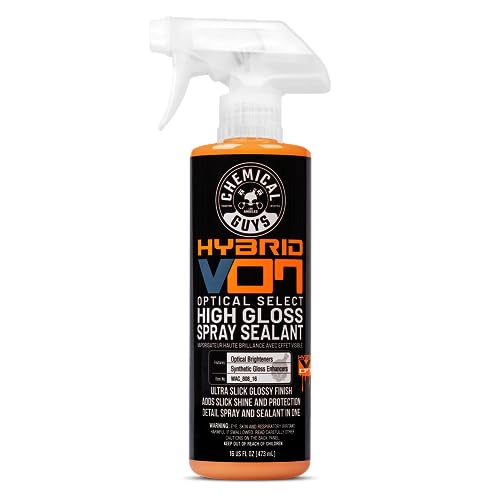
Chemical Guys Hybrid V7 Optical Select
by Chemical Guys
The original hybrid spray sealant -- ideal for ceramic coating owners who need a safe maintenance product that boosts gloss without compromising the underlying coating.
Pros
- Safe over ceramic coatings as a maintenance topper -- this is the spray sealant detailers use to refresh gloss and slickness on professionally coated vehicles between annual maintenance services
- Instantly amplifies gloss and slickness in a single wipe -- the optical-select polymer enhances reflectivity in a way that is visible on the panel within seconds of application
- Doubles as a drying aid or quick detailer between full sealant applications -- one bottle covers three different detailing roles, simplifying product inventory
- Popular orange-scent formula has built a loyal Chemical Guys following over 5,600-plus reviews -- the aromatic experience is a real purchase driver alongside the protection performance
Cons
- Standalone durability is short -- this is engineered as a topper or maintenance product, not as a set-and-forget primary sealant, and using it that way will disappoint
- Less unique in 2026 than it was at launch -- hybrid spray sealants are now common and several competitors offer similar chemistry at comparable prices
Best Spray Car Paint Sealant
Spray sealants apply in 10 to 15 minutes with no foam pad and no buffing — mist a panel, wipe, and move on. They are the right pick for first-time users and anyone who values speed over the last few percent of gloss. All three below are reviewed in full above.
| Product | Price | Buy |
|---|---|---|
| Turtle Wax Hybrid Solutions Ceramic Spray CoatingBest overall spray Turtle Wax SiO2 hybrid -- 29,300+ reviews and the easiest reliable spray application | $15.99 | View on Amazon |
| P&S Bead Maker Paint SealantBest spray topper P&S Bead Maker -- the detailer's drying-aid spray, apply after every wash | $18.99 | View on Amazon |
| Griot's Garage Ceramic 3-in-1 WaxBest ceramic spray value Griot's Ceramic 3-in-1 cleans, shines, and seals in one pass | $17.59 | View on Amazon |
Best Ceramic Car Paint Sealant
SiO2 ceramic sprays deliver both tight water beading and the sheeting action that carries contaminants off the panel during a rinse. They are the closest DIY approximation to a professional ceramic coating without the multi-hour install — and the picks below are all explicitly clear-coat safe.
| Product | Price | Buy |
|---|---|---|
| Turtle Wax Hybrid Solutions Ceramic Spray CoatingBest overall ceramic Turtle Wax Hybrid Ceramic -- the best-reviewed SiO2 spray in the category | $15.99 | View on Amazon |
| Griot's Garage Ceramic 3-in-1 WaxBest ceramic 3-in-1 Griot's Ceramic 3-in-1 -- clean, shine, and protect in a single product | $17.59 | View on Amazon |
| Chemical Guys Hybrid V7 Optical SelectBest ceramic topper Chemical Guys V7 -- ceramic-coating-safe maintenance topper that refreshes gloss | $19.97 | View on Amazon |
Best Paint Sealant for Black and Dark Cars
Dark paint shows every swirl, so black and dark-metallic owners want a product that fills micro-marring and adds optical depth. A glaze-plus-sealant hybrid does exactly that, and a thick liquid polymer lays down the deepest, most uniform gloss on dark clear coats.
| Product | Price | Buy |
|---|---|---|
| Chemical Guys Black Light Hybrid Radiant FinishBest for dark paint depth Chemical Guys Black Light glaze-sealant hybrid fills micro-swirls and deepens dark colors | $29.99 | View on Amazon |
| Chemical Guys JetSeal Anti-Corrosion SealantBest deep-gloss liquid Chemical Guys JetSeal lays a thick, uniform polymer layer for the deepest gloss on dark paint | $39.99 | View on Amazon |
Best Paint Sealants by Use Case
A few more targeted picks for specific priorities, each reviewed in full above:
| Product | Price | Buy |
|---|---|---|
| Chemical Guys JetSeal Anti-Corrosion SealantBest for maximum durability Chemical Guys JetSeal -- 3-5 month anti-corrosion protection, the longest-lasting pick here | $39.99 | View on Amazon |
| Meguiar's Professional Synthetic Sealant 2.0Best value liquid sealant Meguiar's Synthetic 2.0 -- pro-grade polymer gloss at the lowest price per ounce of the liquid sealants here | $23.93 | View on Amazon |
| Chemical Guys Hybrid V7 Optical SelectBest for ceramic-coating owners Chemical Guys V7 -- the ceramic-safe topper that extends a professional coating between services | $19.97 | View on Amazon |
How to Apply Paint Sealant: The Pro Sequence
The single biggest variable in paint sealant performance is surface prep. I have seen DIY sealant applications fail at month two when they should have lasted four months, and in nearly every case the failure traced back to skipped or inadequate prep. Here is the sequence we use in the bay on customer cars.
Step 1: Wash with pH-neutral car shampoo. Use the two-bucket method with separate wash and rinse buckets to prevent dragging dirt across the paint. Skip the dish soap and skip household cleaners — they are alkaline and strip any existing sealant or wax, but they also leave residue that interferes with new sealant bonding. Pair this step with the right car wash soap for the best result.
Step 2: Iron decontamination. Brake dust contamination embeds invisible iron particles into clear coat. These particles create a microscopically rough surface that prevents sealant from bonding evenly. Spray an iron decontamination product (Iron X is the category standard) and let it dwell until you see purple bleeding from the panel — that color change is iron particles dissolving. Rinse and proceed to clay bar.
Step 3: Clay bar treatment. Using a clay bar kit with detailer spray as lubrication, clay every painted panel until the surface feels glass-smooth to the back of your fingers. This is the step most DIY users skip, and it is the step that determines whether your sealant lasts 6 weeks or 4 months. On a vehicle older than 6 months, plan on 30 to 45 minutes for clay bar treatment.
Step 4: Polish (if needed). If the paint has visible swirls, holograms, or oxidation, machine polish with a dual-action orbital before sealant application. For most daily drivers without serious paint defects, this step can be skipped. For show prep or restoration work, polishing is mandatory.
Step 5: IPA wipe. A 15 to 25 percent isopropyl alcohol solution wiped over the panel removes any polish residue, fingerprints, or surface oils that would interfere with sealant bonding. Skip the IPA wipe and your sealant bonds to whatever residue is on the panel rather than to the clear coat itself.
Step 6: Apply sealant. Now — and only now — apply your sealant of choice. Work in the shade, work on a cool surface (under 85 degrees Fahrenheit panel temperature), and follow the manufacturer’s dwell-and-buff timing. For spray sealants, mist evenly and wipe immediately. For liquid sealants, apply with a foam pad in thin even passes, allow the recommended dwell time, then buff off with a clean microfiber.
The total prep-and-apply time on a properly prepped vehicle is 2 to 3 hours for a full-size sedan with clay bar treatment. Once the prep is done correctly, future reapplications take 30 to 45 minutes because the prep step does not need to be repeated for 6 to 12 months.
Sealant vs Wax vs Ceramic Coating: What You Actually Need
This is the question I get most often at the shop, and the answer depends on your goals, your budget, and your willingness to maintain the product. Here is the simplified breakdown for 2026.
Car wax (carnauba or synthetic) is the simplest and shortest-duration paint protection. It bonds loosely to the clear coat, provides warmth and gloss, and lasts 4 to 12 weeks depending on formula. Easy to apply, easy to correct, available at every price point. Best for drivers who enjoy the detailing process and want maximum optical depth on dark paint. See our roundup of the best car wax for current product picks.
Paint sealant (this roundup) is a synthetic polymer or SiO2 hybrid product that bonds more chemically than wax and lasts 2 to 6 months. More hydrophobic than wax, less optically warm, easier to apply consistently. Best for daily drivers who want longer protection intervals and reliable hydrophobics in all weather conditions. The right sealant for 80 percent of drivers in 2026.
Professional ceramic coating is a semi-permanent SiO2 or graphene product applied by a detailer or self-applied with professional-grade prep. Chemically bonds to the clear coat and lasts 1 to 5 years depending on product and climate. Requires extensive paint decontamination, clay bar treatment, and machine polishing before application. Costs 800 to 1,500 dollars for professional installation. Best for drivers who plan to keep a vehicle 5-plus years in harsh climates and want the longest possible protection interval. See our ceramic coating roundup and our ceramic-vs-wax comparison for detailed analysis.
For most drivers, a quality paint sealant applied 3 to 4 times per year is the highest-return-per-effort choice. The DIY sealant cost is roughly 40 dollars per year. The professional ceramic coating one-time cost is 800 to 1,500 dollars. The math favors sealant unless you are keeping the vehicle for 8-plus years in a climate that destroys paint quickly.
When NOT to Use a Paint Sealant
There are specific situations where applying a paint sealant will damage rather than protect your finish. Pay attention to these:
Fresh paint protection film (PPF). A new PPF installation has a curing window where standard sealants can interfere with the film’s adhesive bond. Wait at least 30 days after PPF installation, and verify with the installer which sealants are compatible with their specific film.
Uncured DIY ceramic coating. If you have just applied a DIY ceramic coating yourself, the coating needs 7 days minimum (sometimes 14 days) to fully cure. Applying a sealant during the cure window will destroy the ceramic chemistry. Wait the full cure period, then apply sealant only if the coating manufacturer confirms compatibility.
Painted vinyl wraps and matte finishes. Standard glossy sealants will permanently alter the surface texture of matte and satin finishes by filling the microscopic peaks that create the non-glossy appearance. Use only matte-specific products on these finishes.
Single-stage paint without clear coat. Older classic cars with single-stage paint require gentler chemistry than modern clear-coated vehicles. Many polymer sealants are too aggressive and can dull the single-stage finish. Use traditional carnauba waxes or sealants explicitly labeled for single-stage applications.
Recently repainted panels. Fresh shop paint should cure for at least 30 days before sealant application. The paint is off-gassing during the cure window and applying a sealant traps the off-gassing under the sealant layer, which causes solvent pop and other paint defects.
Buyer's Guide
Paint sealant selection comes down to six factors, and getting the chemistry wrong for your situation means even an expensive product will underperform. Here is what actually matters in 2026.
Real-World Durability
Manufacturer durability claims assume hand-washing in moderate climates. Real-world durability for most sealants is half to a third of the label claim once you factor in automatic car washes, harsh UV, road salt, and tree sap. Spray ceramic sealants typically last 2 to 3 months in normal use. Liquid polymer sealants last 3 to 5 months. Hybrid sealants used as toppers can extend overall protection to 6 months or more if applied at every wash. The water bead test is more reliable than a calendar.
Gloss and Finish Depth
Liquid polymer sealants like Chemical Guys JetSeal and Meguiar's Synthetic Sealant 2.0 produce noticeably deeper gloss than spray ceramics on dark paint. The chemistry difference is real -- liquid sealants apply a thicker, more uniform polymer layer than a spray atomizer can deliver. For drivers who care about absolute gloss on black or dark metallic paint, liquid sealants outperform sprays.
Application Difficulty and Format
Spray sealants apply in 10 to 15 minutes with no foam pad and no buffing. Liquid sealants require a foam applicator, dwell time, and a buff-off pass -- 30 to 45 minutes per vehicle. For first-time users and drivers who prioritize speed, spray formats win. For enthusiasts who enjoy the detailing process and want maximum durability, liquid wins.
Hydrophobic Performance
Water leaves a sealed surface in two ways -- beading and sheeting. SiO2 ceramic sealants produce both effects strongly. Polymer sealants produce strong beading but weaker sheeting. The sheet-off effect matters because it carries away contaminants during rain and rinsing -- a self-cleaning effect that polymer-only sealants do not deliver as effectively.
Layerability and Ceramic Compatibility
Sealant + carnauba wax topper is fine. Sealant over fresh ceramic coating is NOT fine -- traditional polymer and carnauba sealants interfere with the ceramic's hydrophobic chemistry. SiO2 spray sealants like Griot's 3-in-1 and Chemical Guys V7 are explicitly ceramic-safe and can be applied as maintenance toppers. Always verify compatibility with the ceramic coating manufacturer if your vehicle is professionally coated.
Paint Type and Color Suitability
Dark paint benefits most from liquid polymer sealants and glaze-style hybrids that fill micro-swirls and add optical depth. Light paint is more forgiving across chemistry types. Single-stage paint without clear coat requires gentler chemistry. Painted vinyl wraps and matte finishes require matte-specific products only -- standard sealants will permanently alter the surface texture.
How to Choose the Best Paint Sealant
For most daily drivers in 2026, the best paint sealant is the simplest one you will actually apply on a consistent schedule. Pick a SiO2 ceramic spray or hybrid spray with strong review volume, apply it every 2 to 3 months on a properly prepped surface, and use the water bead test to confirm protection between applications. The Turtle Wax Hybrid Solutions Ceramic covers this use case for nearly any vehicle at the lowest sticker price in this roundup.
For dark-paint owners who want maximum optical depth, a liquid polymer sealant or glaze-hybrid like Chemical Guys Black Light delivers visual results that spray ceramics cannot match, in exchange for a longer application time. For ceramic-coating owners, the Chemical Guys V7 is the safe maintenance topper. For drivers in road-salt climates who want the longest protection interval, the JetSeal upgrade pick with anti-corrosion additives justifies the higher price.
Final Verdict
For the majority of drivers in 2026, the Turtle Wax Hybrid Solutions Ceramic Spray Coating is the best paint sealant to buy. The combination of 29,300-plus verified reviews, beginner-friendly spray-and-wipe application, genuine SiO2 chemistry, and unbeatable price-per-application makes this the highest-value product in the category. Apply it every 2 to 3 months on a properly prepped surface and your paint is protected from UV, road salt, and contamination year-round.
If you already have a consistent wash routine and want a sealant that integrates into every wash session, the P&S Bead Maker is arguably the smartest sealant strategy for drivers who wash their own cars weekly. The drying-aid application protocol means cumulative protection grows over time rather than degrading between sessions. If you are buying on cost per application rather than sticker price, the Griot’s Garage Ceramic 3-in-1 is the budget pick here — the 22-ounce bottle works out to the lowest cost per ounce on this page, about a fifth below even the cheapest 16-ounce spray. For enthusiasts who want maximum durability and the deepest polymer-grade gloss on dark paint, the Chemical Guys JetSeal upgrade pick delivers 3 to 5 months of protection with anti-corrosion benefits that matter in road-salt climates.
One final note from the bay: no matter which sealant you choose, the surface prep sequence — wash, iron decon, clay bar, IPA wipe — determines 80 percent of your real-world durability outcome. A budget sealant on a properly prepped surface will outlast a premium one on a dirty surface every time. Pair your sealant choice with a quality car wax for show-day topcoats and a proper clay bar kit for prep, and you are running the same paint protection program that pro detail shops charge their customers for.
Frequently Asked Questions
What sealant do professional detailers actually use?
Can I apply paint sealant in cold weather or direct sun?
How long does a paint sealant actually last if I go through automatic car washes?
Can I use a paint sealant on top of a ceramic coating?
Do I really need to clay bar before applying a paint sealant?
Related Articles
7 Best Car Wax of 2026
car-care-detailing
Ceramic Coating vs Wax: An ASE Mechanic's Complete Comparison (2026)
car-care-detailing
8 Best Ceramic Coatings for Cars of 2026
car-care-detailing
7 Best Clay Bar Kits of 2026
car-care-detailing
How to Choose the Right Car Wax for Your Paint Type (2026): An ASE Master Tech's Guide
car-care-detailing
About the Reviewer

Mike Reeves, ASE Master Technician
A.A.S. Automotive Technology, Universal Technical Institute (UTI)
Mike Reeves is an ASE Master Technician with 15 years of hands-on experience in automotive repair and diagnostics. He earned his A.A.S. in Automotive Technology from UTI and runs his own independent shop in Denver, Colorado. Mike founded RevRated to help everyday car owners make smarter parts decisions -- every recommendation comes from real-world testing in his garage.