7 Best Car Polishers of 2026
ASE Master Tech Mike Reeves reviews the best car polishers of 2026. Compare DA orbital vs rotary, throw size, motor power, and skill match for every paint correction job.
Updated
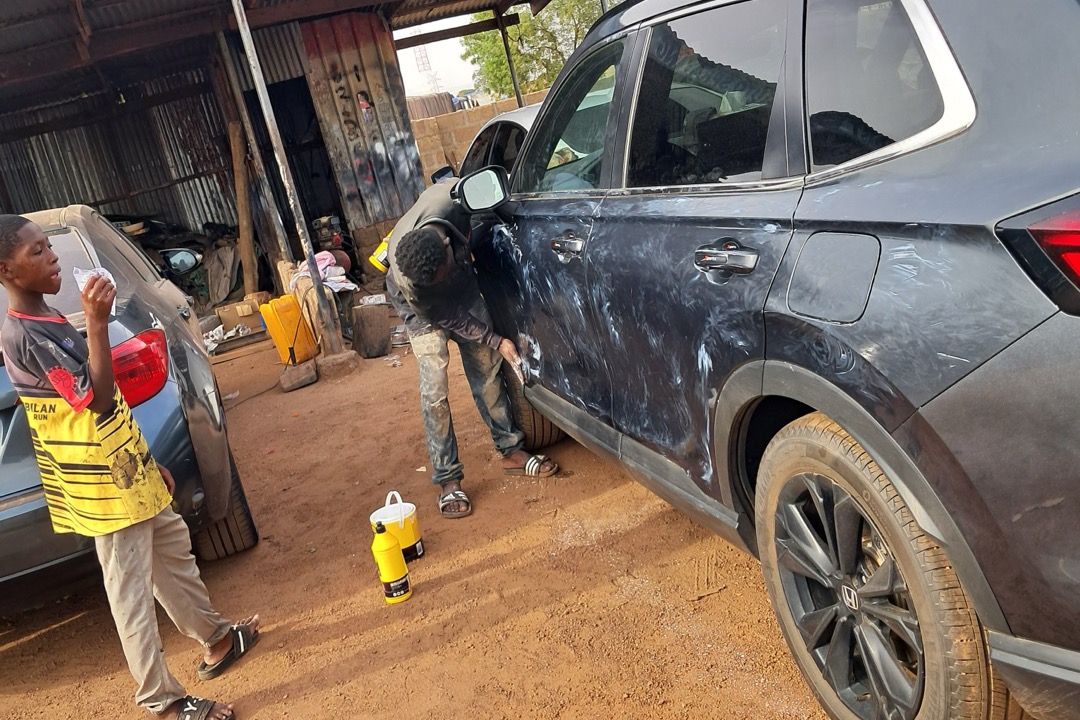
After two-plus decades running an independent shop and correcting paint on everything from daily drivers to concours-grade classics, I can tell you that buying the wrong car polisher is one of the most expensive mistakes a DIY enthusiast can make. Pick a machine with too aggressive a throw and you risk burning through clear coat. Pick one that is underpowered and you spend two hours doing what should be a 30-minute job, give up frustrated, and never touch the machine again. Pick a rotary as your first polisher because the YouTube guy in the polo shirt made it look easy and there is a real chance you damage your paint badly enough to need a respray.
The good news is that the right polisher for your situation is not hard to identify once you understand the three variables that actually matter: orbit throw size, machine type (DA versus rotary), and your honest skill level. I tested and researched these seven machines across exactly those criteria, covering the full spectrum from absolute-beginner kits to professional-grade rotaries. If you are correcting paint for the first time, the Chemical Guys TORQX kit is the safest and most complete starting point. If you are an enthusiast ready for serious correction work, the Griot’s G9 or Adam’s kit are the right step up. The Rupes is the machine you graduate to when polishing becomes part of your weekend routine.
Pair the right polisher with proper paint prep — a clay bar treatment before you ever turn on the machine, the right cutting compound matched to your pad, and a finishing wax or sealant to lock in the work — and you can produce show-quality results in your driveway with no professional detailer required.
| Product | Price | Buy |
|---|---|---|
| Chemical Guys TORQX Random Orbital Polisher KitBest Overall | $219.99 | View on Amazon |
| AVID POWER Dual Action Random Orbital PolisherBudget Pick | $49.99 | View on Amazon |
| Rupes LHR15ES BigFoot Random Orbital PolisherPremium Pick | $332.00 | View on Amazon |
| Porter-Cable 7424XP Variable Speed PolisherRunner-Up | $159.00 | View on Amazon |
| Griot's Garage G9 Random Orbital PolisherRunner-Up | $179.99 | View on Amazon |
| DeWalt DWP849X Variable Speed PolisherRunner-Up | $154.99 | View on Amazon |
| Adam's Polishes 9mm Swirl Killer Polisher KitRunner-Up | $182.74 | View on Amazon |
Find the Right Car Polisher for Your Skill Level
The right polisher depends on your experience and what you are trying to fix. Jump straight to the pick for your situation:
- Best for beginners
- Best for paint correction and swirl removal
- Best professional and rotary polisher
- Best budget polisher
How We Chose These Car Polishers
I evaluated each machine against five criteria that matter in real-world use: orbit throw size and what it means for paint correction speed and operator safety, motor power delivered under load (not the marketing number), build quality and brand track record, accessory ecosystem and pad compatibility, and total cost of ownership including pads and compounds. I specifically looked for machines that cover the full skill spectrum — a true beginner kit, a working budget option, two enthusiast-tier sweet-spot machines, the original category benchmark, the professional long-throw upgrade, and a true rotary for buyers who already know they need one.
ASINs were verified live on Amazon before inclusion. No machine was included based on brand reputation alone.
Best Overall: Chemical Guys TORQX Random Orbital Polisher Kit
The Chemical Guys TORQX kit is the machine I recommend most often to drivers who walk into the shop asking what to buy for paint correction at home. The reason is not that it is the fastest cutter in this lineup — it is not — or that it is the most powerful — it is mid-pack — but that it is the most foolproof complete package available, and for a first-time DA owner that matters more than raw performance.
The 8mm random orbital throw is the safest configuration on the market. The orbit is small enough that even if a beginner makes every common mistake — holds the pad off-flat, presses too hard, stops moving in one spot for a second too long — the machine simply stalls the pad rotation and stops cutting paint. It cannot generate the heat that burns through clear coat. That safety margin is exactly what a first-time operator needs while building the muscle memory of keeping the pad flat and moving consistently. The 700-watt motor is genuinely capable on light to moderate correction work and only starts to feel underpowered on heavier oxidation jobs that would benefit from a 9mm or 15mm machine anyway.
What makes this the standout pick over the Porter-Cable or Griot’s is the kit configuration. The box contains the polisher, multiple foam pads in different cut grades, and Chemical Guys’ compound and polish lineup. A buyer can open the box on Saturday morning and complete a full paint correction by Sunday afternoon without a single trip to a detailing supply store. The economics also work in the kit’s favor — buying these components separately would push the total investment well past the kit price, and the included Chemical Guys chemicals are the same products the brand sells separately to professional detailers, not a watered-down kit-only formulation. The 6,417-review base at 4.6 stars is the largest in the DA polisher kit category for a reason.

Chemical Guys TORQX Random Orbital Polisher Kit
by Chemical Guys
The most beginner-safe complete kit on the market -- one box delivers the polisher, pads, and compounds needed for a full paint correction job with a forgiving 8mm orbit that cannot burn paint.
Pros
- Complete kit with polisher, multiple foam pads, and Chemical Guys compounds and polishes -- the only product in this lineup where a beginner can open one box and have everything needed for a full paint correction job
- 700-watt motor with an 8mm random orbital throw is the most beginner-safe configuration available -- the small orbit cannot generate enough heat to burn paint even if a beginner stops moving in one spot
- 6,417 reviews at 4.6 stars represent the largest review base of any DA polisher kit on Amazon -- review volume at this scale validates the formula across thousands of garages and skill levels
- 6-speed variable trigger lets the operator dial in the right speed for the task -- low for spreading product or finishing polish, high for cutting compound and swirl removal
Cons
- 8mm throw is genuinely slow on heavily oxidized paint -- jobs that a 9mm or 15mm machine would finish in 30 minutes can take an hour or more on this machine
- Pad backing plate uses a 5-inch standard, which limits compatibility with 6-inch pad lineups that other DAs use
Best Budget: AVID POWER Dual Action Random Orbital Polisher
I want to be straightforward about what this machine is and is not. The AVID POWER DA polisher is the cheapest functional dual-action polisher on Amazon, costing roughly a quarter of the Chemical Guys kit. It works. It produces real results on real paint correction. The 871-review base at 4.3 stars is genuine evidence that the machine functions as advertised for the price-conscious DIY market it is built for. If your budget is the primary constraint and you want to try DA polishing without committing several hundred dollars upfront, this is the machine that lets you do that.
Now the honest disclosure. AVID POWER is not a brand the detailing community trusts. The detailing forums respect Chemical Guys, Griot’s, Rupes, Porter-Cable, and Adam’s; AVID POWER is an Amazon-first value-engineered brand with no professional detailing track record. That manifests in build quality differences that matter over time — internal bearings, switch durability, and motor longevity are not at the level of an established detailing brand, and reviewer reports past the first 20 to 30 polish jobs are mixed. If you polish twice a year on a single vehicle, you may never run into these issues. If you polish 10 vehicles a year for friends and family, plan to replace the machine within two seasons.
The pads included are usable starter pads but not professional grade. Most enthusiasts who keep the AVID POWER long-term eventually upgrade to Lake Country or Buff and Shine pads after the included foam wears out, which is a normal upgrade path. Treat this machine for what it is: a low-risk way to learn DA polishing technique on your own vehicle without putting hundreds of dollars on the line. If you discover you enjoy paint correction enough to do it regularly, the Griot’s G9 or Adam’s kit are the natural step up.
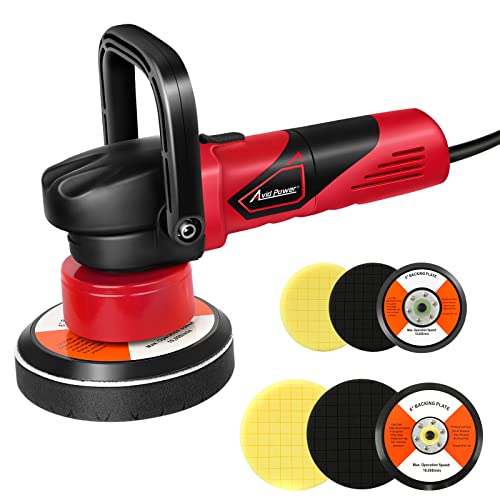
AVID POWER Dual Action Random Orbital Polisher
by AVID POWER
The cheapest functional DA polisher on Amazon -- not a brand the detailing community trusts, but a working machine at a price that makes first-time DA ownership a low-risk decision.
Pros
- Lowest price point in the random orbital DA category by a wide margin -- this machine costs roughly a quarter of the Chemical Guys kit and a sixth of the Rupes
- Includes 4 foam pads (two 5-inch and two 6-inch) plus both backing plates in the box -- a dual-size accessory bundle that lets a budget buyer start polishing the same day
- 6-speed variable control with a 2,700 to 6,500 OPM range covers the same speed envelope as machines costing four times as much
- 871 reviews at 4.3 stars is a solid review base for a budget DA polisher on Amazon -- volume that validates the machine works for the realistic expectations of its price point
Cons
- AVID POWER is not a community-trusted detailing brand -- the detailing forums respect Chemical Guys, Griot's, Rupes, and Porter-Cable, and AVID POWER is a value-engineered Amazon-first brand
- Build quality is what you pay for -- internal bearings, switch durability, and motor longevity are not at the level of the established brands
- Pads included are usable but not professional grade -- most enthusiasts who keep the machine eventually upgrade to Lake Country or Buff and Shine pads
Best Upgrade: Rupes LHR15ES BigFoot Random Orbital Polisher
The Rupes LHR15ES is the machine professional detailers buy and keep for a decade. It is the production-pace tool for paint correction work — the 15mm long-throw orbit cuts paint correction time roughly in half compared to an 8mm machine, which translates directly to billable hours saved when polishing is your job. For an enthusiast who is not running a shop, the Rupes is overkill on light correction but justifies itself the moment you start working on heavily oxidized paint, full corrections on multiple vehicles, or any project where time matters.
What separates the Rupes from every other DA in this lineup is not just the throw size — it is the build quality. Italian engineering and German motor construction translate to bearing life, switch durability, and motor longevity that is in a different class. Eight-year-old Rupes machines hold their value on the used market because they keep working. The vibration dampening is dramatically better than any other DA I tested — after a four-hour correction job, the difference in operator fatigue between the Rupes and a Porter-Cable is significant, and that fatigue translates to mistakes toward the end of long jobs. Less vibration is not a luxury feature; it is a quality-of-results feature.
The trade-off is real. The Rupes is sold polisher-only with no pads, compounds, or accessories, which means the entry cost is actually higher than the sticker price once you add Rupes-compatible pads and a polish lineup. The 15mm throw is also genuinely overpowered for first-time DA users on light correction work — if your goal is occasional swirl removal on a daily driver, this machine moves more product than necessary and you will be paying for capability you do not use. Buy the Rupes when you have done enough DA work to know exactly why you want a long-throw machine. If that is not yet you, save the money and pick the Griot’s G9 or Adam’s kit.

Rupes LHR15ES BigFoot Random Orbital Polisher
by Rupes
The professional-grade long-throw DA that pros buy and keep for a decade -- 15mm throw cuts correction time in half with vibration dampening that makes long jobs noticeably easier on the operator.
Pros
- 15mm long-throw orbit is the production-pace standard used by professional detailers -- this machine cuts paint correction time roughly in half compared to an 8mm machine while maintaining DA safety
- Italian engineering and German motor construction deliver bearing life, switch durability, and motor longevity that 8-year-old Rupes machines still hold their value on the used market for
- Vibration dampening is dramatically better than any other DA in this lineup -- after a four-hour correction job your hands and forearms feel the difference
- 5-inch backing plate paired with the long throw produces an effective working area equivalent to a 6-inch pad on shorter-throw machines -- you cover the same area faster
Cons
- Sold polisher-only with no pads or compounds -- entry cost is actually higher than the sticker price once you add Rupes-compatible pads, easily pushing total investment past $400
- 15mm throw is overpowered for first-time DA users on light correction work -- if your goal is occasional swirl removal, this machine moves more product than necessary
- Limited 347-review base on Amazon -- the professional community's regard for Rupes is well established but the Amazon-specific reviewer count is smaller because most pros buy through detailing supply houses
Porter-Cable 7424XP — The Original DA That Defined the Category
The Porter-Cable 7424XP has been in continuous production since 2003 and is the machine that taught most professional detailers what dual-action paint correction is. Two decades of refinement, the largest accessory ecosystem in the category, and decades of YouTube tutorials are all built around this specific machine. If you have watched paint correction tutorials on YouTube, you have probably watched someone use a Porter-Cable.
The 8mm orbit and 4.5-amp motor produce a balanced cut-versus-finish behavior that handles both compounding and final polishing without requiring two different machines. For a do-it-all enthusiast machine, that versatility matters — you can run a cutting compound on a heavy-cut pad on Saturday morning, swap to a finishing polish on a soft pad after lunch, and complete a full two-step correction with one machine. The 2,940 reviews at 4.6 stars confirm what is uncommon in any power tool category: long-term reliability. You can find positive reviews from owners who have used theirs for 10-plus years and are still on the original motor.
The Porter-Cable’s age also shows in ergonomics and vibration. It is heavier than the Griot’s G9 and produces noticeably more vibration than the Rupes — the technology is over 20 years old at this point, and the vibration dampening and weight reduction in newer machines are meaningful improvements. The Porter-Cable is sold polisher-only, so plan to budget separately for pads and compounds before the first job. For buyers who value the ecosystem, the tutorial library, and the proven track record, this is the safe historical choice. For buyers who want the modern improvements in vibration and ergonomics, the Griot’s G9 is the better pick at a similar price.

Porter-Cable 7424XP Variable Speed Polisher
by Porter-Cable
The original DA polisher that defined the category -- 20-plus years of continuous production, the largest accessory ecosystem, and the most YouTube tutorials of any machine on the market.
Pros
- Decades-long track record as the original DA polisher that taught the detailing community what dual-action paint correction is -- in continuous production since 2003
- 8mm orbit and 4.5 amp motor produce a balanced cut-versus-finish behavior that handles both compounding and final polishing without requiring two different machines
- Replaceable backing plates and accessory ecosystem are the largest in the DA category -- 5-inch and 6-inch backing plates and decades of YouTube tutorials are built around this machine
- 2,940 reviews at 4.6 stars confirm machine longevity -- positive reviews from owners still on the original motor after 10-plus years
Cons
- Heavier than newer competitors and noticeably more vibration than the Rupes or Griot's G9 -- the technology is now over 20 years old
- Sold polisher-only with no pads or accessories -- you need to budget another $50 to $80 for pads and compounds before the first job
Griot’s Garage G9 — The Best Single-Machine Choice for Enthusiasts
If I could only own one car polisher and I had to pick a machine that handles everything from light swirl correction to moderate oxidation work without crossing into the professional skill demands of a 15mm Rupes, the Griot’s G9 is the machine. The 9mm orbit hits the enthusiast sweet spot in a way the rest of the lineup does not — meaningfully faster than 8mm machines on real correction work, but still safely within the operator skill envelope of any enthusiast who has polished a vehicle once or twice before.
The 1,000-watt motor is the most powerful motor in the enthusiast DA category. The extra power matters when pad pressure increases on heavier correction passes — weaker DAs bog down or stall, which is the most common operator complaint with budget machines. The G9 holds its rotation speed under realistic working pressure, which translates directly to more consistent cut quality. The vibration dampening is meaningfully better than the Porter-Cable, and the 10-foot cord is the longest in the lineup until you get to the Adam’s kit. Small details that compound across a multi-hour job into a noticeably better working experience.
Griot’s Garage backs the G9 with a lifetime warranty, and unlike most lifetime warranty marketing claims, Griot’s actually honors them. The brand has been in detailing for 35 years and has a track record of standing behind the products they sell. The 522-review base on Amazon is smaller than the Porter-Cable’s, which makes the machine look thinner on review volume than its actual community reputation justifies. This is a machine the detailing forums respect across the board. Like most quality DAs, it is sold polisher-only, so plan to source pads and a compound and polish lineup separately before the first correction job. Pair this with a proper ceramic coating or wax application after correction and you have the complete enthusiast paint care workflow.

Griot's Garage G9 Random Orbital Polisher
by Griot's Garage
The best single-machine choice for serious enthusiasts -- 9mm sweet-spot orbit with a 1,000-watt motor and a Griot's Garage lifetime warranty that the brand actually honors.
Pros
- 9mm orbit hits the enthusiast sweet spot -- meaningfully faster than 8mm machines on real correction work without crossing into 15mm territory that demands more operator skill
- 1,000-watt motor is the most powerful in the enthusiast DA category -- the extra power means the machine does not bog down or stall when pad pressure increases on heavier passes
- Lifetime warranty backed by Griot's Garage's 35-year track record in detailing -- not a marketing slogan; Griot's actually honors lifetime claims
- 10-foot power cord is the longest in this lineup and removes the constant frustration of running out of cord on larger vehicles
Cons
- Limited Amazon review base of 514 reviews -- the detailing community knows this machine well, but it looks thinner on Amazon than its actual reputation justifies
- Polisher-only purchase with no pads or compounds in the box -- expect to add another $60 to $100 for a pad and chemical lineup before the first job
DeWalt DWP849X — The Professional Rotary
I included the DeWalt DWP849X in this roundup specifically because someone reading this guide will eventually graduate to a rotary, and when they do, this is the machine to buy. With 6,903 reviews at 4.7 stars, it pairs the deepest review history of any rotary in this class with the production-shop track record that paint correction professionals have relied on for decades. The 12-amp motor and 0 to 3,500 RPM variable trigger control deliver cutting speed that no DA machine in this lineup can match. On heavy oxidation, deep swirls, or sanding mark removal, a properly handled rotary cuts in 10 minutes what a DA cuts in an hour.
That speed comes with real risk. Rotaries spin the pad on a single axis at much higher speeds than a DA, and the same RPMs that correct paint quickly will burn through clear coat in seconds if held in one position or run at excessive speed without compound. There is no built-in safety margin like a DA’s free-spinning orbital action. This is not a beginner machine, and operating one without prior DA experience is genuinely risky to your paint. The shops that use rotaries professionally have operators with years of paint correction experience and the muscle memory to keep the pad moving and angled correctly at all times.
If you have already completed multiple paint corrections with a DA, understand pad pressure and pad angle intuitively, and have a specific need to correct paint faster than a DA allows, the DeWalt DWP849X is the right rotary to buy. The DeWalt professional power tool ecosystem means brushes, bearings, and parts are widely available at any home center, which makes long-term maintenance trivial. For everyone else, stay with a DA. If you absolutely need rotary-grade cutting power without the rotary-grade burn-through risk, the Rupes 15mm long-throw is the bridge product — it produces correction speed that approaches rotary territory while maintaining DA safety.

DeWalt DWP849X Variable Speed Polisher
by DeWalt
The professional rotary that shops use for heavy paint correction -- cuts oxidation faster than any DA but requires real operator skill because the same speed that corrects can burn through clear coat in seconds.
Pros
- True rotary polisher with a 12-amp motor and 0 to 3,500 RPM variable trigger control is the production tool for shops that correct paint for a living
- 6,903 reviews at 4.7 stars represent the deepest review history of any rotary polisher in this class -- DeWalt has dominated this professional category for decades
- Accepts 7-inch and 9-inch pads which are the standard sizes for serious correction work -- larger pad surface covers more area per pass, adding up to significant time savings on trucks and SUVs
- DeWalt's professional power tool ecosystem means brushes, bearings, and parts are widely available at any home center -- a tool you can keep running indefinitely with normal maintenance
Cons
- Rotaries can burn through clear coat in seconds if held in one position or run at excessive speed without compound -- this is not a beginner machine
- Heavier than every DA in this lineup and produces meaningful torque reaction at startup -- requires a firm two-handed grip and good operator technique on tight panels
Adam’s Polishes 9mm Swirl Killer Kit — The Most Complete Enthusiast Package
The Adam’s 9mm Swirl Killer Kit is the kit option I recommend when a buyer has decided they are serious about paint correction but wants a complete out-of-the-box solution rather than sourcing a polisher and chemicals separately. The Chemical Guys TORQX kit is the safest beginner choice; the Adam’s kit is the more powerful enthusiast choice with the same kit-format convenience.
The 9mm throw paired with a 1,000-watt motor delivers serious cutting capability for a complete kit at this price point — you get hardware that competes directly with the Griot’s G9 plus a complete chemical lineup that the Griot’s, Porter-Cable, and Rupes do not include. The Adam’s correcting compound and finishing polish included in the kit are the same products Adam’s sells separately to detailing pros, not a stripped-down kit formulation. The 16-foot cord is the longest in the entire roundup and effectively eliminates extension cord juggling on any vehicle, which sounds minor until you experience the difference of working an entire panel without relocating the power source.
The honest limitation is review volume. At 448 reviews, this kit has the smallest review base of any complete kit in the roundup — the kit is newer to market than the Chemical Guys TORQX, and long-term durability data on this specific machine is still accumulating. Adam’s Polishes’ brand reputation in chemicals is well established, but their hardware track record is shorter. The other note is that the 9mm throw is a meaningful step up from the 8mm Chemical Guys kit in terms of operator awareness — not dangerous, but it requires the discipline of keeping the pad flat that beginners may underestimate. If you are buying your first DA polisher and have never corrected paint before, the Chemical Guys TORQX is the safer kit choice. If you have polished a vehicle before and want a complete-kit step up with more cutting power, this is the machine.
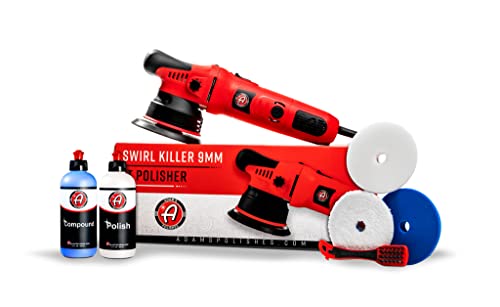
Adam's Polishes 9mm Swirl Killer Polisher Kit
by Adam's Polishes
The most powerful complete-kit option in this roundup -- 9mm throw, 1,000-watt motor, and Adam's-grade compound and polish chemistry, all in one box at a kit price the Rupes and Griot's cannot match.
Pros
- Complete kit including the 9mm DA, multiple foam pads, Adam's correcting compound and finishing polish -- arrives ready to polish without sourcing chemicals separately
- 1,000-watt motor matched to the 9mm throw delivers serious cutting speed for a kit at this price point -- genuinely capable enthusiast-tier hardware paired with a beginner-friendly chemical lineup
- 16-foot cord is the longest in the entire lineup and effectively eliminates extension cord juggling on full-size vehicles
- Adam's Polishes' specific reputation for chemical quality control translates to predictable results -- the included compound and polish are the same products Adam's sells separately to detailing pros
Cons
- 440 reviews is the smallest review base of any complete kit in this roundup -- long-term durability data on this specific machine is still accumulating
- 9mm throw is a meaningful step up from the 8mm Chemical Guys kit in terms of operator awareness -- not dangerous, but requires the discipline of keeping the pad flat that beginners may underestimate
Best Car Polisher for Beginners
If this is your first machine, you want a dual-action polisher that will not burn paint even if your technique is imperfect — a forgiving orbit, clear feedback when the pad stalls, and ideally a kit that arrives with pads and compound so you can start the same day. All three below are free-spinning DAs the detailing community routinely recommends to first-timers: the Chemical Guys TORQX is the safest complete kit, the Griot’s G9 is the best single machine to grow into, and the Adam’s kit pairs beginner-friendly chemistry with more cutting speed.
| Product | Price | Buy |
|---|---|---|
| Chemical Guys TORQX Random Orbital Polisher KitSafest complete kit 8mm orbit and a full pad-and-compound kit make paint burn nearly impossible for a first-timer | $219.99 | View on Amazon |
| Griot's Garage G9 Random Orbital PolisherBest to grow into 9mm sweet-spot orbit with a 1,000W motor and a lifetime warranty -- the machine you keep | $179.99 | View on Amazon |
| Adam's Polishes 9mm Swirl Killer Polisher KitBest kit for more speed 9mm kit with Adam's compound and polish for beginners who want faster correction | $182.74 | View on Amazon |
Best Car Polisher for Paint Correction and Swirl Removal
Removing real swirls, oxidation, and defects fast is about throw and cutting power. A long-throw DA covers more paint per pass while staying safe, and a rotary cuts the heaviest defects fastest in experienced hands. The Rupes 15mm is the production-pace DA pros reach for, the Griot’s G9 is the enthusiast 9mm that balances speed and control, and the DeWalt rotary is the fastest cutter for those with the skill to run it.
| Product | Price | Buy |
|---|---|---|
| Rupes LHR15ES BigFoot Random Orbital PolisherFastest safe correction 15mm long-throw halves correction time while keeping DA burn-through safety | $332.00 | View on Amazon |
| Griot's Garage G9 Random Orbital PolisherBest enthusiast correction 9mm orbit with a 1,000W motor for serious defect removal without pro-level risk | $179.99 | View on Amazon |
| DeWalt DWP849X Variable Speed PolisherFastest heavy cutting True rotary cuts the heaviest oxidation fastest -- for experienced operators only | $154.99 | View on Amazon |
Best Professional and Rotary Car Polisher
Production detailing demands a tool built for hours of daily use and the fastest possible defect removal. The DeWalt DWP849X is the shop-standard rotary that cuts heavy correction faster than any DA, while the Rupes 15mm is the long-throw DA that lets a pro finish safely at production pace. Both reward operator skill — a rotary especially will burn clear coat in seconds without proper technique.
| Product | Price | Buy |
|---|---|---|
| DeWalt DWP849X Variable Speed PolisherBest rotary for pros 12-amp rotary with 7-9 inch pads and the deepest review base of any pro polisher here | $154.99 | View on Amazon |
| Rupes LHR15ES BigFoot Random Orbital PolisherBest pro long-throw DA Italian-built 15mm long-throw with the vibration dampening that makes all-day jobs bearable | $332.00 | View on Amazon |
Best Budget Car Polisher
You do not need to spend a lot to start machine polishing. The AVID POWER is the cheapest functional DA on the market and the lowest-risk way to try the hobby, while the Porter-Cable 7424XP costs more but is the original DA with the largest accessory ecosystem and a 20-year durability record — the better long-term value if you plan to keep polishing.
| Product | Price | Buy |
|---|---|---|
| AVID POWER Dual Action Random Orbital PolisherCheapest entry point Lowest price of any DA here with pads and both backing plates included | $49.99 | View on Amazon |
| Porter-Cable 7424XP Variable Speed PolisherBest long-term budget value The original 8mm DA with the biggest pad ecosystem and a decades-long durability record | $159.00 | View on Amazon |
Buyer's Guide
Picking the right car polisher is mostly about matching the machine to your skill level, your paint condition, and how often you actually plan to use it. Here are the six factors that decide the right choice for any given driver.
Throw Size (8mm vs 9mm vs 15mm)
Throw size is the single most important spec on a DA polisher and the one most buyers misunderstand. 8mm throw is the safest and slowest -- ideal for beginners, for finishing work, and for occasional swirl correction on a daily driver. 9mm throw is the enthusiast sweet spot, faster than 8mm on real correction without crossing into pro-level operator demands. 15mm long-throw is the production-pace standard for professional detailers and cuts correction time roughly in half, but expects an operator who keeps the pad flat and moves consistently. 21mm is a specialty size for heavy correction on large flat panels. For first-time owners, choose 8mm or 9mm. Step up to 15mm only after building experience.
DA vs Rotary
Dual-action (DA) polishers move the pad in two motions simultaneously -- orbital and free-spinning rotation -- which prevents heat buildup and makes burning through paint nearly impossible. Rotary polishers spin the pad on a single axis at much higher speeds (up to 3,500 RPM) and can burn through clear coat in seconds if held still or run too fast. Beginners should always start with a DA. Rotaries are professional-grade tools used in production shop environments by operators who have years of paint correction experience. The DeWalt DWP849X in this roundup is a true rotary -- include it in your consideration only if you have already done multiple paint corrections with a DA and understand exactly why a rotary is faster.
Motor Power and Build
Motor power matters most under load. A 500-watt motor handles light polishing work without complaint but bogs down on heavier cutting passes when pad pressure increases. A 700 to 1,000-watt motor maintains pad rotation under realistic working pressure, which translates directly to more consistent cut quality and less operator frustration. Build quality matters for long-term durability -- bearings, switches, and motor longevity separate brands like Porter-Cable, Griot's, and Rupes from value-engineered budget machines. If you plan to polish regularly for years, prioritize the established brands. If this is a once-or-twice-a-year tool, the budget tier is genuinely workable.
Pad Size and Compatibility
Most DA polishers use 5-inch or 6-inch foam pads. Larger pads cover more area per pass but lose detail control on tight curves and small panels. Smaller pads are slower but more precise. The pad ecosystem matters more than the polisher -- check that the machine you choose accepts pads from the major brands like Lake Country, Buff and Shine, Chemical Guys, and Adam's. Machines with proprietary backing plate sizes can lock you into a single pad brand and limit your future upgrade path. The Porter-Cable 7424XP has the largest accessory ecosystem in the category for this reason.
Cord Length and Power Delivery
Polishing a full-size vehicle means working all the way around the car, often into a corner or up against a wall. A 6-foot cord forces constant repositioning and extension cord juggling. A 10 to 16-foot cord lets you work multiple panels without moving the power source, which sounds minor but adds up to noticeably less frustration on every job. Cordless polishers exist but most lack the sustained power delivery of corded machines on heavier correction work. For a driveway polisher used on owner vehicles, a corded machine with a long cord is the right choice.
Skill Level Match
The right polisher matches the operator's experience. First-time DA owners should pick an 8mm machine with a forgiving motor and clear feedback when the pad stops spinning -- the Chemical Guys TORQX kit is built for this. Enthusiasts who have completed a few corrections should step up to a 9mm machine like the Griot's G9 or Adam's kit, which deliver meaningfully faster results without crossing into professional-tier operator demands. Detailers who polish regularly should consider the Rupes 15mm long-throw, where production speed and vibration dampening make sense for sustained use. Match the machine to where you actually are, not where you aspire to be.
How to Choose the Best Car Polisher
The honest decision tree is shorter than most buying guides make it. If you have never polished a car before, buy the Chemical Guys TORQX kit — the 8mm orbit cannot burn paint, and the included pads and compounds eliminate the friction of sourcing chemicals. If you are working with a tight budget, the AVID POWER is a real working machine with the brand limitations openly disclosed. If you have polished a few vehicles and want a serious enthusiast step up, the Griot’s G9 or Adam’s 9mm kit are the right choice. If you are correcting paint regularly and your hourly time matters, the Rupes LHR15ES is the production-pace tool that pays for itself. Buy a rotary like the DeWalt DWP849X only after you already understand exactly why you need one.
Before You Turn It On: First-Time Polisher Safety Checklist
Even the safest DA polisher can produce mediocre results or minor paint damage if you skip the prep steps. Always wash and dry the vehicle thoroughly before polishing — a proper car wash soap removes the surface dirt that would otherwise grind into the paint under the pad. Follow with a clay bar treatment to remove embedded iron particles and tar that polishing alone cannot address. Tape off all trim, badges, and rubber seals with painter’s tape — compound on plastic trim is significantly harder to remove than compound on paint, and the few minutes spent taping save real frustration later. Never polish in direct sunlight or on a hot panel; the surface temperature accelerates compound flash time and produces uneven cutting. Keep the pad flat against the surface at all times, work in 2-foot by 2-foot sections, and never let the machine dwell in one spot. If the pad rotation stalls (you will see your reference mark stop moving), back off pressure and re-establish flat pad contact before continuing.
DA vs Rotary: What the Difference Actually Means
The single biggest mistake new polishers make is buying a rotary as their first machine because someone said it cuts faster. It does cut faster — and it can ruin a paint job in 30 seconds if mishandled. Here is the actual difference. A dual-action polisher moves the pad in two motions simultaneously: an orbital pattern that traces the throw size (8mm, 9mm, 15mm) and a free-spinning rotation around the pad’s own axis that depends on pad pressure and angle to maintain. The combination produces correction without sustained heat at any single point on the paint, which means you cannot burn through clear coat even if you make mistakes — the pad rotation simply stalls before damage occurs. A rotary spins the pad on a single axis at speeds up to 3,500 RPM. There is no orbital action, no free-spinning safety margin, just sustained rotation at high speed that generates real heat. Held still for two seconds at high RPM with insufficient compound, a rotary will burn through clear coat. Run at excessive speed across an edge or panel seam, the same thing happens. This is why every paint correction tutorial aimed at beginners starts with a DA and why professional detailers spend years on DAs before moving to rotaries. The Rupes 15mm long-throw bridges the gap — it produces correction speed that approaches rotary territory while keeping DA safety — and is the right upgrade path for most enthusiasts before considering a rotary at all.
Throw Size Explained: 8mm vs 9mm vs 15mm
Throw size is the diameter of the orbit pattern the pad traces while spinning, and it is the single most important spec on a DA polisher. The differences between 8mm, 9mm, and 15mm are real and consequential. 8mm throw is the slowest cutter and the safest — the small orbit means the pad covers less ground per revolution and generates the least heat, with effectively zero risk of paint damage even with poor technique. This is the right throw for a beginner’s first machine, for finishing work where you are refining gloss rather than cutting defects, and for occasional swirl removal on a daily driver. 9mm throw is the enthusiast sweet spot and a meaningful step up. The slightly larger orbit covers more area per revolution and cuts measurably faster on real correction work, but stays well within the safety envelope of any operator who has polished a vehicle before. For a single-machine enthusiast who wants more capability than a beginner DA without the operator demands of a long-throw, 9mm is the right answer. 15mm long-throw is the production-pace standard for professional detailers. The orbit is large enough to cover roughly twice the surface area per revolution as an 8mm machine, which translates directly to half the time per correction job. The trade-off is operator expectations — a 15mm machine demands a flat pad angle and consistent movement, and it punishes operators who hold the pad off-flat with poor cut quality and uneven correction. 21mm is a specialty size for very heavy correction on large flat panels and is rarely the right first machine for any buyer.
Paint Correction Levels and Which Polisher Handles Each
Match the machine to the correction level you actually need. Light haze, light swirls, and minor surface marring are correctable with any DA in this lineup paired with a polishing pad and an all-in-one polish or finishing polish. The 8mm Chemical Guys TORQX or the AVID POWER will handle this level of work, just slowly. Moderate swirls, light oxidation, and medium-depth scratches require a cutting compound on a cutting pad and benefit substantially from a 9mm or 15mm throw machine — the Griot’s G9, Adam’s kit, or Rupes will complete moderate correction in a fraction of the time an 8mm machine takes. Heavy oxidation, deep swirls, and sanding mark removal are professional-tier correction work that benefits from either a 15mm long-throw DA (Rupes) or a true rotary (DeWalt) handled by an experienced operator. If you are facing heavy correction work and you are not yet experienced with a DA, hire a professional detailer for that job and use a DA on your future maintenance work.
Final Verdict
For 2026, the Chemical Guys TORQX Random Orbital Polisher Kit is the best car polisher to buy for the broad majority of drivers entering paint correction. The combination of a beginner-safe 8mm orbit, a complete kit that includes pads and compounds, and the largest review base in the DA polisher kit category makes it the lowest-risk purchase for first-time buyers. The 700-watt motor is genuinely capable on real correction work, and the kit format eliminates the frustration of sourcing chemicals separately.
If your budget is the primary constraint, the AVID POWER DA Polisher is the cheapest functional DA on Amazon and a real working machine — with the honest brand limitations disclosed, it is the right choice for buyers who want to try paint correction without committing several hundred dollars upfront. If you have polished before and want a serious enthusiast step up, the Griot’s Garage G9 is the best single-machine choice in this lineup, with a 9mm sweet-spot orbit, the most powerful motor in the enthusiast tier, and a Griot’s lifetime warranty the brand actually honors. If you are correcting paint regularly enough that hours saved per job matter, the Rupes LHR15ES BigFoot is the production-pace tool that justifies its price.
One last note from the shop: no matter which polisher you buy, the result quality depends more on technique than on the machine. Take the time to learn proper pad angle, consistent panel coverage, and the discipline of never letting the pad dwell in one spot. Pair the polisher with a quality car wax or sealant to protect the corrected paint and lock in the work. The right machine in the hands of a careful operator produces show-quality results in a driveway. The wrong machine — or the right machine handled wrong — can damage paint badly enough to require a respray. Buy the polisher that matches where you actually are, and let the technique grow from there.
Frequently Asked Questions
What does throw mean on a DA polisher and how do I pick the right size?
What is the difference between a forced-rotation DA and a free-spinning DA?
What is the difference between polishing compound and finishing polish?
Can I use a DA polisher on ceramic-coated paint?
Why does my pad keep stopping spinning under pressure?
What is the best cordless car polisher, and are cordless polishers any good?
Related Articles
About the Reviewer
Mike Reeves, ASE Master Technician
A.A.S. Automotive Technology, Universal Technical Institute (UTI)
Mike Reeves is an ASE Master Technician with 15 years of hands-on experience in automotive repair and diagnostics. He earned his A.A.S. in Automotive Technology from UTI and runs his own independent shop in Denver, Colorado. Mike founded RevRated to help everyday car owners make smarter parts decisions -- every recommendation comes from real-world testing in his garage.