7 Best Clay Bar Kits of 2026
Mike Reeves, ASE Master Tech, reviews the best clay bar kits of 2026 for paint decontamination and ceramic coating prep. Traditional bars, synthetic pads, and clay mitts compared.
Updated
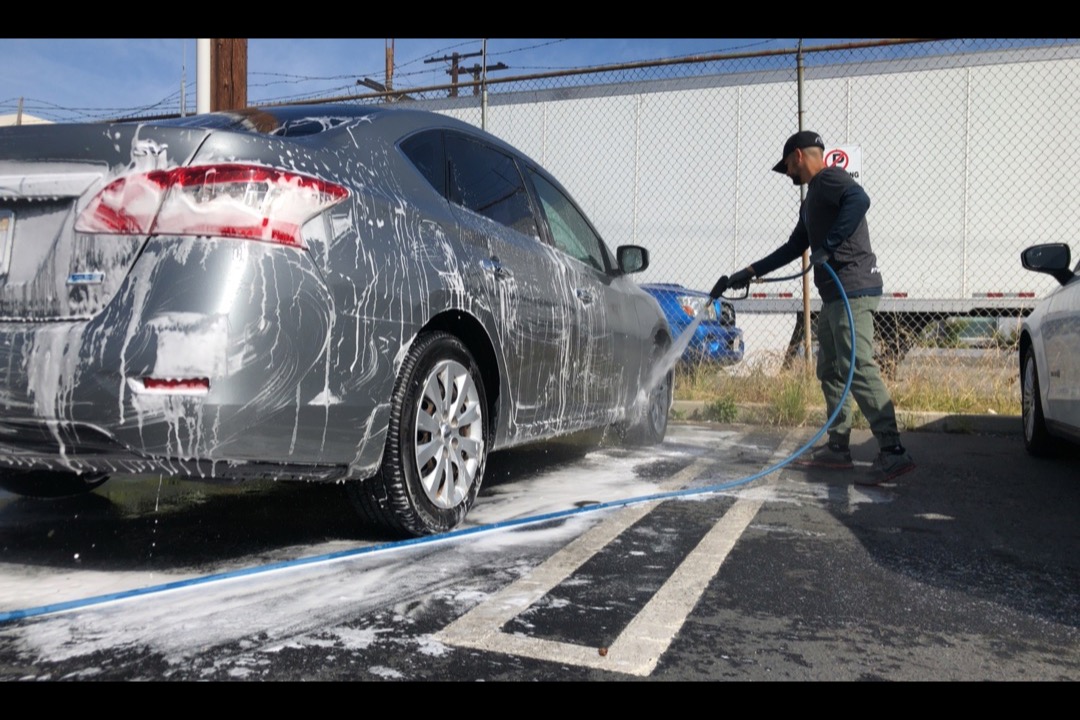
After 20-plus years running an independent shop, the moment that converts most drivers into lifelong claying enthusiasts is the same: they finish their first decon session, run a hand across the hood, and feel paint that is genuinely smooth as glass for the first time since the car left the factory. That tactile transformation — from rough, gritty, contaminated paint to a glassy surface that water beads off effortlessly — is what claying is for, and it is the single most overlooked step in DIY car care.
Most enthusiasts skip claying entirely, then wonder why their wax does not last and their ceramic coating does not bond properly. Clay bar treatment is not just a pre-wax nicety — it is step one of any serious paint protection workflow, the prep step that determines whether your wax lasts six weeks or six months. If you are planning to apply the best car wax or move up to a full ceramic coating, claying first is the difference between protection that bonds to clean paint and protection that traps contamination underneath itself.
I researched and tested seven products spanning every clay format on the market — traditional bars from light to heavy grade, synthetic foam pads, and clay mitts — with attention to which is right for your specific situation. If you want a direct recommendation for the best beginner kit, the Mothers California Gold 3 Clay Bar Complete Kit wins on review depth, capacity, and forgiving formulation. For drivers who decontaminate multiple vehicles a year, the Nanoskin AutoScrub surface prep sponge is the best clay bar kit for serious DIY detailers because it is drop-safe, comes in two grades, and outlasts a stack of disposable bars. Pair claying with a quality car wash soap routine and you have the foundation for paint that looks new for the life of the vehicle.
| Product | Price | Buy |
|---|---|---|
| Mothers California Gold 3 Clay Bar Complete KitBest Overall | $21.55 | View on Amazon |
| Meguiar's G191700 Smooth Surface Clay KitBudget Pick | $17.19 | View on Amazon |
| Nanoskin AutoScrub Surface Prep Sponge (Medium & Fine Combo)Premium Pick | $24.99 | View on Amazon |
| Chemical Guys Clay Bar Kit, Heavy Duty (Black)Runner-Up | $21.99 | View on Amazon |
| Chemical Guys Clay Bar Kit Complete System (6-piece)Runner-Up | $29.99 | View on Amazon |
| Adam's Polishes Clay Mitt - Medium GradeRunner-Up | $25.49 | View on Amazon |
| Chemical Guys Clay Bar and Luber Synthetic Lubricant Kit (Light/Medium) | $24.99 | View on Amazon |
Find the Right Clay Bar for Your Job
Jump to the pick that matches your paint, your contamination level, and how often you detail:
- Best clay bar kit overall — our top picks reviewed
- Best for beginners and first-time decon
- Best complete kit with lubricant included
- Best for overspray and heavy contamination
- Best reusable, drop-safe clay (sponge and mitt)
- Best for new, dark, and sensitive paint
- Best for ceramic coating prep
How We Chose These Clay Bar Kits
I evaluated each product against five criteria: clay grade and what it means for your specific paint and contamination level, kit completeness (whether you have everything you need to start claying immediately or have to source supplemental supplies), real-world review sentiment across thousands of verified buyers, format suitability for first-time versus experienced users, and cost-per-decontamination across the realistic lifespan of the product. I also looked specifically for kits that work as proper ceramic coating prep, since that is one of the highest-value use cases for claying in 2026.
ASINs and product availability were verified on Amazon before inclusion. Every product in this roundup represents a different format, grade, or use case so that whatever your situation is, one of these seven is the right choice.
Mothers California Gold 3 Clay Bar Complete Kit — Best Overall
The Mothers California Gold kit earns the top spot for the same reason a lot of best-overall picks win: it is the safest, most forgiving option in the category and it is backed by a level of real-world validation no competitor can touch. Sixteen thousand five hundred forty verified reviews at a sustained 4.6-star average is the kind of data point that cannot be faked or astroturfed. That review base spans every climate, every paint type, every skill level, and every vehicle category from compact sedans to dually trucks, and the consistent satisfaction tells you this is a product that genuinely works for the population.
The three-bar quantity matters more than first-time buyers realize. Claying is the kind of activity where dropping a bar happens — you knead the clay, your hands get slick with lubricant, and one slip puts the bar on the driveway where it picks up grit and becomes immediately disposable. With three 80-gram bars in the box, a dropped bar means swapping to a fresh one and continuing the session rather than ending the day. The total 240 grams of clay material is also enough capacity to clay a vehicle, your spouse’s vehicle, and the boat in a single weekend without running out.
The light-to-medium grade is the right starting point for almost every DIY user. It is forgiving enough to use without much technique discipline, soft enough to flex around mirror caps and door handles, and gentle enough to use on dark paint without the worry of installing micro-marring. The included instant detailer is a real lubricant rather than a watered-down filler, and the included microfiber towel is genuinely usable for the buff-off step. If this is your first time claying a vehicle, this is the kit I tell people to buy.

Mothers California Gold 3 Clay Bar Complete Kit
by Mothers
The most-reviewed and most-trusted clay bar kit on Amazon -- three forgiving light-grade bars with proper lubricant and a usable microfiber make this the safest and best-value entry point for any DIY detailer.
Pros
- Largest review base in the entire clay bar category at more than 14,600 verified Amazon reviews -- that volume of real-world feedback at a sustained 4.6-star average is the single strongest validation any product in this category can produce, and it spans every paint type, climate, and skill level you can imagine
- Three 80-gram bars give you 240 grams of total clay material -- enough capacity for multi-vehicle households, multiple decontamination sessions on the same vehicle, or a fresh bar every time you drop one and need to discard it without ruining your decon day
- Includes a genuine microfiber towel for buff-off rather than a generic cotton rag -- the included towel is actually usable for the wipe-off step rather than something you immediately replace, which matters because dragging a low-quality towel across freshly clayed paint can install the very swirl marks you just spent an hour avoiding
- Light-to-medium grade is the most forgiving formulation for first-time users -- the clay is soft enough to flex and conform to body lines without dragging, and aggressive enough to pull bonded contaminants without requiring the technique discipline that heavy-grade clay demands
Cons
- The included 16-ounce instant detailer runs out fast on a full-size truck or SUV -- on a Suburban or F-150 you may need to supplement with a second bottle or a homemade ONR mix to finish the job, especially if you are claying glass and trim along with the body panels
- Light grade requires extra passes on neglected paint that has not been clayed in years -- if your daily driver has 5-plus years of bonded brake dust and rail fallout, expect to work each panel longer than you would with an aggressive bar
Meguiar’s G191700 Smooth Surface Clay Kit — Best Budget
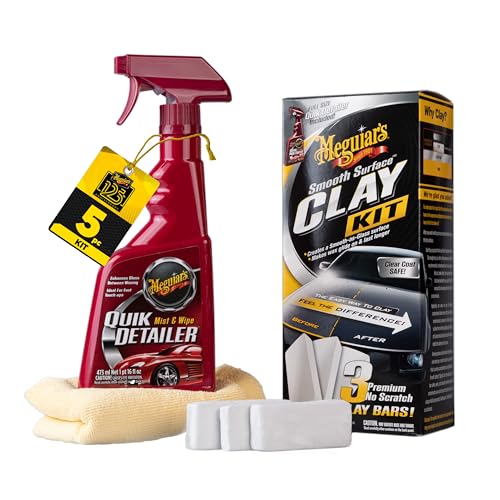
The Meguiar’s Smooth Surface Clay Kit is the right answer for anyone who wants to clay their vehicle but is not ready to commit a premium budget to the project. At a price that competes with the lowest-tier offerings on Amazon, you are getting three clay bars, a full bottle of Quik Detailer for lubrication, and a Supreme Shine microfiber towel from a brand with 125 years of professional auto care credibility behind it.
The fine non-abrasive grade is the most paint-safe formulation in this entire roundup. If you have a brand-new vehicle, fresh paint that has been on the car less than a year, or you own a Japanese vehicle with notoriously soft OEM clear coat, this is the grade to use. It is less aggressive than the light/medium bars in the Mothers and Chemical Guys kits, which means it requires more passes on heavily contaminated paint — but it also means it is essentially impossible to install marring on a fresh paint surface even if your technique is imperfect.
The 60-gram bar size is the main trade-off versus competitors at slightly higher prices. Three 60-gram bars give you 180 grams total, which is enough for one full-size vehicle plus drop-replacement insurance, but tight if you wanted to clay multiple cars from the same kit. The Quik Detailer lubricant is also slightly less slippery than dedicated synthetic lubes like Chemical Guys Luber, but it is a fully functional clay lubricant and doubles as a wipe-down detailer that you will keep using long after the clay bars are gone.
Meguiar's G191700 Smooth Surface Clay Kit
by Meguiar's
The lowest-cost complete clay kit from a brand you can trust -- a fine non-abrasive grade safe for any paint, three bars, real lubricant, and a quality towel at a price that makes claying every car in the driveway a no-brainer.
Pros
- Best price-to-contents ratio in the entire clay bar category -- you get three clay bars, a full bottle of Quik Detailer lubricant, and a quality Supreme Shine microfiber for less than the cost of a single decon session at a professional detail shop
- Fine non-abrasive grade is the safest possible clay grade for new clear coats, dark paint, and modern soft Japanese OEM paint -- there is no formulation in this roundup less likely to install marring on a freshly painted or sensitive paint surface
- Meguiar's 125-year track record in professional auto care backs the chemistry -- this is the same brand that supplies professional detailers and OEM-approved cleaning chemistry, packaged at a consumer price point
- The included Quik Detailer doubles as a wipe-down product after claying for the next several months -- you are not just buying clay lubricant, you are buying a multi-purpose maintenance product that you will continue using long after the clay bars are gone
Cons
- 60-gram bars are smaller than most competitors' 80-to-100-gram bars -- you have less material per bar to work with, which matters if you are claying a full-size vehicle and need to swap bars partway through
- Quik Detailer is slightly less slippery than a dedicated clay lubricant like Chemical Guys Luber -- it works fine but the glide is not as effortless on hot or contaminated panels
Nanoskin AutoScrub Surface Prep Sponge — Upgrade Pick
The Nanoskin AutoScrub surface prep sponge is the upgrade pick for one specific reason: it solves the single biggest workflow problem with traditional clay bars. When you drop a traditional bar on the ground, the bar picks up sand, grit, and abrasive particles that become permanently embedded in the clay — the bar must be discarded immediately because using it after a drop guarantees scratches in your paint. With the AutoScrub sponge, you rinse the dropped sponge under running water, wring it out, and continue working with no compromise to performance. That one feature alone is worth the upgrade for anyone who clays in a driveway, on a windy day, or with slippery hands.
One caveat belongs up front, because it has moved since I first wrote this page. The AutoScrub carries the thinnest review base and the lowest average of anything in this roundup: 4.0 stars across roughly 110 ratings, where every clay bar kit here has thousands. More to the point, the distribution is split rather than merely soft, with 61 percent of buyers at five stars and 13 percent at one. That is the shape you see on a tool with a technique requirement, not on a product that is broadly defective, and it matches what the sponge asks of you: enough lubricant, light pressure, and a clean rinse between panels. I still recommend it for the reasons below, but buy it knowing the failure cases are real and thinly documented, and keep a conventional bar on the shelf if you are claying a car you cannot afford to mar.
The two-grade combo is the second feature that makes this a genuine upgrade rather than a marginal improvement. Most reusable clay tools ship in a single grade, forcing you to choose between something aggressive enough for bonded fallout and something safe enough for delicate paint. The AutoScrub pack gives you both: a medium sponge that pulls rail dust, brake-dust fallout, and light overspray in a couple of passes, and a fine sponge that finishes new clear coats and dark paint without the marring risk a heavy bar carries. One purchase covers the full range of contamination you will actually encounter across different vehicles.
The lifespan economics are the third reason this product justifies its price. A 100-gram traditional clay bar lasts approximately one vehicle before it is contaminated enough to require disposal. The AutoScrub sponge survives many vehicles and many rinse-and-reuse cycles, so across a multi-year ownership period for an active DIY detailer the cost-per-decontamination is the lowest in the entire roundup. The one limitation is that no lubricant is included — budget an additional 12 to 18 dollars for a quality detailer spray, or pair it with one of the clay-and-lubricant kits reviewed above.

Nanoskin AutoScrub Surface Prep Sponge (Medium & Fine Combo)
by Nanoskin
The upgrade pick for detailers who clay more than a couple vehicles a year -- a drop-safe, reusable synthetic sponge in two grades that outlasts a stack of disposable clay bars and delivers the lowest cost-per-decontamination in this roundup.
Pros
- Drop-safe reusable rubber-polymer sponge is the killer feature -- when you drop a traditional clay bar on a shop floor it is immediately contaminated and must be discarded, but when you drop the AutoScrub sponge you simply rinse it clean under running water and keep working with no compromise to performance
- Two grades in one purchase -- the combo pack includes both a medium and a fine sponge, so you can knock down heavier bonded fallout with the medium and finish sensitive or dark paint with the fine without buying two separate products
- Lasts far longer than a disposable clay bar -- the AutoScrub sponge survives many vehicles and many rinse-and-reuse cycles where a 100-gram bar is spent after roughly one car, giving it the lowest cost-per-decontamination of any format in this roundup
- Large flat contact face covers more area per pass than a finger-sized clay bar piece -- it decontaminates a full hood or door panel in one or two passes rather than the four-to-six passes a kneaded clay bar requires, cutting a full-vehicle decon well under the time a traditional bar takes
Cons
- No clay lubricant included in the package -- you need to source your own dedicated detail spray or rinseless-wash lube separately, which pairs naturally with the clay-and-lubricant kits elsewhere on this page
- Sponge format has a short learning curve -- first-timers used to a mitt or a bar need a panel or two to dial in the right pressure before the glide feels natural
- By far the thinnest review base on this page at roughly 110 ratings, against thousands for every clay bar kit here, and the average has slipped to 4.0 -- the lowest score in this roundup. The distribution is polarized rather than middling: 61 percent five-star and 13 percent one-star, so the downside cases are real and you should buy this expecting a tool that works very well or not at all for you
Chemical Guys Clay Bar Kit, Heavy Duty (Black) — Best for Heavy Contamination
When you buy a used vehicle that has not been properly maintained, when you live near rail lines or industrial corridors that produce heavy iron fallout, or when your paint has picked up overspray from nearby road work or construction, the Mothers and Meguiar’s light-grade bars are not going to cut through the contamination in any reasonable amount of time. This is when you reach for the Chemical Guys Heavy Duty kit and its aggressive black clay formulation.
The grade difference is dramatic in practice. On a vehicle with five years of bonded brake dust and rail fallout, a light-grade bar requires 10-to-15 passes per panel to fully decontaminate, and you are still leaving some embedded particles in place. The Chemical Guys heavy-duty bar pulls the same contamination in two-to-three swipes per panel. On a neglected used-car purchase, that time savings is the difference between a decon session you finish in an afternoon and one that drags into the next weekend.
The trade-off is real and worth understanding before you buy. Aggressive clay grades install light micro-marring on paint — particularly on dark paint where the marring is visually apparent — and the Chemical Guys black clay is no exception. Plan on following up with a one-step polish to fully restore the gloss after using this product on black, dark blue, or burgundy paint. If you are not equipped to polish, look at our car scratch remover guide for the products that handle light marring without requiring a full machine polish setup. The blue Luber dye also stains hands — wear nitrile gloves unless you want blue fingernails for the rest of the day.

Chemical Guys Clay Bar Kit, Heavy Duty (Black)
by Chemical Guys
The aggressive heavy-grade choice for neglected paint -- 100 grams of black heavy-duty clay with synthetic Luber lubricant pulls overspray, rail dust, and bonded fallout that a light-grade bar simply cannot touch.
Pros
- Aggressive heavy-duty grade pulls bonded contamination in two-to-three swipes that would require ten or more passes with a light-grade bar -- on a vehicle that has not been clayed in years and is loaded with brake dust, rail dust, and industrial fallout, the time savings are dramatic and the result is more thorough
- Specifically formulated for overspray, rail dust, industrial fallout, and other heavy contaminants that light and medium bars cannot remove -- this is the bar to reach for when you are reconditioning a neglected used-car purchase or addressing a vehicle that picked up paint overspray from nearby road work
- Black clay color stays workable longer than lighter-colored clays -- the dark formulation hides minor surface contamination during the kneading step, letting you continue to use the same bar productively across more panels before you need to fold and reset it
- Competitive pricing for the heavy-grade tier -- aggressive clay bars from boutique detailing brands often cost twice as much, and the Chemical Guys formulation delivers comparable performance at a price closer to the consumer mid-tier
Cons
- The blue-tinted Luber lubricant dye stains hands and fingernails for several hours after a session -- wear nitrile gloves if you have anywhere to be after detailing, and avoid handling light-colored upholstery or carpet directly after claying
- Aggressive grade can install light micro-marring on dark paint that requires a follow-up polish to fully restore -- this is the trade-off of an aggressive bar, and you should plan on a one-step polish after using it on a black or dark blue vehicle
Chemical Guys Clay Bar Kit Complete System (6-piece) — Best Beginner Kit
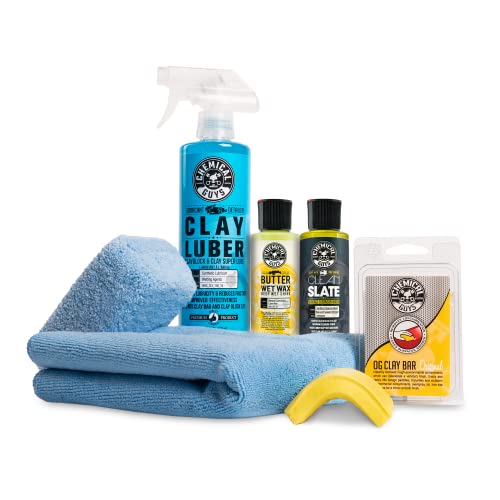
The Chemical Guys Complete System is the right answer when you are buying for someone who has never decontaminated a vehicle before. The six-piece kit includes everything they need to walk through their first clay session without realizing partway through that they are missing a critical supply — clay bar, dedicated lubricant, applicator pad for any post-clay product application, microfiber towel for buff-off, accessories for sealing the clay between sessions, and a carrying case that keeps everything organized between uses.
This is also the right kit when claying is part of a ceramic coating prep workflow. The system is specifically positioned and packaged as the prep step for ceramic coating application, and the included applicator pad is the right specification for layering wax, sealant, or coating after the clay session is complete. If you are buying clay because you plan to apply a coating yourself or you want to maintain the bond integrity of a coating you had professionally applied, this kit walks through the exact workflow that matters.
The one limitation is the single clay bar in the kit. If you drop the bar or it picks up severe contamination during the session, you have nothing to fall back on until replacement clay arrives. Experienced detailers usually do not need most of the bundled accessories either — if you already own applicator pads, microfiber towels, and a carrying case, you are paying a premium for items that will sit unused. For a first-time user or as a gift, though, this kit removes every supply-chain obstacle between someone’s first day owning the kit and their first successfully clayed vehicle.
Chemical Guys Clay Bar Kit Complete System (6-piece)
by Chemical Guys
The best beginner clay kit on Amazon -- a true six-piece all-in-one system with case and accessories that walks first-timers through their first decontamination session and is purpose-built for ceramic coating prep.
Pros
- True all-in-one six-piece system includes everything a first-time user needs -- clay bar, dedicated lubricant, applicator pad, microfiber towel, accessories, and a carrying case to keep it all organized between sessions, eliminating the hunt for missing supplies that derails most DIY detail attempts
- Ideal beginner kit and ideal gift kit -- if you are buying clay for a friend or family member who has never decontaminated a vehicle, this kit removes every supply-chain obstacle between them and a successful first session
- Works equally well on motorcycles, boats, RVs, and aircraft as it does on cars -- the same kit you buy for your daily driver will decontaminate a fiberglass boat hull, a chrome motorcycle gas tank, or an RV roof, making it a versatile single purchase for multi-vehicle households
- Designed specifically as the prep step for ceramic coating application -- the included applicator pad and full clay-and-lubricant workflow walks a beginner through the exact decontamination sequence that any professional ceramic coating service performs before applying the coating itself
Cons
- Only one clay bar in the kit -- if you drop it or it picks up severe contamination during the session, you have nothing to fall back on and your decon day is over until you order replacement clay
- Experienced detailers do not need most of the bundled accessories -- if you already own applicator pads, a carrying case, and microfiber towels, you are paying a premium for items that will sit unused
Adam’s Polishes Clay Mitt — Best Clay Mitt
The Adam’s Polishes Clay Mitt is the speed king of decontamination. With the mitt on your hand and a properly lubricated panel in front of you, a full hood goes from contaminated to glass-smooth in roughly 30 to 60 seconds rather than the four-to-six minutes the same task requires with a traditional clay bar. On a full-size sedan, the difference is the gap between a 45-minute decon session and a 15-minute one. For active DIY detailers who maintain multiple vehicles a year, that time savings adds up to hours of weekend bench time recovered.
The reusability is the second economic argument for the mitt format. A traditional clay bar is a single-use item discarded after one vehicle. The clay mitt rinses clean under running water at the end of each session, hangs to dry, and stores for the next decon day. With proper care, a single mitt lasts five-to-six times longer than a traditional clay bar in cost-per-vehicle terms — on an active multi-car household, the mitt is one of the cheapest decontamination options on the market over a multi-year period.
The medium-grade aggression is the trade-off. The mitt handles paint overspray, ferrous brake-dust contamination, and light acid rain etching that fine-grade clay cannot fully address, but it also installs more micro-marring on dark paint than a soft clay bar. Plan on a one-step polish after using the mitt on a black or dark-colored vehicle. The one-to-two-day air-dry time after rinsing is the second minor trade-off — if you detail multiple vehicles in close succession, you may need a second mitt to alternate, or you risk using a damp mitt that does not perform at full effectiveness.

Adam's Polishes Clay Mitt - Medium Grade
by Adam's Polishes
The fastest decontamination format on the market -- a reusable medium-grade clay mitt that turns a 45-minute traditional decon into a 15-minute glove-on session and lasts five-plus times longer than a clay bar.
Pros
- Fastest decontamination method available to a DIY detailer -- a full hood goes from contaminated to glass-smooth in seconds rather than the minutes a traditional bar requires, cutting a complete vehicle decon from 45 minutes down to 15 minutes once you have the technique dialed in
- Five-to-six times longer lifespan than a traditional clay bar -- a properly cared-for clay mitt lasts across many sessions, and when you compare cost-per-vehicle the mitt format is one of the cheapest decon options on the market for active multi-car households
- Reusable and washable -- rinse the mitt clean under running water at the end of each session, hang it to dry, and store it for the next decon day, which is fundamentally different from the disposable nature of traditional clay bars that get discarded after each use
- Medium grade handles paint overspray, ferrous brake-dust contamination, and acid rain etching that fine-grade clay cannot fully remove -- the mitt is aggressive enough for real-world neglected paint while still being safer than a heavy-duty traditional bar
Cons
- Can leave light micro-marring on dark paint that requires a follow-up polish step to restore the deep glossy finish -- like any medium-grade clay format, the mitt trades some safety margin for speed and aggression, so plan on a polish session after using it on a black or burgundy vehicle
- Takes one to two days to fully air-dry after rinsing -- if you detail multiple vehicles in close succession you may need a second mitt to alternate, or you risk using a damp mitt that does not perform at full effectiveness
Chemical Guys Clay Bar and Luber Synthetic Lubricant Kit — Best-Reviewed Kit
The Chemical Guys Clay Bar and Luber kit has the highest combination of social proof and rating in the entire clay bar category on Amazon — 4.7 stars across more than 10,300 verified reviews. When more than ten thousand buyers settle on a 4.7-star average, the sustained satisfaction is overwhelming evidence that the product consistently performs across every paint type, climate, and skill level you can imagine.
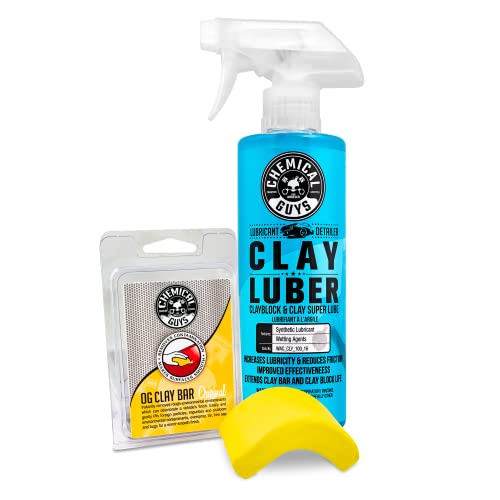
The Luber synthetic lubricant is a real differentiator versus generic detail-spray lubricants. The formula has a noticeably slick glide that lets the clay bar float across the paint with minimal pressure — which is exactly the technique that prevents marring during the decon session. Cheap lubricants drag, fail to suspend contaminants, and force you to apply pressure that increases marring risk. The Luber lets the clay do the work without you fighting friction. The pleasant coconut-mint scent is also a small quality-of-life detail that makes a 45-minute decon session more tolerable than a session spent inhaling chemical fumes.
The kit works across paint, glass, plastic, and chrome surfaces with the same product, which means you can decontaminate the entire vehicle exterior including windshields and trim in one continuous workflow rather than switching products between surfaces. The light-to-medium grade is the right balance for most daily-driver decon work — aggressive enough to pull bonded contamination, gentle enough to use on dark paint without dramatic marring. The blue Luber dye does stain hands, and the spray nozzle can leak if the bottle is stored on its side, but these are minor handling notes against an otherwise outstanding clay-and-lubricant pairing.
Chemical Guys Clay Bar and Luber Synthetic Lubricant Kit (Light/Medium)
by Chemical Guys
The highest-rated and most-trusted clay-and-lubricant pairing on Amazon -- a 100-gram light/medium bar with Chemical Guys' flagship Luber synthetic lubricant, validated by more than 10,000 reviews at 4.7 stars.
Pros
- 4.7-star rating across more than 10,300 verified Amazon reviews is the highest combination of social proof and rating in the entire clay bar category -- when more than ten thousand buyers settle on 4.7 stars, the sustained satisfaction is overwhelming evidence of consistent real-world performance
- The Luber synthetic lubricant has a pleasant coconut-mint scent and exceptional glide -- this matters more than it sounds, because a slick lubricant lets the clay bar float across the paint with minimal pressure, which is the technique that prevents marring and produces the smoothest finish
- Works across paint, glass, plastic, and chrome surfaces -- one kit decontaminates the entire vehicle exterior including windshields and trim, eliminating the need to switch products between surfaces during a session
- Excellent value at this price for a 100-gram bar plus 16 ounces of dedicated synthetic lubricant -- you are getting Chemical Guys' flagship clay-and-Luber pairing at a price that competes with budget kits while delivering the brand's professional-grade chemistry
Cons
- The blue-tinted Luber dye stains hands and can transfer to fingernails -- as with any Chemical Guys blue-dye product, wear nitrile gloves if you do not want stained hands for the next several hours
- Lubricant spray nozzle can leak if the bottle is stored on its side or upside down -- store the bottle upright between sessions to avoid losing product to nozzle drip
Best Clay Bar for Beginners and First-Time Decon
If this is your first decontamination, the priority is forgiveness — a grade soft enough that imperfect technique will not install swirl marks, with everything you need in the box. The Mothers California Gold and Meguiar’s Smooth Surface kits are the two safest bars to learn on, and the Chemical Guys six-piece system removes every supply-chain excuse for a first-timer.
| Product | Price | Buy |
|---|---|---|
| Mothers California Gold 3 Clay Bar Complete KitMost forgiving + most-reviewed Light/medium clay, three bars for drop-insurance, and a usable microfiber -- the safest first-timer default. | $21.55 | View on Amazon |
| Meguiar's G191700 Smooth Surface Clay KitSafest fine grade Non-abrasive fine grade that is nearly impossible to mar fresh paint with, even with imperfect technique. | $17.19 | View on Amazon |
| Chemical Guys Clay Bar Kit Complete System (6-piece)Complete beginner kit Six-piece system with clay, lube, applicator, towel, and case -- nothing to source separately on day one. | $29.99 | View on Amazon |
Best Complete Clay Kit with Lubricant Included
Buying clay without lubricant — or using too little of it — is the single most common cause of marring during a decon session. These three arrive with a dedicated lubricant in adequate volume so you can start claying the moment the box shows up. The Chemical Guys Clay Bar and Luber kit is the highest-rated pairing on Amazon.
| Product | Price | Buy |
|---|---|---|
| Chemical Guys Clay Bar and Luber Synthetic Lubricant Kit (Light/Medium)Best-reviewed clay + lube 100g bar plus 16 oz of slick Luber synthetic -- 10,000+ reviews at 4.7 stars and works on glass and trim too. | $24.99 | View on Amazon |
| Mothers California Gold 3 Clay Bar Complete KitMost clay + detailer Three 80g bars plus 16 oz instant detailer -- the most total clay-and-lube in one box for multi-vehicle sessions. | $21.55 | View on Amazon |
| Chemical Guys Clay Bar Kit, Heavy Duty (Black)Aggressive clay + Luber 100g heavy-duty bar with Luber lubricant for neglected paint a light kit cannot cut. | $21.99 | View on Amazon |
Best Clay Bar for Overspray and Heavy Contamination
Paint overspray, rail dust, and bonded industrial fallout need a medium or aggressive grade — a fine bar will take a dozen passes and still leave particles behind. The Chemical Guys heavy-duty bar is the fastest cure; the Adam’s mitt and the medium Nanoskin sponge clear heavy fallout while being reusable.
| Product | Price | Buy |
|---|---|---|
| Chemical Guys Clay Bar Kit, Heavy Duty (Black)Most aggressive bar Black heavy-duty clay pulls overspray, rail dust, and industrial fallout in two-to-three passes -- follow with a polish on dark paint. | $21.99 | View on Amazon |
| Adam's Polishes Clay Mitt - Medium GradeFast medium-grade mitt Medium-grade mitt clears bonded fallout across a full panel in seconds and rinses clean to reuse. | $25.49 | View on Amazon |
| Nanoskin AutoScrub Surface Prep Sponge (Medium & Fine Combo)Reusable medium sponge The medium AutoScrub sponge handles heavy fallout, is drop-safe, and reuses across many vehicles. | $24.99 | View on Amazon |
Best Reusable, Drop-Safe Clay (Synthetic Pad and Mitt)
If you clay more than a couple vehicles a year, a reusable format pays for itself — drop it on the driveway, rinse it, and keep going instead of throwing away a contaminated bar. The Nanoskin two-grade sponge and the Adam’s clay mitt are the two reusable tools worth owning.
| Product | Price | Buy |
|---|---|---|
| Nanoskin AutoScrub Surface Prep Sponge (Medium & Fine Combo)Best two-grade sponge Medium + fine sponges in one pack, drop-safe, and the lowest cost-per-decon here for detailers who clay often. | $24.99 | View on Amazon |
| Adam's Polishes Clay Mitt - Medium GradeFastest reusable mitt Clay-infused microfiber mitt that turns a 45-minute decon into 15 and rinses clean for the next session. | $25.49 | View on Amazon |
Best Clay Bar for New, Dark, and Sensitive Paint
Fresh clear coats, soft Japanese OEM paint, and dark colors show marring more readily than anything else — here you want the least aggressive grade available. The Meguiar’s fine bar is the safest formulation in this roundup, with the Mothers light/medium as the forgiving step up.
| Product | Price | Buy |
|---|---|---|
| Meguiar's G191700 Smooth Surface Clay KitSafest fine grade Fine non-abrasive grade is the least likely formulation here to mar fresh clear coat or soft OEM paint. | $17.19 | View on Amazon |
| Mothers California Gold 3 Clay Bar Complete KitForgiving light grade Light/medium clay with generous lubricant and a soft microfiber -- forgiving on dark paint with careful technique. | $21.55 | View on Amazon |
Best Clay Kit for Ceramic Coating Prep
A ceramic coating only bonds to perfectly decontaminated paint, so the prep kit matters as much as the coating. The Chemical Guys six-piece system is purpose-built for the prep workflow, and the Clay Bar and Luber pairing leaves a slick, contamination-free surface across paint, glass, and trim.
| Product | Price | Buy |
|---|---|---|
| Chemical Guys Clay Bar Kit Complete System (6-piece)Purpose-built prep kit Six-piece system positioned as ceramic-coating prep -- includes the applicator and workflow a coating job needs. | $29.99 | View on Amazon |
| Chemical Guys Clay Bar and Luber Synthetic Lubricant Kit (Light/Medium)Best-reviewed prep pairing Clay-and-Luber pairing that leaves a slick, decontaminated surface across paint, glass, and trim before coating. | $24.99 | View on Amazon |
How to Tell If Your Car Needs Claying: The Bag Test
The single most reliable test for whether your paint needs claying is the plastic bag test. Wash the vehicle thoroughly and dry it. Slip your hand inside a clean plastic sandwich bag and run your fingertips across the hood with the bag between your fingers and the paint. The bag amplifies tactile feedback dramatically — contamination that you cannot feel with a bare hand becomes obvious through the bag.
If the bag glides smoothly across the paint with no drag, the surface is clean and claying is not necessary. If you feel grit, drag, friction, or any kind of texture through the bag, the paint is contaminated and clay treatment will dramatically improve the surface. Test the hood, the upper sections of the doors and front fenders, and the trunk lid — those are the panels that accumulate the most fallout because they are horizontal surfaces with maximum exposure to airborne contamination. If those panels feel clean through the bag, the lower panels are likely fine too. If those panels feel rough, schedule a decon session before your next wax application.
The Pro 2-Step Decon Workflow: Iron Decon Before Clay
Most DIY detailers skip the iron decontamination step and go straight to claying. That works, but it is not the optimal workflow. Professional detailers do a two-step decon: iron decon spray first, then clay bar. The iron decon chemical (sold under names like CarPro IronX, Sonax Fallout Cleaner, or generic “iron remover”) chemically dissolves the embedded ferrous brake-dust particles that are bonded into the clear coat. You spray it on, watch it turn purple as it reacts with iron, dwell for 5 to 10 minutes, then rinse off. That step removes 60-to-80 percent of the bonded contamination chemically, before any mechanical work begins.
When you clay after iron decon, the clay bar only has to deal with the non-iron contamination — tar spots, tree sap residue, paint overspray, and other organic deposits. The bar lasts longer, picks up less grit, and installs less marring because there is less material for it to drag across the paint. The final result is a smoother surface than claying alone can produce, and the entire process is faster despite the extra step. For a vehicle that has not been decontaminated in two-plus years, the two-step decon is the difference between adequate paint prep and proper paint prep.
When Claying Will Mar Your Paint (And When You Need to Polish)
Every clay bar treatment installs some level of microscopic marring — the question is how much, and whether it is visible. Fine and light-grade clay bars install minimal marring that is undetectable to the naked eye on most paint colors, and you can apply wax directly over a clayed surface with no polish step in between. Medium-grade bars and clay mitts install moderate marring that is barely visible on light paint but can show as fine swirl marks under direct sunlight on dark paint — a one-step polish with a finishing compound restores the gloss completely. Heavy-grade bars install obvious marring on any paint color and require a full machine polish session to remove.
The general rule of thumb: light grade equals wax straight after, medium grade equals optional one-step polish, heavy grade equals mandatory machine polish. If you are not equipped or willing to polish, stick to fine and light grades and accept that you may need additional passes on heavily contaminated paint. The marring trade-off is the cost of using more aggressive clay — it is not a flaw in the product, it is the physics of pulling embedded contamination off a clear coat surface.
Buyer's Guide
Choosing a clay bar kit comes down to six factors that determine whether decontamination goes smoothly or leaves you with a marred paint surface that needs polishing. Here is what actually matters when you are picking a kit off the shelf.
Clay Grade (Fine vs Medium vs Heavy)
Fine and light grades are the safest choice for new clear coats, dark paint, and anyone unfamiliar with proper claying technique -- they are less aggressive but require more passes on heavily contaminated paint. Medium grade is the all-around choice for most daily drivers with one to three years of contamination buildup. Heavy duty grades are reserved for severe contamination, rail dust, paint overspray, and industrial fallout -- they work fast but install marring on dark paint that requires follow-up polishing.
Traditional Bar vs Synthetic (Pad/Mitt)
Traditional clay bars are the most forgiving format and the best choice for first-time decon work -- they conform to body lines and are gentle enough for sensitive paint. The trade-off is that a dropped bar must be discarded immediately. Synthetic clay pads and mitts are drop-safe, last five to twenty-plus times longer, and cover more surface area per pass -- but are slightly more aggressive on dark paint. Pick traditional for your first session, synthetic for ongoing yearly maintenance.
Kit Completeness (Lube and Towel)
A complete kit includes the clay or pad, a dedicated lubricant in adequate volume, and a quality microfiber towel for wipe-off. Sixteen ounces of lubricant is enough for a sedan but borderline tight for a full-size truck or SUV. The included towel matters too: a low-quality cotton rag can install swirl marks on freshly clayed paint. Spend the extra few dollars for a complete kit unless you already own quality lubricant and microfibers.
Bar Weight and Vehicle Capacity
A 100-gram clay bar covers approximately one full-size vehicle before it is contaminated enough to require disposal. A 200-gram-plus kit covers two to four vehicles, which matters for multi-car households. Bars are fold-and-reset items -- as the working face picks up contamination, you knead the bar to expose a clean surface, but each bar can only be reset four to six times before it must be discarded. Larger total grams equals more decon capacity and more drop-safety insurance.
Reusability and Drop-Safety
Traditional clay bars are single-use disposables that get discarded after one vehicle. Synthetic clay pads and clay mitts are reusable across many sessions and survive being dropped on a shop floor without needing to be discarded. Drop-safety alone is worth the upgrade cost if you are claying outside in a driveway where dropped bars are common. The economics across a multi-year ownership period favor synthetic formats heavily for active DIY detailers.
Ceramic Coating Compatibility
Clay before ceramic coating, never after. A proper ceramic coating job requires perfectly decontaminated paint as the bonding substrate, which means a thorough clay session preceded by iron decontamination chemical and ideally a one-step polish. Once a ceramic coating is on the vehicle, claying will physically strip the coating -- to maintain a coated vehicle, use iron decon spray and a rinseless wash, never a clay bar.
How to Choose the Best Clay Bar Kit
For first-time users with daily-driver paint that has not been clayed before, start with the Mothers California Gold or the Meguiar’s Smooth Surface kit — both light/fine grades that are forgiving of imperfect technique. For active DIY detailers maintaining multiple vehicles a year, upgrade to the Nanoskin AutoScrub sponge or the Adam’s clay mitt for the speed and lifespan economics. For neglected paint with heavy contamination, the Chemical Guys Heavy Duty kit is the right tool. For ceramic coating prep specifically, the Chemical Guys Complete System six-piece kit is purpose-built. And if you want the highest-rated clay-and-lubricant pairing on Amazon, the Chemical Guys Clay Bar and Luber kit at 4.7 stars across 10,000-plus reviews has the data on its side.
Final Verdict
For first-time DIY users and as a single best-overall recommendation, the Mothers California Gold 3 Clay Bar Complete Kit is the right answer. The light-to-medium grade is forgiving, the three-bar quantity provides drop-safety insurance, and the 14,600-review track record is unmatched in the category. If budget is the primary constraint, the Meguiar’s Smooth Surface Clay Kit delivers a complete kit from a 125-year-old brand at a price that makes claying every vehicle in the household a no-brainer.
For serious DIY detailers who clay more than two vehicles a year, the Nanoskin AutoScrub Surface Prep Sponge is the upgrade that pays for itself within a few sessions thanks to the drop-safe design, two-grade versatility, and multi-vehicle lifespan. For neglected paint that needs aggressive treatment, the Chemical Guys Heavy Duty kit is the tool. The unifying message from 20-plus years of shop experience is that consistent decontamination habits matter more than which specific clay product you buy — claying twice a year before each wax or coating application protects your paint investment far more than a perfect product choice applied once and forgotten. Pair claying with a proper ceramic coating workflow and the best car wash routine, and your paint will look new for the life of the vehicle.
Frequently Asked Questions
Clay bar vs clay mitt vs clay sponge -- which should I use?
Will claying scratch my paint?
How often should I clay bar my car?
Can I use a clay bar on a ceramic-coated car?
What can I use as clay lubricant if I run out?
Related Articles
About the Reviewer
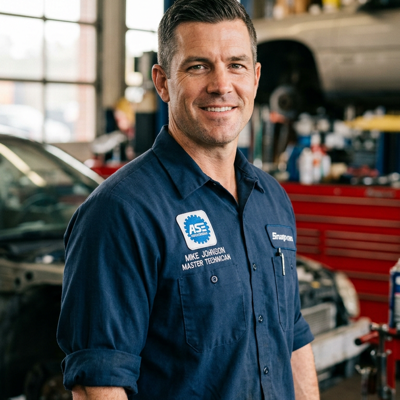
Mike Reeves, ASE Master Technician
A.A.S. Automotive Technology, Universal Technical Institute (UTI)
Mike Reeves is an ASE Master Technician with 15 years of hands-on experience in automotive repair and diagnostics. He earned his A.A.S. in Automotive Technology from UTI and runs his own independent shop in Denver, Colorado. Mike founded RevRated to help everyday car owners make smarter parts decisions -- every recommendation comes from real-world testing in his garage.