How to use this checklist
- Fill in the vehicle info up top. Year, make, model, last 6 of the VIN, mileage, and asking price. None of it is required, but if you fill it in, it shows up on your PDF report. Everything stays on your device — none of it goes to a server.
- Walk the car in the order the sections are listed. Start with documents (because if the title isn't clean, the rest doesn't matter), then exterior, then under the hood — engine off, then engine on. Save the test drive for last so you've already seen everything you can see in a parking lot.
- Check items as they pass. The default is unchecked — checking an item means you've physically inspected it and it passes. Anything you don't check counts as "issue found" in the deal score.
- Tap "Why this matters" on any item for the ASE-shop-floor explanation in plain English — what to look for, what it costs to fix, and whether it's a walk-away or a negotiation point.
- Watch the result banner update in real time. As you find issues, the estimated repair total grows and the banner color shifts. A red walk-away banner means stop — the title, frame, or engine is toast and no negotiation is going to fix it.
- Hit "PDF Report" before you leave. A one-page branded report with every failed item, the deal score, the walk-away red flags, and a signature line. Hand a copy to the seller as your counter-offer rationale.
Why this checklist is different from other used car checklists
Search "used car inspection checklist" and you'll get one of three things: a static PDF you have to print and fill in by hand, a dealer or credit-union blog article that doesn't actually let you tick anything, or a Reddit thread linking to a 9-year-old PDF. None of them know you're standing in a stranger's driveway with a phone in your hand and 20 minutes before they get suspicious. Here's what we built differently:
- Interactive on your phone, not a print-and-fill PDF. The whole 61-point checklist works in your phone browser. Tap through it as you walk around the car. State auto-saves, so you can close the tab, drive home, and come back to the same inspection if you need to think it over.
- Live deal-score and walk-away alerts. As you find issues, the tool tracks the estimated repair total in real time and flags walk-away signals (frame rust, milky oil, salvage title, transmission slip) the second you don't check them. No competitor on the first page of search does this — they just give you the items.
- Per-vehicle PDF report with your data. Most fillable PDFs make you write 61 fields by hand. Ours generates a branded report with the year/make/model, VIN, mileage, asking price, every failed item, the deal score, and a signature line — tailored to this car, not a blank template.
- "Why this matters" on every item. Each of the 61 items has a one-paragraph explanation in Mike Reeves' voice — what the failure mode is, what it actually costs to fix in 2026 dollars, and whether it's a walk-away or a negotiation. The dealer-blog SERP entries just list items without telling you why they matter.
- Suggested counter-offer math. Enter the asking price and the tool shows you a suggested counter ("$14,500 asking − $1,750 estimated repairs = counter at $12,750"), with a hard floor below which to walk. Most checklists stop at "find the issues." Ours tells you what to do with them.
- Embeddable in forum threads and YouTube show-notes. Zero of the top 10 organic results offer an embed snippet. Used-car-buying subreddits, credit-union car-buying-guide pages, and YouTube car-channel show-notes pages can drop the checklist directly into their content with one line of HTML. Same math, persona attribution intact.
The 9 sections — what each one checks for and why
1. Documents & VIN — check this first, in the seller's driveway
Before you turn the key, look at the title. A salvage, rebuilt, or flood title is the single biggest walk-away signal in used-car buying — it means an insurance company decided this car wasn't worth fixing, but someone fixed it anyway. The market knows this, and resale value drops 20–40% the day you sign. Match the VIN on the title to the VIN on the dashboard and the door jamb (check both). Pull a CARFAX or AutoCheck report — most major sellers will have one ready; if they don't, that's a yellow flag in itself.
Then check NHTSA for open recalls (free at nhtsa.gov/recalls), confirm there's no outstanding lien, and ask for service records. A car with no service records is almost always one where maintenance was skipped — the timing-belt history alone (interval-driven on most non-chain engines) can be a $1,500–$3,000 repair the buyer inherits.
2. Exterior — Body & Glass
Walk a slow 360° loop in good daylight. What you're looking for is paint mismatches between adjacent panels (a hood that's slightly different gloss from the fenders means at least one was repainted), uneven panel gaps (a 5mm difference at the door means the unibody is bent), and rust along the rocker panels (the long flat strip below the doors). Cosmetic surface rust on a flare is not a walk-away. Rust along the rocker is — that's structural metal carrying crash loads, and there's no fix short of cutting and welding new metal.
Bring a refrigerator magnet. Body filler doesn't hold a magnet, so a panel where the magnet won't stick is a panel that was crashed and filled. Note any cracked or chipped windshields ($200–$500 to replace) and any damaged side mirrors (OEM heated/folding mirrors run $200–$500 each).
3. Wheels & Tires
Tires tell two stories: how much tread is left, and how the car has been driven. The penny test (insert a penny upside-down — if you can see Lincoln's whole head, the tread is at or below 4/32" and the tire is due) tells you the first. The wear pattern tells you the second. Cupping (regular waves around the tire) means worn struts. Feathering (sharp edges at the tread blocks) means worn tie-rod ends. Inner-edge wear means alignment is off, and sometimes that means a bent control arm from a previous impact.
Check that all four tires match brand, size, and load rating — mixed tires on an AWD car will damage the differential within 2,000 miles. The DOT date (last 4 digits of the DOT code on the sidewall — week + year of manufacture) tells you the rubber age. Tires older than 6 years lose grip even if tread is fine.
4. Lights & Dashboard
Have a friend stand outside while you cycle through every light: headlights low and high beam, taillights, brake lights, all four turn signals, hazards. Then turn the key to the "on" position (engine off) and watch the dashboard light up. Every warning light should illuminate as a self-test, then go out within a second or two of the engine starting. A persistent Check Engine, ABS, or airbag light is one of the strongest walk-away signals on a used car — especially if the seller can't explain it. Plug a $30 OBD2 scanner in to check for stored codes even if no light is currently on.
5. Under the Hood — Engine OFF
Pop the hood with the engine cold and off. The fluids tell you 90% of the story before the engine even runs. Pull the dipstick and look at the oil. Amber or dark brown is fine. Milky / chocolate-milk is a head gasket failure — coolant has crossed into the oil galleries, and the engine is on borrowed time. Walk away. Then check the coolant overflow tank (correct level, correct color — not rusty or oily), transmission fluid (bright red or amber, not burnt-smelling), brake fluid, and power steering.
Squeeze the upper and lower coolant hoses. Mushy means about-to-fail. Look at the serpentine belt for cracks, fraying, or glazing. None of these alone are deal-breakers (except milky oil), but they add up — and a car with three soft hoses and a glazed belt is one whose previous owner skipped maintenance.
6. Under the Hood — Engine ON
Cold-start the car yourself. Never trust a seller who pre-warmed it — the first 60 seconds of a cold start tell you whether the rings seal, the valve seals are good, and the catalytic converter is intact. Listen for extended cranking (weak fuel pump or worn rings), metallic knock at startup (rod knock — borrowed time), and rough idle (vacuum leaks, ignition coils, injectors).
Walk to the back and look at the exhaust. White smoke after warm-up means coolant is in the combustion chamber (head gasket — walk). Blue smoke means oil is burning (rings or valve seals — walk if it's continuous). Black smoke after warm-up means it's running rich (sensors or catalyst — negotiate). Then plug an OBD2 scanner in if you have one — even an off Check Engine Light can have stored codes that signal a $400+ repair coming.
7. Underneath — Frame, Suspension, Drivetrain
If the seller won't let you put it on jack stands at a friend's shop or take it to a quick-lube place that has a lift you can pay $20 to use, walk away. Everything that matters structurally is hidden under the floor. Bring a screwdriver. Push it into any rusty area on the frame, rocker panels, or unibody. If the metal flakes or pokes through, the structural integrity is gone. A unibody car can't be re-framed — it's totaled.
Look at the CV axle boots — torn boots let water and dirt into the joint, and the joint clicks on turns within months. Look for active leaks anywhere — engine, transmission, differential, brake lines. Check the exhaust for rust holes (especially upstream of the catalytic converter) and the suspension for cracked bushings or worn ball joints. Push down on each fender corner and watch how the car settles; if it bounces more than 1.5 cycles, the strut on that corner is shot.
8. Interior & Electronics — trust your nose first
Open every door and just sit in the car for a minute. Trust your nose. Musty smell = water has been inside the car. Could be a leaky sunroof drain ($300–$800), could be a flood title that didn't get reported (walk away). Pull the carpet edge near the rear seat and look at the metal floor — a flood-damaged car shows water stains and rust here. Oily smell = the engine is venting fumes into the cabin, which means a PCV or seal failure.
Then check that A/C blows cold (under 50°F at the vent within 5 minutes), heat works, infotainment + Bluetooth pair, all power windows operate from both driver and passenger sides, every seat belt latches and retracts, and airbag covers are intact (no replaced steering wheel, no cracked dash above the passenger airbag). And — critically — make sure seat wear, pedal wear, and steering-wheel wear all match the odometer reading. A 30K-mile car with a worn-shiny steering wheel has either had its odometer rolled back (felony) or has been driven hard enough that the rest of the car is older than the number says.
9. Test Drive — 30 minutes minimum, on real roads
Drive the car on real roads — surface streets, a stretch of highway, and a parking lot for low-speed maneuvers. 30 minutes minimum. Listen and feel for the things you can't see: transmission shifts (an automatic that flares is slipping; a stick that grinds in any gear has a worn synchro), brakes (pull = stuck caliper or worn pads on one side; vibration through the pedal = warped rotors), steering (does it center after a turn?), suspension over bumps (clunks and knocks), alignment (hands-off, does it track straight?), and vibration at 60–70 mph.
A transmission that slips is the second-biggest walk-away on a used car after a bad title. A rebuild on most cars is $2,500–$5,000 — typically more than the car is worth on a 100K-mile vehicle.
Walk away vs negotiate vs minor — the math
The deal-score in this tool isn't magic — it's a weighted sum of the items you didn't check. Each item has a tier:
- Walk-away — title issues, frame rust, milky oil, transmission slip, smoke from exhaust, a missing/fake VIN, an outstanding lien on the title. None of these are negotiable. The car is the issue. Walk.
- Big fix ($500–$3,000) — head-gasket-adjacent issues, A/C failure, alignment-from-impact symptoms, transmission fluid that smells burnt. Real money, but not always a deal-breaker if the price is right.
- Small fix (under $500) — burned bulbs, worn tires, faded headlights, scuffed rims, missing trim. Easy to negotiate $50–$500 off. None of them individually will hurt the car.
- Note — for-your-records items that don't affect price (oil level, coolant level, trim secure). They show up on the PDF for documentation.
The tool sums the midpoint of each fix range and gives you a counter-offer. If the total exceeds $3,000 with no walk-aways, it flips to "renegotiate hard or walk." If even one walk-away item shows up, that overrides everything — the asking price doesn't matter when the structure is the problem.
When to pay a shop $100 for a pre-purchase inspection
This checklist catches the visible 80% of problems any buyer can find in a parking lot. The other 20% is hidden — frame damage that's been straightened, oil leaks the seller cleaned the day before you came, head-gasket weep that doesn't show until the engine's at full operating temp on a lift. Those need a professional pre-purchase inspection (PPI) by an ASE-certified shop, on a lift, with the engine cold-started and watched for 30 minutes.
A PPI runs $100–$200 and takes about an hour. Most shops will do it for cash, no appointment, if you're already pre-paying. If a seller refuses to let you take the car for a PPI, walk away. There's a reason they're refusing. Even on a private-seller transaction with a clean-looking car, the $100 you spend on a PPI catches problems that easily pay for themselves twenty times over.
Things you specifically want the PPI to look for that this checklist can't:
- Rear main seal weep (only visible from underneath with the engine warm)
- Frame straightening or pulling damage
- Compression test on each cylinder (catches rings/valves before they become smoke)
- Brake-line and fuel-line corrosion under the car
- Catalytic converter integrity (a heat-gun test or a backpressure check)
- Transmission internal scan (extended fault codes that don't trigger a CEL)
Frequently asked questions
What's the most important thing to check on a used car?
The title — and specifically that it's clean, that the VIN matches the dashboard and door jamb, and that there's no outstanding lien. After that, look at the engine oil on the dipstick (milky = walk away), and listen on a cold start for rod knock. Those three checks (clean title, clean oil, clean cold start) catch the worst 70% of used-car traps. The rest of this checklist is the other 30%.
What is a deal-breaker on a used car?
In order of how often they kill deals: salvage / rebuilt / flood title, frame rust on the unibody, milky engine oil (head gasket), white or blue smoke from the exhaust after warm-up, transmission slip, and an outstanding lien. Any one of those is a walk. The tool flags all of them as "walk-away" tier — when one is unchecked, the result banner turns red regardless of the asking price.
Should I get a pre-purchase inspection?
Yes. Always. A PPI by an ASE-certified shop runs $100–$200 and finds the 20% of problems you can't catch in a parking lot — frame straightening, hidden oil leaks, internal transmission codes, catalyst integrity. If a seller refuses to let you take the car for a PPI, walk. The tool is designed to be your first screen — anything that passes the 61-point check is then ready for a $100 PPI.
How do I check a used car's history?
Three sources: CARFAX or AutoCheck (paid — often free at major dealers, or via your auto-insurance member portal) for accident and ownership history; NMVTIS (free at vehiclehistory.gov) for title-brand history; and NHTSA (free at nhtsa.gov/recalls) for open safety recalls. Run all three before you commit. The tool has VIN check items that cover all three sources.
How long should a test drive be?
Minimum 30 minutes. Drive surface streets (low-speed transmission shifts, parking-lot maneuvers, brake feel), a stretch of highway (alignment, vibration at speed, A/C performance), and a hill if you can find one (transmission downshift quality, brake fade). Cold-start the car yourself before you leave the seller's driveway — that's how you catch worn rings and bad fuel pumps the seller has been hiding by pre-warming. The test-drive section of this checklist has 8 items that map to the things you should be feeling for.
Related tools
- Bolt & Lug-Nut Torque Calculator — once you've bought it, the first thing you should do is re-torque the lug nuts to spec (most tire shops over-tighten with an air gun). Live ft-lb / Nm / in-lb display, lug-nut chart by stud size.
- Jump Start Order — Animated Diagram — keep this saved on your phone. The first time the new-to-you car needs a jump in a parking lot, you'll have the cable order in your pocket.
- Tire Height & Diameter Calculator — when the previous owner upsized the tires and never recalibrated the speedometer, this tool tells you how off it is.
- Bar to PSI Converter — for European cars whose door-jamb sticker reads in bar instead of PSI.
- Browse all free tools by Mike Reeves →
Mike's recommendations for inspecting cars yourself
A checklist is only as good as the tools you bring with you. Three categories cover almost every used-car inspection a non-mechanic should do:
- Best OBD2 Scanners — A $30 Bluetooth scanner reads stored fault codes on any car built after 1996. Even when the Check Engine Light is OFF, the ECU often has a stored P0420 or P0171 that signals a $400+ repair coming. Plug the scanner in before the test drive — it's the single highest-value tool you can carry to an inspection.
- Best Mechanic Tool Sets — A 3/8" drive socket set, a magnetic flashlight, and a digital tire-pressure gauge cover the rest. A mid-tier 200-piece mechanic set does this and 90% of the home-driveway repairs you'll do for years afterward. Don't skip the flashlight — the under-the-hood inspection in a poorly-lit driveway is half the reason buyers miss leaks.
- Best Floor Jacks + Best Jack Stands — Once you've bought it, the first weekend you'll want to get under it yourself for an oil change and to look at everything you couldn't see in the seller's driveway. A 3-ton aluminum floor jack and four 6-ton jack stands run about $250 together and last decades. Always pair them — never work under a car held up by a hydraulic jack alone.
Sources & methodology
- Consumer Reports — How to Inspect a Used Car to Avoid Costly Repairs (2026 update) — primary source for section structure and item granularity.
- Edmunds — How to Inspect a Used Car Yourself — test-drive items and deal-breaker hierarchy.
- Kelley Blue Book — Used Car Buying Guide — paperwork, VIN, and pricing methodology.
- Chris Fix — How to Inspect a Used Car Checklist (PDF) — under-the-hood and underneath items.
- AAA — Approved Auto Repair Pre-Purchase Inspection Checklist — PPI methodology and walk-away criteria.
- NHTSA — Vehicle Recall Lookup — recall verification source.
- RepairPal — Repair Cost Estimator — basis for the per-item fix-cost ranges (refreshed annually).
The 9 fixture cases this tool's deal-score is tested against are in fixtures.json alongside the
component source. About Mike Reeves · Last reviewed May 7, 2026.
Cite this page
Free to cite or link in coursework, handouts, and articles — no permission needed.
Reeves, M. (2026, May 7). Used Car Inspection Checklist. RevRated. https://revrated.com/used-car-inspection-checklist/
Reeves, Mike. "Used Car Inspection Checklist." RevRated, 7 May 2026, revrated.com/used-car-inspection-checklist.
Reeves, Mike. "Used Car Inspection Checklist." RevRated. Last modified May 7, 2026. https://revrated.com/used-car-inspection-checklist/
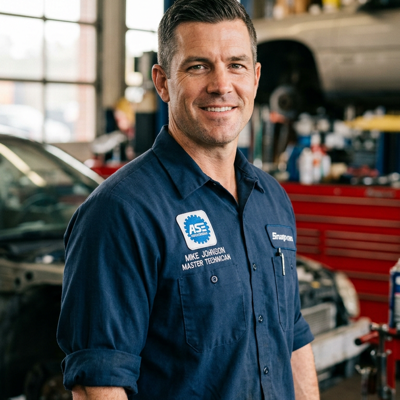
<a href="https://revrated.com/used-car-inspection-checklist/">Used Car Inspection Checklist</a> by Mike Reeves, ASE Master Technician — RevRated
Embed this tool on your site
Free for car-buying subreddits, used-car-buying YouTube channels, credit-union car-buying-guide pages, driver-ed instructors, and dealership trade-in pages that want to show transparency. Required attribution is included in the snippet. No fee, no signup, no analytics attached to the embed.
<iframe
src="https://revrated.com/used-car-inspection-checklist/embed/"
width="100%"
height="1100"
loading="lazy"
style="border:1px solid #d8dbe5; border-radius:16px; max-width:760px;"
title="Used Car Inspection Checklist (RevRated)">
</iframe>
<p style="font-size:12px;color:#666;margin-top:8px">
Used car inspection checklist by
<a href="https://revrated.com/used-car-inspection-checklist/">RevRated</a>
· Reviewed by Mike Reeves, ASE Master Technician
</p>